Selecting a Fencing Contractor: Points to Discuss and Clarify
By Housey · Last reviewed 7th of May 2026
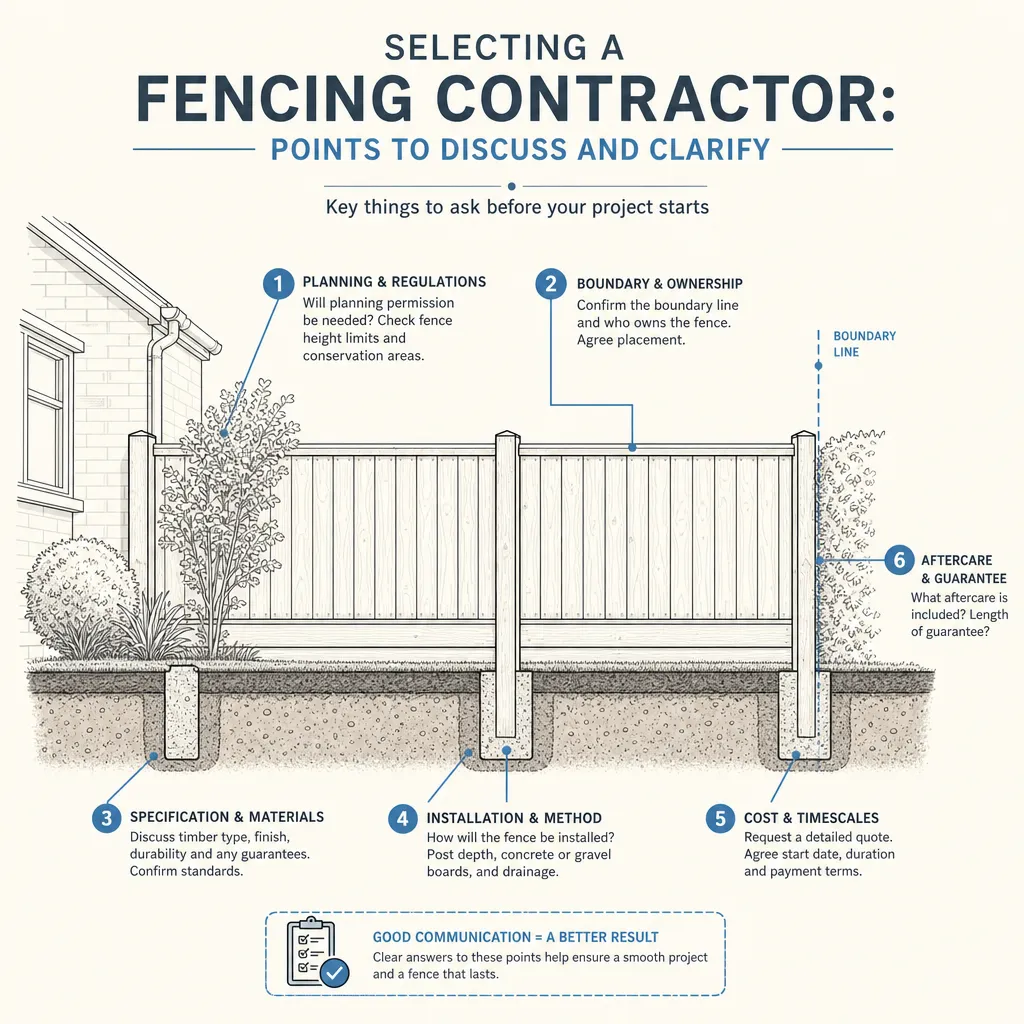
Selecting a Fencing Contractor: Points to Discuss and Clarify
A new fence is often treated as a straightforward improvement job, but boundary work brings its own complications — from ownership questions and planning restrictions to ground conditions and neighbour access — that the best contractors will raise before starting, not after. Asking the right questions at the quoting stage protects you from unexpected costs, disputes, and work that needs to be redone.
Key points
- In England, a fence up to 2 metres high generally falls under permitted development and does not need planning permission — but fences adjacent to a highway are capped at 1 metre, and conservation areas, listed buildings, and some new-build plots have tighter rules.
- Boundary ownership is recorded in your HM Land Registry title deeds; a fencing contractor cannot determine legal ownership from a site visit alone — check your title register and title plan before instructing any work.
- A reputable fencing contractor should carry public liability insurance of at least £2 million; ask for a copy of the certificate before work begins.
- Timber fence posts should typically be set at least one-third of their total length into the ground — a 1.8 m post requires at least 600 mm depth — with concrete haunching for stability in most soil conditions.
- The Party Wall etc. Act 1996 does not generally apply to freestanding garden fences, but work close to a shared boundary can still create neighbour friction; discuss access and disruption before instructing.
Understanding boundary ownership before instructing
Before any fencing work begins, establish who legally owns and is responsible for the boundary. This is not always obvious from the physical layout of the garden, and a contractor cannot tell you from a site visit.
Check your title register and title plan at HM Land Registry — these may show a T mark on one side of a boundary, indicating maintenance responsibility. Many title plans are not fully definitive, however, and older deeds vary widely. If ownership is genuinely unclear, a solicitor can advise before you spend money on materials and labour.
Decisions to settle before requesting quotes:
- Which boundaries are you fencing, and do you own them?
- Is there an existing fence to remove, and who owns it?
- Have you spoken to your neighbour about the planned work?
- Do your deeds include any height restrictions or covenants affecting boundary structures?
Questions to ask a fencing contractor before accepting a quote
Use this checklist when speaking to each contractor you are considering. A contractor who answers these questions clearly — and raises relevant ones of their own — is generally more likely to deliver a well-managed job.
Qualifications, insurance, and experience:
- Are you a member of the Fencing Contractors Association (FCA) or another relevant trade body?
- Can you provide a copy of your public liability insurance certificate before work starts?
- Have you worked on sites with similar ground conditions — heavy clay, sloped gardens, or proximity to tree roots?
- Who will carry out the work: you directly, or subcontractors?
The quote and specification:
- Does the quote include removal and disposal of the existing fence?
- What timber specification are you quoting — pressure-treated softwood, hardwood, or composite?
- What post size, post depth, and concrete specification are you using?
- Is VAT included in the quoted price?
- What would cause the price to change once work has started?
- Is there a contingency allowance if ground conditions are harder or softer than expected?
Timeline and practical matters:
- How long will the work take, and which days will you be on site?
- Will you need access to the neighbour's side of the fence?
- How will you protect plants and surfaces in the garden during the work?
- What is the payment schedule, and how much deposit do you require?
Quote comparison template
When comparing quotes from two or more contractors, use this template to ensure you are comparing like for like:
Item | Contractor A | Contractor B | Contractor C |
|---|---|---|---|
Total price (inc. VAT) |
|
|
|
Fence type and specification |
|
|
|
Post material and size |
|
|
|
Post depth and haunching method |
|
|
|
Old fence removal included? |
|
|
|
Waste disposal included? |
|
|
|
Estimated duration |
|
|
|
Payment schedule / deposit |
|
|
|
Public liability insurance confirmed? |
|
|
|
Trade body membership? |
|
|
|
Written contract or job sheet provided? |
|
|
|
Do not accept a verbal-only quote. Any reputable contractor should provide a written scope of works and payment terms before you commit.
Planning permission and permitted development
Most domestic garden fences do not need planning permission. Under permitted development rights in England, you can erect a fence, gate, or wall up to 1 metre high adjacent to a highway (including a public footpath) or up to 2 metres high elsewhere, without a planning application.
There are important exceptions:
- Conservation areas — permitted development may be restricted or removed; check with your local planning authority before starting work.
- Listed buildings — any boundary work near a listed building may require Listed Building Consent in addition to, or instead of, planning permission.
- New-build properties — some developments have planning conditions that remove certain permitted development rights; check your title deeds and any planning conditions attached to the original consent.
- Article 4 Directions — some local authorities have used these to restrict permitted development in particular streets or areas.
When in doubt, seek pre-application advice from your local planning authority before instructing a contractor. Starting work without the necessary consent can result in an enforcement notice requiring the fence to be removed.
Red flags when selecting a fencing contractor
Some warning signs are worth taking seriously before signing a contract or paying a deposit:
- No written quote or contract — a verbal-only agreement makes disputes very difficult to resolve after the fact.
- Demand for a large upfront cash deposit — a reasonable deposit of up to 25–30 per cent is normal; a demand for full or near-full payment before starting is not.
- No public liability insurance — if a contractor damages neighbouring property or injures someone during the works, you need to know they are covered.
- Vague or missing specification — a quote that does not state post size, depth, or timber grade leaves room for lower-quality materials to be substituted without your knowledge.
- Pressure to start immediately — a contractor with genuinely strong demand will not usually be available to start the same day without prior commitment.
- No VAT number on a sizeable quote — contractors with annual turnover above the VAT registration threshold are legally required to be VAT-registered; ask for a VAT number on any quote that appears to exclude it.
When to get professional help
Most domestic fencing jobs do not require a specialist beyond a competent, insured contractor. However, some situations warrant additional advice:
- Boundary ownership is disputed — consult a solicitor or a boundary surveyor before instructing any contractor.
- Sloped sites requiring retaining elements — a structural engineer may need to assess ground conditions and design the retaining structure.
- Work near underground services — contact the relevant utility companies and arrange a service-location survey before any excavation.
- Conservation area or listed building — seek pre-application planning advice; works done without consent can be costly to reverse.
- Roots, water, or unstable ground evident — a ground investigation or arborist's report may be needed before post positions are fixed.
How Housey can help
Housey helps homeowners compare quotes from local, vetted contractors. When you are ready to move forward with your fencing project, you can use Housey to describe the job and receive responses from local professionals — saving you the time and uncertainty of finding and vetting contractors individually.
Frequently asked questions
Do I need planning permission for a garden fence?
In most cases, no. Under permitted development rights in England, you can build a fence up to 2 metres high without planning permission, or up to 1 metre where it adjoins a highway. Exceptions apply in conservation areas, near listed buildings, or where Article 4 Directions or planning conditions restrict permitted development. Always check with your local planning authority if you are unsure.
Who is responsible for a boundary fence?
Responsibility is determined by your title deeds, not by convention. A T mark on a title plan usually indicates the owner of that boundary. Where no T mark exists, responsibility may not be clearly assigned. If your deeds are unclear, seek legal advice before instructing work — boundary disputes can become costly once contractors have started.
What is the maximum height for a garden fence without planning permission?
In England, you can erect a fence up to 2 metres high in most domestic garden situations without planning permission. The limit drops to 1 metre where the fence is adjacent to a highway, including a public footpath. Conservation areas, listed buildings, and certain new-build developments may have tighter restrictions — check with your local planning authority before starting work.
Should I get the fence quote in writing?
Yes, always. A written quote or job sheet should specify the fence type, materials, post size and depth, removal of the existing fence, waste disposal, timeline, payment schedule, and whether VAT is included. Without a written record it is very difficult to resolve disagreements about what was agreed if a dispute arises during or after the work.
What deposit is reasonable to pay a fencing contractor?
A deposit of up to 25 to 30 per cent of the total quote is generally reasonable for a domestic fencing job. Be cautious about paying more than this upfront, particularly in cash and without a signed contract. Stage payments — a deposit, a midpoint payment, and a final payment on completion — are a sensible arrangement for larger jobs.
Sources and further reading
- Permitted development rights for householders: technical guidance — GOV.UK
- Planning permission: fences, gates and garden walls — Planning Portal
- Fences and boundaries — Citizens Advice
- Search for land and property information — HM Land Registry
Useful next reads
 Improvement & Build
Evaluating And Planning Renovations For Properties Requiring Modernisation
Start by commissioning a condition survey — RICS Level 3 for pre-1919 properties — to identify structural defects, damp, and services issues before finalising a budget.
 Improvement & Build
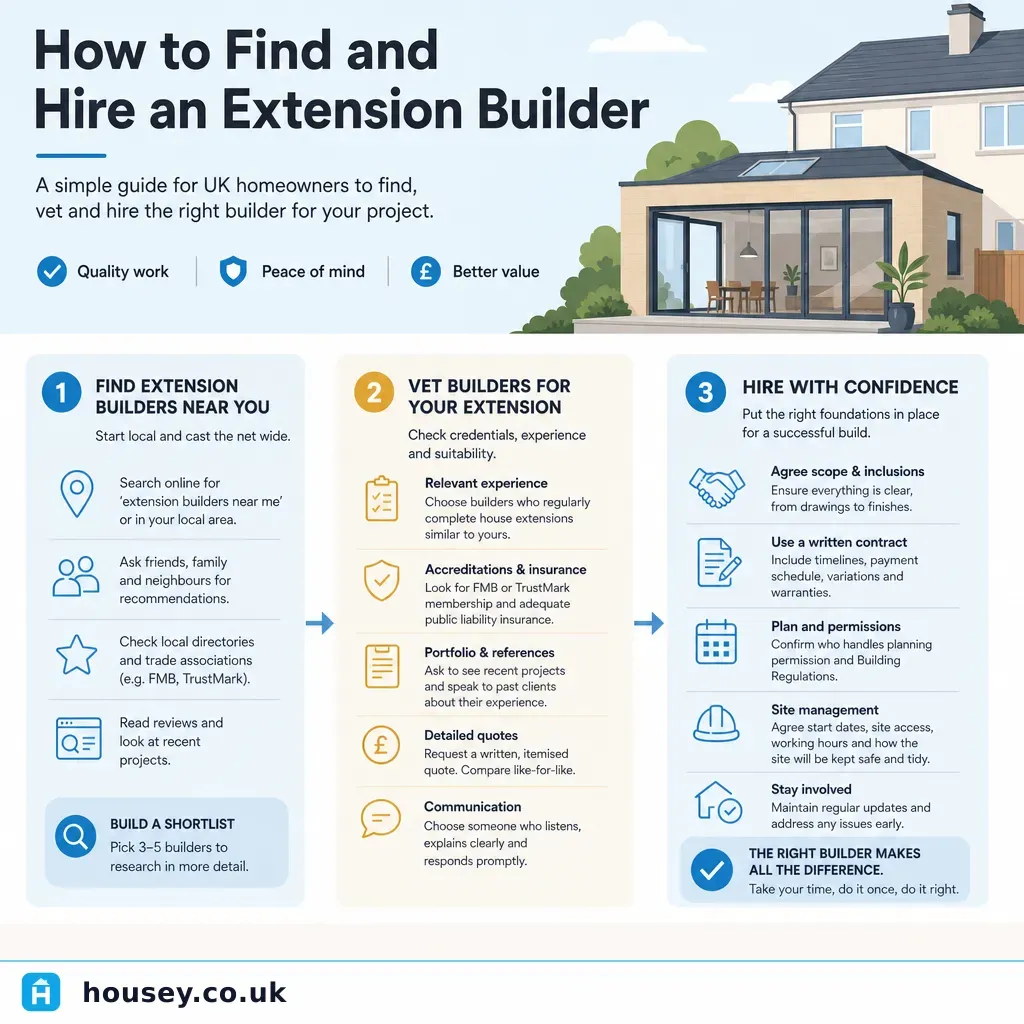
How to Find and Hire an Extension Builder
To hire a reliable extension builder, get at least three detailed written quotes from contractors with documented experience of similar projects.
 Improvement & Build
Who to Contact for Broken Door Handle Repair
For a broken door handle, a general handyperson can handle most internal timber door repairs, while a joiner or locksmith is better suited to external doors, particularly if the lock mechanism is affected.
 Improvement & Build
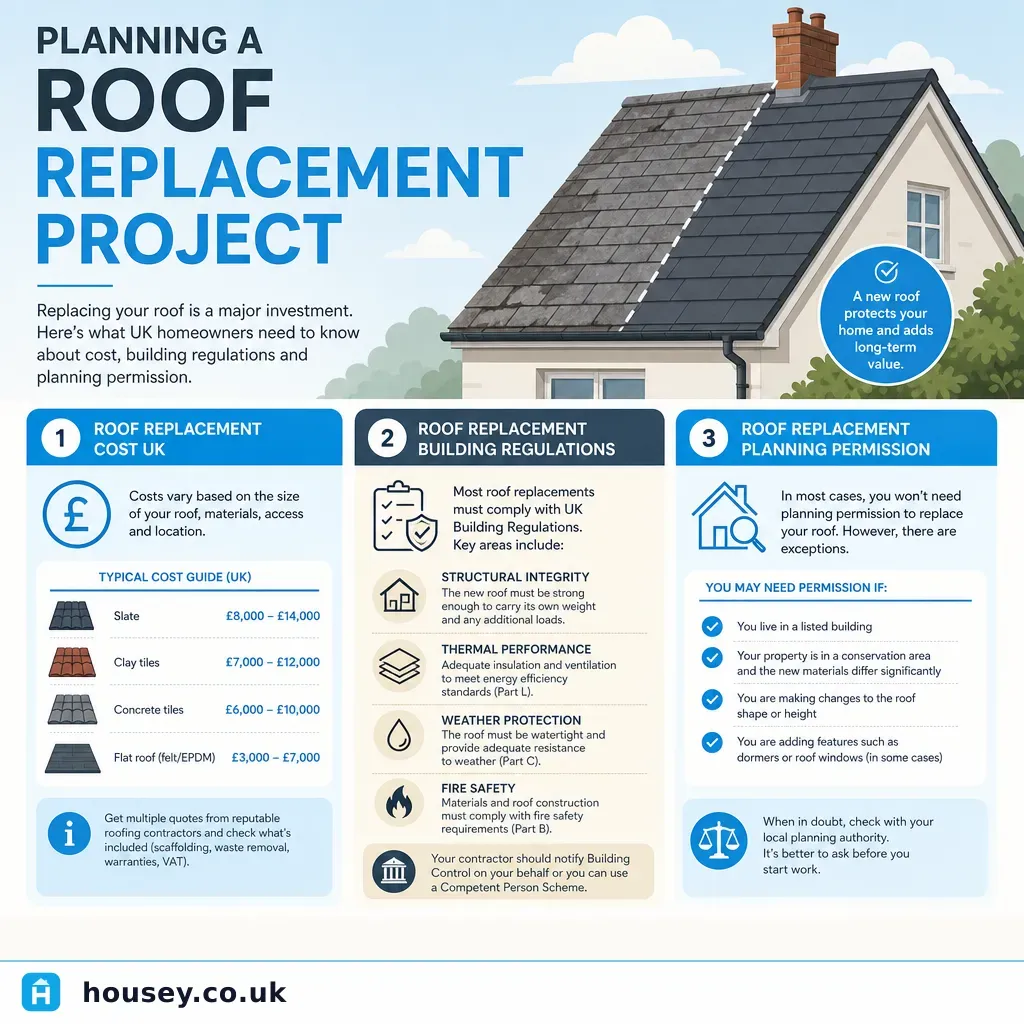
Planning a Roof Replacement Project
A roof replacement project involves stripping the existing covering, renewing the sarking felt and battens, and laying new tiles, slates, or a flat-roof membrane.
 Improvement & Build
Benefits of Hiring Established Landscaping Services in Coastal Areas
Established landscaping contractors in coastal areas understand salt spray exposure, prevailing wind patterns, and local planning restrictions that inland firms often overlook.