Selling Your Property Before Year End: Timelines and Action Steps
By Housey · Last reviewed 18th of May 2026
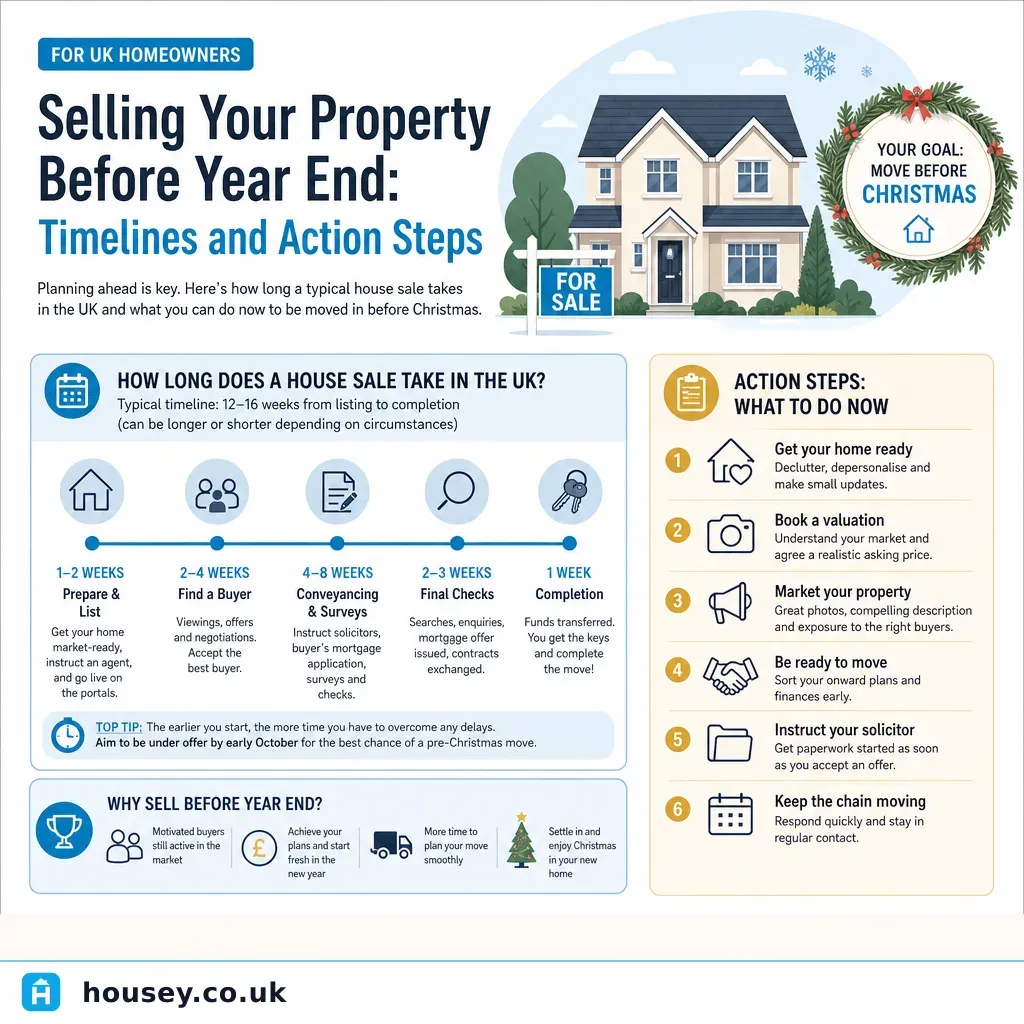
Selling Your Property Before Year End: Timelines and Action Steps
Deciding to sell with a firm completion date in mind — whether driven by financial planning, a dependent chain, or a desire to start fresh in January — focuses the mind in a way that open-ended listings do not. The UK conveyancing process involves many interdependent parties, and the final months of the year bring their own pressures: solicitor offices wind down before Christmas, local authorities slow search processing, and lenders face increased workload. Getting the sequence right from the outset is often the difference between a December completion and a frustrating January delay.
Key points
- A typical UK residential sale takes 12–16 weeks from accepted offer to legal completion
- An Energy Performance Certificate (EPC) is a legal requirement under the Energy Performance of Buildings Regulations 2012 and must be commissioned before a property is marketed
- Local authority search results can take 2–6 weeks depending on the council — some metropolitan councils are considerably slower than rural ones
- Solicitor offices typically reduce staffing from around 23 December, meaning completions in that window require early, organised communication between all parties
- Autumn listings — particularly September and October — tend to attract motivated buyers who want to be settled before Christmas
Working backwards: what your year-end timeline looks like
A target completion of 31 December means preparation should begin no later than August for a standard freehold sale. The following worked scenario illustrates a realistic chain-free timeline.
Worked UK scenario: a 1930s semi in the East Midlands, £285,000, freehold, no onward chain
Stage | Approximate date | Action |
|---|---|---|
Preparation | Early August | Commission EPC, instruct solicitor, arrange valuation |
Listing | Mid-August | Professional photography, go live on portals |
Offer accepted | Early September | Negotiate and agree sale price |
Solicitors instructed (both sides) | Early September | Issue draft contract pack, begin searches |
Searches returned | Mid-October | Local authority, drainage, environmental |
Enquiries raised and resolved | Late October | Solicitor correspondence between parties |
Exchange of contracts | Mid-November | Binding commitment, completion date agreed |
Completion | 31 December | Keys handed over, funds transferred |
This assumes no complications. A pending mortgage offer, mortgage valuation delay, or title issue (missing deeds, restrictive covenants) can each add 1–4 weeks to the process.
Which steps are in your control?
Some parts of the timeline depend entirely on third parties. Others are firmly in your hands as the vendor.
Steps you control
- Instruct a solicitor before listing. Many vendors wait until an offer is accepted. Instructing earlier means the draft contract pack, title register, and property information forms (TA6 and TA10) can be prepared in advance — saving 1–2 weeks when a buyer is found.
- Order your EPC before marketing begins. This is a legal requirement under the Energy Performance of Buildings Regulations 2012. An outstanding EPC will delay your listing date.
- Complete your TA6 and TA10 forms early. These ask detailed questions about planning history, alterations, guarantees, and fittings. Incomplete answers generate enquiries that slow exchange.
- Book professional photography promptly. Portal listing quality directly affects initial enquiry volume and how quickly you receive offers.
- Set a realistic asking price from the outset. A price reduction after weeks on market signals doubt and extends your overall timeline.
Steps outside your control
- Local authority search turnaround times
- The buyer's mortgage offer and lender valuation scheduling
- The buyer's solicitor's responsiveness
- HM Land Registry processing (relevant where the title needs updating)
Decision tree: is a year-end completion realistic?
- Start selling in July or August → a year-end completion is achievable for a straightforward freehold sale with a motivated buyer
- Start selling in September → possible but tight; search delays or chain complications risk pushing into January
- Start selling in October → unlikely unless the property is chain-free, the buyer is paying cash, and both solicitors move quickly
- Already under offer in September → focus on chasing search results, completing the TA6 promptly, and keeping all solicitors in regular contact
- Chain involved → each additional link multiplies delay risk; consider whether December exchange (with a January completion) is a more realistic first milestone
- Cash buyer involved → removes mortgage valuation and lender delays; completion in 6–8 weeks from offer is often achievable for a clean freehold title
Vendor preparation checklist
Before listing, work through the following:
When to get professional help
Conveyancing is not a DIY exercise — a licensed conveyancer or solicitor must handle the legal transfer of title. Seek specialist advice early if your sale involves any of the following:
- Leasehold property, particularly if the lease is below 80 years, which can significantly complicate or delay a sale
- Shared ownership, a Help to Buy equity loan, or any charge attached to the title
- Missing or defective title deeds
- Boundary disputes or neighbour disputes affecting the property
- Recent planning or building works carried out without consent
- Probate sale or a transaction involving gifted equity
How Housey can help
The right preparation before listing gives you the best chance of finding a buyer quickly and completing before year end. Housey connects you with professionals who can help at the critical early stages: arrange an accurate valuation survey to price correctly from day one, and commission professional property photography and floorplans to present your home at its best on the major portals.
Frequently asked questions
How long does a house sale take in the UK?
Most UK residential sales take 12–16 weeks from accepted offer to legal completion. Chain-free cash sales can complete in 6–8 weeks. Properties with leasehold complications, missing documentation, or slow local authority search responses can take 20 weeks or more. Timescales vary by region, property type, and how prepared both parties are when the sale begins.
When is the latest I can accept an offer and still complete before Christmas?
As a rough guide, accepting an offer by mid-September gives a reasonable chance of completing before 31 December for a standard freehold sale with no chain. October offers are very tight, and November offers are unlikely to complete before the holiday period unless the buyer is paying cash and both solicitors work quickly without any delays or title issues.
Does the time of year affect property sale prices?
Autumn typically brings motivated buyers wanting to move before Christmas, which can work in a vendor's favour. Spring (February to May) is traditionally the highest-volume market period, but the relationship between season and achieved price depends heavily on local supply and demand. Setting a well-evidenced asking price from the outset matters considerably more than the time of listing.
What is the TA6 form and why does it matter?
The TA6 is the Law Society's Property Information Form, completed by the seller. It covers disputes, notices, alterations, planning permissions, building works, and guarantees. Solicitors request it early in the process. Delays in completing it accurately — or omissions that generate follow-up enquiries — are one of the most common causes of slow transactions and missed completion targets.
Sources and further reading
- Energy Performance of Buildings Regulations 2012 — legislation.gov.uk
- Buying or selling your home — GOV.UK
- HM Land Registry: registration services — HM Land Registry
- Law Society property forms — Law Society
Useful next reads
 Buying & Moving
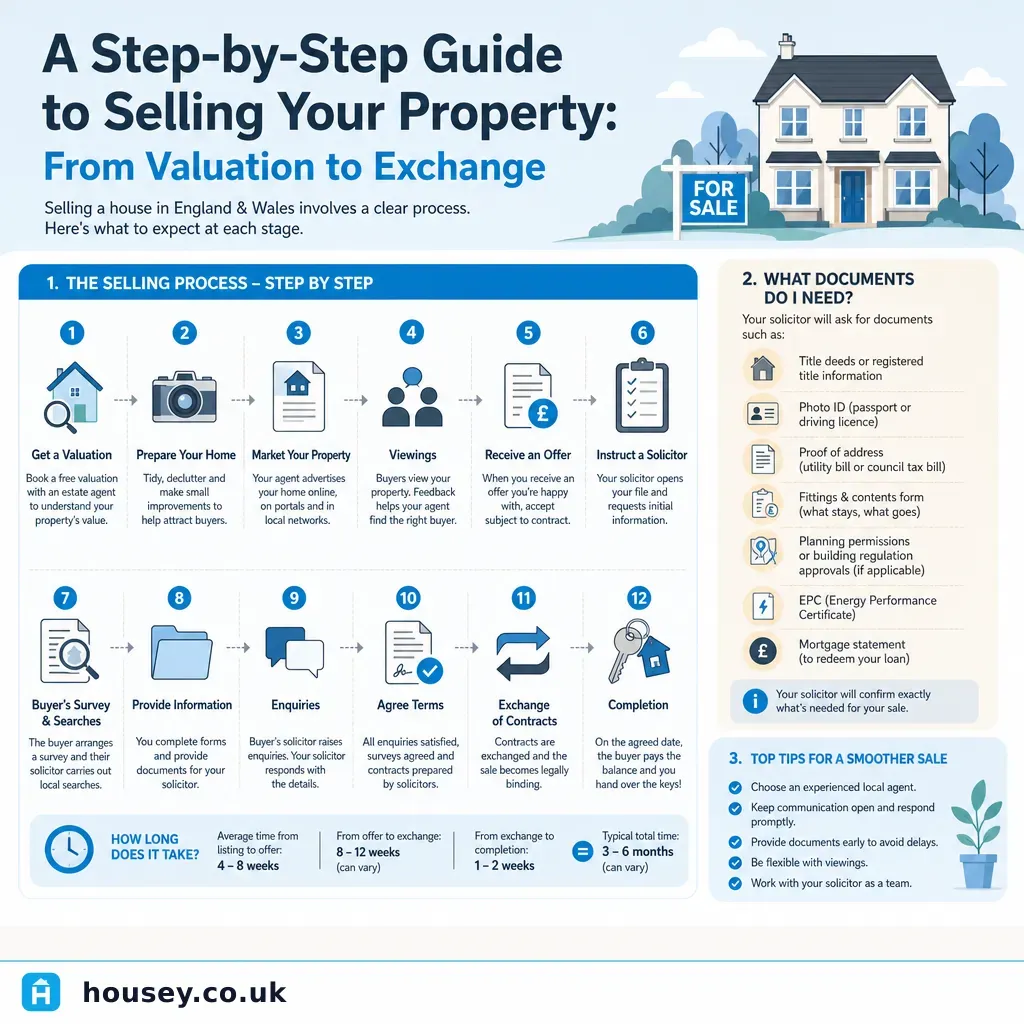
A Step-by-Step Guide to Selling Your Property: From Valuation to Exchange
Selling a property in England and Wales typically involves five key stages: valuation and agent appointment, preparing your EPC and documents, accepting an offer, instructing a conveyancer, and exchanging contracts.
 Buying & Moving
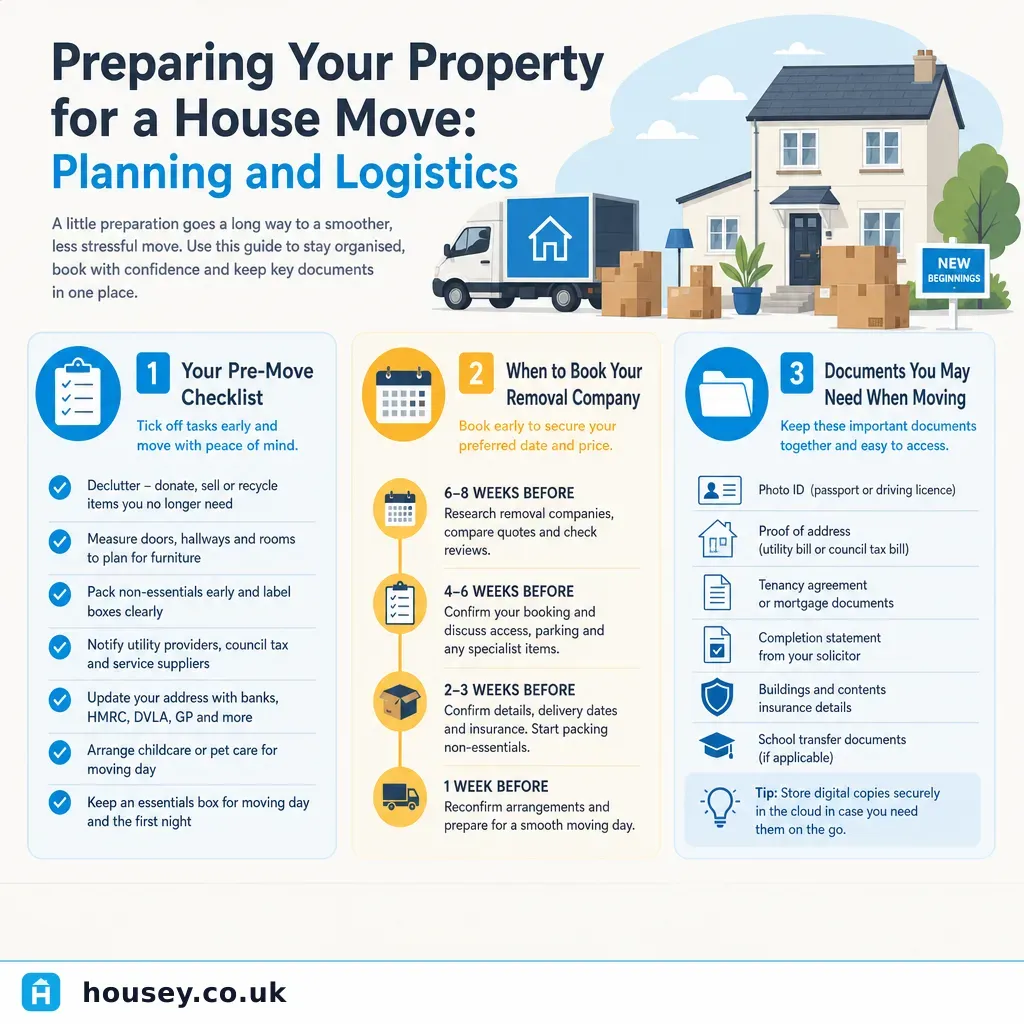
Preparing Your Property for a House Move: Planning and Logistics
Start preparing for a house move 6–8 weeks before your expected completion date.
 Buying & Moving
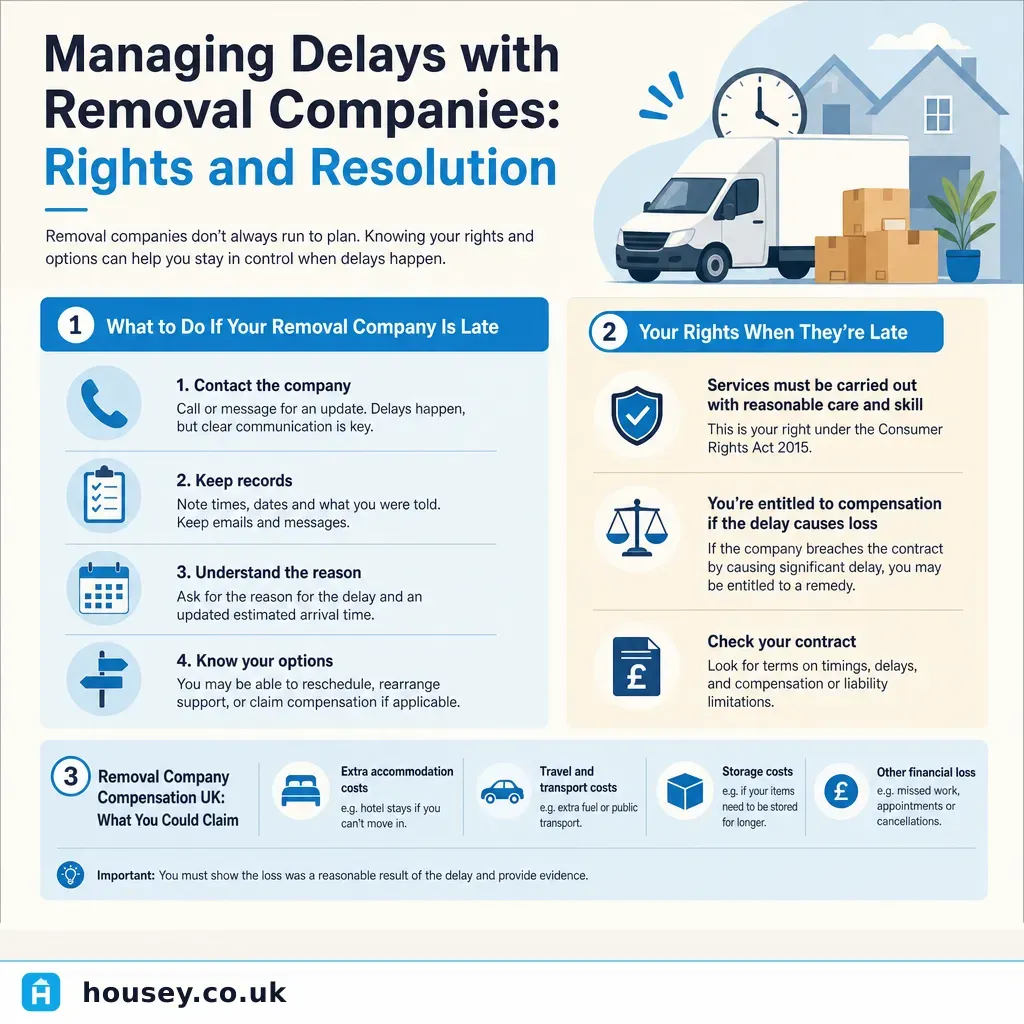
Managing Delays with Removal Companies: Rights and Resolution
If a removal company is late, your rights depend on your contract and whether the company is BAR-registered.
 Buying & Moving
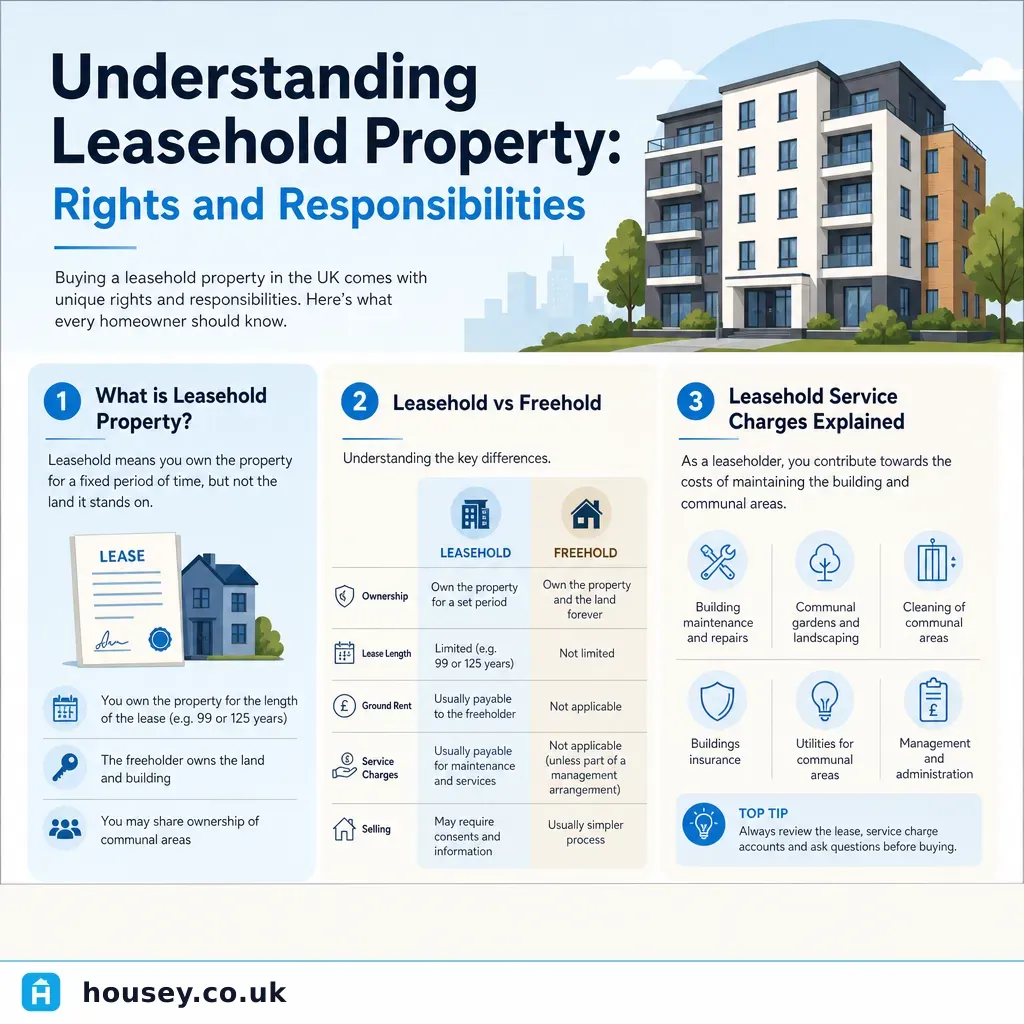
Understanding Leasehold Property: Rights and Responsibilities
Leasehold means you own a time-limited interest in a property while the freeholder owns the land and building.
 Buying & Moving
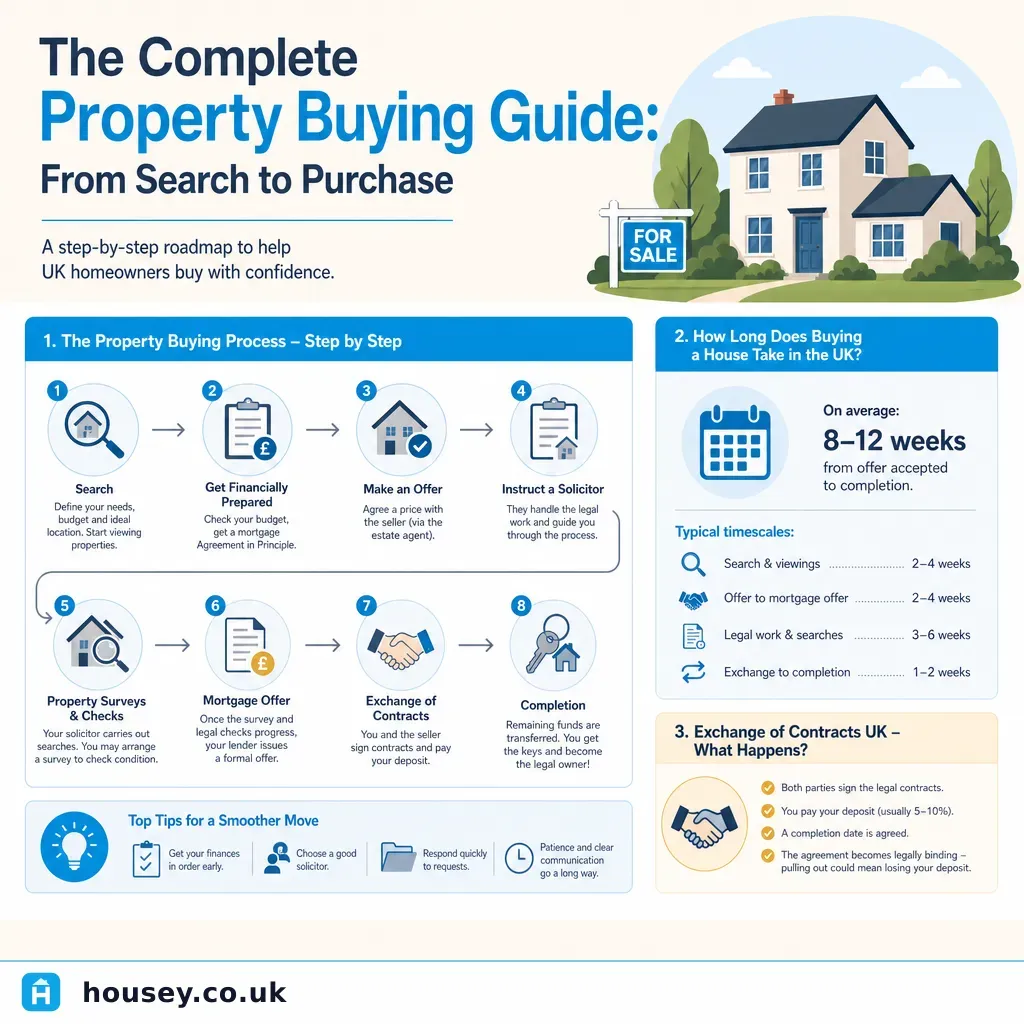
The Complete Property Buying Guide: From Search to Purchase
Buying a property in England and Wales typically takes 3–6 months from accepted offer to completion.