A Step-by-Step Guide to Selling Your Property: From Valuation to Exchange
By Housey · Last reviewed 31st of May 2026
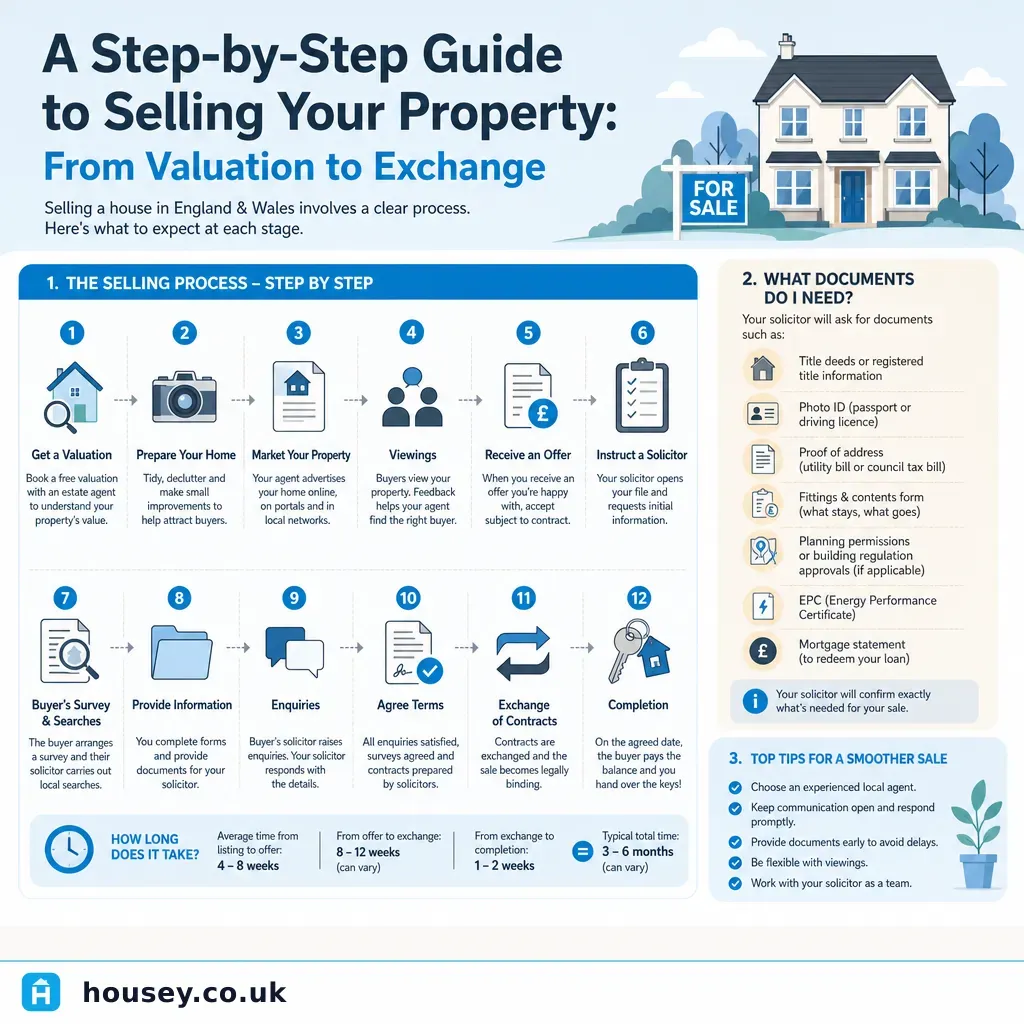
A Step-by-Step Guide to Selling Your Property: From Valuation to Exchange
Selling a property in England or Wales involves a chain of legal, financial, and practical steps that must be completed in roughly the right sequence — with the right professionals involved at each stage. Gaps in documentation or delays in instructing a conveyancer regularly cause problems that only become visible weeks after an offer is accepted, when buyers are impatient and chains are under pressure. Understanding what happens and when puts you in a much stronger position as a vendor.
Key points
- A valid Energy Performance Certificate (EPC) is a legal requirement before marketing a property for sale in England and Wales; fines of up to £5,000 apply for non-compliance.
- Estate agents operating in England must be members of a government-approved redress scheme — either the Property Ombudsman or the Property Redress Scheme — which you should verify before instructing.
- Leasehold sellers must provide a management information pack (form LPE1) from their freeholder or managing agent; this typically costs £100–£400 and takes 6–12 weeks to obtain.
- Exchange of contracts is the point at which the sale becomes legally binding; only after exchange can either party be held in breach for withdrawing.
- Capital Gains Tax (CGT) may apply to properties that are not your main residence — take advice from a qualified accountant or tax adviser before completion, as CGT on residential property must be reported and paid within 60 days.
Step 1: Get a valuation
A realistic asking price is the foundation of a successful sale. Most sellers obtain valuations from two or three estate agents before instructing one. Agents have a commercial incentive to quote attractively, so also cross-check their estimates against recent sold prices on HM Land Registry's price paid data and compare against current listings on Rightmove and Zoopla.
A formal valuation survey by a RICS-registered valuer provides a more rigorous independent assessment — particularly useful in cases of divorce, estate administration, shared ownership sales, or where you want an objective benchmark before negotiating agent fees.
Step 2: Choose your estate agent
Agent type | Best for | Not ideal for | Typical fee |
|---|---|---|---|
High-street sole agency | Most standard residential sales requiring full service | Sellers primarily focused on minimising fees | 1–2% + VAT |
High-street multi-agency | Sellers wanting competitive pressure between agents | Lower-value properties where fees significantly erode margin | 2–3% + VAT |
Online or hybrid agent | Cost-conscious sellers in active, well-priced markets | Sellers needing hands-on support throughout the transaction | Fixed fee £500–£1,500 |
Negotiate the fee, confirm the notice period for ending the instruction, and get the agreed scope in writing — including whether viewings, accompanied visits, and property photography and floorplans are included or quoted separately. Professional photography significantly affects click-through rates on Rightmove and Zoopla.
Step 3: Prepare your property and documents
Gathering documents early prevents delays once an offer is received. The following are commonly required for a residential sale in England and Wales:
Document preparation list for sellers
Step 4: Accept an offer and instruct a conveyancer
When you accept an offer, the sale is not yet legally binding — either party can still withdraw without penalty at this stage. Instruct a conveyancer as soon as possible, ideally before you begin marketing, so you are ready to move quickly when an offer is agreed.
Your conveyancer will issue the draft contract and property information forms to the buyer's solicitor, respond to their enquiries, manage the redemption of any existing mortgage, and coordinate exchange and completion. In England, conveyancing for a standard freehold sale typically takes 8–16 weeks from instruction to exchange. Leasehold sales, missing documents, or chain complications regularly extend this further.
Step 5: Respond to enquiries and navigate the survey
Once the buyer's solicitor has reviewed the contract pack, they will raise enquiries — questions about boundaries, planning consents, alterations, and anything not apparent from the title documents. Responding promptly and accurately is important; delays in answering enquiries are one of the most common causes of slippage in residential property transactions.
Your buyer may also commission a survey of the property. If the surveyor raises concerns about condition, the buyer may seek a price reduction or commission a specialist report. This is a matter of negotiation rather than automatic entitlement, but it is sensible to be prepared for it.
Step 6: Exchange of contracts
Exchange is the legal milestone that makes the sale binding on both parties. At exchange:
- Both parties' signed contracts are exchanged by their conveyancers.
- The buyer pays a deposit — usually 5–10% of the purchase price — held by your conveyancer.
- A completion date is set and agreed by both sides.
If either party withdraws after exchange, they are in breach of contract and liable for financial penalties. Completion follows on the agreed date, at which point keys are handed over, funds transfer, and legal ownership changes.
Important limitations
This article provides general information about the property selling process in England and Wales. Conveyancing is a regulated legal activity; always instruct a solicitor or licensed conveyancer authorised by the Solicitors Regulation Authority (SRA) or the Council for Licensed Conveyancers (CLC). The process in Scotland — governed by the Law Society of Scotland — and in Northern Ireland differs significantly. Nothing in this article constitutes legal advice, and a qualified conveyancer should advise on your specific circumstances throughout the transaction.
What to ask a qualified professional
Before instructing a conveyancer:
- Are you regulated by the SRA or the CLC, and what is your professional indemnity cover?
- Who in your firm will handle my file day-to-day, and how frequently will you update me?
- What are your total fees, including all disbursements — Land Registry fees, search costs, bank transfer fees, and VAT?
- How long do you estimate the process will take, and what factors might extend it?
- Do you have experience with leasehold transactions, if applicable to my property?
Before instructing an estate agent:
- Which government-approved redress scheme are you a member of?
- What is your average time from listing to sale agreed in this price bracket?
- How do you handle competing offers from buyers in a chain versus chain-free buyers?
- Is VAT included in the quoted commission rate, and what is the notice period if I wish to change agents?
When to get professional help
Seek qualified advice immediately if:
- A charging order, restriction, or caution is registered against your title — these must be resolved before completion.
- The property has been altered, extended, or converted without planning permission or Building Regulations consent.
- You are selling a leasehold flat with fewer than 80 years remaining on the lease — buyers' mortgage lenders often refuse to lend on short leases, which can severely limit your buyer pool.
- You cannot answer buyer enquiries about boundaries, rights of way, or historical works.
- Capital Gains Tax may apply — CGT on UK residential property must be reported and paid within 60 days of completion.
How Housey can help
Housey connects sellers with RICS-registered valuers for a valuation survey before setting an asking price, professional photographers for property photography and floorplans that improve portal performance, and vetted solicitors through our conveyancing service who confirm their capacity and timescales before you instruct.
Frequently asked questions
How long does it take to sell a house in the UK?
From accepting an offer to exchange of contracts typically takes eight to sixteen weeks for a straightforward freehold property with a motivated chain. Leasehold sales, missing documents, or a long chain can extend this to twenty weeks or more. Instructing a conveyancer early and preparing all required documents in advance — including the TA6, EPC, and any building consents — is the most effective way to reduce delays.
Do I need a solicitor to sell my house?
You are not legally required to use a solicitor in England and Wales, but conveyancing is a regulated legal activity requiring specialist knowledge of title law, contract law, and Land Registry procedures. The vast majority of sellers instruct a solicitor or a licensed conveyancer regulated by the Council for Licensed Conveyancers. Attempting to manage the process without one carries significant legal and financial risk and is rarely advisable.
What is the Property Information Form (TA6)?
The TA6 is a standard Law Society form completed by the seller, disclosing details about the property including boundaries, neighbour disputes, known alterations, planning history, services, and any guarantees. It forms part of the contract pack provided to the buyer's solicitor and carries legal weight — inaccurate or incomplete answers can lead to claims after completion. Ask your conveyancer for guidance if anything is unclear.
Can a buyer pull out after exchange?
Yes, but doing so constitutes a breach of contract. The buyer forfeits their deposit — usually five to ten per cent of the purchase price — and you may also be able to pursue them for further financial losses resulting from the withdrawal. Before exchange, either party can withdraw without financial penalty, which is why exchange is treated as such a significant legal milestone in the transaction.
Sources and further reading
- Selling a home: step by step — GOV.UK
- Search house prices — HM Land Registry
- Energy Performance Certificates when selling — GOV.UK
- Property transaction forms (TA6, TA10) — The Law Society
- The Property Ombudsman — The Property Ombudsman
- Capital Gains Tax on UK property — GOV.UK
Useful next reads
 Buying & Moving
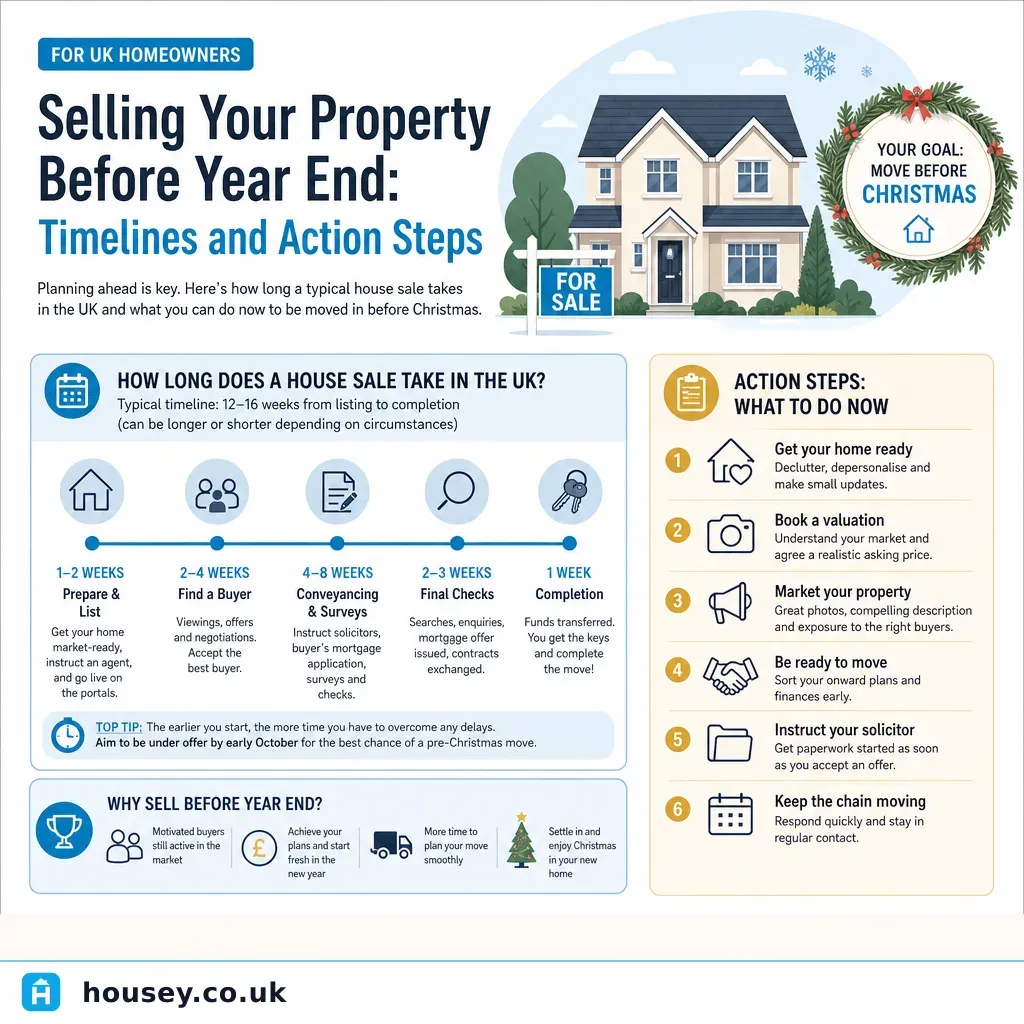
Selling Your Property Before Year End: Timelines and Action Steps
To complete a UK property sale before 31 December, you typically need to accept an offer by mid-September.
 Buying & Moving
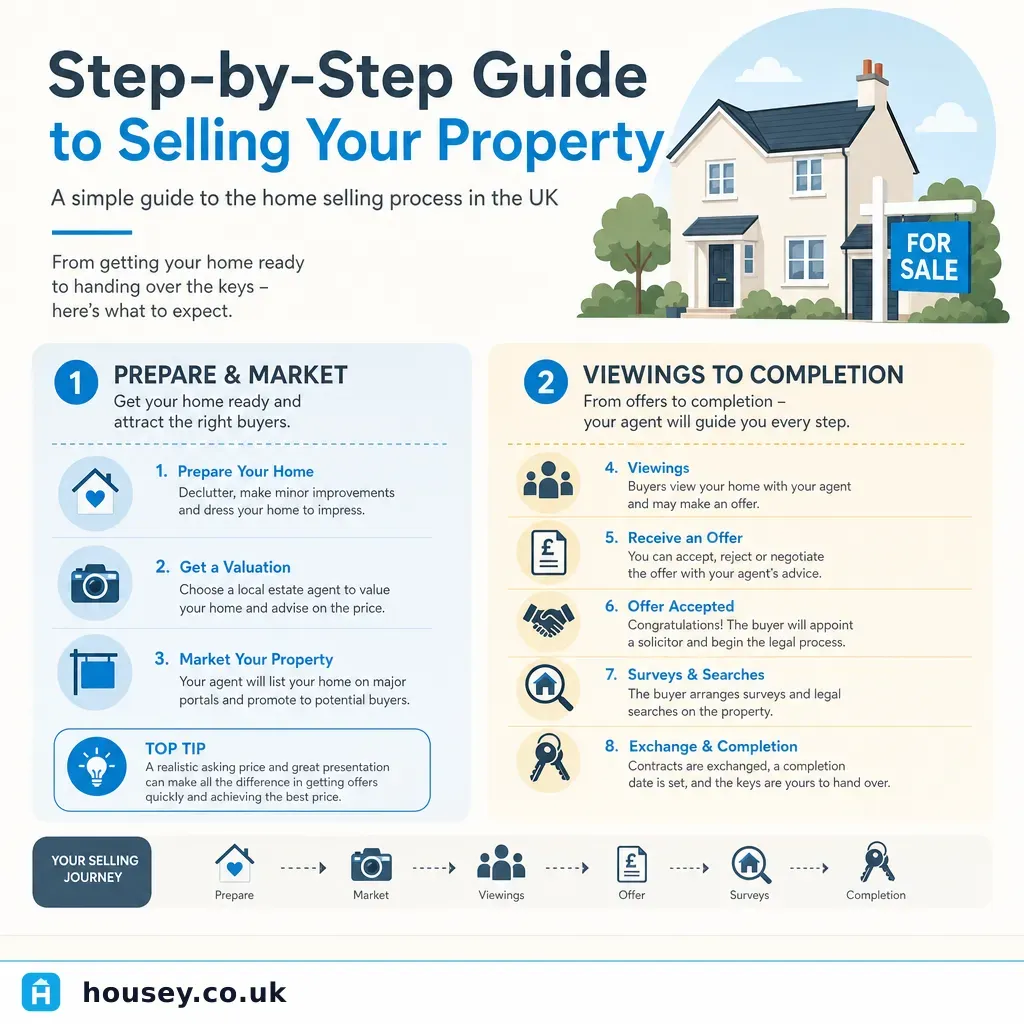
Step-by-Step Guide to Selling Your Property
Selling a property in the UK involves six main stages: getting a valuation, instructing an estate agent, preparing legal documents with a conveyancer, accepting an offer, exchange of contracts, and completion.
 Buying & Moving
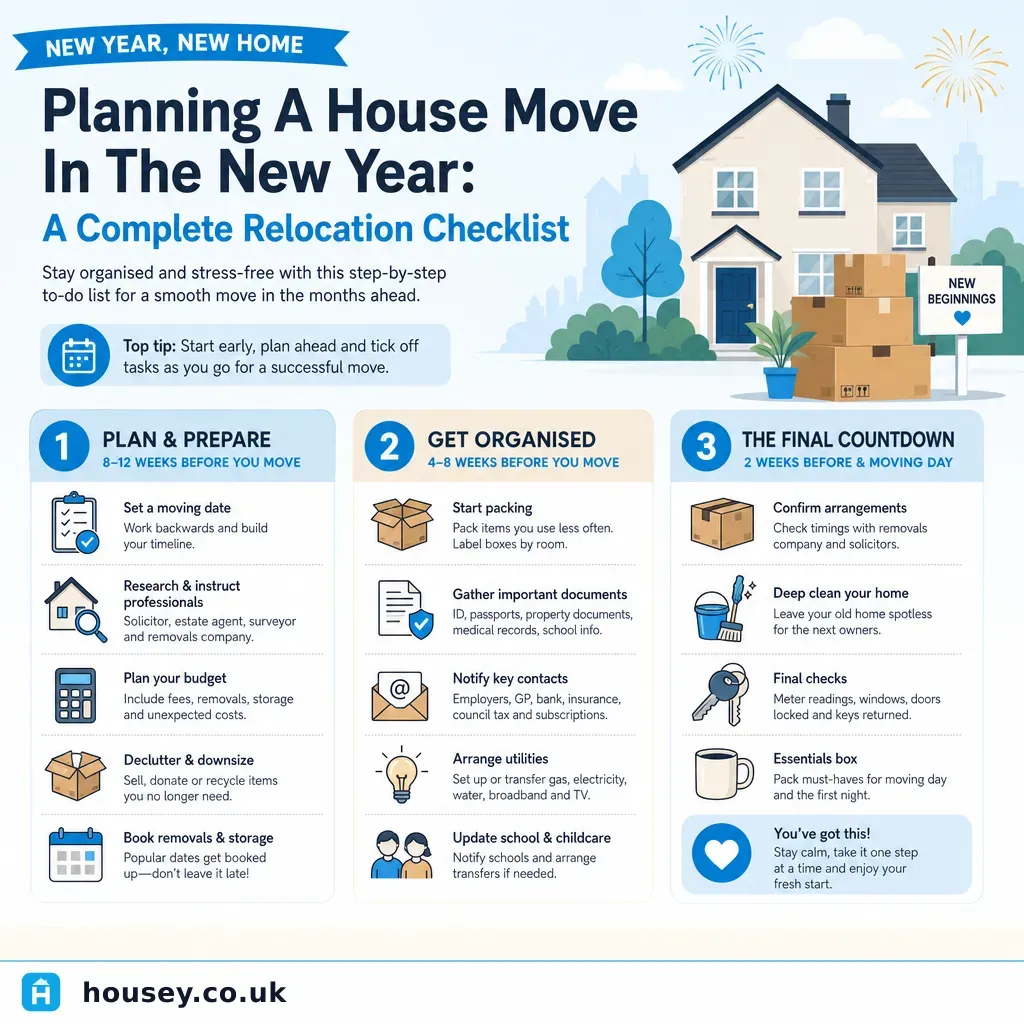
Planning A House Move In The New Year: A Complete Relocation Checklist
Planning a house move in the new year means coordinating removals, utilities, address changes, and legal completions across multiple parties.
 Buying & Moving
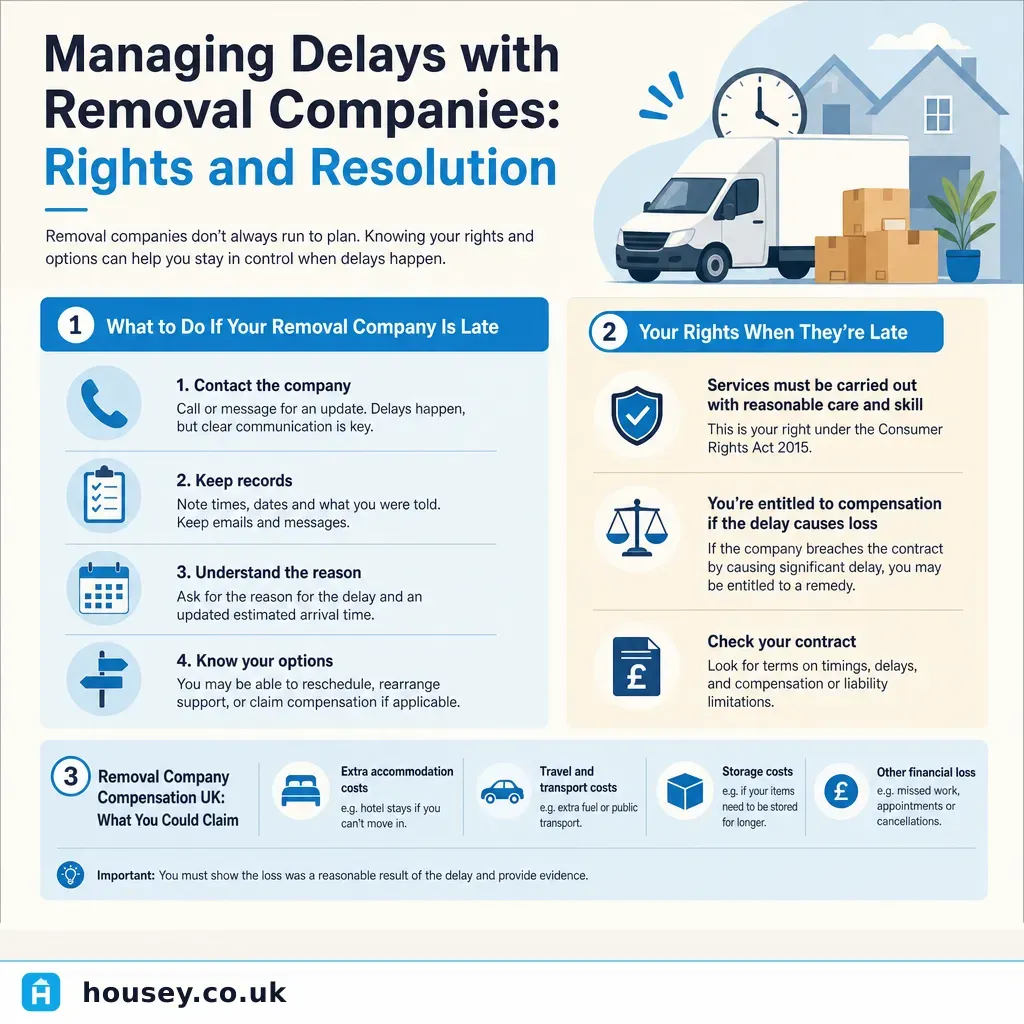
Managing Delays with Removal Companies: Rights and Resolution
If a removal company is late, your rights depend on your contract and whether the company is BAR-registered.
 Buying & Moving
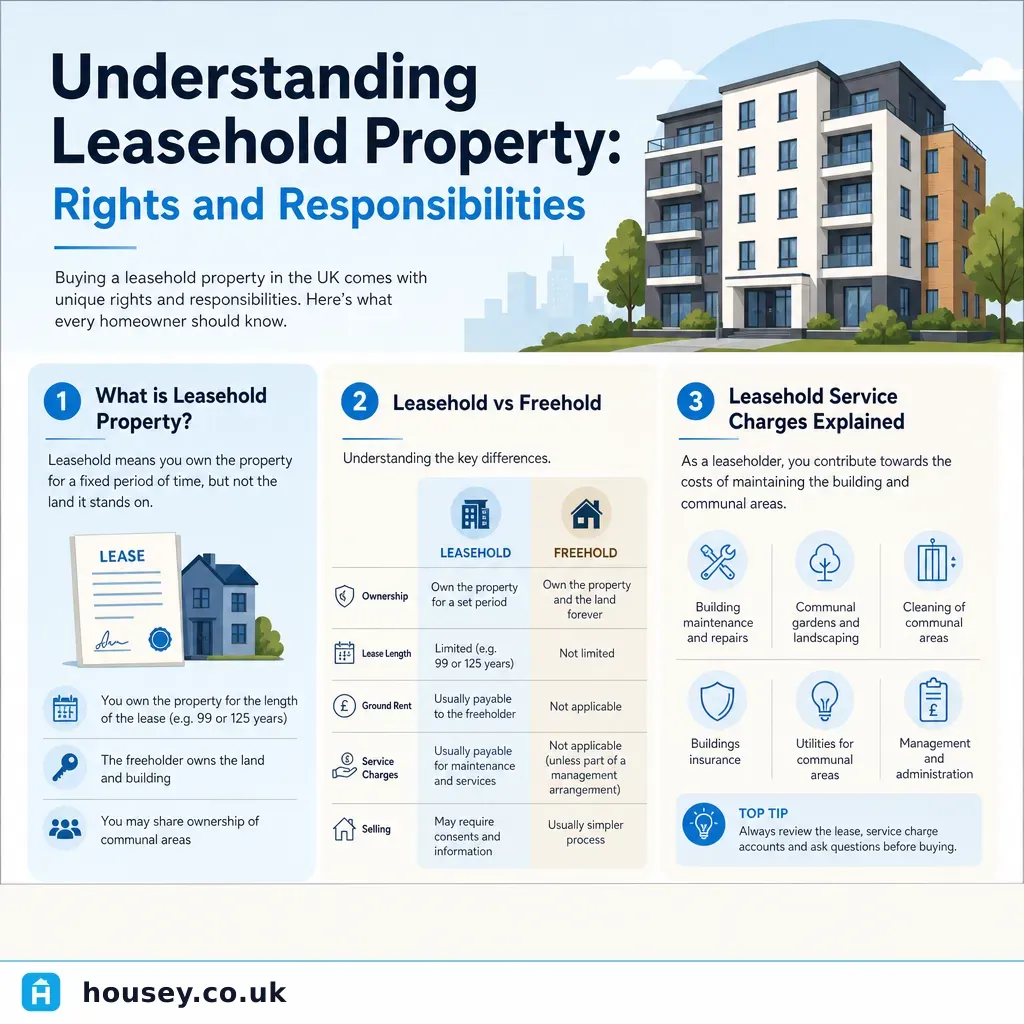
Understanding Leasehold Property: Rights and Responsibilities
Leasehold means you own a time-limited interest in a property while the freeholder owns the land and building.