Selling Property During Divorce: Legal and Practical Guidance
By Housey · Last reviewed 25th of May 2026

Selling Property During Divorce: Legal and Practical Guidance
Jointly owned property is often the most significant and most emotionally charged asset in a divorce settlement. In England and Wales, questions about who can sell the family home, when, and on what terms arise early in separation — yet the answers sit at the intersection of property law, family law, and tax rules that most homeowners have never had cause to consider before. Understanding what legal protections exist, what the court can order, and which professional steps need to happen in what sequence helps separating couples approach the process with greater clarity and less avoidable cost.
Key points
- Matrimonial home rights registered under the Family Law Act 1996 prevent the legal owner from selling or mortgaging the property without giving notice to the other spouse.
- The Matrimonial Causes Act 1973 gives the family court in England and Wales power to order sale, transfer of equity, a Mesher Order, or a Martin Order — regardless of who holds legal title.
- A Consent Order, approved and sealed by the family court, is required for any financial settlement to be legally binding; informal written agreements between parties are not enforceable.
- From 6 April 2023, HMRC's rules allow separating spouses and civil partners up to three tax years after the year of separation to transfer assets between themselves at no gain/no loss for Capital Gains Tax purposes.
- A Mesher Order defers sale until a specified trigger event — such as the youngest child turning 18 — while both parties typically retain a beneficial interest in the property during the deferred period.
What happens to the family home during divorce?
In England and Wales, property law and family law interact in ways that can be counterintuitive. Legal title — whose name appears on the HM Land Registry register — does not automatically determine how assets are divided on divorce. The family court, exercising its discretion under the Matrimonial Causes Act 1973, considers each party's financial needs and contributions, the welfare of any dependent children, and the overall financial picture when deciding how property should be dealt with.
Until a financial order is made, both parties retain their legal or beneficial interest in jointly owned property. A spouse who is not named on the title can register matrimonial home rights at HM Land Registry under the Family Law Act 1996. This places a notice on the title preventing the registered owner from selling or mortgaging the property without the other spouse being notified.
Main options for the family home
Option | What it involves | Typically suited to | Key legal step |
|---|---|---|---|
Sale on the open market | Property marketed; net proceeds divided between parties | Clean break; both parties able to rehouse | Consent Order specifying the division of sale proceeds |
Transfer of equity | One party buys out the other's share | One party wishes to remain and can raise the necessary finance | Conveyancing + mortgage lender consent + Consent Order |
Mesher Order | One party occupies until a trigger event; then sale | Dependent children in the property; primary carer cannot rehouse | Court order specifying occupation terms and eventual split |
Martin Order | One party occupies indefinitely until death, remarriage, or voluntary sale | Older spouse with no realistic means to rehouse | Court order |
Retained joint ownership with deferred sale | Both names remain; sale agreed for a future date | Short-term arrangement where immediate sale is impractical | Cohabitation agreement or court order setting future sale terms |
Can one spouse force a sale?
If both parties jointly own the property and cannot agree on what to do with it, either may apply to the court under the Trusts of Land and Appointment of Trustees Act 1996 (TOLATA) or within divorce financial remedy proceedings for an order for sale. The court considers all relevant circumstances, including the welfare of any children living in the property.
In practice, most property disposals within divorce proceedings are agreed between the parties and formalised in a Consent Order, avoiding the cost and delay of a contested hearing. Where agreement cannot be reached, the court has broad powers to impose a solution.
The importance of a Consent Order
An informal agreement about property division — even a written one signed by both parties — is not legally binding on its own. For any financial settlement to be enforceable, it must be incorporated into a Consent Order approved by the family court.
A Consent Order is drafted by a family solicitor and submitted to the court for approval by a judge. Once sealed, it becomes a court order that can deal with the sale of the family home, the division of proceeds, a transfer of equity, pension sharing, and any other financial matters. Without a Consent Order, either party can return to court to make fresh financial claims, even years after the divorce is finalised.
Capital Gains Tax: what separating couples should know
If the family home has been your main residence throughout the period of ownership, Private Residence Relief (PRR) usually means no Capital Gains Tax is payable on the sale. However, the position can become more complex in separation:
- If one party has moved out and the property has been let during the separation period, PRR may be reduced.
- If the gap between separation and eventual sale is long, part of any gain may become chargeable.
- From 6 April 2023, HMRC guidance extended the window for transferring assets between separating spouses and civil partners at no gain/no loss for CGT to up to three tax years after the tax year of separation — an improvement on the previous one-year window.
Individual circumstances vary considerably. A tax adviser should be consulted before any transfer or sale is completed, particularly if the property has not been the main residence throughout ownership or if there has been a period of letting.
Decision tree: what to do next
- Both parties agree to sell: instruct a family solicitor to draft a Consent Order specifying the agreed division of proceeds; instruct a conveyancer to manage the sale once the order is in place.
- One party wishes to buy out the other: agree a value via an independent RICS-registered valuer, agree terms, obtain mortgage lender consent, and proceed with a transfer of equity — formalised in a Consent Order.
- Dependent children live in the property and one party cannot rehouse: consider whether a Mesher Order or Martin Order is appropriate; take specialist family law advice before instructing any conveyancer.
- One party is uncooperative or refuses to engage: seek legal advice promptly; the court has power to make orders for sale or transfer regardless of one party's refusal to participate.
- The property is in negative equity: both parties remain liable on the mortgage until it is discharged; specialist advice from a mortgage broker and a family solicitor is essential before proceeding.
Red flags that require urgent legal advice
- One party has taken steps to sell, let, or re-mortgage the property without the other's agreement.
- Mortgage payments have fallen into arrears and the lender is threatening repossession proceedings.
- There is a history of domestic abuse — occupation orders under Part IV of the Family Law Act 1996 may be relevant and should be discussed with a solicitor urgently.
- A Notice of Home Rights has not been registered and there are concerns the registered owner may act unilaterally before an order is in place.
- The property is held through a company, a trust, or a pension rather than directly in personal names — this creates additional complexity requiring specialist advice.
- One party has already agreed terms with a buyer or accepted an offer before the financial settlement is resolved.
Important limitations
This article provides general information about property-related issues in the context of divorce in England and Wales. It does not constitute legal advice, family law advice, or tax advice. The law in this area involves court discretion, and outcomes depend on the specific facts of each case — including the overall financial position, the welfare of any children, and each party's respective needs and contributions. Scotland and Northern Ireland have separate legal systems and different professional frameworks. Always instruct a qualified family solicitor for your specific situation.
What to ask a qualified professional
- Should I register matrimonial home rights now, and what does the process involve at HM Land Registry?
- What is the likely timeline and cost of obtaining a Consent Order once terms are agreed?
- If my spouse refuses to engage with the process, what steps can be taken and on what timescale?
- Will Capital Gains Tax be payable on the sale or transfer, and should I take separate tax advice given my circumstances?
- What happens to the mortgage if one party's name remains on the loan after a transfer of equity?
- If a Mesher Order is made, who bears responsibility for the mortgage, maintenance, and buildings insurance during the deferred occupation period?
When to get professional help
Selling or transferring property during divorce almost always requires specialist legal advice. You should:
- Instruct a family solicitor before marketing the property or agreeing any terms with your spouse.
- Instruct a RICS-registered valuer if there is any disagreement about the property's market value.
- Seek independent mortgage advice if one party intends to take over the existing mortgage or needs to raise finance to buy out the other.
- Take tax advice if the property has not been your main residence throughout ownership, has been let, or if significant time has elapsed since separation.
How Housey can help
Once the legal framework for the sale or transfer is agreed with your family solicitor, Housey can connect you with regulated conveyancing professionals to manage the conveyancing process. Conveyancing runs alongside — not instead of — independent family law advice.
Frequently asked questions
Can I sell my house without my spouse's agreement during a divorce?
Not if the property is jointly owned, or if your spouse has registered matrimonial home rights at HM Land Registry under the Family Law Act 1996. Either party can apply to the court for an order for sale if agreement cannot be reached, but the court will consider all circumstances — including the welfare of any children — before making such an order.
What is a Consent Order and do I need one?
A Consent Order is a legally binding court order recording the financial settlement agreed between divorcing parties. Without one, either party can make future financial claims against the other, even after the divorce final order is granted. For any agreed property settlement — whether sale, transfer, or deferred occupation — a Consent Order is strongly recommended.
How is the family home valued during divorce?
Usually by instructing a RICS-registered valuer to carry out an independent Red Book valuation. Where both parties agree, they may jointly instruct a single valuer to reduce cost. If they cannot agree, each may instruct their own valuer, with the final figure negotiated between solicitors or, if necessary, determined by the court.
What is a Mesher Order?
A Mesher Order is a court order allowing one party — usually the primary carer of dependent children — to remain in the family home until a specified trigger event, typically the youngest child turning 18 or completing full-time education. The property is then sold and proceeds divided according to the proportions set out in the order.
Does it matter whose name the property is in?
Legal title matters for practical purposes — the registered owner can transact without the other's consent unless a restriction is registered. However, the family court looks at the overall financial position and applies its discretion under the Matrimonial Causes Act 1973, so legal title does not determine how assets are divided on divorce.
Sources and further reading
- Dividing up money and property when you divorce or separate — GOV.UK
- Family Law Act 1996 — legislation.gov.uk
- Matrimonial Causes Act 1973 — legislation.gov.uk
- Capital Gains Tax and separation or divorce — HMRC / GOV.UK
- Splitting up: what happens to your home — Citizens Advice
Useful next reads
 Buying & Moving
EPC Exemptions and Circumstances: When Energy Certificates Are Not Required
An EPC is not required for listed buildings where energy measures would unacceptably alter their character, standalone buildings under 50 m², places of worship, certain temporary structures, and holiday lets occupied for less than four months per year.
 Buying & Moving
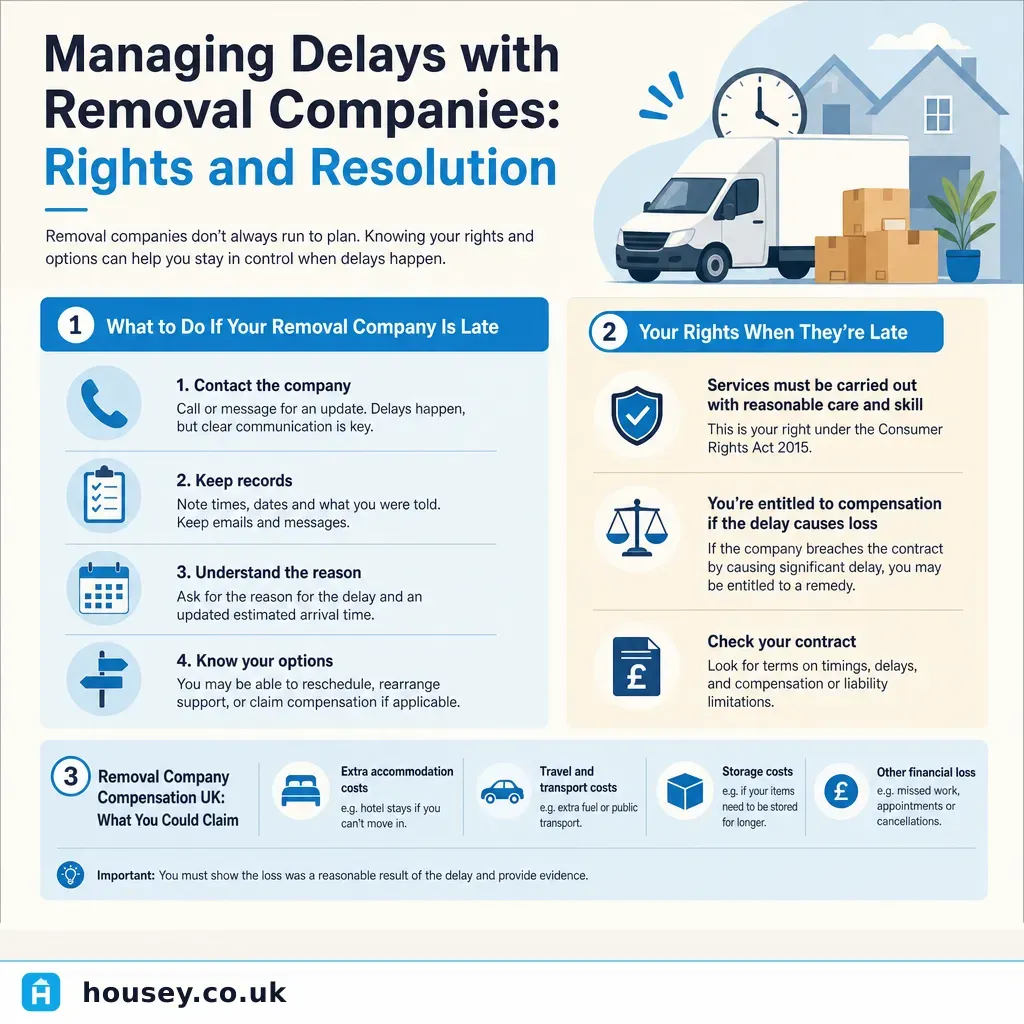
Managing Delays with Removal Companies: Rights and Resolution
If a removal company is late, your rights depend on your contract and whether the company is BAR-registered.
 Buying & Moving
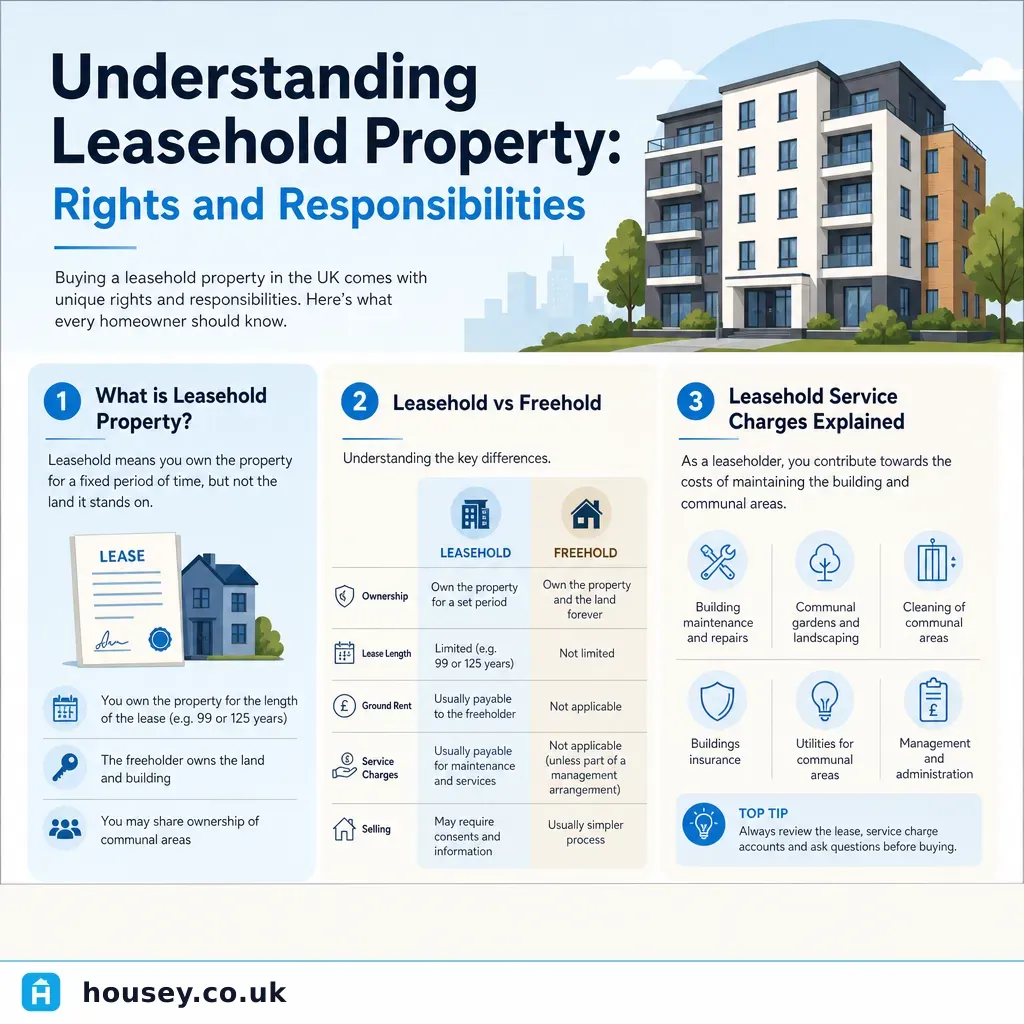
Understanding Leasehold Property: Rights and Responsibilities
Leasehold means you own a time-limited interest in a property while the freeholder owns the land and building.
 Buying & Moving
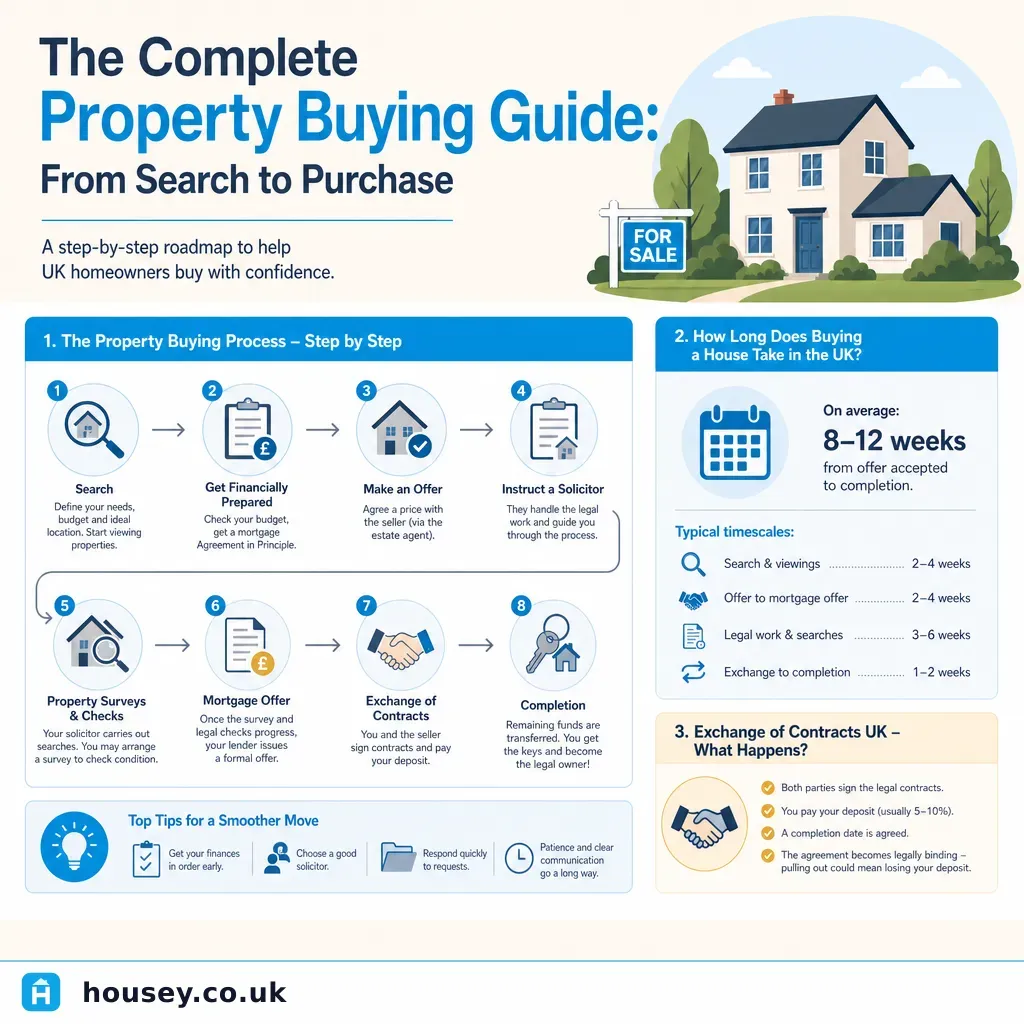
The Complete Property Buying Guide: From Search to Purchase
Buying a property in England and Wales typically takes 3–6 months from accepted offer to completion.
 Buying & Moving
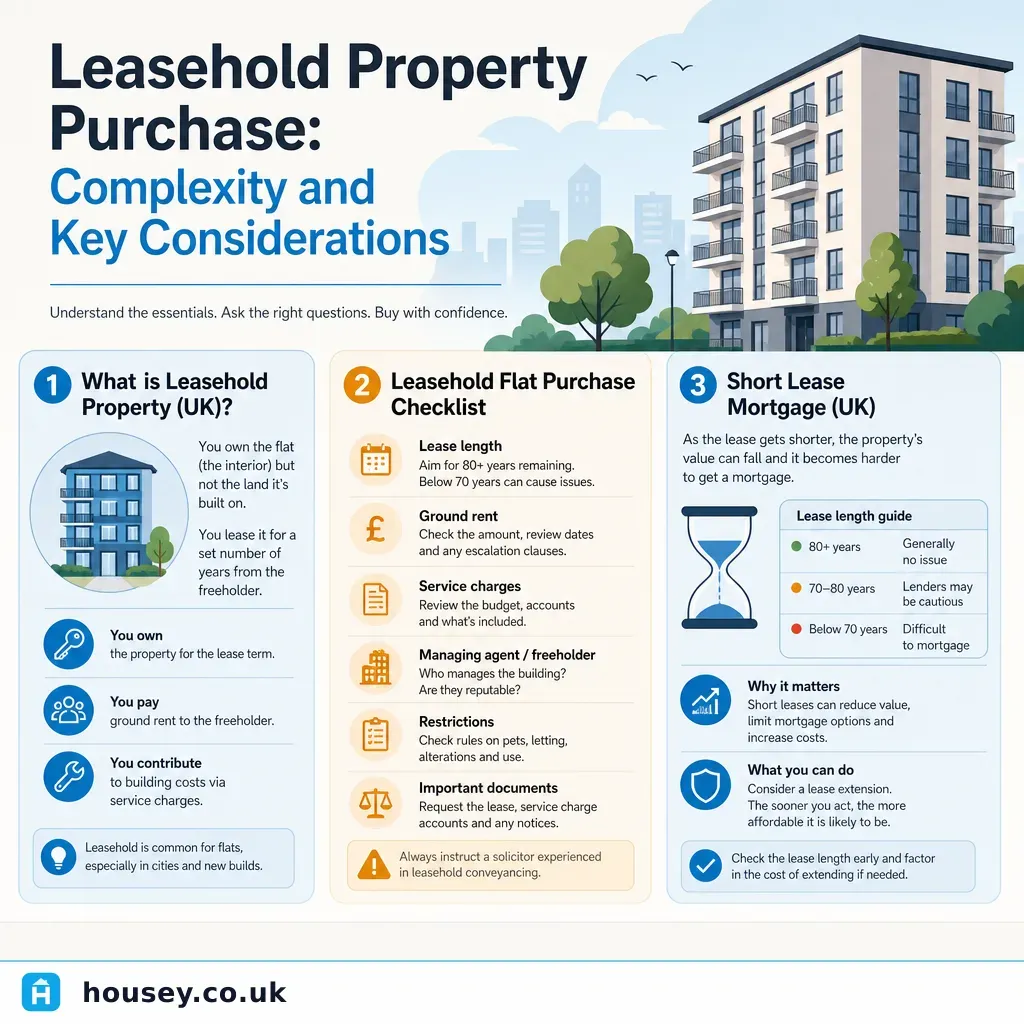
Leasehold Property Purchase: Complexity and Key Considerations
Buying a leasehold property means purchasing the right to occupy for a fixed term rather than owning the land outright.