Skip Hire Pricing and Waste Management Services
By Housey · Last reviewed 10th of May 2026

Skip Hire Pricing and Waste Management Services
Skip hire arises at predictable moments in a property owner's life: a house clearance before a move, a loft conversion, a kitchen renovation, or a garden redesign. Getting the right size at the right price — and understanding what can and cannot legally go into a skip — avoids extra charges, permit complications, and potential Environment Agency enforcement. Costs and permit requirements vary by local authority, so it pays to understand how the market works before booking.
Key points
- Skip hire operators in England and Wales must hold a Waste Carrier Licence registered with the Environment Agency; the public register is searchable on GOV.UK before you book.
- Skips placed on a public road, pavement, or verge require a permit from your local authority, typically costing £30–£80 and valid for up to two weeks; fees and processing times vary by council.
- Plasterboard and gypsum-based materials must be segregated from general construction waste under the Environmental Permitting (England and Wales) Regulations 2016; many operators now charge a surcharge or refuse mixed plasterboard loads.
- Hazardous materials including asbestos, tyres, gas cylinders, fluorescent tubes, and electrical appliances (WEEE) are prohibited from standard skips and require specialist disposal routes.
- Skip sizes are measured in cubic yards: a mini skip (2–3 yd³) holds roughly 25–35 black bin bags; a builders skip (6–8 yd³) holds roughly 70–90 bags.
Skip sizes and what they suit
Skip size | Approx. volume | Approx. bag capacity | Best suited to | Not ideal for |
|---|---|---|---|---|
Mini skip | 2–3 yd³ | 25–35 bags | Small clearances, garden waste, single-room strip-out | Large renovation projects, heavy construction debris |
Midi skip | 4–5 yd³ | 40–55 bags | Kitchen or bathroom renovation, moderate clearances | Very heavy aggregate or soil loads |
Builders skip | 6–8 yd³ | 70–90 bags | House clearances, loft conversions, extension works | Driveways with limited access or tight turning circles |
Maxi / large skip | 10–16 yd³ | 100–180 bags | Large renovations, site clearances, demolition arisings | Residential streets with parking restrictions |
Indicative UK costs, last reviewed 2026-05-10. Mini skip hire typically costs £100–£200; builders skips £200–£400; maxi skips £350–£600 or more. Prices vary significantly by region — London and the South East tend to sit 20–40% above the national average. Overloading a skip (waste above the fill line) usually results in a surcharge or refusal to collect.
Do you need a permit for a skip?
If the skip sits entirely on your private property — driveway or garden — no permit is needed. If any part of the skip will occupy a public road, pavement, or verge, you need a permit from your local authority (district or borough council in England; council in Wales or Scotland).
In practice, the skip hire company usually applies for the permit on your behalf and adds the cost to the invoice. Confirm this is included rather than assuming. In some areas, permit processing takes several working days — worth factoring in for a tight clearance window. Skips on public roads must display lights and warning markers overnight; this is the operator's legal responsibility, but confirm it is included in the quote.
What you cannot put in a skip
Standard skip hire does not cover hazardous waste. The following materials are prohibited and require separate disposal routes:
- Asbestos — requires a licensed asbestos contractor and specialist disposal facility
- Tyres — handled by separate tyre collection services or retailers
- Gas cylinders and pressurised containers
- Electrical appliances (WEEE) — fridges, freezers, televisions, monitors
- Fluorescent tubes and compact energy-saving bulbs (contain mercury)
- Clinical or medical waste
- Solvents, oils, liquid paint, and other hazardous chemicals
- Plasterboard — most operators require segregated plasterboard in a separate bag or dedicated skip
If prohibited items are discovered by the driver, the operator may refuse collection or charge a removal fee. Always request the operator's full prohibited items list before booking.
Quote comparison template: what to ask before booking a skip
Before accepting a quote, confirm:
Alternative waste removal options
Skip hire is not always the most cost-effective approach. For smaller clearances or specific material types, consider:
Man and van rubbish removal: a licensed operator collects and loads waste directly; useful for mixed loads or awkward items. Prices typically £100–£300 depending on volume. Confirm the operator holds a valid Waste Carrier Licence before booking.
Council bulky waste collection: most councils offer free or subsidised collection for a limited number of bulky items. Book via your council's website.
Household Waste Recycling Centres (HWRCs): free for most household materials for residents; many areas now require a permit for van or trailer loads to prevent trade waste disposal. Check your local council's HWRC page for booking requirements.
Grab lorry hire: for large volumes of aggregate, soil, rubble, or demolition arisings — a grab lorry loads directly from piles without manual bagging. Often more cost-effective than multiple skips for demolition clearances.
When to get professional help
Waste involving asbestos, clinical materials, or contaminated ground requires a specialist licensed contractor — not a standard skip company. If renovation work reveals material that may contain asbestos (pre-1999 textured coatings, pipe lagging, ceiling tiles), stop work and arrange a survey by a licensed asbestos surveyor before proceeding. For large-scale site clearances or demolition arisings, a licensed waste management contractor can manage the full waste stream compliantly.
How Housey can help
For larger clearances involving significant volumes of waste, Housey can connect you with vetted house clearance specialists and demolition contractors who manage waste removal as part of their service. If you need somewhere to store furniture or belongings during a clearance or move, our storage facilities directory can help you find a suitable local option.
Frequently asked questions
How long can you keep a hired skip?
Standard skip hire periods are typically 7–14 days. Extensions are usually available at a daily or weekly rate — confirm this when booking. Road permits have a fixed council term, typically up to two weeks. Agree an extension plan with the operator before the collection date if you think you will need more time.
Can I put soil and rubble in a skip?
Yes, but most operators impose a weight limit on heavy inert materials such as soil, concrete, and bricks. A per-tonne surcharge applies if the limit is exceeded. Confirm the weight allowance before booking — a builders skip filled with soil can weigh several tonnes and may exceed the operator's vehicle axle limit, resulting in a refusal to collect.
Do skip hire companies recycle the waste?
Licensed operators must issue a waste transfer note showing where waste is taken. Most reputable companies send general mixed waste to a Materials Recovery Facility (MRF) where recyclable material is sorted before disposal. Recyclable rates vary by operator and waste type. If sustainability matters, ask the company what proportion typically goes to landfill versus recovery.
Is skip hire subject to VAT?
Yes. Skip hire is a standard-rated service for VAT purposes in the UK, charged at 20%. Always confirm whether quoted prices are inclusive or exclusive of VAT before accepting. Permit fees, surcharges for heavy materials, and overfill charges may also be quoted exclusive of VAT.
Sources and further reading
- Register as a waste carrier, broker or dealer — GOV.UK
- Environmental Permitting (England and Wales) Regulations 2016 — legislation.gov.uk
- Asbestos: managing and working with it — Health and Safety Executive
- Household waste collection — GOV.UK
Useful next reads
 Buying & Moving
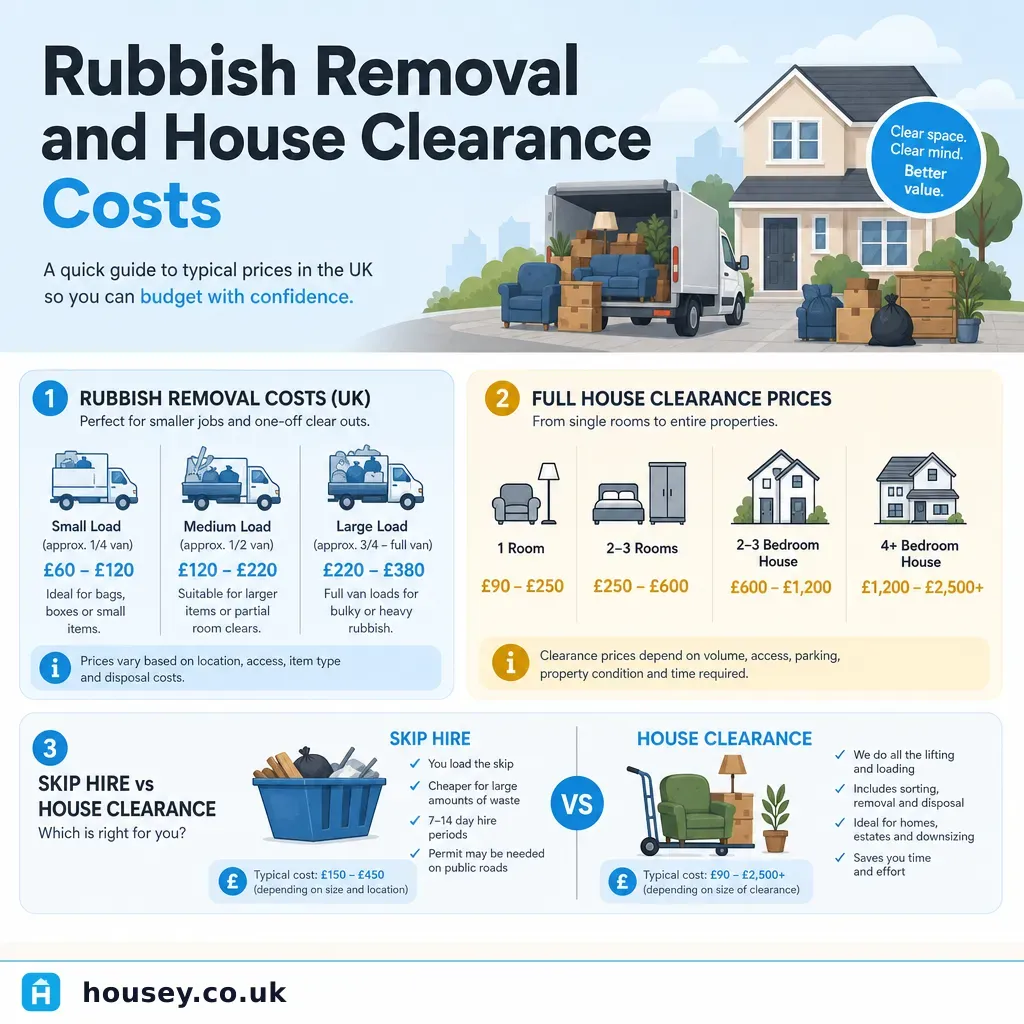
Rubbish Removal and House Clearance Costs
House clearance in the UK typically costs £150–£400 for a single room and £500–£1,500 for a full three-bedroom property, depending on volume, access, and hazardous items.
 Buying & Moving
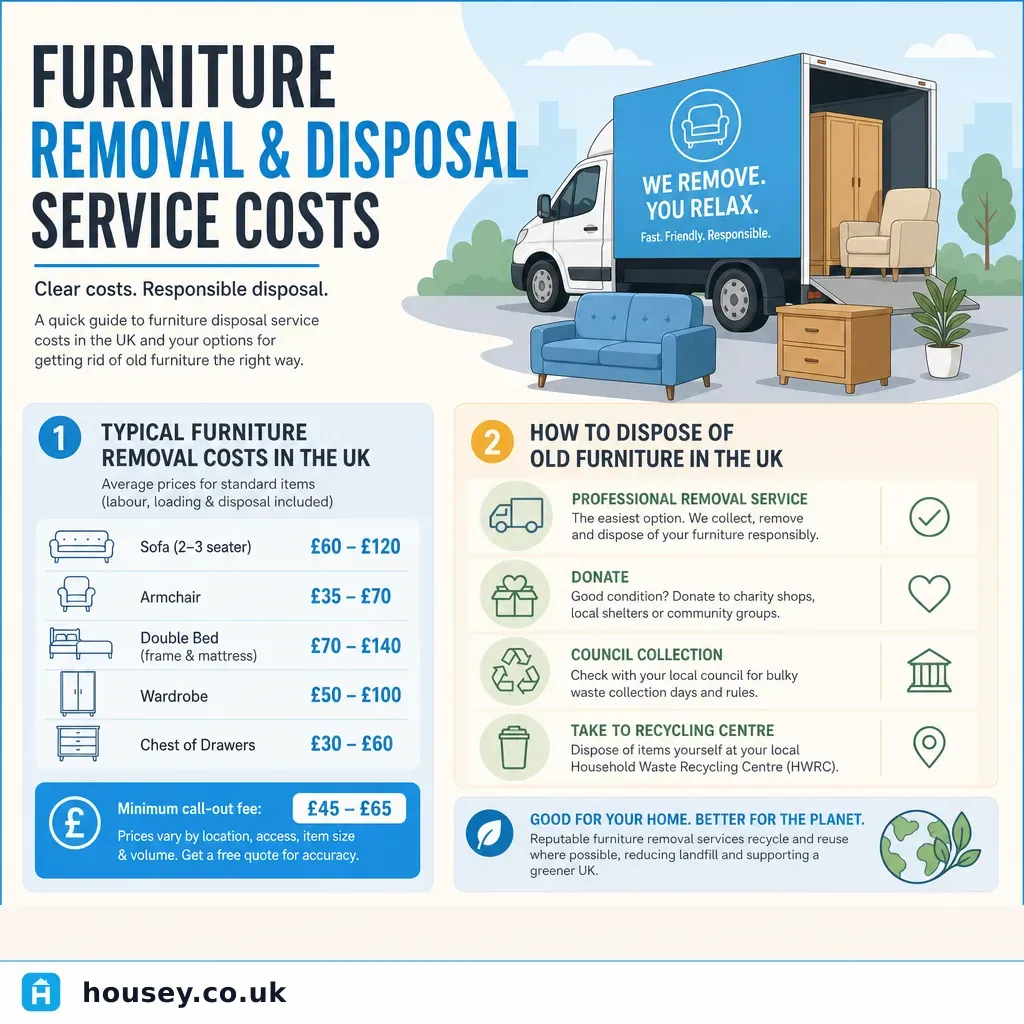
Furniture Removal and Disposal Service Costs
Furniture removal and disposal in the UK typically costs £50–£300 for a van load, depending on volume, item type, and whether the service includes recycling or charity donation.
 Buying & Moving
Professional House Clearance Services for Your Home
A professional house clearance firm removes all or part of a property's contents and disposes of them at licensed facilities.
 Buying & Moving
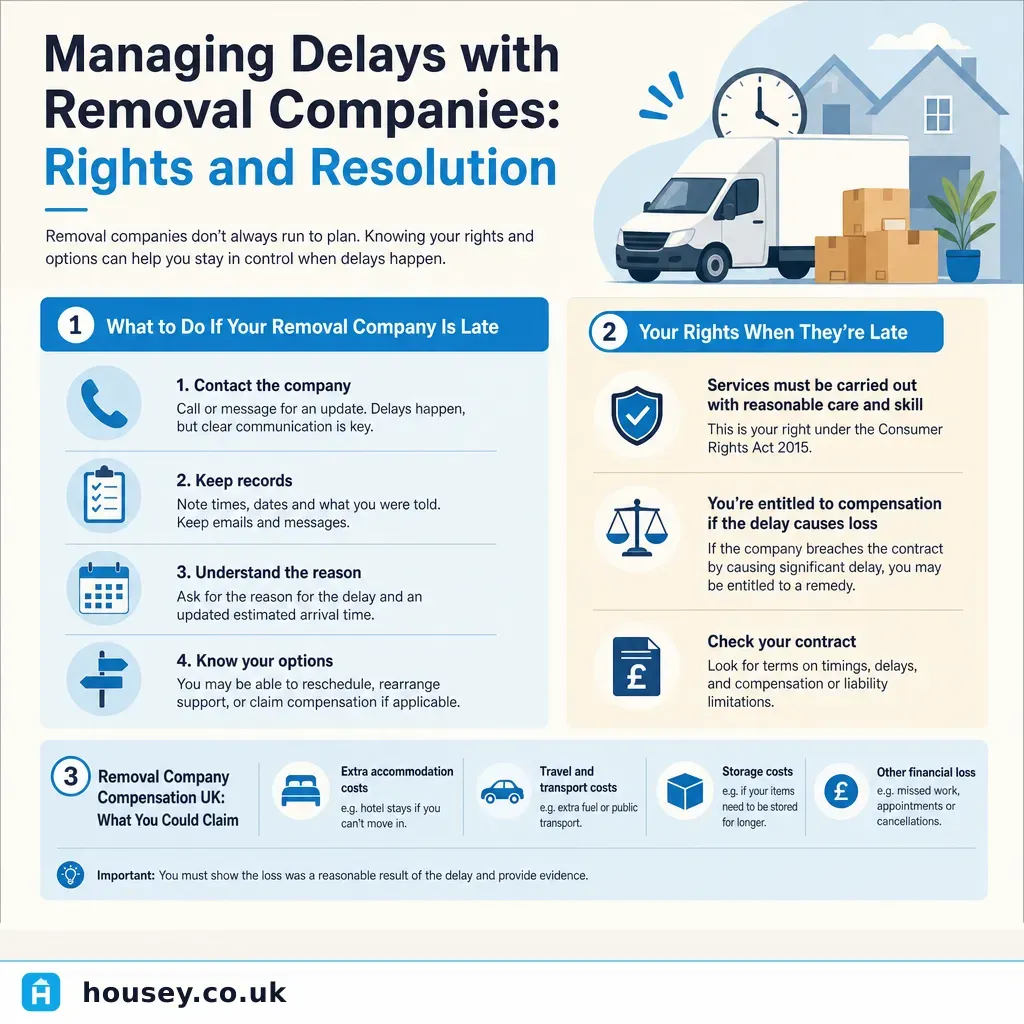
Managing Delays with Removal Companies: Rights and Resolution
If a removal company is late, your rights depend on your contract and whether the company is BAR-registered.
 Buying & Moving
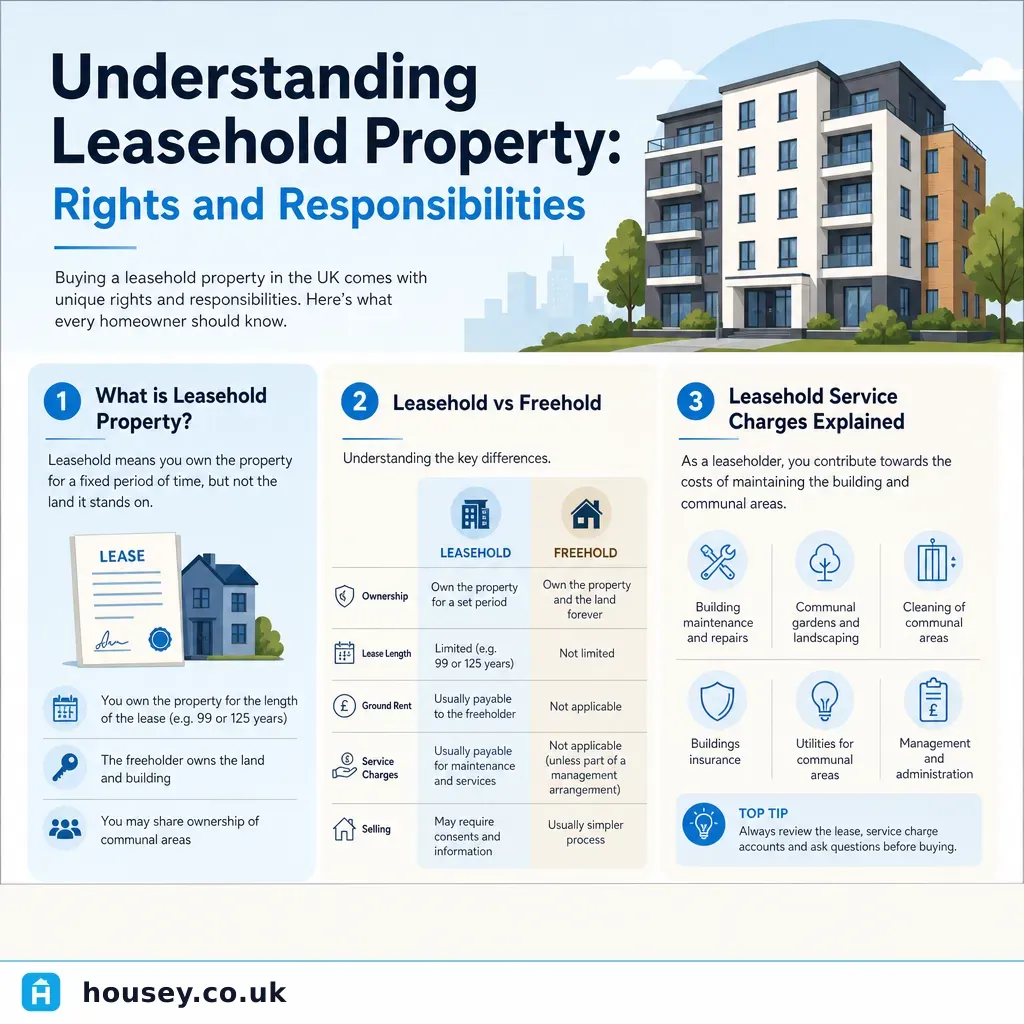
Understanding Leasehold Property: Rights and Responsibilities
Leasehold means you own a time-limited interest in a property while the freeholder owns the land and building.