Solid Fuel Central Heating System Running Costs
By Housey · Last reviewed 6th of May 2026
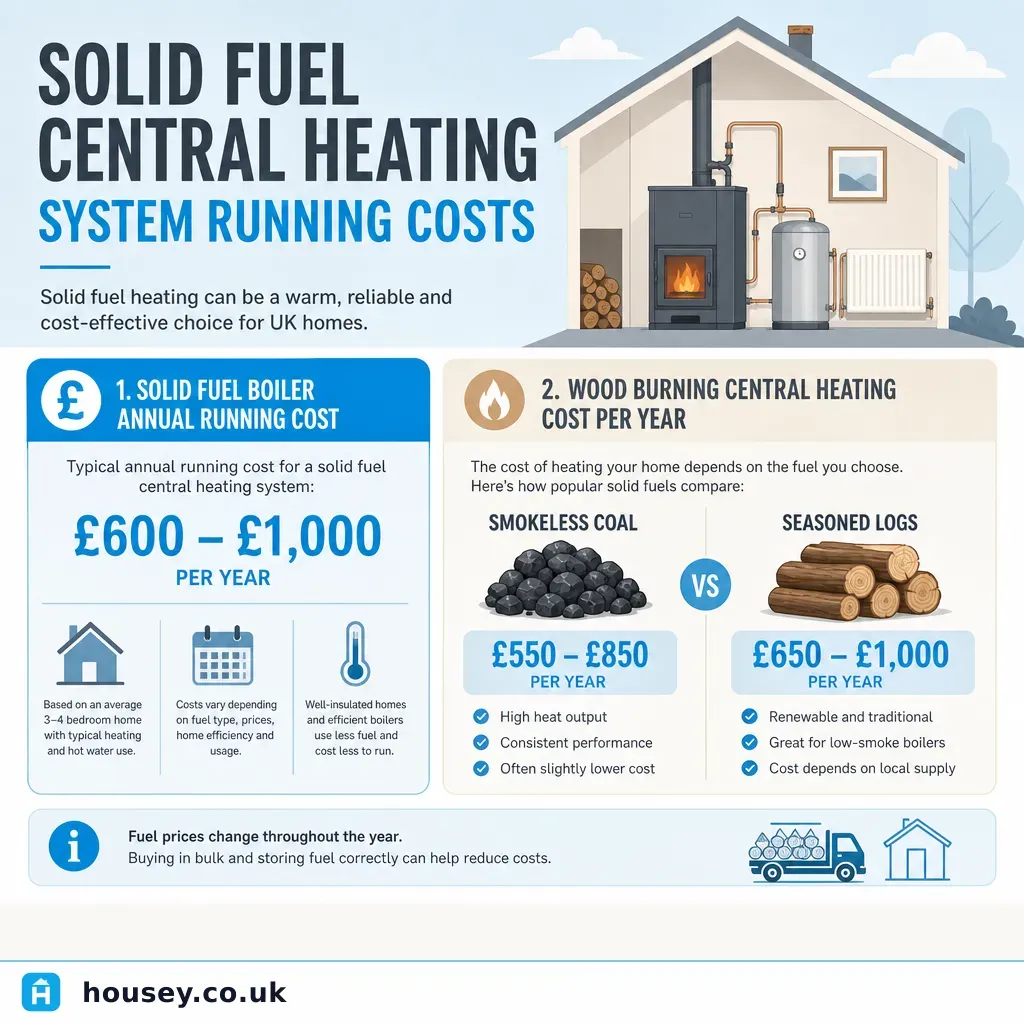
Solid Fuel Central Heating System Running Costs
Solid fuel central heating — using wood logs, wood pellets, smokeless coal, or anthracite to heat water circulated through radiators and a hot water cylinder — remains common in rural UK properties, particularly those off the gas grid. Running costs can be competitive compared to heating oil or LPG, but depend heavily on fuel type, local supply, boiler efficiency, and how well the property retains heat. Understanding what drives costs up or down helps you budget accurately and identify where savings are genuinely achievable.
Key points
- Seasoned hardwood logs must have a moisture content below 20% to meet the UK Ready to Burn standard introduced under the Clean Air Strategy 2019; wet wood burns far less efficiently and significantly accelerates creosote build-up in the flue.
- HETAS (Heating Equipment Testing and Approval Scheme) is the recognised competence scheme for solid fuel appliances and installers in England, Wales, and Scotland; new installations must be notified to building control under Building Regulations Part J.
- Properties in a Smoke Control Area (SCA) must use only DEFRA-approved fuels and DEFRA-exempt appliances; burning non-approved fuels in an SCA is an offence under the Clean Air Act 1993, with fines up to £1,000.
- Solid fuel boilers and stove-boilers should be serviced annually by a HETAS-registered engineer; chimneys should be swept at least twice per year during regular use, per HETAS guidance.
- House coal is no longer available at retail in the UK following restrictions under the Clean Air Strategy 2019; only smokeless fuels and certified wood fuels may now be sold in retail bags under 2 tonnes.
What does it cost to run solid fuel central heating?
Running costs depend on four main variables: the fuel purchased, the appliance's rated efficiency, how well the property retains heat, and the daily hours of operation.
Fuel prices in the UK
Indicative UK fuel prices, last reviewed 2026-05-06.
Fuel type | Approximate price | Approximate calorific value | Notes |
|---|---|---|---|
Seasoned hardwood logs | £120–£200 per tonne | ~3,500 kWh/tonne at ≤20% moisture | Prices vary by species, region, and delivery quantity |
Kiln-dried logs | £180–£280 per tonne | ~3,900 kWh/tonne | Burns more efficiently; lower creosote risk; Ready to Burn certified |
Wood pellets (BSL-certified) | £280–£380 per tonne | ~4,800 kWh/tonne | Used in automated pellet boilers; consistent quality and moisture content |
Smokeless coal or anthracite | £400–£600 per tonne | ~8,300 kWh/tonne | Highest energy density; DEFRA-approved for use in Smoke Control Areas |
Source: indicative ranges based on Energy Saving Trust guidance and market observations. Regional prices vary significantly — always obtain local supplier quotes.
Annual running cost: worked UK scenario
Scenario: Three-bedroom 1950s semi-detached house in rural North Yorkshire, off-gas-grid, with a modern HETAS-approved solid fuel boiler-stove rated at 80% efficiency, heating six radiators and a 150-litre hot water cylinder. Estimated annual heat demand: 12,000–16,000 kWh.
Fuel | Estimated annual consumption | Approximate annual fuel spend |
|---|---|---|
Seasoned hardwood logs | 3.5–5 tonnes | £500–£900 |
Kiln-dried logs | 3–4.5 tonnes | £600–£1,200 |
Smokeless coal | 1.5–2 tonnes | £700–£1,100 |
Wood pellets (automated pellet boiler) | 2.5–3.5 tonnes | £750–£1,300 |
These figures assume a modern appliance at 80% efficiency. An older open-fire back boiler operating at 50–60% efficiency would consume substantially more fuel for the same heat output. Add approximately £80–£200 per year for annual servicing and £100–£200 for chimney sweeping (two sweeps per heating season). Indicative figures only — actual consumption depends on boiler type, insulation, and occupancy.
How does solid fuel compare to other off-grid heating options?
For properties not connected to the gas network, solid fuel competes primarily with heating oil, LPG, and electric heat pumps.
Heating system | Indicative annual fuel cost (3-bed off-grid home) | Key advantage | Key disadvantage |
|---|---|---|---|
Solid fuel (logs or smokeless coal) | £700–£1,500 | Potentially low fuel cost where local supply is available | Manual loading required; fuel storage space needed; Smoke Control Area restrictions apply |
Heating oil (OFTEC-registered) | £1,200–£2,200 | Automated delivery; familiar controls | Significant price volatility; oil storage tank required |
LPG | £1,500–£2,800 | Gas-like convenience and controls | Often the most expensive off-grid option |
Air source heat pump | £800–£1,400 with tariff optimisation | Low running emissions; Boiler Upgrade Scheme grant of £7,500 available as of 2026 | High upfront cost; performs best in well-insulated properties |
Ground source heat pump | £600–£1,200 | Very high efficiency (COP 3–5); stable running costs | High installation and groundworks costs |
Indicative UK costs, last reviewed 2026-05-06. Source: Energy Saving Trust and Ofgem guidance.
What drives solid fuel running costs higher than expected?
Wet or poorly seasoned fuel. Wood with moisture content above 20% wastes a significant proportion of its energy evaporating water rather than producing heat. It also produces more smoke and deposits creosote in the flue, increasing the risk of a chimney fire. The Ready to Burn standard applies to retail bags; bulk deliveries may still vary, so request a moisture reading or test with a meter on delivery.
Old or inefficient appliance. A 1980s or 1990s back boiler may operate at 50–60% efficiency; a current HETAS-listed boiler-stove typically achieves 75–85%. Upgrading the appliance is usually the single most effective lever for reducing annual fuel consumption.
Poor building fabric. A home at EPC rating E or below loses heat far more rapidly, requiring longer boiler run times. Improving loft insulation, draught-proofing, and wall insulation reduces heat demand directly and often delivers the best return on investment before considering any appliance upgrade.
Over-firing. Loading excessive fuel or operating with maximum draught sends heat up the flue rather than into the radiator circuit. It can also overheat flue components and is a recognised contributing factor in chimney fires.
Important limitations
This article provides general guidance on solid fuel heating costs and is not a substitute for professional assessment. Solid fuel appliances involve combustion risk, carbon monoxide hazard, and compliance obligations that vary by property location, appliance type, and fuel choice. Installation, significant modification, and annual servicing should be carried out only by HETAS-registered engineers or other suitably qualified professionals. Rules on approved fuels and appliances differ depending on whether your property is in a Smoke Control Area. Always verify current fuel approvals and appliance exemptions on GOV.UK or via HETAS before making changes to your heating system.
What to ask a qualified professional
Before installing or modifying a solid fuel central heating system, ask:
- Is my property in a Smoke Control Area, and if so, which fuels and appliances are DEFRA-approved for use here?
- Is this appliance HETAS-listed, and will you register the installation with building control under the competent-persons scheme?
- What flue or chimney specification does this installation require, and are any remedial works to the existing flue needed first?
- What efficiency rating does the proposed boiler achieve at typical part-load conditions, not just peak output?
- How often should the chimney be swept, and will you provide a written sweep record at each visit?
- Where should a carbon monoxide alarm compliant with BS EN 50291 be positioned in this property?
- Are there any moisture, ventilation, or condensation risks specific to this installation that I should monitor over time?
When to get professional help
Contact a HETAS-registered engineer or qualified professional in the following situations:
- New installation or replacement: Requires HETAS-registered installation and building control notification under Building Regulations Part J.
- Chimney repair or relining: A HETAS-registered sweep or chimney engineer should inspect and specify any relining before the appliance is used.
- Carbon monoxide alarm activation: Evacuate immediately, call 999, and do not re-enter until emergency services confirm it is safe.
- Unusual smoke, smell, or noise from the flue: Switch off the appliance and arrange a professional inspection before any further use.
- Change of fuel type: Switching from coal to wood or vice versa can affect flue temperature and draught characteristics. Ask a HETAS professional whether any modifications are required before changing fuel.
How Housey can help
Housey helps homeowners across the UK find qualified tradespeople and energy professionals. If you are considering upgrading your heating system, comparing whole-house energy efficiency options, or need help finding a specialist for solid fuel installation or servicing, Housey's service request platform can connect you with relevant professionals in your area.
Frequently asked questions
Is it legal to burn logs and coal at home in the UK?
It depends on location. Properties in a Smoke Control Area must use only DEFRA-approved fuels and exempt appliances. Outside SCAs, dry wood and smokeless coal can generally be burned in suitable appliances. House coal is now restricted from retail sale under the Clean Air Strategy 2019. Check your postcode using the GOV.UK Smoke Control Area checker before purchasing fuel.
How often should a solid fuel boiler be serviced?
HETAS guidance recommends an annual service by a HETAS-registered engineer, plus chimney sweeping at least twice per year when the system is used regularly through the heating season. Regular servicing reduces the risk of chimney fires, carbon monoxide exposure, and avoidable fuel waste from inefficient or partially blocked combustion.
Can I get a grant towards a solid fuel heating system?
Most solid fuel systems are not eligible for the Boiler Upgrade Scheme, which covers heat pumps and biomass boilers only. MCS-certified biomass boilers using wood pellets may qualify if they meet scheme criteria. The ECO4 scheme may assist low-income households with certain heating improvements — check current eligibility on GOV.UK as criteria change regularly.
What is the Ready to Burn scheme?
Ready to Burn is a UK government standard requiring that kiln-dried or processed wood sold in retail bags display the Ready to Burn logo, confirming moisture content below 20%. Introduced under the Clean Air Strategy 2019, it applies to retail sales. Bulk loose deliveries are not covered, so buyers should request a moisture reading or test with a meter.
How can I reduce my solid fuel heating costs?
The most effective steps are: use only certified dry fuel at or below 20% moisture; upgrade to a modern high-efficiency HETAS-approved appliance; improve the building fabric through loft insulation, draught-proofing, and wall insulation; and avoid over-firing the boiler. Regular chimney sweeping also maintains efficient draught and reduces the risk of costly flue problems.
Sources and further reading
- HETAS: the official body for solid fuel and biomass heating — HETAS
- Smoke Control Areas: rules and approved fuels — GOV.UK
- Clean Air Strategy 2019 — GOV.UK / DEFRA
- Approved Document J: Combustion appliances and fuel storage systems — GOV.UK
- Carbon monoxide safety — Health and Safety Executive
- Heating your home — Energy Saving Trust
Useful next reads
 Energy & Retrofit
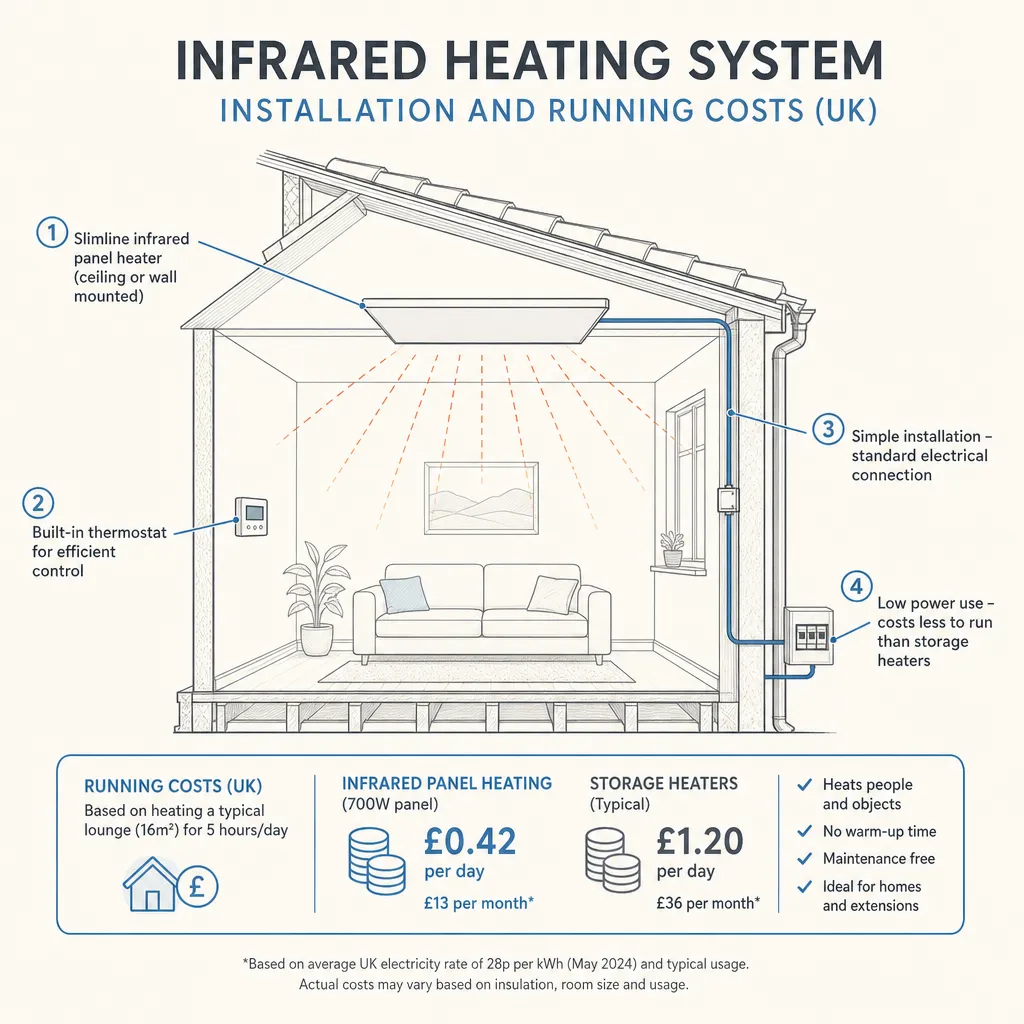
Infrared Heating System Installation and Running Costs
Infrared heating panels supply heat through radiant energy rather than warming air, making them efficient in well-insulated spaces.
 Energy & Retrofit
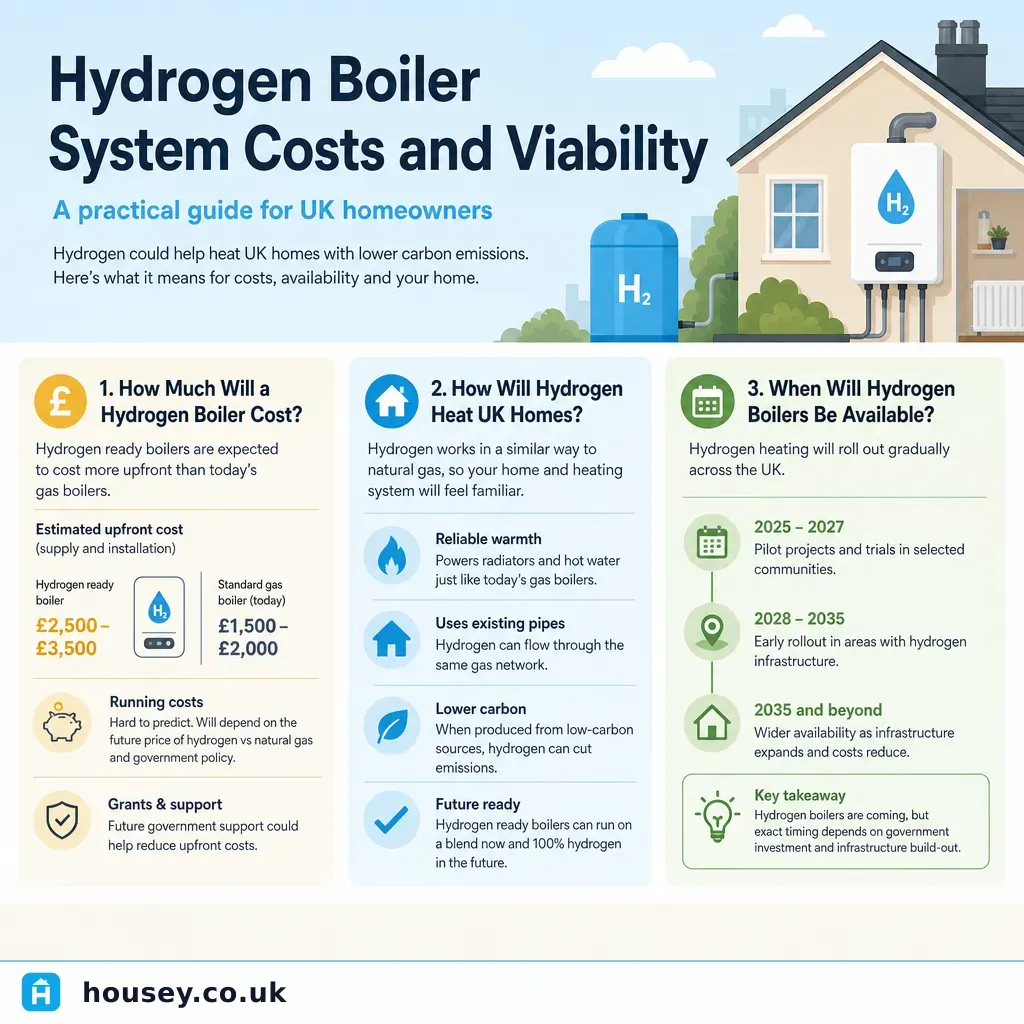
Hydrogen Boiler System Costs and Viability
Hydrogen boilers are not commercially available for UK homes as of 2026.
 Energy & Retrofit
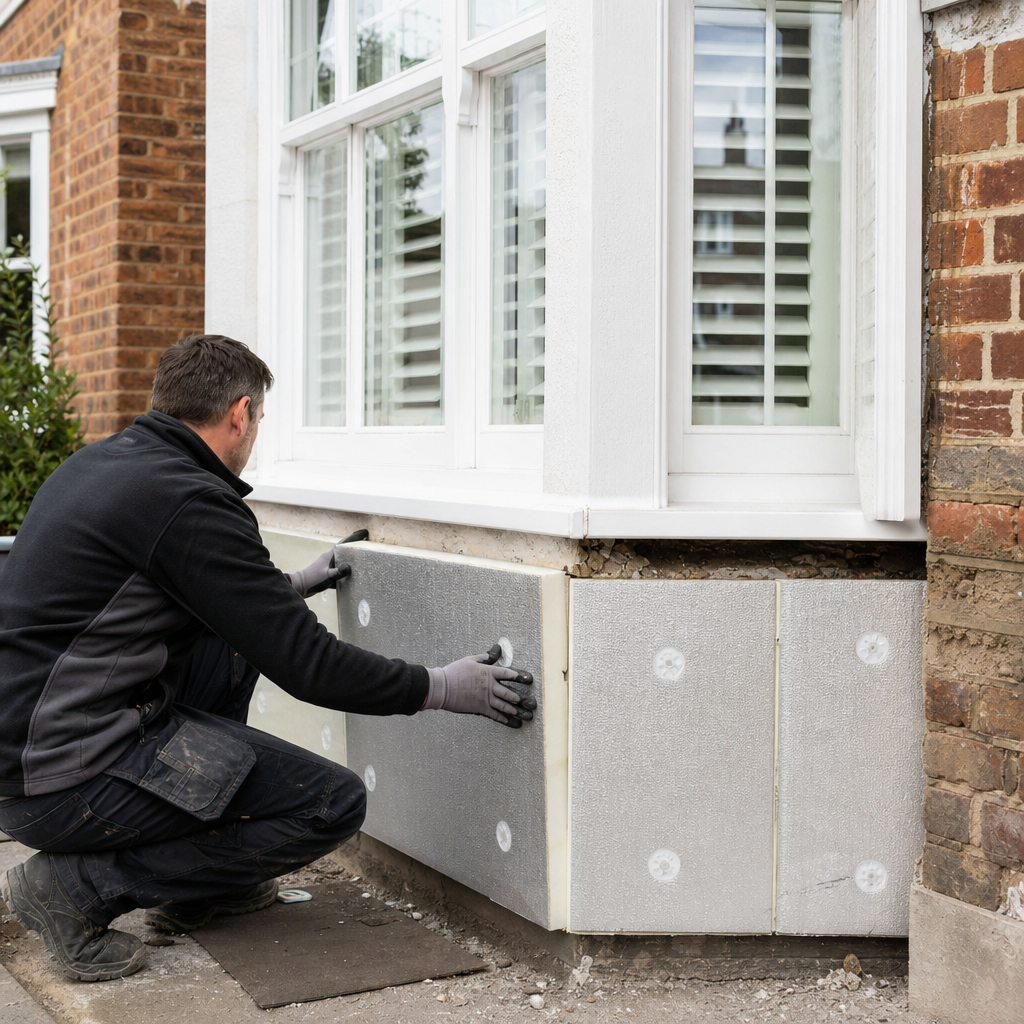
Insulating Solid Masonry Walls Under Bay Windows: Technical Guidance
Insulating solid masonry walls under bay windows requires specialist detailing at angled wall faces, window reveals, and the bay floor and ceiling junctions.
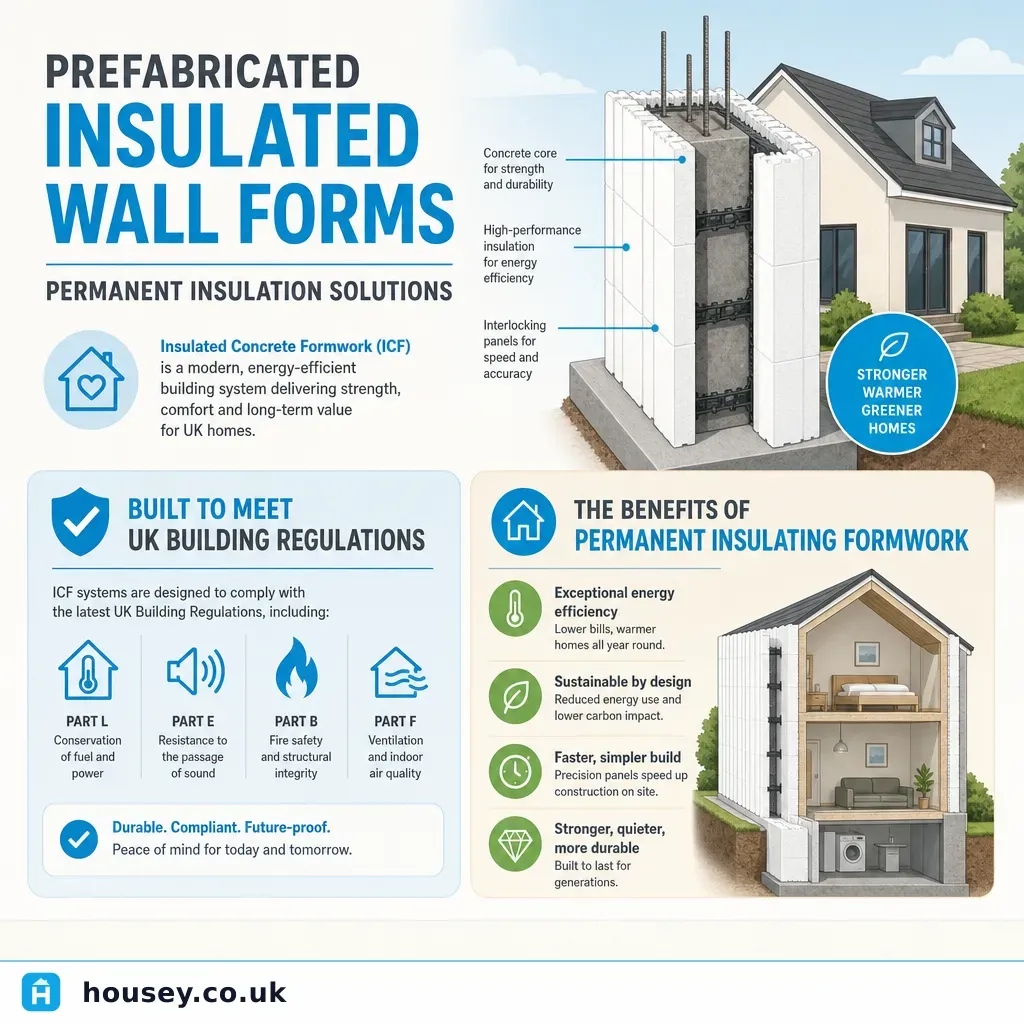 Energy & Retrofit
Prefabricated Insulated Wall Forms: Permanent Insulation Solutions
Prefabricated insulated wall forms — including ICF and SIPs systems — deliver high thermal performance by combining permanent insulation with structural concrete or timber in a single wall assembly.
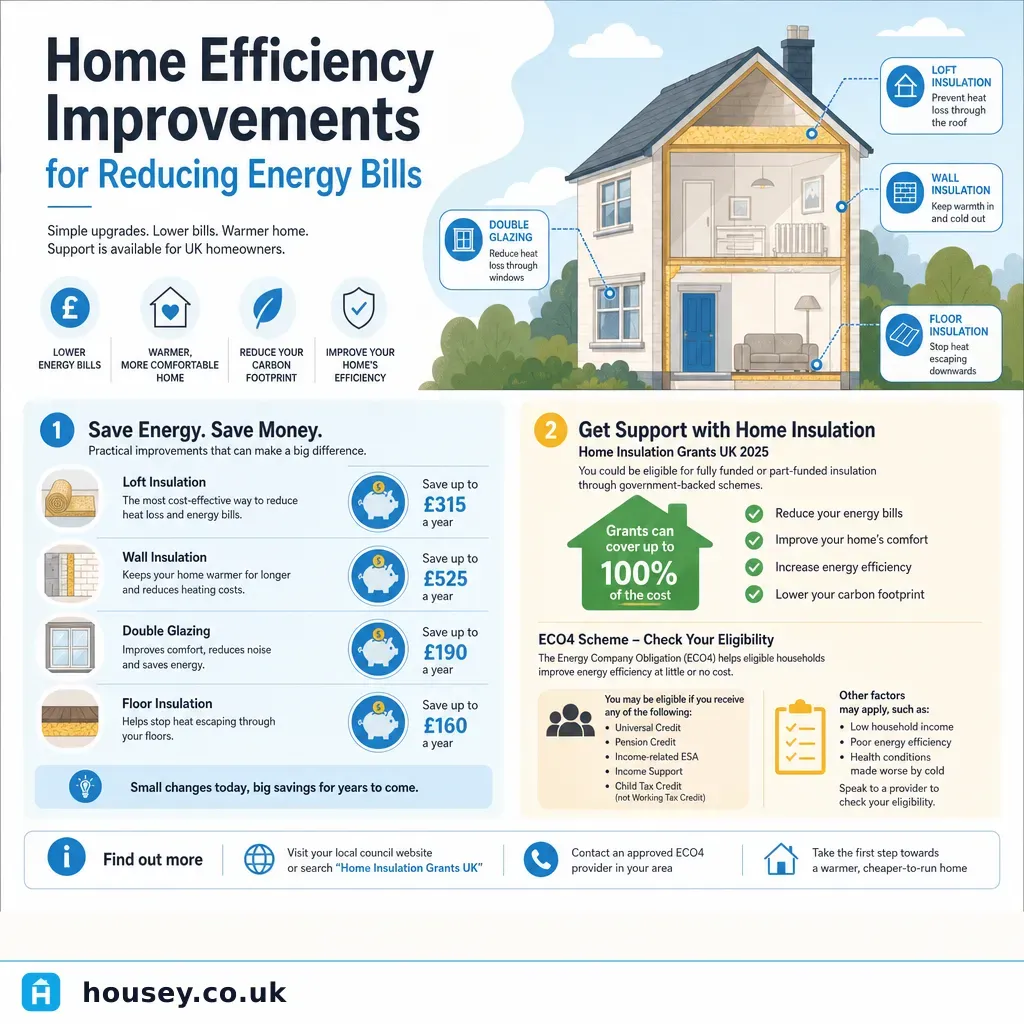 Energy & Retrofit
Home Efficiency Improvements for Reducing Energy Bills
The most cost-effective UK home efficiency improvements are usually loft insulation, cavity wall insulation, draught-proofing, and upgrading heating controls.