Specialist Piano Moving and Handling Services for High-Value Items
By Housey · Last reviewed 19th of May 2026

Specialist Piano Moving and Handling Services for High-Value Items
A piano, an oil painting, a vintage wine collection, or a marble sculpture presents an entirely different logistical challenge from a standard house move. Standard removal crews are trained to handle boxes and furniture — not the specialist rigging, climate control, or custom crating that high-value and fragile items often require. Understanding what specialist moving involves, and what to ask before booking, helps you protect items that may be irreplaceable.
Key points
- An upright piano typically weighs 150–250 kg; a grand piano can exceed 480 kg — specialist crews use load-rated piano boards, stair-climbing trolleys, and ramps designed for these weights.
- Standard household removal insurance often excludes or severely caps cover for pianos, antiques, and fine art — confirm all-risks transit insurance matching the item's full market or replacement value before signing a contract.
- Fine art and antiques in transit may require climate-controlled vehicles and bespoke timber or foam crating, not just blanket wrapping.
- Instruments containing ivory (such as pre-1975 pianos with ivory keys) may require CITES documentation for international movement — check GOV.UK guidance from the Animal and Plant Health Agency.
- Ask for a written condition report documenting the item's state before and after transit — this is standard practice among reputable specialist movers.
What makes specialist moving different
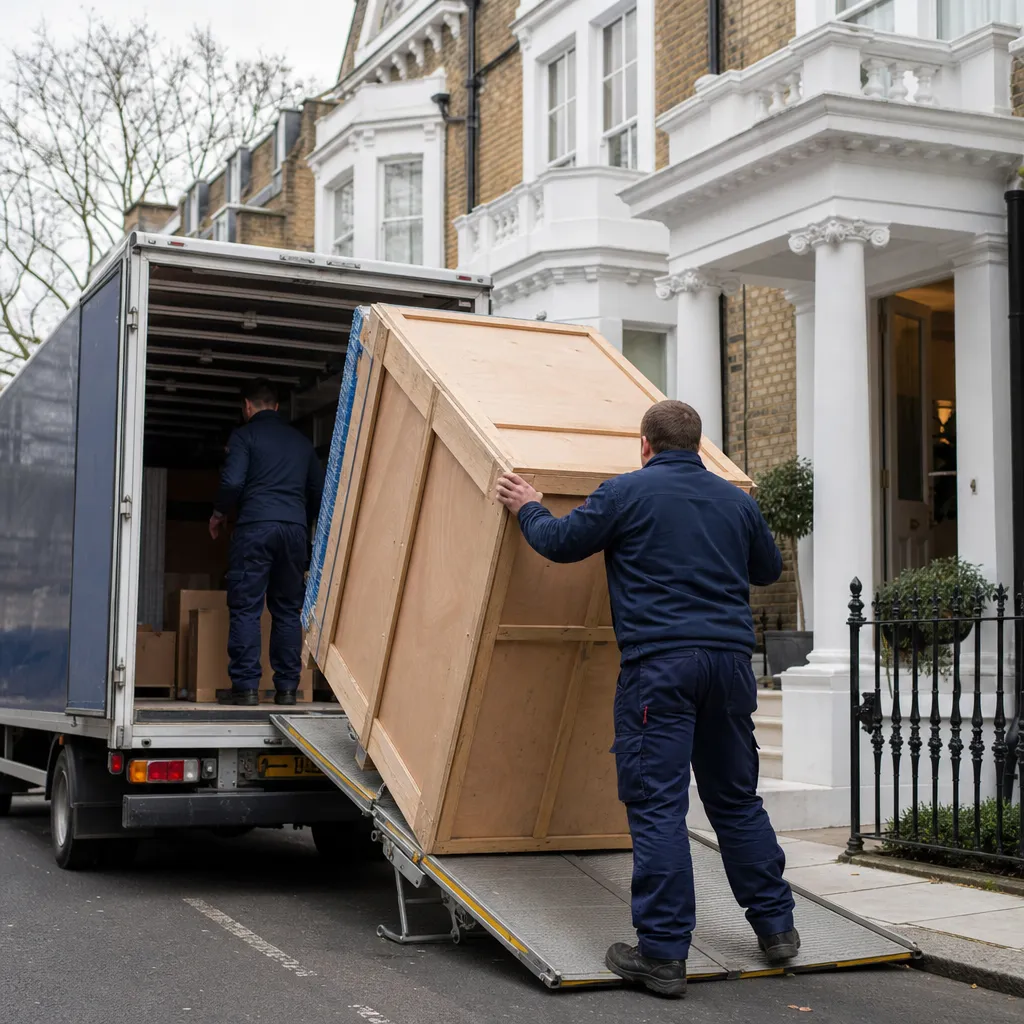
A standard removal crew is skilled at loading and unloading the contents of a typical UK home. What they are not typically trained or equipped to do is move a 250 kg upright piano through a narrow Victorian hallway, rig a large sculpture over a balcony, or maintain the stable temperature and humidity that oil paintings require in transit.
Specialist removers invest in different equipment — piano boards, hydraulic tail-lifts, custom crating workshops — carry different insurance (all-risks fine art and specialist items policies), and employ people with training in rigging, art handling, or instrument logistics. The premium you pay for a specialist firm reflects that investment, and the cost of getting it wrong.
For context: a single scratch to the lacquer of a grand piano can cost several hundred pounds to repair. Damage to a period painting or antique may be irreversible. The cost of specialist moving is small relative to the cost of replacing or restoring a damaged item.
Standard removal versus specialist high-value moving: a comparison
Factor | Standard removal | Specialist high-value moving |
|---|---|---|
Piano moving | Not usually offered; risk of damage to instrument and property | Dedicated piano boards, rated trolleys, trained crew |
Fine art transit | Blanket wrapping only; no climate control | Custom crating, climate-controlled vehicles, art handlers |
Insurance cover | Standard household goods up to a per-item cap | All-risks cover for declared value of individual items |
Condition reports | Not standard | Itemised before-and-after condition records |
Rigging and craning | Not offered | Available for oversized items or restricted access |
Cost | Lower day rate | Higher — reflects specialist equipment and insurance |
Suitable for | Boxes, standard furniture, white goods | Pianos, antiques, fine art, sculptures, wine, safes |
Types of high-value items and what each typically requires
Upright and grand pianos. Require a dedicated piano board or skate — a low padded platform on castors — a crew of at least three, and stair-climbing equipment for multi-floor moves. Grand pianos must be partially dismantled (legs and pedal lyre removed) before transport. Climate control is not always required, but the destination room should be positioned away from radiators and exterior walls.
Fine art and paintings. Oil paintings on canvas are sensitive to temperature change, humidity fluctuation, and vibration. Reputable art movers use double-walled wooden crates, climate-controlled vans, and GPS tracking for high-value consignments. Ask whether the firm has worked with the specific medium and whether itemised insurance certificates are available.
Antique furniture. Victorian and Edwardian pieces often have fragile joints, veneer, and applied decoration that can loosen during transit. Custom blocking and padding — rather than generic furniture blankets — is the appropriate approach. Confirm the mover has experience with the specific furniture type and period.
Wine collections. Temperature consistency is critical — a journey in a warm van can age wine unpredictably. Specialist wine carriers use temperature-logged refrigerated vehicles and provide collection documentation for insurance and provenance purposes.
Safes and strongboxes. Floor-mounted and freestanding safes can weigh several hundred kilograms. Specialist safe movers use pump trucks and reinforced flooring protection. Confirm the mover can handle the specific weight and whether doorway or flooring modification is required at either address.
What to ask before booking a specialist mover
Before instructing any firm to move a piano, antique, or other high-value item, ask:
- What is your specific experience with this type of item, and can you provide references or examples?
- What equipment will you use, and how many crew members will attend?
- What insurance policy covers this move, and what is the per-item limit? Request a copy of the policy schedule.
- Will you provide a written condition report before and after the move?
- Is climate-controlled transport available, and is it included in the quote?
- What is your claims process if an item is damaged in transit — and what is the typical resolution timeline?
- Are there access constraints at either address that would affect the approach, such as narrow staircases, listed building restrictions, or parking limitations?
- Is VAT included in the quote?
- For international moves: do you handle customs documentation and CITES permits where required?
When to get professional help
Always use a specialist firm — not a general removal crew — for:
- Any piano (upright, grand, or digital cabinet weighing over 150 kg).
- Fine art, sculptures, or antiques with a declared replacement value over £5,000.
- Wine collections requiring temperature-controlled transit.
- Safes weighing over 200 kg or requiring special access arrangements.
- International moves involving items subject to CITES, export licensing, or cultural property regulations.
- Moves into or out of listed buildings where access is restricted or works require consent.
If you are unsure whether your item warrants specialist handling, contact a British Association of Removers (BAR) member firm and describe the item — reputable firms will advise honestly about what is required.
How Housey can help
Housey connects you with vetted house removals firms with specialist packing services, including those experienced in handling pianos and high-value items. For moves across international borders, compare experienced international removals companies with expertise in customs documentation and climate-controlled transport. If you need interim managed storage facilities for a piano or antique between moves, Housey can match you with facilities suited to specialist items.
Frequently asked questions
How much does it cost to move a piano in the UK?
Costs vary considerably by piano type, distance, and access. Moving an upright piano locally with a specialist firm typically costs £150–£400; a grand piano move can cost £300–£800 or more (Indicative UK costs, last reviewed 2026-05-19; always obtain quotes). International piano shipping involves additional freight, crating, and customs fees.
Do I need specialist removers for an antique?
It depends on the value, fragility, and size. For antiques worth more than a few thousand pounds, or items with fragile veneers, inlays, or applied decoration, a specialist firm's crating and handling approach significantly reduces the risk of damage compared to a standard removal crew. Confirm insurance cover matches the declared replacement value.
What is all-risks transit insurance for high-value items?
All-risks transit insurance covers physical loss or damage during packing, loading, transit, and unloading — including accidental breakage. Standard household removal insurance often excludes items above a per-item cap or excludes categories such as musical instruments and fine art altogether. Always request a copy of the policy schedule and confirm your item is explicitly covered.
Can I move a piano myself?
Moving an upright piano without specialist equipment and a trained crew is strongly inadvisable. Pianos are extremely heavy, top-heavy, and awkward to manoeuvre. Attempting a DIY piano move risks serious personal injury and damage to the instrument, stairs, walls, and floors. Always use a specialist piano-moving firm.
Sources and further reading
- British Association of Removers — specialist services — British Association of Removers
- GOV.UK — CITES: controls on trade in endangered species — Animal and Plant Health Agency
- British Antique Dealers' Association — member directory — British Antique Dealers' Association
- Fine Art Trade Guild — standards and guidance — Fine Art Trade Guild
Useful next reads
 Buying & Moving
Specialised Moving Solutions for Premium and High-Value Properties
High-value relocations require specialist companies with all-risk transit insurance, climate-controlled vehicles, and trained handlers for art, antiques, and pianos.
 Buying & Moving
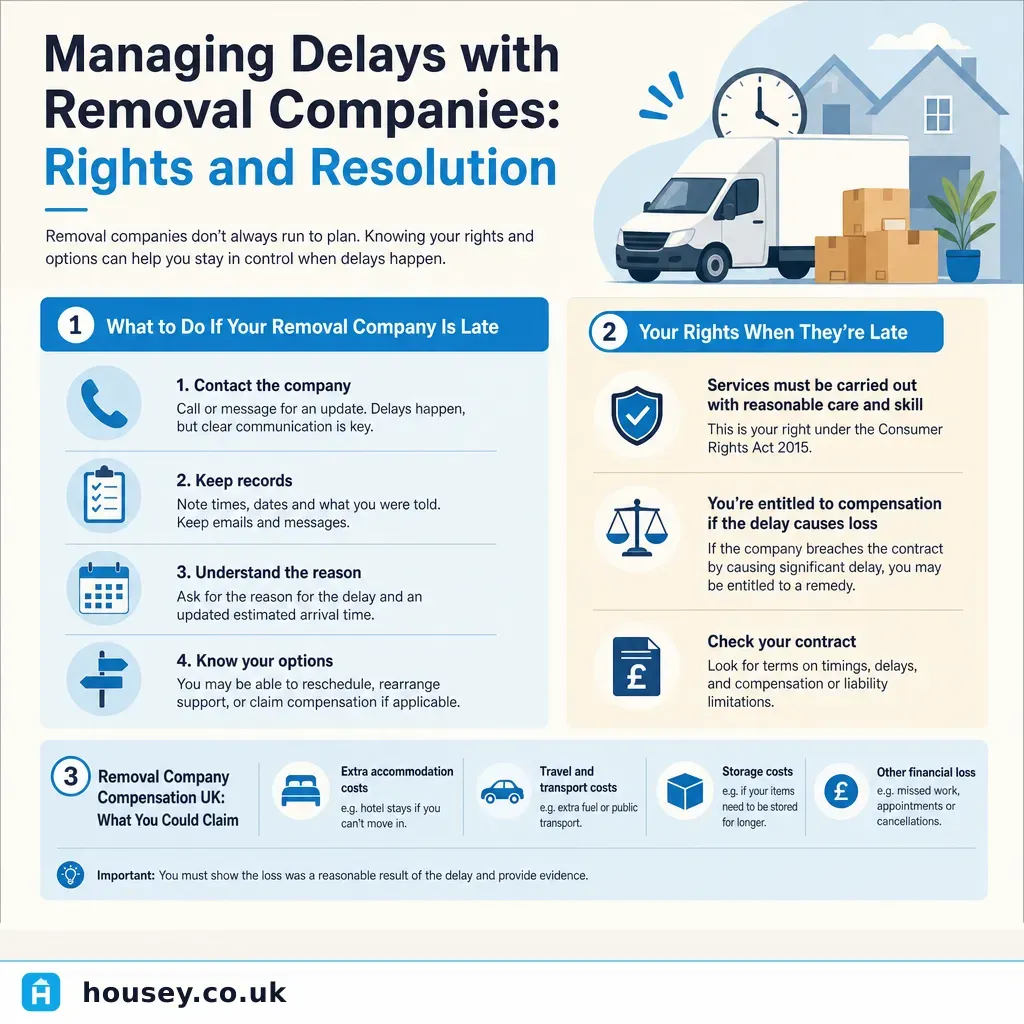
Managing Delays with Removal Companies: Rights and Resolution
If a removal company is late, your rights depend on your contract and whether the company is BAR-registered.
 Buying & Moving
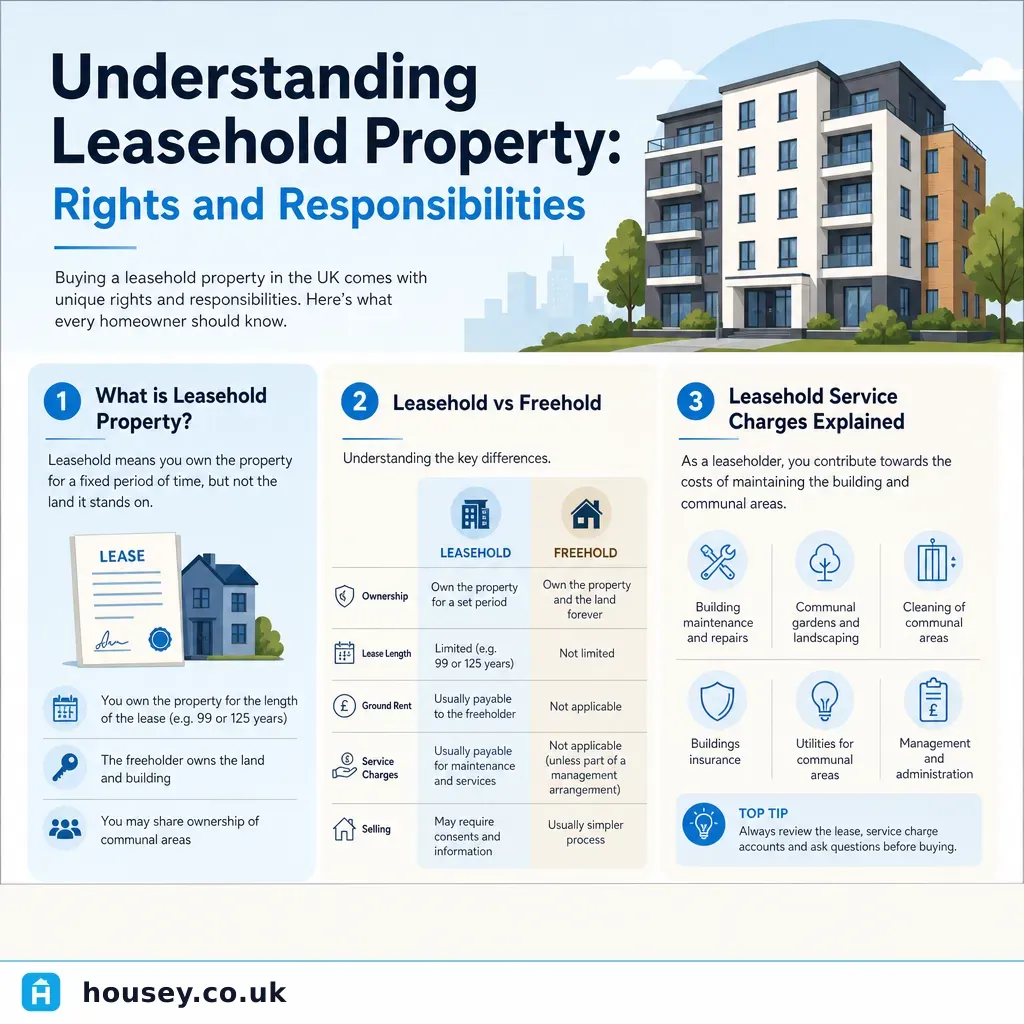
Understanding Leasehold Property: Rights and Responsibilities
Leasehold means you own a time-limited interest in a property while the freeholder owns the land and building.
 Buying & Moving
The Complete Property Buying Guide: From Search to Purchase
Buying a property in England and Wales typically takes 3–6 months from accepted offer to completion.
 Buying & Moving
Leasehold Property Purchase: Complexity and Key Considerations
Buying a leasehold property means purchasing the right to occupy for a fixed term rather than owning the land outright.