Specialised Moving Solutions for Premium and High-Value Properties
By Housey · Last reviewed 30th of May 2026

Specialised Moving Solutions for Premium and High-Value Properties
Moving a luxury or high-value property is a fundamentally different undertaking from a standard house removal. The combination of irreplaceable items, significant financial exposure, complex access arrangements, and the expectations of all parties involved means that choosing the wrong type of company — or underestimating the planning required — can have consequences that no standard transit insurance policy will fully resolve. Whether you are relocating a Georgian townhouse full of antiques or a contemporary penthouse with a substantial art collection, the gap between a specialist and a general removals company matters in ways that only become clear under pressure.
Key points
- Standard removals companies typically cap their liability at £40,000–£50,000 per item or per claim; specialist companies can arrange all-risk cover substantially above this threshold on request.
- Fine art, antiques, and collectibles may exceed the single-article limit on a standard household contents policy, often set at £5,000–£15,000 per item — confirm your policy terms with your insurer before the move.
- Grand pianos require specialist disassembly, cradle-and-skate handling, and often a staircase hoist; standard removal crews are neither trained nor insured for this task.
- Climate-controlled vehicles are used by specialist firms for temperature and humidity-sensitive items including oil paintings, wooden antiques, wine collections, and certain electronic equipment.
- Pre-move condition reporting — written and photographic — of both the property and its contents is standard practice among specialist providers and is essential for any subsequent insurance or liability claim.
Standard versus specialist removals: which do you need?
Feature | Standard household removals | Specialist high-value removals |
|---|---|---|
Typical liability per item | £40,000–£50,000 cap (check policy wording) | Negotiable; all-risk policies available |
Packing materials | General cardboard and bubble wrap | Museum-quality acid-free tissue, custom crating, climate-controlled packaging |
Vehicle type | Standard box van or luton van | Air-ride suspension vehicles; climate-controlled options available |
Crew training | General household handling | Specialist fine art, antiques, piano, or wine handling experience |
Condition reporting | Variable; basic inventory sometimes provided | Comprehensive pre-move condition survey as standard |
Art and antiques handling | Not typically offered | Core service area |
Wine collection transport | Not offered | Climate-controlled cellar-to-cellar service |
Cost basis | Per cubic metre or load weight | Bespoke pricing based on inventory, distance, and services required |
Indicative UK costs, last reviewed 2026-05-30: specialist high-value removals are individually priced and are not directly comparable to standard van-and-crew rates. Request itemised quotations for meaningful comparison.
Which professional do you need for each item type?
Different contents within a high-value property may require different specialists. This table helps identify the right expertise.
Item type | Professional to engage | Why a generalist is not sufficient |
|---|---|---|
Oil paintings and fine art | Fine art removals specialist | Requires climate control, acid-free materials, and correct orientation; humidity fluctuation causes irreversible damage |
Grand piano | Piano removal specialist | Requires leg and pedal lyre disassembly, specialist cradle and skate, hoist for stairs; improper handling causes structural and tonal damage |
Antique furniture | Fine furniture removals specialist | Period pieces require bespoke wrapping; standard van strapping damages fragile joints and decorative surfaces |
Wine collection | Temperature-controlled logistics specialist | Wine must be maintained at 12–14°C throughout transit; vibration and light exposure must be minimised |
Sculpture and ceramics | Fine art handler with 3D object experience | Requires custom crating; large pieces may need structural engineering input for safe transport |
Jewellery and watch collections | Specialist courier (not a removals company) | High-value portable items should travel separately under a dedicated courier with specific insurance |
Classic or vintage car | Enclosed car transporter | Requires an enclosed trailer rather than open transporter; concours-condition vehicles may need climate control |
Pre-move preparation for high-value properties
The preparation phase for a luxury relocation is more extensive than for a standard move and typically begins eight to twelve weeks before the moving date.
Document preparation checklist:
What to ask a specialist removals company before you book
Before instructing a specialist company, use these questions to assess their suitability and protect your position.
- What specific experience does your team have in moving [the category of items you own]?
- What level of liability cover does your standard contract provide per item, and can this be increased?
- What type of vehicles will be used — are they climate-controlled or fitted with air-ride suspension?
- Do you provide a pre-move condition survey, and does this form part of the insurance documentation?
- What packing materials and methods will be used for each category of item?
- Are your staff directly employed and trained in-house, or do you use subcontractors?
- Can you provide references from previous clients with similar items or property types?
- Is VAT included in the quotation?
- What is your process if damage occurs during transit or packing?
- Are you a member of the British Association of Removers (BAR) or another recognised trade body?
Insurance considerations for high-value relocations
Transit insurance for high-value moves has several layers that homeowners often discover only after something goes wrong.
All-risk versus negligence-only cover: Standard removals policies typically cover damage caused by the company's negligence. All-risk policies cover accidental damage regardless of fault — essential for irreplaceable or one-of-a-kind items.
Single-article limits: Your household contents policy may have individual article limits, often £5,000–£15,000. Items above this require a separately scheduled agreement with your insurer. Confirm this before the move, not after.
Pairs and sets: Damage to one item in a matching pair or set may entitle you to claim for the diminished value of the whole — check your policy wording carefully before any move involving matched furniture, crockery sets, or paired artworks.
Document everything: Photographs, independent valuations, and condition reports taken before the move significantly strengthen any claim and reduce disputes about whether damage pre-existed the removal.
When to get professional help
For any move involving items individually valued above £10,000, grand pianos or large sculptures, a wine collection of more than modest size, fine art of any description, or properties with restricted or complex access, standard household removals companies are not the appropriate choice. The premium charged by a specialist is real, but remains small relative to the cost of repairing or replacing a damaged irreplaceable item.
How Housey can help
Housey can connect you with vetted house removals specialists, including companies that focus on high-value and luxury relocations. Describe your property, the categories of items you are moving, and your timeline to receive tailored quotes from providers with the right experience and insurance cover for your move.
Frequently asked questions
What is all-risk transit insurance and why does it matter for high-value moves?
All-risk insurance covers accidental damage to your items during transit regardless of who is at fault. Standard removals contracts typically offer negligence-only cover, which pays out only if the company caused the damage. For high-value or irreplaceable items, all-risk cover is the appropriate standard and should be confirmed in writing before moving day.
Do I need a specialist if I am only moving one or two valuable pieces of art?
Yes, in most cases. A single oil painting of significant value requires appropriate materials, climate-controlled conditions, and a handler trained in fine art. A standard removals company may lack the training, materials, and insurance for this task, even if willing to attempt it.
How should I value my contents for insurance purposes before a high-value move?
For fine art and antiques, obtain a current valuation from a RICS-accredited valuer or a specialist such as a member of the British Antique Dealers' Association (BADA). Purchase prices and general estimates may be rejected by insurers if they do not reflect current market value.
Can I move my wine collection in a standard removals van?
This is not recommended. Wine requires consistent temperature control at approximately 12–14°C, minimal vibration, and protection from light throughout transit. Standard vans provide none of these conditions. A specialist temperature-controlled logistics company should be used for any collection of significant size or value.
Sources and further reading
- British Association of Removers — BAR
- Export Control Order 2008 — legislation.gov.uk
- RICS valuation standards — RICS
- Problems with a service — Citizens Advice
- Home insurance guidance — Association of British Insurers
Useful next reads
 Buying & Moving
How to Plan a House Move: A Practical Guide to Residential Relocations
A UK house move goes more smoothly with planning that starts 6–8 weeks before moving day.
 Buying & Moving
Managing Property Relocation in Major Urban Centres
Urban house moves require planning beyond a standard removal, particularly around vehicle emission zone compliance, parking bay suspensions, and lift access in purpose-built flats.
 Buying & Moving
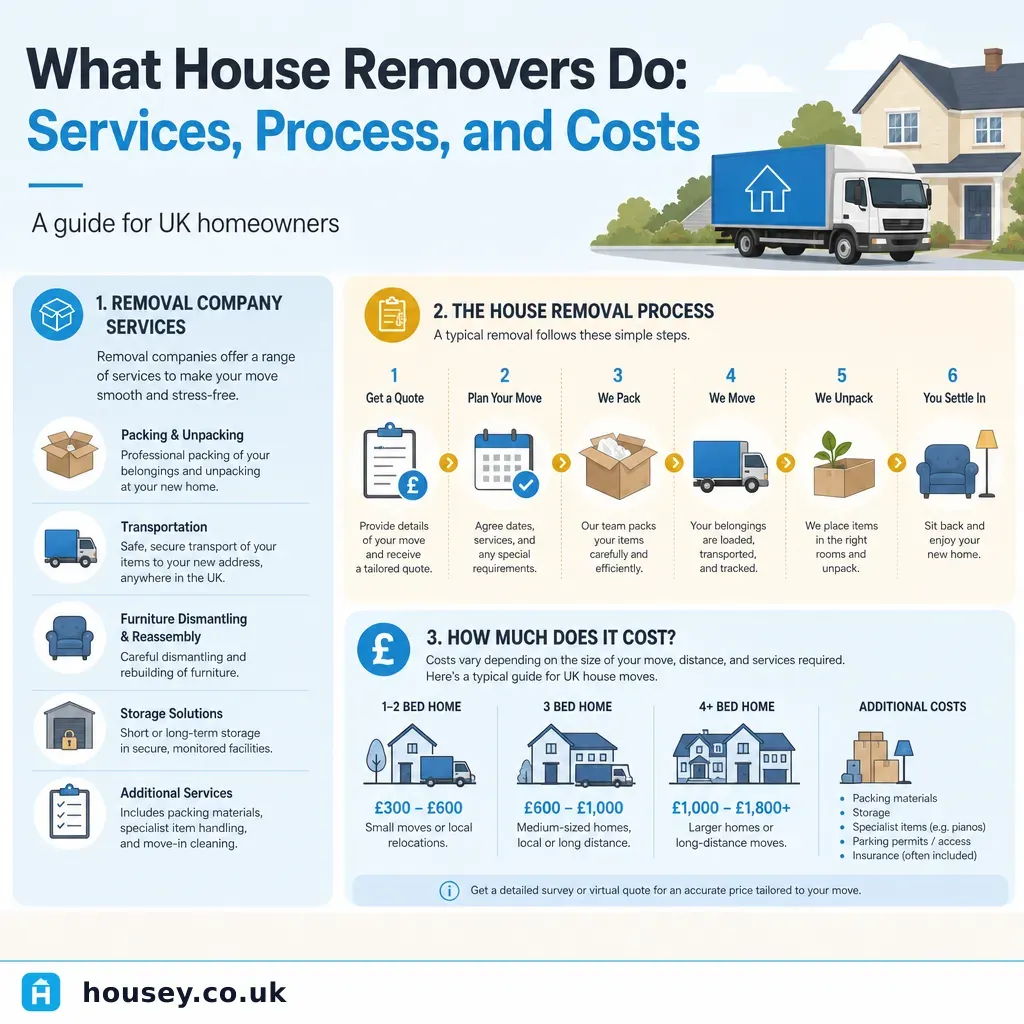
What House Removers Do: Services, Process, and Costs
House removers load, transport, and unload your belongings between properties.
 Buying & Moving
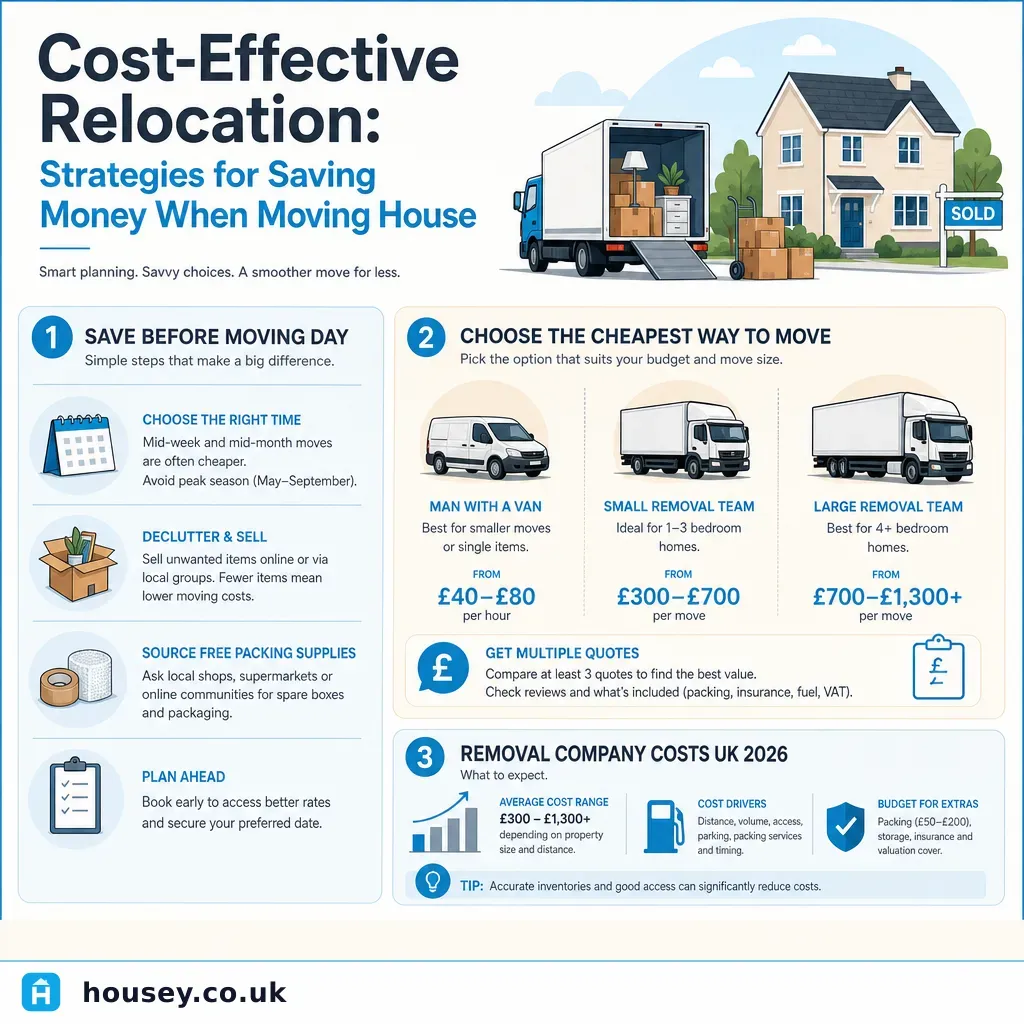
Cost-Effective Relocation: Strategies for Saving Money When Moving House
Moving house in the UK involves costs well beyond the removal van — stamp duty, conveyancing, surveys, and storage all add up.
 Buying & Moving
Planning your house move before the festive season: timing and logistics
Moving before Christmas requires careful planning.