Step-by-Step Guide to Selling Your Property
By Housey · Last reviewed 24th of May 2026
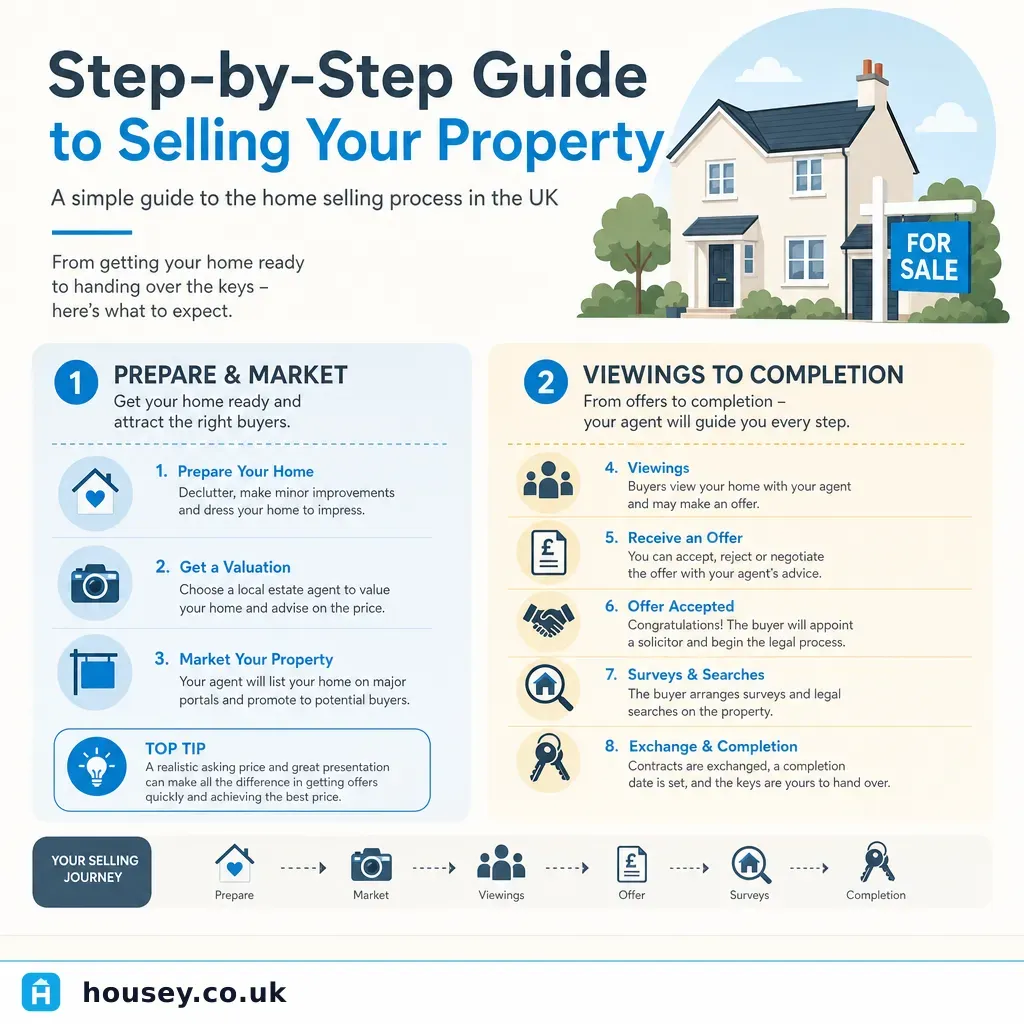
Step-by-Step Guide to Selling Your Property
Selling a property in the UK involves more moving parts than most first-time sellers expect — and even experienced sellers can be caught out by changes to conveyancing requirements, leasehold complications, or chain dynamics. Knowing what happens at each stage, and what to prepare in advance, significantly reduces the chance of delays, unexpected costs, or a sale falling through.
Key points
- A valid Energy Performance Certificate (EPC) must be in place before a property can be marketed for sale in England; failing to provide one carries a penalty of up to £5,000.
- The Law Society's TA6 Property Information Form (version 4, updated April 2024) now requires disclosure of building safety information for flats; incomplete or inaccurate forms are a common cause of solicitor enquiries and delays.
- Exchange of contracts is the point at which the sale becomes legally binding; before exchange, either party can withdraw without legal penalty, though costs will already have been incurred.
- Both solicitors regulated by the SRA and licensed conveyancers regulated by the Council for Licensed Conveyancers (CLC) are qualified to act in residential property sales and must hold professional indemnity insurance.
- Completion typically occurs 1–4 weeks after exchange; the date is agreed in the contract and both parties must be ready to vacate or move on that day.
Stage 1: Preparing to sell
Before your property goes to market, several practical and legal steps should be in place.
Get a valuation. Invite two or three reputable local estate agents to provide a market appraisal. For an independent figure not linked to commission, an RICS-registered valuation provides an objective assessment. Use sold price data from HM Land Registry to sense-check any figure you receive.
Obtain an EPC. All properties marketed for sale in England must have a valid Energy Performance Certificate. EPCs are valid for 10 years; check whether yours is still current at the GOV.UK EPC register before instructing an agent.
Instruct a conveyancer early. Instructing a conveyancer before accepting an offer allows them to begin preparing the contract pack immediately — including the TA6 and TA10 forms and the title register from HM Land Registry — so it is ready to send to the buyer's solicitor the moment an offer is accepted.
Document preparation list — gather these before listing:
Stage 2: Choosing and instructing an estate agent
Compare at least two agents on: valuation accuracy, marketing approach, fee structure, and average time to sell. Sole agency fees typically range from 1–1.5% plus VAT for traditional agents; online agents often charge a fixed fee upfront.
Your agency agreement will specify a notice period (commonly 4–8 weeks) and any tie-in period during which you cannot switch without penalty. Read this carefully before signing.
Stage 3: Marketing and viewings
Once listed, your agent manages enquiries and arranges viewings. As a seller, you should:
- Be flexible about viewing times — restricting access slows sales.
- Brief your agent on features that may not be obvious in photographs.
- Disclose known defects honestly on the TA6; misrepresentation can expose you to legal claims after completion.
Stage 4: Receiving and negotiating offers
When an offer is received, your agent will communicate the buyer's position: whether they are chain-free, have a mortgage agreed in principle, or are cash buyers. These factors affect transaction speed as much as the offer price.
Decision guide — how to assess an offer:
- Accept if the price meets your needs and the buyer has a mortgage agreed in principle or cash funds evidenced, and is in a strong onward position.
- Negotiate if the price is slightly below asking but the buyer's position is strong; a 1–2% reduction may be worth the certainty of a clean transaction.
- Request sealed bids if multiple offers arrive at similar levels; your agent can advise on managing the process.
- Decline and re-list if the offer is significantly below market value and you have the time to wait for a stronger buyer.
Nothing is legally binding until exchange of contracts; accepting an offer does not commit either party at this stage.
Stage 5: The conveyancing process
Once an offer is accepted, your conveyancer and the buyer's conveyancer manage the legal transfer of ownership. This involves:
- Draft contract issued by your conveyancer to the buyer's solicitor.
- Buyer's solicitor raises enquiries — questions about the property, boundaries, planning history, and anything flagged in the TA6.
- Your conveyancer responds to enquiries — missing documents or unclear answers cause the most delays at this stage.
- Searches completed by the buyer's solicitor (local authority, drainage, environmental).
- Mortgage offer issued to the buyer by their lender, if applicable.
- Exchange of contracts — both parties sign identical contracts and the buyer pays a deposit, typically 10% of the purchase price.
- Completion — the balance of funds is transferred; keys are released.
Professional conveyancing with a responsive solicitor or licensed conveyancer is one of the most significant factors in keeping this stage on track.
Stage 6: Exchange and completion
At exchange, your completion date is fixed. Between exchange and completion:
- Confirm and book your removal company.
- Notify utilities, council tax, and Royal Mail of your move date.
- Arrange mail redirection through Royal Mail.
- Obtain your final mortgage redemption figure from your lender.
On completion day, your conveyancer receives the sale proceeds, redeems your mortgage, deducts their fees and the estate agent's commission, and transfers the balance to you. Keys are handed over on that day.
When to get professional help
Seek specialist advice if:
- Your property is leasehold with fewer than 80 years remaining — this typically requires a lease extension before sale or significant price negotiation with buyers.
- You have carried out works without building regulations approval — your conveyancer can advise on retrospective indemnity insurance.
- The TA6 requires disclosure of neighbour disputes, Japanese knotweed, or building safety issues in a flat.
- You are in a complex chain or under pressure to exchange quickly — a conveyancer who communicates proactively with all parties is particularly valuable in these circumstances.
How Housey can help
Housey connects you with vetted professionals for every stage of your sale. Compare quotes for professional conveyancing to keep your transaction on track, or arrange an RICS-registered valuation to ensure your asking price is grounded in current market evidence.
Frequently asked questions
How long does it take to sell a property in the UK?
The full process from accepting an offer to completion typically takes 12–16 weeks for a straightforward freehold sale with no chain. Leasehold sales, complex chains, or slow local authority searches can extend this to 6 months or more. Instructing your conveyancer before listing is the single most effective way to reduce the legal stage and keep the overall timeline on track.
Do I need a solicitor to sell my house, or can I use a licensed conveyancer?
Both solicitors (regulated by the SRA) and licensed conveyancers (regulated by the Council for Licensed Conveyancers) are qualified to handle residential conveyancing. A licensed conveyancer is often a cost-effective choice for straightforward transactions. For complex situations — leasehold disputes, boundary issues, or unusual title — a solicitor with residential property expertise may be preferable.
What happens if a buyer pulls out before exchange?
Before exchange of contracts, either party can withdraw without legal penalty. You will have incurred costs — your conveyancer's fees to that point, and possibly survey or search fees if agreed. Your property can immediately be re-listed. Some sellers instruct their agent to continue taking enquiries during the conveyancing stage as a safeguard against this outcome.
What is the difference between exchange and completion?
Exchange of contracts is the point at which both parties become legally committed to the transaction. The buyer pays a deposit — typically 10% of the purchase price — on exchange. Completion is when ownership formally transfers and the balance of funds changes hands. The gap between them is usually 1–4 weeks, giving both parties time to arrange removals and finalise finances.
Sources and further reading
- Selling a home — GOV.UK
- Conveyancing Quality Scheme — The Law Society
- Search the property register — HM Land Registry
- Find an energy certificate — GOV.UK
- Check your conveyancer — Council for Licensed Conveyancers
- Selling your home — Citizens Advice
Useful next reads
 Buying & Moving
Essential Steps to Selling Your Home Successfully
Selling your home successfully in the UK involves obtaining a valid EPC, choosing an estate agent or alternative method, instructing a solicitor or conveyancer early, and completing the Seller's Property Information Form accurately.
 Buying & Moving
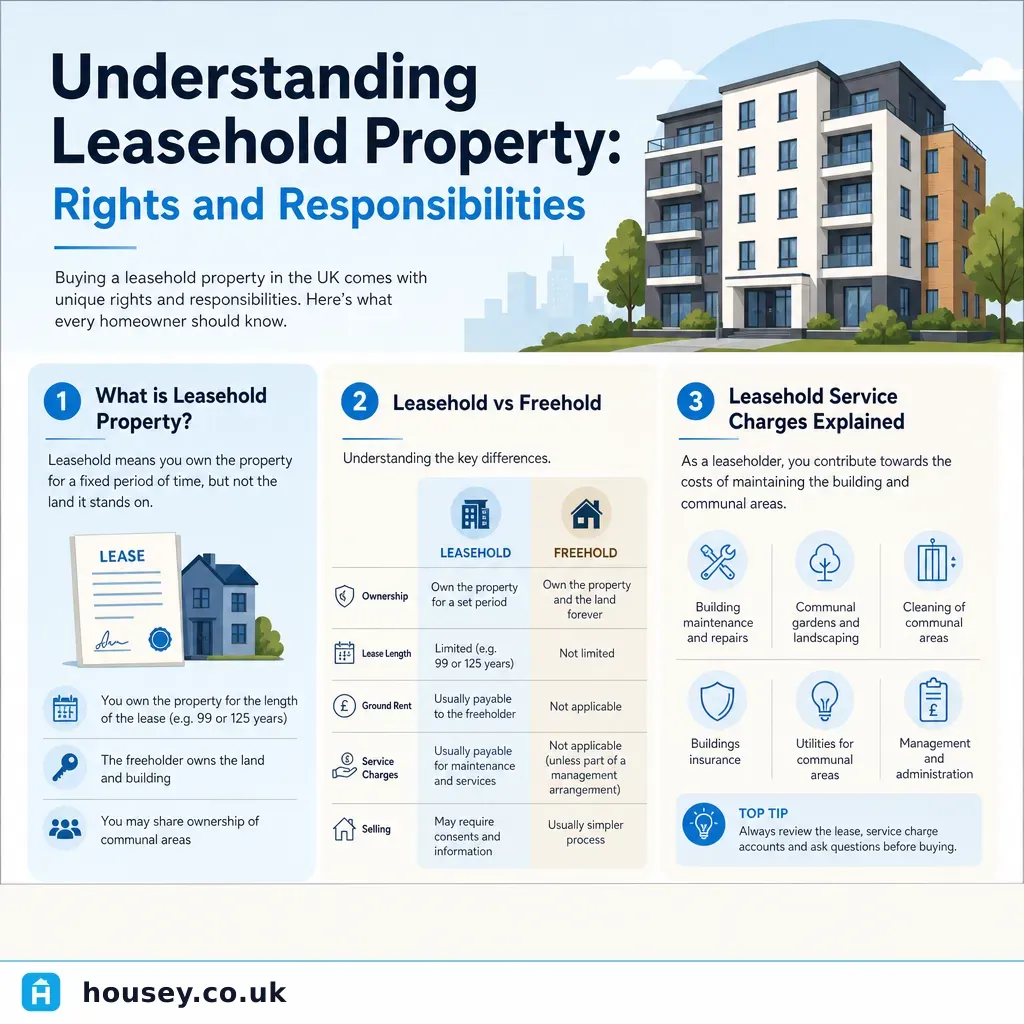
Understanding Leasehold Property: Rights and Responsibilities
Leasehold means you own a time-limited interest in a property while the freeholder owns the land and building.
 Buying & Moving
Navigating Simultaneous Purchase and Sale of Property
When buying and selling simultaneously in England and Wales, both sets of contracts are exchanged on the same day — this is called simultaneous exchange.
 Buying & Moving
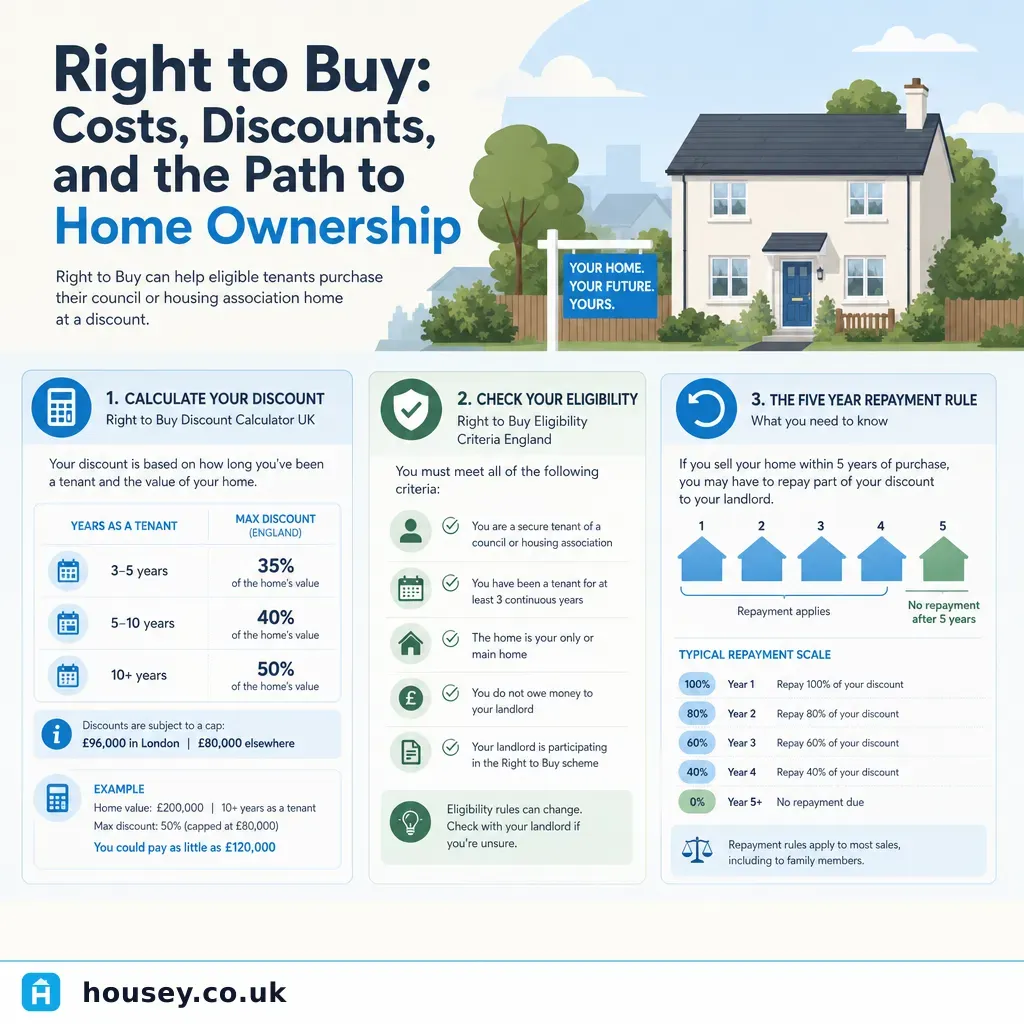
Right to Buy: Costs, Discounts, and the Path to Home Ownership
Right to Buy lets eligible council tenants in England buy their home at a government-funded discount — between 35% and 70% of its value, depending on tenancy length and property type.
 Buying & Moving
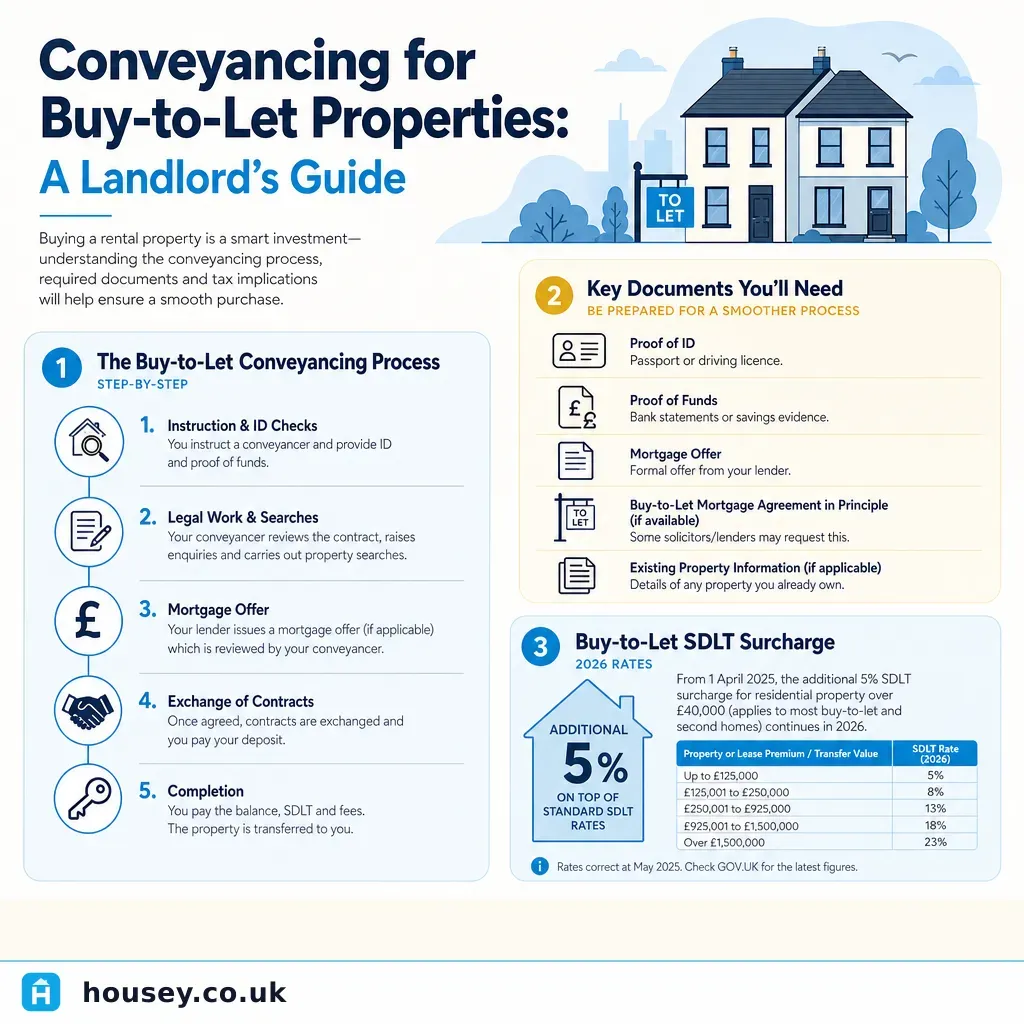
Conveyancing for Buy-to-Let Properties: A Landlord's Guide
Buy-to-let conveyancing follows the same legal process as any residential purchase but adds several layers: a 5% SDLT additional dwelling surcharge in England, review of any existing tenancy agreements, checking local authority licensing requirements, and ensuring buy-to-let mortgage conditions are correctly recorded.