Storm Door Hardware Options: Handle Styles and Installation Types
By Housey · Last reviewed 24th of May 2026
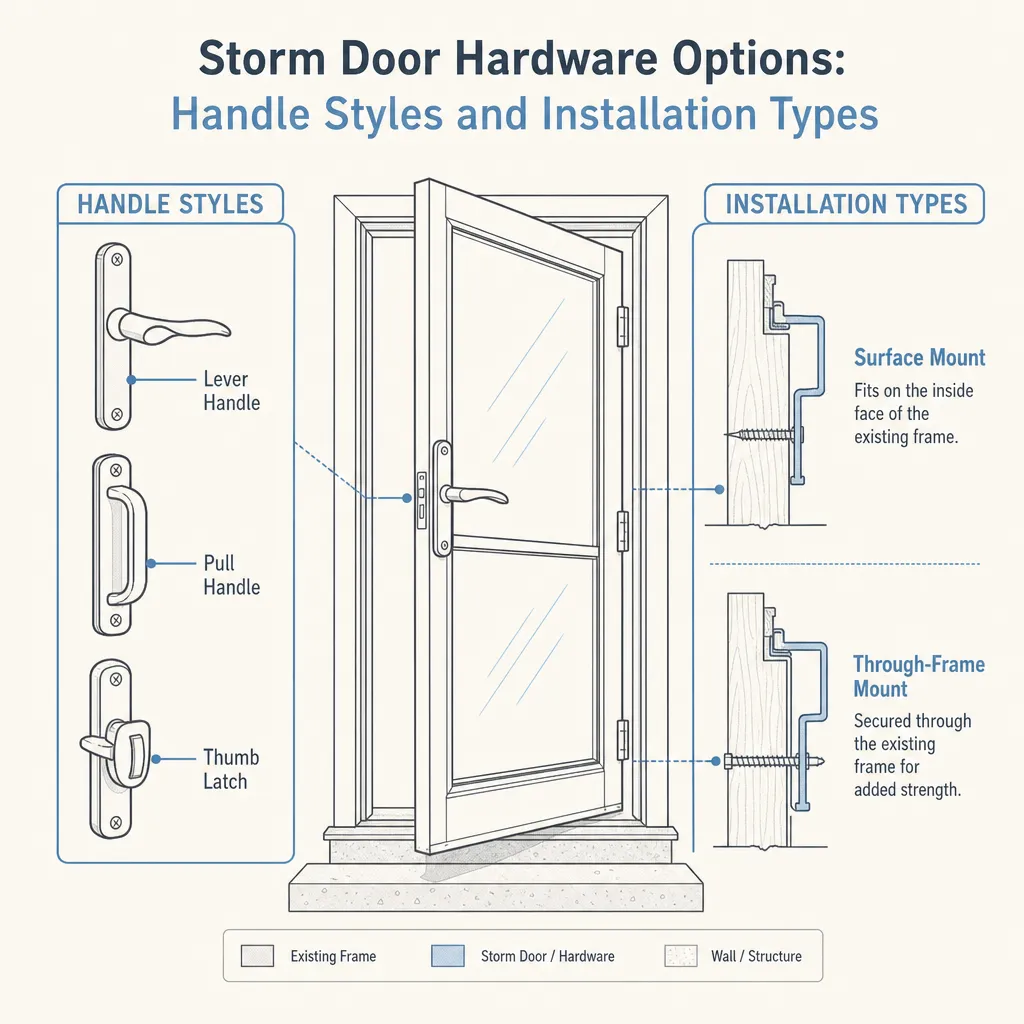
Storm Door Hardware Options: Handle Styles and Installation Types
Choosing the right hardware for a storm door is more consequential than it first appears — the handle style, latch type, and lock specification all affect ease of use, security, and how well the door seats against its weatherseal. Homeowners typically face this decision when fitting a new storm door, replacing worn handles on an ageing door, or upgrading security before an EPC assessment flags draughts around the entrance frame. UK suppliers offer a narrower range of storm door hardware than North American markets, so knowing which specifications are compatible with your door and frame avoids wasted returns and costly refitting.
Key points
- Storm door handles in the UK are most commonly supplied in pull-bar (full-length) or lever-handle configurations; knob handles are largely absent from current UK product ranges
- Latch mechanisms are either single-point (one latch bolt) or multi-point (two or three latch points for better weatherseal compression); multi-point latching is advisable for exposed or coastal positions
- Keyed locks on storm doors should carry at least a British Standard BS 3621 cylinder or equivalent — insurers may require this where the storm door is treated as a point of entry
- Surface-mounted hardware is compatible with most aluminium and timber storm door frames; concealed (mortice) hardware requires a minimum frame stile depth of approximately 44mm
- Finish longevity varies significantly — powder-coated aluminium outperforms chrome plate in salt-air or high-moisture environments
Handle styles available in the UK
Full-length pull bars
A bar spanning most of the door height — typically 600–900mm — fixed at two points. Common on aluminium storm doors and well-suited to regular use because pull force is distributed over a wide area, reducing point stress on the frame. Usually supplied with a thumb-turn or keyed cylinder integrated into the interior stile.
Lever handles
A lever-action handle mounted at mid-height, typically 1,000–1,050mm from the floor, which aligns with Approved Document M accessibility guidance for accessible entrances. Lever handles are easier to operate with one hand or limited grip strength — relevant where the door is on an accessible route or used by older occupants. Return-lever designs (angled back at the end) reduce the risk of clothing catching on the handle.
Push plates and passive-side hardware
Where a lever or pull bar is fitted on the leading edge, the hinge side of the door may carry a simple push plate to protect the door surface during closing. Some doors omit passive-side hardware entirely when the self-closing mechanism provides the primary means of closure.
Latch and lock types compared
Type | How it works | Best for | Not ideal for |
|---|---|---|---|
Single-point latch | One spring bolt engages a single strike plate | Sheltered positions, internal porch doors | Exposed or coastal positions with high weather demand |
Multi-point latch | Two or three latch bolts compress the weatherseal at multiple points | Exposed positions; improved weathertightness | Budget installations — cost is higher than single-point |
Dead bolt (keyed) | Key-operated bolt with no spring action | Added security layer, outbuildings | Convenience — always requires a key to operate |
Thumb-turn dead bolt | Interior thumb-turn; exterior key | Primary entry storm doors | Where keyed internal access is needed |
Roller latch | Ball-spring roller engages a strike cup | Light-duty internal lobby doors | External weather-exposed positions |
Security certification
For storm doors that sit immediately in front of the main entry door, check whether your home insurer factors the storm door into the policy. PAS 24 and Secured by Design (SBD) certification are the most widely recognised standards for enhanced-security door sets in England and Wales. A storm door alone rarely achieves PAS 24 certification, but the main door behind it should comply if your policy requires it.
Surface-mount versus concealed hardware
Surface-mounted hardware attaches to the outer face of the door stile with visible fixing screws. This is the most common arrangement for aluminium-framed storm doors and requires no routing or morticing. Most confident DIYers can complete a surface-mount hardware replacement with a drill and appropriate screwdriver. The visible screw heads are the main aesthetic trade-off.
Concealed (mortice) hardware sits within a routed pocket in the door stile, giving a cleaner, flush appearance. More common on timber storm doors. Requires a minimum stile depth of approximately 44mm and precise routing — typically a job for a joiner or experienced DIYer with a router and accurate marking out.
Which professional do you need?
Task | Appropriate professional | Notes |
|---|---|---|
Replacing like-for-like surface-mounted hardware | Confident DIY or general handyperson | No qualification required |
Mortice handle fitting to a timber door | Joiner or experienced handyperson | Accurate routing is essential for a clean result |
Full storm door supply and fit with glazing | Window and door installer | Confirm FENSA or CERTASS registration for glazed units |
Security upgrade to PAS 24 specification | Specialist door company | Look for Secured by Design accreditation |
Accessible-route hardware compliance check | Access consultant or architect | RIBA or CIAT membership relevant |
Finish options and durability
The right finish depends on the property's exposure, local climate, and visual context.
- Satin or brushed stainless steel: Highly durable; excellent resistance to salt-air and coastal exposure. The most expensive option but lowest lifetime maintenance cost.
- Powder-coated aluminium: Good corrosion resistance, wide colour range, and cost-effective for most UK climates. The default choice for most aluminium storm doors.
- Polished chrome: Visually attractive but prone to surface corrosion in coastal or high-moisture positions; requires regular maintenance to retain appearance.
- Antique brass or bronze: Suited to period properties; check whether the surface carries a protective lacquer coating, which significantly extends the finish life.
- Black powder coat: Popular for both Victorian-style and contemporary properties; similar durability to standard powder coat with good UV stability.
Matching the finish to the main door's furniture is not a regulatory requirement but creates better visual cohesion and can improve first impressions at point of sale.
When to get professional help
Most surface-mounted hardware replacement is within DIY capability. Call a qualified installer if:
- The door frame is narrow-section UPVC or composite — incorrect fixings can crack or delaminate the profile
- You are upgrading to a multi-point latch, which may require routing a new keeperset and potentially a different door edge profile
- The door is fire-rated (FD30 or FD60) — hardware changes on certified fire doors must not compromise the door's certification; check the manufacturer's guidance before altering any component
- Existing fixings are corroded or have pulled away from the frame, which may indicate underlying frame or glazing bead damage needing repair before hardware is refitted
How Housey can help
If you need a new storm door fully specified and fitted — including correct hardware for your climate exposure, security requirements, and property type — Housey can connect you with experienced window and door installers who supply and fit a range of storm door systems with appropriate hardware from the outset.
Frequently asked questions
Do I need to match storm door hardware to my main front door hardware?
There is no regulatory requirement to match finishes. However, visual cohesion is generally advisable — a polished chrome storm door handle in front of a black lever handle on the main door looks inconsistent. Many homeowners choose the same finish for both or opt for a complementary neutral such as satin nickel or black that works across multiple door colours.
Can I fit a letterbox to a storm door?
Yes, though it is less common than fitting one to the main door only. If both doors have a letterbox, you will need a pass-through design in the storm door that aligns with the one behind. Measure carefully — misalignment makes posting difficult and can leave a persistent draught gap between the two apertures when closed.
What handle height is required for an accessible entrance?
Part M of the Building Regulations recommends door furniture on accessible routes to be positioned between 850mm and 1,000mm from finished floor level. This applies to new builds and material changes of use rather than routine maintenance, but positioning handles within this range is good practice for any door used by occupants with varying mobility.
Is a keyed lock required on a storm door by law?
No — there is no blanket legal requirement. However, if your insurer treats the storm door as a point of entry, check your policy wording carefully. Many standard home insurance policies require external doors to carry a British Standard lock; whether this extends to a secondary storm door depends on the specific policy terms.
Sources and further reading
- Approved Document M — Access to and Use of Buildings — GOV.UK
- Secured by Design — door security standards — Secured by Design (Police Crime Prevention Initiatives)
- FENSA — registered window and door installers — FENSA
- Draught-proofing — Energy Saving Trust
Useful next reads
 Improvement & Build
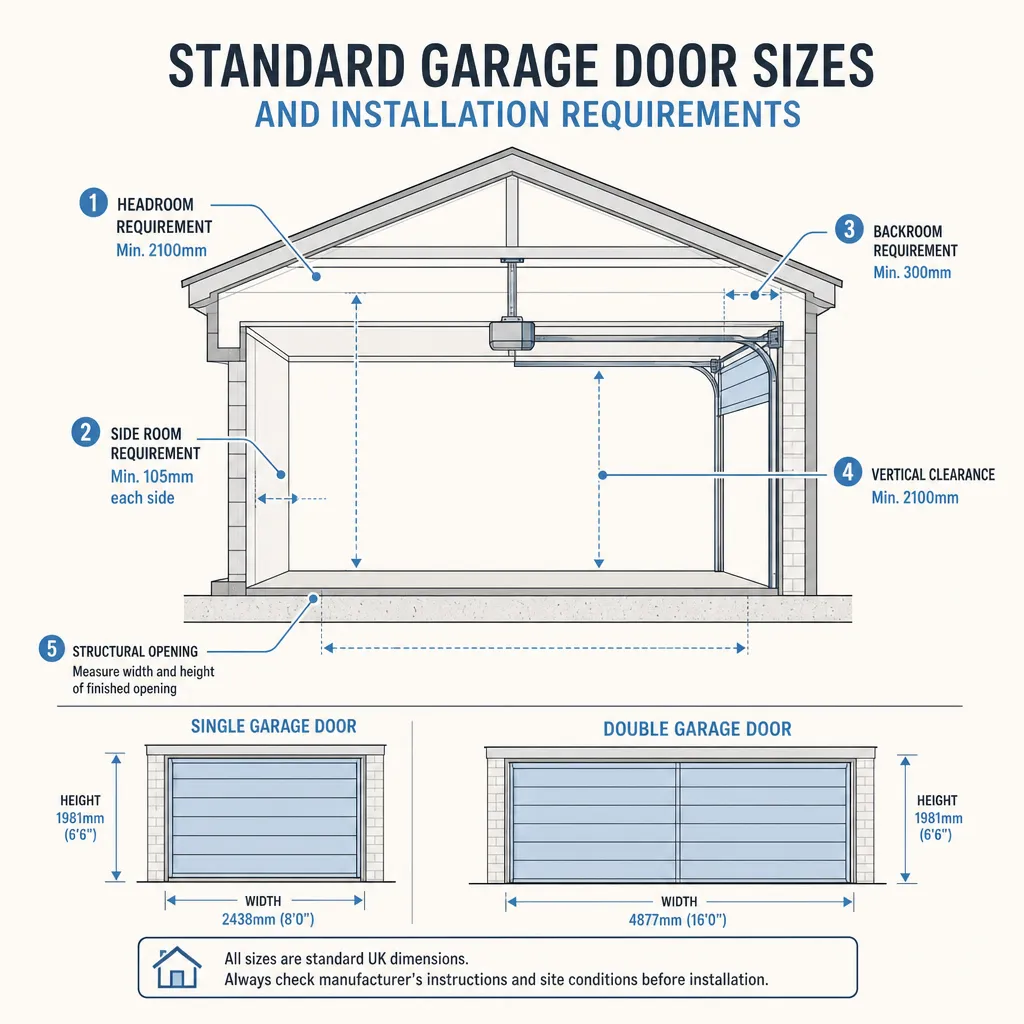
Standard Garage Door Sizes and Installation Requirements
Standard UK single garage doors fit a structural opening of 2134mm (7 ft) wide by 1981mm (6 ft 6 in) high; double doors typically span 4267mm (14 ft) wide.
 Improvement & Build
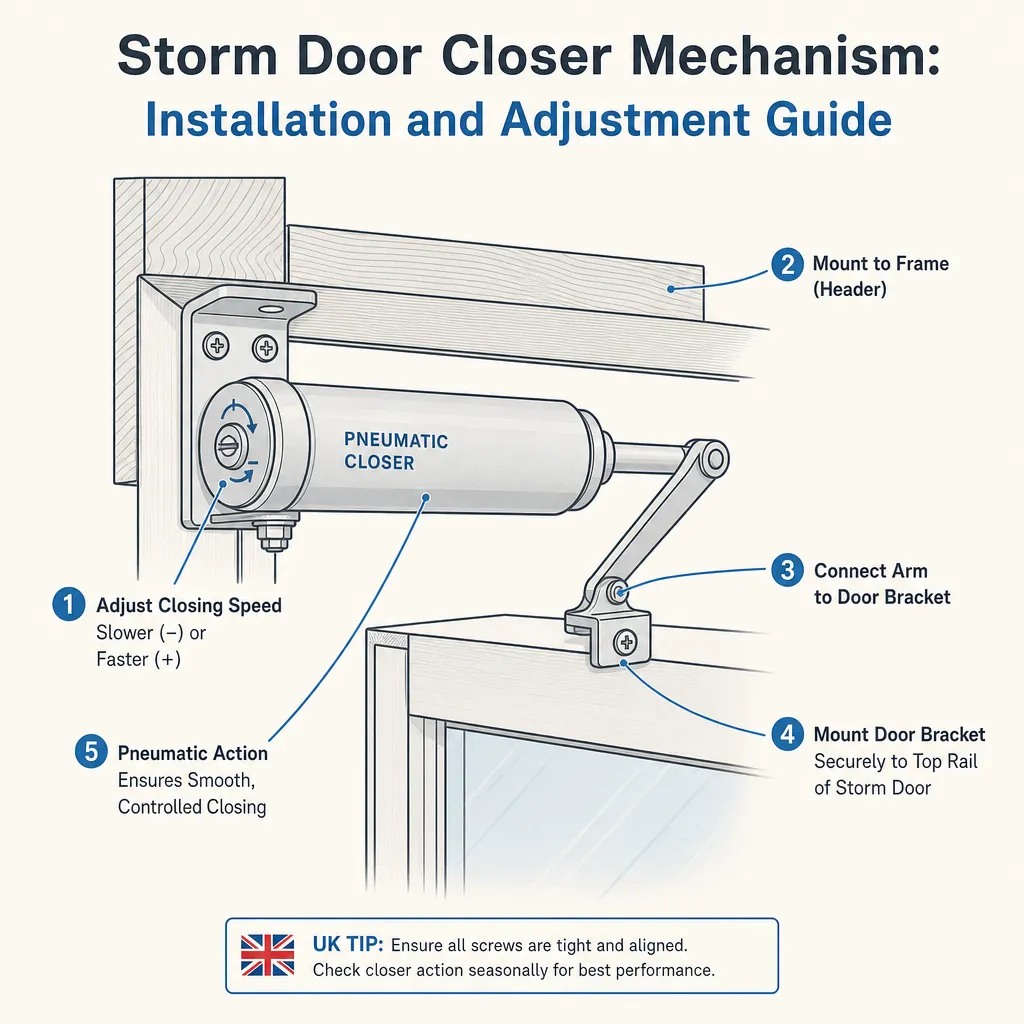
Storm Door Closer Mechanism: Installation and Adjustment Guide
Storm door closers are adjusted via a small screw at the end of the cylinder — clockwise slows the door, anticlockwise speeds it up.
 Improvement & Build
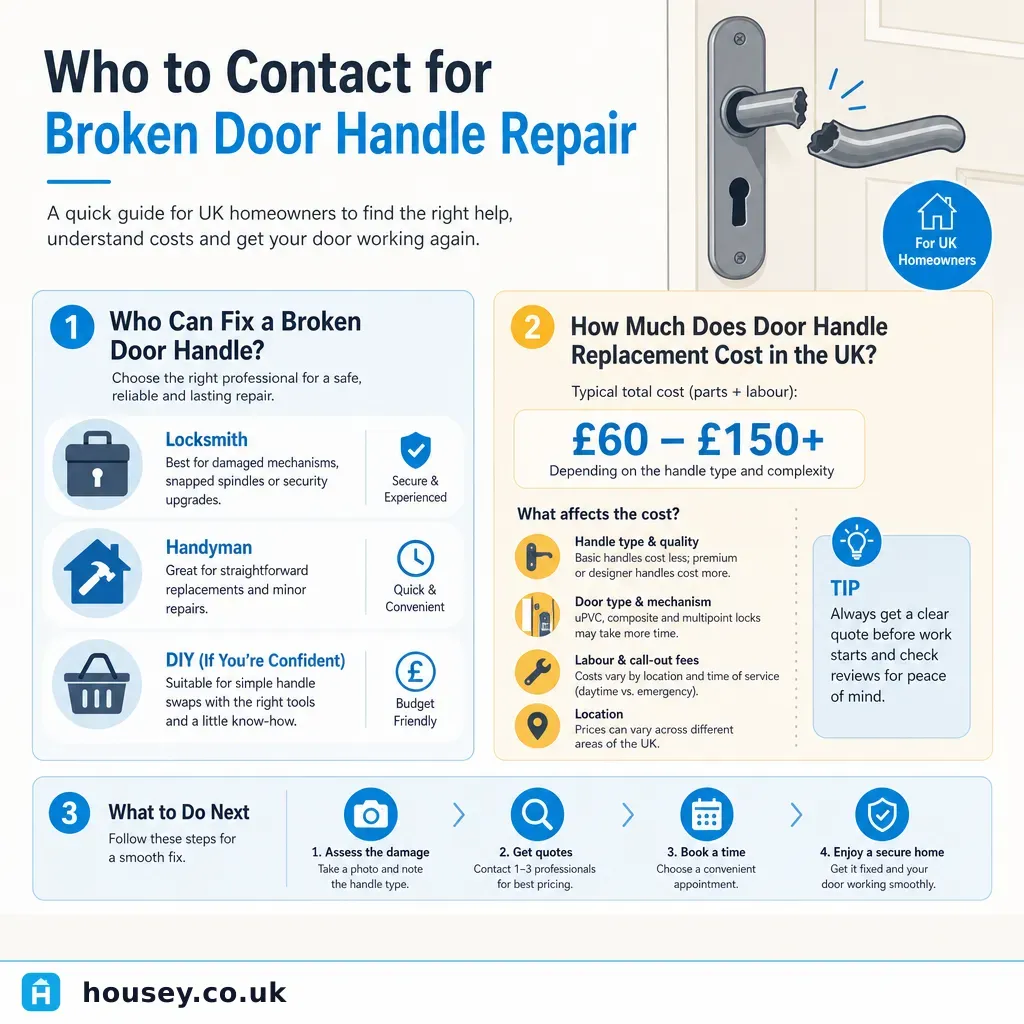
Who to Contact for Broken Door Handle Repair
For a broken door handle, a general handyperson can handle most internal timber door repairs, while a joiner or locksmith is better suited to external doors, particularly if the lock mechanism is affected.
 Improvement & Build
Retractable Door Latches: Function and Purpose Explained
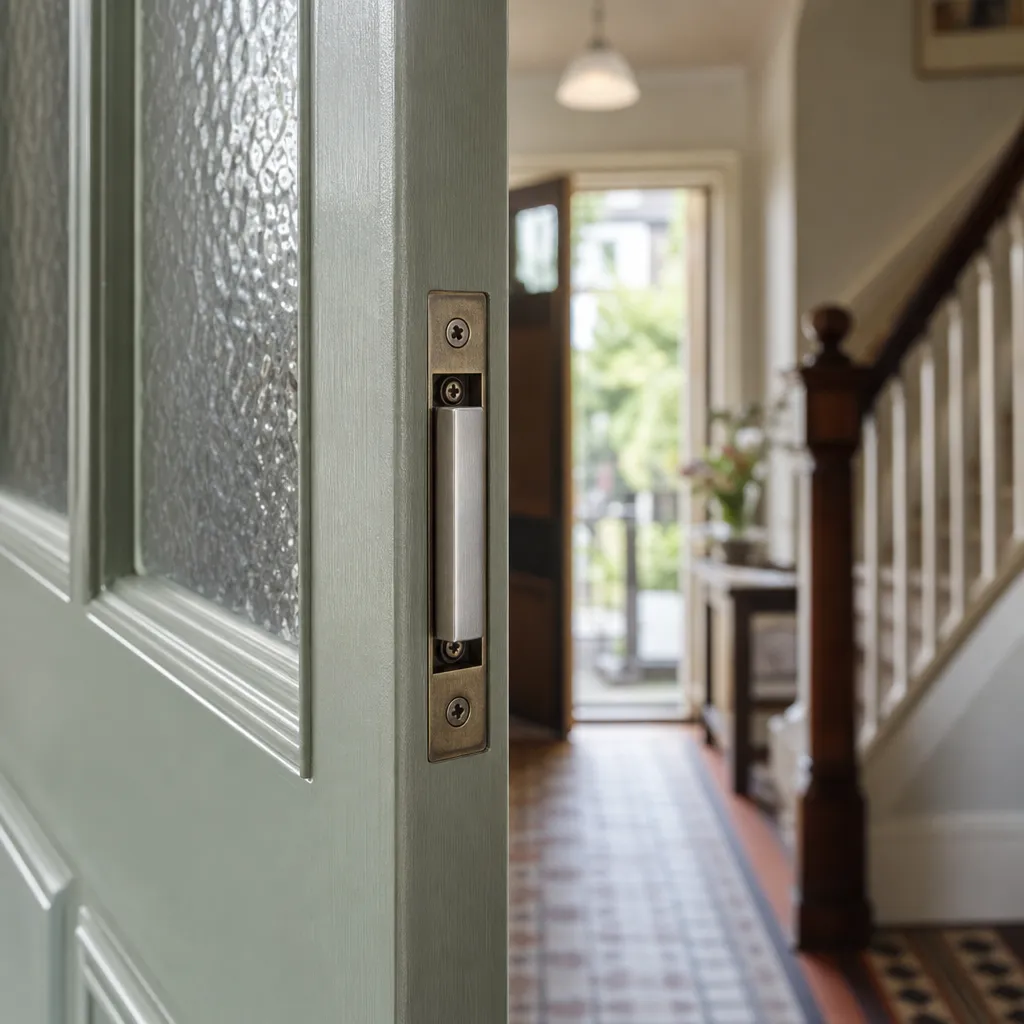
A retractable door latch uses a spring-loaded bolt that is pushed inward by the angled face of the striker plate as the door closes, then springs forward into the keep to hold the door shut.
 Improvement & Build
Repairing a Broken uPVC Door Lock: Replacement and Solutions
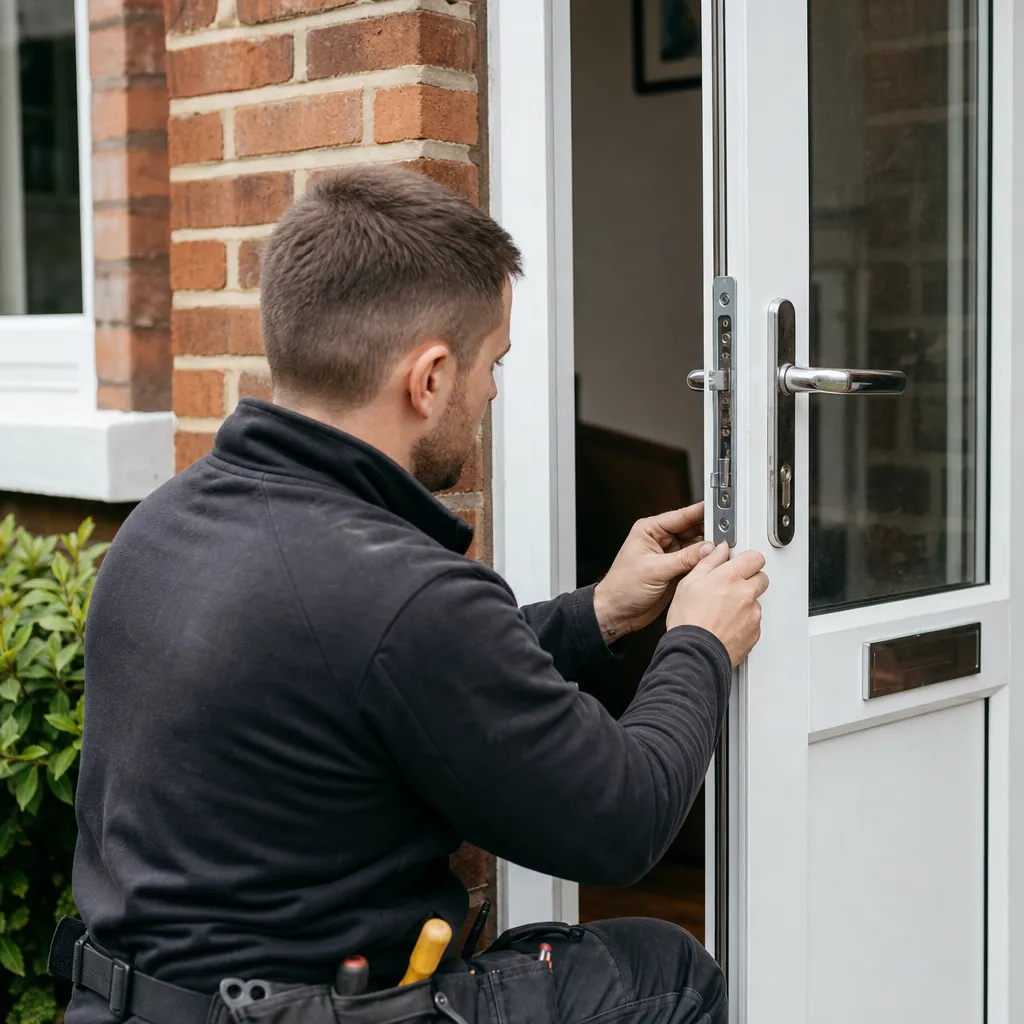
A broken uPVC door lock usually needs a new cylinder, a replacement multipoint mechanism, or both.