Standard Garage Door Sizes and Installation Requirements
By Housey · Last reviewed 1st of June 2026
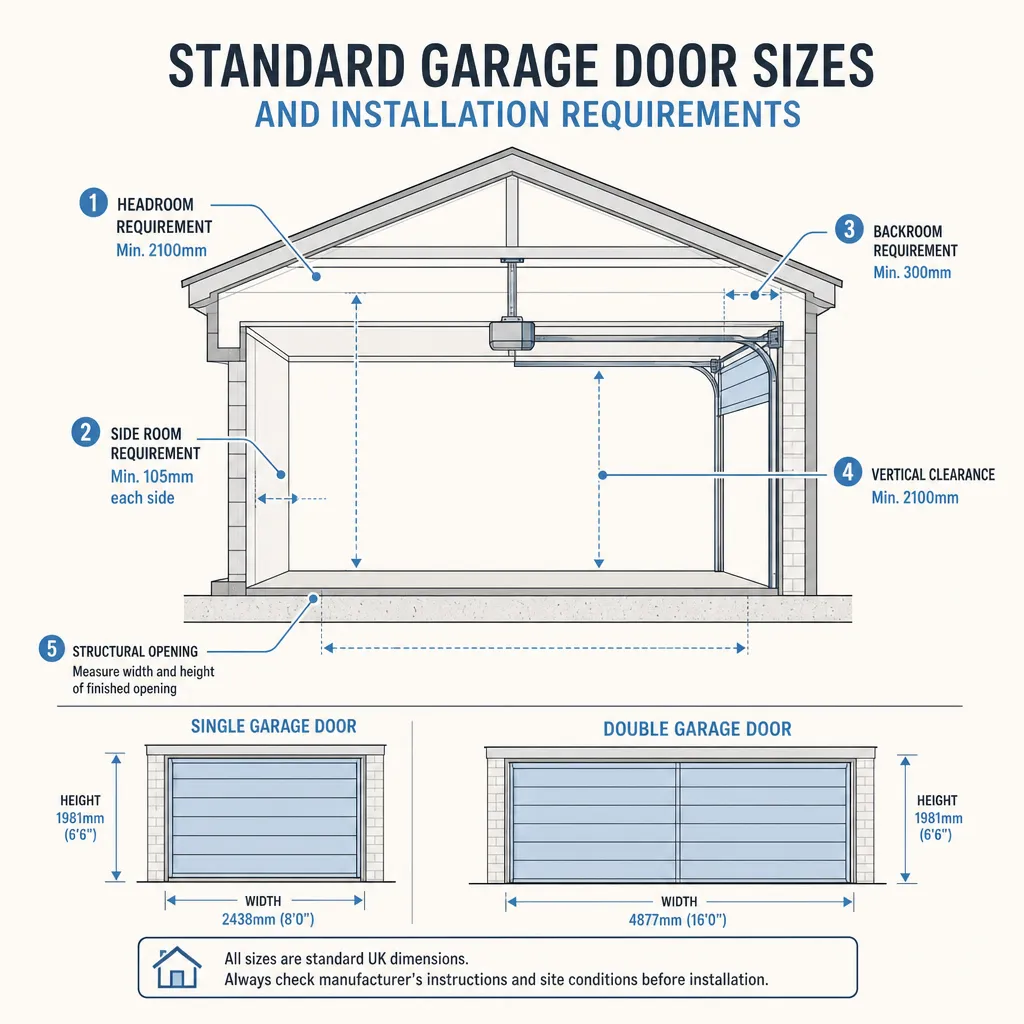
Standard Garage Door Sizes and Installation Requirements
Choosing or replacing a garage door is rarely as straightforward as picking a style — the structural opening, available headroom, and side clearances all determine which door types will physically fit. Whether you are renovating a 1930s semi with a single integral garage or specifying a new double opening as part of an extension, getting the dimensions right before ordering avoids costly remakes and delays on site.
Key points
- The most common UK single garage door structural opening is 2134mm (7 ft) wide by 1981mm (6 ft 6 in) high; many pre-1970s properties have narrower openings starting from 1981mm wide.
- Double garage doors typically span 4267mm (14 ft) wide; custom widths from 2440mm to 5500mm are available from most manufacturers.
- The structural (masonry) opening must be larger than the door leaf: up and over canopy doors typically need 75–100mm side clearance and a minimum of 150mm headroom above the opening.
- Building Regulations Approved Document B requires a fire-resisting door (minimum FD30S) in any compartment wall between an integral garage and the habitable rooms of the house — a standard garage door does not satisfy this requirement.
- Automated garage doors connected to the mains are notifiable work under Part P Building Regulations; a qualified electrician must install and certify the motor circuit.
Standard UK garage door dimensions
Manufactured single garage doors in the UK most commonly suit a structural opening of 2134mm × 1981mm (7 ft × 6 ft 6 in), though pre-1970s properties often have narrower openings. If you are measuring an existing opening, always measure masonry-to-masonry in both directions — not the old door or frame — and take readings at multiple points, as old brickwork is rarely perfectly plumb or square.
Door type | Typical single width | Typical double width | Common heights |
|---|---|---|---|
Up and over (canopy) | 2134–2286mm | 4267–4500mm | 1981–2134mm |
Up and over (retractable) | 2134–2438mm | 4267–4877mm | 1981–2286mm |
Roller | 1980–2500mm | 3500–5000mm | 1800–2500mm |
Sectional | 2134–2500mm | 4267–5000mm | 1981–2500mm |
Side-hinged | 2134–2500mm | 4000–5000mm | 1981–2286mm |
Dimensions are guide ranges; always confirm against the specific manufacturer's sizing chart before placing an order.
Headroom and side clearance requirements
The clearance required around the structural opening varies significantly by mechanism type:
- Up and over (canopy): Minimum 150mm headroom above the opening, 75mm each side. The leading edge of the door swings outward as it opens — allow a clear external apron zone in front of the garage.
- Up and over (retractable): 300mm headroom minimum, 75–100mm either side. The door retracts fully inside the garage, which requires greater internal depth behind the opening.
- Roller: As little as 75mm headroom (the box drum sits above the aperture), minimal side clearance. Best suited to garages with limited ceiling height or a beam running close to the top of the opening.
- Sectional: 150–200mm headroom for the horizontal ceiling track; approximately 90–115mm side room. Fits flush with the front wall and provides the maximum drive-through width of all door types.
- Side-hinged: No headroom requirement; doors open outward. Requires clear external space on each side — check adjacent boundary walls, gates, and any dropped kerb alignment.
If garage depth is limited, measure from the back of the door frame to the nearest internal obstruction (rear wall, step, water heater). Up and over mechanisms typically require 100–250mm of internal depth beyond the door leaf when fully open.
Which garage door type should you choose?
- Choose roller if headroom above the opening is under 250mm or a structural beam runs close to the top of the aperture.
- Choose sectional if you want the maximum drive-through width, a flush external finish, or improved thermal performance for an integral garage.
- Choose up and over (canopy) if budget is the priority, headroom exceeds 150mm, and the garage is detached.
- Choose side-hinged if the garage doubles as a workshop or storage area requiring frequent pedestrian access without raising the full door.
- Ask a specialist installer to measure on site if the opening is irregular, the lintel shows any signs of cracking or deflection, or the property is listed or within a conservation area.
Planning permission and Building Regulations
Garage door replacements are generally permitted development for houses and do not require a planning application. Exceptions include listed buildings, conservation areas, and situations where a change to the principal elevation would materially alter the character of the building. Check with your local planning authority if the situation is not clear-cut.
Building Regulations do apply in the following situations:
- Converting an integral garage to a habitable room: Approved Documents L, B, and F all become relevant. The opening will need to be infilled or fitted with a properly insulated, fire-rated element rather than a standard garage door.
- Automated electrical installation: Part P applies to any new mains circuit for a door motor. The circuit must be installed and certified by a qualified electrician, or the work must be notified to building control.
- Fire separation between garage and house: Where an integral garage shares a wall with a habitable room, Approved Document B requires a fire-resisting door (FD30S) with intumescent seals in that wall. A standard garage door does not meet this requirement and cannot substitute for it.
- Widening the structural opening: A structural engineer must specify the replacement lintel, and a building notice or full plans application must be submitted before any structural work begins.
For a standard like-for-like replacement on a non-habitable detached garage, Building Regulations do not usually apply.
Homeowner checklist before ordering
When to get professional help
Most standard door replacements can be handled by a specialist installation company. Seek additional professional input if:
- The lintel above the opening shows cracking, deflection, or rust staining on the soffit.
- The garage is integral to the house and you are uncertain about fire separation requirements under Approved Document B.
- You need to widen the structural opening — this requires structural engineering input and Building Regulations approval.
- The door motor requires a new dedicated circuit from the consumer unit.
- The property is listed or in a conservation area and any character-defining elements are affected.
How Housey can help
If your garage door project forms part of a wider renovation or new extension, our network of extension builders can advise on structural openings, lintel specifications, and Building Regulations compliance as part of the overall construction programme.
Frequently asked questions
What is the standard size of a single garage door in the UK?
The most common single garage door structural opening in the UK is 2134mm (7 ft) wide by 1981mm (6 ft 6 in) high. Older properties, particularly pre-1970s garages, may have narrower openings down to 1981mm wide. Always measure the masonry opening at multiple points — not the existing door frame — as old brickwork is rarely perfectly square.
Do I need planning permission to replace a garage door?
In most cases, no. Like-for-like replacement of a garage door is permitted development for houses. However, if the property is listed, in a conservation area, or if the change significantly alters the principal elevation, permitted development rights may not apply. Always check with your local planning authority if uncertain before ordering.
What headroom do I need for a roller garage door?
Roller garage doors require as little as 75mm of headroom above the opening because the mechanism sits in a compact box drum mounted directly above the aperture. This makes them well suited to garages with low ceiling height or beams close to the top of the opening, where up and over or sectional mechanisms would not physically fit.
Can I widen a single garage opening to fit a double door?
Only if the existing structural opening is already wide enough — a double door typically starts at 4267mm (14 ft) wide. Widening an existing single opening requires removing and replacing the lintel, which is a structural alteration. You will need a structural engineer's assessment and a Building Regulations application (full plans or building notice) before work begins.
Sources and further reading
Useful next reads
 Improvement & Build
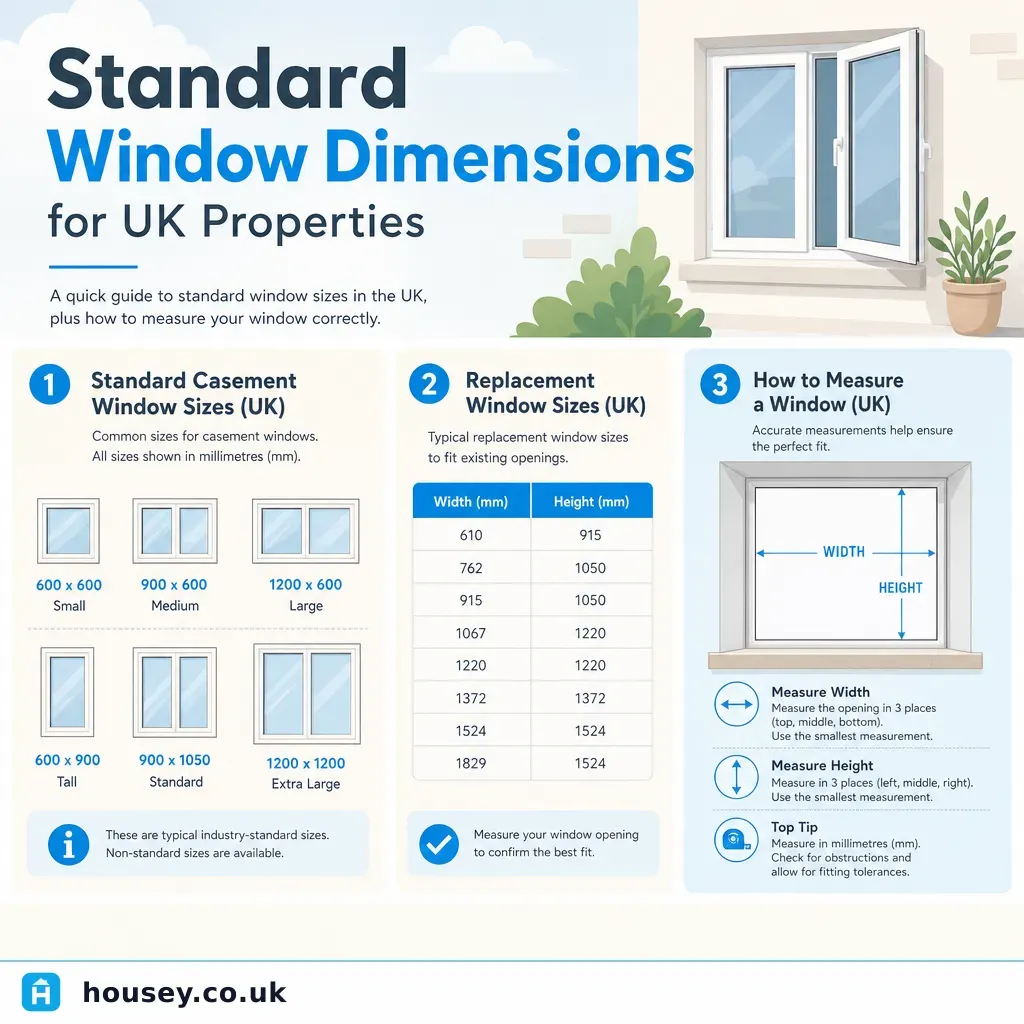
Standard Window Dimensions for UK Properties
UK windows have no mandatory size standard, but common off-the-shelf casement frames measure 600–1200 mm wide by 900–1200 mm tall.
 Improvement & Build
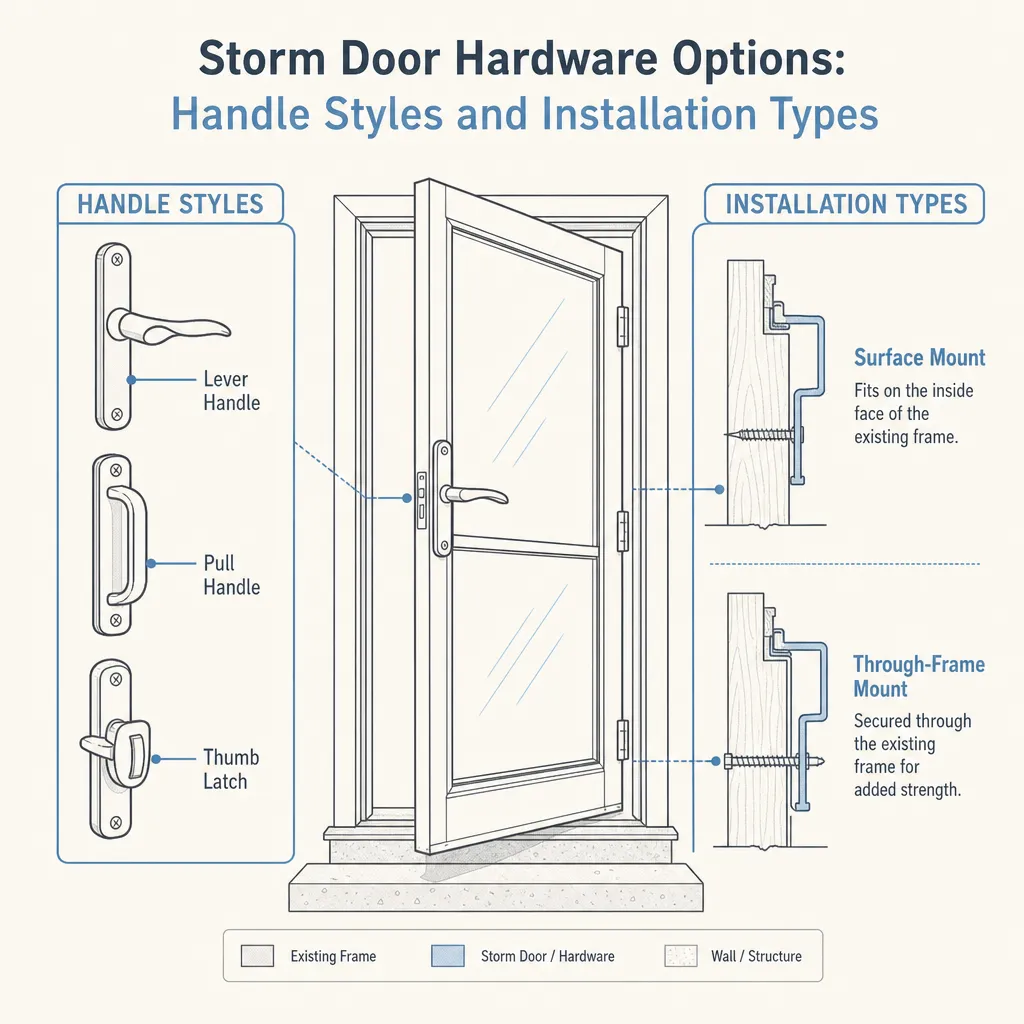
Storm Door Hardware Options: Handle Styles and Installation Types
UK storm door hardware options include full-length pull bars, lever handles, and push plates.
 Improvement & Build
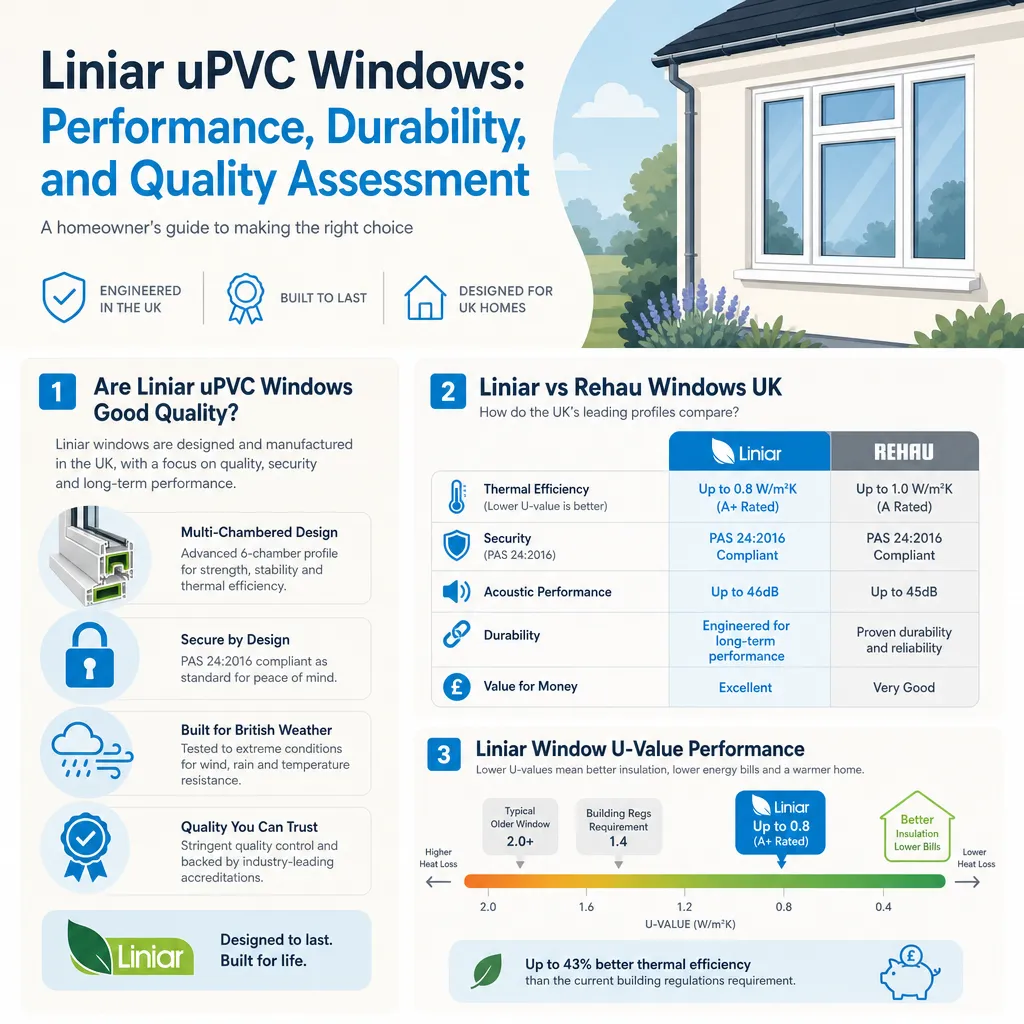
Liniar uPVC Windows: Performance, Durability, and Quality Assessment
Liniar uPVC window profiles are manufactured in the UK using multi-chambered, foamed frames.
 Improvement & Build
Garden Tap Installation with Hot and Cold Water: Plumbing Options
Adding a cold garden tap is a common DIY project, but routing hot water outdoors requires a plumber to connect to your domestic hot water system and comply with the Water Supply (Water Fittings) Regulations 1999.
 Improvement & Build
Sealing and Maintaining Historic Leaded Glass Windows: Preservation and Performance
Leaded glass windows are maintained using traditional linseed oil cement — not silicone or modern sealants, which prevent natural movement in the lead came.