Surveying and Maintaining Converted Windmills and Historic Structures
By Housey · Last reviewed 7th of May 2026
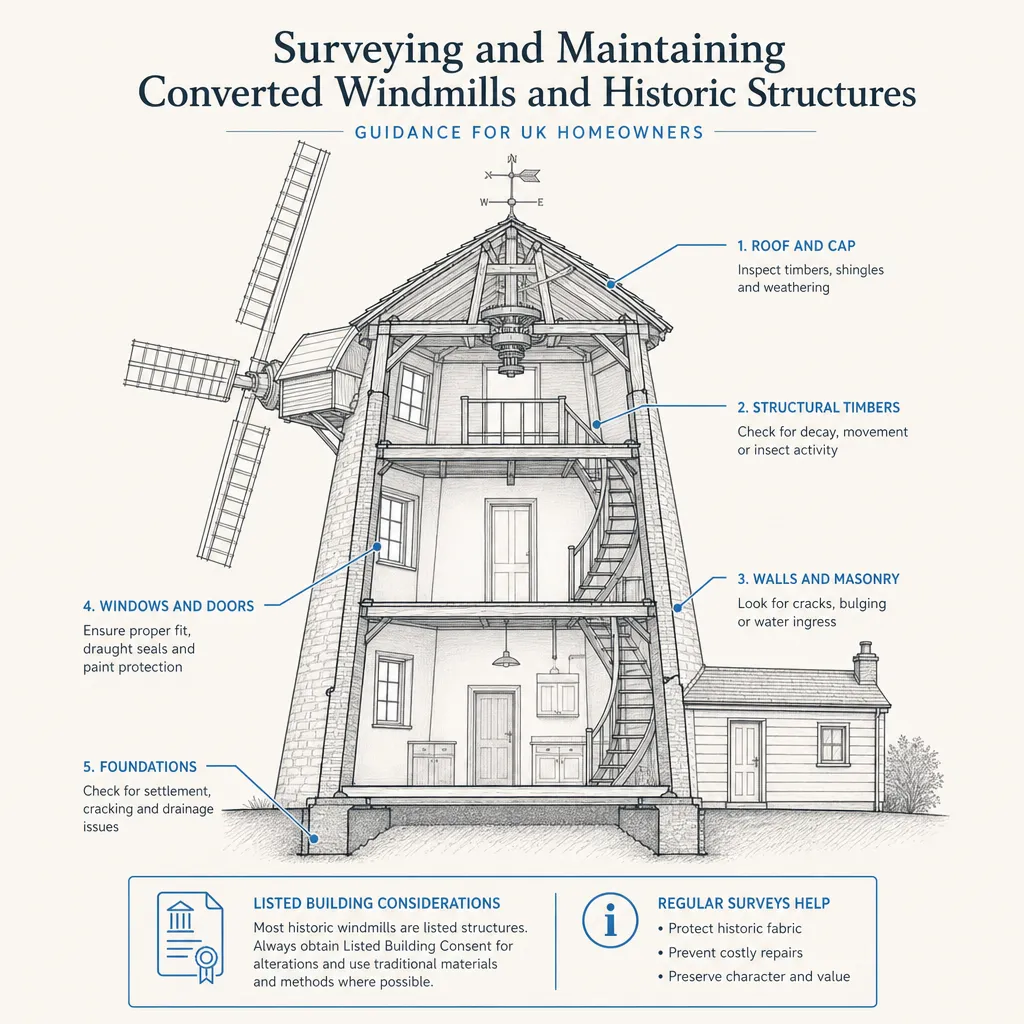
Surveying and Maintaining Converted Windmills and Historic Structures
Converted windmills represent some of the most distinctive residential properties in England, but their unusual construction, heritage status, and age create surveying and maintenance challenges that few buyers anticipate. Most date from the 17th to 19th centuries and were built using techniques — tapered masonry towers, lime mortar, embedded timber beams — that have little in common with any standard domestic property type. Couple that with the high likelihood of listed building status and the regulatory constraints that come with it, and both purchasing and maintaining a windmill demands specialist knowledge at every stage.
Key points
- Most standing windmills in England are listed at Grade I or Grade II*, the highest protection tiers under the Planning (Listed Buildings and Conservation Areas) Act 1990.
- Listed Building Consent is a legal requirement for any alteration, extension, or demolition that affects a listed structure's character; like-for-like maintenance using matching materials is usually (but not always) exempt.
- A RICS Level 3 Building Survey is the minimum appropriate inspection; a specialist heritage building survey by a chartered surveyor experienced in historic structures is usually more suitable.
- Lime-based mortars and traditional materials are typically required for masonry repairs; Portland cement can cause irreversible damage to historic brickwork and stonework by trapping moisture.
- Historic England's National Heritage List for England (NHLE) holds detailed listing records; your local planning authority's conservation officer is the first practical authority for consent questions.
What makes windmill surveys different from standard property inspections
A conventional RICS Level 2 or Level 3 survey is designed for domestic property of known construction types — Victorian terraces, 1930s semis, post-war houses, new-build flats. Converted windmills fall outside those categories in almost every respect: circular or octagonal floor plates, tapered masonry towers, internal timber cap structures, historic machinery voids, and construction methods that predate modern building practice by two centuries or more.
A chartered surveyor without historic buildings experience may miss defects that are routine in this context — differential movement between the tower and a later addition, lime mortar pointing that needs periodic renewal, or deterioration in a cap frame (the rotating timber structure at the summit). For that reason, many buyers and owners commission both:
- A RICS Level 3 Building Survey or specialist heritage building survey to assess overall condition and identify defects needing immediate attention.
- A measured building survey to produce accurate floor plans and section drawings — essential for Listed Building Consent applications and any future alteration works.
Survey type | Best for | Limitations for windmills |
|---|---|---|
RICS Level 2 Home Survey | Standard modern homes in reasonable condition | Not appropriate; windmills are non-standard construction |
RICS Level 3 Building Survey | Older, complex, or defective buildings | Adequate if the surveyor has historic buildings experience; may miss specialist elements |
Heritage building survey | Listed structures, unusual construction | Best option for windmills; requires a surveyor with demonstrable historic buildings specialism |
Structural engineer's report | Specific defects — cracking, movement, cap structure | Useful alongside a heritage survey if structural concerns are identified |
Measured building survey | Accurate recording of existing fabric for planning or alteration works | Advisable before any consent application; essential for Listed Building Consent drawings |
Structural risks particular to windmill towers
The most common structural concerns in windmill towers include:
- Differential settlement: The tower may have settled unevenly over centuries. Stepped cracking through brickwork or stonework can indicate ongoing movement and requires engineering assessment.
- Cap and fantail mechanisms: Many converted windmills retain original or partial cap structures. These are primarily timber, susceptible to decay, and — if in poor condition — can impose additional loads on the masonry below.
- Floor beam connections: Original floor beams are typically embedded directly into the masonry. Where moisture has penetrated, these connections can rot without obvious external signs.
- Repointing with cement: Previous owners may have repointed with Portland cement mortar, trapping moisture inside the wall and causing spalling and frost damage. This is a common and costly defect to remediate correctly.
- Later additions: Attached brick extensions or single-storey additions may have moved independently of the tower, creating gaps, water ingress routes, or structural tension at the junction.
Red flags during a pre-purchase inspection
- Stepped or diagonal cracking through the masonry, especially if recent or widening between visits.
- Rust staining around metal ties, cramps, or brackets embedded in the tower walls.
- Evidence of damp ingress at floor beam positions, visible as staining or timber discolouration.
- Visible movement or separation between the tower and any later addition.
- Lime mortar fully eroded from external joints at depth, leaving exposed aggregate or hollow sections.
- Ceiling cracks running in a radial pattern from the centre of a circular room.
- No record of planning or listed building consents for the original conversion works or subsequent alterations.
If you identify any of these during a viewing, commission a specialist structural engineer's inspection before exchanging, in addition to a heritage building survey.
Listed Building Consent: what requires approval and what does not
Most converted windmills in England are listed — the majority at Grade II, with a significant number at Grade II* or Grade I given their rarity and historical importance. Listed building status attaches to the entire structure, including fixtures, fittings, and curtilage buildings that form part of its historic character.
Under the Planning (Listed Buildings and Conservation Areas) Act 1990, Listed Building Consent is required for works that would affect the character of a listed building in a way that matters to its special interest. Routine maintenance using like-for-like materials and methods is generally exempt, but the following would typically require consent:
- Replacing original timber windows with uPVC or aluminium equivalents.
- Installing underfloor heating beneath original floor tiles or stone flags.
- Painting previously unpainted masonry, internally or externally.
- Installing solar panels or other renewables visible from a public place.
- Structural works to the cap frame or any retained millwork.
- Repointing using a mortar specification that differs materially from the original.
The distinction between maintenance and alteration is not always obvious. When in doubt, contact your local planning authority's conservation officer for pre-application advice before starting any works — verbal or written pre-application guidance can prevent costly enforcement action later.
Finding the right surveyor or consultant
Not all surveyors or architects have the specialist knowledge that windmills and listed structures demand.
What to look for:
- RICS membership and demonstrable experience with historic or listed buildings, ideally with references from comparable projects.
- Familiarity with Historic England's conservation principles and your local planning authority's heritage policies.
- Experience preparing or supporting Listed Building Consent applications.
- Knowledge of traditional materials: lime mortar, lime render, breathable insulation, heritage-compatible window replacement.
What to ask before instructing a surveyor or heritage consultant:
- Have you surveyed listed windmills or similar tower structures before, and can you provide references?
- What will the report cover, and will it flag items likely to require Listed Building Consent?
- Do you have experience engaging specialist sub-consultants such as structural engineers or timber decay specialists?
- Can you advise on grant funding — for example, from Historic England or local heritage bodies — for listed building repairs?
- Will you liaise with the local conservation officer on my behalf if questions arise during the inspection?
Day-to-day maintenance
Ongoing maintenance of a converted windmill requires the same discipline as any listed building: use traditional materials, keep records of all works carried out, and seek advice in cases of doubt before acting.
- Lime mortar repointing: Commission a specialist lime mortarist, not a general builder. A mortar analysis can help match the original mix in terms of aggregate grading and binder ratio.
- Drainage: Keep gutters and downpipes clear and in good repair. Water is the principal threat to historic masonry and embedded timbers.
- Damp monitoring: Install calibrated humidity sensors inside the tower if access is limited. Persistent elevated moisture causes structural damage long before it becomes visible.
- Cap structure inspection: If the cap or any original millwork is retained, a structural timber specialist should inspect it every five to ten years.
- Insurance: Specialist listed building insurers can cover reinstatement at like-for-like cost using appropriate materials; standard home insurance policies often cannot.
Historic England publishes free guidance on caring for listed buildings at historicengland.org.uk/advice/your-home/owning-a-listed-building/, covering maintenance priorities, grants, and materials advice.
Important limitations
This article provides general information only. The rules governing listed buildings, planning consent, and structural maintenance vary significantly depending on the grade of listing, local planning authority policies, the property's history of consents, and the specific condition of the structure. Nothing in this article constitutes legal, structural, or planning advice. Always consult a qualified heritage consultant, a chartered surveyor with demonstrable historic buildings experience, and your local planning authority's conservation team before beginning any works.
What to ask a qualified professional
- What is the listing grade, and what specific features or elements does the list entry identify as significant?
- Is there any enforcement history, outstanding notice, or informal objection attached to the property?
- Which proposed works will require Listed Building Consent, and which fall within routine maintenance?
- What materials specification would you recommend for the current repointing or repair works?
- Are there Historic England or local authority grants available to help fund listed building repairs?
- What would remediation of the identified defects cost broadly, and in what order of priority would you address them?
When to get professional help
If you are purchasing a windmill or similar historic structure, commission a heritage building survey and a measured building surveys before exchange — do not rely on a standard RICS Level 2 Home Survey for a non-standard listed property. If a structural concern is identified — cracking, movement, timber decay in load-bearing elements — instruct a structural engineer alongside the heritage surveyor before proceeding. If you are unsure whether proposed works require Listed Building Consent, speak to your local conservation officer before starting, not after.
How Housey can help
Housey connects homeowners and buyers with qualified heritage and conservation consultants who understand the demands of listed windmills and other historic structures. You can also request quotes for measured building surveys — essential for Listed Building Consent applications and accurate recording of the existing fabric — or commission a specialist structural survey where movement, cracking, or defect investigation is needed.
Frequently asked questions
Do I need Listed Building Consent to carry out repairs on a windmill?
Like-for-like maintenance using the same materials and methods as the original is generally exempt from Listed Building Consent, but the boundary between maintenance and alteration is not always clear. Repointing with a different mortar mix, replacing windows, or altering internal features may all require consent. Contact your local planning authority's conservation officer for pre-application advice before starting any works on a listed structure.
What type of surveyor should I instruct for a converted windmill?
A RICS Level 3 Building Survey is the minimum appropriate level, but you should seek a chartered surveyor with demonstrable experience in historic or listed buildings. For complex structures, a specialist heritage building survey — sometimes combined with a structural engineer's assessment — is more appropriate than a standard residential survey. Ask candidates specifically about previous windmill or tower structure experience.
Can I get a mortgage on a converted windmill?
Specialist lenders including Ecology Building Society and some high-street banks will lend on converted windmills, but availability is narrower than for standard properties. Expect a detailed valuation, a likely requirement for a RICS Level 3 survey, and higher insurance requirements. Speak to a whole-of-market mortgage broker with experience in non-standard property types before committing to a purchase.
What are the main structural risks in a converted windmill?
The most common concerns are differential settlement in the masonry tower, timber decay in embedded floor beams or cap structures, water ingress through failed pointing (especially where Portland cement has been used historically), and movement at junctions between the original tower and later additions. A specialist surveyor can identify which of these apply and advise on priority remediation.
Who enforces listed building rules for windmills?
Your local planning authority is responsible for enforcing Listed Building Consent requirements. Historic England also has advisory and enforcement powers in some cases. Unauthorised works to a listed building are a criminal offence under the Planning (Listed Buildings and Conservation Areas) Act 1990, potentially resulting in unlimited fines and orders to reinstate the original fabric at the owner's expense.
Sources and further reading
- National Heritage List for England — Historic England: search listing records for any windmill
- Planning (Listed Buildings and Conservation Areas) Act 1990 — legislation.gov.uk: the primary legislation governing listed building consent
- Conservation Principles, Policies and Guidance — Historic England: framework for managing change in historic environments
- Caring for your listed building — Historic England: practical guidance for owners
- RICS Home Surveys standards — RICS: survey levels and professional standards
Useful next reads
 Planning & Pre-Build
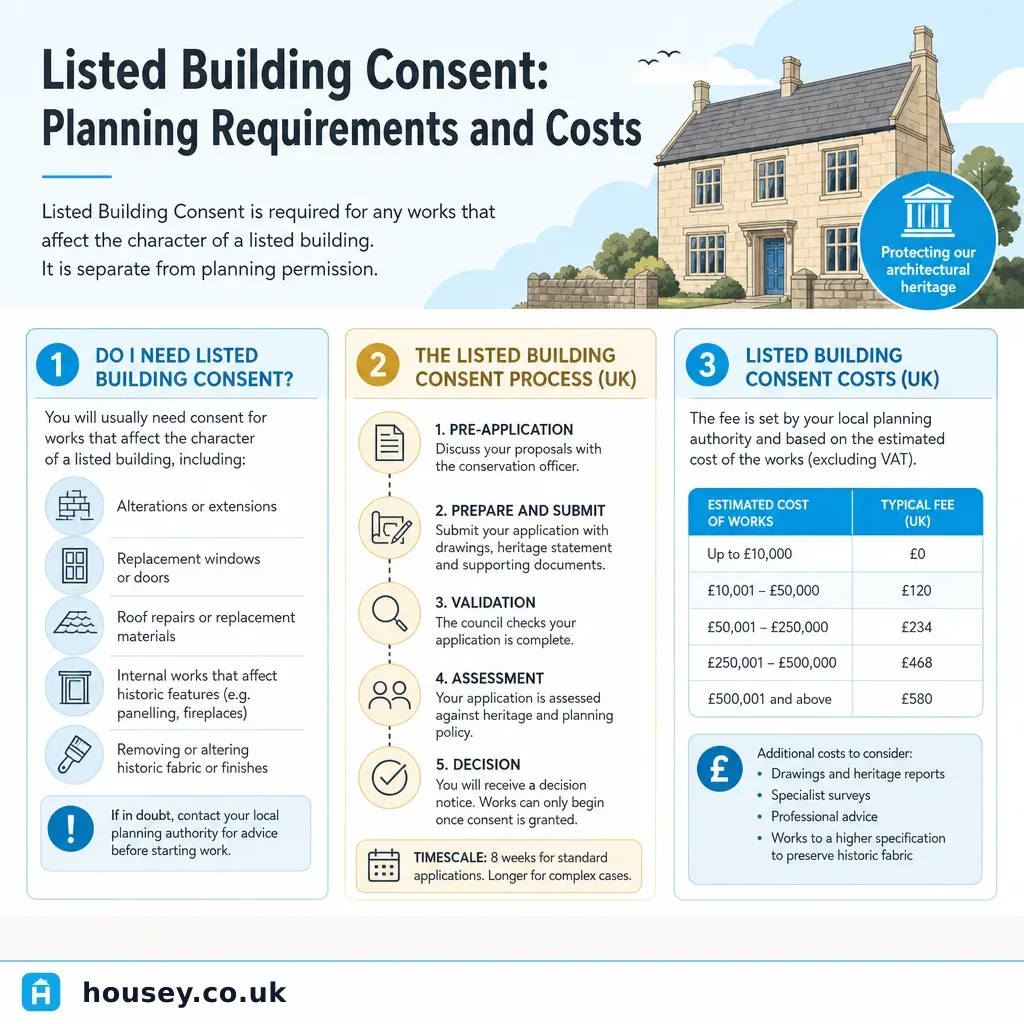
Listed Building Consent: Planning Requirements and Costs
Listed Building Consent is required for any works that affect the character of a listed building as a building of special architectural or historic interest — including internal alterations.
 Planning & Pre-Build
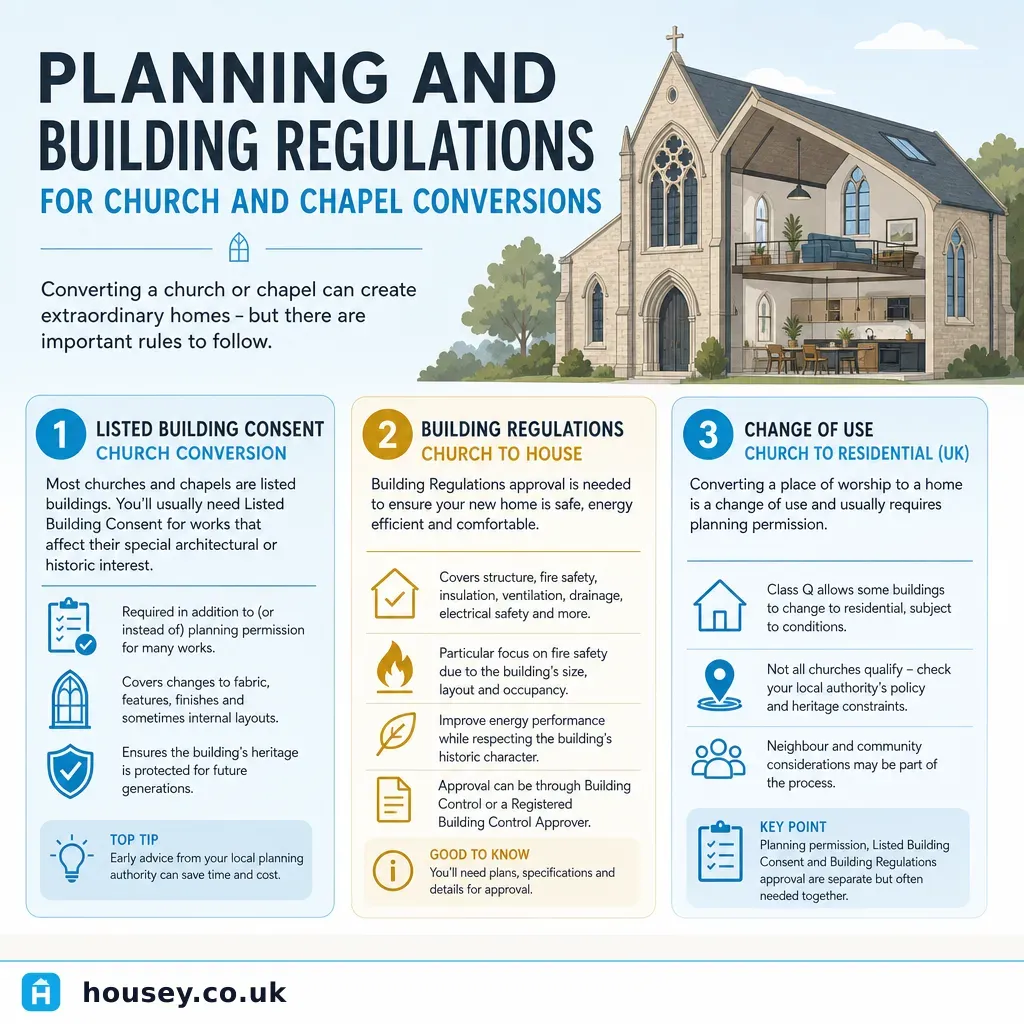
Planning and Building Regulations for Church and Chapel Conversions
Converting a church or chapel to residential use requires planning permission for change of use from Class F1 to Class C3, and listed building consent if the building is listed.
 Planning & Pre-Build
Heritage Property: Preserving Historic Homes and Conservation Standards
Listed buildings in the UK require Listed Building Consent for most works — internal and external — that affect their special architectural or historic interest.
 Planning & Pre-Build
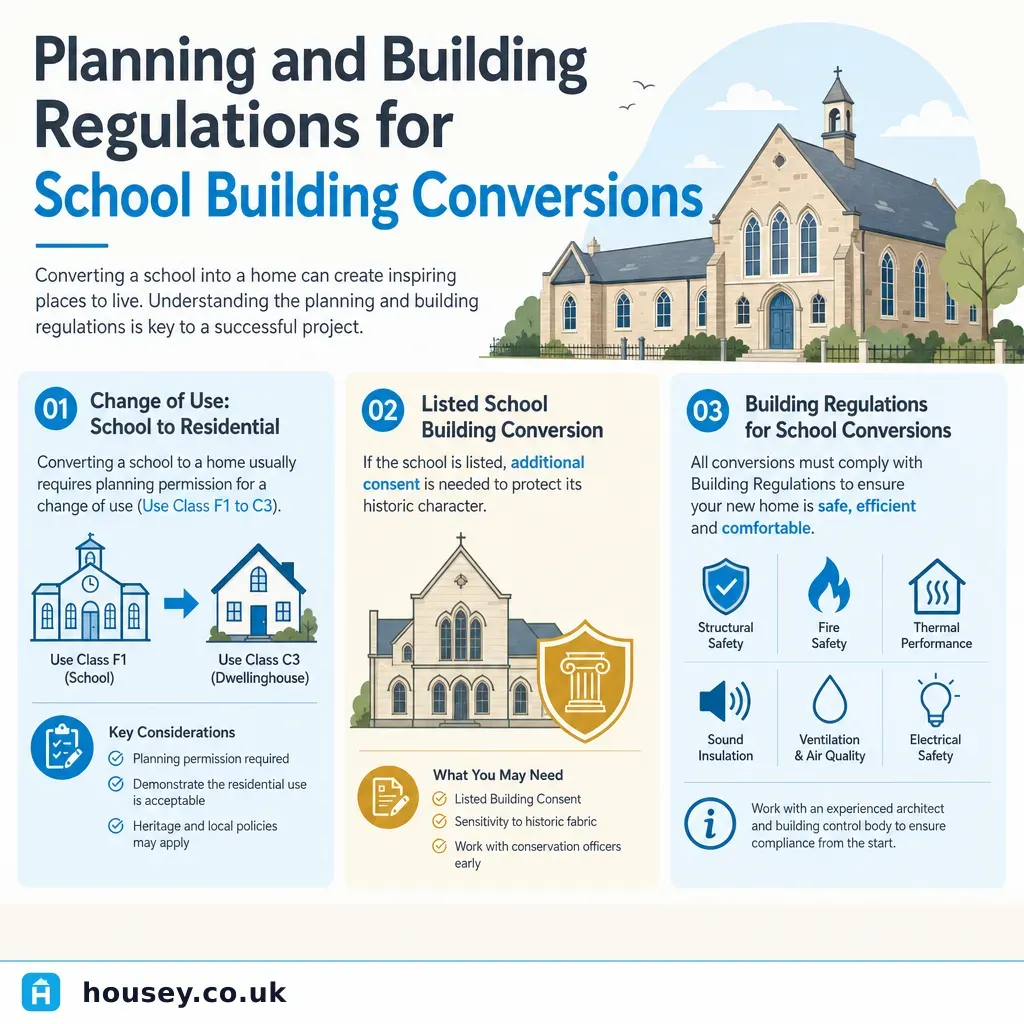
Planning and Building Regulations for School Building Conversions
Converting a school to residential use in England requires full planning permission — there is no permitted development right for this change of use.
 Planning & Pre-Build
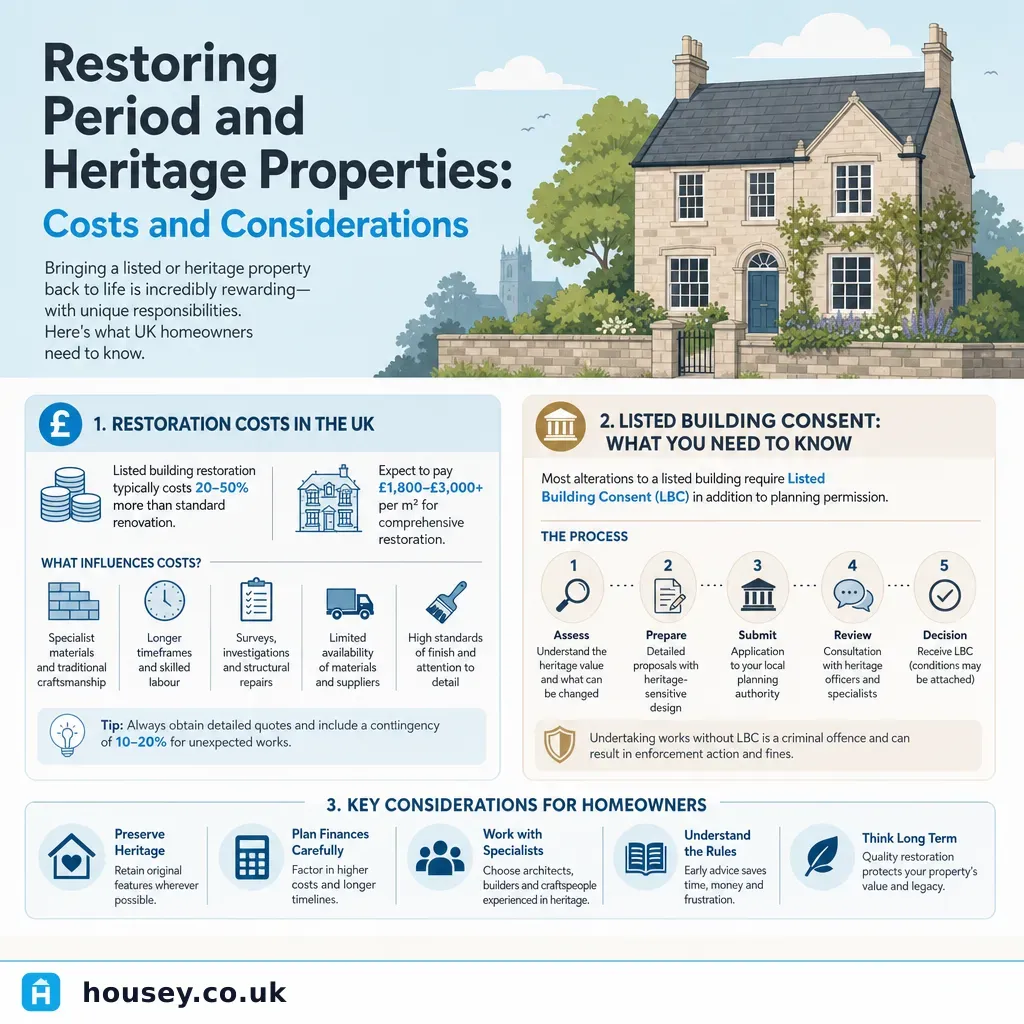
Restoring Period and Heritage Properties: Costs and Considerations
Restoring a period or heritage property requires listed building consent for most alterations, use of traditional materials such as lime mortar, and specialist contractors.