Planning and Building Regulations for Church and Chapel Conversions
By Housey · Last reviewed 7th of May 2026
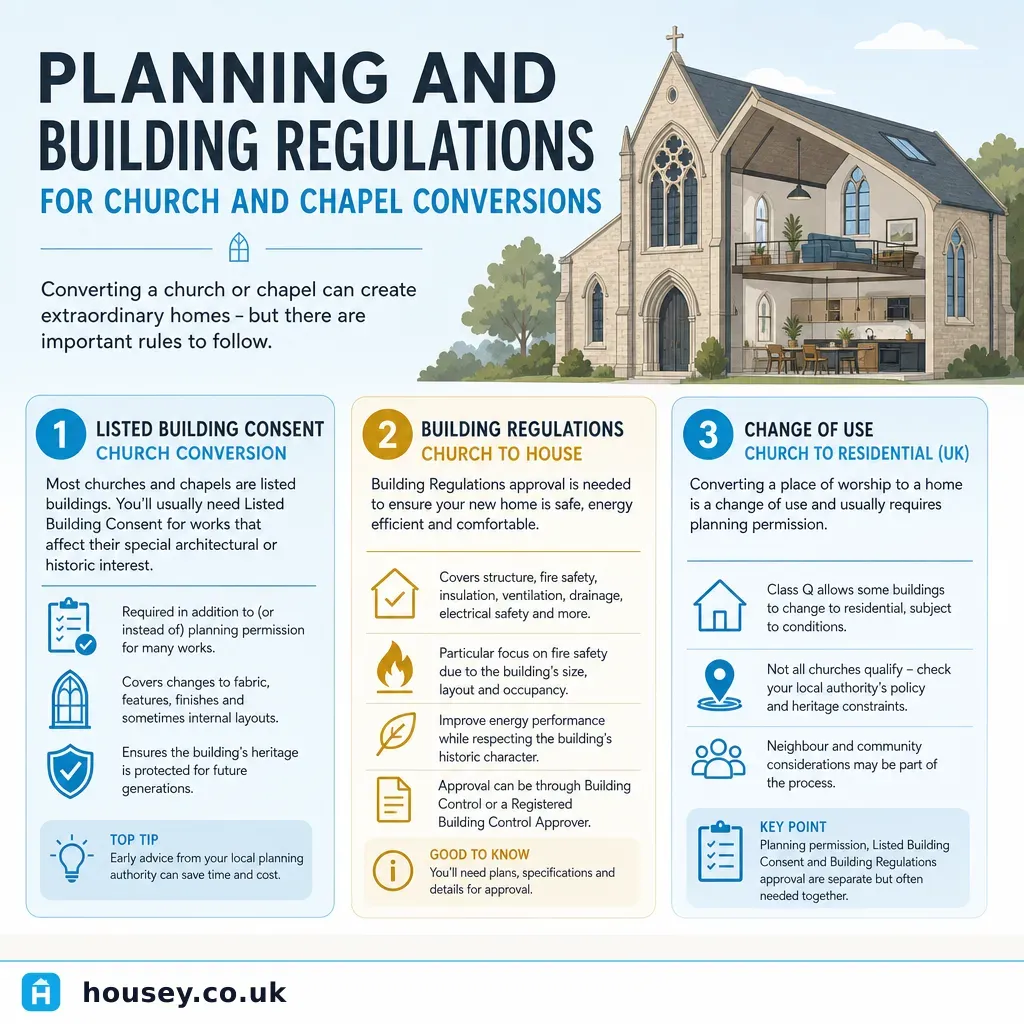
Planning and Building Regulations for Church and Chapel Conversions
Converting a redundant church or chapel into a home is one of the most complex residential projects in the UK property market. The combination of a listed structure, ecclesiastical ownership history, and the need to meet modern building standards means that planning and regulatory requirements are far more layered than a standard residential conversion. Whether you are buying a church at auction or have acquired a redundant chapel privately, understanding the planning framework before you commit is essential.
Key points
- Change of use from a place of worship (Use Class F1) to a dwelling (Use Class C3) requires full planning permission — there are no permitted development rights that allow this change automatically.
- If the building is listed (Grades I, II*, or II in England; A, B, or C in Scotland and Wales), listed building consent is required separately from planning permission and covers internal as well as external works.
- Building Regulations approval applies to all conversions, covering structure (Part A), fire safety (Part B), energy efficiency (Part L), ventilation (Part F), and access (Part M).
- Historic England is a statutory consultee for Grade I and Grade II* applications; the local planning authority's conservation officer is a key contact for all heritage conversions.
- Many churches are not individually listed but fall within a conservation area, which introduces additional controls on external alterations and may be subject to Article 4 Directions.
Change of use: what you need to know
Churches and chapels in England are classified under Use Class F1 (local community use) under the Town and Country Planning (Use Classes) Order 1987 (as amended). Converting to a single dwelling (Class C3) or flats is a material change of use and always requires planning permission.
The planning application will be assessed against the local development plan, national planning policy (the National Planning Policy Framework in England), and any heritage designations. Councils typically examine:
- Whether the building is still genuinely needed for community use, or whether there is clear evidence of redundancy.
- The impact of the proposed design on the character and appearance of the surrounding area.
- The treatment of key architectural elements — stained glass, windows, doors, internal partitions, and any new inserted structures such as mezzanines.
- Whether the proposals cause harm to the significance of a heritage asset, and whether that harm is justified.
Conversion to multiple dwellings or flats introduces additional complexity. A Flood Risk Assessment may be required if the site is in Flood Zone 2 or 3, and the provision of affordable housing contributions may be sought by some local authorities for larger schemes.
Listed building consent
Approximately 6,000 churches and chapels in England are listed buildings, according to Historic England's National Heritage List for England. A listed building's protection extends to its interior as well as its exterior, and to all fixtures and fittings that form part of the structure. This means even modest internal works — removing pews, forming a bathroom, creating a mezzanine — require listed building consent in addition to planning permission.
Listed building consent is assessed separately by the local planning authority. The core question is whether the proposed changes harm the heritage significance of the building, and whether that harm is necessary and proportionate.
Which grade applies?
Grade (England) | Equivalent (Scotland / Wales) | Significance | Listed building consent required? |
|---|---|---|---|
Grade I | Category A / Grade I | Exceptional interest | Yes — highest level of scrutiny |
Grade II* | Category B / Grade II* | Particularly important | Yes — high scrutiny, Historic England consultee |
Grade II | Category C / Grade II | Nationally important | Yes — most common designation |
Unlisted in conservation area | Similar local designations | Local character | Planning permission required; Article 4 Directions may add controls |
In Scotland, listed building consent is governed by the Planning (Listed Buildings and Conservation Areas) (Scotland) Act 1997, with Historic Environment Scotland as the heritage body. In Wales, equivalent legislation applies under the Planning (Listed Buildings and Conservation Areas) Act 1990, with Cadw as the heritage body.
Decision tree: do you need listed building consent?
- Is the building on the National Heritage List for England, Cadw's register, or Historic Environment Scotland's listing? → Yes: listed building consent is required before any works begin. No: continue to next question.
- Is the building in a conservation area? → Yes: planning permission is needed for most external changes; check with the local planning authority whether an Article 4 Direction applies that removes permitted development rights. No: standard planning permission for change of use applies.
- Are any works proposed to the interior? → If the building is listed: yes, listed building consent is required for any material change that affects the character or significance of the building.
- Are you subdividing into multiple units? → Always seek pre-application discussions with the conservation officer and instruct a heritage consultant before designing a multi-unit scheme.
- Is the building in active ecclesiastical use? → Some denominations retain ecclesiastical exemption from listed building consent for internal works to active churches. Once a building is made redundant and sold, this exemption ceases to apply.
Building regulations for church conversions
Even where planning permission and listed building consent are granted, the building must comply with the Building Regulations 2010 (England and Wales). The principal Approved Documents relevant to church conversions include:
- Part A (Structure): Structural adequacy of floors, roofs, and any new openings. Church roofs frequently use heavy timber trusses or stone vaulting; a structural assessment is needed before adding new mezzanine levels or inserted floors.
- Part B (Fire safety): Means of escape, fire detection, and compartmentation. Large open-plan church spaces converted into multiple dwellings require careful fire compartmentation design.
- Part L (Conservation of fuel and power): Requires meaningful improvement to energy efficiency when carrying out conversion work. For listed buildings, the requirement is to improve performance "as far as reasonably practicable" without causing undue harm to significance — one of the most contested areas in practice.
- Part F (Ventilation): Churches are often poorly ventilated for residential use; mechanical ventilation or heat recovery systems are commonly required.
- Part M (Access): Accessibility standards must be met where reasonably practicable.
- Part P (Electrical safety): All new electrical installation must be notified to or self-certified by a registered competent person.
Building control approval can be obtained through the local authority building control (LABC) or a Registered Building Control Approver (private sector), operating under the Building Safety Act 2022 framework.
Energy efficiency and historic buildings
Part L of the Building Regulations requires energy improvements in conversion projects, but Historic England guidance acknowledges that many standard solutions — external wall insulation, cavity fill, replacement double-glazed units in historic frames — are inappropriate for listed buildings where they would harm significance.
For listed church conversions, the usual approach is a heritage-compatible energy strategy:
- Secondary glazing rather than replacement windows to listed frames.
- Internal wall insulation using breathable, lime-based systems to avoid interstitial condensation within solid historic fabric.
- Underfloor heating in new screed where the floor construction allows.
- High-efficiency heating and hot water systems.
- Mechanical ventilation with heat recovery (MVHR) where airtightness targets can be achieved without harmful intervention.
A retrofit assessor or energy consultant with experience of historic buildings — ideally familiar with PAS 2035 principles and Historic England guidance — can help develop a strategy that satisfies both Part L requirements and the conservation officer's concerns.
Red flags to watch for
- No pre-application discussion before submitting — this is rarely advisable for a complex heritage conversion. Most local planning authorities offer a pre-application service; use it.
- No heritage impact assessment with a listed building consent application — Historic England and most LPAs expect this, and its absence often delays or prejudices an application.
- Structural assumptions about church roofs — many Victorian church roof timbers are in poor condition; repair or replacement can add substantially to project costs and may require separate listed building consent.
- Overlooking bat survey requirements — churches are among the most important bat habitats in the UK; a preliminary bat roost assessment is almost always expected by the LPA, and failure to obtain one can result in enforcement action if roosts are disturbed.
- Underestimating drainage — Victorian drainage on church sites is often combined, poorly mapped, and in poor condition; a CCTV drain survey is advisable before exchange of contracts.
- Assuming the ecclesiastical exemption still applies — once a building is made redundant and sold, the exemption ceases; all listed building controls apply in the normal way.
Important limitations
This article provides general information about planning and building regulations as they typically apply to church and chapel conversions in England. Rules and requirements vary by local planning authority, the heritage designation of the building, its location, planning history, and the nature of the proposed works. Planning policy in Scotland and Wales differs from policy in England in specific respects.
This article is not a substitute for professional planning, heritage, structural, or building regulations advice. You should consult a qualified planning consultant, a heritage and conservation specialist, and an appropriate building control body before purchasing, applying for consent, or commencing any works.
When this becomes urgent
- If works have already started without planning permission or listed building consent, stop immediately and take professional advice. Unauthorised works to a listed building are a criminal offence under the Planning (Listed Buildings and Conservation Areas) Act 1990.
- If a bat roost is found during initial investigations or early works, all works must cease and a Natural England licence must be obtained before proceeding.
- If a structural survey or inspection identifies significant movement, wet rot, or concealed roof deterioration, instruct a structural engineer before exchanging contracts.
What to ask a qualified professional
Before instructing a planning consultant or heritage adviser for a church conversion, ask:
- Have you managed listed building consent and planning applications for similar ecclesiastical conversions, and what was the outcome?
- Which officers at this local planning authority have you spoken to, and what are their initial concerns with a scheme like this?
- What heritage impact assessment will you produce, and will it address both significance and the harm test under paragraph 208 of the NPPF?
- What are the realistic planning risks, and what is the likely determination timetable?
- How will you address bat survey requirements, and do you work with a suitably qualified ecologist?
- Will building regulations compliance be managed separately, and can you recommend a building control consultant with listed building experience?
When to get professional help
Church and chapel conversions involve multiple overlapping regulatory regimes and specialist disciplines. You should instruct professionals before purchasing, not after. At minimum you will need a planning consultant with heritage experience, a heritage and conservation specialist, a structural engineer to assess the fabric, and a building control consultant familiar with listed building work.
Seek professional input immediately if:
- There is any doubt about whether the building is listed or in a conservation area.
- Works have already started without consent.
- A survey reveals structural movement, significant wet rot, or major roof deterioration.
- Bats or nesting birds are discovered on site.
- Title or ecclesiastical covenant issues are identified by your solicitor.
How Housey can help
Housey connects homeowners and developers with qualified professionals across the disciplines that matter most for a church conversion. You can request quotes from a planning consultant with heritage experience, a heritage and conservation specialist, a structural engineer, and a building control consultant — making it straightforward to assemble the right team before you commit to a purchase or a planning application.
Frequently asked questions
Does a church conversion always need planning permission?
Yes. Changing the use of a church or chapel (Use Class F1) to a dwelling or dwellings (Use Class C3) is a material change of use and always requires full planning permission in England, Scotland, and Wales. There are no permitted development rights that allow this change automatically, regardless of the building's size, location, or condition.
How long does a church conversion planning application take?
Most local planning authorities aim to determine applications for major heritage conversion projects within 13 weeks, though complex listed building cases often take longer. Pre-application discussions, ecology surveys — particularly bat surveys — and a heritage impact assessment should be completed before submission to avoid delays and reduce the risk of refusal.
Do I need a bat survey for a church conversion?
Almost certainly. Churches are among the most important bat roost habitats in the UK, and planning authorities routinely require a preliminary bat roost assessment. If roosts are found, a full survey under Natural England licence conditions is needed. Bat surveys can only be carried out at certain times of year, so instructing an ecologist early is important for project programming.
What is a heritage impact assessment?
A heritage impact assessment is a document, usually prepared by a heritage and conservation consultant, that identifies the significance of the building and explains how proposed works would affect that significance. It is required by Historic England and most local planning authorities for any listed building consent application, and is good practice for unlisted buildings within conservation areas.
Can a listed church be converted into flats rather than a single house?
It is possible, but subdivision into multiple units attracts additional scrutiny. The local planning authority and Historic England will assess whether the compartmentation required for flats causes unacceptable harm to the building's significance. Some conversions have been approved as flats; others only as single dwellings. Pre-application discussions with the conservation officer are essential before designing a multi-unit scheme.
Sources and further reading
- Planning Portal: Change of use — Planning Portal
- National Heritage List for England — Historic England
- Energy Efficiency and Historic Buildings — Historic England
- Listed buildings and conservation areas — GOV.UK
- Building Regulations Approved Documents — GOV.UK
- Bats: surveys and licensing — Natural England / GOV.UK
Useful next reads
 Planning & Pre-Build
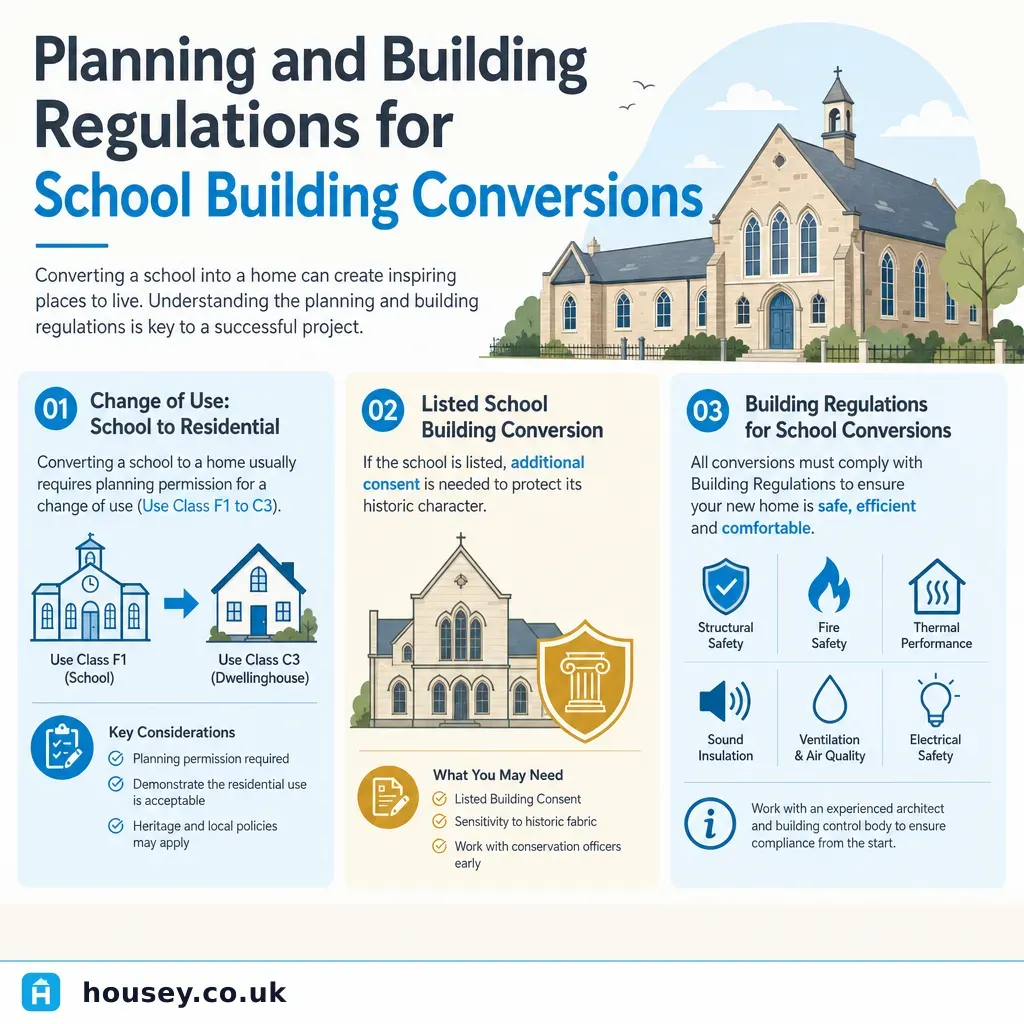
Planning and Building Regulations for School Building Conversions
Converting a school to residential use in England requires full planning permission — there is no permitted development right for this change of use.
 Planning & Pre-Build
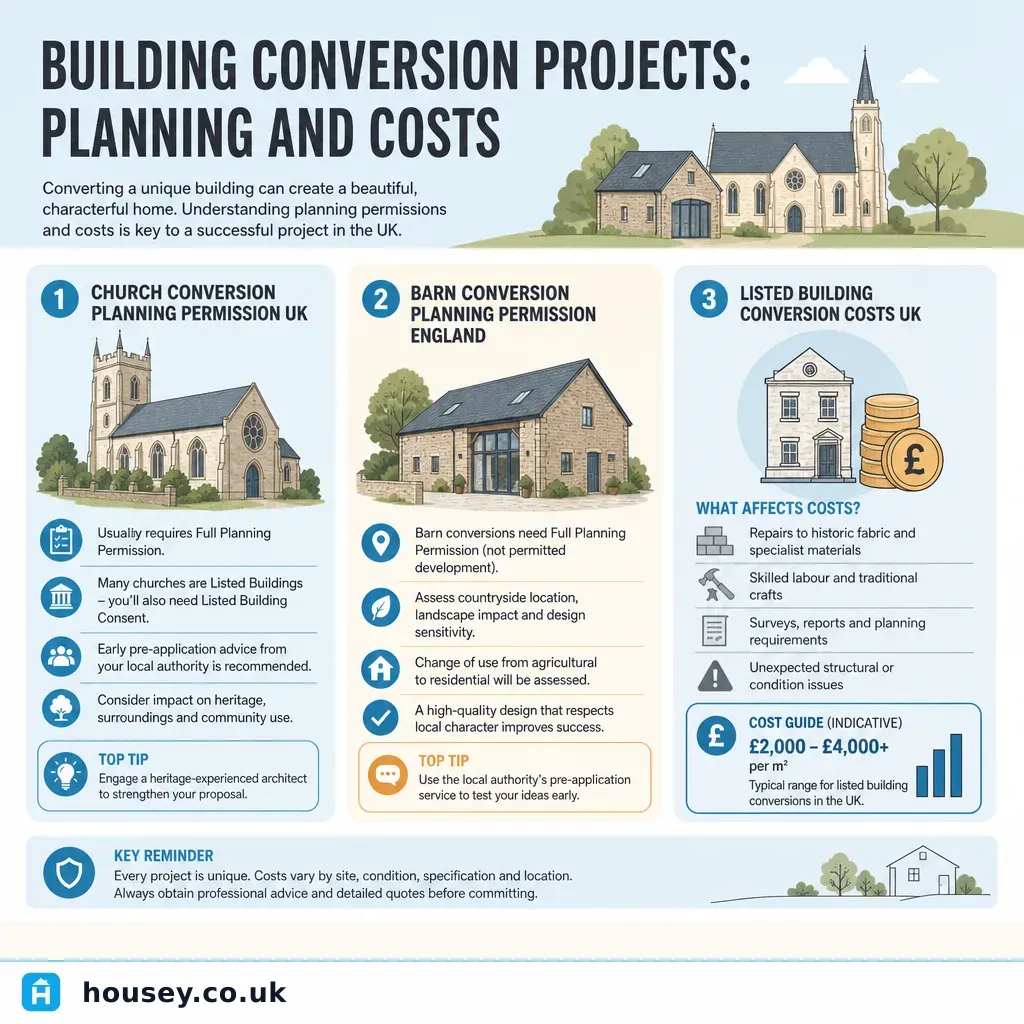
Building Conversion Projects: Planning and Costs
Converting a non-residential building in the UK — such as a barn, church, or commercial property — typically requires full planning permission and often Listed Building Consent.
 Planning & Pre-Build
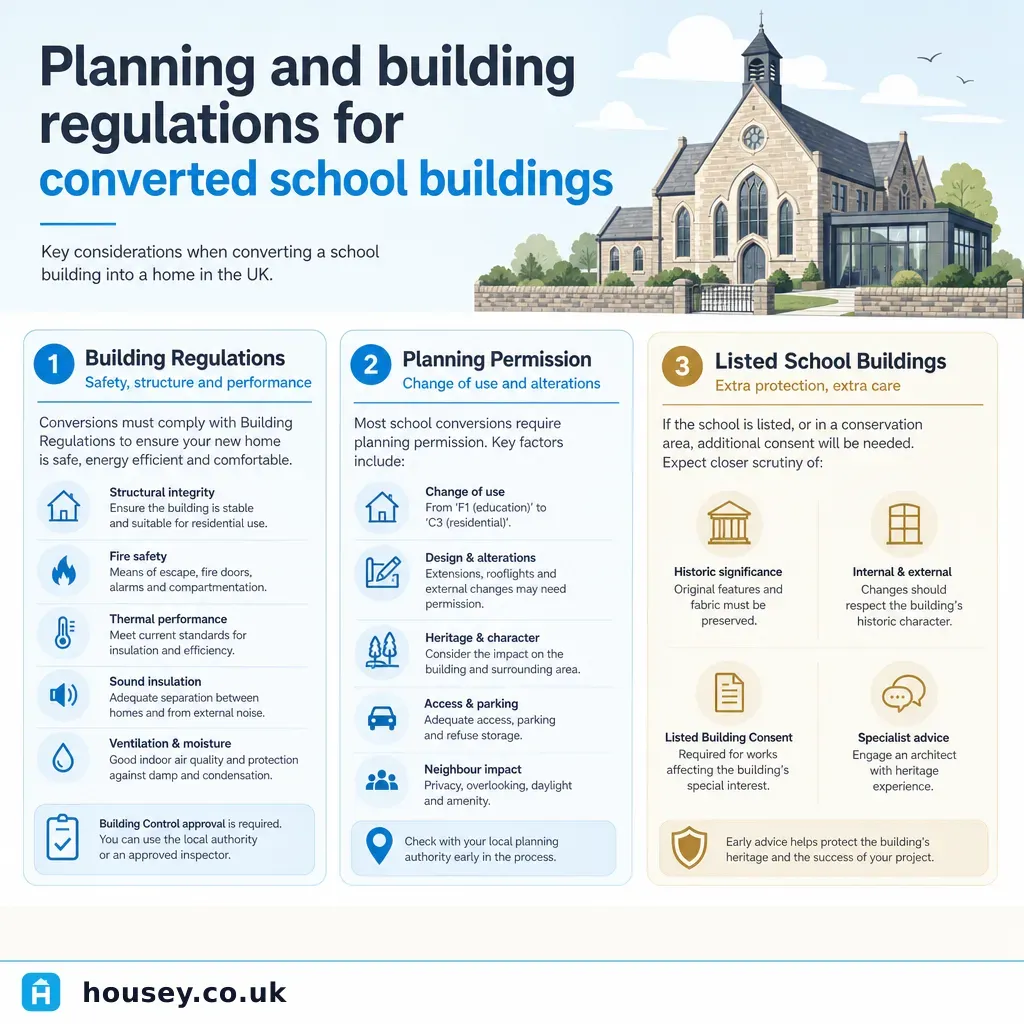
Planning and building regulations for converted school buildings
Converting a school building to residential use in England requires a full planning application — there is no permitted development route for F.
 Planning & Pre-Build
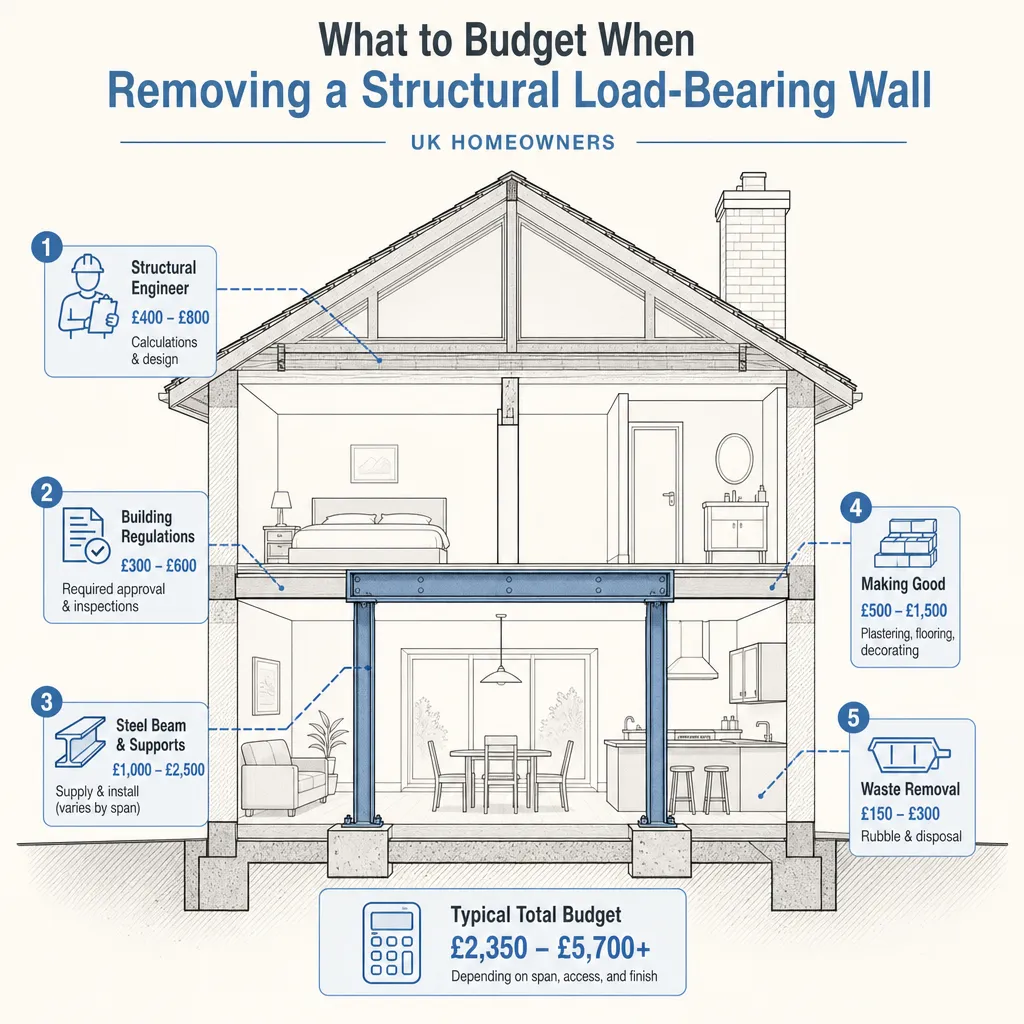
What to Budget When Removing a Structural Load-Bearing Wall
Removing a load-bearing wall in a typical UK home costs £2,500–£8,000 or more in total, covering a structural engineer's calculations, Building Regulations approval, the steel beam, builder's labour, and replastering.
 Planning & Pre-Build
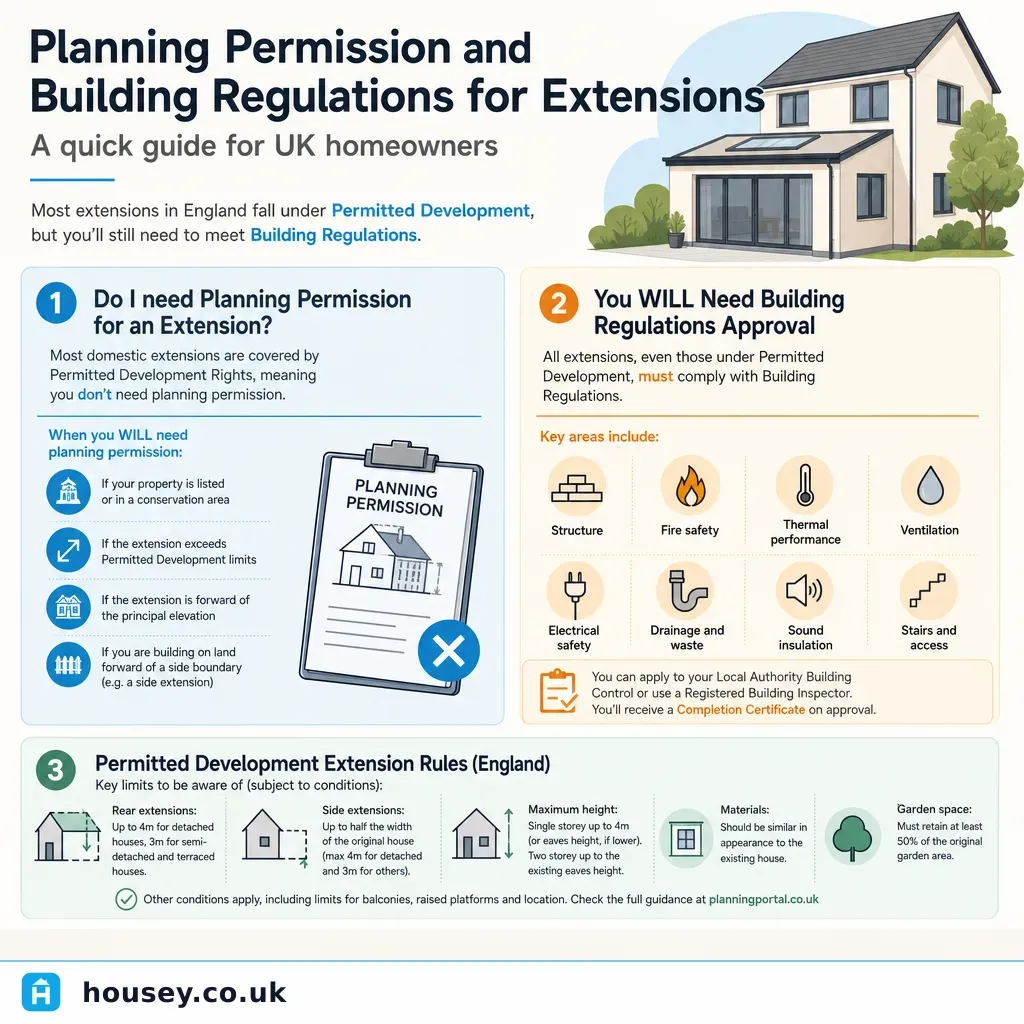
Planning Permission and Building Regulations for Extensions
UK home extensions usually require both planning permission and Building Regulations approval, though most smaller rear extensions qualify as Permitted Development under the GPDO 2015 and need no planning application.