Top Property Services in Scotland: Market Leaders and Specialists
By Housey · Last reviewed 19th of May 2026

Top Property Services in Scotland: Market Leaders and Specialists
Scotland operates under a separate legal system from England and Wales, with its own property law, planning framework, and building standards regime. Buyers, sellers, and homeowners north of the border navigate a fundamentally different process for purchasing property, obtaining surveys, paying transaction taxes, and getting building work approved. Understanding which professionals operate in Scotland's market — and what makes their roles distinct from their counterparts elsewhere in the UK — is essential before starting any property project in Scotland.
Key points
- Home Reports (introduced under the Housing (Scotland) Act 2006) have been mandatory for most residential property sales in Scotland since 1 December 2008; each contains a single survey, an energy report, and a property questionnaire.
- Scotland uses Land and Buildings Transaction Tax (LBTT), administered by Revenue Scotland, rather than Stamp Duty Land Tax (SDLT) — thresholds and rates differ, including an Additional Dwelling Supplement (ADS) for additional residential properties.
- Property transactions in Scotland use Scots law; offers are made through solicitors and become legally binding once missives (formal letters of offer and acceptance) are concluded, significantly reducing the risk of gazumping compared to England and Wales.
- Building work in Scotland is regulated by the Building (Scotland) Act 2003 and the Building (Scotland) Regulations 2004, with Technical Handbooks (Domestic and Non-Domestic) used in place of the Approved Documents that apply in England and Wales.
- National Planning Framework 4 (NPF4), adopted by Scottish Ministers on 13 February 2023, sets national planning policy for Scotland; local development plans sit below it, and planning decisions are administered by 32 local authorities plus national park authorities.
How the Scottish property market differs from England and Wales
The Scottish buying process differs substantially from the system in England and Wales. Using professionals unfamiliar with Scots law can cause serious difficulties at every stage.
Feature | Scotland | England and Wales |
|---|---|---|
Survey timing | Usually before making an offer | Usually after offer accepted |
Pre-sale survey requirement | Home Report mandatory for most sales | No equivalent national requirement |
Offer process | Written offer via solicitor; legally binding through missives | Subject to contract; not binding until exchange of contracts |
Property transaction tax | LBTT (Revenue Scotland) | SDLT (HMRC) |
Property law | Scots law (separate legal system) | Common law / Law of England and Wales |
Conveyancing professionals | Solicitors only (no licensed conveyancers) | Solicitors or licensed conveyancers |
Building standards | Technical Handbooks (Building (Scotland) Regulations 2004) | Approved Documents (Building Regulations 2010) |
National planning policy | NPF4 (adopted February 2023) | NPPF (National Planning Policy Framework) |
In Scotland, it is standard practice to instruct a solicitor at the very start of your property search — they will register interest with the seller's solicitor, attend closing dates, and submit formal offers on your behalf. Using a solicitor qualified in English law for a Scottish property purchase is not appropriate; you need a solicitor qualified in Scots law, typically a member of the Law Society of Scotland.
Home Reports: what buyers and sellers need to know
Home Reports were introduced to make property information available upfront and to reduce the cost of multiple buyers commissioning separate surveys on the same property. A Home Report contains three documents:
- Single Survey: A condition survey produced by a RICS-registered surveyor, rating the condition of each element of the property on a 1–3 scale (1 = no immediate action required, 2 = repair or maintenance required, 3 = urgent attention required). It includes a market valuation.
- Energy Report: An assessment of the property's energy efficiency and environmental impact, equivalent to an EPC.
- Property Questionnaire: Completed by the seller, covering council tax band, factoring arrangements, alterations, and other property-specific information.
Home Reports are commissioned and paid for by the seller and must be made available to serious potential buyers. They are generally no more than 12 weeks old when a property is placed on the market. Buyers may still choose to commission an independent RICS survey in addition to relying on the Home Report — this is particularly advisable for older, larger, or more complex properties, or where condition 2 or 3 ratings appear.
Find out more about commissioning and interpreting Scottish Home Reports through Housey's network of RICS-registered surveyors experienced in Scottish property types.
Key property services in Scotland
Which professional do you need?
- Instruct a Scots law solicitor if you are buying or selling a Scottish property — instructing one at the start of your search is standard practice in Scotland, not premature.
- Commission an independent RICS survey if the property is older, larger, complex, or has condition 2 or 3 ratings in the Home Report — do not rely solely on the seller's survey for high-value or defective properties.
- Instruct a RIAS-registered or ARB-registered architect for planning applications, building warrant drawings, and new-build or conversion projects in Scotland.
- Use a planning consultant with NPF4 experience for complex applications, appeals, or sites in National Parks — Scottish planning policy differs from England's NPPF in several material respects.
- Contact Home Energy Scotland before commissioning energy-efficiency improvements — this free, impartial advice service is funded by the Scottish Government and signposts available funding including Warmer Homes Scotland.
- Use a TrustMark and MCS-registered installer if applying for Warmer Homes Scotland grant funding for heat pump or insulation measures.
Traditional Scottish construction types
Scotland's building stock includes several construction types rarely encountered in England:
- Sandstone tenements (Glasgow, Edinburgh, Dundee, Aberdeen) — shared buildings with common areas managed under the Tenements (Scotland) Act 2004; factoring arrangements govern common repairs and should be checked before purchase.
- Aberdeen granite — a very hard stone requiring specialist tooling and compatible mortars for repair work.
- Harl or roughcast render — a traditional external wall finish applied over stone across Scotland; removing harl from a stone building can expose the masonry to moisture damage and is often inadvisable.
- Corrugated iron buildings — common in rural Highland and Island properties, requiring specialist roof repair contractors.
Worked example: buying a Victorian tenement flat in Glasgow
Consider a buyer purchasing a sandstone tenement flat in Glasgow's West End, built around 1890:
- The seller's solicitor provides the Home Report. The single survey rates the shared close and main roof as condition 2, with an estimated repair cost noted. The buyer's solicitor reviews the Home Report and property questionnaire, checking the factoring arrangements and whether repair reserves are held.
- The buyer instructs their own Scots law solicitor, who registers interest and prepares for a closing date, as the property is attracting several bids.
- The solicitor submits a formal offer. Once accepted and missives concluded, the transaction is legally binding — unlike the English system, withdrawal at this stage could incur legal liability for both parties.
- Following purchase, the buyer plans a bathroom alteration and contacts Glasgow City Council's Building Standards department to establish whether a building warrant is required before works commence.
- Pointing repairs are needed to the external sandstone. A lime-mortar specialist is instructed — harled and sandstone walls require breathable, compatible mortars rather than cement-based products.
This scenario illustrates why professionals experienced in Scots law and Scottish property types — from solicitors to RICS surveyors familiar with tenement factoring — are essential rather than optional.
Important limitations
This article provides general information about property services in Scotland and should not be relied upon as legal, financial, or professional advice. Scots property law, LBTT rates, planning policy, and building standards requirements change over time and vary by property type, location, local authority, and individual circumstances. Always instruct a qualified professional — a solicitor qualified in Scots law, a RICS-registered surveyor, or a Building Standards-approved specialist — for advice specific to your situation. Information in this article reflects our understanding as at the date of last review (2026-05-19) and may have changed.
What to ask a qualified professional
Before instructing a solicitor or surveyor for a Scottish property matter, consider asking:
- Are you qualified in Scots law and a current member of the Law Society of Scotland?
- How many Scottish residential property transactions did you handle last year, and in which areas?
- For a surveyor: are you familiar with tenement factoring assessments, harl render, granite construction, and the condition-rating system used in Scottish Home Reports?
- What does the Home Report valuation mean for my mortgage application, and is a separate lender's valuation likely to be required?
- Are there outstanding planning conditions, building warrant sign-offs, or factoring arrears on the property?
- What are the current LBTT rates and ADS for my purchase price, and when must payment be made to Revenue Scotland?
- If I am likely to bid at a closing date, what strategy do you recommend given current market conditions?
When to get professional help
You should instruct qualified professionals before any property transaction or significant building works in Scotland. In particular:
- Instruct a Scots law solicitor at the start of your property search — not after finding a property you intend to offer on
- Commission an independent RICS survey if the property is pre-1919, complex, or has condition 2 or 3 ratings in the Home Report
- Contact your local council's Building Standards department before starting any structural alteration, extension, or conversion
- Use a PAS 2035 retrofit coordinator before installing insulation or a heat pump in a pre-1919 stone, harled, or solid-wall building
How Housey can help
Housey connects Scottish homeowners and buyers with vetted local specialists, including RICS surveyors experienced in Scottish Home Reports and Scottish property types. Use Housey to find professionals who understand the Scottish market — from Home Report surveys and building standards applications to energy retrofit assessments for traditional stone and tenement properties.
Frequently asked questions
Do I need a Scots law solicitor to buy property in Scotland?
Yes. Conveyancing in Scotland is carried out exclusively by solicitors qualified in Scots law — there are no licensed conveyancers as in England and Wales. Your solicitor handles the legal title work, registers your interest, submits offers, and concludes missives. Using a solicitor unfamiliar with Scots property law could create serious difficulties with the transaction process and timeline.
What is a Home Report and who pays for it in Scotland?
A Home Report is commissioned and paid for by the seller before marketing a residential property. It contains a single survey (condition and valuation), an energy report, and a property questionnaire completed by the seller. Serious potential buyers can request a copy. Buyers may still commission an independent survey — particularly for older or more complex properties, or where the Home Report shows condition 2 or 3 ratings.
What is LBTT and how does it differ from Stamp Duty?
Land and Buildings Transaction Tax (LBTT) is the Scottish equivalent of Stamp Duty Land Tax (SDLT) in England and Wales, administered by Revenue Scotland with different thresholds and rates. An Additional Dwelling Supplement (ADS) applies to purchases of additional residential properties such as buy-to-let or second homes. Current rates are published by Revenue Scotland and should always be verified at the time of purchase.
Sources and further reading
- Scottish Government: Home Reports — Scottish Government
- Revenue Scotland: LBTT Guidance — Revenue Scotland
- National Planning Framework 4 — Scottish Government
- Law Society of Scotland: Find a Solicitor — Law Society of Scotland
- Home Energy Scotland — Scottish Government / Energy Saving Trust
- RICS: Find a Regulated Firm — RICS
Useful next reads
 Buying & Moving
Golfing communities and properties near St Andrews
St Andrews and the surrounding villages in north-east Fife attract golf-motivated buyers from the UK and overseas.
 Buying & Moving
Scottish Property Transaction Terminology: A Reference Guide
Scottish property law uses distinct terminology with no direct English equivalent.
 Buying & Moving
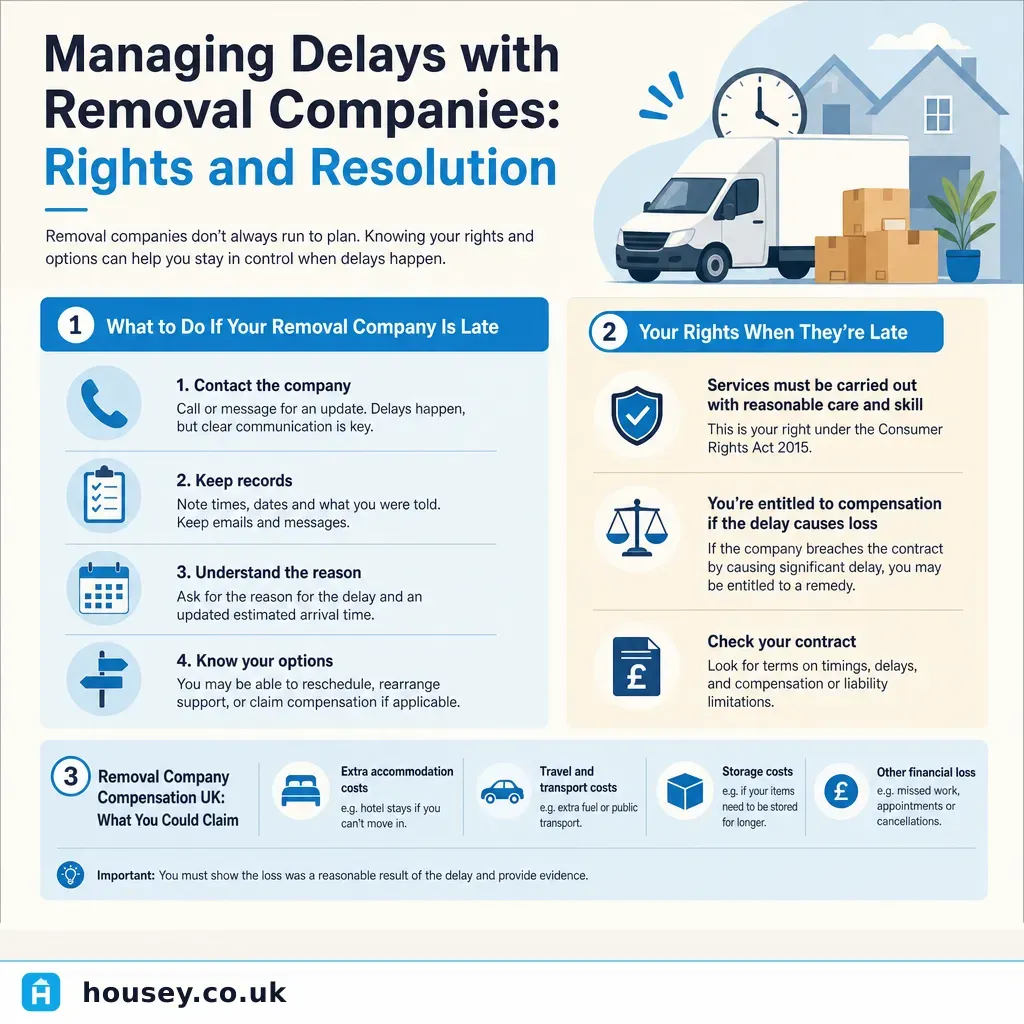
Managing Delays with Removal Companies: Rights and Resolution
If a removal company is late, your rights depend on your contract and whether the company is BAR-registered.
 Buying & Moving
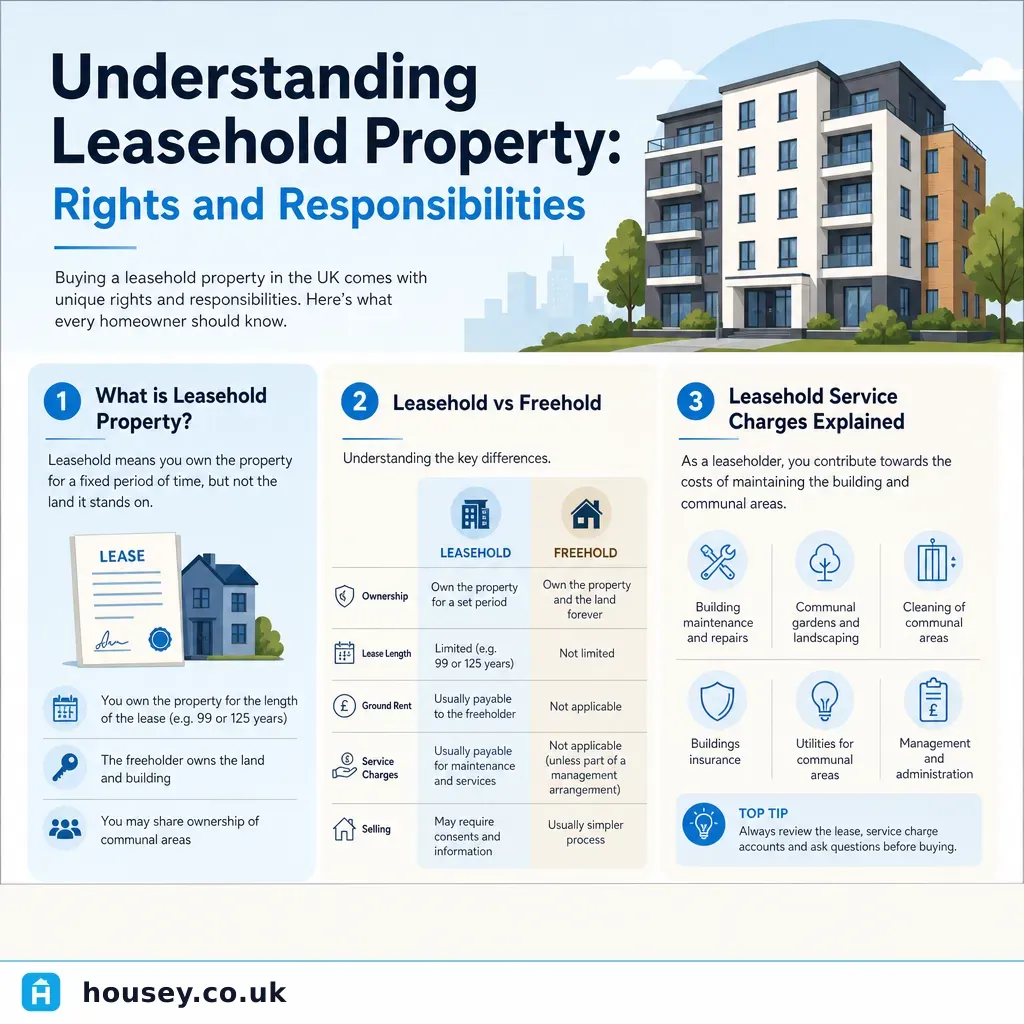
Understanding Leasehold Property: Rights and Responsibilities
Leasehold means you own a time-limited interest in a property while the freeholder owns the land and building.
 Buying & Moving
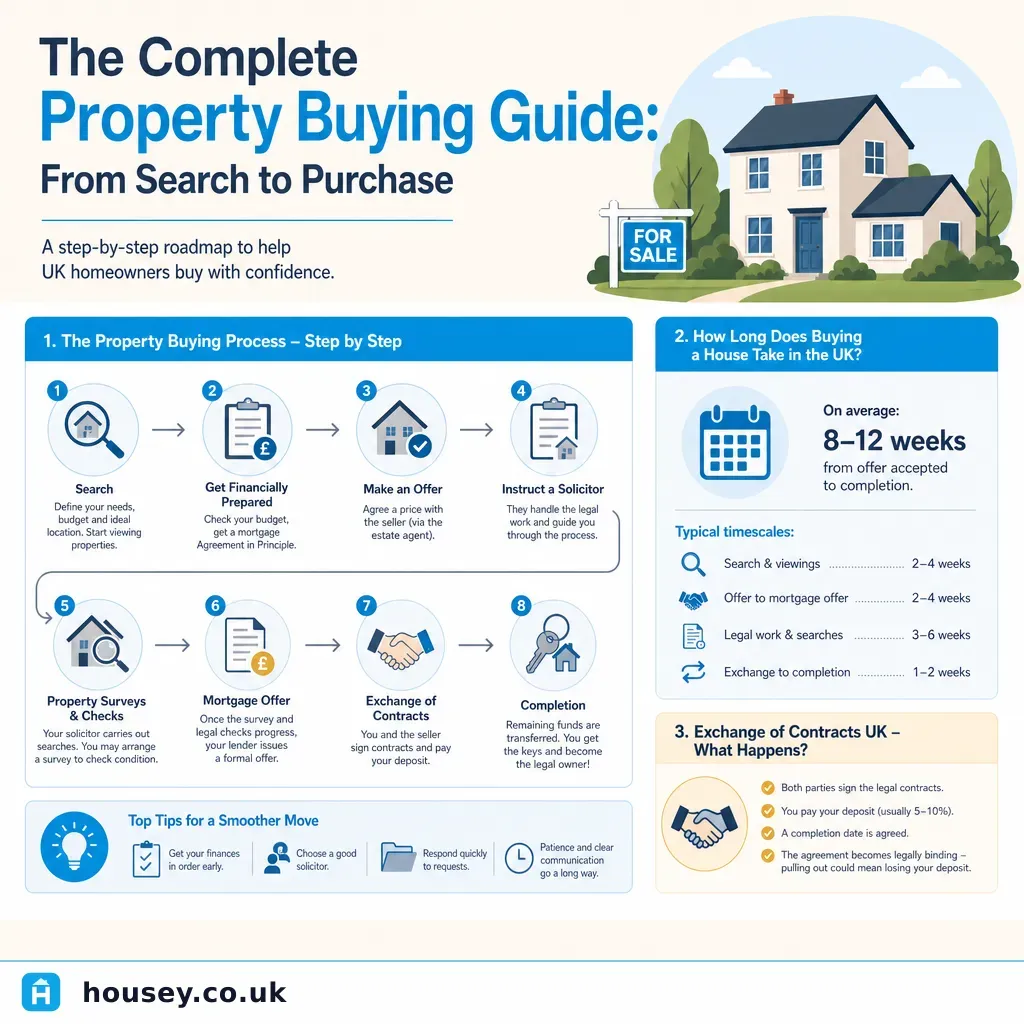
The Complete Property Buying Guide: From Search to Purchase
Buying a property in England and Wales typically takes 3–6 months from accepted offer to completion.