Golfing communities and properties near St Andrews
By Housey · Last reviewed 30th of May 2026
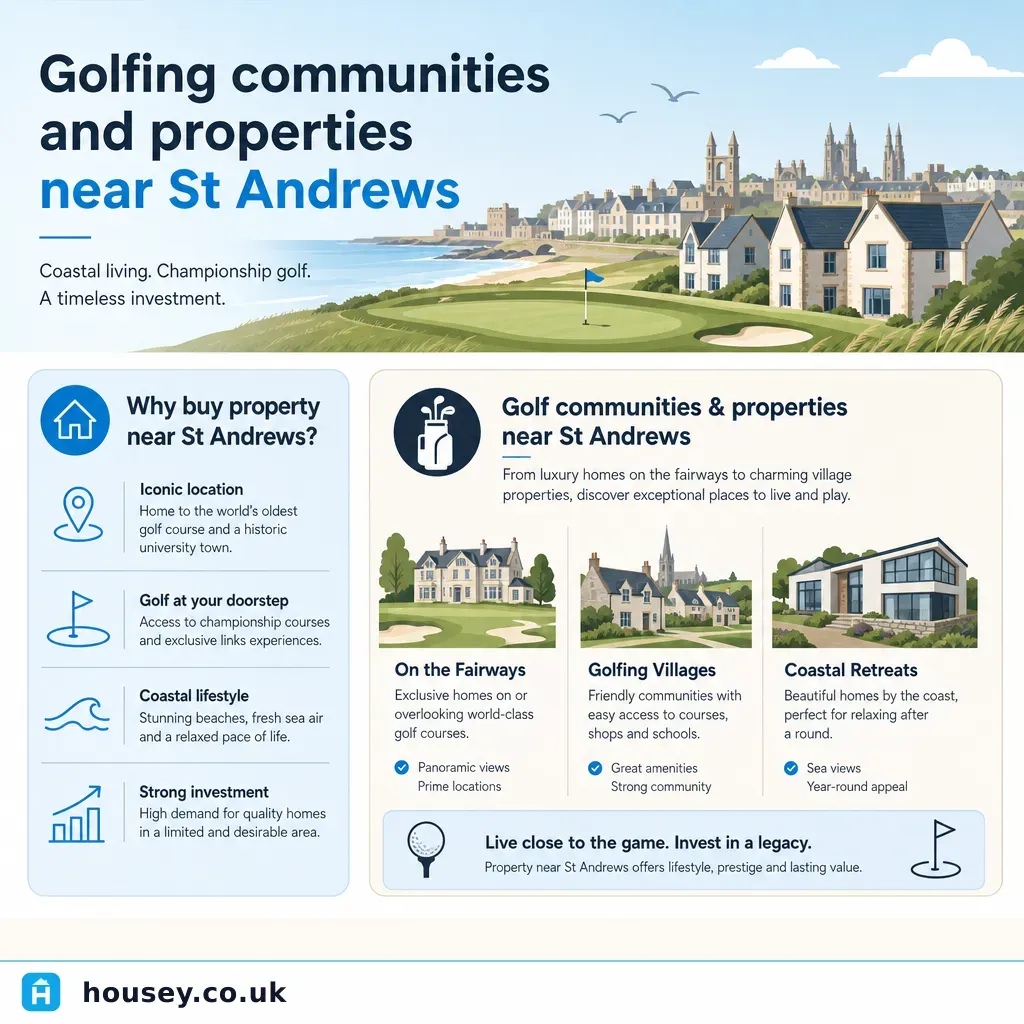
Golfing communities and properties near St Andrews
St Andrews occupies a singular position in world golf — home to the R&A, the Old Course, and five further Links Trust courses within the town boundary — but for buyers considering a purchase in the area, the appeal extends considerably beyond access to fairways. The town and its surrounding villages in north-east Fife offer a mix of Georgian townhouses, Victorian sandstone villas, coastal cottages, and new-build developments, set against a property market that draws domestic buyers, international purchasers, and investors with golf as the primary motivation. Understanding both the local market character and the distinct features of Scottish property law is essential before making any serious enquiry.
Key points
- Scottish property purchases use the missives system and require a solicitor admitted in Scotland; English and Welsh conveyancers cannot act in Scottish transactions.
- Land and Buildings Transaction Tax (LBTT) applies in place of Stamp Duty Land Tax; additional dwelling buyers also pay the Additional Dwelling Supplement (ADS), currently 6% of the full purchase price — verify current rates at Revenue Scotland.
- Most properties marketed for sale in Scotland must be accompanied by a Home Report comprising a Single Survey (RICS valuation and condition report), an Energy Report, and a Property Questionnaire, all commissioned by the seller.
- Properties within the St Andrews Conservation Area are subject to additional planning controls under the Planning (Listed Buildings and Conservation Areas) (Scotland) Act 1997; external alterations may require conservation area consent from Fife Council.
- Short-term let properties in Scotland require a licence from the local authority under the Civic Government (Scotland) Act 1982 (as amended in 2022); Fife Council administers this for properties in the St Andrews area.
Why buyers choose the St Andrews area
The property market around St Andrews is driven by a specific set of priorities that distinguishes it from most UK markets. International buyers — particularly from the United States, Canada, Australia, and parts of Europe — account for a meaningful proportion of transactions, drawn by the combination of golf access, the University of St Andrews (one of Scotland's oldest institutions), and the coastal landscape of the East Neuk of Fife.
For golf-motivated buyers, the key considerations are:
- Course proximity: properties on or adjacent to the Links courses command the highest premiums, particularly those with Old Course or West Sands views from upper floors or rear elevations.
- Golf access: property ownership in St Andrews does not guarantee membership of any private golf club or preferential access to Links Trust courses — the Old Course operates a public daily ballot alongside reserved tee times, with green fees charged to all players.
- Short-term letting potential: properties in central St Andrews have a strong rental market driven by golf visitors, the Open Championship rotation (the town hosts approximately every five years), and university events including graduation weeks and the May Dip.
Property types and locations near St Andrews
Area | Property types | Typical appeal | Golf proximity |
|---|---|---|---|
Central St Andrews | Georgian and Victorian townhouses, tenement flats, sandstone terraces | Walking distance to all Links courses; university and town centre | Excellent — Old Course under 10 minutes on foot |
Kingsbarns | Rural cottages, converted farmhouses, new-build plots | Quiet rural setting; Kingsbarns Golf Links nearby | Good — Kingsbarns course within 5 minutes by car |
Crail and Anstruther (East Neuk) | Stone fishermen's cottages, coastal properties | Scenic coastline, characterful village settings | Moderate — golf at Crail GC; 30–40 min drive to St Andrews |
Leuchars and Guardbridge | Modern semi-detached and detached homes | Lower price point; good A91 commute access | Moderate — 10–15 min drive to Links courses |
Strathkinness | Village homes, detached houses, bungalows | Elevated countryside views close to university | 10–15 min drive to Links |
Fairmont St Andrews (resort area) | Luxury lodge apartments, resort-adjacent homes | On-site golf (Torrance and Kittocks courses), hotel amenities | On-site golf |
Buying property in Scotland: what golf buyers often misunderstand
The offer system is legally binding sooner. In Scotland, once a formal offer is accepted and missives are concluded, the transaction is legally binding on both sides. There is no equivalent of the English "gazumping" risk after missives are concluded — but equally there is no cooling-off period. Buyers should instruct a Scottish solicitor before making any formal approach, not after a price has been agreed.
The Home Report system. Most properties marketed in Scotland come with a mandatory Home Report. The included Single Survey provides a RICS-based condition assessment and market valuation. Buyers may rely on this report, but may also commission their own independent RICS survey for additional assurance — this is particularly advisable for older stone-built properties in St Andrews where damp penetration, roof condition, or structural movement may warrant closer inspection than the standard report provides.
Short-term letting is licensed in Scotland. Anyone using a property in Scotland for short-term lets must hold a licence from the local council. Fife Council administers licences for the St Andrews area. Buyers intending to let during golf events, the Open Championship, or university periods should confirm current licensing requirements and application lead times before completing a purchase.
VAT on serviced plots. Some new-build plots in and around St Andrews carry VAT implications on the land price that differ from a straightforward residential purchase. If considering a self-build or plot purchase, take early advice from a Scottish solicitor familiar with land transactions.
A worked example: buying a Victorian townhouse in central St Andrews
Consider a buyer relocating from England seeking a three-bedroom Victorian townhouse in central St Andrews, priced at approximately £650,000.
Legal structure: The buyer instructs a Scottish solicitor before any formal approach. The seller's Home Report Single Survey flags some dampness at ground-floor level — typical of solid-wall stone properties of this era. The buyer commissions an independent RICS Level 3 survey for additional detail before missives are concluded.
LBTT liability: At £650,000, the LBTT charge on a residential purchase is approximately £38,350 based on banded rates (0% up to £145,000; 2% to £250,000; 5% to £325,000; 10% to £750,000) — verify current rates on Revenue Scotland's website. Because the buyer already owns a property in England, the Additional Dwelling Supplement (ADS) at 6% of the purchase price adds a further £39,000, giving an indicative total tax liability of approximately £77,350. The Scottish solicitor calculates the precise figure.
Conservation area check: Central St Andrews is within a Conservation Area. The buyer's solicitor confirms that planned replacement of original sash windows will require conservation area consent from Fife Council before works can proceed.
Short-term let planning: The buyer intends to let the property during the Open Championship and university graduation week. The solicitor advises that a short-term let licence application must be submitted to Fife Council, and that the property cannot be advertised for rental until the licence is granted.
These figures are illustrative only. Tax rates, licence fees, and regulatory requirements should be confirmed with a qualified Scottish solicitor and the relevant authorities at the time of purchase.
What to ask when buying golf-adjacent property near St Andrews
- Is the property within the St Andrews Conservation Area, and what consent will be required for any planned external alterations?
- What is the Council Tax band, and can it be verified on the Scottish Assessors Association website before offers are made?
- Does the Home Report Single Survey flag any structural, damp, or roof concerns common to stone-built properties of this age?
- Are there any rights of access across the plot, particularly for properties adjacent to Links Trust land or coastal paths?
- What are the current short-term let licence requirements and fees under Fife Council's scheme, and what is the typical application lead time?
- Does the title include any burdens or conditions affecting short-term letting, subletting, or commercial use of the property?
- Are there any consented or proposed developments in the area — particularly along the Links corridor or A91 — that could affect outlook or access?
When to get professional help
Buying property in Scotland differs meaningfully from the English and Welsh process, and international buyers in particular should not navigate missives, LBTT, ADS, or conservation area requirements without qualified local legal advice. Professional support is essential when:
- You are purchasing from outside Scotland and are unfamiliar with the missives system and Home Report process.
- The property is listed or within a Conservation Area and you plan any alterations to external fabric.
- You are considering a plot purchase, self-build, or development opportunity with potential VAT or planning complexity.
- You intend to use the property for short-term letting and need to understand Fife Council's current licensing scheme.
- The Home Report flags structural concerns, damp, or roof condition in an older stone property.
How Housey can help
Whether you are preparing to sell a golf-adjacent property or assessing a purchase, presentation and independent valuation both matter. Housey can connect you with property photography and floorplan specialists experienced with Scottish residential properties, and with RICS-registered professionals offering valuation surveys across Fife and the wider Scottish market.
Frequently asked questions
Do I need a Scottish solicitor to buy property near St Andrews?
Yes. Scottish property law uses a distinct conveyancing process based on the missives system. You must instruct a solicitor admitted in Scotland — an English or Welsh conveyancer cannot act for you in a Scottish property transaction. Many solicitors in Edinburgh, Dundee, and St Andrews itself handle golf-area purchases routinely.
Is the Old Course free to play for St Andrews residents?
No. The Old Course is operated by the St Andrews Links Trust and charges green fees for all players. Daily access for non-reserved tee times is available through a morning ballot. Property ownership in St Andrews does not confer any preferential access to Links Trust courses.
What taxes apply when buying property in Scotland?
Land and Buildings Transaction Tax (LBTT) applies rather than Stamp Duty Land Tax. For residential purchases above £145,000, LBTT is charged on a banded basis. If you already own property elsewhere, the Additional Dwelling Supplement (ADS) — currently 6% of the full purchase price — also applies. Check current rates on Revenue Scotland's website and instruct a Scottish solicitor to calculate your precise liability.
What is the Home Report in Scotland?
The Home Report is a mandatory seller-provided pack for most residential properties marketed in Scotland. It contains a Single Survey (a RICS-based condition assessment and market valuation), an Energy Report (EPC), and a Property Questionnaire. Buyers may rely on the included survey or commission their own independent RICS survey for additional assurance, particularly on older stone-built properties.
Sources and further reading
- Land and Buildings Transaction Tax guidance — Revenue Scotland
- Home Reports in Scotland — Scottish Government
- Short-term let licensing — Fife Council
- St Andrews Links Trust — course access and green fees — St Andrews Links Trust
- Planning (Listed Buildings and Conservation Areas) (Scotland) Act 1997 — legislation.gov.uk
Useful next reads
 Buying & Moving
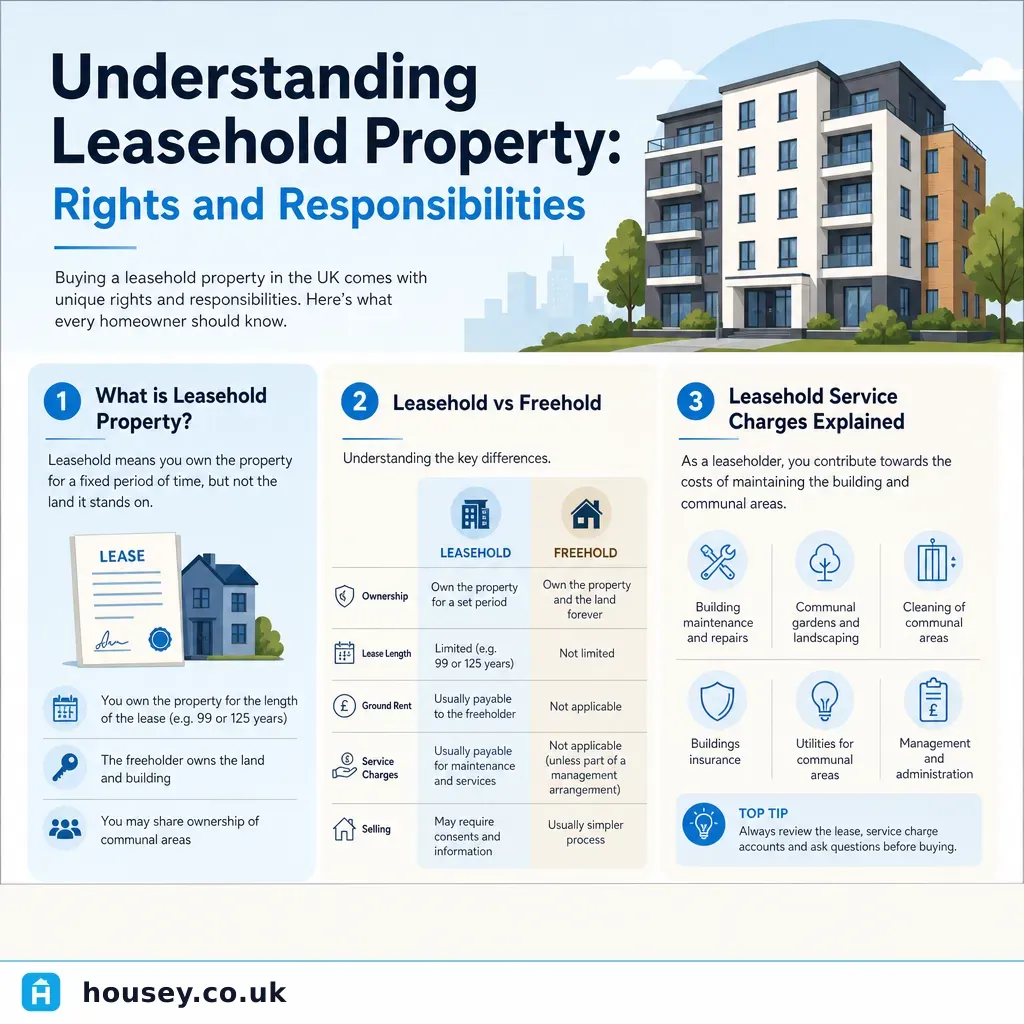
Understanding Leasehold Property: Rights and Responsibilities
Leasehold means you own a time-limited interest in a property while the freeholder owns the land and building.
 Buying & Moving
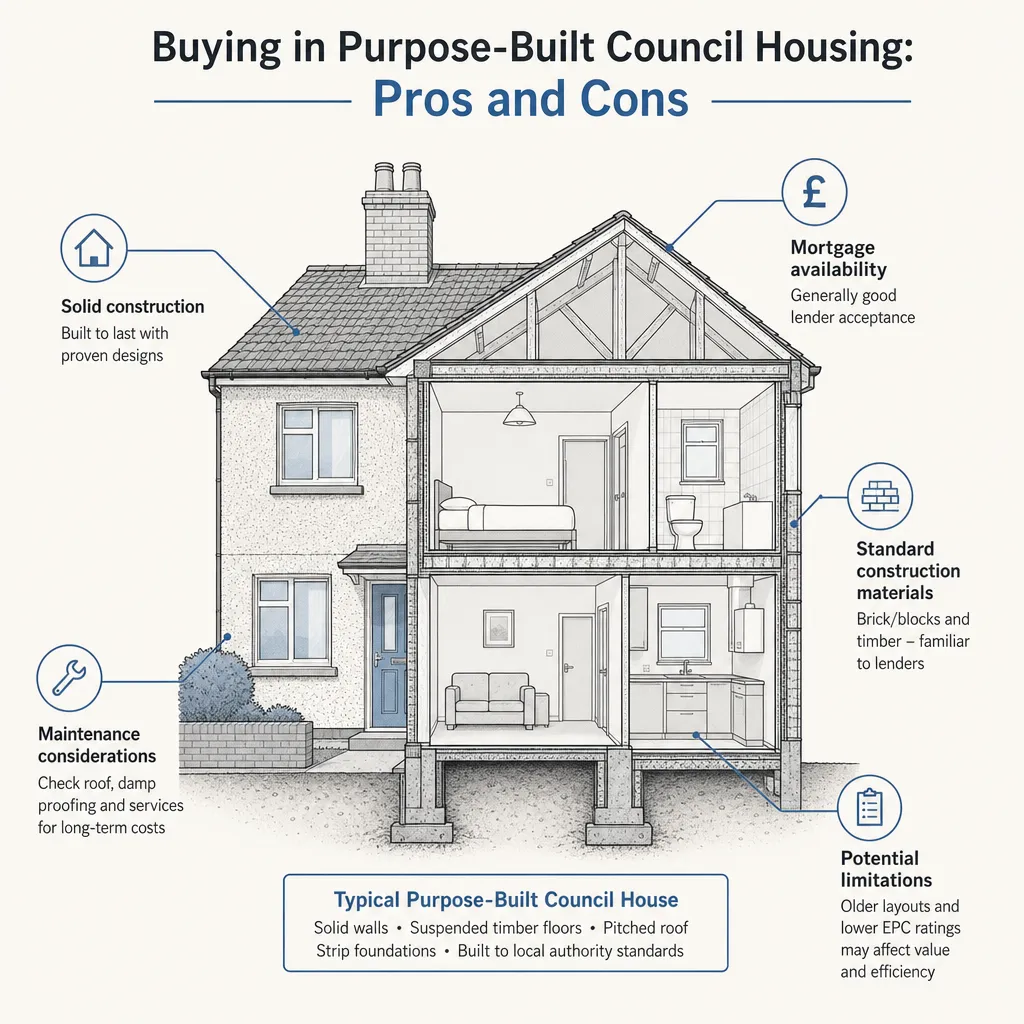
Buying in Purpose-Built Council Housing: Pros and Cons
Purpose-built council housing — typically 1950s–1980s blocks, maisonettes, or estate houses — can offer good value and generous room sizes, but buyers should check construction type before applying for a mortgage.
 Buying & Moving
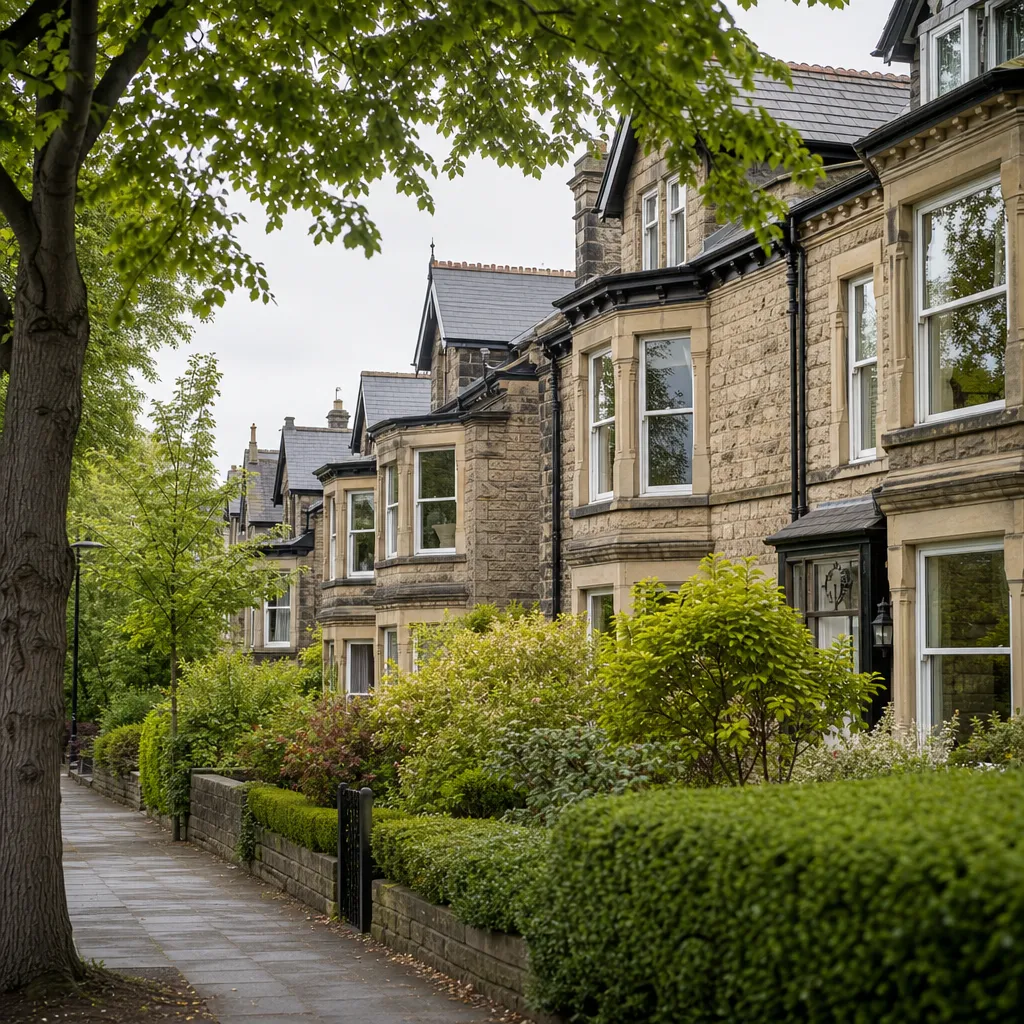
Moving to Harrogate: Location Guide and Property Information
Harrogate is a North Yorkshire spa town approximately 21 miles from Leeds, with direct rail links to Leeds (30–45 mins) and York.
 Buying & Moving
Scottish Property Transaction Terminology: A Reference Guide
Scottish property law uses distinct terminology with no direct English equivalent.
 Buying & Moving
Top Property Services in Scotland: Market Leaders and Specialists
Scotland has a separate legal system, planning framework, and building standards from England and Wales.