Toughened Glass Glazing Solutions and Pricing
By Housey · Last reviewed 11th of May 2026

Toughened Glass Glazing Solutions and Pricing
Toughened — or tempered — glass comes up whenever a homeowner is replacing a door panel, adding a large window, or fitting a shower enclosure. The decision matters not just for aesthetics but because Building Regulations specify exactly where safety glazing is legally required, and using the wrong product can create a compliance problem when you come to sell. Whether you are mid-renovation or comparing quotes, understanding the rules and realistic costs will help you make the right choice.
Key points
- Building Regulations Approved Document N defines critical locations where safety glazing is mandatory, including glazed doors and side panels, glazing below 800 mm from finished floor level, and glazing within 300 mm of a door edge up to 1,500 mm from the floor.
- Toughened glass must meet BS EN 12150-1 and carries a permanent kitemark etched in the corner confirming compliance.
- Once thermally toughened, the glass cannot be cut or drilled — all sizing and any hole-drilling must happen before the tempering process.
- Indicative supply costs for toughened float glass range from approximately £40–£150 per m², depending on thickness (4 mm to 19 mm) and any tints or coatings. Indicative UK costs, last reviewed 2026-05-11.
- FENSA (Fenestration Self-Assessment Scheme) or CERTASS registration means the installer can self-certify replacement glazing under Building Regulations — if your installer is not registered, you will need a local authority building control inspection.
Where is toughened glass required?
Approved Document N sets out four categories of critical location where glazing must be toughened, laminated, or otherwise safety-rated to BS 6206 or BS EN 12600:
- In or adjacent to doors — any pane within a door leaf, and panes within 300 mm of a door opening edge and below 1,500 mm from the floor.
- Low-level glazing — any pane with a bottom edge below 800 mm from the floor in a room.
- Large areas of glass — panes with an area exceeding 0.5 m² within reach (below 1,500 mm from the floor).
- Bathrooms and wet rooms — shower enclosures, bath screens, and similar applications.
In practice, this means most patio door panels, ground-floor French windows, floor-to-ceiling windows, and all shower screens will require toughened or laminated safety glass by law.
Conservation areas and listed buildings may have additional requirements from the local planning authority — check before ordering.
Toughened glass versus laminated glass versus standard float glass
Both toughened and laminated glass qualify as safety glazing under Approved Document N, but they behave very differently and suit different applications.
Type | How it breaks | Best for | Not ideal for |
|---|---|---|---|
Toughened (tempered) glass | Shatters into small blunt granules | Shower screens, patio doors, structural glazing | Overhead glazing (granules can fall) |
Laminated glass | Cracks but stays in place (PVB interlayer) | Rooflights, overhead glazing, high-security glazing | Where rapid ventilation after breakage is needed |
Standard float glass | Breaks into large sharp shards | Internal, non-critical locations only | Any critical location per Approved Document N |
For overhead glazing and rooflights, laminated glass is typically preferred because broken fragments are held in place by the plastic interlayer rather than falling. A competent glazier can advise which product is appropriate for your specific opening.
How toughened glass is made and why it cannot be altered
Standard float glass is heated to around 620 °C and then rapidly quenched with cold air jets. This creates compressive stress in the outer surfaces and tensile stress in the core. The result is glass that is four to five times stronger than untreated glass of the same thickness under bending loads.
The trade-off is that once tempered, the stress is locked in — any attempt to cut, drill, grind, or score the glass releases the stress catastrophically and the pane shatters. This means:
- All dimensions, cutouts, holes for ironmongery, notches, and edge polishing must be specified before tempering.
- If a measurement is wrong, the pane cannot be salvaged — you must order a replacement.
- Always provide accurate dimensions, including any door handle holes or finger-pull slots, to the glazier at the outset.
Typical UK costs for toughened glass
Costs depend on thickness, size, edge finish, any coatings (self-cleaning, solar control, low-emissivity), and whether the glass is clear, patterned, or tinted. Obtain at least three quotes from registered glaziers before proceeding.
Indicative UK costs, last reviewed 2026-05-11 (supply only, excl. installation and VAT):
Thickness | Typical use | Approx. cost per m² |
|---|---|---|
4 mm | Shower screens, internal screens | £40–£70 |
6 mm | Standard window panes, door panels | £50–£90 |
10 mm | Structural balustrades, frameless shower enclosures | £80–£130 |
12–19 mm | Glass floors, large structural panels | £110–£200+ |
Installation costs vary widely by project complexity. A straightforward single-door panel replacement may cost £150–£400 fitted; a full patio door set or large structural glazing installation can run into thousands. Always ask whether scaffolding or specialist lifting equipment is required and whether these costs are included in the quote.
Checklist: what to confirm before ordering toughened glass
Use this list to avoid costly remakes:
What not to assume about toughened glass
Do not assume all safety glass is the same. Toughened and laminated are both safety glasses but behave differently in failure mode. Confirm which type is specified for your project and why.
Do not assume the existing frame size is correct. Old frames may have settled out of square. Measure the rebate, not the old glass, and check for squareness before ordering.
Do not assume a FENSA sticker means the glass is compliant. FENSA certifies the installation process, not each individual pane. Ask to see the kitemark on the glass itself.
Do not assume pattern glass is toughened. Obscured or frosted glass is often standard float — confirm the safety rating if it falls in a critical location under Approved Document N.
Do not assume the quote includes disposal of old glass. Broken or removed glass requires specialist disposal. Check whether collection and disposal is included in the price.
When to get professional help
Most toughened glass work requires a professional glazier regardless of scale — the glass cannot be cut on site after tempering, and fitting structural or load-bearing glazing without the right tools and training creates serious safety risks. Seek professional help if:
- The pane falls in a critical location under Approved Document N.
- The project involves overhead, structural, or balustrade glazing.
- The property is listed or in a conservation area (additional consents may be needed).
- The frame or lintel shows signs of movement or deterioration.
- You are unsure whether the existing glass is toughened — look for the kitemark etched in a corner.
How Housey can help
Housey connects you with vetted window and door installers who can assess your glazing needs, confirm Building Regulations compliance, and provide fixed-price quotes for supply and fitting. Compare up to four quotes from local professionals before committing.
Frequently asked questions
Is toughened glass a Building Regulations requirement?
Toughened or laminated safety glazing is required by Building Regulations Approved Document N in critical locations — glazed doors, side panels, low-level glazing below 800 mm from the floor, and shower enclosures. Using standard float glass in these positions is a Building Regulations breach that can affect your ability to sell the property.
Can I cut toughened glass myself?
No. Once toughened, glass cannot be cut, drilled, or scored without shattering. All sizing must be finalised before the pane is tempered. If a measurement is wrong, the glass must be remade from scratch — there is no way to salvage a toughened pane that is the wrong size.
How do I know if existing glass is toughened?
Look for a permanent kitemark or safety marking etched in one corner of the pane, typically showing the BS EN 12150 standard and safety class. If no mark is visible, the glass may be standard float. A qualified glazier can advise on testing or replacement if you are uncertain.
Does toughened glass need planning permission?
Replacing like-for-like glass in existing frames does not usually require planning permission. However, if your property is listed or in a conservation area, you may need listed building consent or conservation area consent from your local planning authority before altering windows or doors.
Is laminated glass better than toughened glass?
Neither is universally better — they suit different applications. Toughened glass is stronger under bending loads and shatters into small blunt fragments. Laminated glass stays in place when broken, making it preferable for overhead or high-security glazing. Both are accepted as safety glazing under Approved Document N.
Sources and further reading
- Approved Document N: Glazing — safety in relation to impact, opening and cleaning — GOV.UK
- BS EN 12150-1: thermally toughened soda lime silicate safety glass — BSI (British Standards Institution)
- FENSA: competent person scheme for replacement windows and doors — FENSA
- GGF guidance on safety glazing — Glass and Glazing Federation
Useful next reads
 Improvement & Build
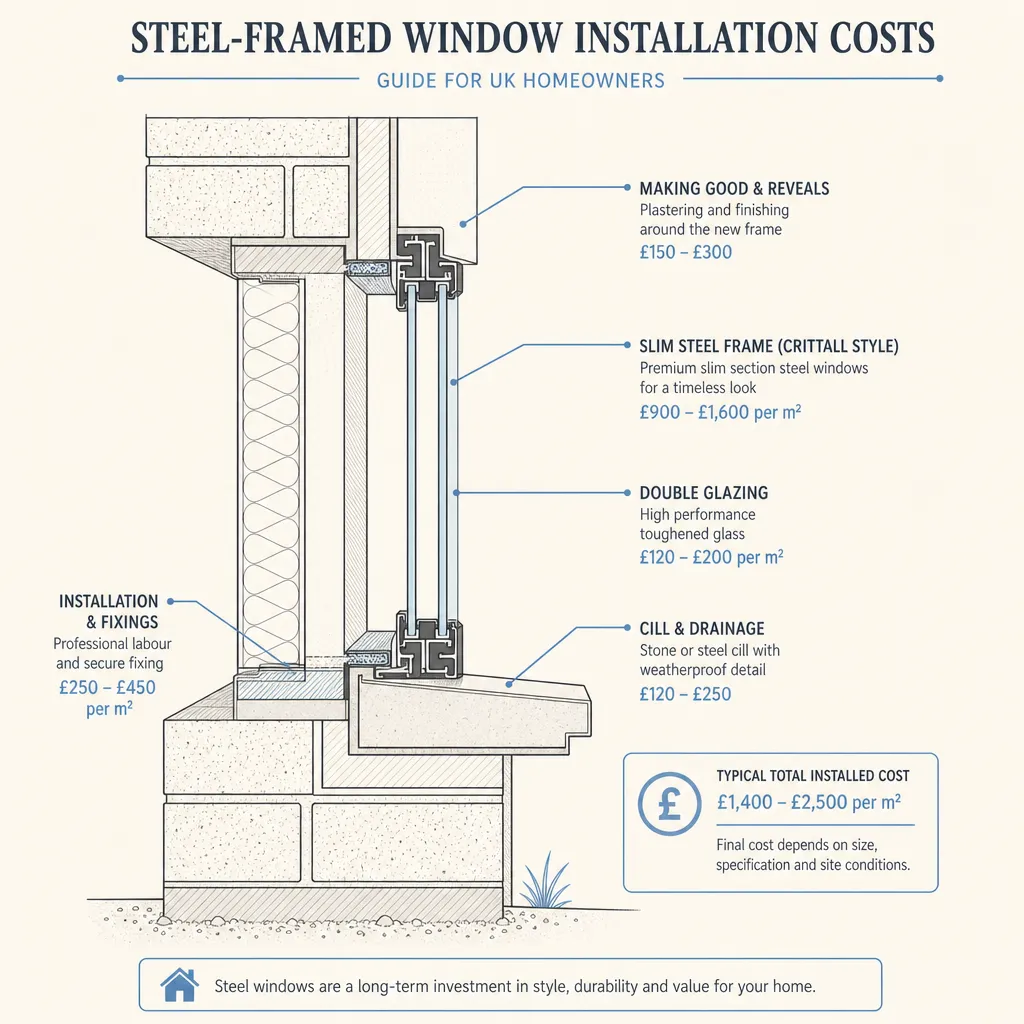
Steel-Framed Window Installation Costs
Steel-framed windows cost between £800 and £3,500 or more per window installed in the UK, depending on size, profile type, glazing specification, and whether old frames need removing.
 Improvement & Build
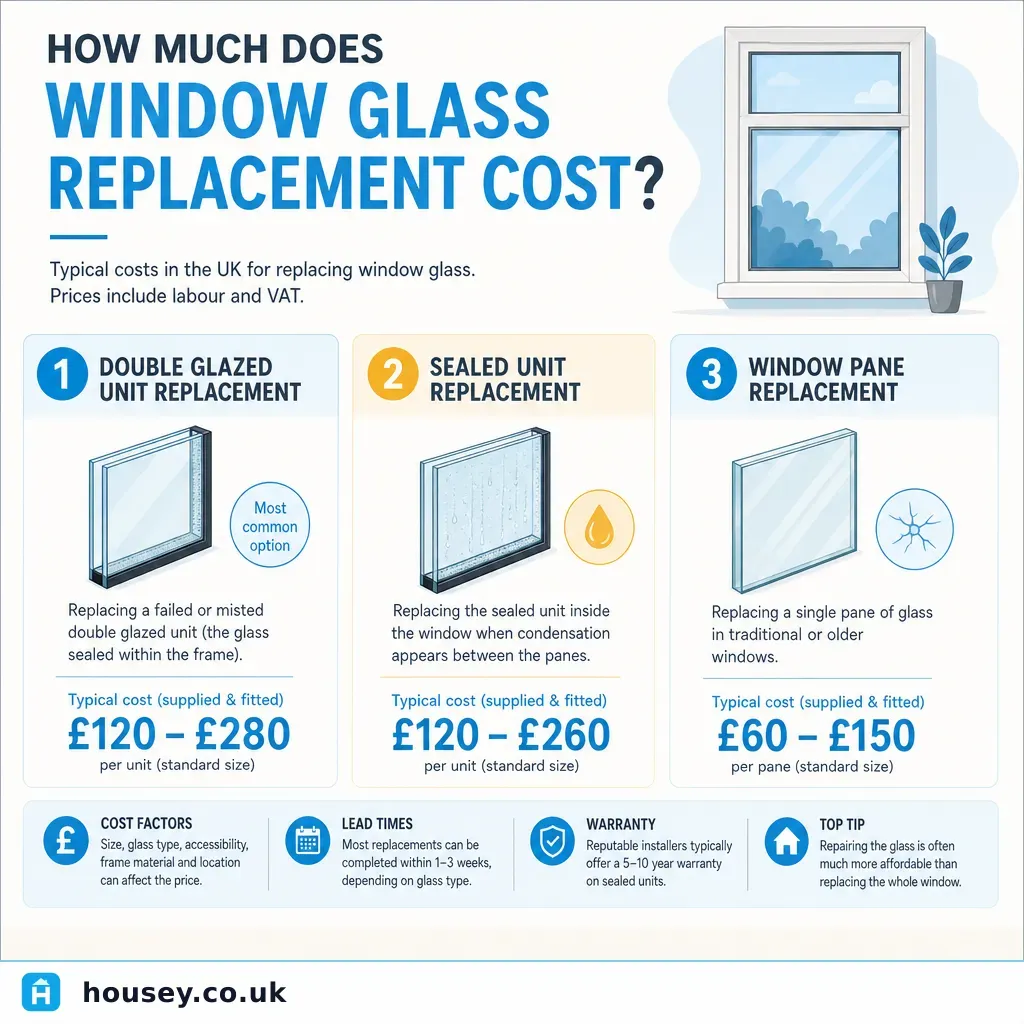
How much does window glass replacement cost
Replacing a standard double-glazed sealed unit typically costs £80–£300 in the UK, depending on glass size, type, and access.
 Improvement & Build
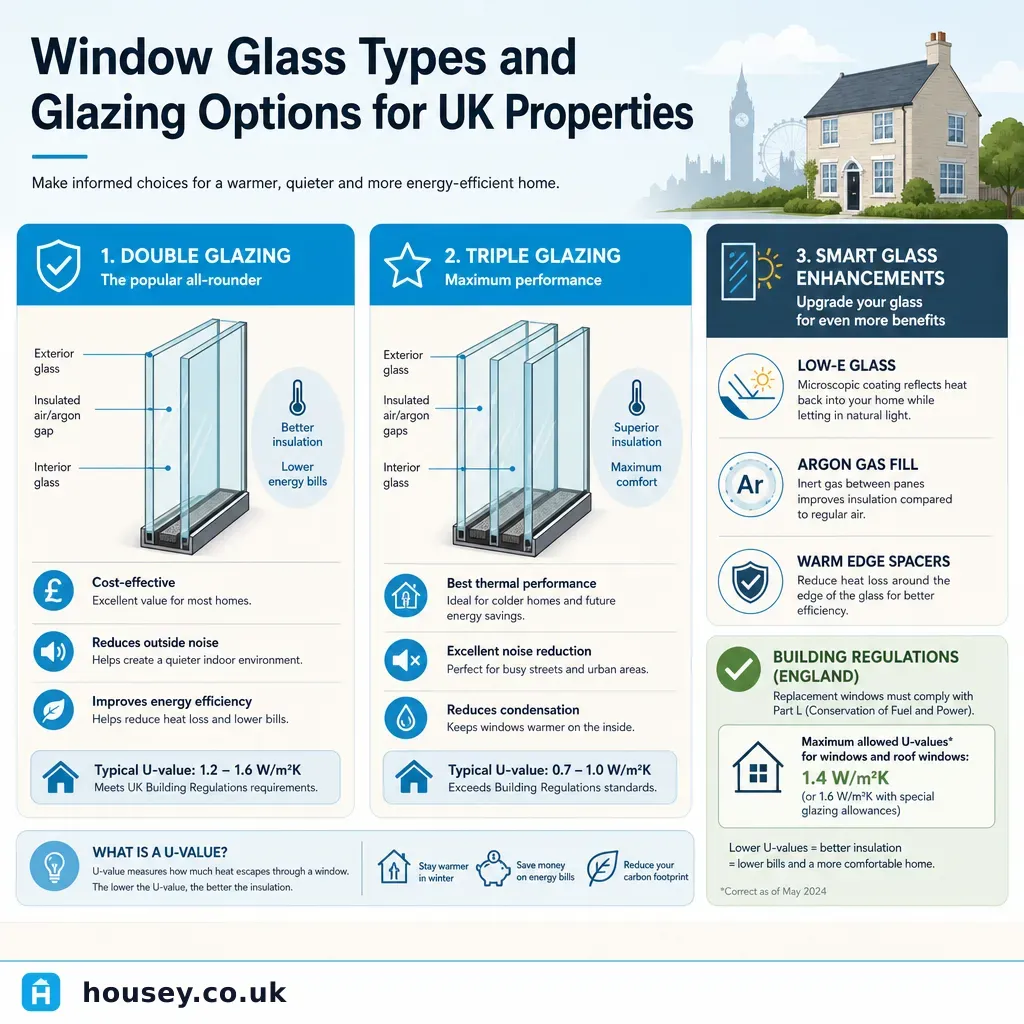
Window Glass Types and Glazing Options for UK Properties
UK replacement windows must meet Building Regulations Approved Document L, typically requiring a whole-window U-value of 1.
 Improvement & Build
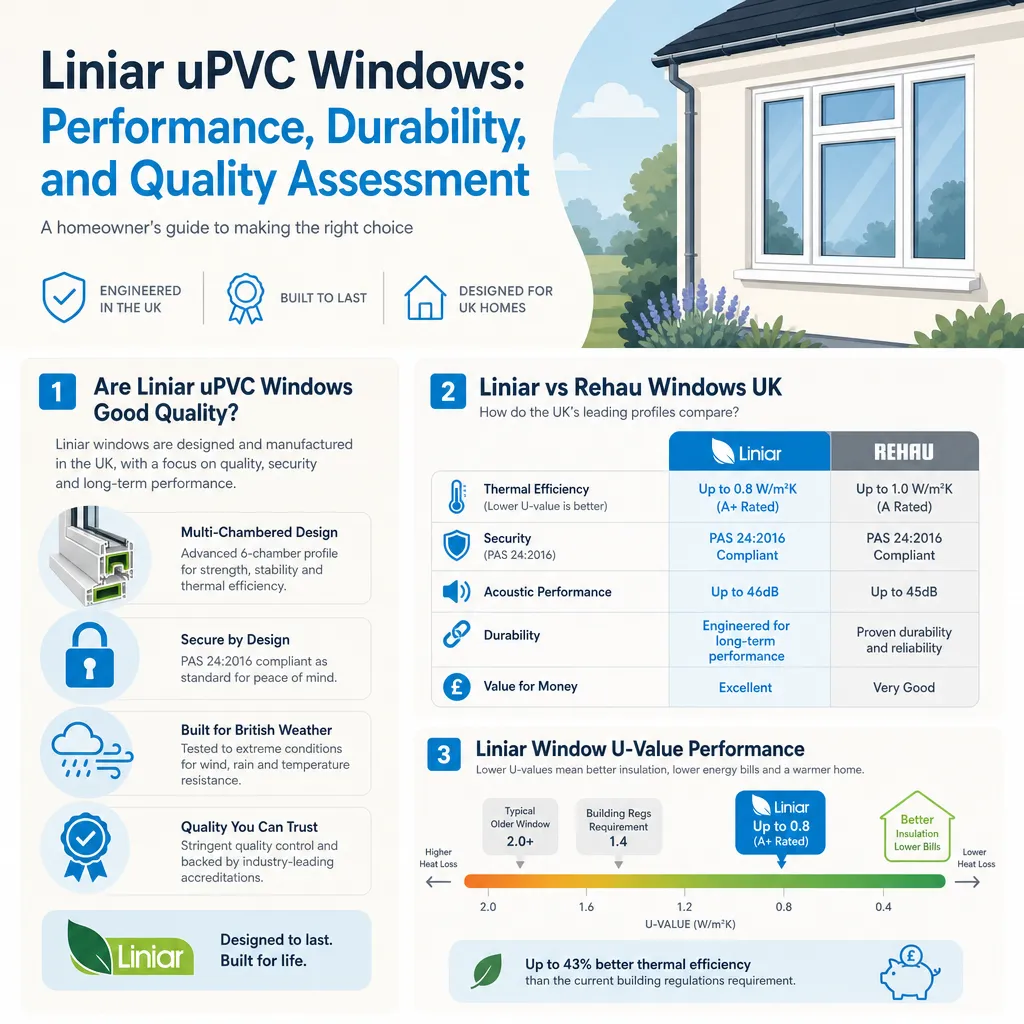
Liniar uPVC Windows: Performance, Durability, and Quality Assessment
Liniar uPVC window profiles are manufactured in the UK using multi-chambered, foamed frames.
 Improvement & Build
Garden Tap Installation with Hot and Cold Water: Plumbing Options
Adding a cold garden tap is a common DIY project, but routing hot water outdoors requires a plumber to connect to your domestic hot water system and comply with the Water Supply (Water Fittings) Regulations 1999.