Steel-Framed Window Installation Costs
By Housey · Last reviewed 10th of May 2026
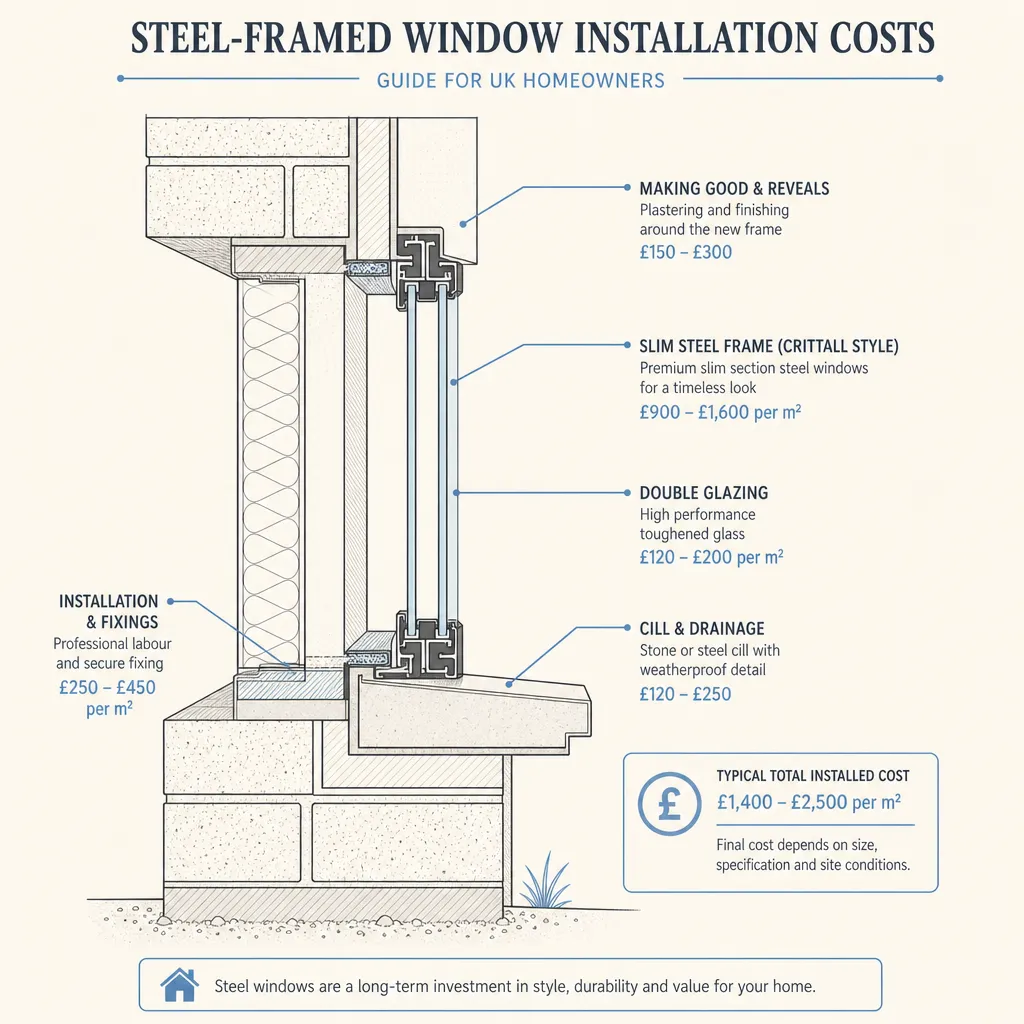
Steel-Framed Window Installation Costs
Steel-framed windows have seen a marked resurgence in UK residential and commercial projects, driven by the popularity of slim sightlines in contemporary extensions and the need for heritage-appropriate replacements in older properties. The cost question typically arises when specifying a new build, a rear or side extension, or a replacement programme for an existing property — and the figures can be a considerable step up from aluminium or uPVC equivalents. Understanding what you are paying for, and why, is essential before approaching manufacturers or installers.
Key points
- Slim-section steel profiles — such as those manufactured by Crittall, Jansen, and Forster — achieve frame widths as narrow as 18–25mm, compared with 60–80mm for standard uPVC, giving the narrow sightline characteristic of the Crittall aesthetic.
- Indicative installed costs range from £800 to £3,500+ per window depending on profile type, glazing specification, and size; large fixed panels can exceed £6,000 installed. (Indicative UK costs, last reviewed 2026-05-10.)
- Thermally broken slim-section steel windows with sealed double-glazed units can achieve whole-window U-values of 1.4–1.6 W/m²K, meeting Building Regulations Part L; non-thermally broken single-glazed Crittall frames typically achieve 5.0+ W/m²K.
- Replacement windows must be certified under the FENSA scheme or notified to Local Authority Building Control before installation; a missing certificate can create problems when selling the property.
- In conservation areas and listed buildings, slim-section steel is often the only frame type approved by planning authorities and conservation officers — always confirm before specifying an alternative.
What are steel-framed windows?
Steel windows fall into several distinct categories with different aesthetics, cost profiles, and thermal performance characteristics:
Standard steel casement windows: Thicker, heavier profiles used predominantly in agricultural, industrial, or utilitarian contexts. Less common in residential work.
Slim-section steel windows (Crittall-style): The dominant residential and commercial steel window type in the UK. Narrow profiles create a characteristic grid pattern associated with Arts and Crafts, Modernist, and contemporary extension design. Crittall is a British manufacturer and the most recognised name in this category; Jansen, Forster, and Optimum produce comparable systems.
Thermally broken slim-section steel: A development of the slim-section type in which a polyamide thermal break is inserted into the steel profile to reduce heat conduction — the standard specification for energy-compliant new-build and replacement installations.
Heritage replica (conservation-grade) windows: Manufactured to replicate historic single-glazed originals, typically for listed buildings where planning authorities require like-for-like replacement. Usually single-glazed with putty-fixed panes.
How much do steel windows cost in the UK?
Indicative UK costs, last reviewed 2026-05-10. Prices vary significantly by manufacturer, configuration, and glazing specification. VAT is additional unless confirmed otherwise. Always obtain itemised quotes from at least two specialist installers.
Window type | Supply-only cost per window (indicative) | Installed cost per window (indicative) |
|---|---|---|
Standard steel casement (small, single-glazed) | £300–£700 | £500–£1,200 |
Slim-section steel (non-thermally broken, double-glazed) | £700–£1,800 | £1,000–£2,800 |
Slim-section steel (thermally broken, double-glazed) | £1,200–£3,000 | £1,800–£4,000+ |
Heritage replica (conservation, single-glazed) | £600–£1,500 | £900–£2,500 |
Large fixed panel or picture window | £1,500–£4,000+ | £2,000–£6,000+ |
Labour costs for steel window installation typically exceed those for uPVC or aluminium because frames are heavier, precision fitting is required to achieve weathertight seals, and specialist anchorage into masonry or subframes is often needed.
What drives the cost?
Profile system and manufacturer: Specialist thermally broken slim-section systems command the highest supply prices. Standard steel casements are significantly cheaper but less commonly specified for residential use.
Glazing specification: Single-glazed heritage units sit at the lower end. Thermally broken frames with sealed double-glazed units improve Part L compliance and thermal comfort but cost more to supply and handle on site.
Size and configuration: Large fixed panels, multi-light crittall screens, or corner windows cost more than standard opening casements. Complex shapes — arched heads or raked heads — add further cost.
Removal and disposal: Taking out existing frames bonded or built into masonry adds time and cost. Reveals and linings may need making good after removal.
Powder coating and finish: Most steel windows are powder-coated to RAL colour at the factory. Dual-colour configurations, metallic effects, or specialist finishes may carry a premium.
Conservation area or listed building requirements: Heritage statements, listed building consent applications, and conservation officer liaison can add professional fees and extend the programme considerably.
Steel vs aluminium vs uPVC: which should you choose?
Frame type | Typical installed cost per window (indicative) | Approx. profile width | Thermal performance | Best for | Not ideal for |
|---|---|---|---|---|---|
Steel (slim thermally broken) | £1,800–£4,000+ | 18–35mm | Good (U-value ~1.4–1.6 W/m²K) | Heritage, contemporary extensions, conservation areas | Budget projects |
Steel (standard casement) | £500–£1,200 | 40–60mm | Moderate | Agricultural, utility buildings | Residential aesthetics |
Aluminium (thermally broken) | £600–£2,000 | 35–55mm | Good | Contemporary residential and commercial | Period aesthetic |
uPVC | £300–£900 | 60–80mm | Good | Mainstream residential | Conservation areas, period properties |
Timber | £600–£2,500 | 45–70mm | Variable | Traditional and conservation area | Low-maintenance requirements |
Indicative UK costs, last reviewed 2026-05-10.
Building regulations and certification
Replacement windows in England, Scotland, and Wales must comply with Building Regulations Part L, which sets minimum thermal performance standards. The most common compliance route is FENSA (Fenestration Self-Assessment Scheme) registration: FENSA-registered installers can self-certify their work and issue a certificate directly, without requiring a separate Local Authority Building Control notification.
If your installer is not FENSA-registered, you must notify your local building control authority before work begins and pay a notification fee; the authority will inspect and certify on completion. A missing certificate can cause delays when you come to sell the property.
For new structural openings within an extension or structural alteration, full building regulations approval applies — not just the fenestration notification route.
In conservation areas, replacing windows may require planning permission if it constitutes a material alteration or if a condition on an existing consent prevents changes. For listed buildings, Listed Building Consent is a legal requirement for window replacement regardless of whether the replacement matches the original.
Homeowner checklist before ordering steel windows
When to get professional help
Steel window installation always requires a qualified and experienced installer. Seek professional advice before proceeding if:
- Your property is listed — Listed Building Consent is legally required and directly affects what can be installed.
- You are in a conservation area and are unsure whether planning permission applies to the replacement.
- The structural opening will be altered, widened, or require a new or modified lintel — structural engineering input is essential.
- Existing frames show signs of significant corrosion, distortion, or structural bonding with the surrounding masonry.
- You are unsure whether your installer is FENSA-registered or how to notify building control.
How Housey can help
Housey connects homeowners with vetted window and door installers who can advise on steel window profile options, provide itemised supply-and-fit quotes, and handle FENSA certification for replacement work. Compare quotes and credentials before you commit to an order.
Frequently asked questions
Are thermally broken steel windows energy efficient?
Yes — thermally broken slim-section steel windows with sealed double-glazed units can achieve whole-window U-values of around 1.4–1.6 W/m²K, meeting current Part L requirements. Non-thermally broken or single-glazed steel windows perform significantly worse: traditional single-glazed Crittall frames have U-values above 5.0 W/m²K, making them unsuitable for energy-compliant replacement work in most circumstances.
How long do steel windows last?
With adequate maintenance — periodic repainting or prompt attention to damaged powder-coat edges, and clear drainage at the sill — steel windows can last 50–100 years. Many original Crittall windows from the 1920s–1950s remain in service in UK homes and offices. The main risk is corrosion at breached paintwork, which should be treated promptly to prevent spread.
Do I need Listed Building Consent to replace steel windows?
Yes, if your property is a listed building. Listed Building Consent is a legal requirement for any replacement of windows, even when matching the original style exactly. Carrying out replacement work without consent risks enforcement action and a requirement to reinstate the originals. Apply to your local planning authority before any work starts — do not rely on verbal assurances that consent is unnecessary.
Can original Crittall frames be retrofitted with double glazing?
Often, yes. Some original slim-section steel frames can be adapted to accept sealed slim double-glazed units, and specialist companies offer this service. Suitability depends on the rebate depth and structural condition of the existing frame, which must be assessed on site. Where frames are in poor condition, full replacement with a modern thermally broken profile may be more cost-effective than retrofitting glazing units.
Sources and further reading
- Approved Document L: Conservation of fuel and power — GOV.UK Building Regulations
- FENSA: Fenestration Self-Assessment Scheme — FENSA
- Permitted development — windows and planning guidance — Planning Portal
- Advice on windows in traditional buildings — Historic England
- Steel Window Association — industry guidance — Steel Window Association
Useful next reads
 Improvement & Build
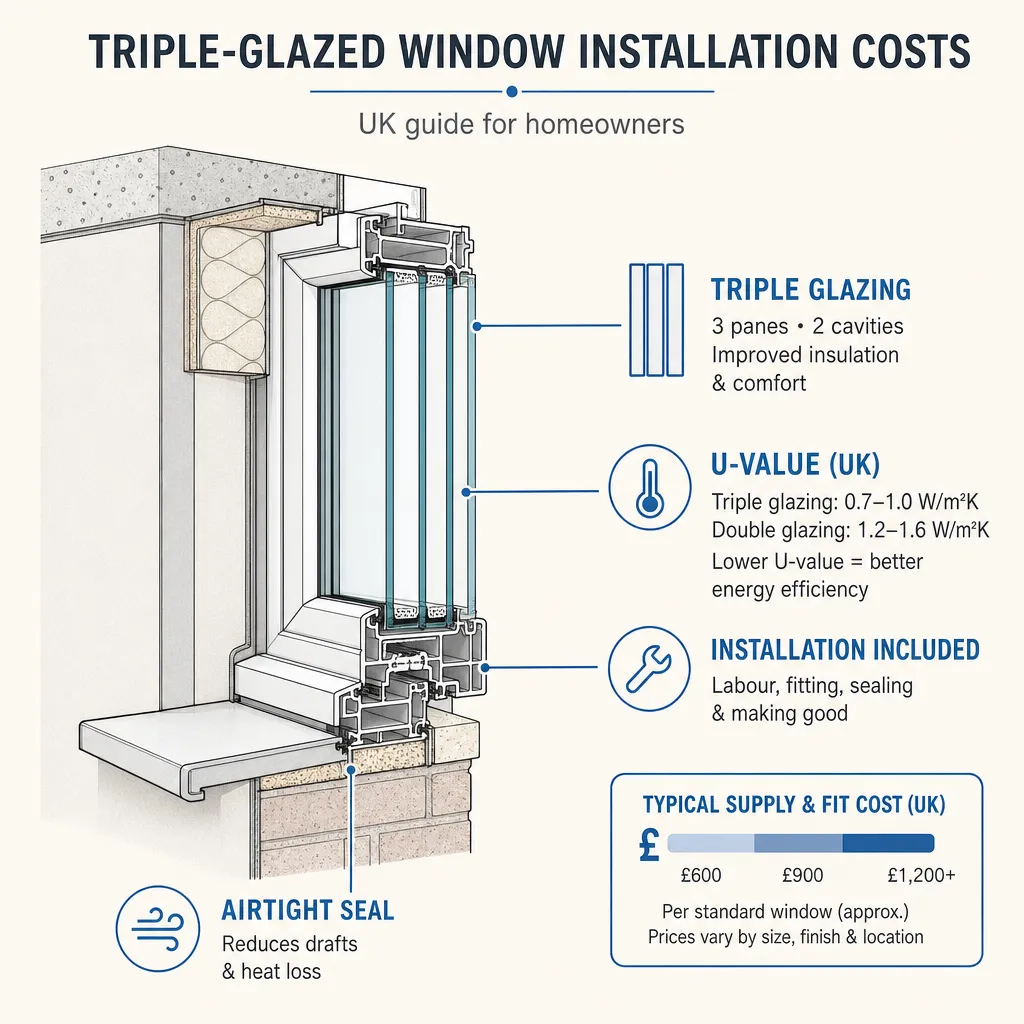
Triple-Glazed Window Installation Costs
Triple-glazed window installation in the UK typically costs £800–£1,800 per window, depending on size, frame material, and glazing specification.
 Improvement & Build
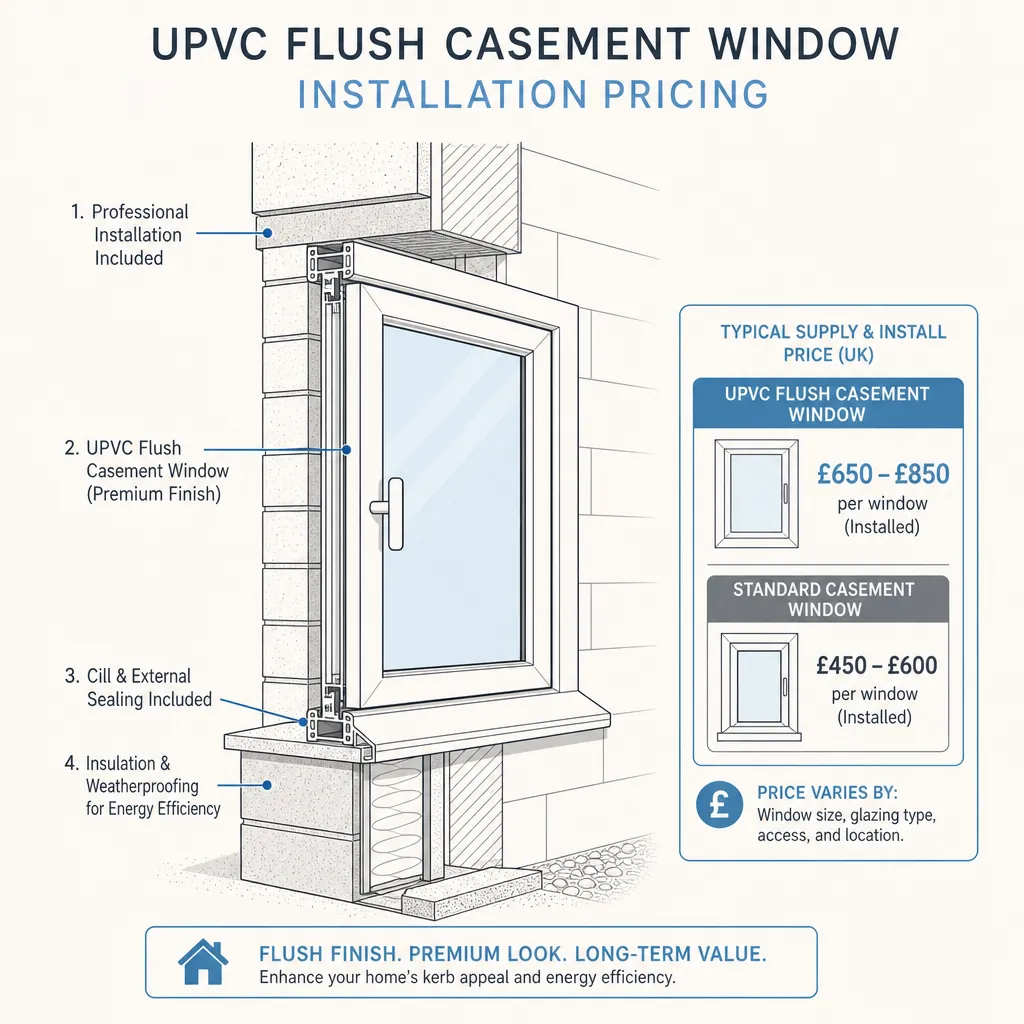
UPVC Flush Casement Window Installation Pricing
UPVC flush casement windows typically cost £400–£900 per window supplied and fitted in the UK, depending on size, glazing specification, and finish.
 Improvement & Build
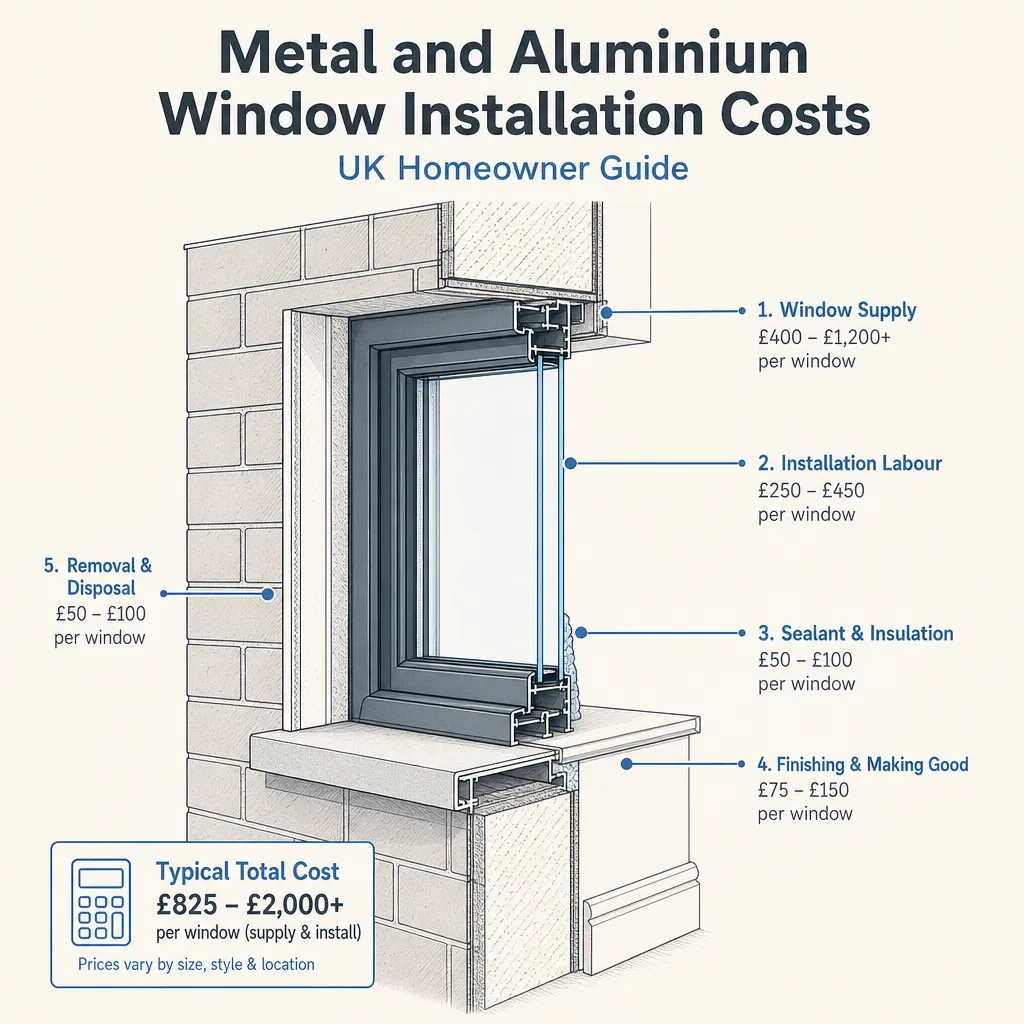
Metal and Aluminium Window Installation Costs
Aluminium window installation in the UK typically costs £450 to £1,800 per window depending on size, glazing, and frame system.
 Improvement & Build
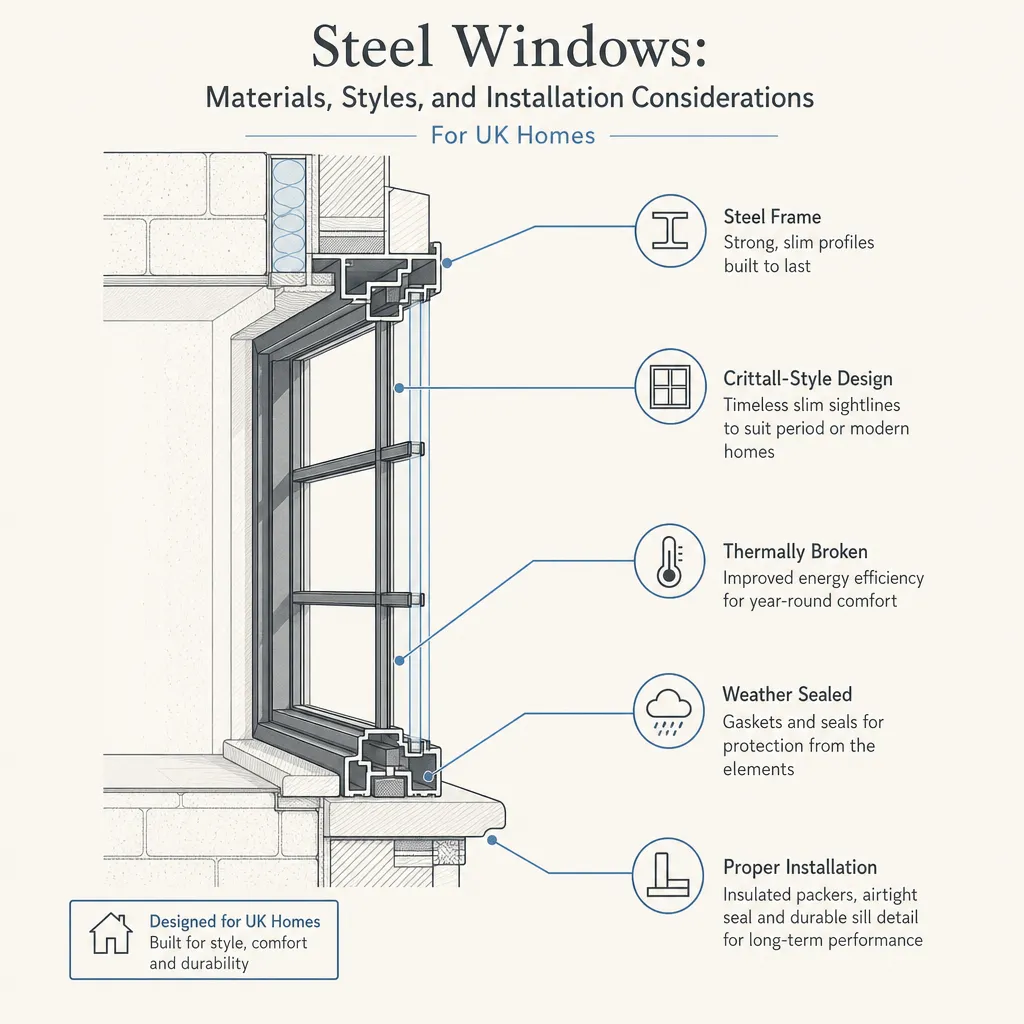
Steel Windows: Materials, Styles, and Installation Considerations
Steel windows offer exceptionally slender sightlines — as narrow as 20–38 mm — making them popular for heritage and contemporary projects alike.
 Improvement & Build
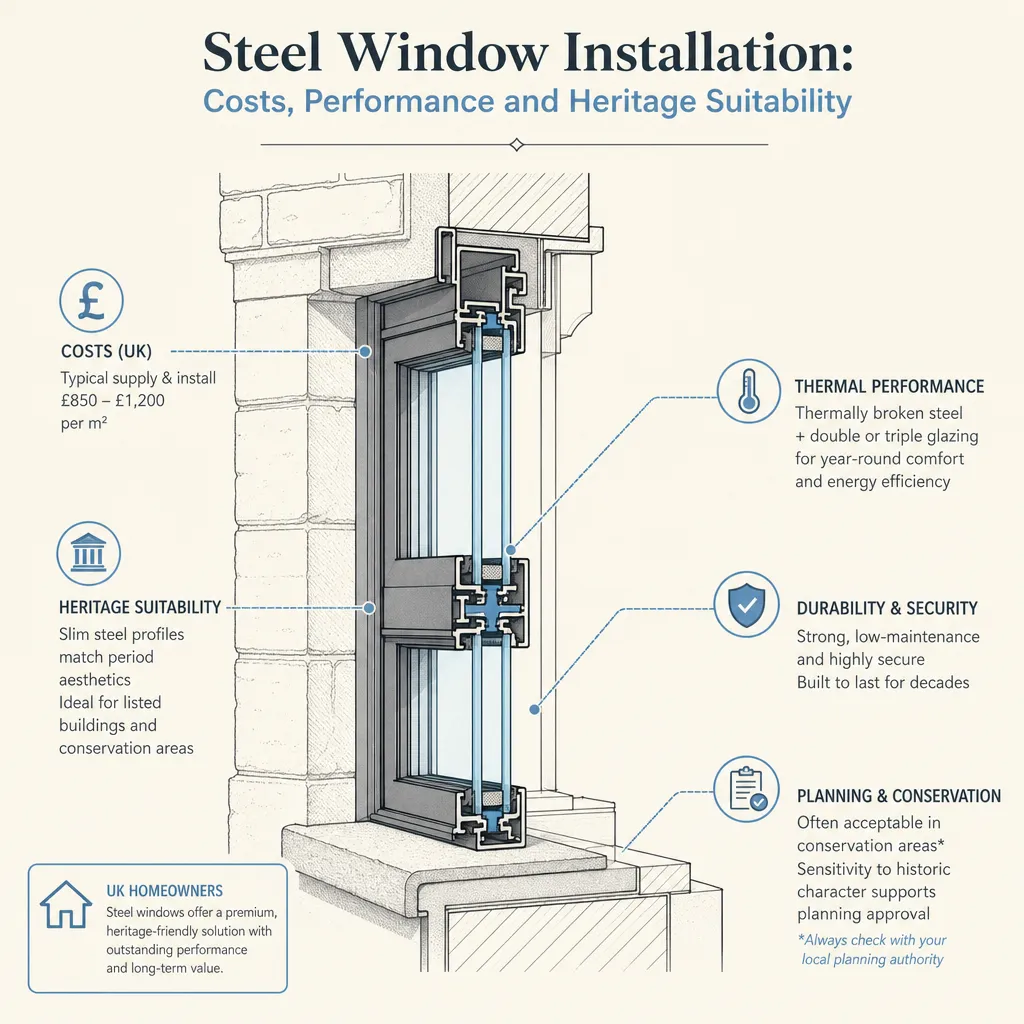
Steel Window Installation: Costs, Performance and Heritage Suitability
Steel windows are suited to inter-war, modernist, and contemporary UK homes where slim sightlines or heritage character matter.