Waterproofing and Protecting Your Deck or Patio
By Housey · Last reviewed 1st of June 2026
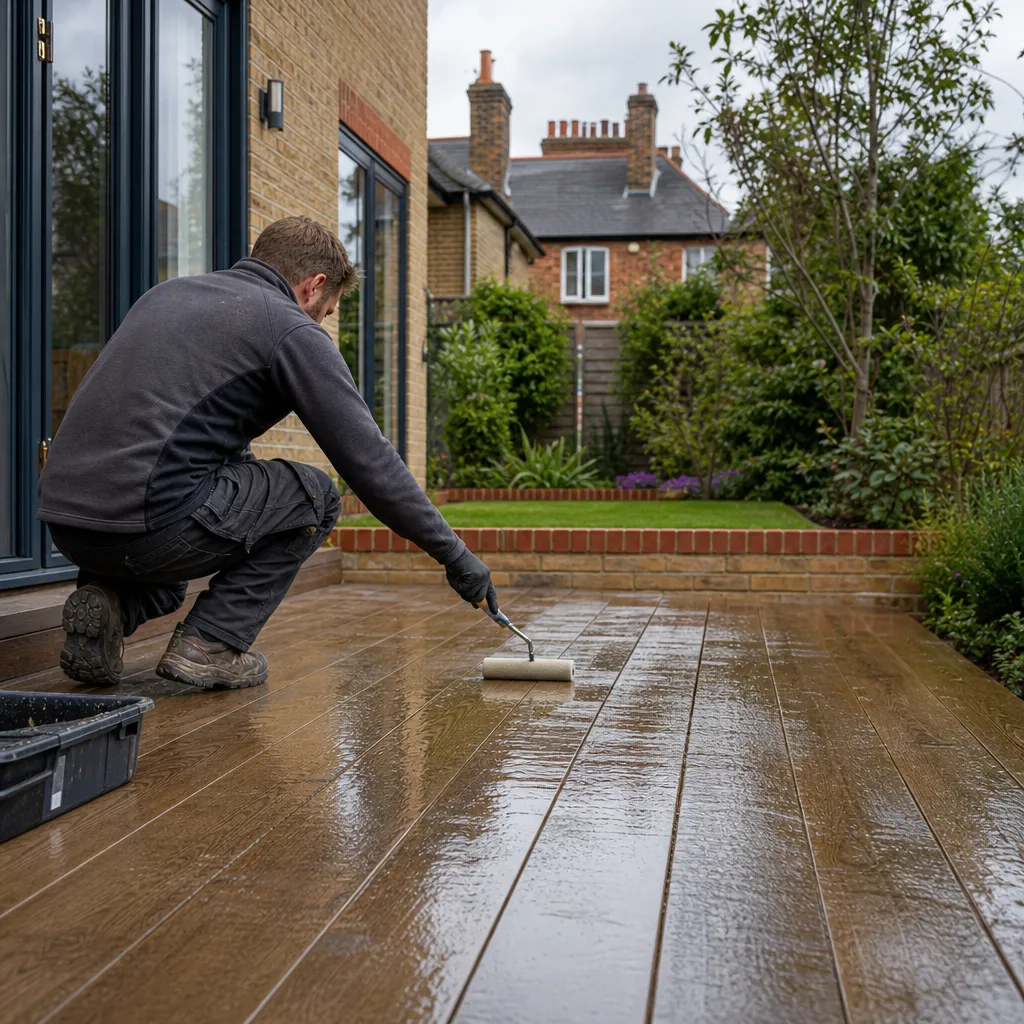
Waterproofing and Protecting Your Deck or Patio
A timber deck or hard-landscaped patio is one of the most exposed surfaces around a UK home — subject to prolonged rainfall, frost cycles, algae growth, and UV exposure throughout the year. Questions about waterproofing typically arise after a harsh winter reveals bleached decking, crumbling jointing, or damp patches spreading towards a house wall. Getting the treatment right from the outset saves money, prevents structural rot, and avoids the more serious problem of water bridging into the building fabric.
Key points
- Timber decking must be dry for at least 48 hours before any sealant or oil is applied; moisture trapped beneath a coating causes premature peeling and shortens the treatment life significantly.
- Penetrating impregnators (silane or siloxane-based) for concrete and natural stone allow the surface to breathe and typically last 3–5 years, longer than most film-forming sealers.
- Raised decking over 30cm above ground level may require planning permission in some local authority areas — always check before building or altering.
- Poor drainage is more often the root cause of persistent patio damp than surface permeability; no sealant will correct a structural drainage problem.
- Composite decking boards generally have lower maintenance needs than softwood, but grout lines, fixings, and the underlying frame still need annual inspection.
Why decks and patios suffer water damage
UK rainfall averages around 885mm per year nationally, with coastal and upland areas receiving considerably more. Hard surfaces around a home concentrate runoff, and any gap in surface protection — a cracked slab, failed pointing, or unsealed timber grain — becomes an entry point for water. Once beneath the surface, freeze–thaw cycles in winter expand trapped moisture and enlarge cracks. Timber decking is particularly vulnerable because it cycles between wet and dry conditions repeatedly, causing swelling, shrinkage, surface checking (fine grain cracks), and, eventually, rot in the underlying frame if drainage is inadequate.
Choosing the right waterproofing product for your surface
Different surface materials require different treatment chemistries. Using the wrong product — for example, a film-forming varnish on softwood decking — traps moisture rather than repelling it and leads to early failure.
Surface type | Recommended treatment | Reapplication frequency | Notes |
|---|---|---|---|
Softwood decking (pine, larch, spruce) | Penetrating decking oil or water-repellent sealant | Every 1–2 years | Avoid film-forming varnish; clean first with a specialist deck cleaner |
Hardwood decking (oak, iroko, teak) | Hardwood decking oil | Every 2–3 years | Allow new hardwood to weather 3–6 months before first oiling |
Composite decking | Composite cleaner; UV protector optional | Every 2–3 years (cleaning) | Check manufacturer guidance — some composites void warranty if coated |
Concrete patio | Penetrating impregnator (silane/siloxane) | Every 3–5 years | Breathable; surface sealers may darken appearance |
Natural stone (sandstone, limestone) | Colour-enhancing or natural-finish impregnator | Every 2–4 years | Avoid acid-based cleaners; test in an inconspicuous area first |
Porcelain tiles | Grout sealer recommended; tile surface low-maintenance | Every 1–2 years (grout only) | Porcelain tile surface is generally non-porous |
How to prepare your deck or patio before waterproofing
Preparation is responsible for most of the outcome. Applying sealant to a dirty or damp surface shortens its effective life significantly, often by more than half.
Pre-waterproofing checklist
Drainage and structure: what no sealant can fix
A common misunderstanding is that surface waterproofing will cure persistent damp near or inside a house. If water is appearing on an adjacent wall, pooling on the patio surface after rain, or infiltrating a basement or ground floor, the problem is almost certainly drainage — not surface permeability.
Key drainage checks before applying any treatment:
- Patio fall: patios adjacent to a house should slope away from the building at a gradient of approximately 1:80 (around 12mm per metre). A spirit level and string line will reveal whether the current fall is adequate.
- DPC clearance: the patio surface should sit at least 150mm below the damp-proof course (DPC) in the house wall. If it does not, water and soil can bridge the DPC and cause rising damp indoors.
- Drainage outlets: a blocked gulley or drainage channel is a simple fix — but one that makes a disproportionate difference to surface water management.
Maintenance schedule: how often should you treat?
The comparison table above gives product-specific guidance, but a general annual inspection in early autumn — before the wettest months — is worth building into your property maintenance calendar. Look for:
- Boards that have gone grey or splintery (UV and moisture damage; respond to cleaning and re-oiling before rot sets in)
- White or chalky deposits on stone or brick (efflorescence — salt migrating from within the slab, indicating ongoing moisture movement)
- Cracked or missing pointing between slabs or pavers
- Any movement or rocking of individual slabs, tiles, or boards
When to get professional help
Most waterproofing and maintenance tasks on a flat deck or ground-level patio are accessible to a confident homeowner. However, seek professional advice when you see these red flags:
- Standing water persists more than 30 minutes after rain stops — a drainage or fall issue likely requiring regrading rather than sealing.
- Damp is appearing on interior walls adjacent to the patio — a potential DPC bridge that a qualified damp proofing specialist should assess before any sealing work is attempted.
- Joist or post rot is visible beneath a raised deck — structural timber replacement is needed before waterproofing has any lasting value.
- The patio slab is cracking, sinking, or rocking — a possible void beneath the slab or ground movement that may require a structural engineer's opinion.
- The deck sits over an enclosed interior space such as a garage or basement room — waterproofing in this context is closer in scope to flat-roof waterproofing and should be scoped accordingly by a roofer with flat-roof experience.
How Housey can help
If you are dealing with persistent damp near a patio or suspected water ingress through a deck above an interior space, a qualified professional can diagnose the cause before you spend money on the wrong treatment. Housey connects you with vetted damp proofing specialists and experienced roofers who can assess drainage, DPC clearance, and waterproofing requirements for your specific property and construction type.
Frequently asked questions
Does a deck need planning permission in the UK?
A ground-level deck under 30cm in height in most rear gardens falls within permitted development rights and does not need planning permission. Decking above 30cm, in a conservation area, on a listed building, or covering more than 50% of the garden area may require consent. Check with your local planning authority before building or altering.
Can I apply decking oil over old sealant?
It depends on the existing product. Penetrating oils cannot work through an intact film-forming sealant or varnish. Strip any flaking or existing film finish first, then clean and dry the surface thoroughly before applying oil. If you are unsure what was previously applied, test a small area and observe the result.
How do I stop a patio going green and slippery?
Algae and moss growth is the main cause of slippery patios in the UK. An annual clean with a biocide or specialist patio cleaner removes existing growth. A penetrating impregnator reduces moisture retention and slows regrowth. Improving airflow and reducing shade around the patio area also helps limit future growth.
Is waterproofing a deck or patio subject to VAT?
For homeowners commissioning tradespeople, labour on general maintenance and repair work is subject to standard-rate VAT at 20% unless the property qualifies for a reduced rate under specific HMRC rules. Materials purchased separately also attract standard-rate VAT. Confirm the VAT position with your contractor before work begins.
Sources and further reading
- Permitted development rights for householders: technical guidance — GOV.UK
- Care and maintenance guidance — Timber Decking and Cladding Association
- Damp and waterproofing guidance — Property Care Association
- Work at height: a brief guide — Health and Safety Executive
Useful next reads
 Improvement & Build
Sealing and Maintaining Historic Leaded Glass Windows: Preservation and Performance
Leaded glass windows are maintained using traditional linseed oil cement — not silicone or modern sealants, which prevent natural movement in the lead came.
 Improvement & Build
Repairing Damaged Porch Screens: When to Call a Specialist
Most porch screen repairs fall into two categories: surface work — cracked paint, minor mesh tears, loose beading — that a confident homeowner can handle, and structural or glass replacements that require a specialist.
 Improvement & Build
Budget for Fitting Soffits, Fascias, and Gutter Systems
Replacing soffits, fascias, and gutters on a typical UK semi-detached house costs roughly £1,500–£3,500 for uPVC, depending on property size, access, and material choice.
 Improvement & Build
Home Improvement Projects That Add Value to Your Property
Loft conversions, rear extensions, and kitchen refurbishments typically offer the strongest return on investment for UK homeowners.
 Improvement & Build
Exterior Painting for Your Home
Exterior painting protects your home from the UK's wet climate and can significantly boost kerb appeal.