What Is a Conveyancing Solicitor and What They Do for You
By Housey · Last reviewed 25th of May 2026

What Is a Conveyancing Solicitor and What They Do for You
When you agree a sale price on a property in England or Wales, the legal side of the transaction is only just beginning. Investigating ownership history, reviewing planning consents, checking for restrictions on the title, and co-ordinating the movement of mortgage funds all require specialist legal knowledge. Mistakes at this stage — a missed restriction on the title register, an unresolved planning breach, an incorrectly drafted transfer deed — can affect the property's saleability and your legal rights for years afterwards.
Key points
- A conveyancing solicitor must hold a current practising certificate from the Solicitors Regulation Authority (SRA); verify any firm's registration at the SRA's online solicitor register before instructing.
- Licensed conveyancers are regulated separately by the Council for Licensed Conveyancers (CLC) and can carry out residential conveyancing but cannot advise on non-property legal matters that may arise from the transaction.
- Most mortgage lenders require a solicitor or licensed conveyancer to act in their interests as well as yours; many firms accept dual representation under the UK Finance Mortgage Lenders' Handbook.
- The Law Society's Conveyancing Quality Scheme (CQS) accreditation indicates a firm has met assessed standards for residential conveyancing practice; many lenders require CQS-accredited firms as a condition of panel membership.
- Client money held by solicitors sits in a protected client account regulated by the SRA; the SRA Compensation Fund provides recourse if a firm misappropriates funds.
What a conveyancing solicitor does during a purchase
A conveyancing solicitor takes on two distinct sets of responsibilities: acting in your interests as buyer, and — where applicable — acting simultaneously for your mortgage lender.
Before exchange of contracts, the solicitor typically:
- Requests and reviews official copies of the title register and title plan from HM Land Registry.
- Raises pre-contract enquiries with the seller's solicitor, covering boundaries, disputes, alterations, and any known issues with the property.
- Orders standard property searches: a Local Authority search (checking planning decisions, enforcement notices, road adoption, and certain financial charges), a drainage and water search, and an environmental search. Additional searches — coal mining, chancel repair liability, or flood risk — may be recommended depending on location and property age.
- Reviews the draft contract and supporting documents, including the TA6 property information form and the TA10 fixtures and fittings form.
- Checks the mortgage offer against lender requirements.
- Reports all findings to you and advises on any issues before exchange.
At exchange of contracts, the solicitor:
- Confirms all outstanding enquiries are satisfactorily resolved.
- Exchanges signed contracts with the seller's solicitor, legally binding both parties.
- Receives and holds the deposit (usually 10% of the purchase price, though this is negotiable).
- Agrees the completion date.
Between exchange and completion, the solicitor:
- Carries out pre-completion searches (official search with priority at HMLR, bankruptcy search against the buyer's name).
- Prepares the Transfer deed (TR1 form for registered land).
- Requests the mortgage advance from the lender.
On completion day, the solicitor:
- Transfers the purchase price to the seller's solicitor by CHAPS bank transfer.
- Confirms receipt and arranges release of keys through the estate agent.
- Files the Stamp Duty Land Tax (SDLT) return and pays tax owed to HMRC within 14 days of completion.
- Applies to register the new ownership and any mortgage at HM Land Registry.
Conveyancing solicitor vs licensed conveyancer
Both professionals can legally carry out residential conveyancing in England and Wales. The right choice often depends on the complexity of your transaction.
| Conveyancing solicitor | Licensed conveyancer |
|---|---|---|
Regulated by | Solicitors Regulation Authority (SRA) | Council for Licensed Conveyancers (CLC) |
Qualification | Law degree + LPC or SQE, plus training contract | CLC qualification |
Scope | All legal matters, including litigation, trusts, and wills | Residential and commercial conveyancing only |
Best for | Complex titles, leasehold, disputed boundaries, transactions involving probate or divorce | Straightforward freehold purchases and remortgages |
Compensation fund | SRA Compensation Fund | CLC Compensation Fund |
Law Society CQS available | Yes | No |
Which professional do you need?
- Choose either a conveyancing solicitor or a licensed conveyancer for a standard freehold purchase or sale of a house.
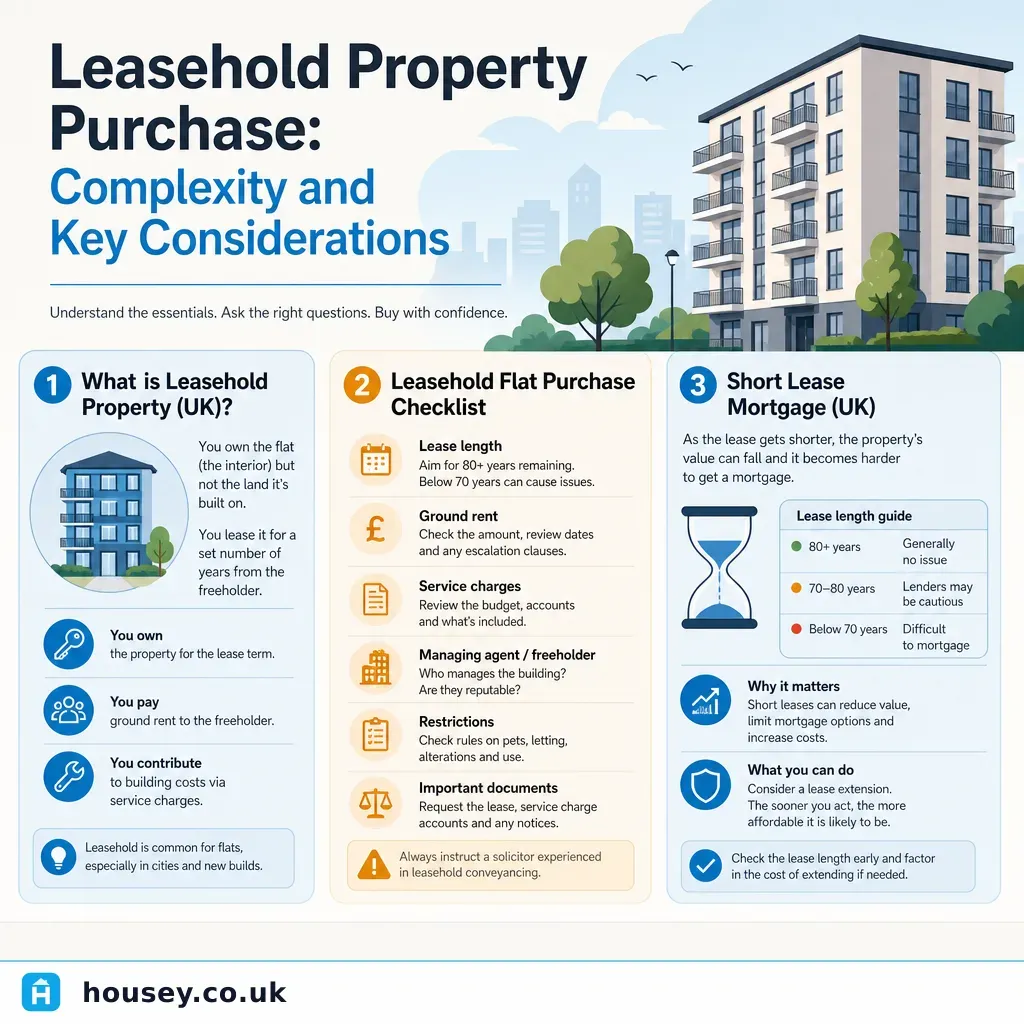
- Choose a conveyancing solicitor for a leasehold flat purchase — leases can involve landlord and tenant law that goes beyond pure conveyancing.
- Choose a solicitor with new-build experience if buying from a developer — exchange deadlines are often short and developer solicitors apply pressure.
- Choose a solicitor if the transaction involves probate, divorce, equity release, or trust arrangements.
- Ask your mortgage lender which firms are on their approved panel before instructing anyone.
- Check with your solicitor if the property is listed, in a conservation area, or subject to any enforcement notices — these may require specialist input.
How conveyancers are regulated
Regulation matters because conveyancers hold large sums of client money and make legally binding commitments on your behalf. The SRA sets conduct standards, requires professional indemnity insurance, and operates the SRA Compensation Fund for cases of solicitor fraud or insolvency. The CLC performs an equivalent role for licensed conveyancers.
Before instructing, verify registration:
- Solicitors: Law Society's Find a Solicitor tool
- Licensed conveyancers: CLC's Find a Conveyancer tool
Avoid unregulated services not listed on either register; they cannot legally act for a mortgage lender and offer no regulatory protection if something goes wrong.
Important limitations
This article provides general information about the role of conveyancing solicitors in residential property transactions in England and Wales. It does not constitute legal advice. Scottish property law operates under a different system (missives, Registers of Scotland), as does Northern Ireland. Individual transactions vary considerably in complexity. Always instruct a qualified and regulated professional and seek their specific advice about your situation.
What to ask a qualified professional
Before instructing a conveyancing solicitor or licensed conveyancer:
- Are you regulated by the SRA or CLC, and can I verify your firm's registration online?
- Do you hold Law Society CQS accreditation?
- Who will handle my file day-to-day — a qualified solicitor, a licensed conveyancer, or a supervised paralegal?
- Can I contact that person directly if I have questions?
- What searches do you recommend for this property, and are there any additional searches given its location or age?
- How do you communicate progress — portal, email, or telephone?
- What is your quoted fee, and what disbursements (searches, SDLT, HMLR registration fees) are additional?
- What is your process if issues arise — a problematic lease, a missing planning consent, or a boundary dispute?
When to get professional help
Conveyancing for a mortgaged property must be carried out by a regulated solicitor or licensed conveyancer; your lender requires it. Even for unmortgaged cash purchases, the risk of undetected title defects, incorrect SDLT filing, and missed search results makes professional instruction strongly advisable.
Seek advice immediately if:
- You are being pressed to sign documents by the seller's solicitor before your own solicitor has reviewed them.
- A search has revealed an enforcement notice, a restriction on the title, or a notice of compulsory purchase.
- The property has been extended or converted without obvious building regulations completion certificates.
- There is a dispute about the physical boundaries versus the title plan.
- The lease has fewer than 80 years remaining — below this threshold, lease extension costs rise sharply and some lenders will decline to lend.
How Housey can help
Housey connects you with regulated conveyancing professionals for residential purchases, sales, and remortgages across England and Wales. Compare quotes, check accreditations, and instruct a solicitor or licensed conveyancer through our conveyancing service, with transparent pricing at every step.
Frequently asked questions
Do I legally need a solicitor to buy a house?
There is no strict legal requirement to use a solicitor for an unmortgaged cash purchase, but the complexity of title investigation, SDLT filing, and HM Land Registry registration makes professional instruction the norm. If you have a mortgage, your lender will require a regulated conveyancer to act on their behalf, and most insist the same firm acts for you simultaneously.
How much do conveyancing solicitors charge?
Indicative UK costs, last reviewed 2026-05-25. Professional fees for a straightforward freehold purchase typically range from around £800 to £1,800 plus VAT, depending on the property value, the firm, and its location. Disbursements — searches, HMLR registration fees, and SDLT — are additional. Leasehold and new-build transactions usually cost more due to greater complexity. Always request a full itemised quote before instructing.
What is the difference between a conveyancing solicitor and a conveyancer?
The word conveyancer covers anyone who carries out conveyancing work. A conveyancing solicitor is a qualified lawyer who specialises in property, regulated by the SRA, and able to advise on any related legal matters. A licensed conveyancer holds a specialist CLC qualification limited to conveyancing. Both are regulated and can act for mortgage lenders; the practical difference is the breadth of legal advice available.
What is CQS accreditation?
The Law Society's Conveyancing Quality Scheme (CQS) is an accreditation available to solicitor firms that meet defined standards for residential conveyancing practice, covering client service, risk management, and technical competence. Many mortgage lenders require CQS accreditation as a condition of approved panel membership.
Sources and further reading
- HM Land Registry: registering land or property — GOV.UK
- Find a solicitor — Law Society / SRA
- Find a licensed conveyancer — Council for Licensed Conveyancers
- Conveyancing Quality Scheme — Law Society
- Stamp Duty Land Tax — GOV.UK / HMRC
- UK Finance Mortgage Lenders' Handbook — UK Finance
Useful next reads
 Buying & Moving
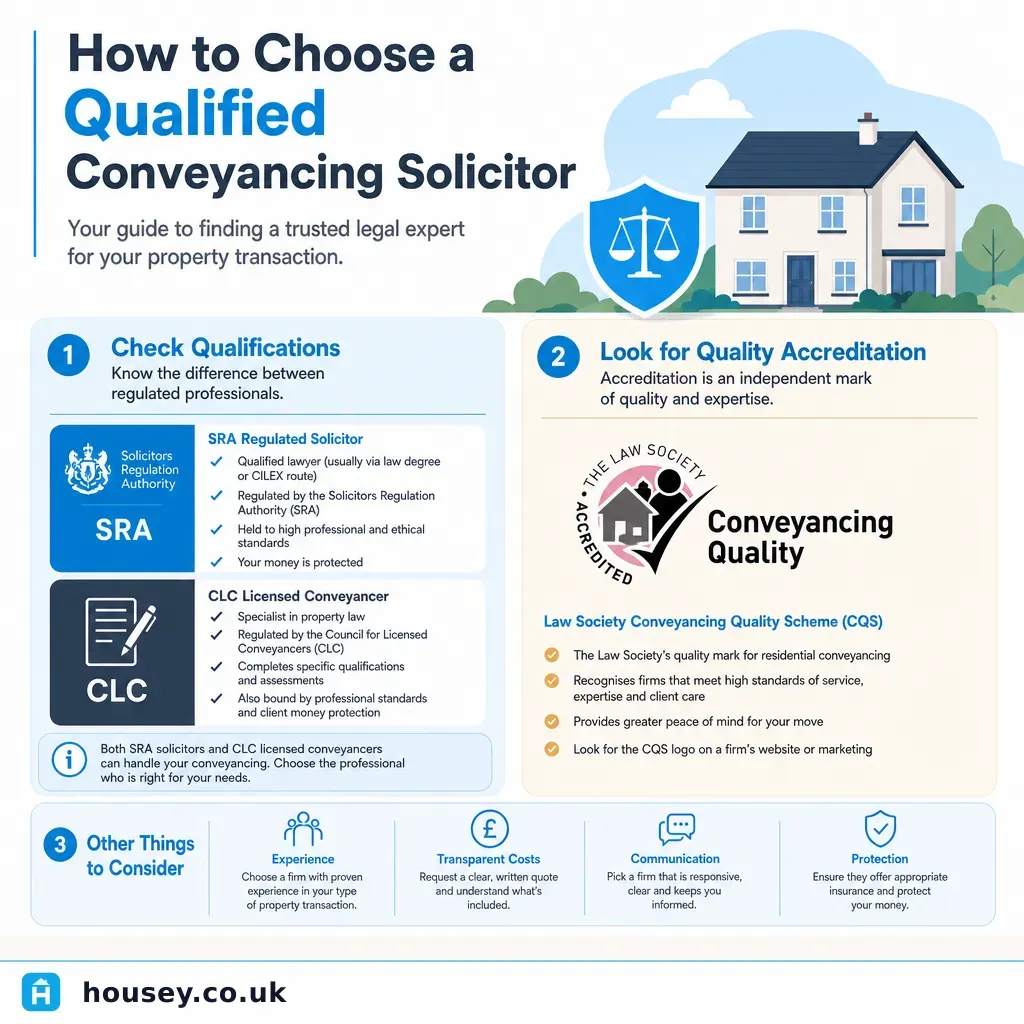
How to Choose a Qualified Conveyancing Solicitor
To choose a qualified conveyancing solicitor, verify they are regulated by the Solicitors Regulation Authority (SRA) or the Council for Licensed Conveyancers (CLC), check whether they hold Law Society CQS accreditation, and confirm they are on your mortgage lender's approved panel.
 Buying & Moving
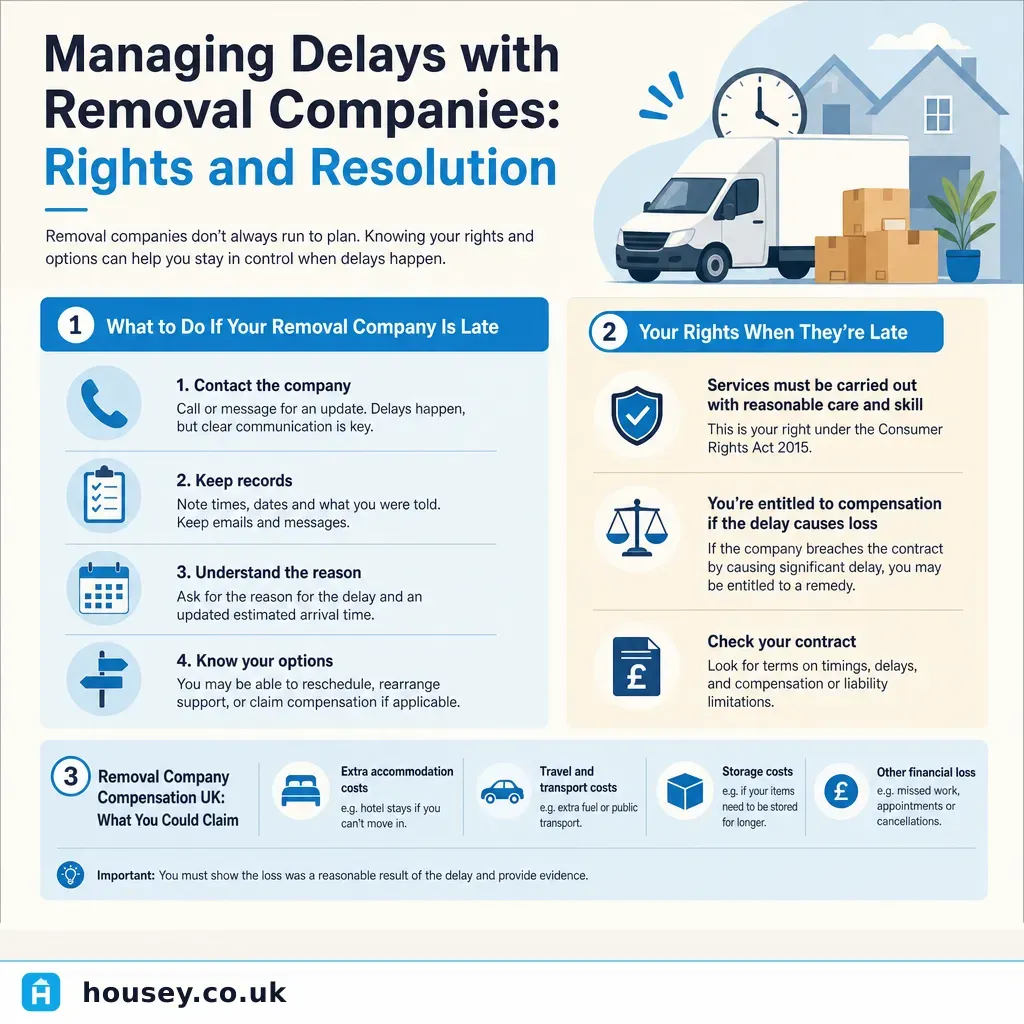
Managing Delays with Removal Companies: Rights and Resolution
If a removal company is late, your rights depend on your contract and whether the company is BAR-registered.
 Buying & Moving
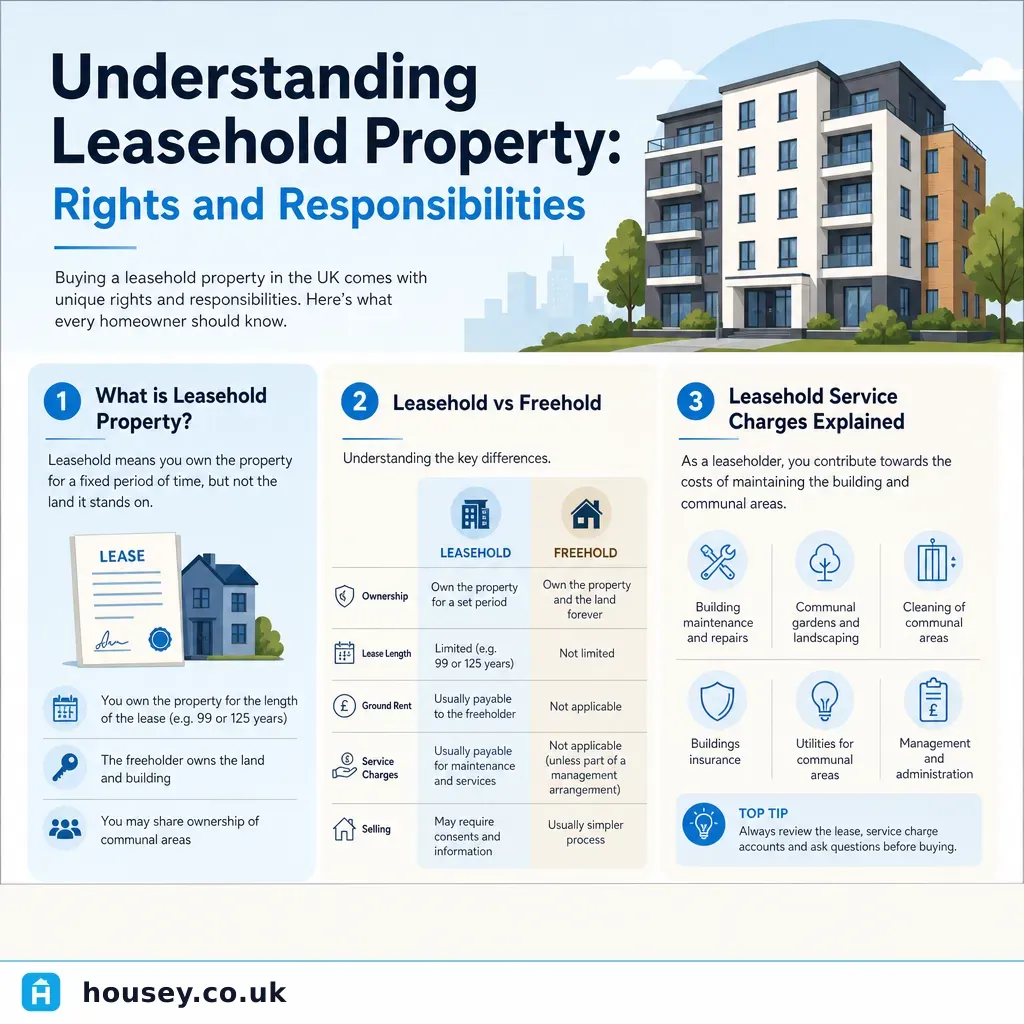
Understanding Leasehold Property: Rights and Responsibilities
Leasehold means you own a time-limited interest in a property while the freeholder owns the land and building.
 Buying & Moving
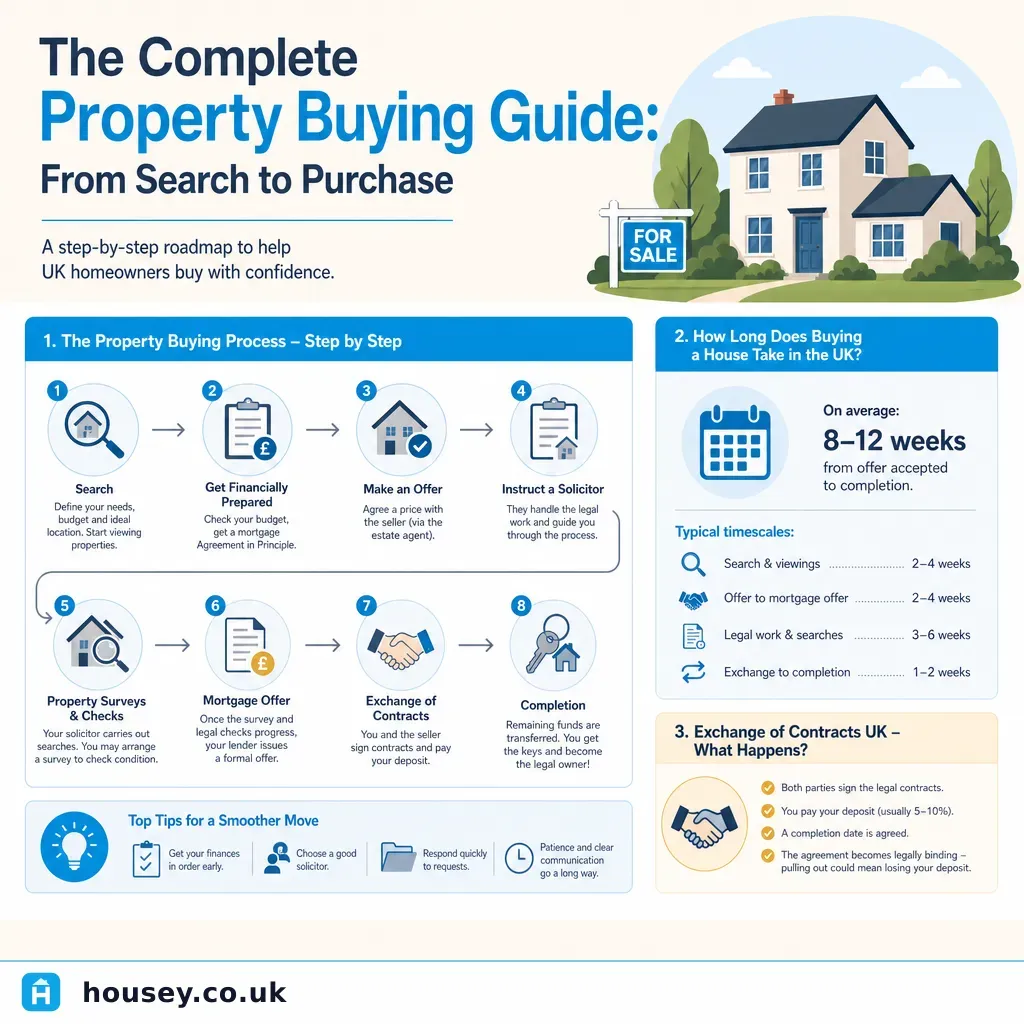
The Complete Property Buying Guide: From Search to Purchase
Buying a property in England and Wales typically takes 3–6 months from accepted offer to completion.
 Buying & Moving
Leasehold Property Purchase: Complexity and Key Considerations
Buying a leasehold property means purchasing the right to occupy for a fixed term rather than owning the land outright.