What to Expect from a Professional Roof Inspection
By Housey · Last reviewed 1st of June 2026
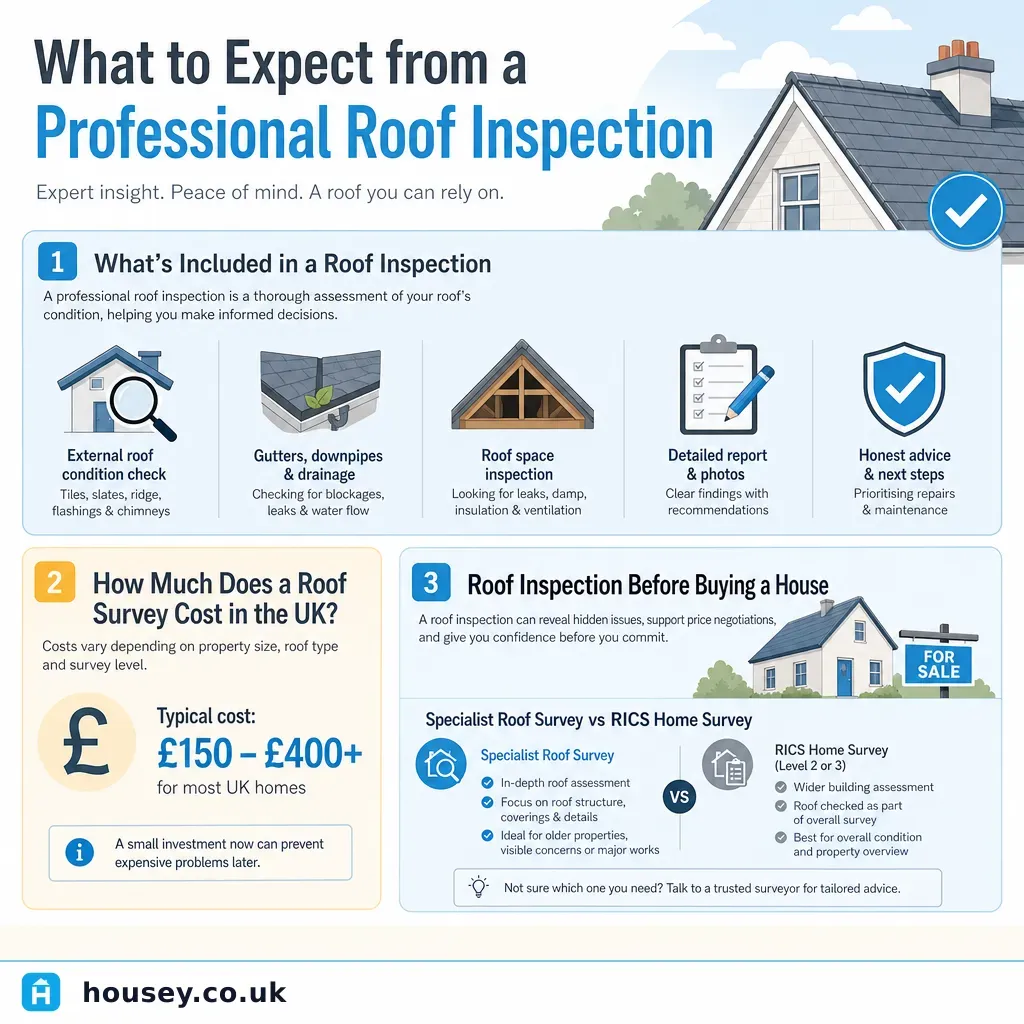
What to Expect from a Professional Roof Inspection
A roof that looks serviceable from the pavement can conceal deteriorating felt underlay, failed mortar joints, corroded flashings, or early-stage timber rot that will eventually allow water into the building. A professional inspection gives you an accurate picture of current condition, a prioritised repair schedule, and a documented record that can support purchase decisions, insurance negotiations, or maintenance planning. Understanding what the process involves helps you choose the right type of inspection and interpret the report you receive.
Key points
- Professional roof inspections in the UK range from a ground-level visual assessment and drone survey to a full scaffold or MEWP (mobile elevating work platform) access inspection — the appropriate method depends on roof type, pitch, access conditions, and the level of detail required.
- A RICS Level 2 or Level 3 Home Survey includes a roof inspection from ground level and from the loft where accessible, but a specialist roofing survey examines coverings, flashings, mortar, and structure in considerably greater detail and is recommended for older, complex, or visibly deteriorating roofs.
- Common defects identified during UK roof inspections include slipped or broken slates and tiles, failed ridge and hip mortar, deteriorated lead or mortar flashings, blocked gutters, chimney stack cracking, and — on flat roofs — membrane blistering or standing water.
- A written report with photographs is the standard deliverable; it should classify defects by urgency — typically urgent, short-term (within 12 months), medium-term (within 3–5 years), and monitoring items — so you can plan and budget effectively.
- Indicative UK costs range from approximately £150–£350 for a drone inspection to £300–£700+ for a scaffold access survey on a typical semi-detached house, varying with roof area, pitch, and access difficulty. (Indicative UK costs, last reviewed 2026-06-01; obtain at least two quotes.)
Types of professional roof inspection
Not all roof inspections offer the same level of detail. The method chosen directly affects what the inspector can observe and physically check, and therefore the reliability of the recommendations.
Inspection type | What it involves | Best for | Limitations |
|---|---|---|---|
Ground-level visual | Inspector surveys from the garden using binoculars; no roof access | Initial condition screen, quick checks on accessible properties | Cannot examine flashings, underlay, battens, or mortar detail closely |
Drone survey | Aerial camera captures close-up roof imagery; inspector reviews footage | Hard-to-access roofs, pre-purchase checks, complex roof plans | Cannot test mortar adhesion, check felt beneath tiles, or assess timber structure |
MEWP (cherry picker) | Inspector accesses specific sections from an elevated platform | Targeted investigation at accessible points | Limited coverage; not suited to all roof geometries |
Scaffold access | Full scaffolding erected; inspector walks the roof and checks all elements tactilely | Older roofs, pre-reroofing assessment, post-storm surveys, listed buildings | Highest cost; scaffolding programme adds time |
Loft and roof void inspection | Inspector enters the loft to examine rafters, felt condition, insulation, and leak evidence | Leak investigation, structural assessment, pre-purchase detail | Must be combined with an external inspection for a complete picture |
What a roof inspector examines
A thorough inspection covers the following elements. Before booking, confirm which of these are included and to what depth.
Roof coverings
- Natural or fibre cement slates: checked for slippage, breakage, and nail sickness — where corroding nails cause tiles to slide without obvious external damage.
- Clay or concrete tiles: inspected for cracks, frost spalling, displacement, and fixing integrity.
- Flat roof membranes (felt, EPDM, GRP, or mastic asphalt): examined for blistering, splits, ponding water, and seam failures.
- Lead sheet: inspected at roll joints, welts, and soakers for fatigue cracking.
Mortar and pointing
- Ridge and hip tiles: mortar bedding typically fails after 20–30 years and is one of the most frequently identified defects on UK roofs.
- Verge mortar at gable ends: deterioration can allow wind uplift of tiles.
- Chimney pointing and haunching: freeze-thaw cycles erode exposed pointing; poorly haunched pots allow water ingress into the chimney breast.
Flashings and abutments
- Lead step and soaker flashings at roof-to-wall junctions: mortar pointing over lead cracks over time, allowing water behind the flashing.
- Chimney apron flashings: a primary route for water ingress into chimney breasts in Victorian and Edwardian properties.
Gutters, downpipes, and valley drainage
- UPVC, cast iron, and pressed steel gutters checked for alignment, cracking, bracket failure, and blockage.
- Downpipes checked for discharge routing and blockage.
- Lead or GRP-lined valley gutters in complex roof plans often present as ceiling staining when they fail.
Roof structure (from inside the loft)
- Rafters, purlins, and ridge board examined for rot, beetle infestation — notably common death-watch beetle in older oak timbers — and evidence of movement.
- Felt underlay condition: older bitumen felt degrades and becomes brittle; breathable membranes used in more recent construction perform better.
- Insulation coverage and cold bridge risk at eaves and around roof lights.
Homeowner checklist: before the inspection
Preparing before the inspector arrives makes the visit more productive:
Red flags that indicate urgent inspection
Do not delay arranging a professional inspection if you notice any of the following:
- Active ceiling staining or drips after rain — water has already breached the roof covering or flashing and is entering the structure.
- Visible daylight in the loft space — a direct gap in the roof covering requiring immediate attention.
- Ridge or hip tiles displaced or fallen into the garden — a safety hazard and an open route for water ingress.
- Blistering or bulging on a flat roof membrane — indicates trapped moisture that can cause rapid membrane failure if not addressed.
- Chimney stack visibly leaning, cracked, or with loose brickwork — a structural concern requiring urgent specialist assessment.
- Extensive moss or lichen growth obscuring tile surfaces — can retain moisture, lift fixings, and may indicate that the roof covering is approaching the end of its serviceable life.
What to ask before booking a roof inspection
- What qualification or professional membership does the inspector hold? (For example, RICS membership, National Federation of Roofing Contractors (NFRC) registration, or equivalent.)
- Will the inspection be ground-level, drone, MEWP, or scaffold access — and what does that mean for the completeness of the report?
- Is a written report with photographs included in the fee, and how long will delivery take after the inspection?
- Can the inspector provide repair quotations as well as a condition report, or will they refer you to separate contractors?
- Is the inspector covered by professional indemnity insurance?
- Will the loft inspection be included, and what access conditions are required?
When to get professional help
Always instruct a qualified professional rather than attempting to access your own roof: working at height above 2 m is a leading cause of fatal accidents in UK construction and maintenance and is governed by the Working at Height Regulations 2005 (HSE). Do not assume the roof element of a RICS Level 2 Home Survey provides sufficient detail for an older or visibly deteriorating roof — a specialist inspection commissioned in parallel or as a follow-up is usually worthwhile.
Seek urgent professional assessment if ridge tiles have fallen, if there is active water ingress into the property, or if you can see structural deformation from ground level.
How Housey can help
Housey connects homeowners with vetted roof survey specialists across the UK. Whether you need a pre-purchase condition report, a post-storm assessment, or an inspection ahead of a reroofing project, you can compare qualified professionals and request detailed quotes through the platform.
Frequently asked questions
How often should I have my roof professionally inspected?
Most roofing professionals recommend an inspection every five to ten years for a pitched roof in average condition, or after any significant storm. Roofs predating 1980, those with a known repair history, or those incorporating flat sections benefit from more frequent attention. A basic visual check from ground level after storms is sensible practice between formal inspections.
Will a standard RICS home survey cover my roof in sufficient detail?
A RICS Level 2 or Level 3 Home Survey includes a visual roof inspection from ground level and from the loft where accessible, and the surveyor will flag concerns and recommend specialist follow-up. It does not include access to the roof surface. Where the surveyor identifies concerns, or where the roof is older or complex, a specialist roofing inspection is advisable.
Can I claim on home insurance for defects found during a roof inspection?
Buildings insurance typically covers sudden, accidental damage — for example storm-related tile loss — rather than gradual deterioration or maintenance failure. A professional inspection report with photographs and clear defect classification provides useful supporting evidence if you pursue a claim. Check your policy wording carefully and speak to your insurer before instructing repairs.
Is a drone survey sufficient before buying a property?
A drone survey provides high-resolution imagery and is a meaningful improvement on no inspection. However, it cannot replicate a tactile assessment: a surveyor on a scaffold can press-test mortar, lift a tile to check the underlay, and assess fixing integrity directly. For an older or larger property, treat a drone survey as a useful triage tool rather than a substitute for access inspection.
Sources and further reading
- Working at Height Regulations 2005 — HSE guidance — Health and Safety Executive
- RICS Home Survey Standard — Royal Institution of Chartered Surveyors
- National Federation of Roofing Contractors — NFRC
- Energy Saving Trust — roof and loft insulation — Energy Saving Trust
Useful next reads
 Surveys & Inspections
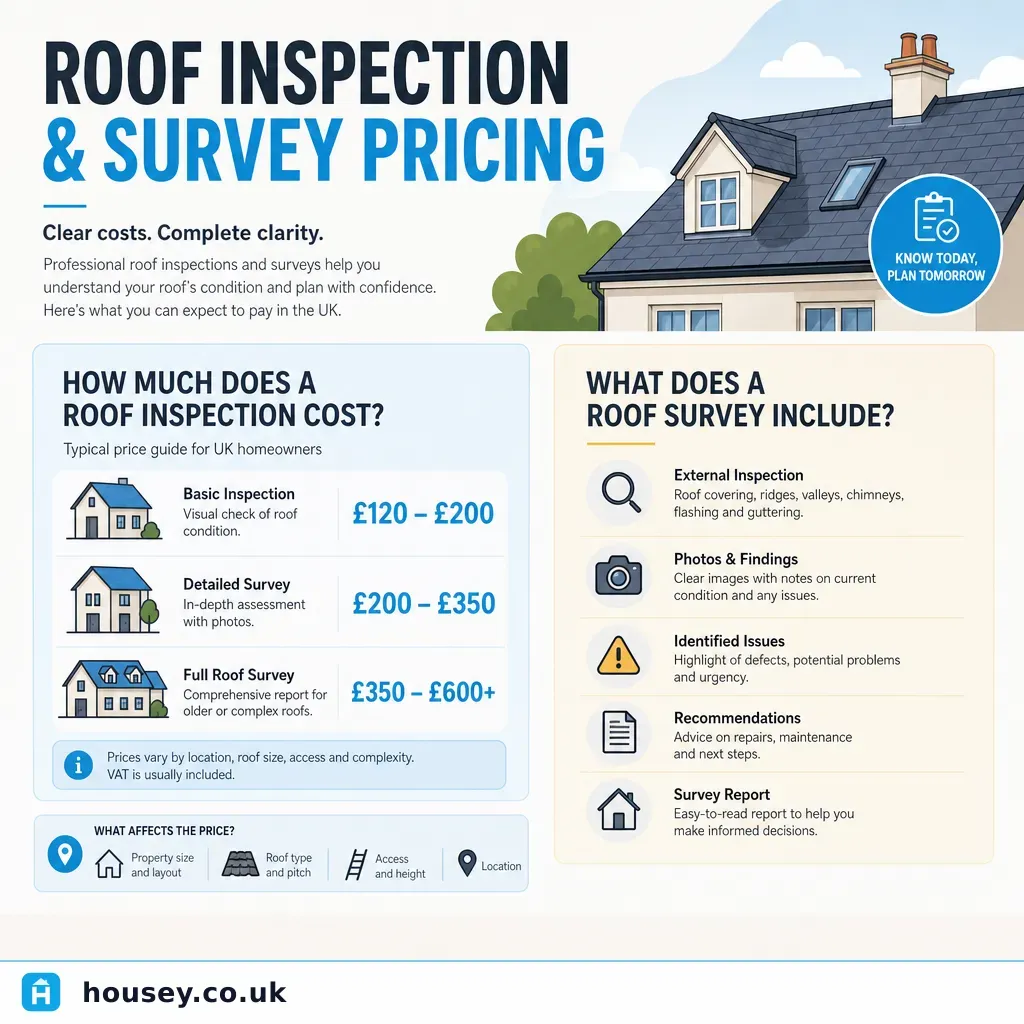
Roof Inspection and Survey Pricing
A professional roof inspection costs £150–£350 for a hands-on roofer survey, rising to £300–£800 for drone or thermal imaging surveys, and £600–£1,500 or more for a RICS Level 3 Building Survey.
 Surveys & Inspections
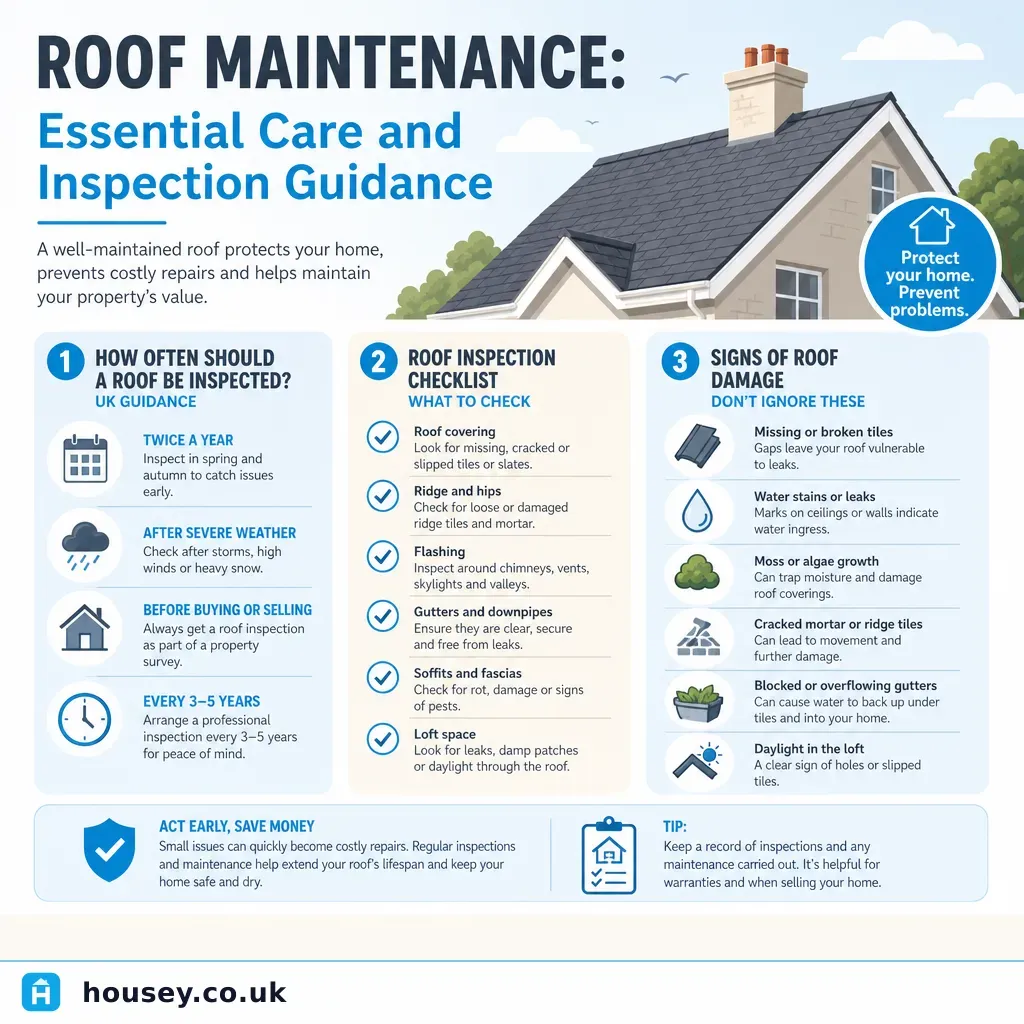
Roof Maintenance: Essential Care and Inspection Guidance
UK roofs should be visually inspected at least once a year — ideally in autumn before winter — and after any significant storm.
 Surveys & Inspections
Modern Roof Surveying: Drone Technology and Data-Driven Inspection Methods
Drone roof surveys in the UK use cameras and thermal sensors to inspect roof condition without scaffolding, capturing data that identifies tile damage, moisture ingress, and insulation gaps.
 Surveys & Inspections
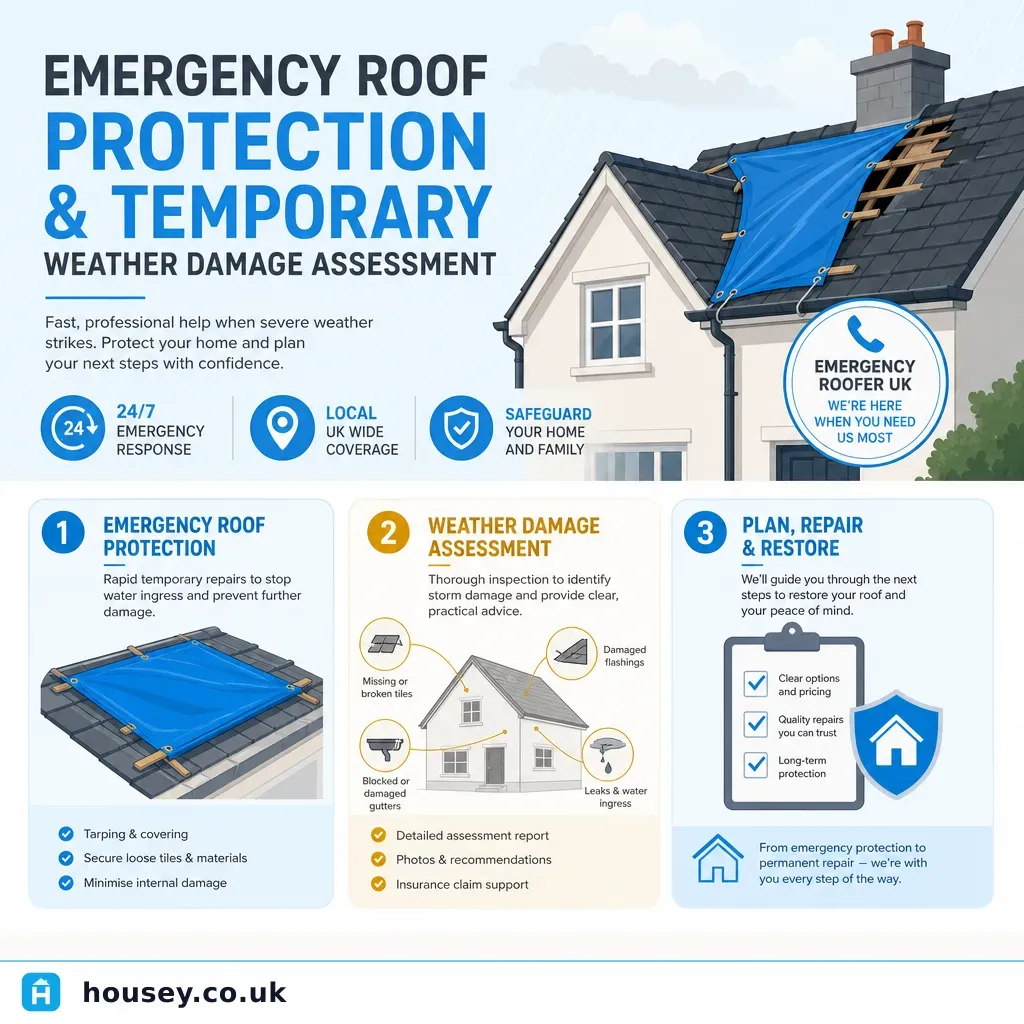
Emergency Roof Protection and Temporary Weather Damage Assessment
After roof damage, your priority is safe temporary protection — typically a tarpaulin secured by a roofer — followed by a professional inspection to assess structural impact.
 Surveys & Inspections
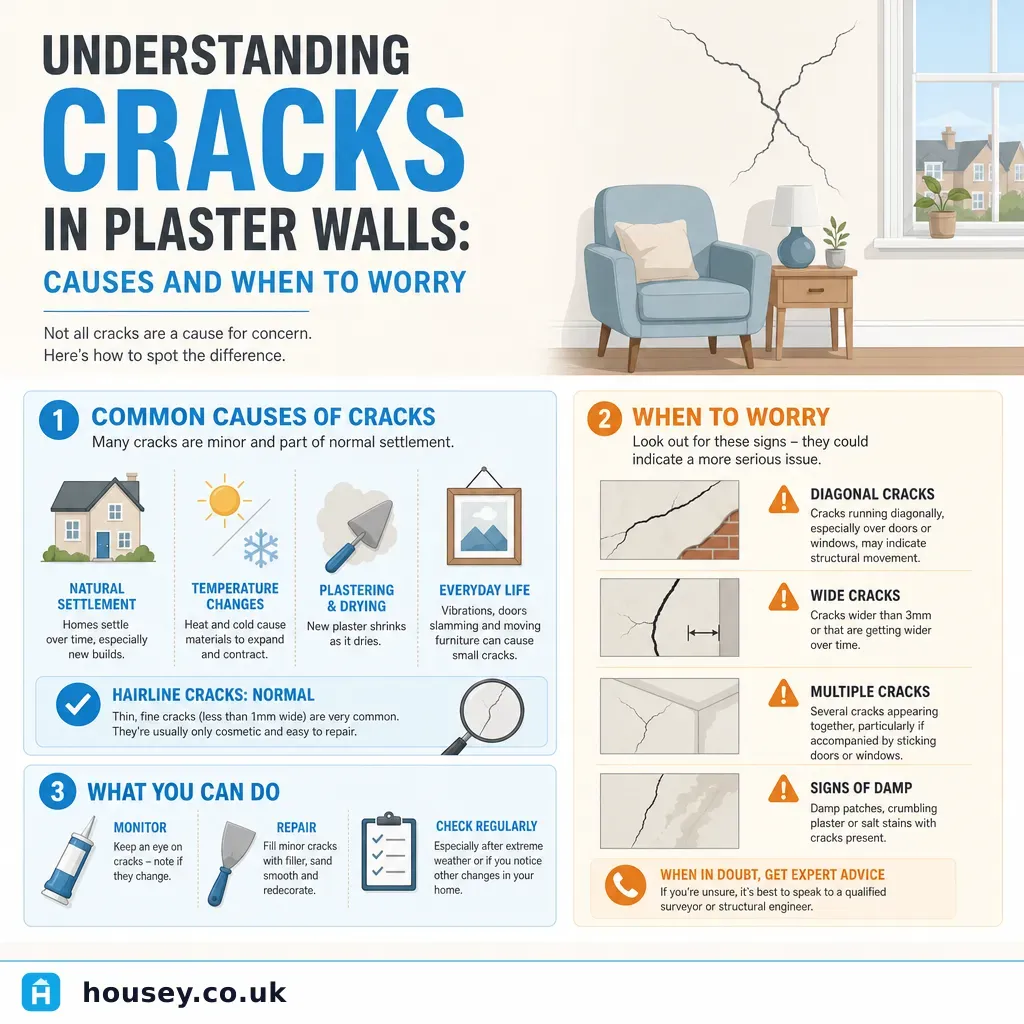
Understanding Cracks in Plaster Walls: Causes and When to Worry
Most hairline plaster cracks are cosmetic, caused by seasonal shrinkage or minor settlement.