Window Mechanism Repair: Understanding Window Regulator Issues
By Housey · Last reviewed 30th of May 2026
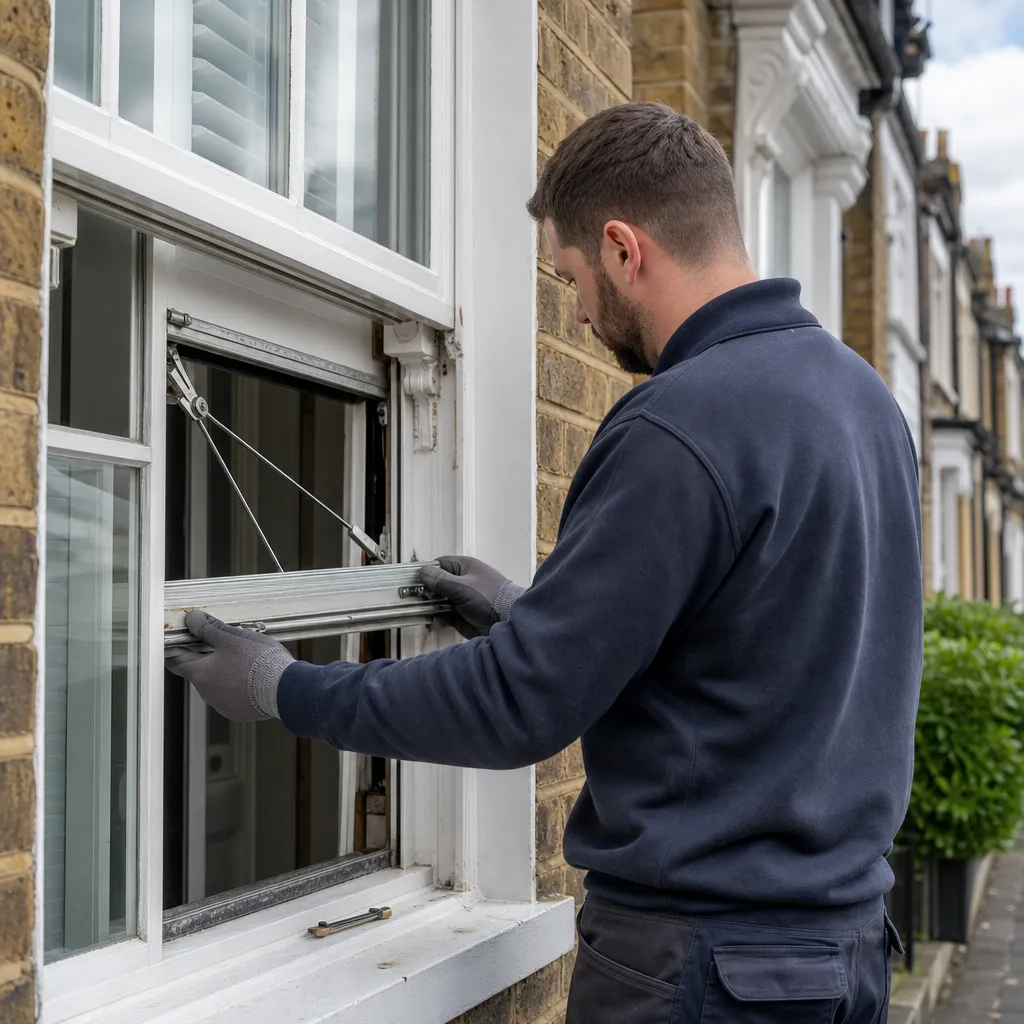
Window Mechanism Repair: Understanding Window Regulator Issues
Window mechanism problems rarely announce themselves all at once — a handle stiffens gradually over winter, a casement begins dropping at an angle, or a first-floor sash suddenly refuses to latch. In most UK homes these failures affect UPVC casement windows, traditional timber sash windows, or tilt-and-turn units found in flats and modern builds, and each type uses a different mechanism that fails in a different way. Understanding what each component does makes it easier to describe the fault accurately, choose the right specialist, and avoid paying for a full window replacement when only a single part needs attention.
Key points
- Most UPVC and aluminium window mechanisms — friction stays, espagnolette locks, handles, and tilt-and-turn pivots — can be replaced without removing the full frame, at a fraction of the cost of new windows.
- Window restrictors on upper-floor openable windows are required under Building Regulations Approved Document K in new-build and major refurbishment dwellings; a failed or missing restrictor should be treated as a priority safety repair.
- FENSA-registered installers can self-certify replacement window work under Building Regulations — covering thermal performance under Part L and ventilation under Part F — without a separate building control application.
- British Standard BS EN 13126 specifies performance requirements for window and door hardware, including handles, friction stays, locks, and restrictors.
- Misted double-glazing panes — condensation visible between the glass — indicate a failed hermetic seal in the insulating glass unit (IGU), which is a glass replacement issue entirely distinct from a mechanism fault.
What are the main types of window mechanism?
UK residential windows use several different operating systems, each with specific failure patterns.
Friction stays (casement and top-hung windows)
Friction stays are the hinged arms on casement and top-hung windows that allow the sash to open and hold in a chosen position. Over time the friction adjusters wear, causing the window to drop uncontrollably or refuse to hold at any fixed position. Replacement stays must match the original in length, egress rating, and opening angle, particularly where the window serves as a fire-escape route.
Espagnolette locking systems (UPVC multi-point locks)
Most modern UPVC casement windows use an espagnolette mechanism — a single handle operates multiple locking points (shootbolts and rollers) simultaneously around the frame. When the internal gearbox fails, the handle becomes stiff or the window no longer locks securely. In many cases the gearbox alone can be replaced without dismantling the full locking strip.
Sash window pulleys and cords
Traditional timber sash windows use a counterweight system — cast-iron or lead weights balanced by sash cords running over pulleys. Broken sash cords are the most common failure and are usually re-corded by a joiner or sash window specialist without major disruption to the surrounding frame or internal décor.
Tilt-and-turn mechanisms
Tilt-and-turn windows — common in flats and modern builds — allow the sash to tilt inward for ventilation or swing fully open for cleaning and emergency egress. The handle position controls which mode is active. A worn or broken drive mechanism can prevent the window switching between positions, and this type of repair often requires a specialist familiar with the specific hardware brand.
Window restrictors
Restrictors limit how far a window can open, typically to 100 mm on upper-floor windows. Under Building Regulations Approved Document K, restrictors are required in dwellings where a fall from height is a risk, particularly where children may be present. A broken or missing restrictor on an upper-floor window is a priority safety repair.
Repair or replace? A decision guide
Symptom | Likely cause | Recommended action |
|---|---|---|
Handle stiff or difficult to turn | Worn gearbox or broken spindle | Replace handle or gearbox only |
Casement drops or will not hold open | Worn friction stay | Replace friction stay — match size and egress rating |
Window does not lock securely | Failed espagnolette gearbox or shootbolt | Replace gearbox or locking strip |
Condensation between panes (misting) | Failed IGU hermetic seal | Replace the glass unit — frame and mechanism may be intact |
Frame bowed, cracked, or heavily degraded | Structural frame damage | Full window replacement likely necessary |
Window restrictor broken or missing | Worn or damaged restrictor arm | Replace restrictor immediately — safety priority |
Tilt-and-turn window stuck in one position | Drive mechanism failure | Specialist repair — brand-specific hardware required |
What not to assume about window mechanism repair
- Do not assume you need a new window. The majority of mechanism failures — handles, stays, locks, restrictors — can be resolved with replacement parts. A reputable installer should assess the mechanism before recommending a full replacement.
- Do not assume all UPVC hardware is interchangeable. Window hardware is often manufacturer-specific. A Maco lock strip is not directly compatible with a Roto or Yale system; a specialist must identify the brand before sourcing parts.
- Do not assume misting means the mechanism has failed. Misting between panes is a sealed-unit failure, not a mechanical fault. The frame and operating mechanism may be working correctly.
- Do not assume a stiff handle just needs lubricating. Stiffness often points to a misaligned sash, a failing gearbox, or a swollen frame. Lubrication may offer short-term relief but will not address an underlying structural issue.
- Do not assume removing a restrictor is harmless. Removing an upper-floor window restrictor for improved ventilation is a safety risk, particularly in homes with young children, and may also affect compliance with Building Regulations.
What to ask before accepting a quote
- What exactly has failed, and can you identify the damaged component?
- Are you recommending mechanism replacement only or full window replacement — and what is your reason?
- What brand and specification of replacement hardware will you use, and is it compatible with my existing frame?
- Is the workmanship covered by a guarantee, and for how long?
- Is VAT included in the quoted price?
- If the window is under 10 years old, have you checked whether the original manufacturer or installer warranty still applies?
- Will this work require building regulations notification?
When to get professional help
Most window mechanism repairs are appropriate for a qualified window specialist or FENSA-registered installer. Seek professional help promptly if:
- An upper-floor window restrictor has failed, is damaged, or is missing entirely.
- The window cannot be secured or locked — a security concern that may also affect your buildings insurance cover.
- The sash has dropped significantly and is difficult to move — forcing it risks cracking the glass or causing further frame damage.
- A tilt-and-turn window is stuck fully open, particularly in cold or adverse weather.
Red flags when choosing a window repair specialist:
- Recommends full window replacement without first inspecting the mechanism.
- Cannot identify the hardware brand or source compatible replacement parts.
- Declines to provide a written quote before starting work.
- Suggests permanently bypassing or removing the upper-floor restrictor for better ventilation.
How Housey can help
Housey helps you find window and door installers experienced in mechanism repair and hardware replacement. Compare written quotes from FENSA-registered specialists in your area before committing to any work.
Frequently asked questions
Is window mechanism repair covered by home insurance?
Generally no — wear and tear is excluded from most buildings and contents policies. However, if the mechanism was damaged by an insured event such as storm damage or a break-in attempt, the repair may be claimable. Check your policy schedule and contact your insurer before proceeding with repairs you intend to claim.
How long does a window mechanism repair take?
Most straightforward repairs — handle replacement, friction stay replacement, or gearbox swap — take one to two hours per window. Sash cord replacement on a traditional timber sash window may take two to four hours depending on access and the number of cords. Tilt-and-turn mechanism work can take longer if specialist parts need to be ordered.
Can I replace a window handle or friction stay myself?
Simple handle replacement may be within the capability of a competent DIYer if the correct replacement part can be identified. However, friction stay replacement requires matching the correct size, egress rating, and frame specification. Espagnolette gearbox replacement and any work involving upper-floor restrictors should be carried out by a qualified installer to ensure safety and correct operation.
Do I need building regulations approval for window mechanism repair?
Pure mechanism repair — replacing a handle, stay, or lock — does not require building regulations notification. If you are also replacing the sealed glass unit, this may engage Part L (thermal performance) and Part F (ventilation) requirements. A FENSA-registered installer can self-certify this work without a separate building control application.
Sources and further reading
- FENSA: self-certification for replacement windows — FENSA (Fenestration Self-Assessment Scheme)
- Approved Document K: Protection from falling, collision and impact — GOV.UK
- Consumer Rights Act 2015 — legislation.gov.uk
- Your rights if a product is faulty — Citizens Advice
- BS EN 13126: Building hardware for windows and skylights — BSI Group
Useful next reads
 Improvement & Build
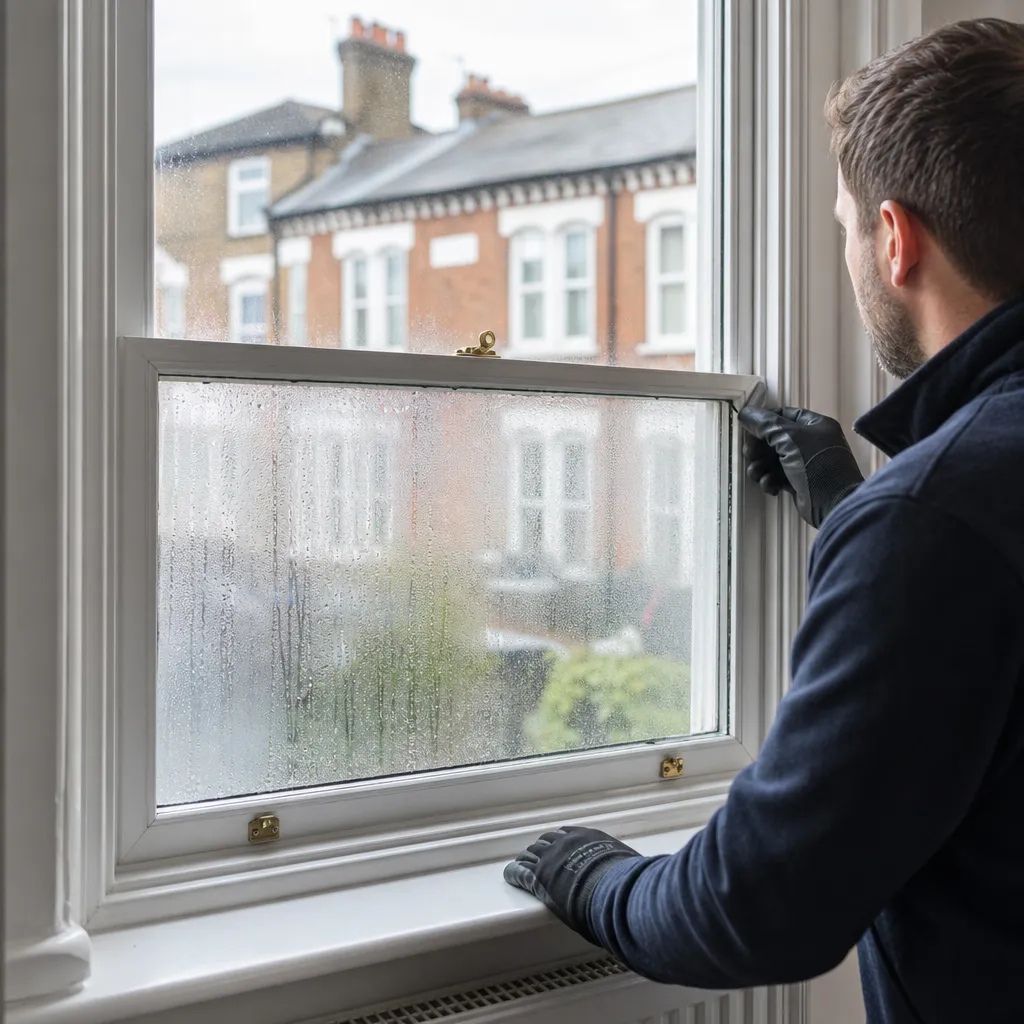
Repairing Failed Window Seals and Condensation Issues
Condensation between double-glazed panes means the hermetic seal on the insulated glass unit has failed.
 Improvement & Build
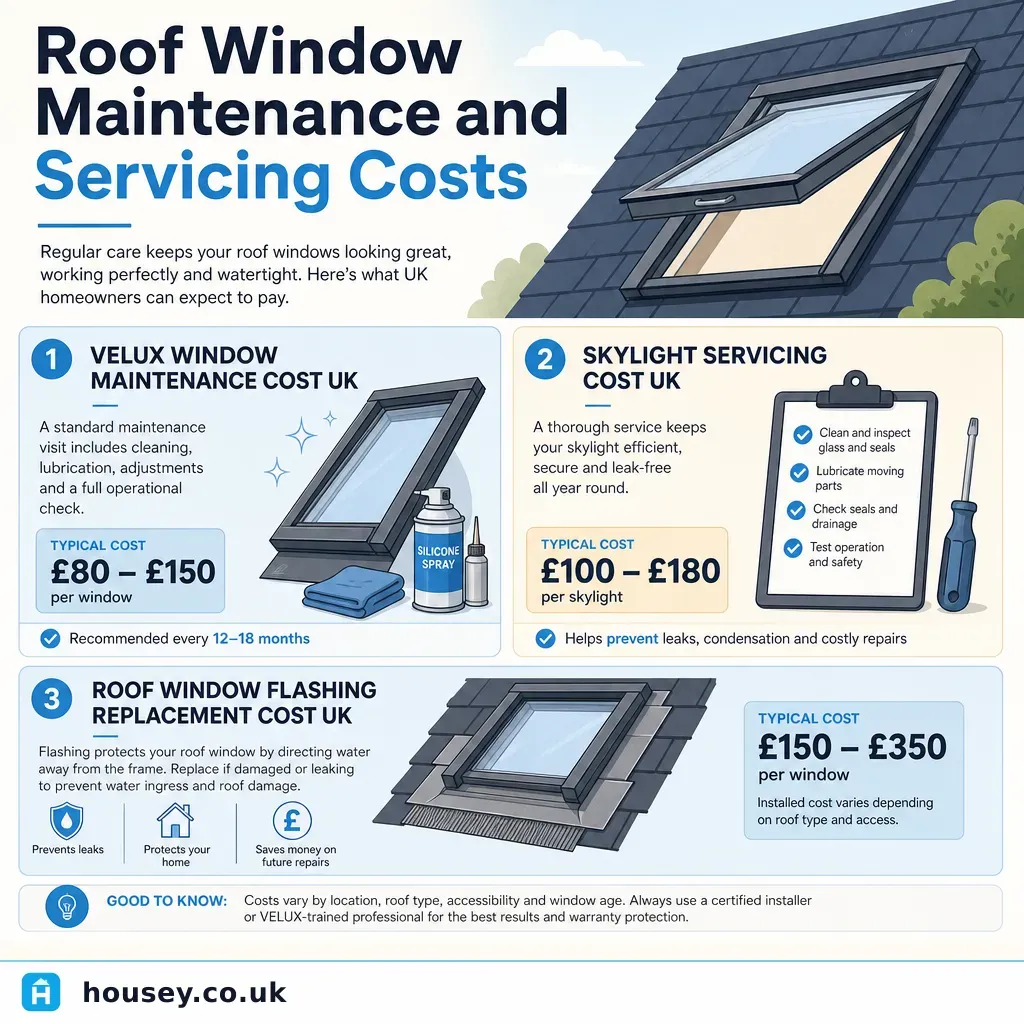
Roof Window Maintenance and Servicing Costs
Roof window servicing in the UK typically costs £80–£200 per window for a professional visit covering seals, flashings, and the opening mechanism.
 Improvement & Build
Leaded Window Repair and Restoration Costs
Leaded window repair in the UK typically costs £150–£600 for minor re-soldering or resealing, rising to £800–£2,500+ for full panel removal and restoration.
 Improvement & Build
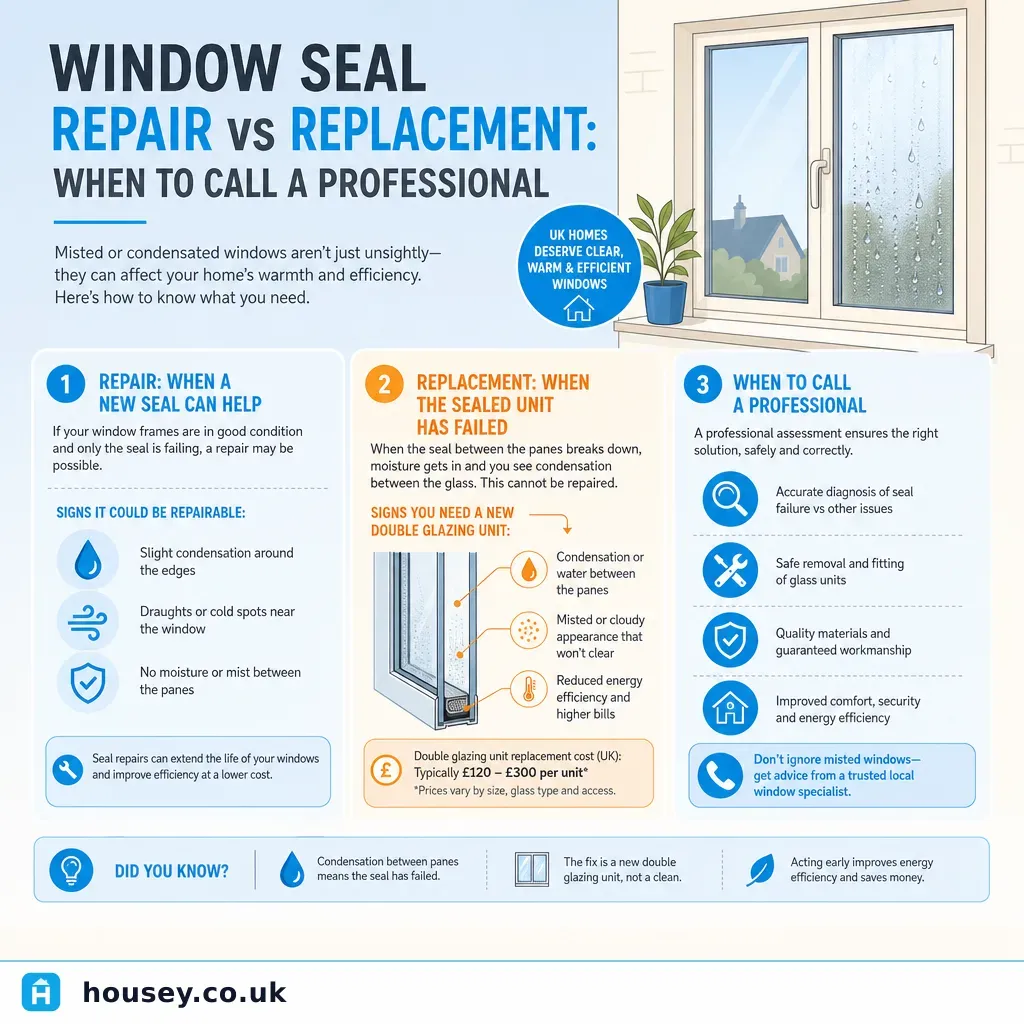
Window Seal Repair vs Replacement: When to Call a Professional
Failed window seals usually mean the double-glazed unit needs replacing — resealing a misted unit rarely works long-term.
 Improvement & Build
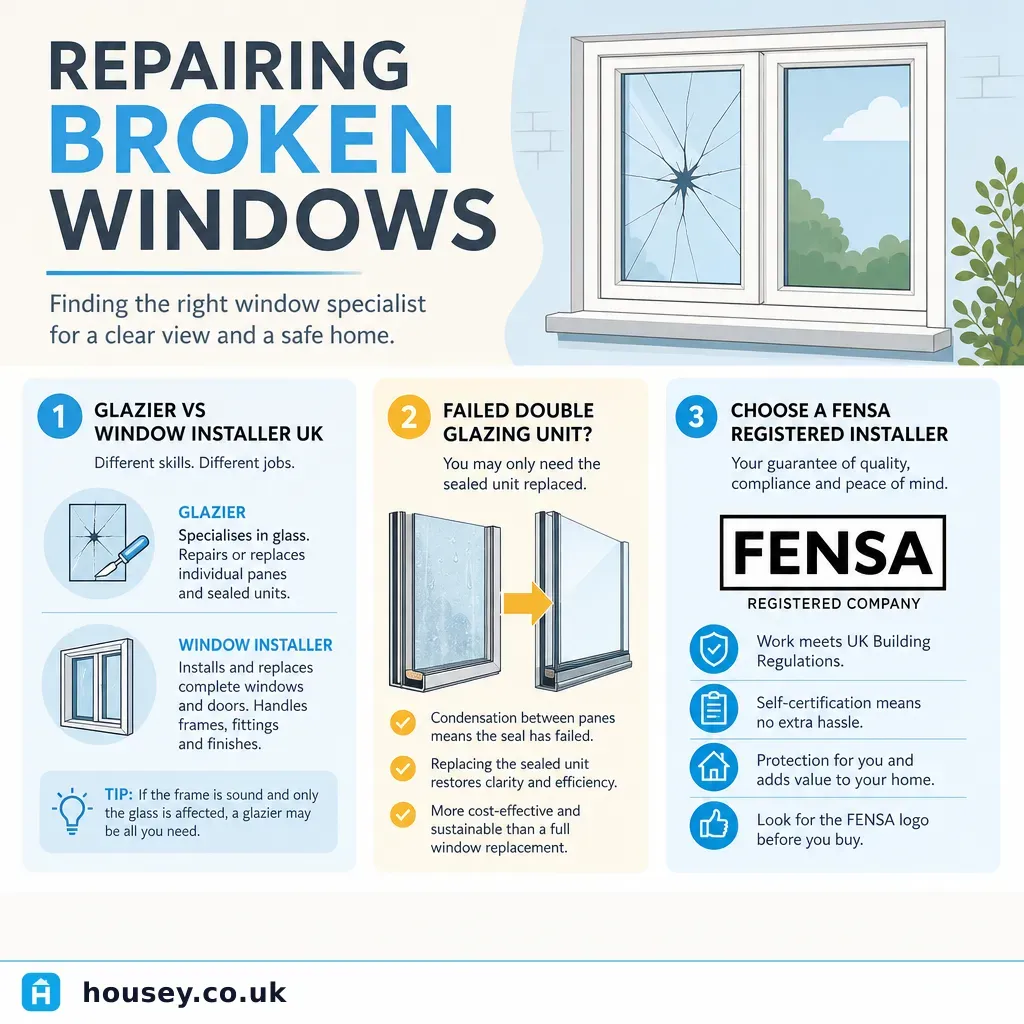
Repairing Broken Windows: Finding a Window Specialist
Repairing a broken window depends on the type of damage: a failed double-glazing unit (misted glass) needs the sealed unit replaced, cracked or broken glass needs a glazier, and frame damage may require a specialist joiner.