Repairing Broken Windows: Finding a Window Specialist
By Housey · Last reviewed 31st of May 2026
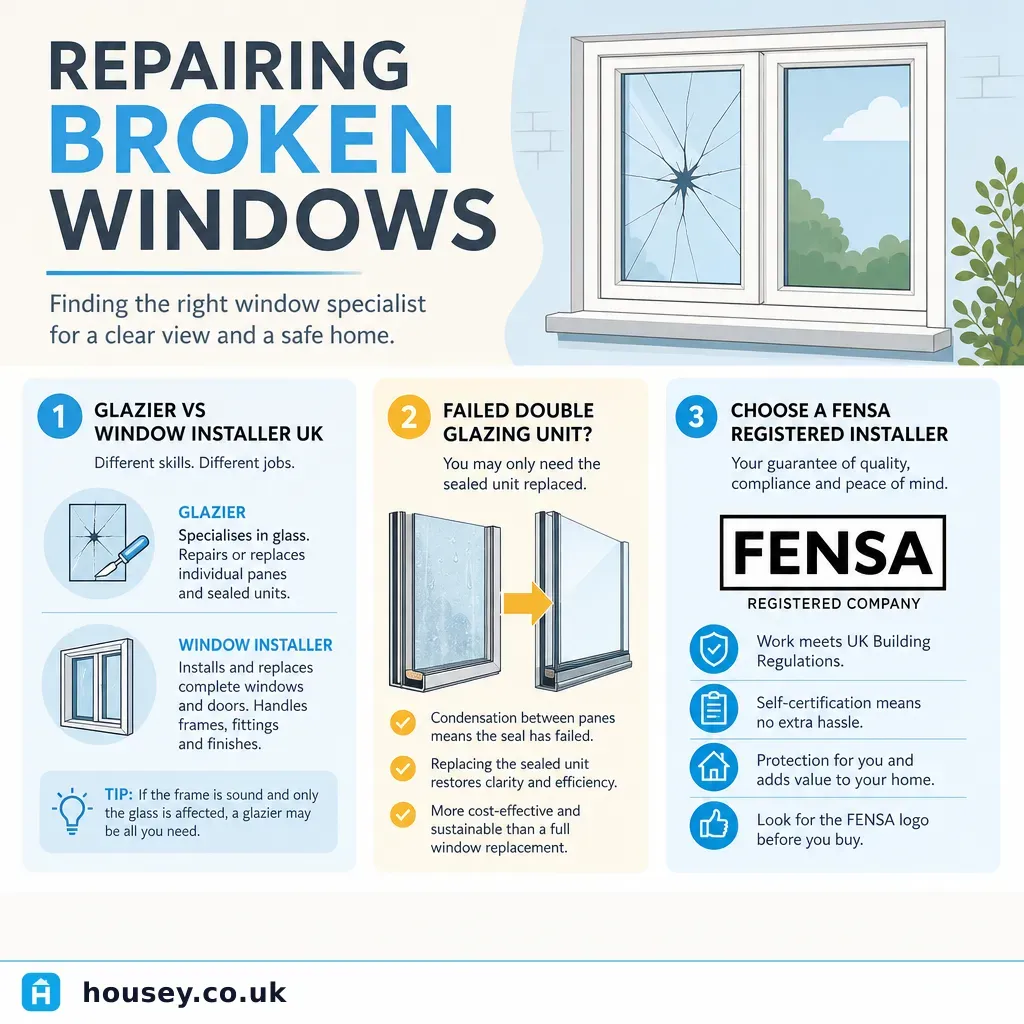
Repairing Broken Windows: Finding a Window Specialist
A broken window rarely arrives at a convenient moment — whether it is a crack from an accidental impact, a double-glazed unit that has developed persistent internal misting, or a more urgent security situation after a break-in. For most UK homeowners the instinct is to call a glazier, but the right specialist depends on the type of damage, the construction of the window, and whether the property has any planning restrictions that affect what can be repaired or replaced. Getting this right at the outset avoids unnecessary delays, ensures the work meets Building Regulations, and protects you from certification problems when you come to sell.
Key points
- A failed double-glazing unit (condensation or misting between the panes) requires replacement of the insulated glass unit (IGU) — often without replacing the full frame, which is the more cost-effective approach.
- Emergency boarding and glazing is available from most glaziers on a 24/7 call-out basis; call-out fees typically range from £60–£150, with glass replacement charged additionally. Indicative UK costs, last reviewed 2026-05-31.
- In England and Wales, replacing an entire window unit (frame and glazing together) must be carried out by a FENSA-registered installer or notified to building control under the Building Regulations 2010 for energy performance compliance.
- Listed buildings and properties in conservation areas may require specialist timber joiners and Listed Building Consent or planning permission before window repairs or replacements proceed.
- Standard uPVC double-glazing companies are usually not appropriate for period sash windows or heritage casements — these require specialist joiners familiar with traditional profiles and materials.
What type of damage do you have? Choosing the right specialist
The type of damage determines which trade to appoint. Appointing the wrong specialist can result in unnecessary expense, inadequate repairs, or work that falls short of Building Regulations requirements.
Type of damage | Right specialist | Likely solution |
|---|---|---|
Cracked or broken glass pane (single or double glazed) | Glazier | Glass replacement within existing frame |
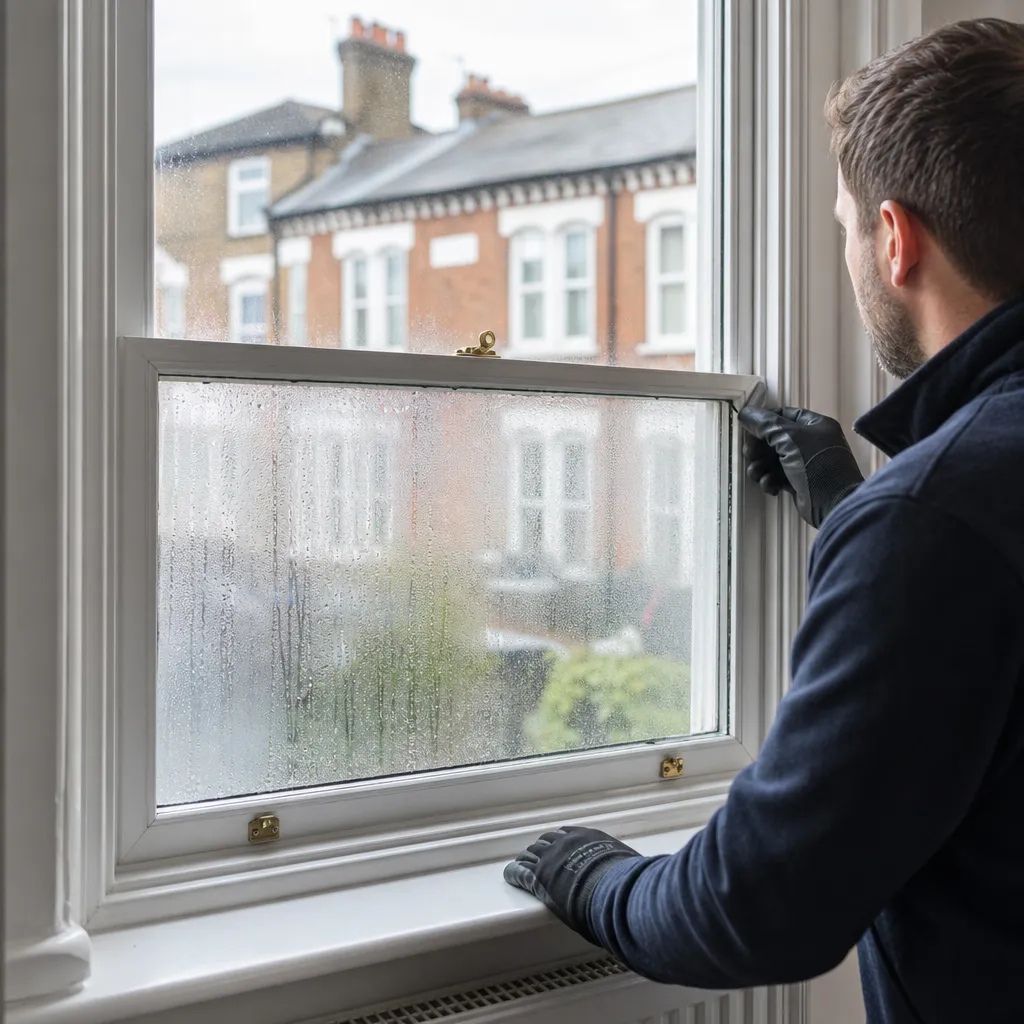
Misted or condensation between double-glazed panes (IGU failure) | Glazier or double-glazing specialist | IGU (sealed unit) replacement — frame retained |
Damaged or rotten timber frame | Specialist joiner or heritage window company | Frame repair or like-for-like replacement |
Damaged uPVC or aluminium frame | uPVC or aluminium window specialist | Frame section repair or full window replacement |
Broken hardware (hinges, locks, handles, restrictors) | Locksmith or window hardware specialist | Hardware replacement |
Full window replacement (frame and glass together) | FENSA-registered window installer | New window installation with building control notification |
Historic sash or casement in listed building | Heritage window specialist or conservation joiner | Repair-first approach; may require Listed Building Consent |
What does a glazier do, and when do you need one?
A glazier specialises in glass cutting, fitting, and replacement. They are the right first call when:
- A pane of glass is cracked, smashed, or missing — including emergency boarding and replacement after a break-in.
- The double-glazing sealed unit has failed, shown by persistent internal misting that cannot be wiped away.
- The frame itself is intact and structurally sound — only the glass needs replacing.
Glaziers carry cut-to-size glass and sealed units and can often attend for emergency repairs the same day or within 24 hours. For security emergencies, most will board the opening temporarily before returning to fit permanent glazing.
A glazier is not usually the right trade for full window frame replacement, significant frame repairs or restoration on heritage windows, or secondary glazing installation. For those jobs, a FENSA-registered window installer or specialist joiner is the appropriate appointment.
FENSA, building control, and when they apply
In England and Wales, replacing an entire window unit (frame and glazing) is notifiable under the Building Regulations 2010 (Approved Document L) for energy performance. There are two compliant routes:
- FENSA-registered installer — the company self-certifies compliance and notifies building control on your behalf. You receive a FENSA certificate within 30 days of installation.
- Local building control notification — if the installer is not FENSA-registered, you or the installer must notify building control and arrange an inspection separately before work starts.
FENSA certification matters because conveyancing solicitors check for it during property sales. Missing certificates can delay or complicate a sale and may require retrospective building control approval.
Glass-only replacements (where the frame is retained intact) do not usually require FENSA or building control notification.
Heritage windows: a separate set of rules
Properties built before 1919 — and particularly those listed under the Planning (Listed Buildings and Conservation Areas) Act 1990 — often have original sash windows, leaded lights, or timber casements that form part of the building's architectural character.
For these properties:
- Repair is almost always preferable to replacement. Historic England and most local planning authorities expect owners to repair original windows wherever viable.
- Listed Building Consent is required before replacing or substantially altering windows in a listed building. This is a separate consent from planning permission.
- Standard uPVC or aluminium double-glazed windows are routinely refused consent in listed buildings.
- Specialist timber joinery companies can repair original profiles using hardwood or softwood, and some offer slim-profile double glazing units compatible with listed buildings — though this remains subject to consent.
- In conservation areas, replacing windows in a different material or style may require planning permission; like-for-like replacement is often permitted development.
Always check with your local planning authority and Historic England's guidance before arranging any window work on a listed or heritage property.
What to ask before accepting a quote
Before appointing any window repair or replacement specialist, ask:
- What is included and excluded in the quote? (Materials, glass specification, disposal of the old unit, call-out fee, VAT)
- Are you FENSA-registered? (Required for full frame replacements in England and Wales)
- What glass specification will you use — is it A-rated or better for energy performance, and will it be toughened or laminated where required by Building Regulations?
- What qualifications or trade memberships do you hold? (Glass and Glazing Federation membership is a useful indicator for glaziers)
- What warranty do you provide on the sealed unit and the frame or installation?
- How quickly can you attend, and do you offer emergency boarding for security?
- If the property is listed or in a conservation area, have you worked on similar properties before and are you familiar with consent requirements?
- Is VAT included in the quote, and what could change the price or timeline?
Indicative costs for window repair and replacement
Indicative UK costs, last reviewed 2026-05-31. All figures are approximate and vary significantly by location, glazing specification, frame material, and property type.
Work type | Typical cost range |
|---|---|
Emergency boarding (24-hour call-out) | £60–£150 call-out fee + boarding materials |
Single-pane glass replacement (glazier, per pane) | £80–£200 (size dependent) |
Double-glazing sealed unit (IGU) replacement | £100–£300 per unit (size and specification dependent) |
uPVC casement window replacement (supply and fit) | £400–£900 per window |
Timber sash window repair (specialist joiner) | £200–£800 per window (depending on condition) |
Like-for-like timber sash window replacement | £800–£2,000+ per window |
Always obtain at least two quotes. Prices vary by region, glazing type (standard float, toughened, laminated, low-emissivity coated), and frame material.
When to get professional help
Contact a specialist promptly if:
- The broken window creates a security risk — board the opening and arrange emergency glazing.
- The crack extends across a large pane of toughened or laminated safety glass — do not attempt to remove it yourself.
- The window is in a location where safety glazing is legally required: low-level panes near doors, bathrooms, or stairs, as specified in Building Regulations Approved Document K and BS EN 12600.
- The window is in a listed building or conservation area — seek specialist advice before any repair or replacement is arranged.
- The frame shows significant rot, structural distortion, or damp ingress — replacing only the glass without addressing the frame will not solve the underlying problem and may allow moisture damage to continue.
How Housey can help
Housey connects you with vetted window and door installers covering emergency and non-emergency glass replacement, FENSA-registered full window installations, and specialist companies experienced with period and heritage properties. Submit your job details and receive comparable quotes from local professionals.
Frequently asked questions
Can I replace a double-glazed sealed unit myself?
Replacing a failed insulated glass unit (IGU) is not usually suitable DIY work. Sealed units are precision-made to size, heavy, and must be installed with correct setting blocks, edge seals, and — in critical locations — specified as toughened or laminated safety glass. Incorrect fitting can void any warranty and create a safety risk. Appoint a glazier or window specialist.
How long does a double-glazed unit last before it fails?
Most double-glazed sealed units carry a manufacturer's guarantee of five to ten years against seal failure, but units can last 20 years or more in practice. Seal failure (shown by persistent internal misting) is more common in units exposed to extreme temperature variation, those with inadequate drainage, or those over 15 to 20 years old.
Does home insurance cover broken windows?
Most UK home insurance buildings policies cover accidental breakage of fixed glass, including double-glazed units. Check your policy excess — for smaller repairs it may be more cost-effective to pay directly than to claim. Accidental damage cover, often an optional add-on, is needed if the break was caused by an accident inside the home rather than an external event.
What is the difference between toughened and laminated safety glass?
Toughened glass is heat-treated to be approximately four times stronger than standard float glass and shatters into small blunt fragments when broken. Laminated glass has a plastic interlayer that holds fragments together on breakage. Both are classed as safety glass under BS EN 12600. Building Regulations Approved Document K specifies the locations in your home where safety glazing is required.
Do I need planning permission to replace a window in a conservation area?
In a conservation area, replacing a window like-for-like in the same material, appearance, and opening style is usually permitted development. However, changing the material, style, or glazing configuration may require planning consent. Rules vary by local authority and differ in Scotland. Always check with your local planning authority before proceeding.
Sources and further reading
- FENSA: Fenestration Self-Assessment Scheme — FENSA: registered installer search and certificate verification for England and Wales
- Building Regulations Approved Document L (Conservation of Fuel and Power) — GOV.UK: energy performance requirements for replacement windows
- Historic England: windows in listed buildings — Historic England: guidance on repairing and replacing heritage windows
- Planning Portal: windows — do I need permission? — Planning Portal: permitted development rules for windows
- Glass and Glazing Federation — GGF: trade body for glaziers with member search for finding qualified local companies
- Building Regulations Approved Document K (Protection from Falling, Collision and Impact) — GOV.UK: safety glazing requirements by location
Useful next reads
 Improvement & Build
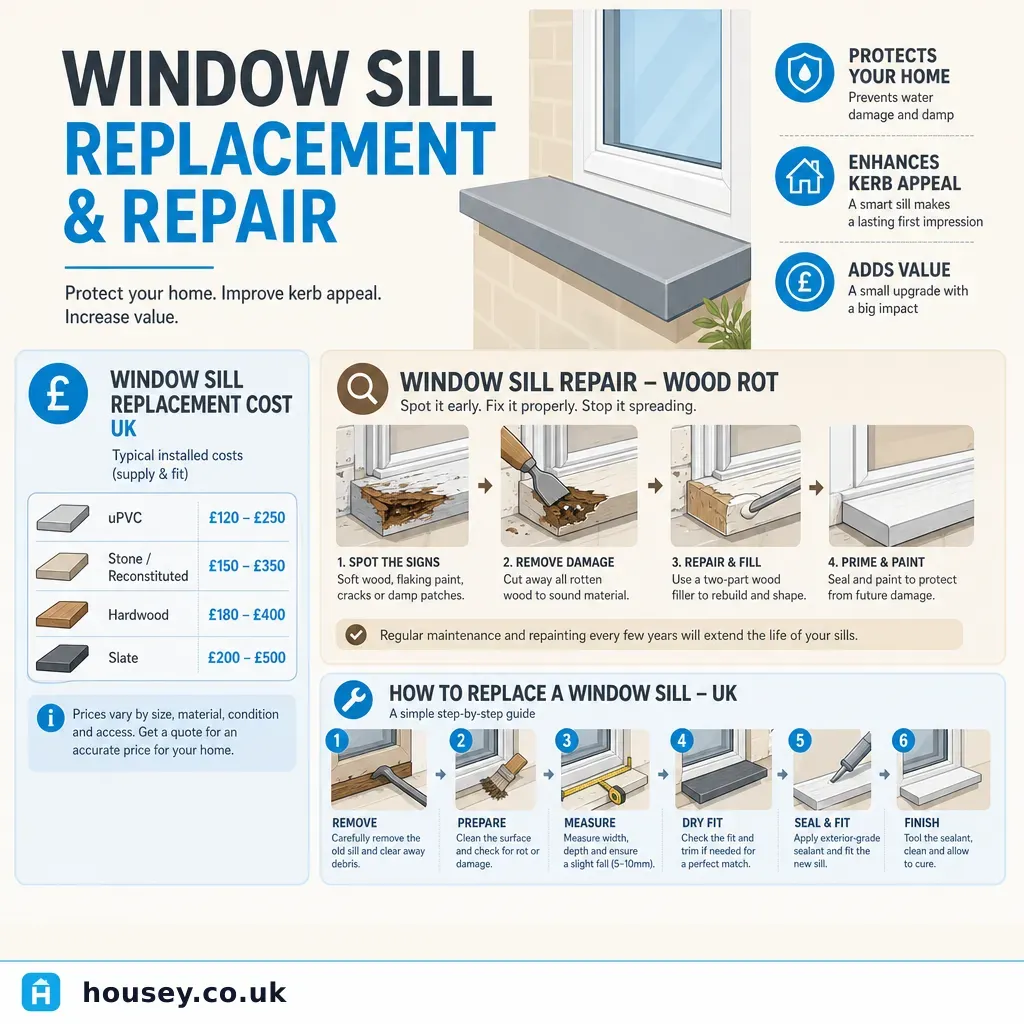
Window Sill Replacement and Repair
Window sill rot or damage is usually caught early enough to repair rather than replace.
 Improvement & Build
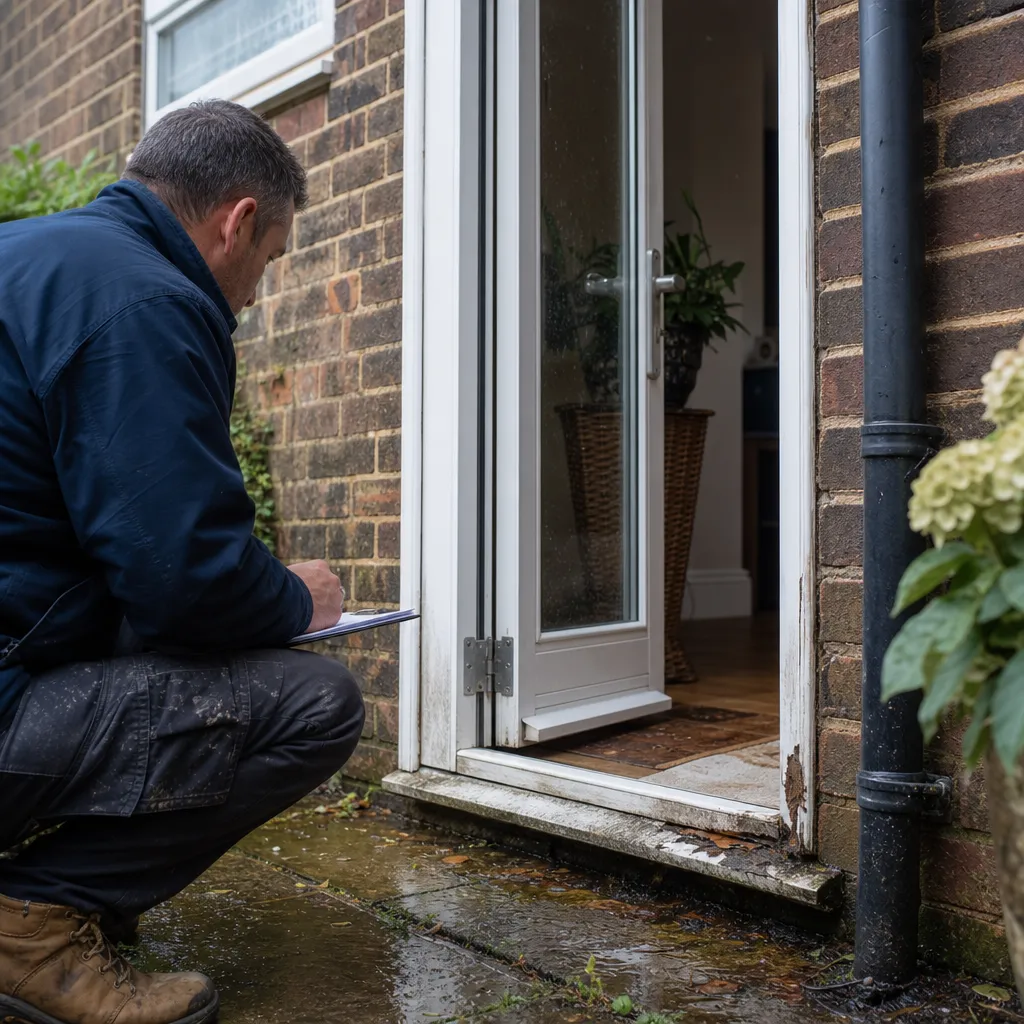
Fixing Leaking Back Doors and Water Ingress
Most leaking back doors in UK homes fail at one of three points: the threshold or door sill joint, the frame-to-masonry mastic seal, or the door weatherstrip.
 Improvement & Build
Who Provides House Demolition Services
House demolition in the UK is carried out by specialist demolition contractors, often members of the National Federation of Demolition Contractors (NFDC).
 Improvement & Build
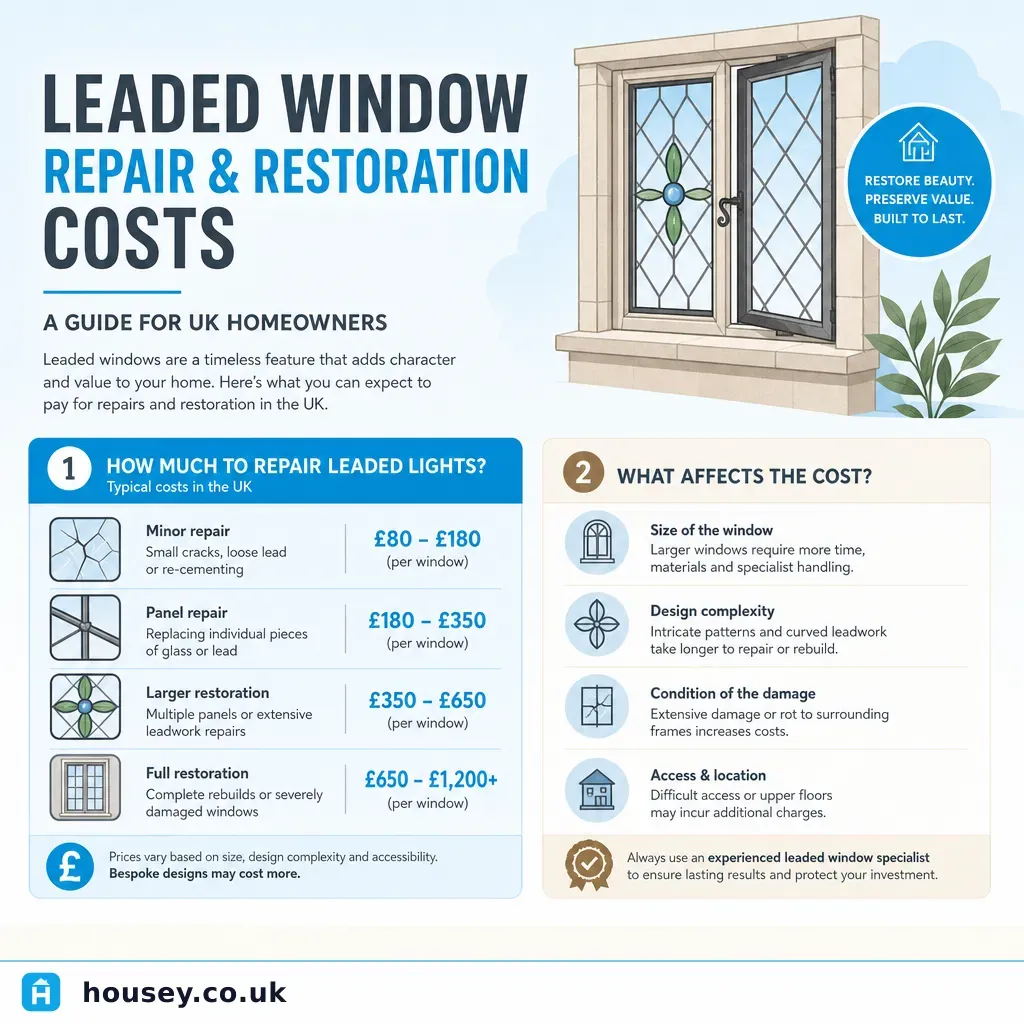
Leaded Window Repair and Restoration Costs
Leaded window repair in the UK typically costs £150–£600 for minor re-soldering or resealing, rising to £800–£2,500+ for full panel removal and restoration.
 Improvement & Build
Repairing Failed Window Seals and Condensation Issues
Condensation between double-glazed panes means the hermetic seal on the insulated glass unit has failed.