Acoustic Barrier Walls for Noise Reduction in Residential Properties
By Housey · Last reviewed 25th of May 2026
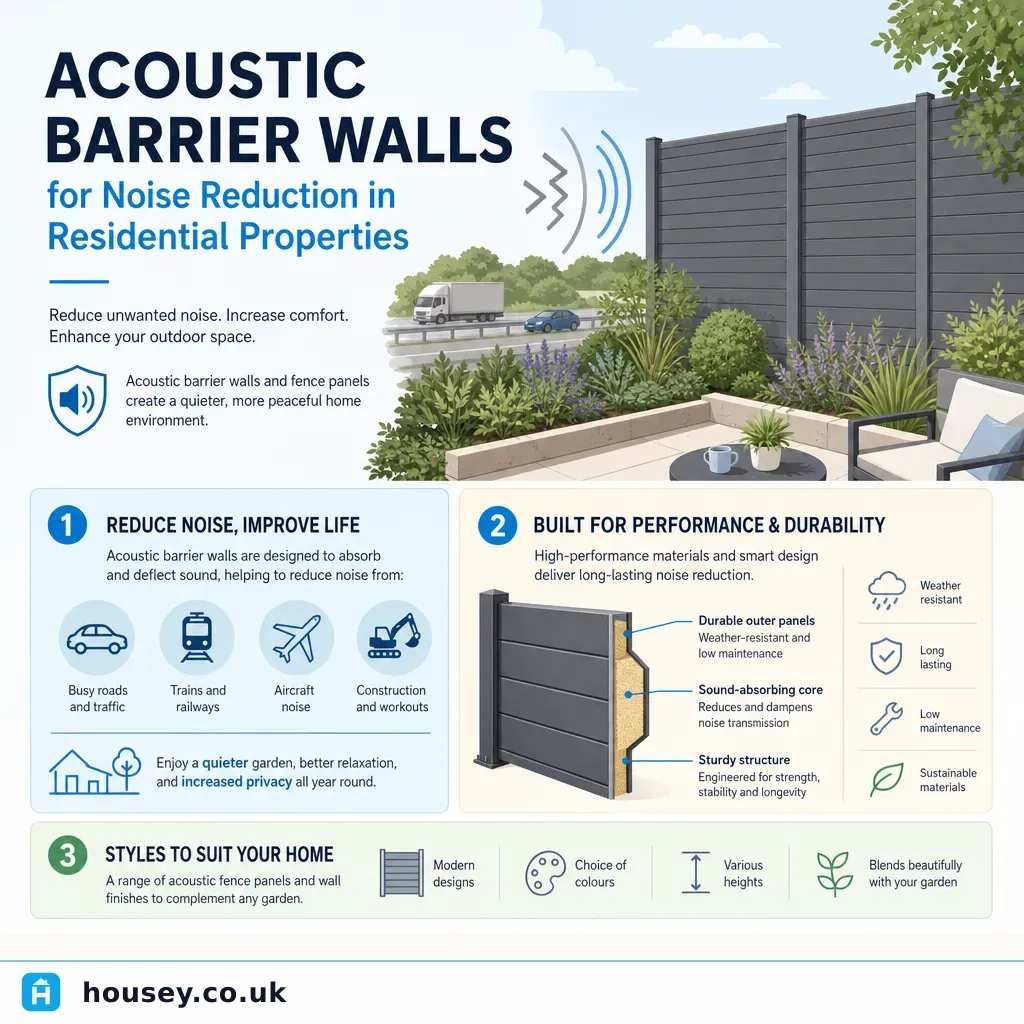
Acoustic Barrier Walls for Noise Reduction in Residential Properties
Noise from roads, railways, or neighbouring industrial and commercial sites is one of the most common quality-of-life complaints among UK homeowners. Whether you live beside a busy A-road in a Victorian terrace or back on to a distribution yard from a 1990s estate house, the decision to install an acoustic barrier wall typically arises when double-glazing alone is no longer enough — and the garden is unusable for significant parts of the year.
Key points
- Solid masonry or pre-cast concrete barrier walls typically achieve 25–40 dB insertion loss at mid-range frequencies (500 Hz–2 kHz), the frequency range most associated with road traffic and human speech.
- The acoustic mass law means that doubling wall mass increases sound reduction by approximately 6 dB; height and continuity matter as much as material density.
- Garden walls up to 2 m on a boundary not adjacent to a highway are generally permitted development under Schedule 2, Part 2, Class A of the Town and Country Planning (General Permitted Development) (England) Order 2015 — walls adjacent to a highway are limited to 1 m.
- Pre-cast concrete noise barrier panels are the most common retrofit solution; acoustic timber panels can achieve similar performance at lower mass when fitted with absorptive facing.
- A 10 dB reduction is perceived by most listeners as roughly halving the loudness of a sound source.
How acoustic barriers work
Sound energy travels as pressure waves through air. A solid barrier intercepts those waves, and performance depends on three mechanisms.
Transmission loss — the barrier material absorbs or reflects sound energy. Dense, heavy materials such as concrete and masonry have high transmission loss. Lightweight materials perform less well unless combined with absorptive layers.
Diffraction — sound bends over and around barrier edges. The higher the barrier relative to the noise source and receiver, the greater the path-length difference and the more effective the shielding. Adding an angled acoustic cap or T-profile parapet to the top of a wall can add 3–5 dB of additional insertion loss by disrupting diffraction at the crest.
Absorption — reflective surfaces can cause sound to bounce back or sideways towards neighbours. Panels with an absorptive facing (mineral wool, acoustic foam, or recycled rubber composites) reduce reflections, which is particularly important where barriers flank both sides of a road or sit close to a neighbouring property.
Gaps and discontinuities are critical weak points. A single 10 mm gap in an otherwise solid 25 dB barrier can reduce effective insertion loss to below 15 dB. Continuous construction — with solid capping, gated sections using acoustic gate seals, and properly founded bases — is essential.
Comparing acoustic barrier types
Barrier type | Typical insertion loss | Best for | Not ideal for | Relative cost |
|---|---|---|---|---|
Dense concrete block masonry wall | 30–40 dB | Permanent, high-performance installations; settings where appearance is controlled | Speed of installation; very heavy, needs adequate foundations | High |
Pre-cast concrete panel system | 25–38 dB | Faster installation; modular designs; industrial-adjacent residential | Highly visible; requires base beam and posts | Medium–high |
Acoustic timber panel (hardwood-faced with mineral wool core) | 22–32 dB | Residential gardens; planning-sensitive settings | Durability in UK climate without regular maintenance | Medium |
Concrete block with absorptive facing | 30–40 dB + reduced reflection | Where neighbouring properties could be affected by reflections | Cost and complexity | High |
Standard close-board timber fence | 5–15 dB | Low-level nuisance; visual screening | Road or railway noise reduction | Low |
Indicative UK costs, last reviewed 2026-05-25. Actual insertion loss depends on installation quality, ground conditions, and noise profile.
Planning permission and permitted development
In England, the rules most commonly applicable to residential acoustic barriers are set out in the Town and Country Planning (General Permitted Development) (England) Order 2015 (as amended):
- Boundary walls and fences not adjacent to a highway: up to 2 m in height are generally permitted development.
- Boundary walls adjacent to a highway (roads, footpaths, bridleways): limited to 1 m.
- Conservation areas, Article 4 Direction areas, and listed building curtilages: permitted development rights are often removed or restricted — check with your local planning authority before starting.
- Wales, Scotland, and Northern Ireland have different permitted development regimes; refer to the relevant national planning policy before proceeding.
If a barrier exceeds permitted development limits, a householder planning application is required. Noise reduction purpose alone does not guarantee planning permission; design, materials, and visual impact on the streetscene are all assessed.
What affects barrier performance in practice
Several factors reduce real-world performance below laboratory ratings:
- Foundation and base sealing: barriers must be built off a concrete footing or base beam with no gap below the panel. An unsealed base is one of the most common causes of underperformance in installed systems.
- Length of barrier: a barrier must extend far enough beyond the noise source on both sides to prevent flanking noise from wrapping around the ends.
- Proximity to source and receiver: moving the barrier closer to the noise source — or closer to the receiver — improves insertion loss for the same barrier height.
- Ground type: soft, absorbent ground (grass, soil) attenuates sound; hard surfaces (concrete, tarmac) reflect and may worsen noise levels at adjacent properties.
- Secondary noise paths: noise entering through a gap under a gate, or through a lightweight side gate, dominates the overall insertion loss of the whole system.
When to get professional help
An acoustic barrier wall is a practical installation for a competent builder in most cases. However, professional input is worth considering when:
- Noise levels are severe (adjacent to a motorway, railway, or large industrial facility) — a noise assessment by an acoustics consultant using BS 4142:2014+A1:2019 or CRTN methodology will establish realistic targets and a defensible specification.
- The ground is sloping, waterlogged, or the barrier needs to be taller than 2 m.
- The barrier could reasonably be claimed to cause nuisance or affect a neighbour's light — consider the Party Wall etc. Act 1996 if the structure is on or near the boundary.
- You are in a conservation area, Article 4 Direction area, or the property is listed.
- The barrier must meet a performance standard required by a planning condition or Section 106 agreement.
Red flags suggesting acoustic consultancy input rather than a self-specified installation:
- You need more than 15 dB insertion loss and the specification must be demonstrably met.
- The noise source includes significant low-frequency content (motorway traffic, heavy goods vehicles, plant equipment) — these frequencies require very high mass or specialist design to attenuate.
- The barrier must not reflect significant sound towards other properties.
What to ask before accepting a quote
- What insertion loss (in dB) does the proposed system achieve, and at which frequency range?
- What foundation specification is included, and how will the base be sealed against flanking gaps?
- How will gates and any service penetrations be treated acoustically?
- What maintenance does the system require, and what is the expected service life?
- Does the specification comply with any relevant planning condition?
- Is VAT included, and at what rate?
- What warranties are provided for panels, fixings, and foundations?
How Housey can help
If your project involves building or significantly altering your property alongside acoustic barrier work, our extension builders service can connect you with experienced contractors who understand both structural requirements and residential amenity considerations.
Frequently asked questions
Do I need planning permission for an acoustic barrier wall in my garden?
In England, walls or fences up to 2 m on a boundary not adjacent to a highway are generally permitted development. Walls adjacent to a highway are limited to 1 m. Permitted development rights may be removed in conservation areas or by Article 4 Directions. Always check with your local planning authority if you are unsure — rules can vary based on property history and location.
How much noise reduction can I realistically expect?
A well-built, continuous masonry or pre-cast concrete wall of 1.8–2 m height typically achieves 10–20 dB of insertion loss in a residential garden setting, depending on distance to the noise source, ground conditions, and barrier continuity. Gaps, gates, and short barrier lengths reduce performance significantly. If you need guaranteed performance for a planning condition, commission a noise assessment before specifying.
Can I use a timber fence as an acoustic barrier?
A standard close-board timber fence provides only 5–15 dB of sound reduction — useful for low-level nuisance but insufficient against road or railway noise. Acoustic timber panels with a dense mineral wool core achieve 22–32 dB and are a practical middle ground where appearance matters and a masonry wall is not preferred or permitted.
Does an acoustic barrier wall need building regulations approval?
Free-standing garden walls generally fall outside the Building Regulations in England. Taller walls, or walls forming part of a structure, may need to comply with structural requirements under Approved Document A. If in doubt, consult your local building control authority or an approved inspector before starting work.
Will a barrier wall affect my neighbour's property?
A reflective barrier can redirect some sound towards adjacent properties. If this is a concern, specify panels with an absorptive facing on the side facing the noise source. Consider whether the Party Wall etc. Act 1996 applies if the structure is on or close to a shared boundary — consult a party wall surveyor if needed.
Sources and further reading
- Permitted development rights for householders: technical guidance — GOV.UK
- Town and Country Planning (General Permitted Development) (England) Order 2015 — legislation.gov.uk
- BS 4142:2014+A1:2019 Methods for rating and assessing industrial and commercial sound — BSI
- Calculation of Road Traffic Noise (CRTN) — GOV.UK / Department for Transport
Useful next reads
 Improvement & Build
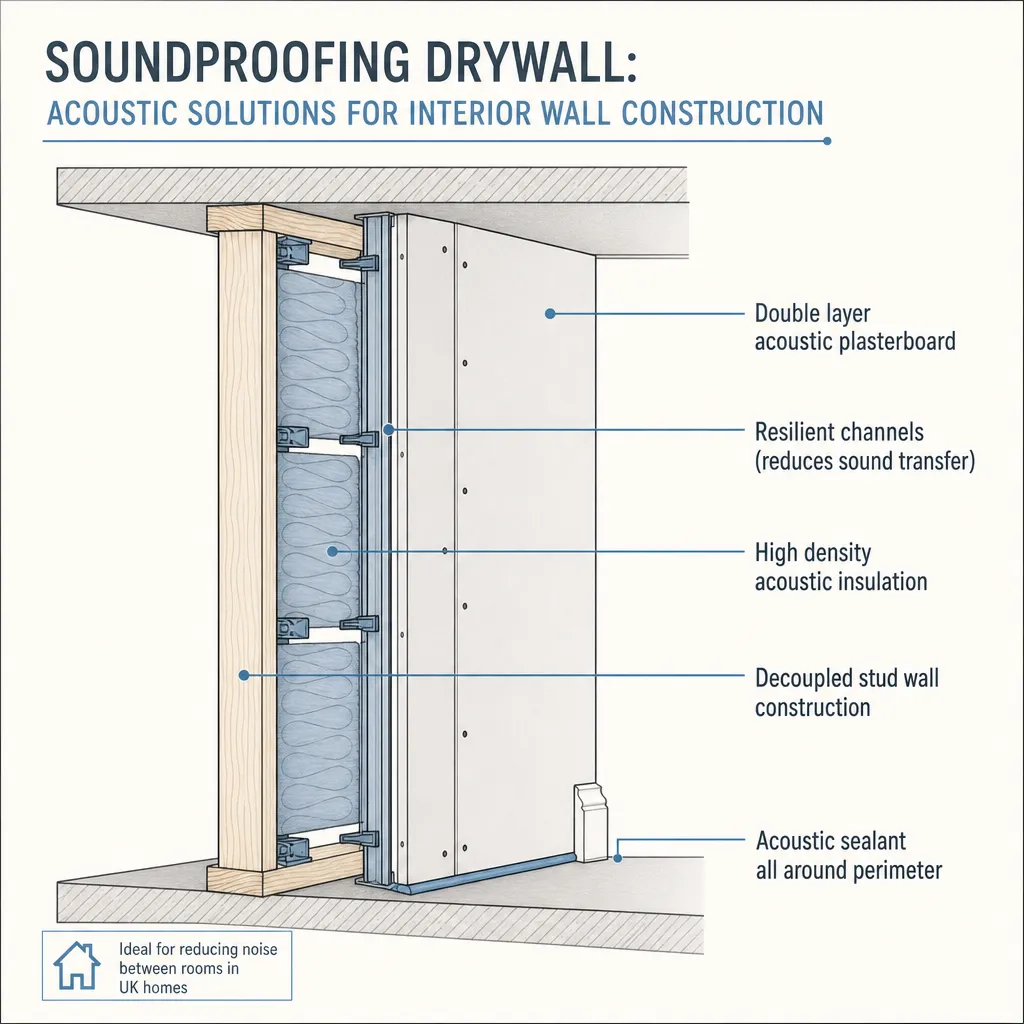
Soundproofing drywall: acoustic solutions for interior wall construction
Soundproofing drywall in UK homes typically combines acoustic plasterboard, resilient bar fixings, and mineral wool cavity fill to reduce airborne and structure-borne noise.
 Improvement & Build
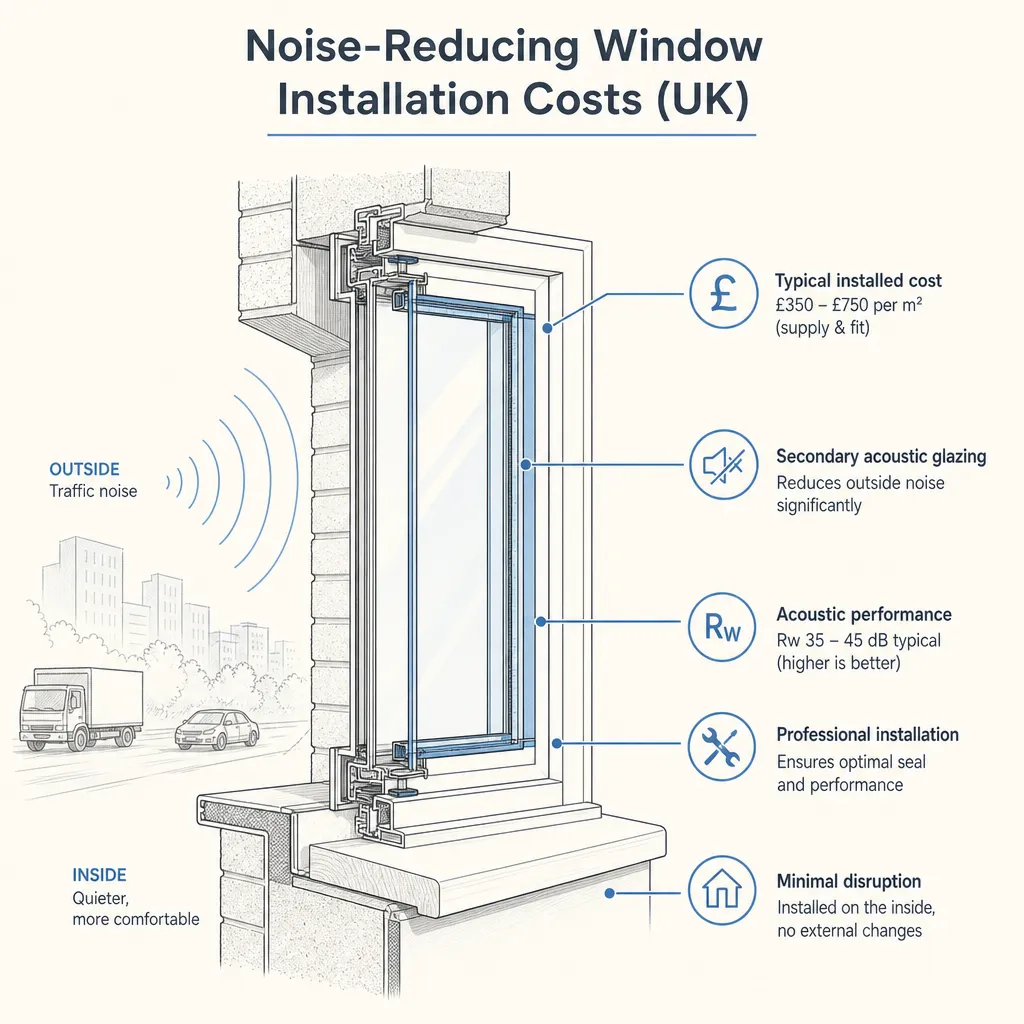
Noise-Reducing Window Installation Costs
Noise-reducing window installation in the UK typically costs £400–£1,500 per window depending on glazing specification, frame material, and property type.
 Improvement & Build
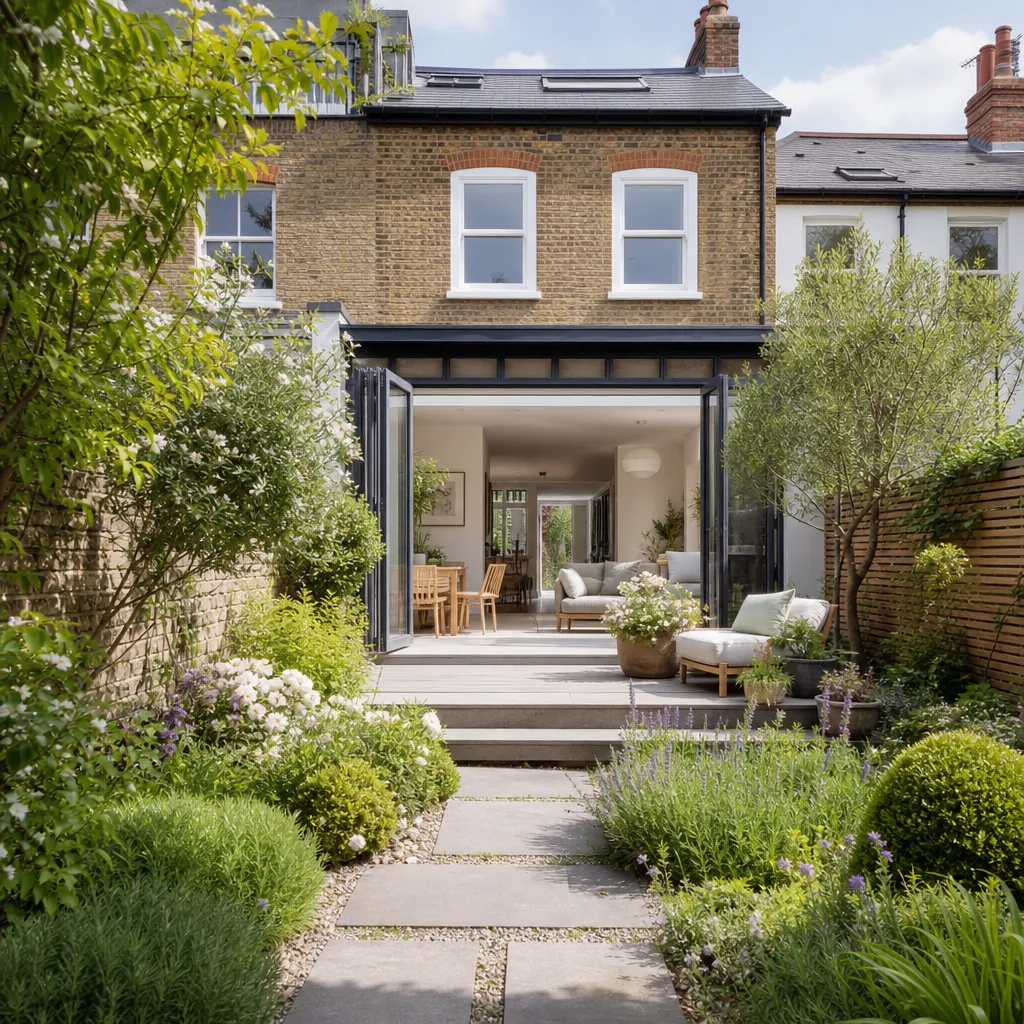
Spring Garden Transformations: Design Ideas to Enhance Your UK Property
Spring is the best time to transform a UK garden, with mild temperatures and longer days ideal for planting and landscaping.
 Improvement & Build
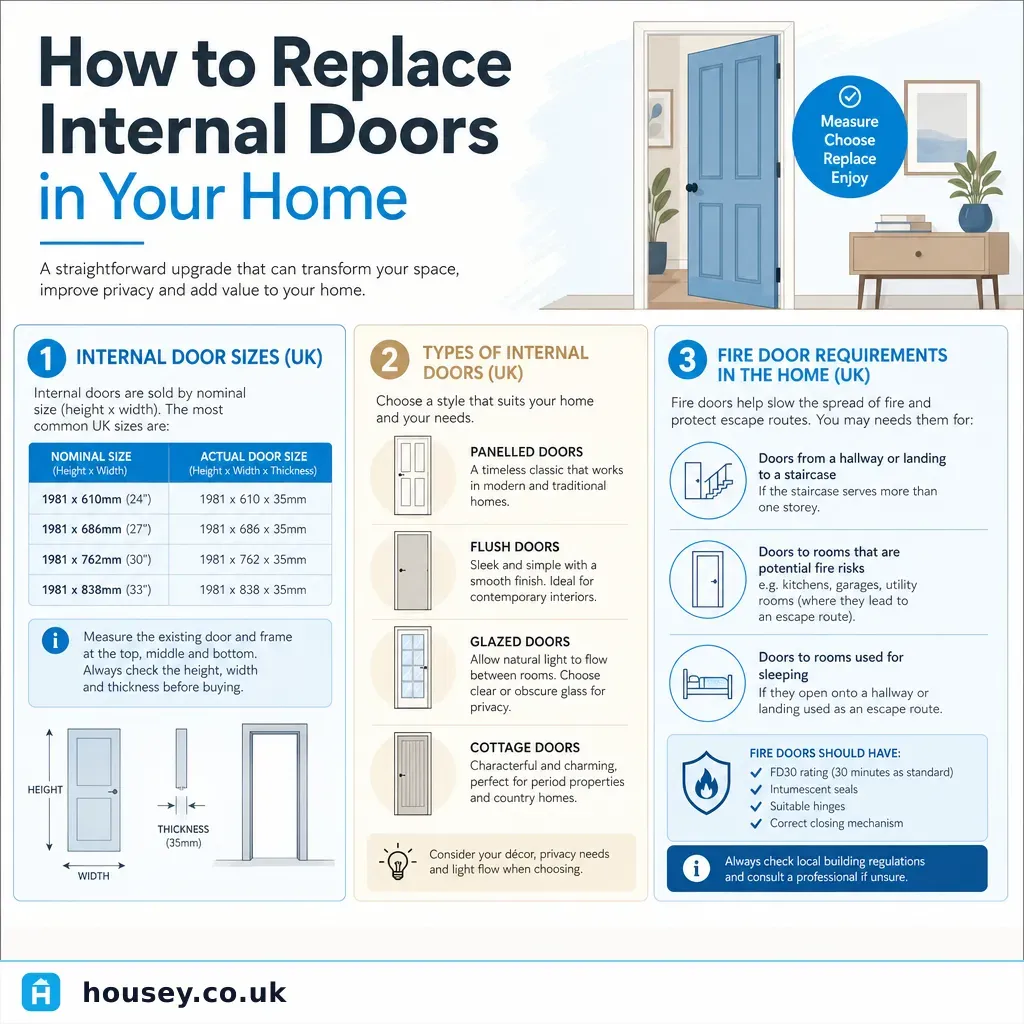
How to Replace Internal Doors in Your Home
Replacing internal doors is a straightforward home improvement that most competent DIYers or a joiner can complete.
 Improvement & Build
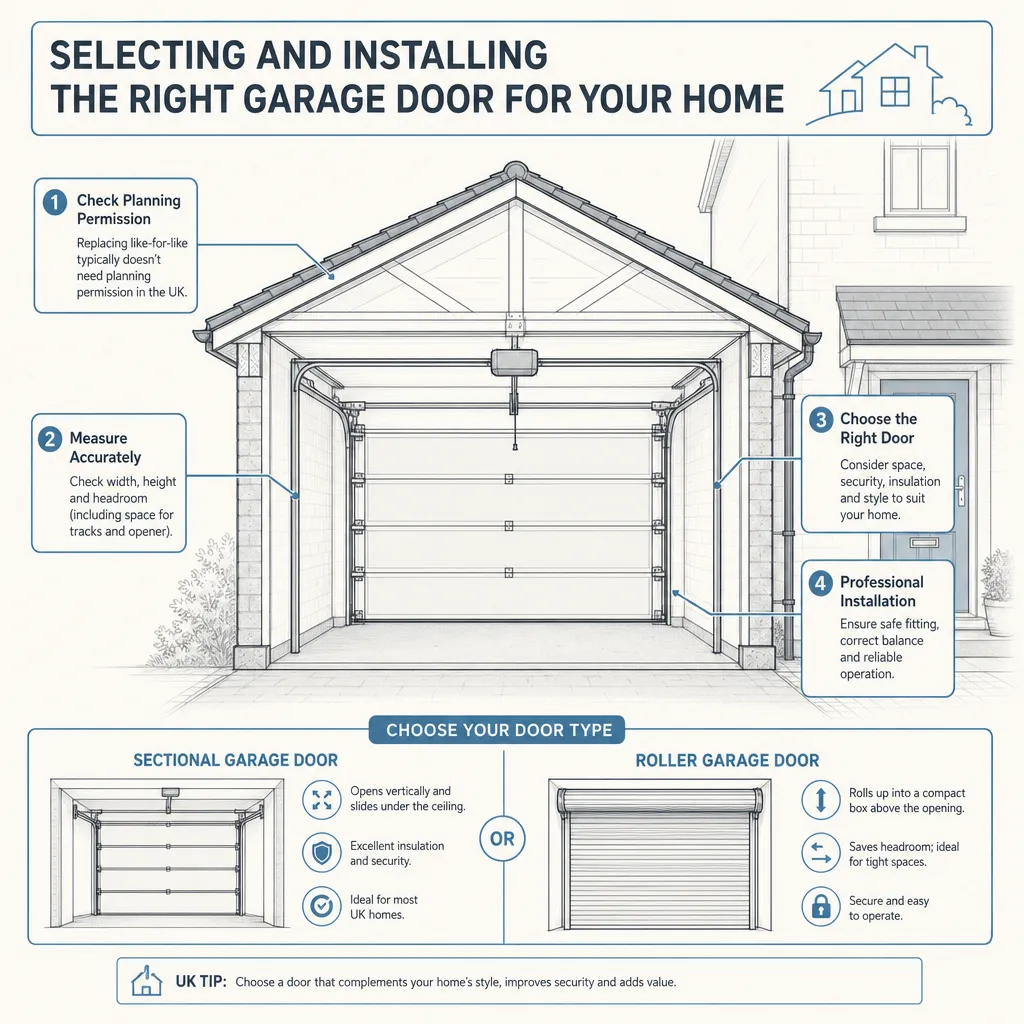
Selecting and Installing the Right Garage Door for Your Home
Choosing the right garage door depends on available headroom, opening width, security needs, and budget.