Spring Garden Transformations: Design Ideas to Enhance Your UK Property
By Housey · Last reviewed 18th of May 2026
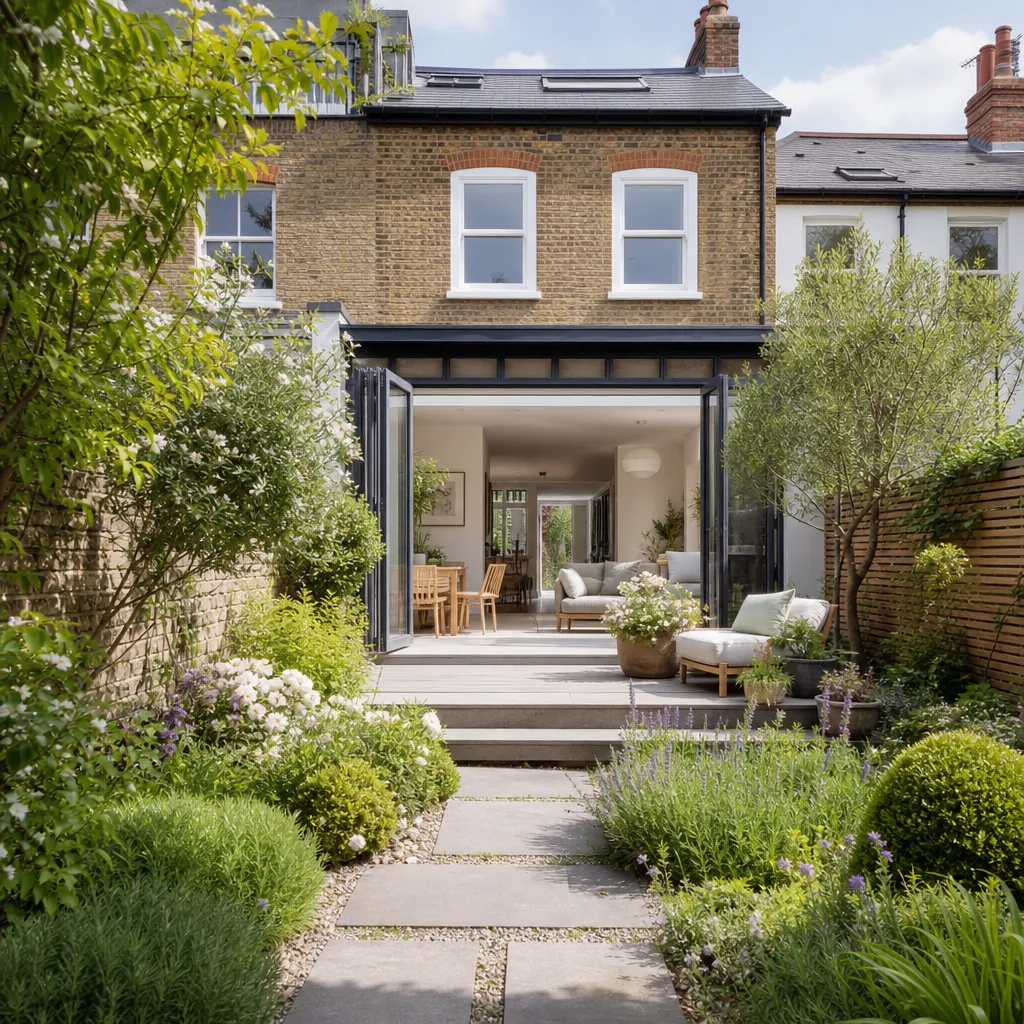
Spring Garden Transformations: Design Ideas to Enhance Your UK Property
Spring is the season when most UK homeowners turn their attention to the garden — prompted by an imminent sale, a move into a new home, or simply the desire to make more of their outdoor space. A well-considered garden can lift kerb appeal, extend usable living space, and improve daily enjoyment, but the variety of options — from a quick tidy to a full redesign — makes it worth thinking carefully about where time and budget will have the greatest impact.
Key points
- Laying more than 5 square metres of impermeable hard-standing in a front garden (such as concrete or standard block paving) requires householder planning permission unless the surface is permeable or drains to a soakaway — check GOV.UK guidance before proceeding.
- RHS research has linked well-maintained gardens to meaningful uplifts in asking price, though the actual benefit depends on location, buyer profile, and the standard of existing gardens in the street.
- Disturbing nesting birds between March and August is a criminal offence under the Wildlife and Countryside Act 1981 — schedule hedge trimming, ivy clearance, and tree work outside this window.
- A garden designer (who may be a member of the Society of Garden Designers) produces a layout, planting plan, and specifications; a landscaper carries out the physical installation — these are often separate professionals with different skills and pricing structures.
- Bamboo planted without a root barrier can spread aggressively and has caused boundary disputes and neighbour liability claims — confirm containment before planting.
Where to start: a decision tree for spring garden projects
Choosing the right starting point depends on your goals, timeline, and budget.
- Preparing to sell within 12 months? Prioritise kerb appeal: clear boundaries, a well-edged lawn, a clean path, and seasonal colour in pots or borders. Avoid major structural changes that raise buyer questions or leave works unfinished.
- Planning to stay long-term and want a functional outdoor room? Consider zoning the garden — lawn, seating, kitchen garden, play area — and commission a garden designer's plan to make the layout work across all seasons before starting any construction.
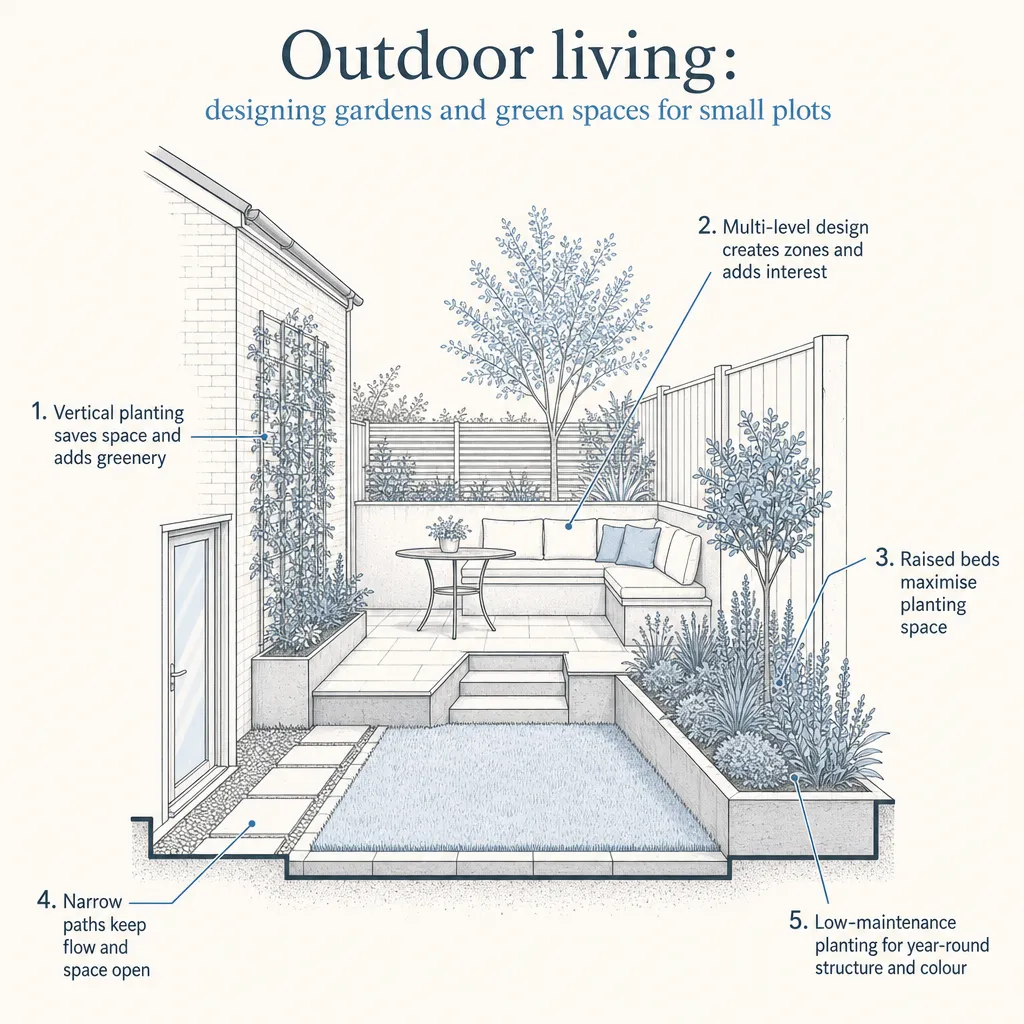
- Working with a small or awkward plot? Vertical planting, raised beds, pale hard-landscaping, and mirrors can increase the sense of space. A designer experienced in smaller gardens is usually worth the fee where layout constraints are complex.
- Dealing with a neglected or overgrown garden? Start with clearance and soil improvement — no planting plan performs well without addressing compaction, persistent weeds, and poor drainage first.
- On a tight budget? Focus improvements on the front garden for maximum visual return, propagate plants from existing stock, and phase back-garden work over two or three seasons.
Kerb appeal: the front garden
The front garden creates the first impression for buyers, visitors, and valuers. Small, well-targeted improvements here deliver a disproportionate visual impact relative to their cost.
High-impact, lower-cost steps:
- Power-wash paths and paving; remove moss from boundary walls.
- Repaint or replace a tired front door and gate.
- Clear gutters and soffits of debris.
- Plant evergreen topiary or clipped box in pots flanking the entrance.
- Add gravel mulch to borders to suppress weeds and improve drainage appearance.
Before laying new front-garden hard-standing: Replacing a front lawn with solid concrete or standard block paving larger than 5 square metres requires the surface to be permeable (gravel, permeable block paving, or open-jointed slabs) or for surface water to drain to a soakaway, unless householder planning permission is granted. Check the GOV.UK guidance on when planning permission is required before commissioning any hard-standing work.
Back garden zoning and design
A garden structured as a series of linked zones tends to feel larger, more functional, and more interesting throughout the year than a single open lawn. The table below outlines common zones and their practical requirements.
Zone | Typical area | Key features | Best suited to |
|---|---|---|---|
Outdoor seating and dining | 12–25 sq m | Paving, decking, or gravel; weather-resistant furniture and shade structure | Relaxing, entertaining, and al-fresco dining |
Lawn | Variable | Well-edged, regularly mown; consider a partial wildflower strip at the boundary | Children, pets, and visual open space |
Kitchen garden or raised beds | 4–12 sq m | Raised timber or slate beds; south or south-west facing; good drainage | Growing vegetables, fruit, and herbs |
Mixed planted border | 1–3 m deep | Shrubs, perennials, and bulbs for year-round structure and seasonal colour | Wildlife, pollinator habitat, and privacy screening |
Utility area | 2–6 sq m | Compost bins, log store, bin storage; ideally screened with trellis or hedging | Practical storage out of the main view |
Spring is ideal for laying new turf, planting containerised shrubs, establishing raised beds, and sowing annual seeds directly. Avoid major tree work or hedgerow removal between March and August — this is the bird nesting season, and disturbance to active nests is an offence under the Wildlife and Countryside Act 1981.
Planting for a UK climate
A reliable spring planting scheme builds on plants that tolerate wet winters, occasional summer drought, and — in coastal or exposed areas — wind. The following categories perform well across most of England, Wales, and Scotland:
Spring bulbs (planted in autumn for spring colour): Alliums, narcissi, and tulips provide early seasonal colour with minimal ongoing maintenance.
Structural plants for year-round form: Viburnum tinus, Pittosporum tenuifolium, Sarcococca confusa, and ornamental grasses give the garden backbone in every season and require little intervention once established.
Fast-growing climbers for screens and boundaries: Clematis montana, climbing roses, and Hydrangea anomala subsp. petiolaris can cover a fence or wall within two to three seasons without aggressive spreading.
Pollinator-friendly perennials: Echinacea, Verbena bonariensis, Nepeta, and lavender attract bees and butterflies, are hardy across most UK regions, and require minimal deadheading or division in the first two or three years.
Avoid without preparation: Bamboo planted without a root barrier; Buddleja davidii in ecologically sensitive areas; Fallopia species (related to Japanese knotweed) — check the GB Non-Native Species Secretariat guidance before planting anything in the Polygonum family.
Spring garden renovation checklist
Before instructing contractors or beginning significant work, work through these steps:
When to get professional help
For most spring garden projects, a confident homeowner or experienced local landscaper can deliver excellent results. Consider instructing a qualified garden designer or specialist landscaper when:
- The garden involves significant level changes, retaining walls, or drainage problems — these require structural knowledge alongside planting expertise.
- You are planning structural features: a garden room, pool, pergola, or a retaining wall over 1 metre.
- You want a design that performs across all seasons and need a planting plan and specification that can be implemented in phases.
- Work involves trees — particularly removal, crown reduction, or construction within root protection areas.
- You are preparing a property for sale at a competitive price point and want the garden to support rather than undermine the asking price.
How Housey can help
Whether you want a full redesign or practical installation work, Housey can connect you with the right professionals. Find a qualified garden designer to develop a layout and planting plan tailored to your site and goals, or connect with experienced landscapers to carry out the physical work to a professional standard.
Frequently asked questions
Does garden design add value to a UK property?
A well-maintained and attractively designed garden can add measurable value, particularly for family buyers. RHS research has suggested meaningful uplifts are possible in some scenarios, though actual impact depends heavily on location and buyer profile. Even modest improvements — clear paths, tidy lawn edges, and healthy planting — improve kerb appeal and first impressions at relatively low cost compared with internal renovation work.
Do I need planning permission to landscape my garden?
Most garden landscaping work falls within permitted development rights and does not need planning permission. Key exceptions include laying more than 5 square metres of impermeable hard-standing in a front garden; constructing outbuildings beyond permitted sizes; work on listed buildings or in conservation areas; and felling or pruning trees protected by a Tree Preservation Order. Always check with your local planning authority if you are uncertain.
When is the best time of year to transform a UK garden?
Spring (March to May) is generally ideal for turfing, planting containerised shrubs and perennials, sowing seeds, and starting hard-landscaping projects. Avoid major tree work or hedgerow clearance between March and August — this is the bird nesting season and disturbance to active nests is an offence under the Wildlife and Countryside Act 1981. Autumn is best for bare-root planting and spring-flowering bulbs.
What is the difference between a garden designer and a landscaper?
A garden designer plans the layout, planting scheme, and material specifications — they produce drawings and planting plans. A landscaper installs the work: laying paving, building structures, turfing, and planting. Some landscaping firms offer both services under one roof. For more complex or large gardens, it is common to instruct a designer separately and put the installation work out to tender among local landscapers.
Sources and further reading
- When is planning permission required — hard-standing and driveways — GOV.UK
- Wildlife and Countryside Act 1981 — legislation.gov.uk
- Flood and Water Management Act 2010 — legislation.gov.uk
- RHS research and garden value — Royal Horticultural Society
- British Association of Landscape Industries — BALI
Useful next reads
 Improvement & Build
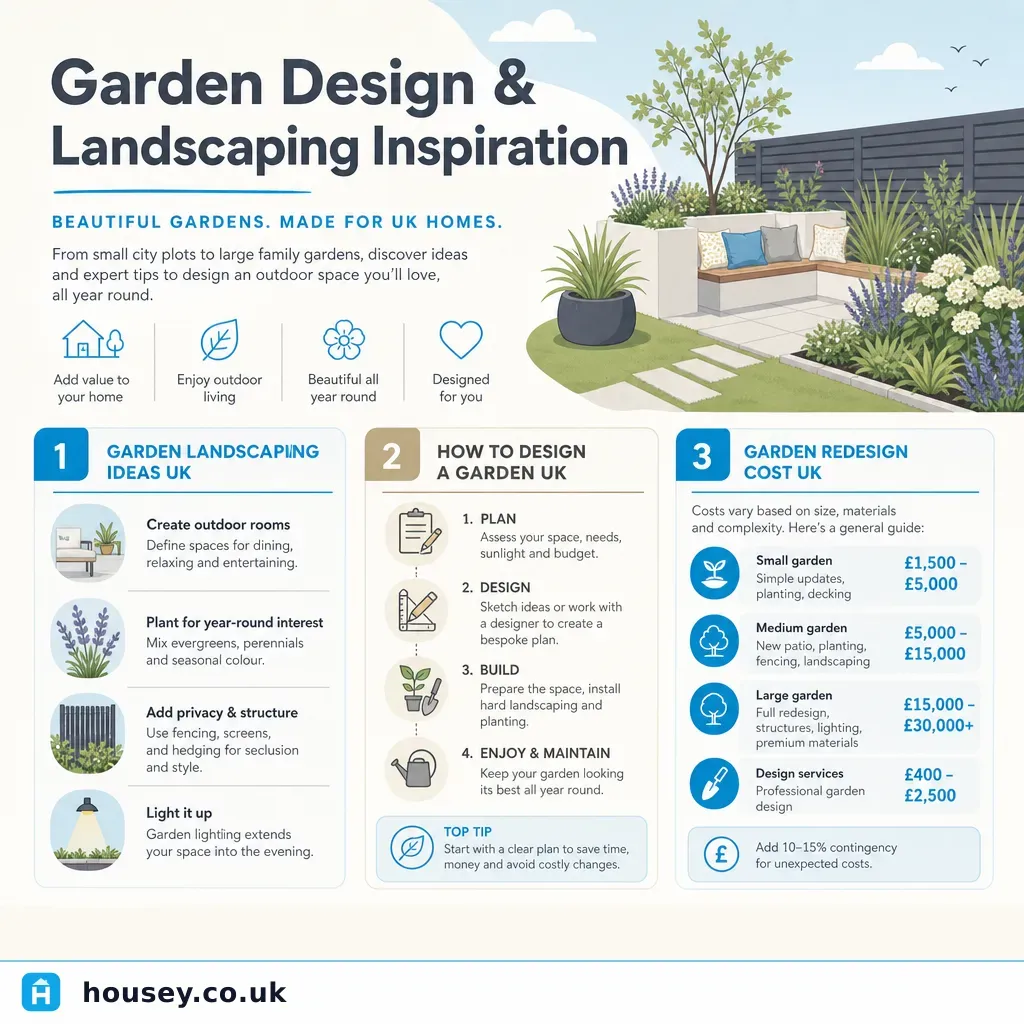
Garden Design and Landscaping Inspiration
Effective garden design starts with assessing your aspect, soil type, and existing features before commissioning any planting or hard landscaping.
 Improvement & Build
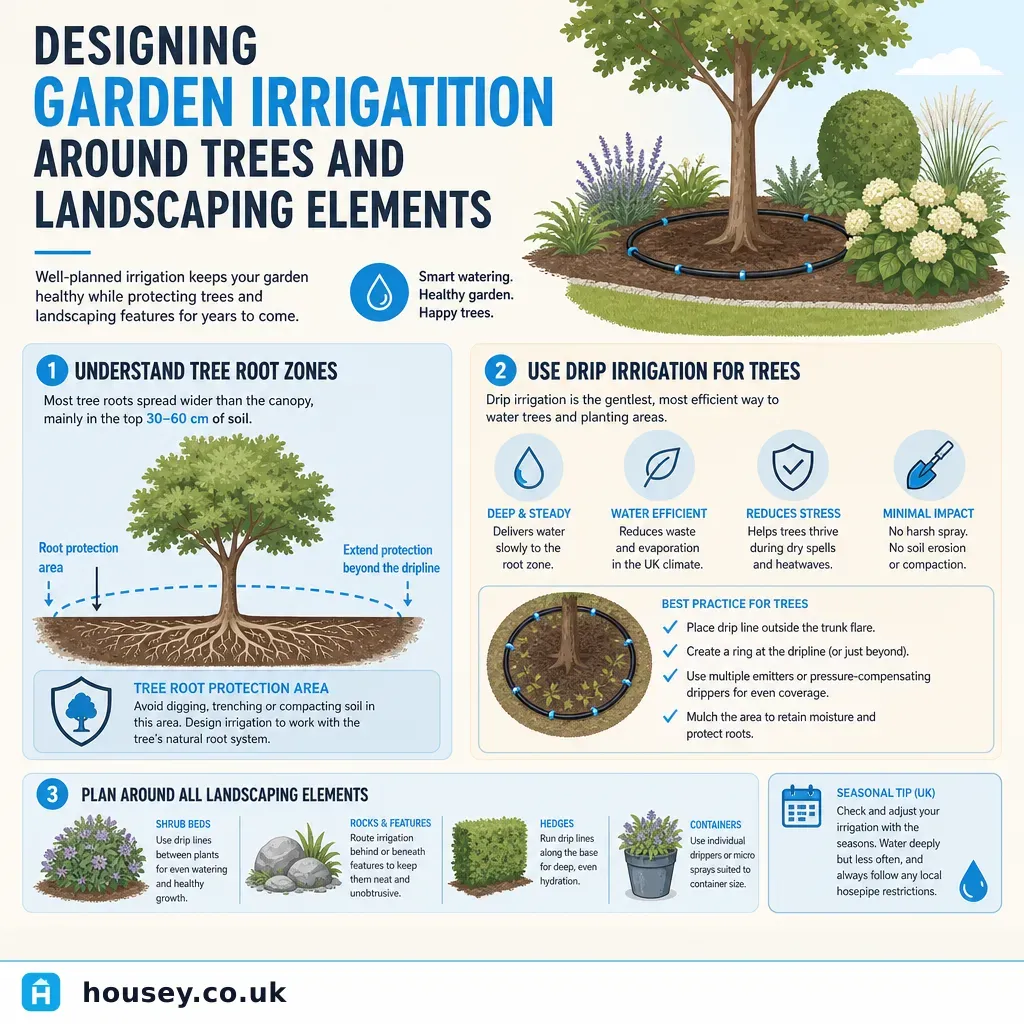
Designing Garden Irrigation Around Trees and Landscaping Elements
Design irrigation around trees by respecting the root protection area defined under BS 5837:2012, using drip or leaky pipe delivery rather than spray heads, and putting the tree zone on its own circuit.
 Improvement & Build
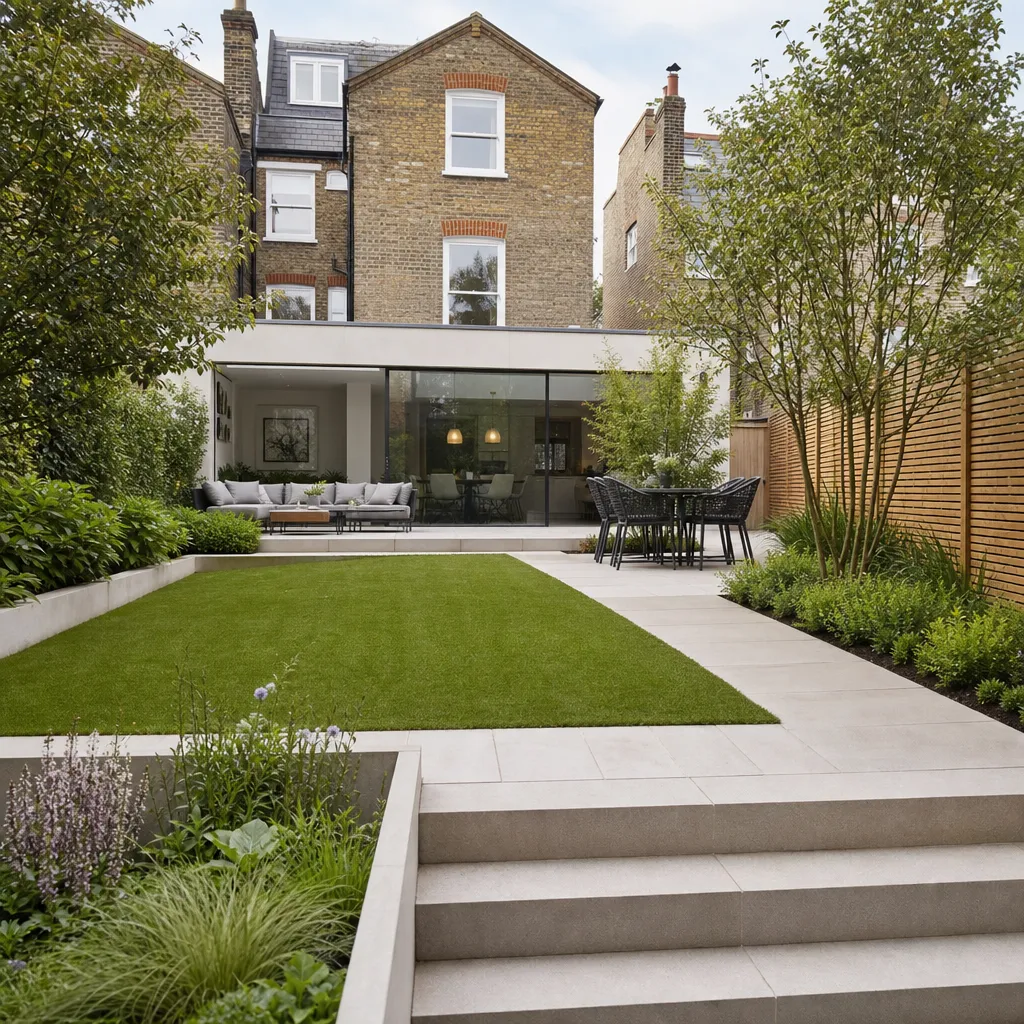
Garden Design Trends and Contemporary Landscaping Ideas
Contemporary UK garden design centres on low-maintenance naturalistic planting, multi-functional outdoor spaces, sustainable hard landscaping materials, and wildlife-friendly rewilded areas.
 Improvement & Build
Outdoor living: designing gardens and green spaces for small plots
Small plots work best when divided into defined zones — seating, planting, and utility — before materials are chosen.
 Improvement & Build
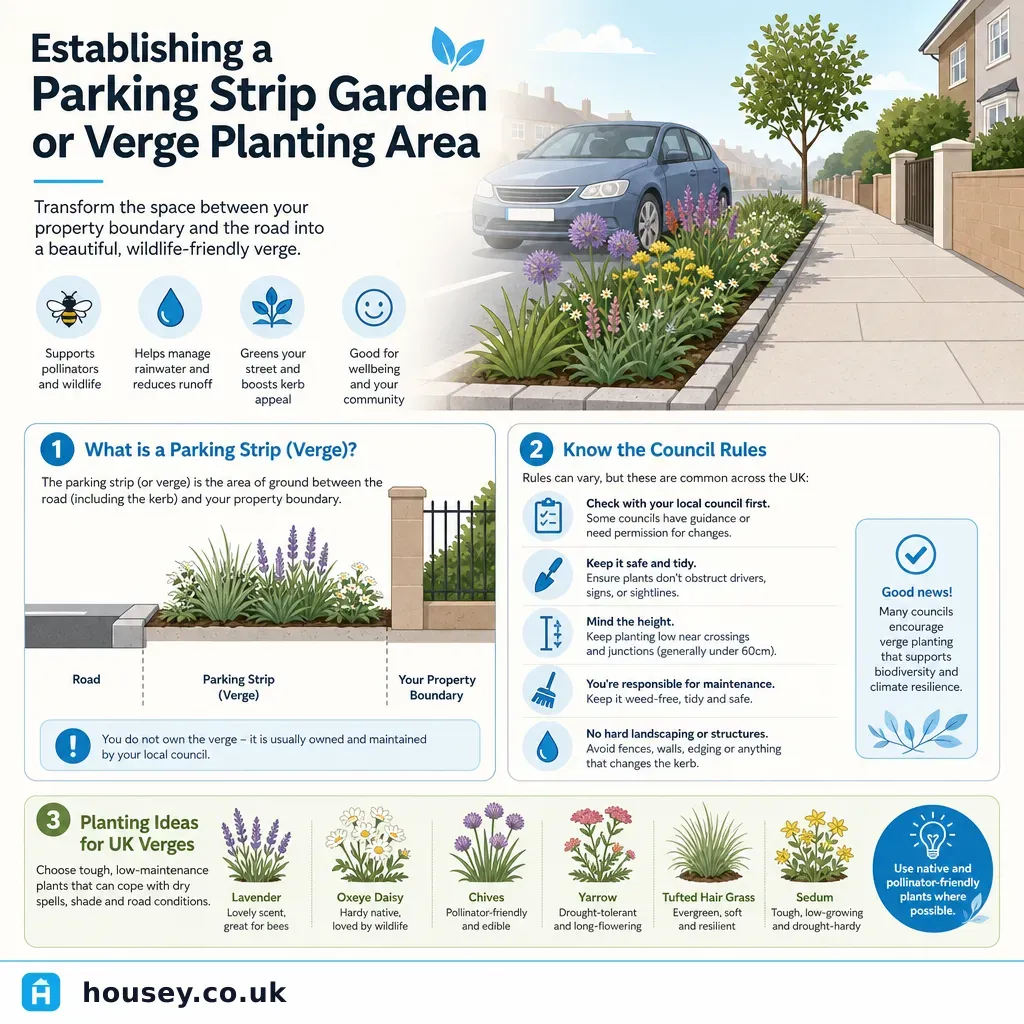
Establishing a Parking Strip Garden or Verge Planting Area
A parking strip or verge sits between your garden boundary and the road.