Acoustic Insulation For Bedrooms: Methods And Costs
By Housey · Last reviewed 30th of May 2026
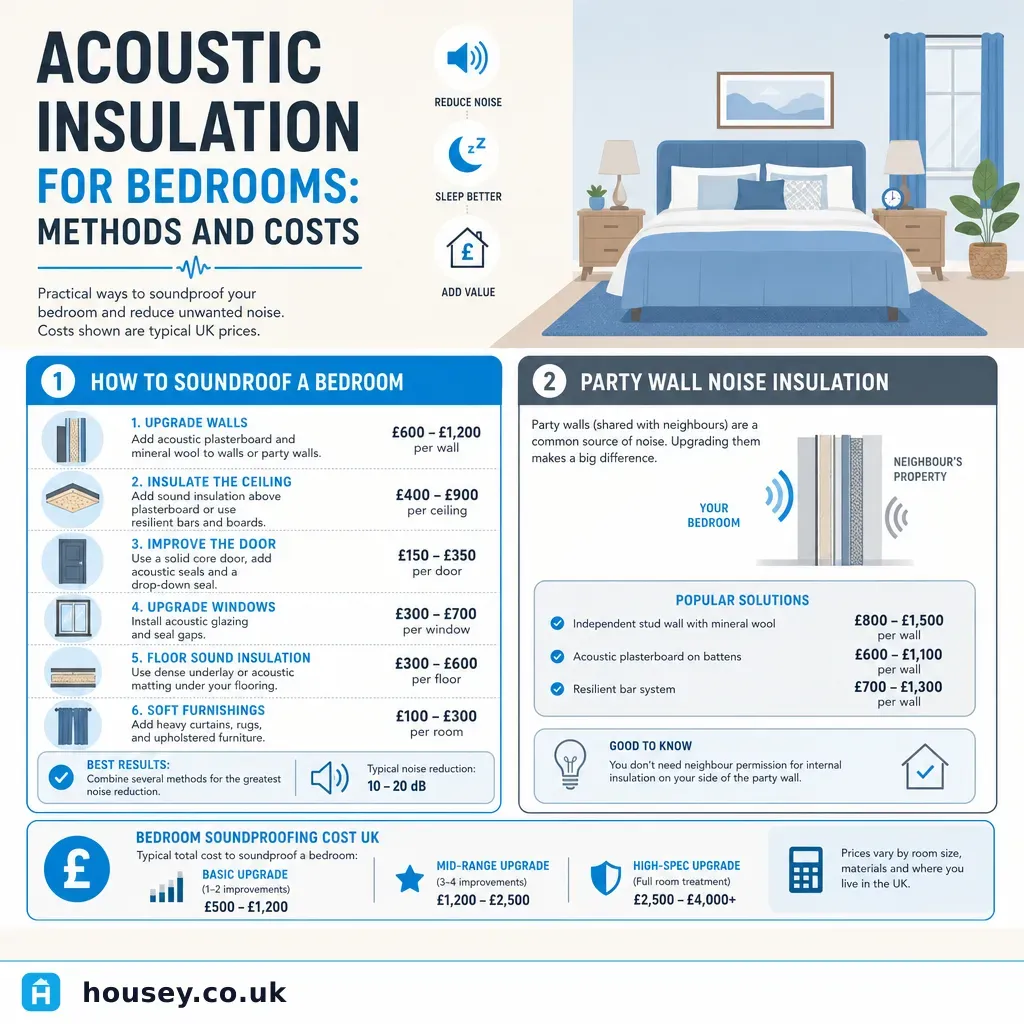
Acoustic Insulation For Bedrooms: Methods And Costs
Noise in the bedroom — whether traffic from a busy road, a neighbour's television through a party wall, or footfall from the floor above — is one of the most common reasons homeowners consider acoustic insulation. The challenge is that sound behaves very differently from heat: reducing it effectively requires identifying the source and transmission path before selecting a method. A Victorian terraced house with a shared party wall presents a very different problem from a first-floor bedroom suffering impact noise from a child's room above.
Key points
- Building Regulations Part E requires new and converted residential separating walls to achieve a minimum of 45 dB airborne sound insulation (DnTw + Ctr) and separating floors to limit impact sound transmission to no more than 62 dB (L'nTw).
- The laboratory Sound Reduction Index (Rw) printed on acoustic products is typically 5–10 dB higher than real-world in-situ performance due to flanking transmission through surrounding structure.
- Decoupling — physically separating a surface from the structure using resilient bars or acoustic isolation clips — is one of the most effective methods for reducing structure-borne and impact noise.
- An independent stud wall built 25–50 mm away from a party wall, lined with high-mass acoustic plasterboard and filled with acoustic mineral wool, provides the best airborne noise reduction but reduces room width by 75–150 mm per treated wall.
- A single bedroom wall treated with an independent stud lining typically costs £800–£2,500; a full bedroom treatment covering walls and ceiling can cost £2,500–£7,000 or more (Indicative UK costs, last reviewed 2026-05-30).
What types of noise are you trying to reduce?
Acoustic insulation is not a single product — it is a strategy. Identifying the noise type and its transmission path determines which methods will be effective.
Noise type | Typical source | Primary transmission path | Most effective treatment |
|---|---|---|---|
Airborne (external) | Road traffic, aircraft, street noise | Through external walls, windows, or gaps | High-mass wall lining, acoustic glazing, door and window sealing |
Airborne (through party wall) | Neighbour's voices, music, television | Solid or cavity masonry or timber party wall | Independent wall lining with acoustic mineral wool |
Impact noise | Footfall, furniture scraping from room above | Structure of floor and ceiling joists | Acoustic floating floor above, or resilient ceiling system below |
Flanking noise | Sound travelling around walls via structure | Junctions between floors, walls, and ceilings | Professional acoustic assessment to identify and treat paths |
If your bedroom suffers from a combination of noise types, treating one transmission path may simply reveal another — particularly with flanking in older terraced or semi-detached homes.
Acoustic insulation methods for bedroom walls
Independent wall lining (highest performance)
A timber stud frame is built 25–50 mm away from the existing wall with no direct contact. The frame is lined with two layers of high-mass acoustic plasterboard — such as British Gypsum Gyproc SoundBloc or Knauf Soundshield Plus — and the cavity is filled with acoustic mineral wool. The frame is isolated from the floor and ceiling using resilient neoprene strips or pads to break the rigid acoustic path. This typically achieves 10–15 dB additional sound reduction but reduces room width by 75–150 mm.
Resilient bar system (balanced performance)
Resilient metal bars are fixed horizontally across the existing wall surface at regular centres. Plasterboard is then fixed to the bars rather than directly to the wall, breaking the rigid acoustic connection through the structure. Mass loaded vinyl (MLV) can be added behind the plasterboard for additional performance. This approach loses less room width than a full independent lining but outperforms direct lining.
Direct wall lining (lower performance, lower cost)
Acoustic plasterboard or composite acoustic panels are fixed directly to the existing wall surface, sometimes with acoustic mineral wool batts behind. This is faster and cheaper than independent linings but performance is limited because the surface remains coupled to the structure, allowing structure-borne sound to bypass the treatment. Typically achieves 5–8 dB additional reduction.
Acoustic insulation for bedroom floors and ceilings
Impact noise from the floor above
The most effective solution for impact noise from a room above is treatment at floor level:
- Acoustic underlay and floating floor — chipboard or engineered timber on acoustic resilient cradles or mat underlay breaks the rigid connection between footfall and the subfloor, significantly reducing impact noise transmission.
- Specialist floating floor systems — products such as Regupol or similar resilient cradle systems can achieve substantial impact noise reduction and are compatible with underfloor heating.
If access to the room above is not available, treating the ceiling below is the alternative:
- Resilient bars or acoustic hangers support a ceiling lining isolated from the joists above.
- Adding mass via double-layer acoustic plasterboard and filling the ceiling void with acoustic mineral wool improves both impact and airborne performance from below.
Airborne noise through the ceiling
For voices or music from the room above rather than impact noise, the ceiling treatment approach still applies — an independent ceiling lining with acoustic mineral wool and resilient fixings provides the best result for airborne sound through a floor or ceiling.
How much does bedroom acoustic insulation cost?
Indicative UK costs, last reviewed 2026-05-30. Costs vary with room size, specification, and regional labour rates — always obtain at least three written quotes.
Treatment | Typical cost range |
|---|---|
Direct acoustic wall lining (one wall, approx. 12 m²) | £400–£900 |
Resilient bar system with acoustic plasterboard (one wall) | £600–£1,400 |
Independent stud wall lining (one wall) | £800–£2,500 |
Resilient acoustic ceiling treatment (one room) | £700–£2,000 |
Acoustic floating floor (new installation, approx. 15 m²) | £800–£2,500 |
Full bedroom treatment (walls and ceiling combined) | £2,500–£7,000+ |
These ranges typically include materials and installation. Decoration, skirting board reinstatement, and electrical socket repositioning are usually priced separately.
Which acoustic insulation method suits your situation?
This decision guide provides a starting point — a professional insulation assessment is advisable for complex or persistent noise problems:
- Traffic noise through an external bedroom wall → prioritise acoustic glazing on windows first; supplement with an acoustic wall lining if the wall itself is thin or poorly constructed.
- Noise through a party wall from a neighbour → independent stud wall lining with acoustic mineral wool gives the best performance; the frame must not touch the party wall at any point.
- Footfall from a room directly above → acoustic floating floor in the room above is the most effective solution; resilient ceiling treatment below is the alternative if the upper room is not accessible.
- Voices or music from the room above → resilient ceiling system with acoustic batts and high-mass plasterboard addresses airborne noise through the ceiling structure.
- General reverberation and echo within the room → acoustic absorption panels reduce echo but do not prevent external sound entering — absorption and soundproofing are not the same thing.
- Rented property → obtain written consent from your landlord or managing agent before making any structural changes.
Homeowner checklist for bedroom acoustic insulation
When to get professional help
Acoustic insulation works best when the correct transmission path is identified first. Engage a professional when:
- The noise source or path is unclear — a specialist acoustic consultant can take measurements and identify flanking paths before you commit to materials.
- The problem involves a party wall in a leasehold property — check your lease before making any structural alterations to a shared wall.
- You are undertaking a conversion or change of use where Part E compliance must be demonstrated to Building Control.
- Previous soundproofing attempts have not worked — this usually indicates untreated flanking transmission.
How Housey can help
Housey connects you with vetted insulation installers who work on acoustic as well as thermal projects. If you are unsure which approach suits your bedroom noise problem, an insulation assessment can help identify the source and recommend an appropriate specification before you commit to materials and installation.
Frequently asked questions
How much does it cost to soundproof a bedroom wall in the UK?
A single bedroom wall treated with an independent stud lining and acoustic plasterboard typically costs £800–£2,500 depending on room size, specification, and region (Indicative UK costs, last reviewed 2026-05-30). Direct acoustic lining is less expensive at £400–£900 per wall but gives lower performance. A full bedroom treatment covering walls and ceiling can range from £2,500 to £7,000 or more.
Does acoustic insulation reduce heat loss too?
Acoustic mineral wool — the most commonly used fill in acoustic wall and ceiling treatments — also has thermal insulation properties, typically a lambda value of 0.034–0.040 W/mK. An independent wall lining will improve both acoustic and thermal performance of a party wall or external wall. However, acoustic products are specified differently from thermal insulation, so do not assume Part L U-value targets will be met without checking.
Will acoustic insulation stop all noise coming into my bedroom?
No acoustic treatment eliminates noise entirely. A well-specified independent wall lining can reduce airborne noise by 10–20 dB, roughly halving the perceived loudness, but complete silence is only achievable in specialist controlled environments. If the primary noise path is through a window or door, treating the walls first will have limited impact. The realistic goal is reduction to a level that does not disturb sleep.
Do I need planning permission or Building Regulations approval for bedroom soundproofing?
Planning permission is not usually required for internal acoustic lining work in an existing bedroom. Building Regulations Part E compliance is required in specific circumstances — notably when creating new habitable rooms in a conversion or as part of a material change of use. Standard internal acoustic improvements in an existing bedroom generally do not require a Building Regulations application, but check with your local Building Control body if in any doubt.
Sources and further reading
- Approved Document E — Resistance to the passage of sound — GOV.UK
- Building Regulations 2010 — Part E — legislation.gov.uk
- BRE — Sound insulation in dwellings — Building Research Establishment
- Noise nuisances: how councils deal with complaints — GOV.UK
Useful next reads
 Energy & Retrofit
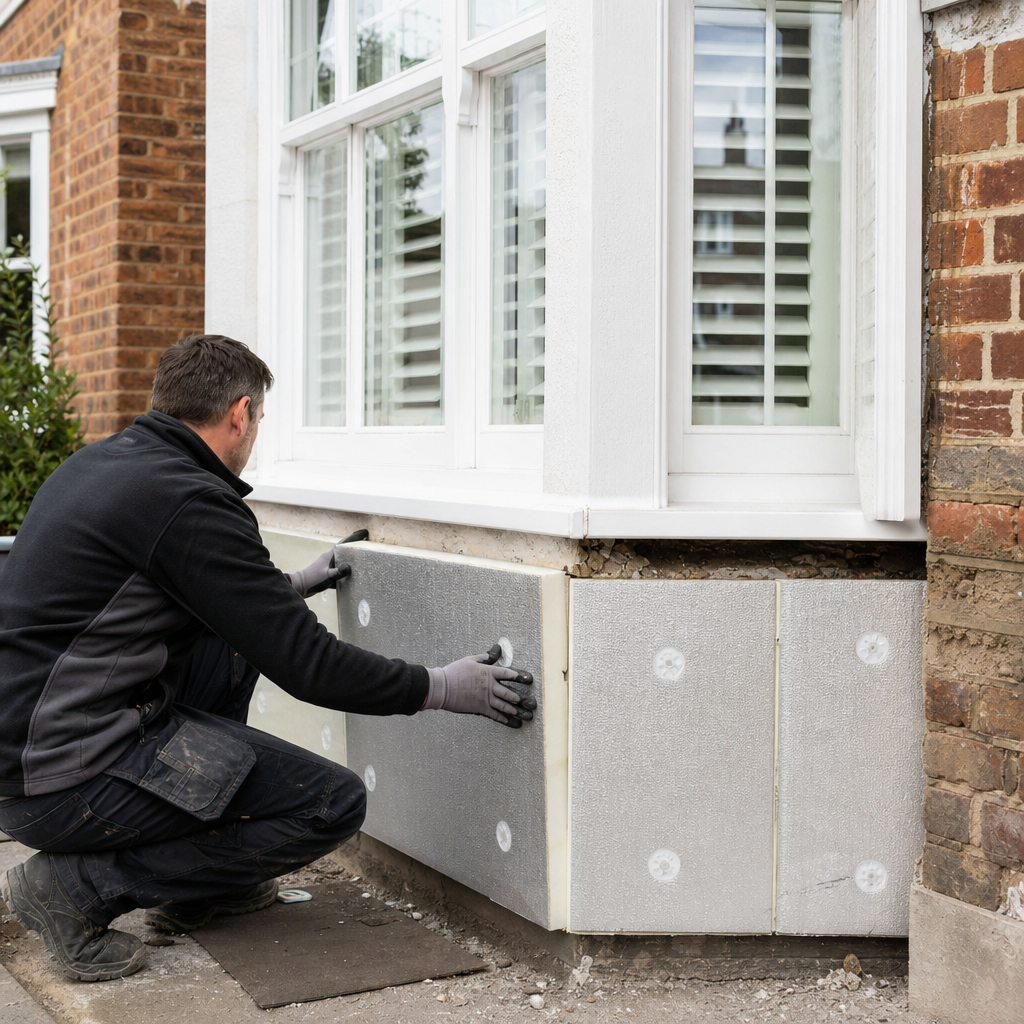
Insulating Solid Masonry Walls Under Bay Windows: Technical Guidance
Insulating solid masonry walls under bay windows requires specialist detailing at angled wall faces, window reveals, and the bay floor and ceiling junctions.
 Energy & Retrofit
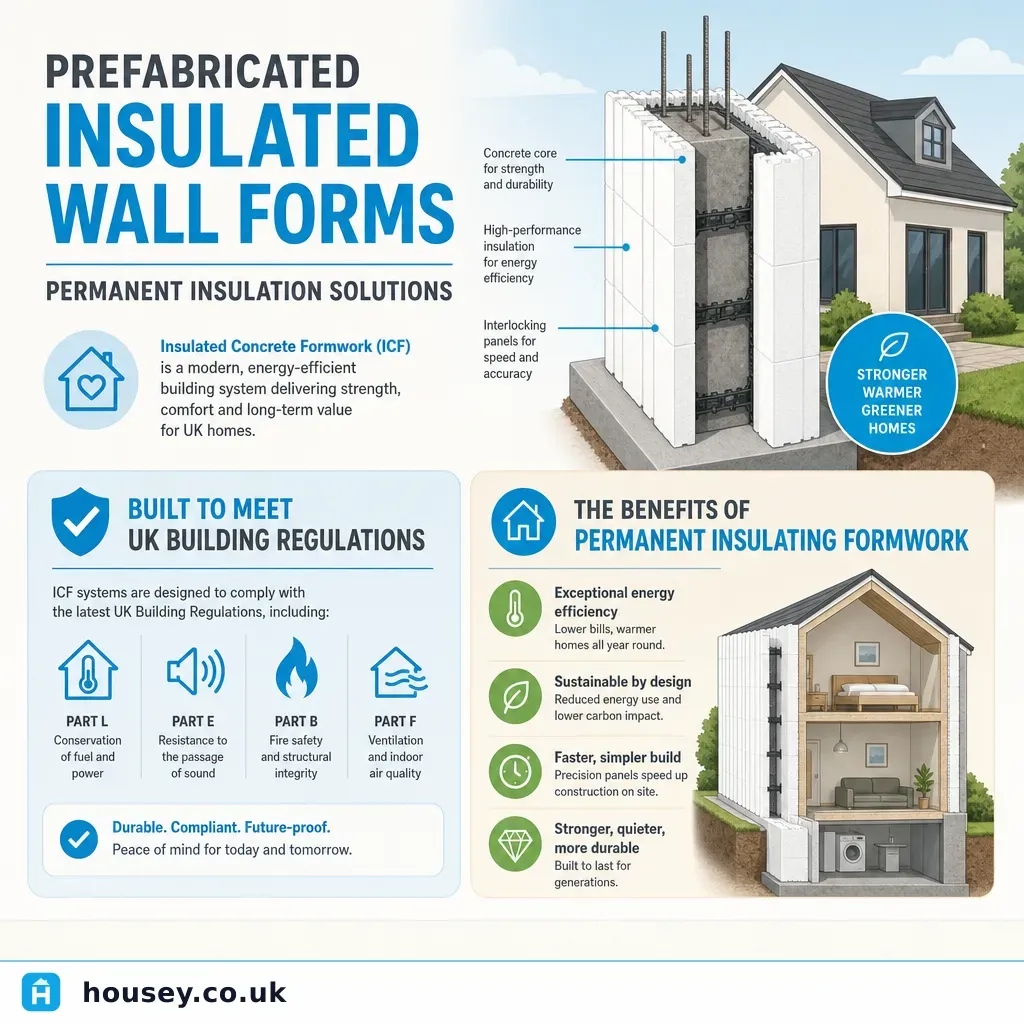
Prefabricated Insulated Wall Forms: Permanent Insulation Solutions
Prefabricated insulated wall forms — including ICF and SIPs systems — deliver high thermal performance by combining permanent insulation with structural concrete or timber in a single wall assembly.
 Energy & Retrofit
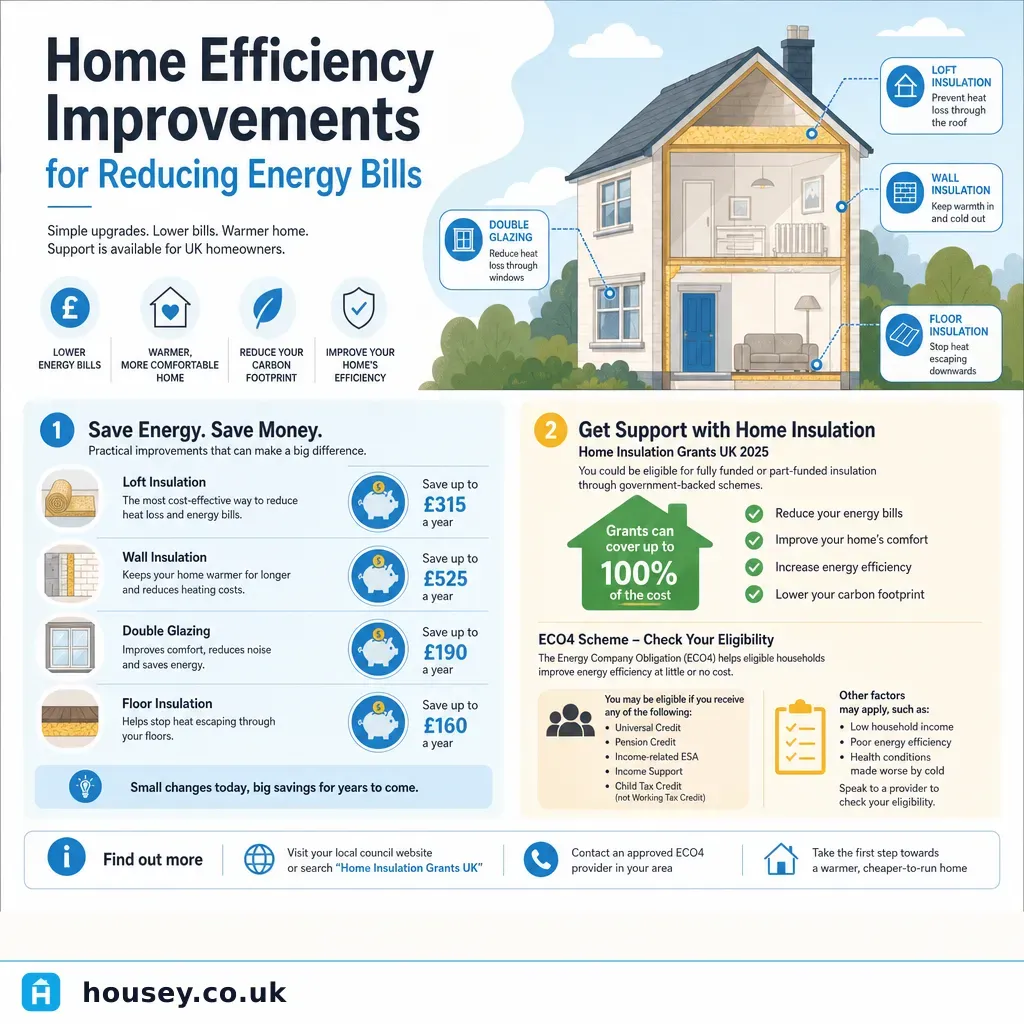
Home Efficiency Improvements for Reducing Energy Bills
The most cost-effective UK home efficiency improvements are usually loft insulation, cavity wall insulation, draught-proofing, and upgrading heating controls.
 Energy & Retrofit
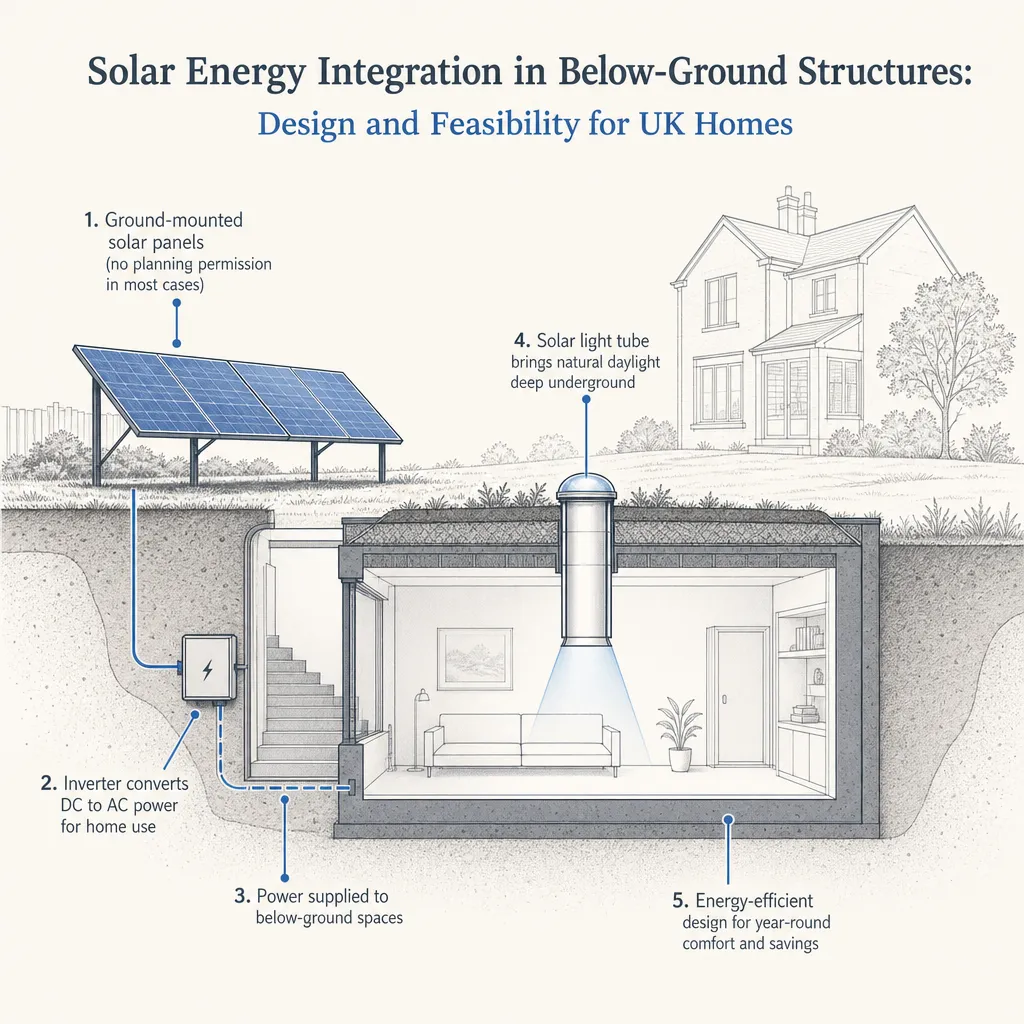
Solar Energy Integration in Below-Ground Structures: Design and Feasibility
Below-ground structures cannot host solar panels on their own roofs but can use surface-mounted panels connected via cable runs, solar light tubes for daylighting, and battery storage.
 Energy & Retrofit
Climate-Ready Home Improvements for the Future
Climate-ready home improvements tackle four main risks for UK properties: overheating, increased rainfall and flooding, storm damage, and energy cost volatility.