Climate-Ready Home Improvements for the Future
By Housey · Last reviewed 11th of May 2026
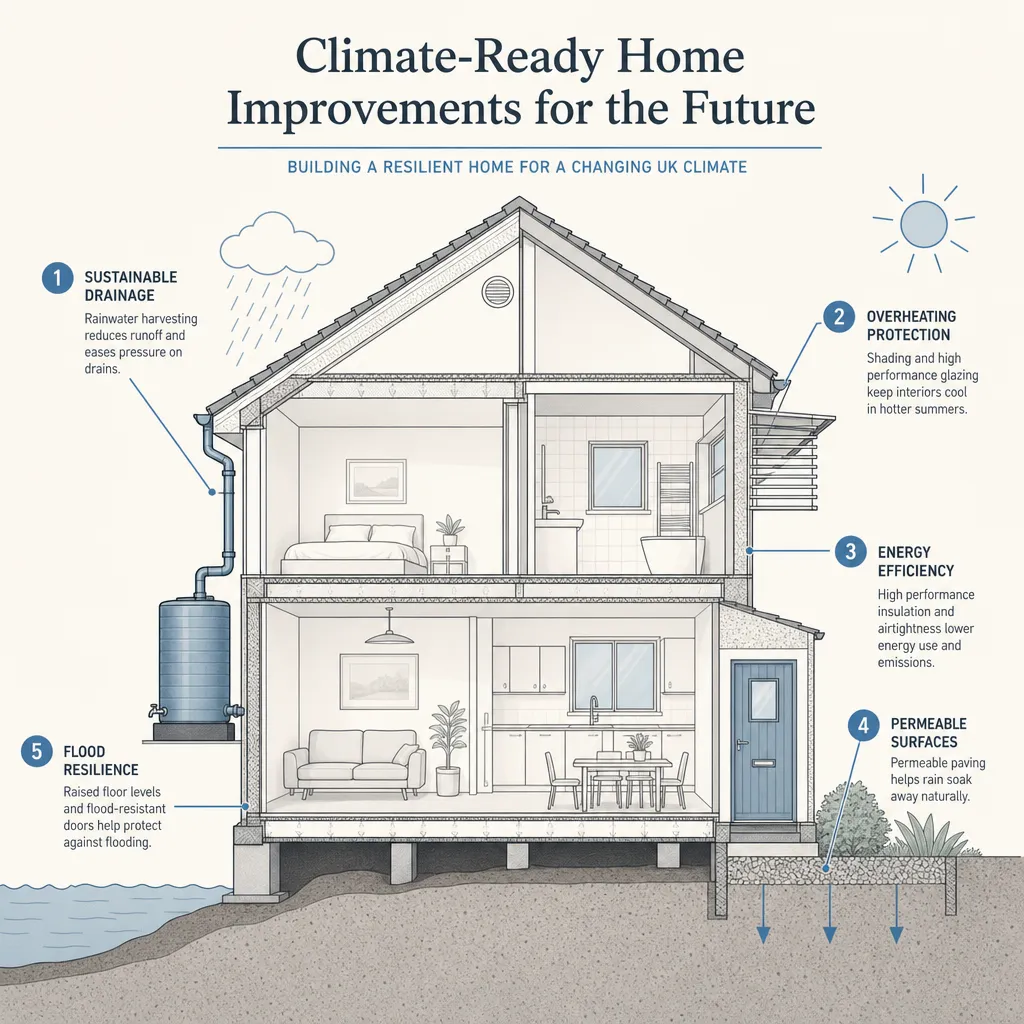
Climate-Ready Home Improvements for the Future
UK homes built before the 2000s were designed for a climate that is changing faster than at any point in modern British weather records. Average summer temperatures are rising, intense rainfall events are becoming more frequent, and many properties now face overheating risks that were not considered when they were originally built. For homeowners, these shifts have practical implications: buildings that performed adequately a generation ago may now benefit from targeted upgrades to remain comfortable, insurable, and energy-efficient through the decades ahead.
Key points
- The Climate Change Committee (CCC) warns that overheating in homes is already a significant risk, with internal temperatures in poorly ventilated loft conversions regularly exceeding 26°C during UK heatwaves.
- Part O of the Building Regulations (England, 2022) requires overheating mitigation in new and converted dwellings, referencing the CIBSE TM59 design methodology.
- PAS 2035:2023 — the publicly available specification for domestic retrofit — requires a whole-house assessment before grant-funded insulation or heating upgrades are installed, to prevent moisture and ventilation failures.
- The Environment Agency estimates around 5.2 million properties in England are in areas at risk from flooding, with surface-water flooding the most common type affecting residential homes.
- Permitted development rights generally cover solar PV panels and most loft insulation, but listed buildings, conservation areas, and Article 4 direction areas require a planning application for many external climate-adaptation works.
What climate risks affect UK homes?
Four main risks shape the climate adaptation agenda for UK residential property.
Overheating affects well-insulated modern homes as much as older stock. Low thermal mass, high solar gain through glazing, and inadequate ventilation combine to push indoor temperatures above safe and comfortable thresholds during heatwaves. South- and west-facing loft conversions and single-storey extensions are particularly vulnerable.
Surface-water and river flooding is the risk affecting the greatest number of properties. More intense, shorter rainfall events overwhelm drainage systems and cause flash flooding even in areas not traditionally considered flood zones. The Environment Agency's Flood Map for Planning allows homeowners to check their property's risk level.
Storm damage is increasing in frequency. Atlantic storm tracks are shifting, and named storms are causing more wind and water damage to roofing, chimneys, render, and exposed external elements.
Energy cost and supply volatility is indirectly a climate risk. Transitioning away from mains gas to low-carbon electricity — through heat pumps and solar PV — insulates homeowners from fossil-fuel price spikes while reducing carbon emissions.
Which improvements address overheating?
Overheating is best addressed through a hierarchy of passive-first measures, followed by active ventilation or cooling where passive measures are insufficient.
Measure | Best for | Typical planning requirement | Key risk if wrongly installed |
|---|---|---|---|
External solar shading (shutters, awnings, external blinds) | South- and west-facing glazing | Usually permitted development | Incorrect sizing provides little benefit |
Loft and roof insulation upgrade | Pre-2000 uninsulated lofts | None | Inadequate loft ventilation causing condensation |
Mechanical ventilation with heat recovery (MVHR) | Newly built or heavily retrofitted airtight homes | None for most retrofits | Incorrect commissioning reduces air quality benefit |
Air source heat pump with passive cooling | Well-insulated homes with underfloor heating | Permitted development in most cases | Incorrect sizing leads to poor efficiency and comfort |
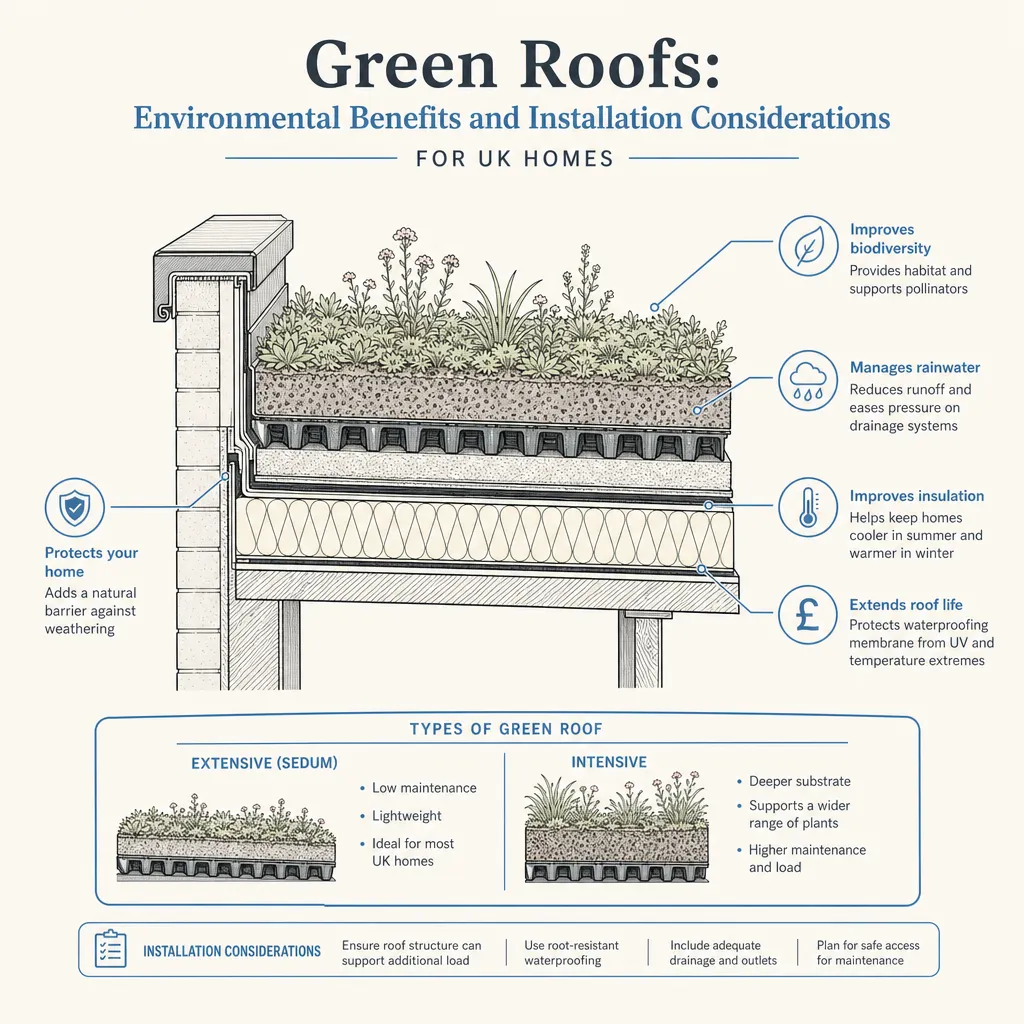
Green roof or living wall | Flat-roofed extensions and garages | May need permission; structural check required | Additional loading without engineering sign-off |
Which improvement should you prioritise?
- Choose external shading if overheating is concentrated in glazed rooms facing south or west.
- Upgrade loft insulation first if the property is pre-2000 and the loft is uninsulated — this also improves winter energy performance.
- Ask a retrofit assessor if the home is already well insulated but still overheats — ventilation or airtightness is likely the cause.
- Commission a structural engineer before adding a green roof to an existing flat roof.
- Check with your local planning authority before any external works if the property is listed or in a conservation area.
How to reduce flood risk and manage surface water
Flood resilience measures fall into two categories: resistance (keeping water out) and resilience (limiting damage when water enters). The Environment Agency recommends combining both approaches for properties in flood-risk areas.
Practical flood and surface-water measures:
- Install flood barriers, raised door thresholds, and air-brick covers for resistance.
- Replace impermeable driveways with permeable paving, gravel, or planted surfaces — this usually does not require planning permission if water drains naturally or to a soakaway.
- Fit non-return valves to drains and soil pipes to prevent back-flooding from overwhelmed sewers.
- Raise electrical sockets, consumer units, and boilers above the likely flood level.
- Install a rainwater harvesting tank to capture roof runoff, reducing pressure on the drainage system and providing a reserve for garden irrigation.
Red flags that suggest professional assessment is needed:
- The property has flooded previously, even partially.
- You have a basement or converted lower-ground floor.
- The garden pools after moderate rainfall and drains slowly.
- The property is within a Flood Zone 2 or 3 area (check the Environment Agency map).
- Your buildings insurance has been declined or heavily loaded due to flood risk.
Energy resilience: insulation, heat pumps, and solar
Improving energy performance reduces bills, lowers carbon output, and makes the home less dependent on volatile fuel prices. The recommended sequence for most UK properties is:
- Insulate and draught-proof first. Loft, cavity wall, or solid-wall insulation reduces heat loss in winter and heat gain in summer. A poorly insulated home requires a larger, more expensive heat pump to maintain comfort.
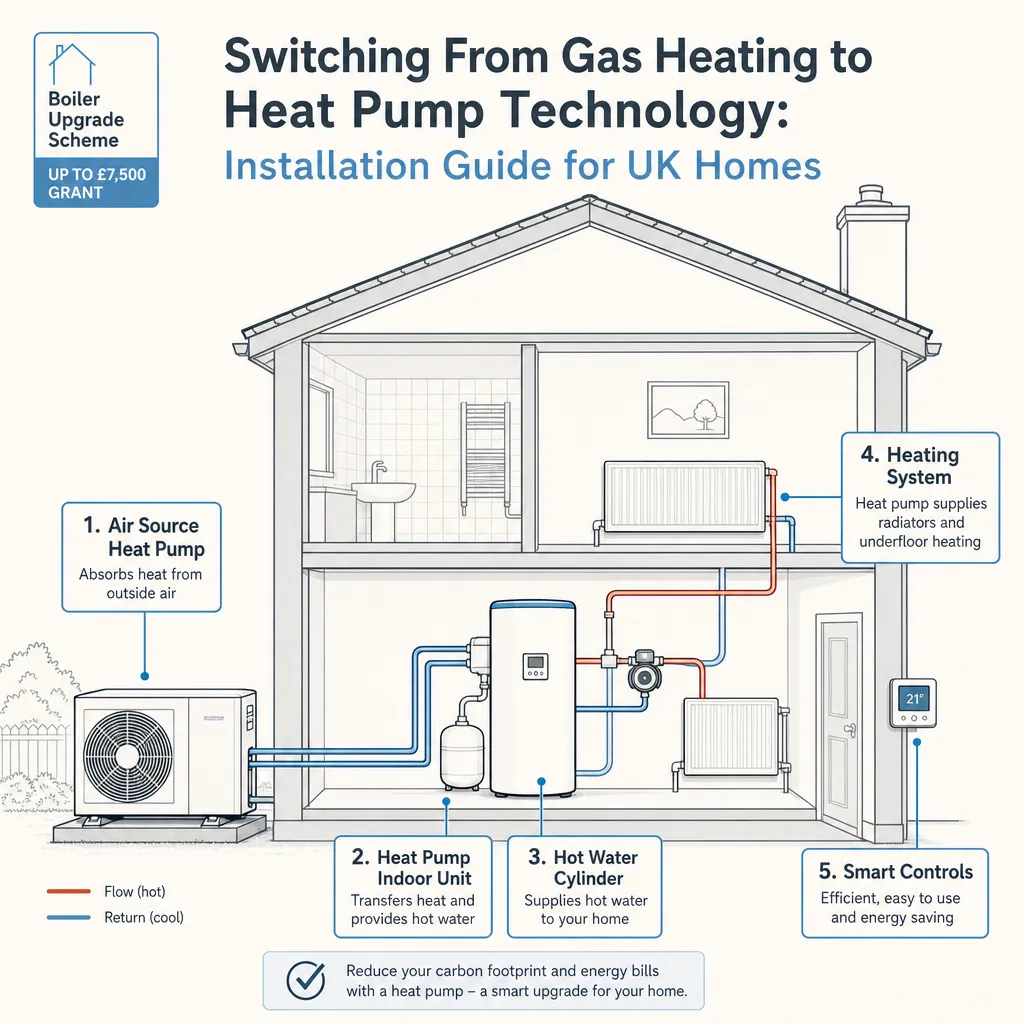
- Install a heat pump. Air-source heat pumps are eligible for the Boiler Upgrade Scheme (BUS), which provides a £7,500 voucher. Correct sizing — using MCS-compliant heat loss calculations — is essential. PAS 2035 assessment is required for most grant-funded routes.
- Add solar PV. South-facing roof space of 20 m² or more can typically accommodate a 4–5 kWp system. Most residential installations fall within permitted development rights.
- Consider battery storage. A 5–15 kWh battery increases self-consumption of solar generation and supports off-peak tariff charging.
For grant eligibility, check the ECO4 guidance on GOV.UK and the Great British Insulation Scheme.
Important limitations
This article provides general information only. The right combination of climate-adaptation measures depends on the specific construction, location, condition, and occupancy of your property. Planning rules, building regulations, and grant schemes change regularly and vary by local authority. Moisture and ventilation risks from insulation and airtightness improvements can be serious if not properly assessed. A qualified retrofit assessor should evaluate your home before major works are committed to. Nothing in this article constitutes structural, planning, legal, or financial advice.
When this becomes urgent
Seek professional advice promptly if:
- You have experienced condensation, mould growth, or unexplained damp — particularly following insulation works.
- Your property has flooded, even partially.
- You are planning a heat pump installation and are unsure whether your insulation levels are sufficient.
- You are applying for ECO4 or GBIS funding — a PAS 2035-compliant whole-house assessment is required before works begin.
- You are in a flood risk zone and have not reviewed your buildings insurance cover recently.
What to ask a qualified professional
Before instructing a retrofit assessor, energy-efficiency consultant, or installer:
- Are you a PAS 2035-certified retrofit assessor, and will you produce a Medium-Term Improvement Plan showing a sequenced upgrade pathway?
- How will you assess overheating and ventilation requirements before recommending further insulation?
- How will moisture risk be managed in my property — particularly if it has solid walls or traditional lime construction?
- Is the heat pump sized using MCS-compliant heat loss calculations, and at what flow temperature will it operate?
- Which grant funding schemes am I eligible for, and will you manage the application process?
- What certificates, warranties, and completion documents will I receive?
When to get professional help
Climate adaptation works interact in ways that are not always obvious — insulation without adequate ventilation causes condensation and mould; flood barriers without non-return valves can worsen internal flooding. A retrofit assessment provides a whole-house view before individual measures are commissioned, reducing the risk of costly sequencing mistakes. An energy-efficiency consultant can model proposed improvements against your specific property, and a heat pump survey confirms whether your home is suitably insulated for low-carbon heating.
How Housey can help
Housey connects UK homeowners with qualified professionals offering retrofit assessments, guidance from energy-efficiency consultants, and heat pump surveys. Describe your property and the improvements you are considering, and receive competitive quotes from vetted local specialists.
Frequently asked questions
Do I need planning permission for external wall insulation in the UK?
In most cases, external wall insulation is permitted development in England if it does not project more than 0.16 m from the original wall face and the property is not listed or in a conservation area. Always check with your local planning authority — rules can vary by area, property type, and whether an Article 4 direction is in force.
What is PAS 2035 and does it apply to my retrofit project?
PAS 2035:2023 is the UK specification for domestic retrofit. It requires a qualified retrofit assessor to survey your home and produce an improvement plan before works begin. Compliance is required for most government grant funding routes, including ECO4 and the Great British Insulation Scheme, to prevent moisture and ventilation failures.
Does a heat pump work well in an older, uninsulated UK home?
Heat pumps work less efficiently in poorly insulated homes and require higher flow temperatures, which reduces the coefficient of performance and increases running costs. Most guidance — including from CIBSE and the Energy Saving Trust — recommends improving insulation before installing a heat pump to right-size the system and keep running costs manageable.
What is the Boiler Upgrade Scheme grant?
The Boiler Upgrade Scheme (BUS) provides a £7,500 grant towards an air-source or ground-source heat pump for eligible properties in England and Wales. Applications are made by the MCS-certified installer, not the homeowner. Check GOV.UK for current eligibility rules, as criteria and funding levels are subject to change.
Sources and further reading
- ECO4 guidance for homeowners — GOV.UK
- Flood Map for Planning — Environment Agency
- Boiler Upgrade Scheme guidance — GOV.UK
- TM59: Assessment of overheating risk in homes — CIBSE
- UK Climate Change Risk Assessment 2022 — Climate Change Committee
- Great British Insulation Scheme — GOV.UK
Useful next reads
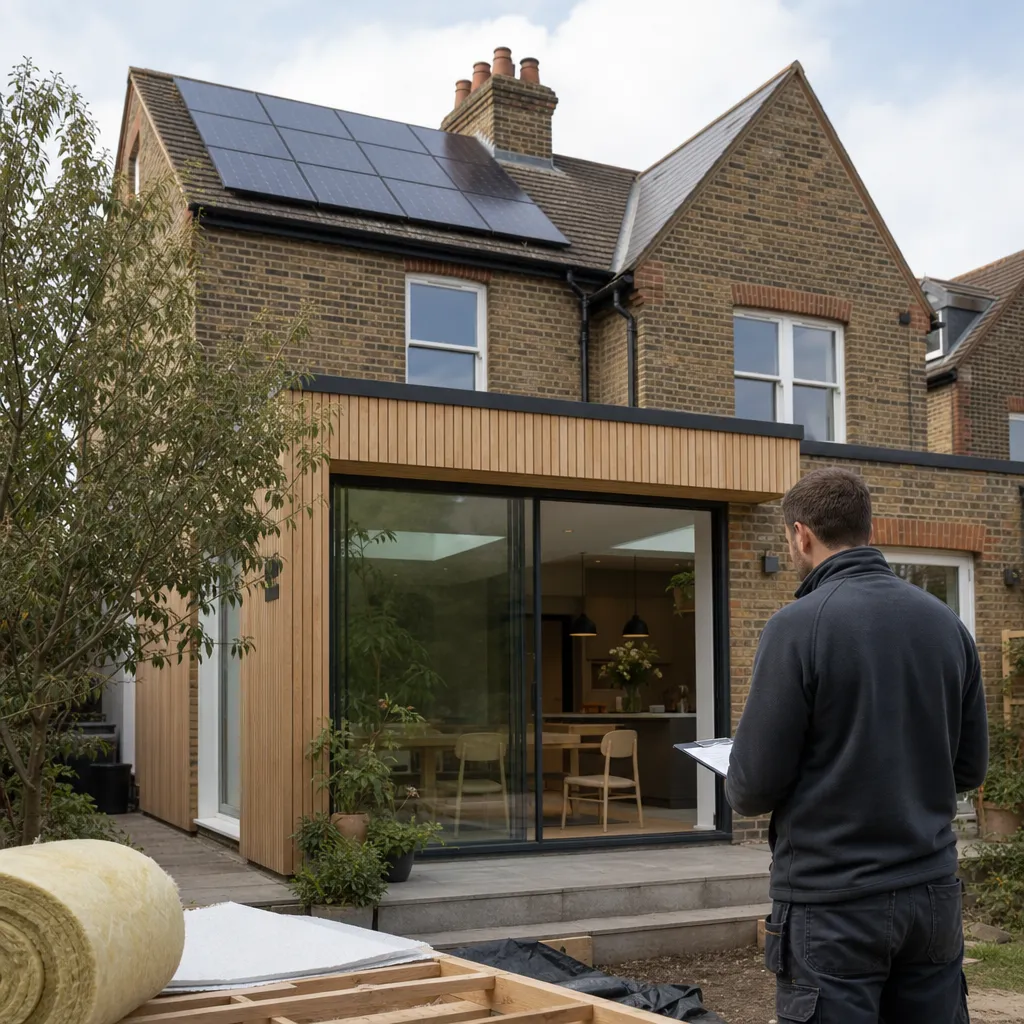 Energy & Retrofit
Sustainable Home Upgrades During Renovation
During a renovation, the most effective sustainable upgrades follow a fabric-first sequence: start with loft and wall insulation, improve ventilation, then upgrade heating.
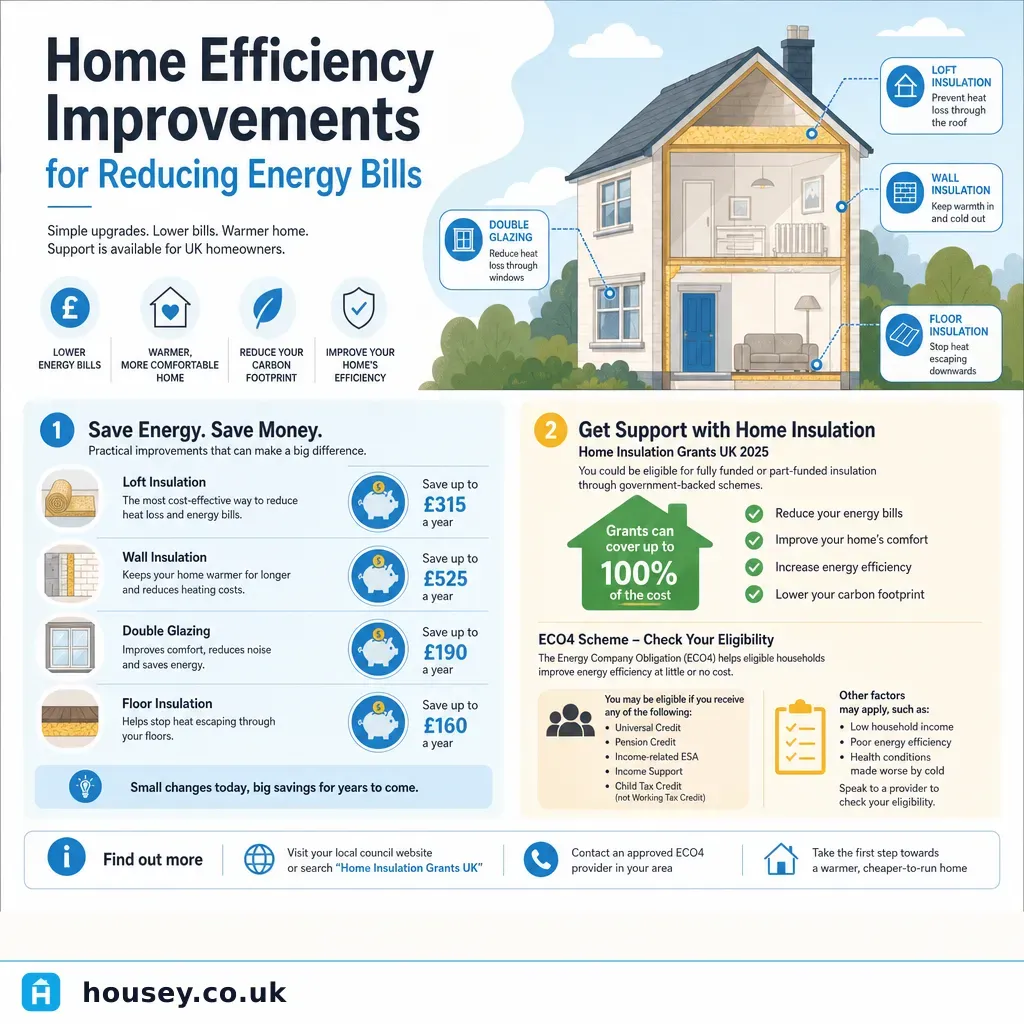 Energy & Retrofit
Home Efficiency Improvements for Reducing Energy Bills
The most cost-effective UK home efficiency improvements are usually loft insulation, cavity wall insulation, draught-proofing, and upgrading heating controls.
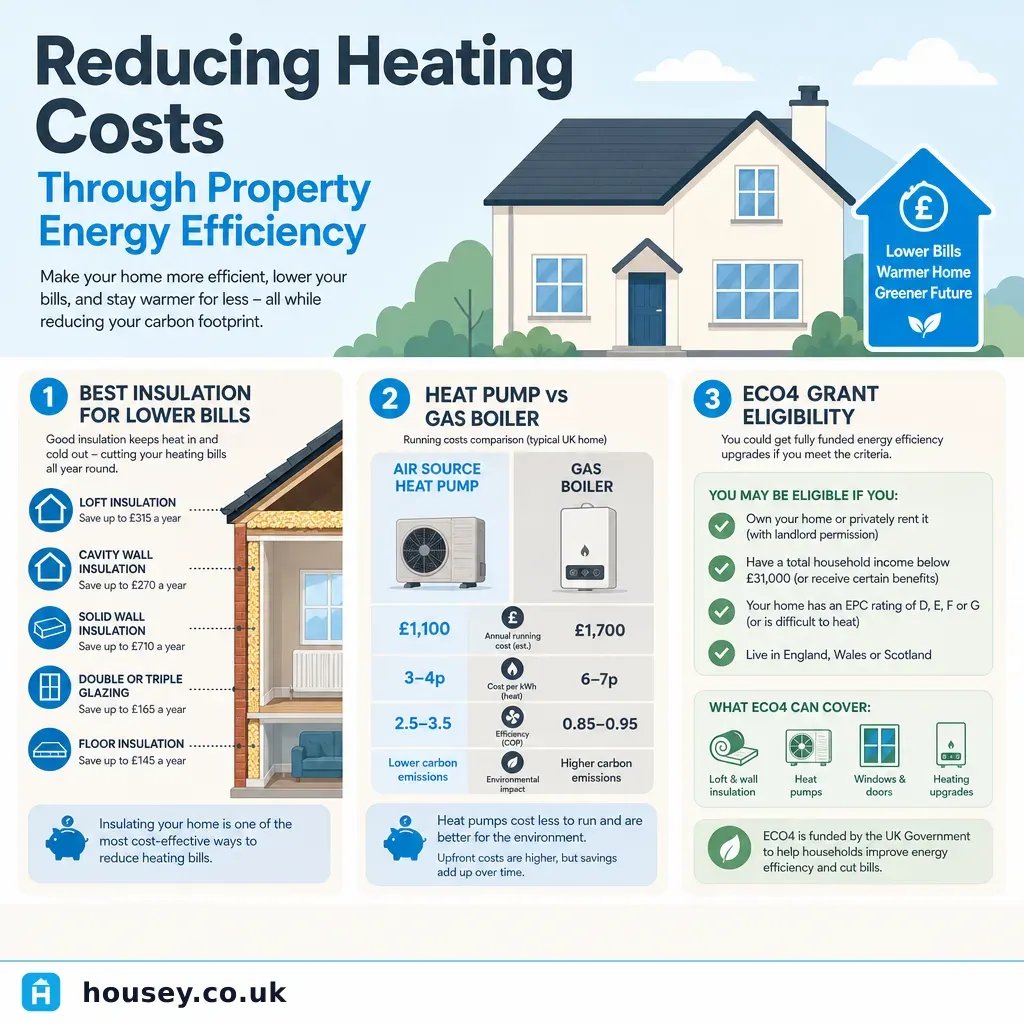 Energy & Retrofit
Reducing Heating Costs Through Property Energy Efficiency
Reducing heating costs starts with identifying where heat is lost — typically walls (30–35%), roof (20–25%), and windows.
 Energy & Retrofit
Switching From Gas Heating to Heat Pump Technology: Installation Guide
Switching from gas to a heat pump requires a heat loss calculation, correctly sized equipment, and often radiator upgrades before installation.
 Energy & Retrofit
Green Roofs: Environmental Benefits and Installation Considerations
A green roof supports vegetation on a waterproof membrane above your building.