Acquiring Multiple Properties in the Cotswolds: Conveyancing and Bulk Transaction Essentials
By Housey · Last reviewed 7th of May 2026

Acquiring Multiple Properties in the Cotswolds: Conveyancing and Bulk Transaction Essentials
When you are buying several properties in one area — whether as a holiday-let portfolio, a residential investment, or a mix of both — the transaction becomes significantly more complex than a single purchase. The Cotswolds adds its own particular considerations: a high concentration of listed buildings, conservation areas, Article 4 directions affecting short-term lets, and a property market where non-standard construction is common and mortgage availability varies considerably by property type.
Key points
- Each property in a bulk acquisition requires its own separate title register search, local authority search, and conveyancing file — even where one solicitor handles all files simultaneously.
- Stamp Duty Land Tax (SDLT) Multiple Dwellings Relief (MDR) was abolished for most residential transactions from 1 June 2024 (Spring Budget 2024); specialist tax advice before exchange is essential, as SDLT cannot be corrected after completion.
- Many Cotswolds properties are Grade II or Grade II* listed, which restricts permitted development and requires listed building consent for most internal and external alterations.
- Article 4 Directions affecting short-term lets are active or under consideration across parts of the Cotswolds, including areas within Cotswold District Council; properties intended for holiday-let use may require planning permission for change of use.
- Portfolio landlord rules apply to mortgage borrowers with four or more mortgaged buy-to-let properties and require additional affordability stress testing; some lenders restrict the number of properties they will lend on per applicant.
What makes a bulk Cotswolds acquisition different from a single purchase
A bulk acquisition is generally understood as the purchase of two or more properties in a single negotiated transaction, or as near-simultaneous purchases from the same vendor as part of a coordinated investment strategy. The key differences from a single purchase:
- Interdependency risk: transactions are often contractually linked — a vendor may require all properties to complete simultaneously, meaning one title or mortgage problem can delay or collapse the entire deal.
- Tax complexity: SDLT, Capital Gains Tax, and income tax treatment all vary depending on whether you purchase individually, through a limited company, or via a partnership structure.
- Finance constraints: most mortgage lenders impose per-lender property limits; Cotswolds properties with thatched roofs, stone construction, or listed status frequently fall outside standard residential and buy-to-let mortgage criteria.
- Planning sensitivity: the Cotswolds National Landscape and high density of conservation areas and listed buildings means permitted development rights are more restricted than average across much of the region.
- Valuation complexity: a portfolio discount negotiated with the vendor can complicate individual property valuations for mortgage or insurance purposes, as each lender typically requires a separate Red Book valuation.
Conveyancing structure for multiple acquisitions
Conveyancing element | Single property | Multiple properties (bulk) |
|---|---|---|
Title register searches | One | One per property — required individually |
Local authority searches | One | One per property; results can differ significantly between neighbouring villages |
SDLT return | One | Separate return per property; specialist tax advice required |
Mortgage offer | One | Separate offer per property or a portfolio finance facility |
Completion | Single date | Simultaneous (linked) or staggered; linked completions increase risk |
Typical timescale | 8–16 weeks | 12–20+ weeks; longer if any property has title or planning issues |
Your conveyancing solicitor should have demonstrable experience in portfolio or multi-property residential transactions. Not all residential conveyancers handle bulk acquisitions regularly — ask directly before instructing.
Stamp Duty Land Tax and the abolition of Multiple Dwellings Relief
SDLT is charged on each property individually. The 3% additional dwelling surcharge applies to all purchases where the buyer already owns residential property at the end of completion day.
Multiple Dwellings Relief (MDR) — which previously allowed SDLT to be calculated on the average value across all dwellings — was abolished for most transactions from 1 June 2024 following the Spring Budget 2024. Some limited reliefs may remain depending on transaction structure; take specialist SDLT advice before exchange.
For transactions involving six or more dwellings purchased in a single transaction, non-residential SDLT rates may apply, which can be materially lower than residential rates. This is a complex area where the facts of the transaction — including how the contract is structured — significantly affect the outcome.
SDLT errors cannot be corrected after completion. Always take specialist legal and tax advice before exchanging contracts.
Planning and listed building considerations in the Cotswolds
The Cotswolds National Landscape (formerly the AONB) covers a significant part of the region. Within it and across the wider area:
- Conservation areas: some permitted development rights are restricted, and works affecting the character of buildings may require prior approval or full planning permission.
- Listed buildings (Grade II and Grade II*): listed building consent is required for any works affecting the character of a listed building, internally or externally. A disproportionately high share of Cotswolds residential stock is listed compared with the national average.
- Article 4 Directions for short-term lets: several local authorities in the Cotswolds have introduced or consulted on Article 4 Directions requiring planning permission to change a dwelling's use to a short-term holiday let. Check with the relevant local planning authority — typically Cotswold District Council, West Oxfordshire District Council, or Stroud District Council — before assuming a property can operate as a holiday let without consent.
- Flood risk: parts of the Cotswolds — particularly the Churn, Evenlode, and Windrush valleys — carry significant flood risk. A flood risk search should be obtained for each property, as insurance costs and mortgage availability may be affected.
Valuation for bulk purchases
Individual Red Book (RICS-compliant) valuations are typically required by mortgage lenders for each property. Even for cash purchases or single-facility finance, independent valuations for each property are advisable to confirm the agreed price reflects individual market value, to support buildings insurance at accurate reinstatement values, and to provide a documented basis for SDLT calculations.
For Cotswolds properties specifically, valuers should be instructed with local market experience, as the combination of listed status, non-standard construction, flood risk, and holiday-let income potential requires local knowledge to assess accurately. You can request Red Book valuation surveys through Housey from RICS-registered valuers familiar with the area.
What not to assume when buying a Cotswolds portfolio
- Do not assume planning permission for short-term letting is automatic. Depending on the property and local authority, operating as a holiday let may constitute a material change of use requiring planning consent. This varies by district and is an active policy area across the Cotswolds.
- Do not assume all properties can be mortgaged. Thatched roofs, unlisted unconventional construction, and properties with unusual features often fall outside standard residential and buy-to-let mortgage criteria.
- Do not assume a vendor's portfolio discount is tax-neutral. A purchase price below individual market values does not reduce SDLT liability if HMRC considers the arrangement to have been structured to reduce tax.
- Do not assume listed building consent will be granted for conversion or upgrading works. Properties requiring significant work to achieve your intended use may face restrictions on insulation methods, window replacement, or internal reconfigurations.
- Do not assume search results from one village apply to a neighbouring one. Local authority boundaries in the Cotswolds frequently place adjacent villages in different districts with different planning policies, search results, and Article 4 coverage.
Important limitations
This article is general information about conveyancing and planning considerations for bulk property acquisitions in the Cotswolds area of England. It is not legal, tax, financial, or planning advice. SDLT rates, planning policy, and mortgage lending criteria change; all rules and figures should be verified with qualified professionals at the time of your transaction. Property law in Scotland and Northern Ireland differs from that in England and Wales. Always take specialist legal and tax advice before exchanging contracts.
What to ask a qualified professional
Ask your conveyancing solicitor:
- Do you have specific experience handling portfolio or multi-property simultaneous completions?
- How will you manage a title or planning issue that affects only one property in a linked transaction?
- What searches do you recommend for each property given its location, age, and intended use?
- Have you previously dealt with Cotswolds listed buildings or conservation area properties?
Ask your tax adviser:
- What is the most SDLT-efficient acquisition structure for my specific circumstances?
- Should I purchase individually, through a limited company, or another vehicle?
- What are the CGT and income tax implications of my intended use — holiday let versus assured shorthold tenancy?
- Does any remaining SDLT relief apply to this transaction structure?
Ask the local planning authority or a planning consultant:
- Is this property listed, and what consent is required for the works I intend to carry out?
- Does an Article 4 Direction affecting short-term lets apply to this property?
- What use class is the property currently in, and does my planned use require a change of use application?
Ask your mortgage broker or lender:
- Do your portfolio landlord rules apply to this acquisition?
- Will you lend on non-standard construction — thatch, Cotswold stone, timber frame?
- What Red Book valuations do you require, and which RICS-registered valuers do you accept?
When to get professional help
Appoint a solicitor experienced in portfolio transactions, a specialist tax adviser, and ideally a planning consultant before making any formal offer on a bulk Cotswolds acquisition. Professional involvement is particularly urgent:
- When a vendor requires simultaneous completion on multiple properties.
- Before agreeing a price that reflects a portfolio or bulk discount.
- If any property is listed, in a conservation area, or intended for short-term letting.
- As soon as you know the acquisition will result in you holding four or more mortgaged residential properties.
How Housey can help
Housey can connect you with conveyancing solicitors experienced in portfolio transactions who handle multi-property residential acquisitions, as well as specialists for Red Book valuation surveys for each property in the acquisition. Once transactions complete, you can also arrange professional property photography and floorplans to market your properties effectively.
Frequently asked questions
Can one solicitor handle all the properties in a bulk Cotswolds purchase?
Usually yes, provided the firm has no conflict of interest and sufficient capacity. A single solicitor handling all files makes coordination — especially for simultaneous completions — considerably more straightforward. Confirm the firm has specific experience with multi-property residential transactions, not just high-volume standard conveyancing, before instructing.
Is Multiple Dwellings Relief still available in 2026?
MDR was abolished for most residential transactions from 1 June 2024 following the Spring Budget 2024. Very limited reliefs may apply in specific transaction structures. Take specialist SDLT advice from a solicitor or tax adviser before exchange — SDLT errors cannot be corrected after completion, and the rules in this area changed materially in 2024.
Do I need a separate survey for each Cotswolds property?
Yes. Each property is a distinct asset with its own condition, construction type, and defect risk. Mortgage lenders will require a separate Red Book valuation for each. A building survey — RICS Level 2 or Level 3 depending on age and condition — is also advisable for each property, separately from the lender's valuation.
Does buying in the Cotswolds National Landscape affect what I can do with the properties?
It can significantly. The National Landscape designation supports planning policies protecting character and restricting some development. Permitted development rights are more restricted in conservation areas, listed building status adds further controls on alterations, and local authorities may have policies specifically restricting short-term let use. A planning consultant with Cotswolds experience is advisable before committing.
What is the typical conveyancing timeline for a bulk purchase?
Typically 12 to 20 weeks or more, depending on the number of properties, title complexity, search results, and mortgage requirements. Linked simultaneous completions add risk: a problem with one property — an unresolved title question or a delayed mortgage offer — can delay completion on all others in the transaction.
Sources and further reading
- Stamp Duty Land Tax reliefs and exemptions — GOV.UK / HMRC
- Spring Budget 2024 — HM Treasury
- RICS Valuation — Global Standards (Red Book) — RICS
- Listed buildings — Historic England — Historic England
- Cotswolds National Landscape planning guidance — Cotswolds Conservation Board
- Short-term lets: planning rules in England — GOV.UK
Useful next reads
 Buying & Moving
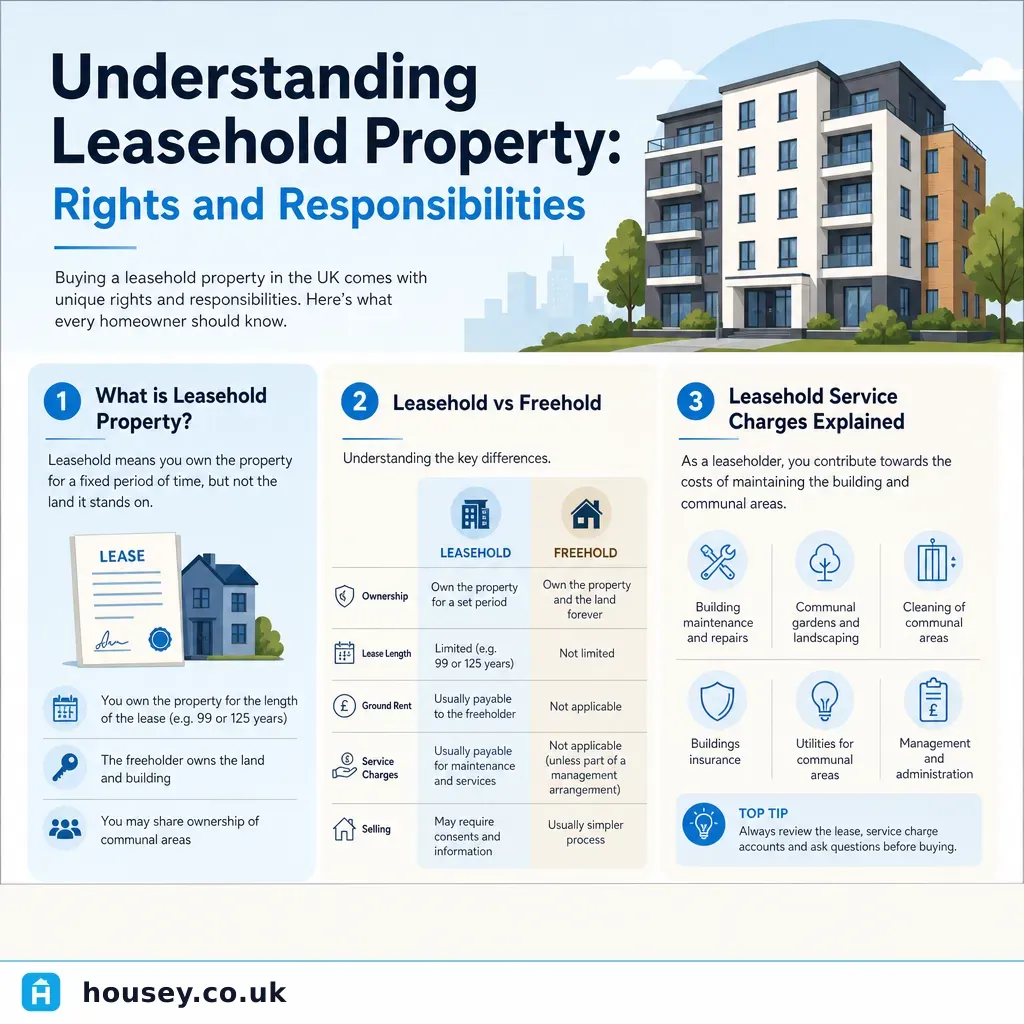
Understanding Leasehold Property: Rights and Responsibilities
Leasehold means you own a time-limited interest in a property while the freeholder owns the land and building.
 Buying & Moving
Navigating Simultaneous Purchase and Sale of Property
When buying and selling simultaneously in England and Wales, both sets of contracts are exchanged on the same day — this is called simultaneous exchange.
 Buying & Moving
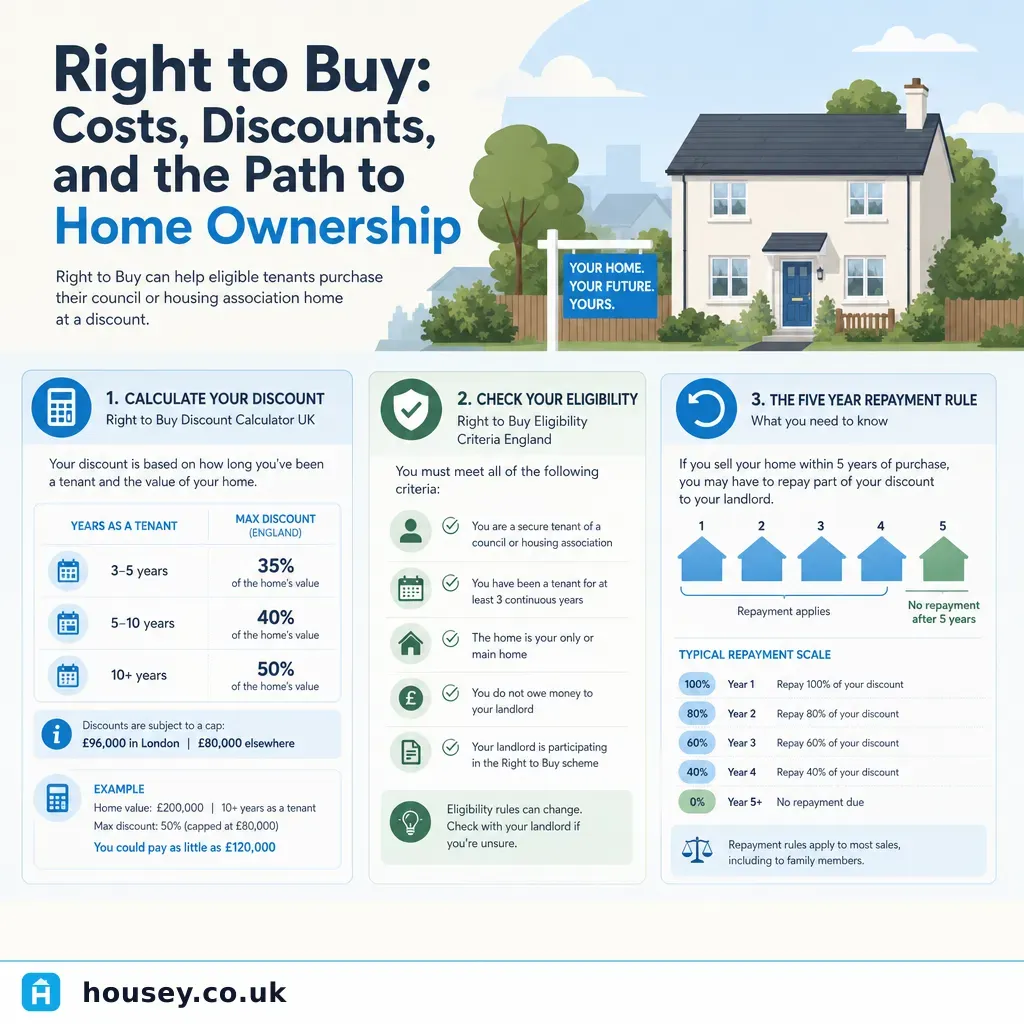
Right to Buy: Costs, Discounts, and the Path to Home Ownership
Right to Buy lets eligible council tenants in England buy their home at a government-funded discount — between 35% and 70% of its value, depending on tenancy length and property type.
 Buying & Moving
Essential Steps to Selling Your Home Successfully
Selling your home successfully in the UK involves obtaining a valid EPC, choosing an estate agent or alternative method, instructing a solicitor or conveyancer early, and completing the Seller's Property Information Form accurately.
 Buying & Moving
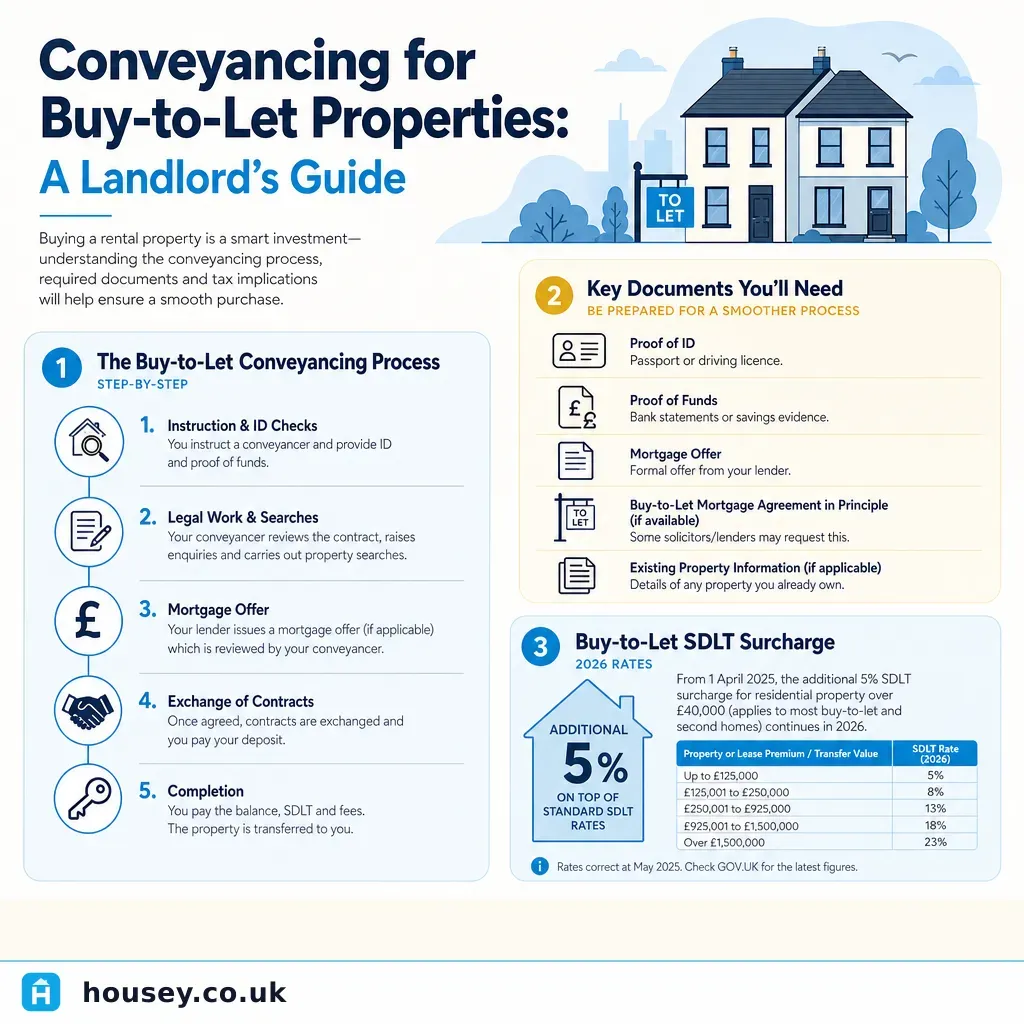
Conveyancing for Buy-to-Let Properties: A Landlord's Guide
Buy-to-let conveyancing follows the same legal process as any residential purchase but adds several layers: a 5% SDLT additional dwelling surcharge in England, review of any existing tenancy agreements, checking local authority licensing requirements, and ensuring buy-to-let mortgage conditions are correctly recorded.