Navigating Simultaneous Purchase and Sale of Property
By Housey · Last reviewed 24th of May 2026

Navigating Simultaneous Purchase and Sale of Property
Most UK homeowners who are not first-time buyers face the same challenge: they need to sell their current property to fund the next purchase, yet they also need to secure the new home before someone else does. Managing both transactions in parallel creates a property chain — and the longer or more complex the chain, the greater the risk of delays, collapses, and last-minute renegotiations. Understanding how the process works, and where the risks concentrate, is essential before you put either property on the market.
Key points
- Simultaneous exchange of contracts — where both sale and purchase legally commit on the same day — is the standard mechanism used in England and Wales when buying and selling at the same time.
- Mortgage offers in the UK are typically valid for three to six months; if a chain stalls and a new offer is required, the fresh lender valuation may reflect different market conditions.
- Bridging finance can replace sale proceeds in a broken or delayed chain but typically costs 0.5–1.5% interest per month plus arrangement fees of 1–2% of the loan amount.
- Industry data from Propertymark and others consistently indicates that 25–35% of agreed property sales in England and Wales fall through before exchange, making chain collapse a material risk in every transaction.
- In Scotland, the missive system creates a legally binding commitment earlier in the process than in England and Wales, reducing — though not eliminating — chain collapse risk.
How simultaneous exchange works in England and Wales
When you are buying and selling at the same time, your solicitor coordinates with every other solicitor in the chain to agree a single exchange date. On exchange day:
- Every party in the chain signs their respective contracts.
- Deposits — usually 10% of the purchase price — transfer down the chain.
- A completion date, typically one to four weeks after exchange, is agreed by all parties simultaneously.
If any party in the chain cannot exchange on the agreed day, the entire chain holds until they can — or until it collapses. This is why a chain of four or five properties can stall because of an issue at either end that has nothing to do with your own transaction.
Which approach suits your situation?
Deciding how to manage a simultaneous purchase and sale depends on your financial position, risk tolerance, and local market conditions.
Approach | Best for | Risk | Typical additional cost |
|---|---|---|---|
Sell first, rent temporarily | Risk-averse sellers; strong buyer markets | Low — no onward chain risk on purchase | Rental costs, double-move, storage fees |
Buy first using bridging finance | Strong buyers in rising markets where speed matters | High — two mortgages until sale completes | Bridging interest (0.5–1.5%/month) + arrangement fee |
Simultaneous exchange (standard chain) | Most homeowners in most market conditions | Medium — chain collapse risk | Standard conveyancing costs |
New-build part-exchange | Sellers of older property buying from a developer | Low chain risk on your side | Developer often buys below market value |
Decision tree: choosing your approach
- Choose sell first if your equity is fully tied up in your current property and bridging finance is not affordable, or if you want the certainty of knowing exactly how much you have to spend before committing to a purchase price.
- Choose buy first with bridging if you have found a rare or time-sensitive property, you have sufficient equity and income to service two loans short-term, and your current home is likely to sell quickly at the asking price.
- Choose standard simultaneous exchange if you have found both a buyer for your sale and a property to purchase and want to link them — this is the default approach for most UK sellers and requires no additional finance.
- Choose part-exchange if you are buying a new-build from a developer who offers the scheme and you accept a likely discount on your current property's assessed value in exchange for speed and certainty.
- Ask a solicitor and mortgage broker before proceeding if you have a short-lease leasehold, outstanding charges on the title, or complex mortgage arrangements involving portability or early repayment charges.
Managing the chain
A property chain involves multiple parties, each with their own solicitor, mortgage lender, survey, and set of enquiries. The most common weak points that cause delays or collapse:
- Survey issues on any property in the chain. A poor condition report mid-chain can trigger renegotiation or withdrawal by the buyer of that property, stalling everyone above and below.
- Mortgage down-valuation. If a lender's valuer assesses a property below the agreed price, the buyer may need to find additional funds or renegotiate the purchase price.
- Slow leasehold management pack requests. These can take four to six weeks on complex blocks and hold the entire chain while everyone waits.
- Outstanding building regulations certificates or indemnity insurance requirements discovered during solicitor enquiries.
- Loss of buyer finance. If a buyer's circumstances change — redundancy, a credit event — their mortgage offer may be withdrawn without warning, collapsing their ability to proceed.
Red flags that your chain is in trouble
The following signs do not guarantee collapse, but each warrants an immediate conversation with your solicitor:
- Any party in the chain going silent with their solicitor for more than two consecutive weeks without explanation.
- A buyer further down the chain requesting a price reduction as exchange approaches.
- Survey results or mortgage valuations are not being communicated across the chain within expected timescales.
- A solicitor in the chain changes firm mid-transaction, causing a file handover delay.
- A lender's mortgage offer is nearing its expiry date without exchange having been agreed across the whole chain.
What happens if the chain collapses
If the chain falls apart before exchange, no money legally changes hands beyond any deposit that has moved (which must be returned). However, you may have already incurred non-recoverable costs:
- Solicitor search fees and work already done: typically £200–£600.
- Survey fees on the property you intended to buy: £400–£1,600 depending on survey type and property size.
- Mortgage arrangement or valuation fees: £150–£1,500 depending on the product and lender.
None of these costs are typically recoverable from the other party in most cases. If your current home was already sold subject to contract (SSTC), you may also lose that buyer and need to remarket, potentially in a changed market.
Conveyancing and professional coordination
Using a solicitor with active experience in chain coordination — rather than simply transactional conveyancing — makes a practical difference to outcomes. Before instructing, confirm:
- Whether they proactively chase other solicitors in the chain, or only respond to incoming queries.
- Whether they use a progress-tracking portal that all parties in the chain can access.
- What their approach is if one part of the chain stalls — can they advise on bridging or other contingency arrangements?
Housey's conveyancing service can connect you with solicitors experienced in linked sale-and-purchase transactions. If you need a professional valuation to confirm your purchase price before committing to simultaneous exchange, our valuation surveys service can match you with a RICS-registered valuer.
Important limitations
This article provides general guidance on the process of simultaneous buying and selling in England and Wales. Scotland and Northern Ireland operate under different legal systems — in Scotland, the missive system creates legal commitment at an earlier stage in the process. Nothing in this article constitutes legal, financial, or conveyancing advice. Property chains are complex and fact-specific; always instruct a qualified solicitor or licensed conveyancer before proceeding.
What to ask a qualified professional
Before instructing a conveyancer or financial adviser for a simultaneous purchase and sale, ask:
- What happens to my legal fees if the chain collapses before exchange?
- Can you act on both my sale and purchase, or does a conflict of interest require separate firms?
- How do you handle chain coordination — do you chase proactively, and how often will you update me?
- If my purchase mortgage offer is nearing its expiry, what options are realistically available to me?
- Is bridging finance a viable option given my income and equity position — and can you refer me to a regulated mortgage broker?
- What leasehold or title issues on my current property are most likely to cause a delay?
When to get professional help
Instruct a solicitor as soon as an offer is agreed on your sale or a purchase offer is accepted — not only once both are in place. Early instruction allows searches and enquiries to begin immediately, reducing the overall timeline. Seek specialist advice if:
- Your chain has more than four properties.
- A leasehold property in the chain has fewer than 80 years remaining on its lease.
- You are considering bridging finance — speak to a regulated mortgage broker, not only your bank.
- A survey has revealed significant defects on any property in the chain that may trigger renegotiation.
How Housey can help
Housey makes it easier to find professionals who understand the pressures of linked sale-and-purchase transactions. Our conveyancing service connects you with experienced solicitors and licensed conveyancers, and our valuation surveys service can help you confirm the market value of the property you are buying before committing to exchange.
Frequently asked questions
Can I exchange on my sale and purchase on different days?
In most cases, no. Simultaneous exchange is strongly preferred when you are both selling and buying. If you exchanged on your sale without having exchanged on your purchase, you would be legally committed to vacate on the agreed completion date but would have no legal certainty about your onward property. Your solicitor will co-ordinate both exchanges to happen on the same day.
How long does a typical chain take to exchange?
Most chains exchange within 10–14 weeks of the initial offer being agreed, though chains involving leasehold properties, new-builds, or complex titles regularly take 16–20 weeks. A slow solicitor at any single point in the chain affects every other participant's timeline, which is why early instruction matters.
What is gazumping and when does it happen?
Gazumping occurs when a seller accepts a higher offer from a different buyer after having agreed a sale with you, but before exchange of contracts. Gazundering is the reverse — a buyer reduces their offer at the last moment. Both are legal in England and Wales up until exchange, which is why exchanging as quickly as possible protects all parties.
Do I need two separate solicitors for my sale and purchase?
Usually, a single solicitor or conveyancer can act on both your sale and your purchase, provided there is no conflict of interest — which is uncommon in standard residential transactions. Using one firm for both can reduce communication delays and sometimes attracts a combined fee that is lower than two separate instructions.
What is a no-chain property and why does it matter?
A no-chain property is sold by a seller who does not need to buy onward — for example, an empty property following a bereavement, or a landlord selling a tenanted home. Buying no-chain usually means a faster exchange because there is no dependency at the top of the chain, reducing the most common source of delay and collapse.
Sources and further reading
- Buying or selling your home — GOV.UK
- Exchanging contracts and completing — Citizens Advice
- Propertymark housing market report — Propertymark
- Conveyancing Quality Scheme — Law Society of England and Wales
- Stamp Duty Land Tax — HMRC / GOV.UK
Useful next reads
 Buying & Moving
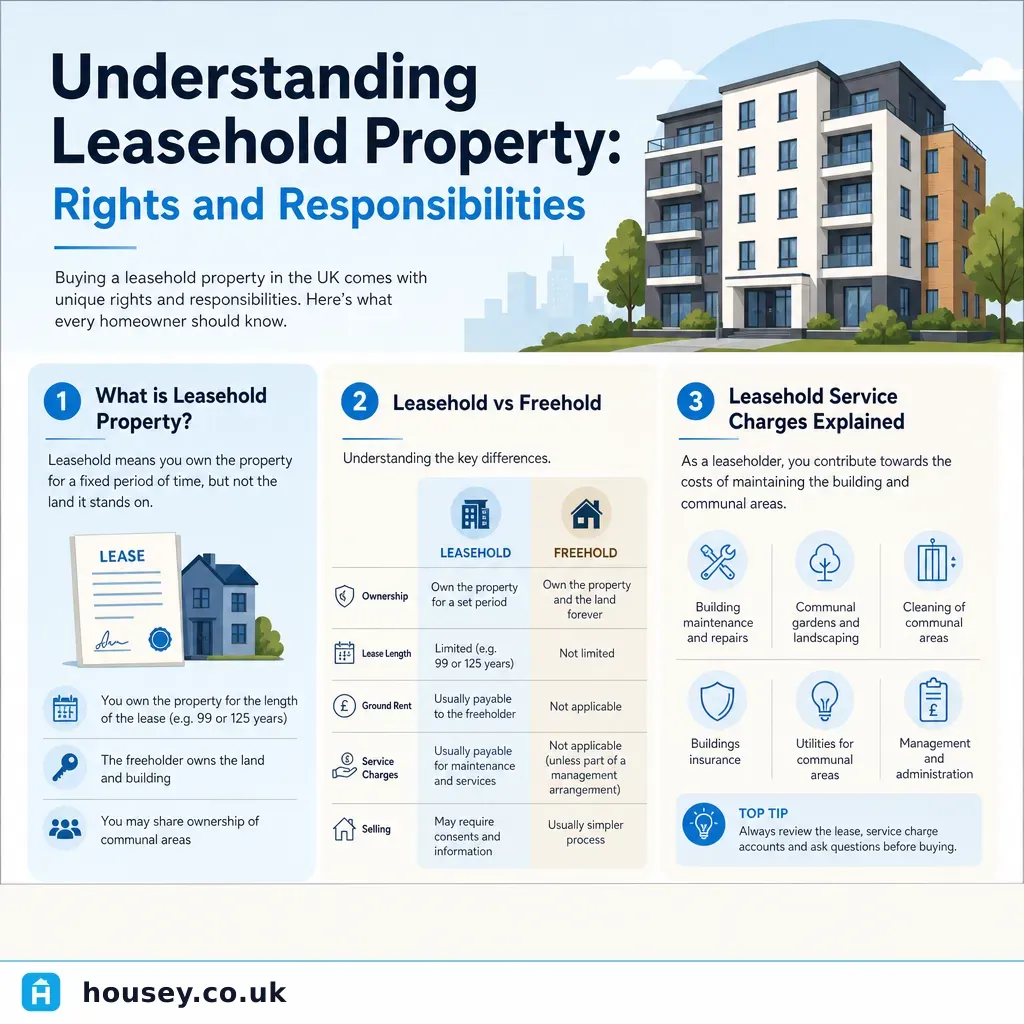
Understanding Leasehold Property: Rights and Responsibilities
Leasehold means you own a time-limited interest in a property while the freeholder owns the land and building.
 Buying & Moving
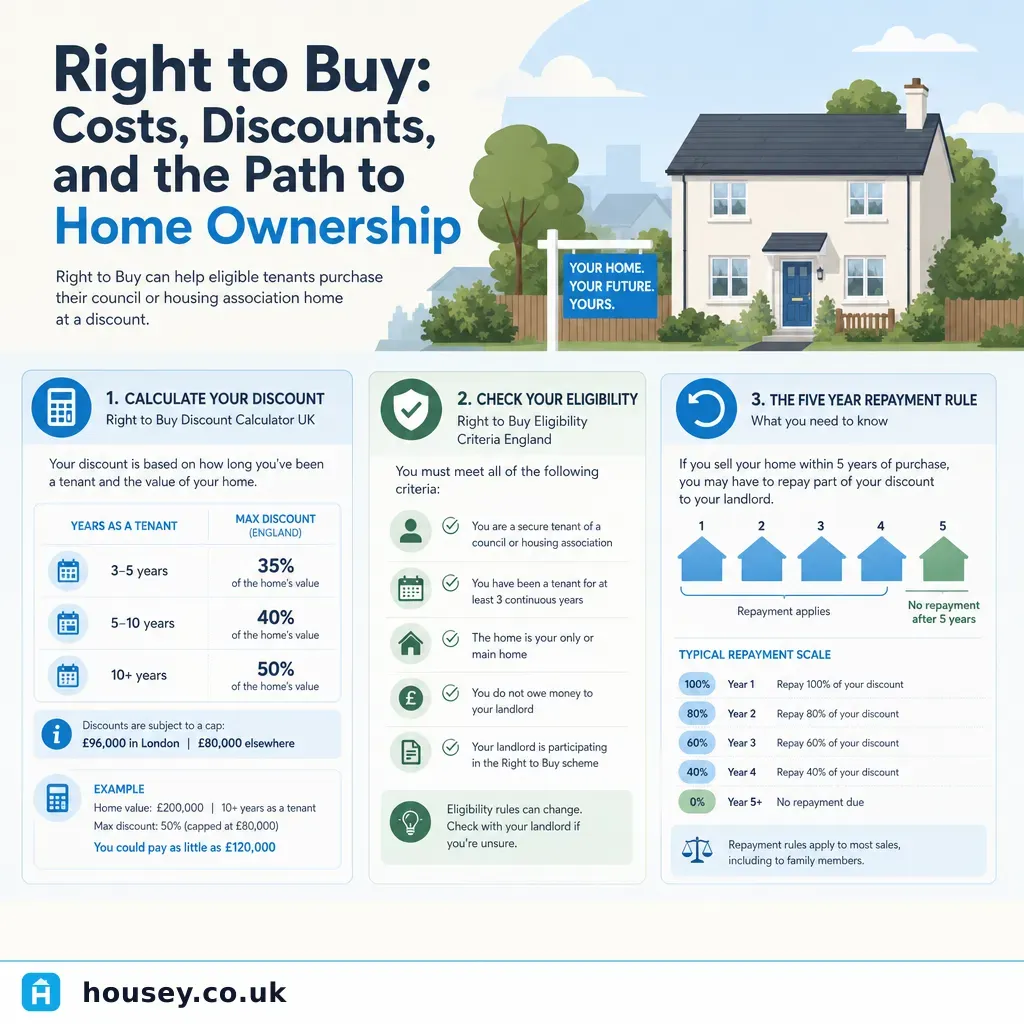
Right to Buy: Costs, Discounts, and the Path to Home Ownership
Right to Buy lets eligible council tenants in England buy their home at a government-funded discount — between 35% and 70% of its value, depending on tenancy length and property type.
 Buying & Moving
Essential Steps to Selling Your Home Successfully
Selling your home successfully in the UK involves obtaining a valid EPC, choosing an estate agent or alternative method, instructing a solicitor or conveyancer early, and completing the Seller's Property Information Form accurately.
 Buying & Moving
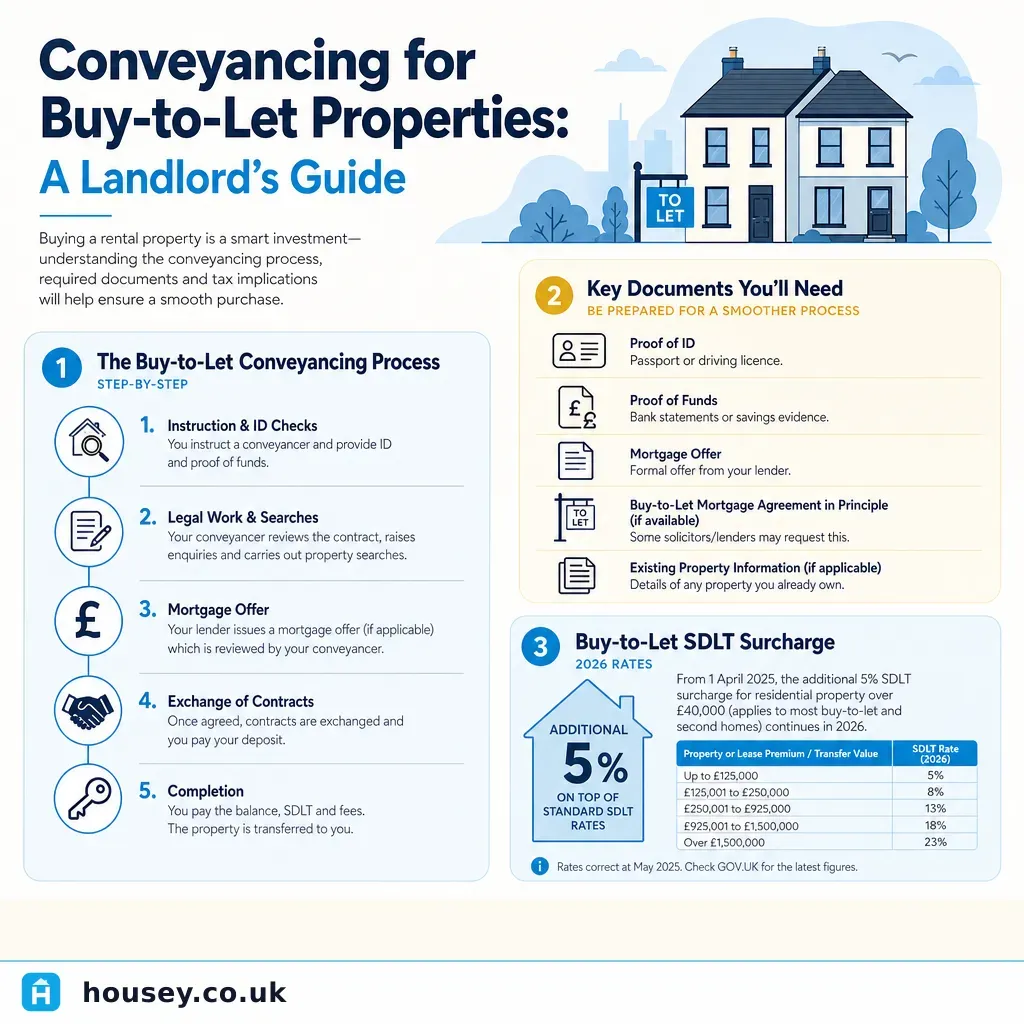
Conveyancing for Buy-to-Let Properties: A Landlord's Guide
Buy-to-let conveyancing follows the same legal process as any residential purchase but adds several layers: a 5% SDLT additional dwelling surcharge in England, review of any existing tenancy agreements, checking local authority licensing requirements, and ensuring buy-to-let mortgage conditions are correctly recorded.
 Buying & Moving
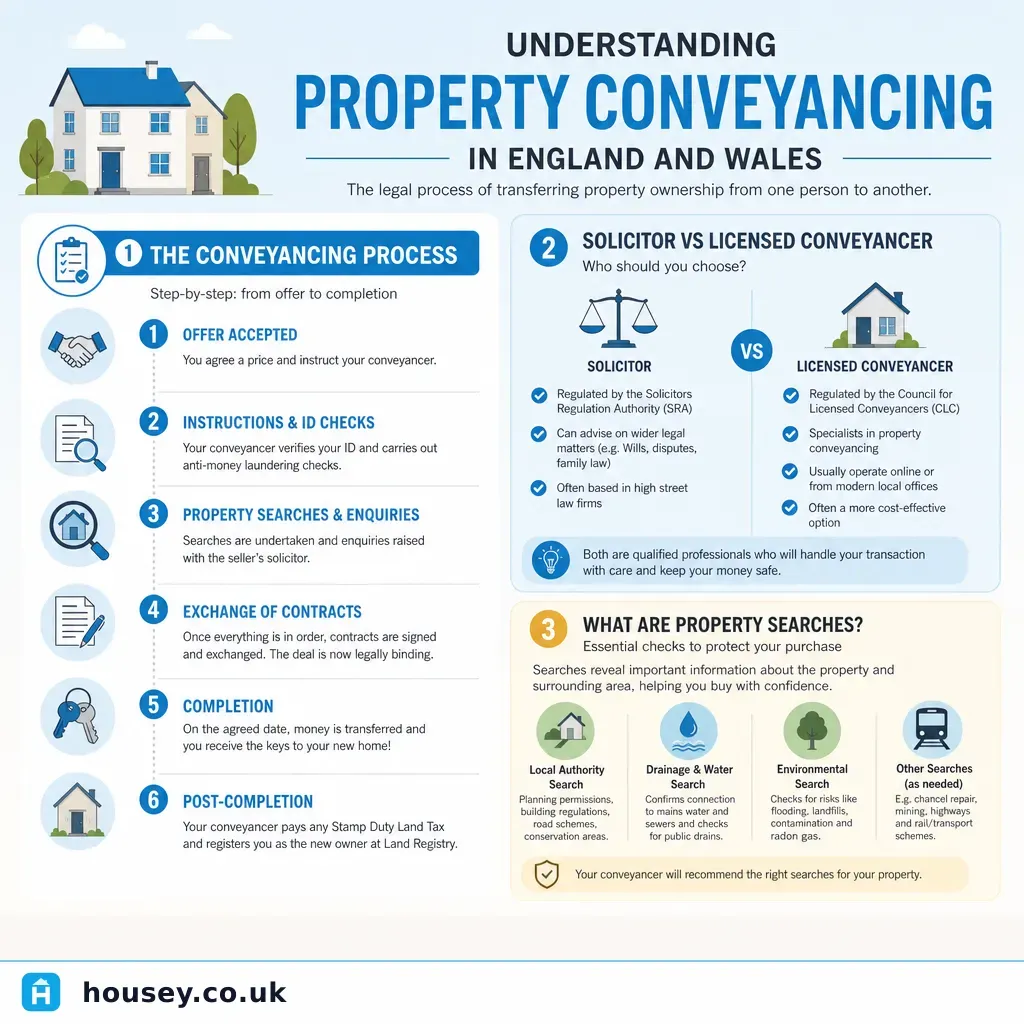
Understanding Property Conveyancing in England and Wales
Conveyancing is the legal process of transferring property ownership in England and Wales.