Essential Steps to Selling Your Home Successfully
By Housey · Last reviewed 19th of May 2026

Essential Steps to Selling Your Home Successfully
Selling a property involves considerably more preparation than many homeowners expect. In England and Wales, the average time from listing to completion is around 4–6 months, and that timeline can lengthen when buyers encounter survey findings, mortgage difficulties, or chain delays. Addressing the legal, documentary, and presentational groundwork before you go to market is the most reliable way to reduce the risk of a sale falling through.
Key points
- An Energy Performance Certificate (EPC) is a legal requirement before you can market a residential property for sale in England, Wales, and Scotland — EPCs last 10 years and the property must show a minimum rating of E (unless exempt).
- You should instruct a solicitor or licensed conveyancer as early as possible — ideally before accepting an offer — so they can prepare the contract package and identify potential title issues before they become problems mid-chain.
- Leasehold properties require a management information pack from the freeholder or managing agent, which commonly takes 4–8 weeks to obtain and can cause significant delays if not requested promptly.
- The Seller's Property Information Form (TA6), produced by the Law Society, must be completed accurately — incorrect answers can give a buyer grounds for a misrepresentation claim after completion.
- National Trading Standards Material Information requirements now oblige estate agents to disclose upfront facts including tenure, council tax band, and flood risk in property listings before a buyer makes an offer.
Choosing how to sell
Most UK sellers use an estate agent, but it is worth understanding the main options before committing.
Method | Best for | Main drawback | Typical cost |
|---|---|---|---|
High street estate agent | Most sellers wanting full support and local market expertise | Commission typically 1–3% + VAT of the sale price | Percentage of sale |
Online or hybrid agent | Cost-conscious sellers comfortable managing viewings | Less local presence; often an upfront flat fee regardless of outcome | Fixed fee £500–£2,000+ |
Property auction (unconditional) | Unusual, distressed, or fast-sale properties | Reserve risk; buyer pool differs from open market | Seller fees plus buyer's premium |
Private sale | Direct sale to a known buyer, e.g., a family member | No agent marketing; still needs a solicitor and valid EPC | Legal fees only |
Indicative UK costs, last reviewed 2026-05-19. Agent fees vary significantly; always compare at least three agents before instructing.
Getting your property ready to sell
Targeted preparation matters more than wholesale renovation. Buyers and their surveyors will assess your home critically, and visible defects can affect offers or trigger survey-related renegotiations.
Before you list:
- Fix obvious maintenance issues: dripping taps, cracked tiles, faulty sockets, and damp patches. These attract attention in a RICS survey report and can give buyers leverage to renegotiate.
- Obtain or renew your EPC if it has expired. Without a valid EPC, your agent cannot legally market the property.
- Declutter and depersonalise before viewings and photography — professional photographs significantly affect click-through rates on Rightmove and Zoopla.
- Locate your HM Land Registry title number, and gather any planning permissions, building control completion certificates, FENSA certificates for windows, Gas Safe records, and structural or damp warranties.
- Check whether any extension or conversion was subject to building control and that a completion certificate was issued — missing sign-off should be addressed with your solicitor before listing.
Instructing a solicitor or conveyancer
You should instruct a solicitor or licensed conveyancer as soon as you accept an offer — or, ideally, before you list. Early instruction allows them to prepare a draft contract package and identify title issues before they become problems mid-chain.
Your conveyancer will:
- Request the official copy title register from HM Land Registry.
- Send you the Seller's Property Information Form (TA6) and Fittings and Contents Form (TA10) to complete.
- Obtain a leasehold management information pack if the property is leasehold.
- Draft the contract and respond to the buyer's solicitor's enquiries.
- Manage exchange of contracts and coordinate completion.
For leasehold properties, the management pack — which discloses service charges, ground rent, insurance, and any planned major works — can take 4–8 weeks to arrive. Request it as early as possible to avoid holding up the chain.
Which agent model should you choose?
- Choose a high street estate agent if your property is in a competitive local market, you want accompanied viewings and active negotiation support, or you are not confident managing enquiries and offers independently.
- Choose an online or hybrid agent if your property has broad appeal, you are available and comfortable managing viewings directly, and minimising agent fees is a priority.
- Choose auction if you need a guaranteed sale timeline, the property has structural or legal issues that may deter mortgage-dependent buyers, or it is suitable for a cash or investor purchaser.
- Consult a property solicitor before proceeding if there are title complications, boundary disputes, restrictive covenants, a short lease, or the property is subject to estate administration or divorce proceedings.
Pre-sale homeowner checklist
Important limitations
This article provides a general overview of the home-selling process in England and Wales. The legal process in Scotland — including the role of solicitors, the offers system, and the Home Report requirement — differs significantly. Leasehold situations, properties with title complications, and sales involving estate administration or divorce require specialist legal advice. Nothing in this article constitutes legal advice; always instruct a qualified solicitor or licensed conveyancer.
What to ask a qualified professional
Before instructing a solicitor or conveyancer, ask:
- What is included in your conveyancing fee, and what disbursements will I need to pay separately?
- How will you communicate progress, and what is your typical response time for enquiries?
- Have you handled properties of this type before (leasehold, shared ownership, new-build)?
- What are the most common causes of delay, and how do you manage them?
- Is VAT included in your quoted fee?
- What is your process if the buyer raises unexpected enquiries or requests for information?
- How will you handle my mortgage redemption on completion day?
When to get professional help
Seek specialist advice before listing if:
- The lease has fewer than 80 years remaining — buyers may struggle to obtain a mortgage, and you should consider extending the lease before marketing.
- You are aware of boundary disputes, rights of way, or restrictive covenants affecting the property.
- Planning permission or building control sign-off was never obtained for an extension or conversion — this should be resolved with a solicitor before exchange.
- You are selling as part of divorce, probate, or financial proceedings — the process differs and specialist legal advice is required.
- The property has had significant structural, damp, or fire damage, even if repairs have since been made.
How Housey can help
Housey can help you find qualified professionals at every stage of a sale. Start with a valuation survey to understand your property's current value, then use professional property photography and floorplans to maximise your listing's impact on the portals. When you are ready to proceed legally, our conveyancing service connects you with an experienced solicitor or licensed conveyancer suited to your transaction.
Frequently asked questions
How long does it take to sell a house in the UK?
The average time from listing to completion in England and Wales is roughly 4–6 months, though this varies significantly with chain complexity, buyer mortgage timescales, and local market conditions. Leasehold properties can take longer because the management information pack often takes 4–8 weeks to arrive from the freeholder or managing agent. Scotland's conveyancing process typically runs faster once missives are concluded.
Do I need an EPC before I sell?
Yes. An Energy Performance Certificate is a legal requirement before you can market a residential property for sale in England, Wales, and Scotland. EPCs are valid for 10 years. Without a valid EPC, your estate agent cannot legally list the property. Contact a registered domestic energy assessor — you can find one via the GOV.UK EPC register.
What is the Seller's Property Information Form?
The Seller's Property Information Form (TA6) is a Law Society standard document you complete with details about the property's boundaries, disputes, alterations, services, and other material facts. Your conveyancer will send it to you early in the process. Answers must be accurate — providing incorrect information can give the buyer grounds for a misrepresentation claim after completion.
Can a sale fall through after I accept an offer?
Yes. In England and Wales, neither party is legally committed until exchange of contracts. Either side can withdraw without financial penalty before exchange, though you will lose costs already spent on surveys, legal fees, and mortgage applications. Scotland operates differently — once missives are concluded, both parties are legally bound and withdrawal can lead to a claim for damages.
What happens on completion day?
On completion, the buyer's solicitor transfers the purchase funds to your solicitor, who uses them to clear any outstanding mortgage and transfer the balance to you. The estate agent releases the keys once funds are confirmed. HM Land Registry is subsequently notified and updates the title register. You must vacate by the agreed time — typically midday unless negotiated otherwise at exchange.
Sources and further reading
- Selling a home — GOV.UK
- Energy Performance Certificates for selling or renting your home — GOV.UK
- Law Society Conveyancing Protocol — The Law Society
- Material information in property listings: guidance — National Trading Standards
- HM Land Registry: searching the register — HM Land Registry
Useful next reads
 Buying & Moving
Preparing Your Home for Sale: Flooring and First Impressions
Before marketing a property in the UK, flooring condition and room presentation directly affect buyer interest and offer levels.
 Buying & Moving
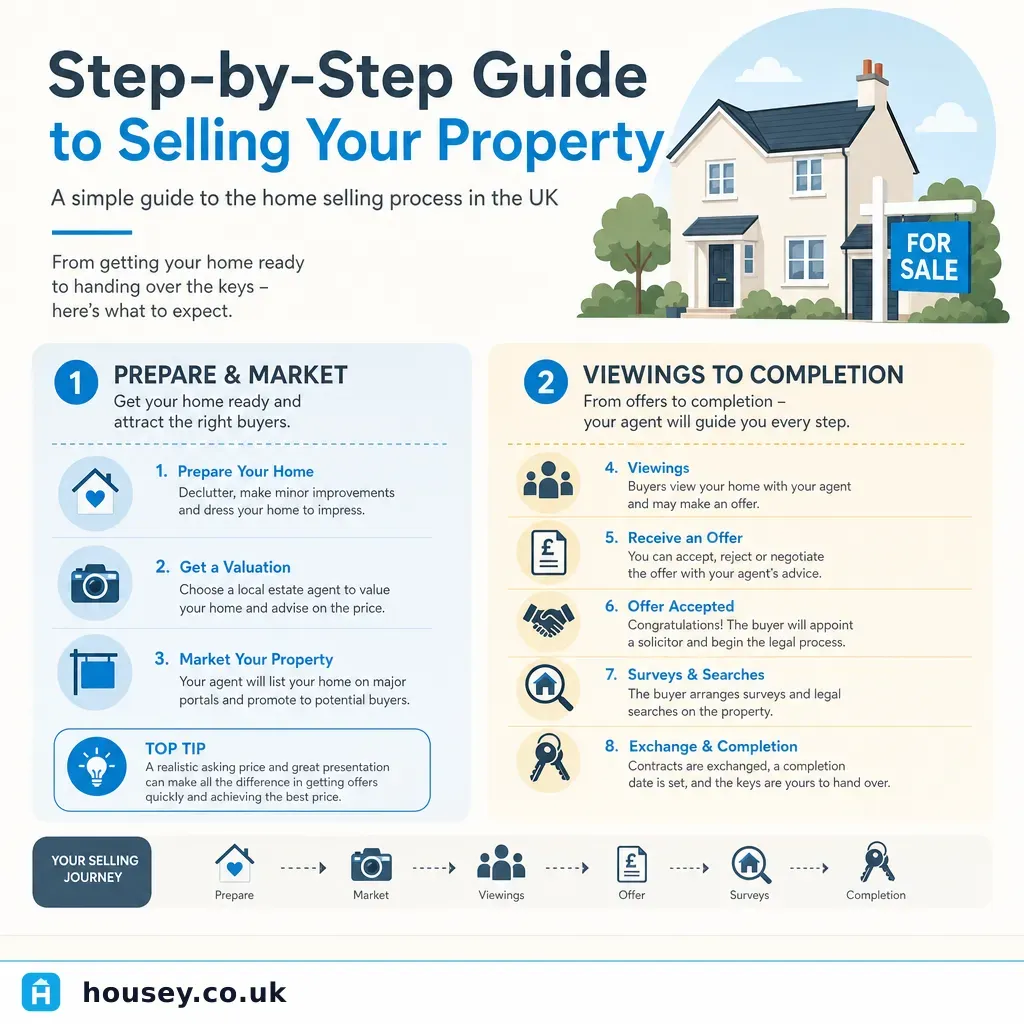
Step-by-Step Guide to Selling Your Property
Selling a property in the UK involves six main stages: getting a valuation, instructing an estate agent, preparing legal documents with a conveyancer, accepting an offer, exchange of contracts, and completion.
 Buying & Moving
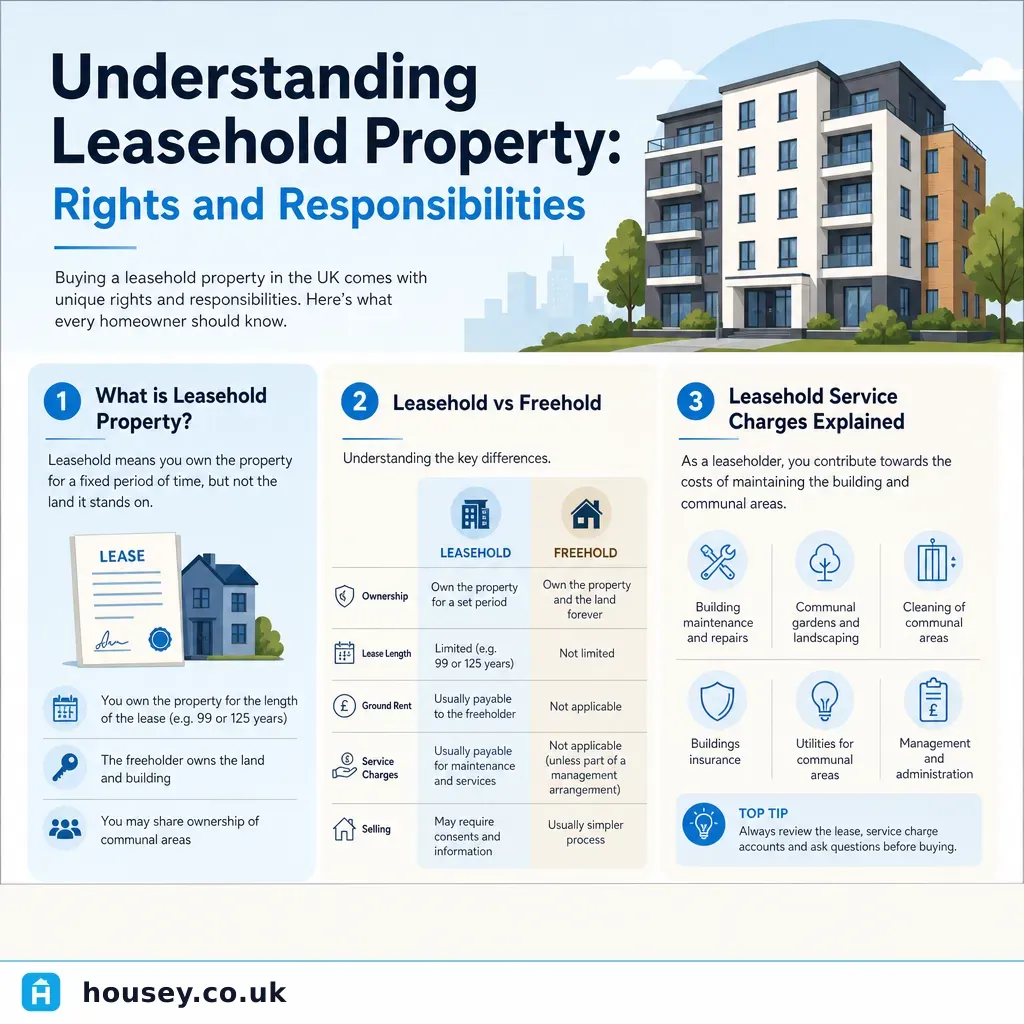
Understanding Leasehold Property: Rights and Responsibilities
Leasehold means you own a time-limited interest in a property while the freeholder owns the land and building.
 Buying & Moving
Navigating Simultaneous Purchase and Sale of Property
When buying and selling simultaneously in England and Wales, both sets of contracts are exchanged on the same day — this is called simultaneous exchange.
 Buying & Moving
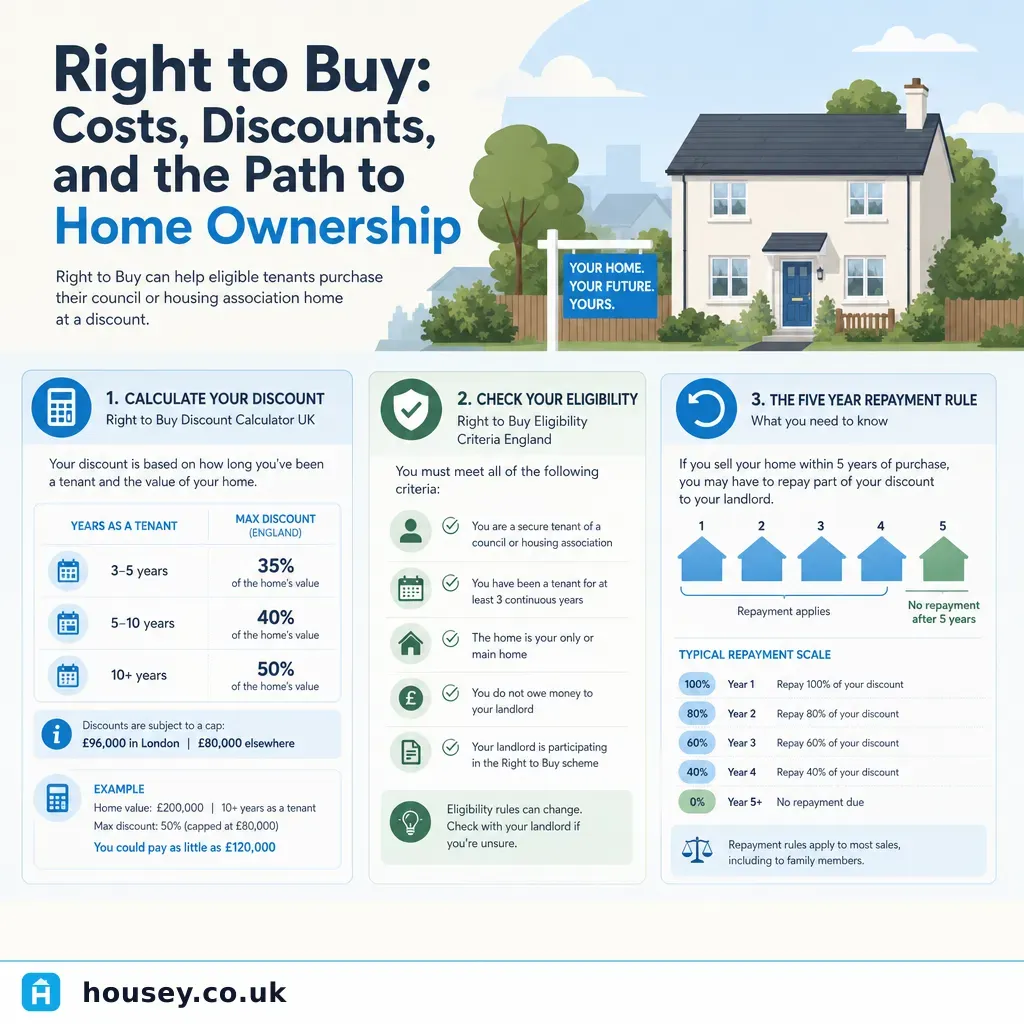
Right to Buy: Costs, Discounts, and the Path to Home Ownership
Right to Buy lets eligible council tenants in England buy their home at a government-funded discount — between 35% and 70% of its value, depending on tenancy length and property type.