Adding a Garden Office: Space, Value and Planning Considerations
By Housey · Last reviewed 24th of May 2026
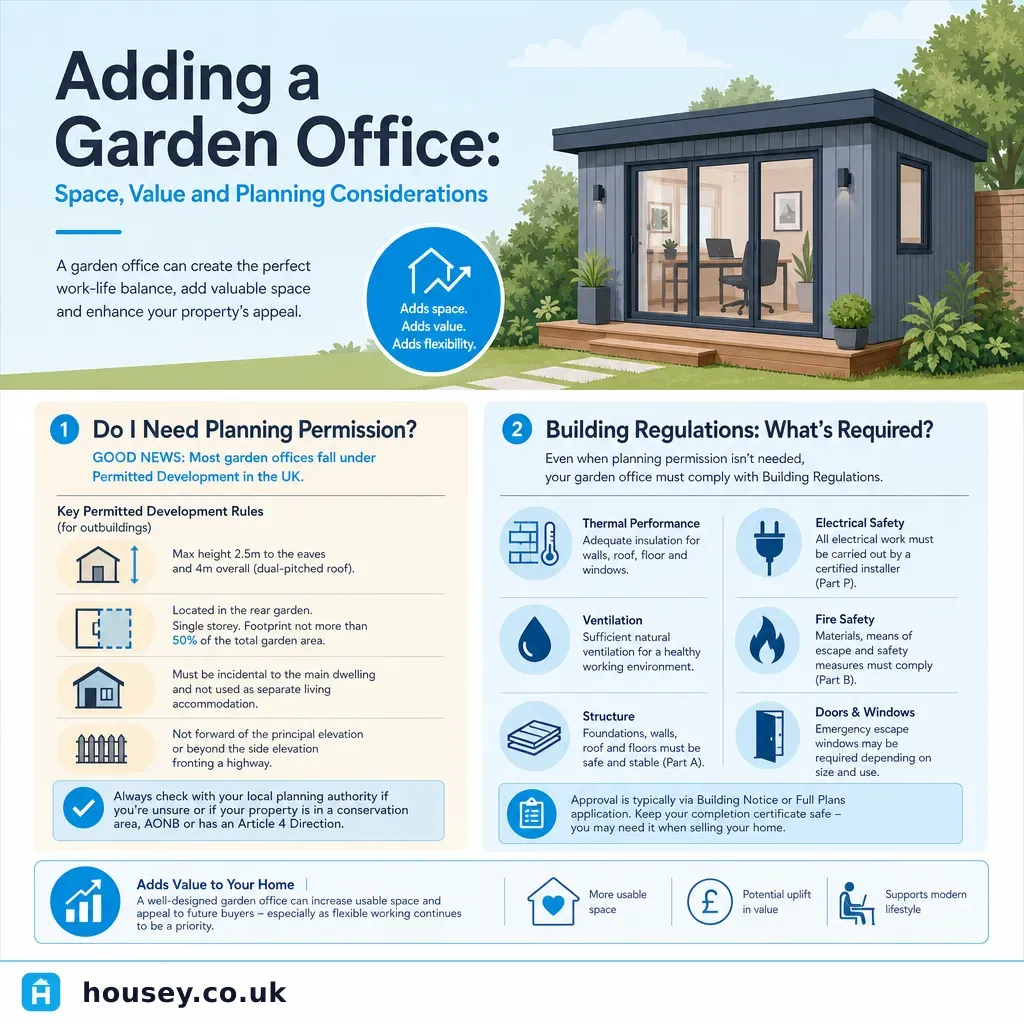
Adding a Garden Office: Space, Value and Planning Considerations
A dedicated garden office has become one of the most sought-after home improvements in the UK since hybrid working became mainstream. The appeal is clear: a private workspace that keeps work and home life separate without the cost or disruption of a full house extension. But before ordering a timber pod or commissioning a bespoke garden studio, it is worth understanding the planning rules, building regulations implications, and what the project means for your property's value and insurability.
Key points
- Garden offices are usually classed as outbuildings under permitted development rights in England and do not require planning permission, provided they comply with the size, height, and location criteria in the Town and Country Planning (General Permitted Development) (England) Order 2015.
- The structure must be single-storey, located to the rear or side of the house (not forward of the principal elevation), and must not exceed an eaves height of 2.5 m or an overall height of 4 m for a dual-pitched roof, or 3 m for any other roof shape.
- All outbuildings combined must not cover more than 50% of the original curtilage — the garden as it stood on 1 July 1948 for most properties.
- Permitted development rights do not apply to listed buildings or flats, and additional restrictions apply in conservation areas, National Parks, and AONBs for outbuildings within 20 m of the house.
- Building regulations may apply if the garden office exceeds 15 m² and is less than 1 m from any boundary, exceeds 30 m² in total floor area, or includes sleeping accommodation, a bathroom, or a new electrical circuit from the main consumer unit.
Does a garden office need planning permission?
Under permitted development rights in England, a garden office does not need planning permission if all of the following conditions are met:
- Located to the rear or side of the house — not forward of the principal elevation facing the highway.
- Single storey only; no upper floors or mezzanines.
- Eaves height does not exceed 2.5 m.
- Overall height does not exceed 4 m (dual-pitched roof) or 3 m (any other roof type).
- Total footprint of all outbuildings does not exceed 50% of the original garden area.
- Not used as a separate dwelling — sleeping accommodation triggers different planning requirements.
- The property is not a listed building or flat, and is not subject to an Article 4 direction removing these rights.
Rules in Wales and Scotland differ from those in England. Always check with your local planning authority (LPA) if there is any doubt about your specific property or site.
Decision tree: do you need planning permission for your garden office?
- No planning permission required if the building is to the rear or side, within the height and footprint limits, and the garden is not subject to an Article 4 direction or conservation area restriction on outbuildings.
- Check with your LPA first if the property is in a conservation area, National Park, AONB, or World Heritage Site — permitted development may be restricted for buildings within 20 m of the house, and outbuilding rules can vary.
- Full planning permission required if the property is a listed building or flat; the building is forward of the principal elevation; the total outbuilding footprint would exceed 50% of the original garden; sleeping accommodation is included; or the proposed structure exceeds the permitted height limits.
- Consider a lawful development certificate (LDC) even where permitted development appears to apply — an LDC provides written confirmation from the LPA and is sometimes requested by mortgage lenders or conveyancers during a future sale.
- Ask a planning consultant if the property has a complex planning history, prior conditions, or you are uncertain about any of the thresholds — getting this wrong before construction is far cheaper than enforcement action afterwards.
Do you need building regulations for a garden office?
Building regulations and planning permission are separate regimes. Many garden offices fall outside building regulations, but not all.
Scenario | Building regulations position |
|---|---|
Under 15 m², at least 1 m from any boundary | No building regulations required |
Under 15 m², less than 1 m from a boundary | Fire separation provisions may apply |
15–30 m², no sleeping accommodation | Partial compliance — fire separation from the house required |
Over 30 m² | Full building regulations apply (structure, fire safety, insulation) |
Any size with sleeping accommodation | Full building regulations apply |
Any size with a bathroom or WC | Drainage and sanitation provisions under Part H apply |
Electrical supply from main consumer unit | Part P self-certification or LABC notification required |
Connecting a new circuit from your home's consumer unit requires either a Part P-registered electrician operating under a Competent Person Scheme or notification to your LABC. Your building supplier will not normally cover electrical installation — budget for this as a separate contract.
What does a garden office cost?
Indicative UK costs, last reviewed 2026-05-24. Prices vary significantly by size, specification, supplier, and region; the ranges below are a starting point for budgeting and not a substitute for getting quotes.
Specification | Approximate installed cost |
|---|---|
Basic insulated timber cabin, up to 20 m² | £8,000–£14,000 |
Mid-range insulated garden studio, 20–30 m² | £20,000–£35,000 |
High-specification bespoke garden building | £40,000–£80,000+ |
Architect-designed modular pod | £25,000–£60,000 |
Groundworks, electrical installation, data cabling, and internal decoration are often quoted separately. Confirm exactly what is and is not included before accepting any quote. Sources: Checkatrade market data, Buildstore estimates (2025–26).
Checklist: what to confirm before ordering a garden office
Does a garden office add value to your property?
A well-specified, properly consented garden office can add value, particularly in suburban and rural markets where dedicated home workspace is in demand. Estate agents often report a perceived uplift of £5,000–£20,000 for quality outbuildings, though this is not universal and depends on plot size, the quality of the structure, aspect, and the wider property value. A large building that substantially reduces the garden area may deter family buyers. Any value uplift is subjective and market-dependent — it is not guaranteed.
Important limitations
This article covers permitted development rights and building regulations in England. Rules in Wales, Scotland, and Northern Ireland differ. Permitted development rights can also vary by LPA, property history, restrictive covenants, and previous planning conditions. This guide is not a substitute for advice from a qualified planning consultant or your local planning authority. Always verify the position for your specific property before committing to a design, supplier, or purchase.
When this becomes urgent
Seek professional advice promptly if:
- You have already begun construction of a garden office without confirming permitted development eligibility.
- The property is listed or in a conservation area and you have not checked with the LPA.
- You have received a planning enforcement notice or pre-enforcement communication from the council.
- The proposed structure is close to the 50% curtilage coverage threshold or the permitted height limits.
- A prospective buyer, mortgage lender, or conveyancer has raised questions about an existing garden building during a sale or remortgage.
What to ask a qualified professional
Before instructing a planning consultant or architectural technologist:
- Is my property subject to any Article 4 directions, restrictive covenants, or planning conditions that affect permitted development rights?
- Is the proposed building clearly within the permitted development size and height parameters?
- Would a lawful development certificate be advisable for my situation, and what would the process and fee involve?
- If planning permission is required, what are my realistic prospects of approval and what would a planning application involve?
- Can you check the planning history for the property before I commit to a design or supplier?
- If building regulations apply, what drawings and documents will I need to submit?
How Housey can help
Housey connects homeowners with planning consultancy specialists who can confirm permitted development eligibility and prepare lawful development certificate applications. Architectural technologists can prepare drawings for planning or building regulations submissions, and garden designers can help integrate the office into the wider plot. For projects that trigger building regulations, our building regulations drawings service can match you with a suitable specialist.
Frequently asked questions
Can I use my garden office as a spare bedroom?
Using a garden outbuilding for sleeping accommodation changes both the planning and building regulations position significantly. In planning terms, a structure with sleeping accommodation may be treated as a separate dwelling, requiring full planning permission. It would also need to satisfy building regulations for habitable rooms, including Part B fire safety and thermal performance standards. Always seek advice from your local planning authority before installing sleeping accommodation in any outbuilding.
Do I need a lawful development certificate for my garden office?
A lawful development certificate is not legally required if the project genuinely qualifies as permitted development. However, it provides written confirmation from the LPA that the building is lawful and can be a useful safeguard during a future sale or remortgage. Some mortgage lenders and conveyancers request one for larger or more prominent structures. The application fee in England is typically around £103 as at 2025, and processing usually takes up to eight weeks.
Will my buildings insurance cover a garden office?
Policies vary widely between insurers. Some include permanent outbuildings up to a fixed sum as standard; others require the structure and its contents to be separately declared. Insurers will also want to know if the building contains high-value equipment such as computers. Notify your insurer before the building is installed and request written confirmation of cover for both the structure and its contents.
What is an Article 4 direction and could it affect my garden office?
An Article 4 direction is issued by a local planning authority to remove specified permitted development rights in a defined area, commonly conservation areas or sensitive locations. Where one applies, a garden office that would otherwise be permitted development may require full planning permission. Check with your local planning authority or use the Planning Portal to search for Article 4 directions affecting your postcode before progressing a design.
Sources and further reading
- Permitted development rights for householders: technical guidance — GOV.UK — Ministry of Housing, Communities and Local Government
- Outbuildings — Planning Portal — Planning Portal
- Town and Country Planning (General Permitted Development) (England) Order 2015 — legislation.gov.uk — legislation.gov.uk
- Building regulations: when you need approval — GOV.UK — GOV.UK
Useful next reads
 Improvement & Build
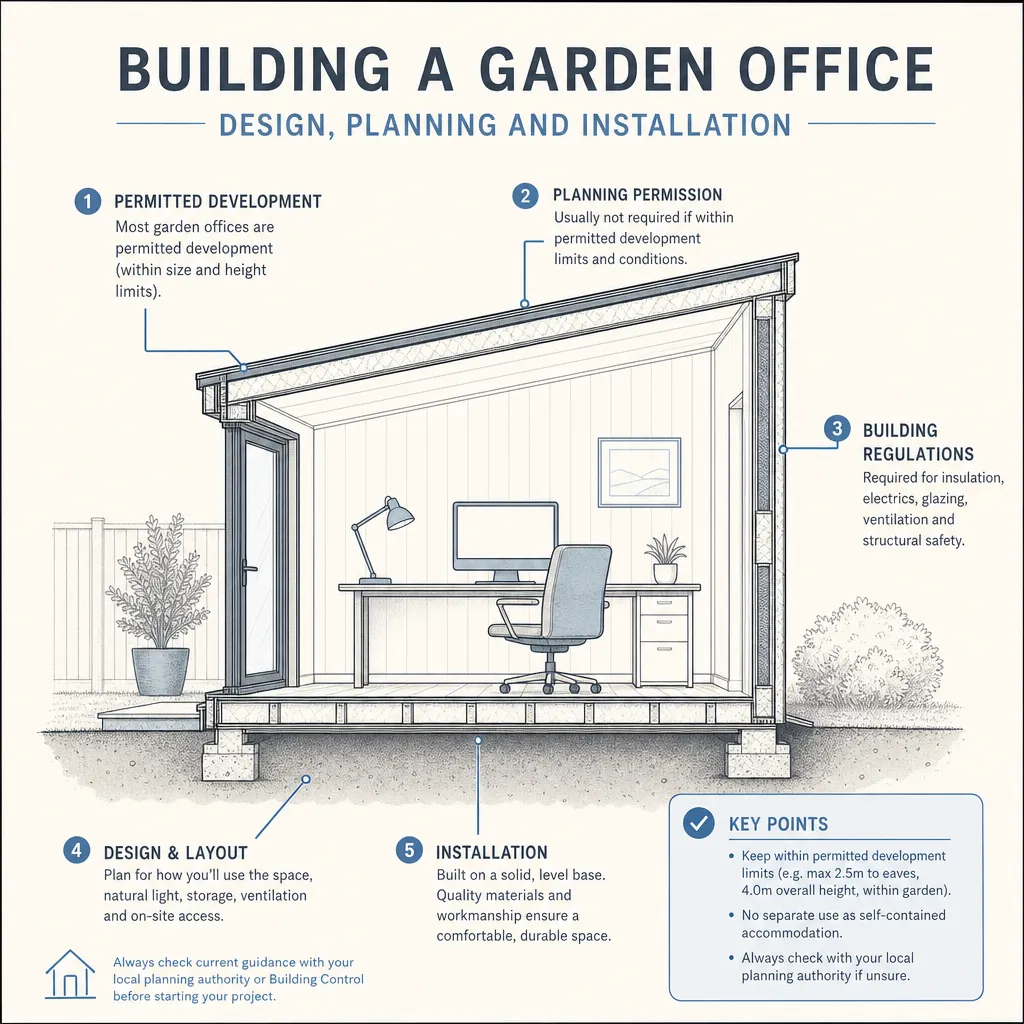
Building a Garden Office: Design, Planning and Installation
Most garden offices in England fall under permitted development and need no planning permission if they are single-storey, below 2.
 Improvement & Build
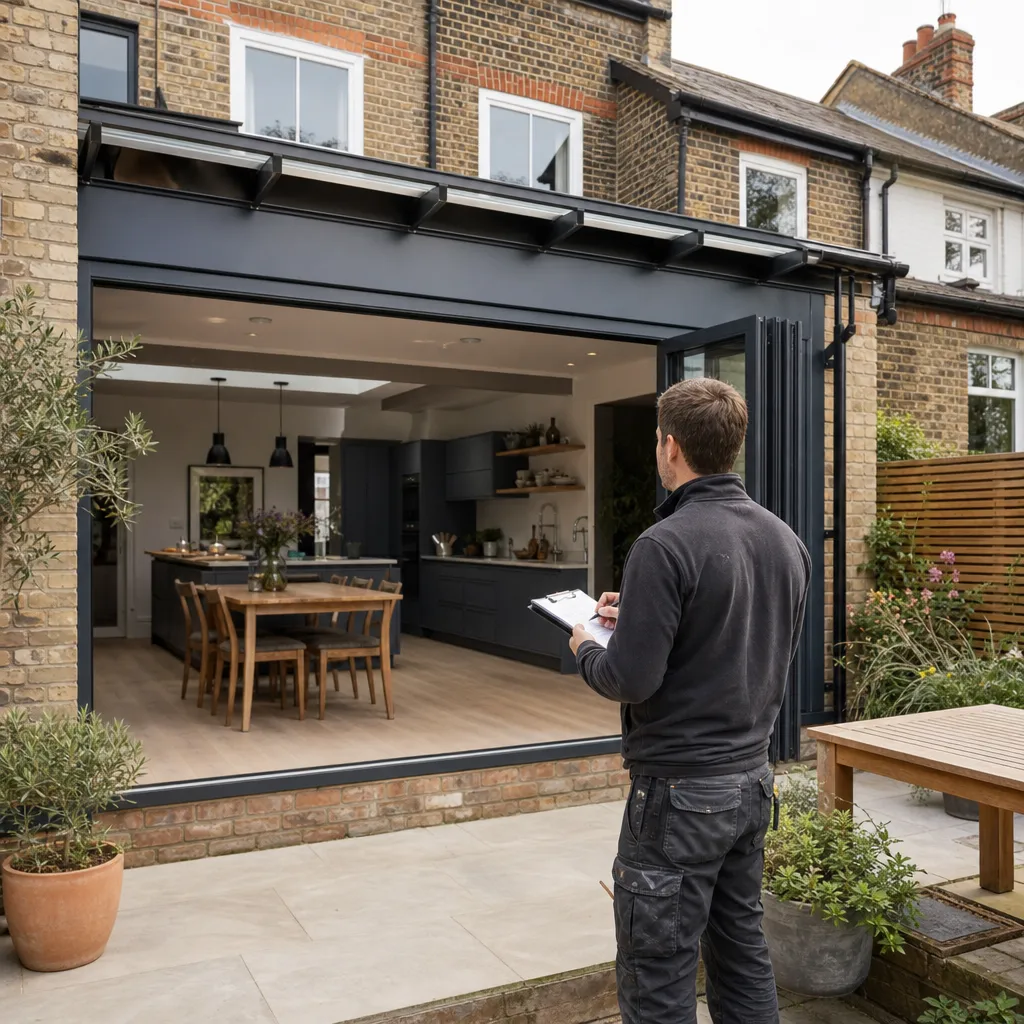
Maximising Value Through Strategic Home Improvement Projects
In the UK, loft conversions and kitchen extensions tend to deliver the strongest return on investment, with loft conversions potentially adding around 20% to property value according to Nationwide data.
 Improvement & Build
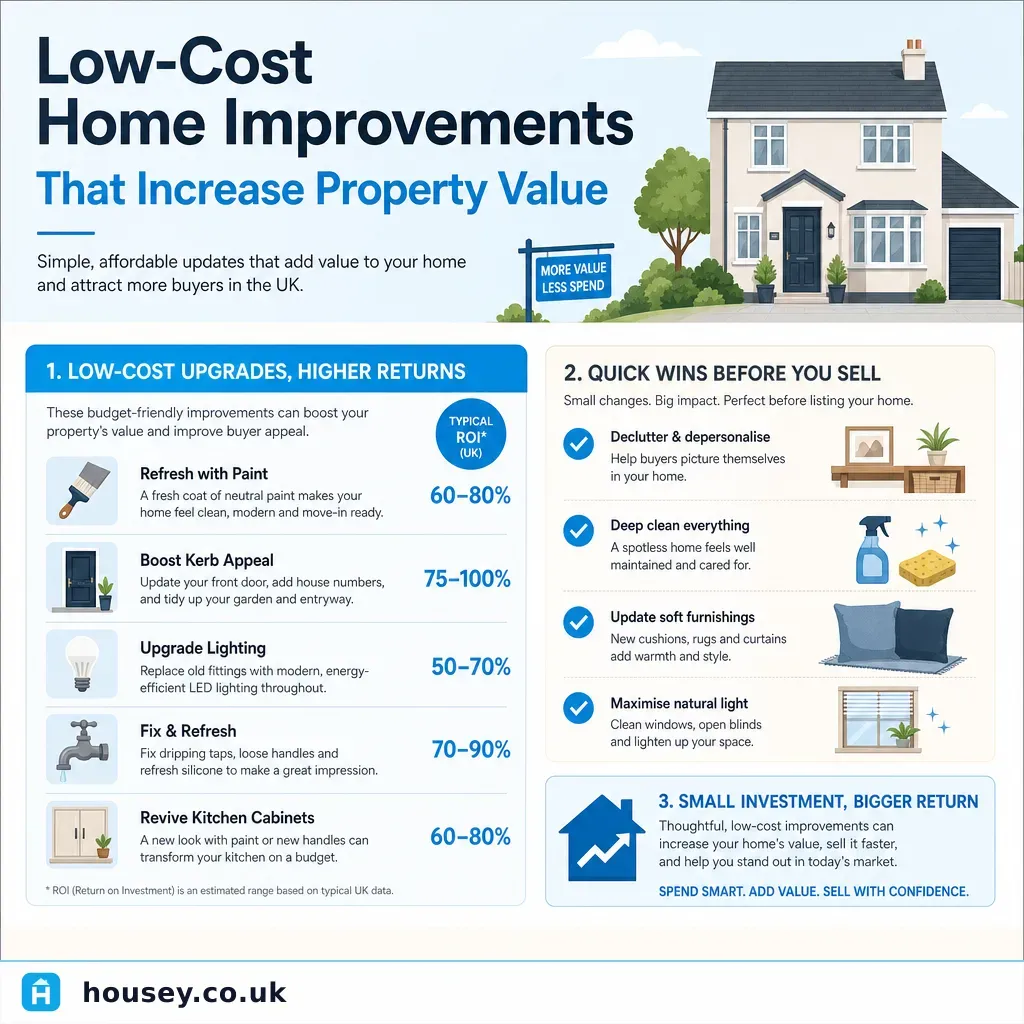
Low-Cost Home Improvements That Increase Property Value
Cosmetic upgrades such as fresh neutral paint, improved kerb appeal, tidied gardens, and refreshed kitchens and bathrooms can meaningfully improve a property's saleability and perceived value at relatively low cost.
 Improvement & Build
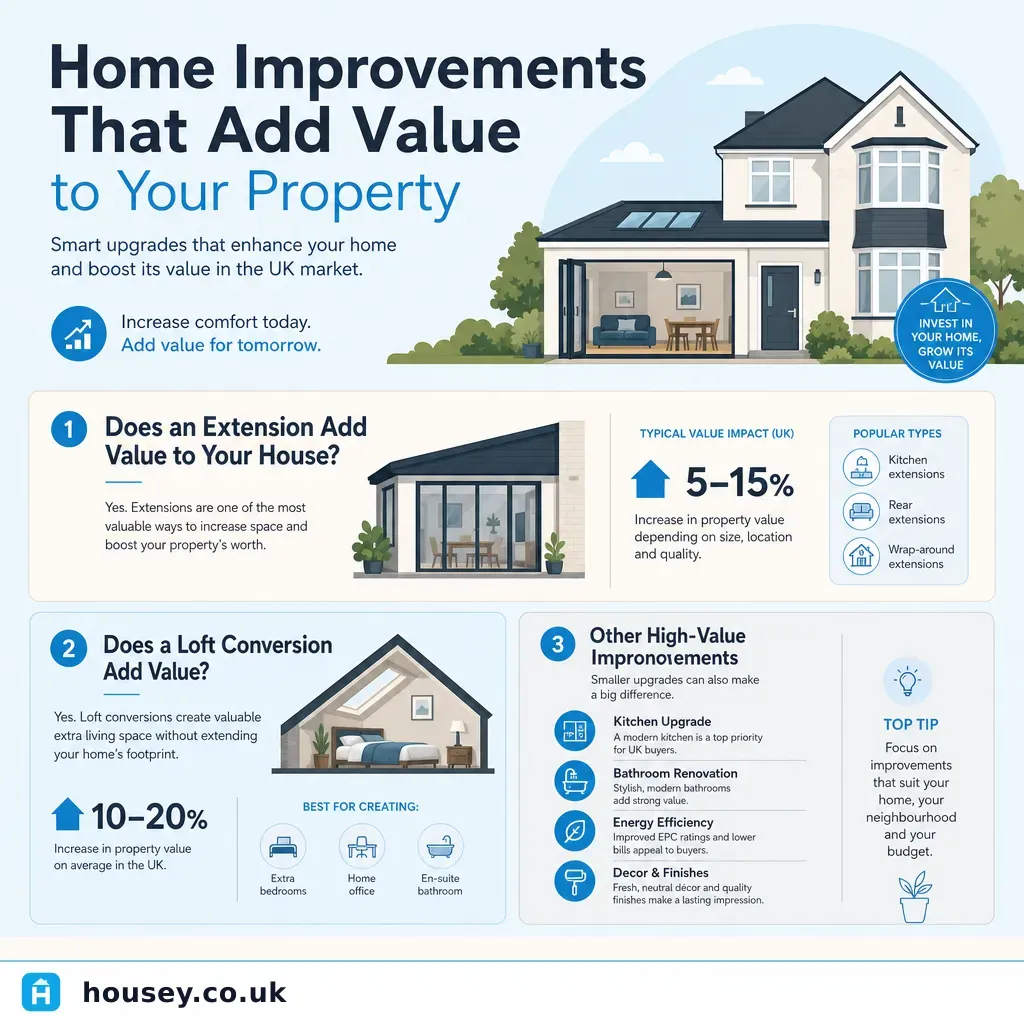
Home Improvements That Add Value to Your Property
The home improvements most likely to add value in the UK are those that add usable floor space — loft conversions and extensions — or improve EPC ratings.
 Improvement & Build
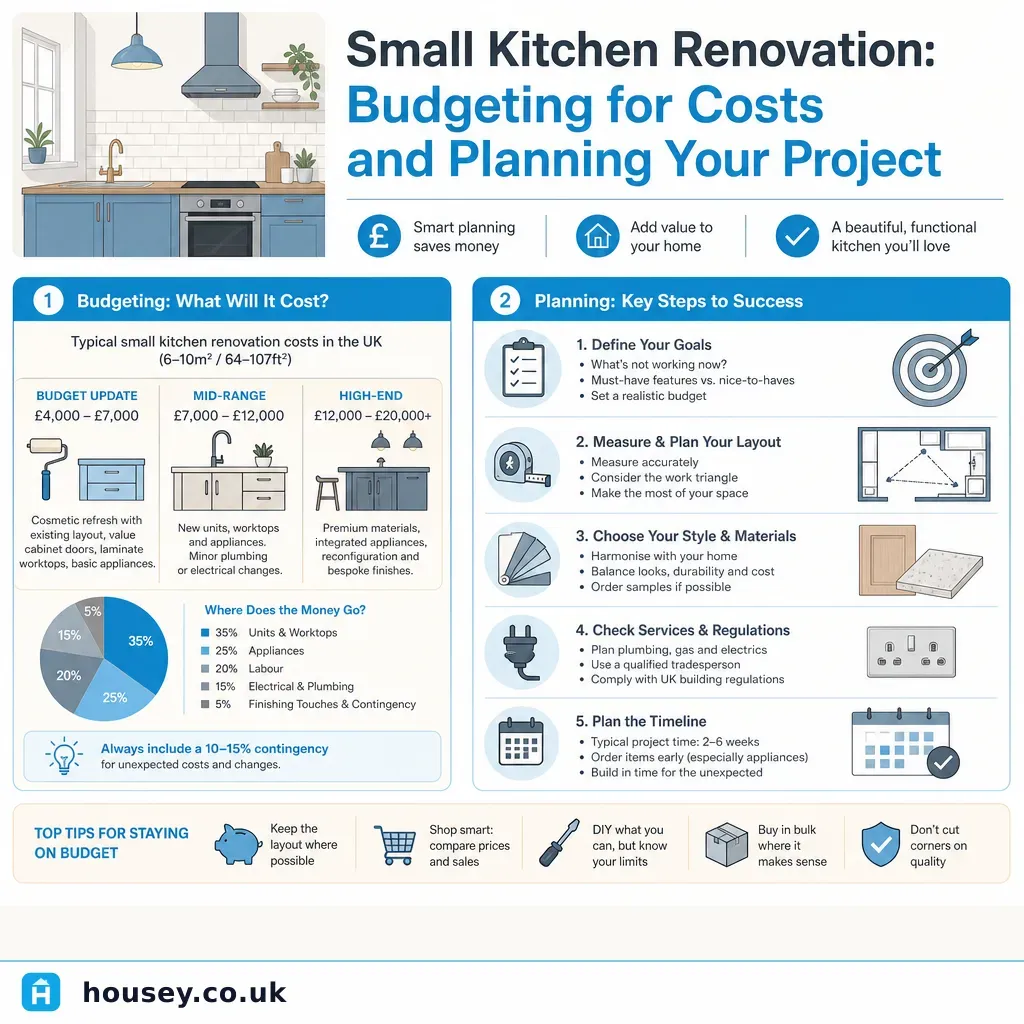
Small kitchen renovation: budgeting for costs and planning your project
A small kitchen renovation in the UK typically costs £5,000–£15,000 for a full refresh including new units, worktops, tiling, and appliances, though costs vary widely by specification, region, and whether structural changes or rewiring are involved.