Maximising Value Through Strategic Home Improvement Projects
By Housey · Last reviewed 31st of May 2026
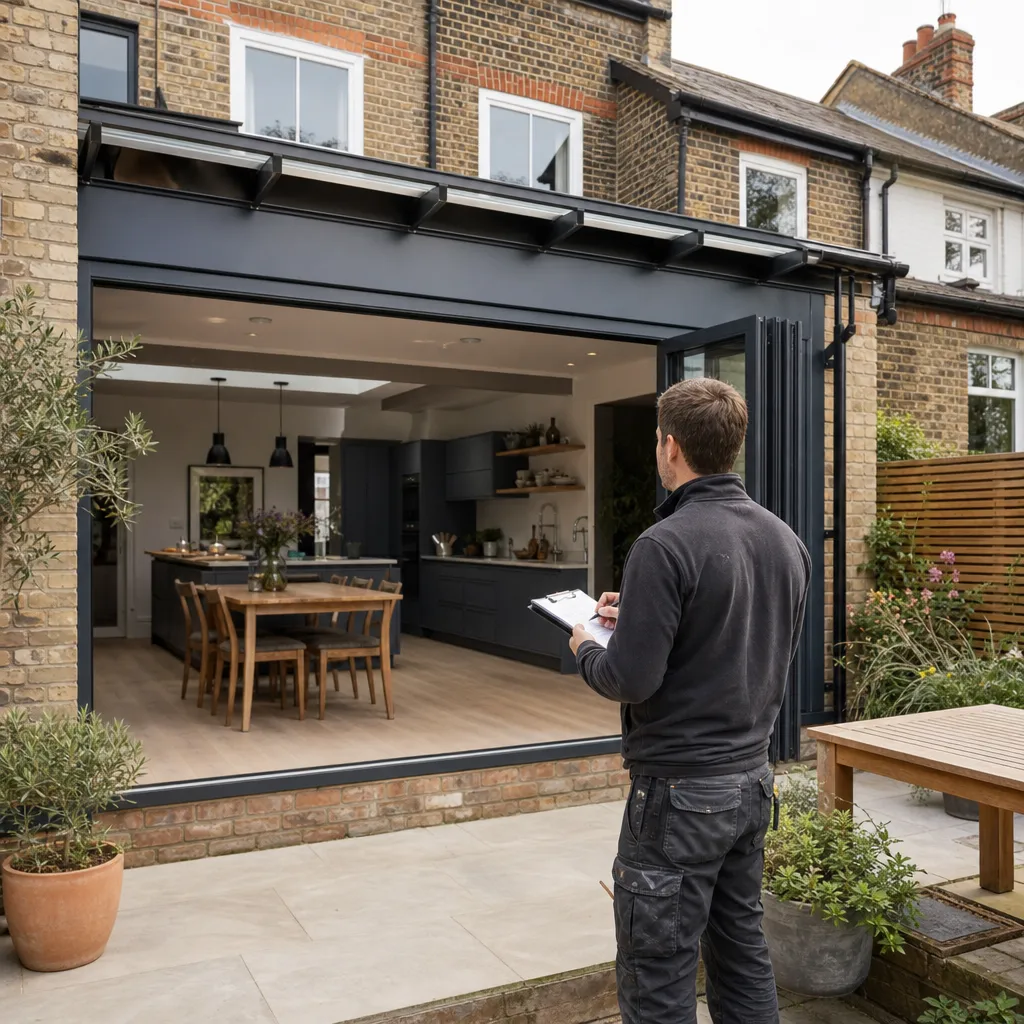
Maximising Value Through Strategic Home Improvement Projects
Every year, UK homeowners spend billions of pounds on renovation and improvement works — but not all that investment comes back at resale, and some of it actively reduces saleability if done badly or without the right permissions. Whether you are preparing to sell, planning to remortgage at a higher loan-to-value, or simply investing in where you live, understanding which projects deliver a meaningful return in the UK market changes how you prioritise your budget and your time.
Key points
- Research by Nationwide Building Society indicates loft conversions can add around 20% to a property's value, making them among the highest-return improvements for most UK house types.
- Kitchen extensions and open-plan kitchen-diners are consistently rated among the top value-adding works by estate agents, particularly in family homes in competitive local markets.
- Energy Performance Certificate (EPC) improvements — targeting Band C or above — are increasingly affecting saleability and mortgage availability under lender energy criteria.
- Under Permitted Development rights (Classes A, B, and C for houses), many single-storey rear extensions can proceed without a full planning application, reducing both cost and programme time.
- Poor workmanship on extensions and conversions can reduce value rather than add it; RICS surveyors routinely flag substandard work that affects valuations and mortgage lending decisions.
Which projects tend to add the most value?
Value uplift from home improvement is driven by three factors: whether the improvement addresses a genuine need felt by local buyers, whether the quality of execution is consistent with the local price point, and whether the work has the right certificates and permissions in place. A high-specification kitchen in a low-value area rarely pays back; the same project in a competitive commuter-belt family home may pay back well.
The table below summarises the most common improvement categories by indicative return and cost.
Project | Indicative value uplift* | Typical cost range* | Usually needs planning? | Key consideration |
|---|---|---|---|---|
Loft conversion (dormer or Velux) | 15–25% | £35,000–£65,000+ | Often no (PD rights) | Building regulations sign-off essential; structural calculations required |
Single-storey rear extension | 5–15% | £20,000–£50,000+ | Often no (PD rights) | Value gain varies significantly by location and specification |
Kitchen refurbishment (in-situ) | 3–8% | £8,000–£25,000+ | No | Mid-range finishes often outperform luxury installs on ROI |
Bathroom renovation | 2–5% | £5,000–£15,000+ | No | More likely to remove a negative than add a strong positive |
EPC improvement (insulation and heating upgrade) | Varies; improves saleability | £3,000–£20,000+ | No | ECO4 funding may apply; affects mortgageability under lender energy criteria |
Garage conversion | 10–15% | £10,000–£25,000+ | Sometimes (check LPA) | Loss of parking can deter buyers in some suburban locations |
Double or triple glazing replacement | 2–5% | £4,000–£12,000+ | No (FENSA installer required) | FENSA certificate required on sale; improves EPC rating |
*Indicative UK costs, last reviewed 2026-05-31. Ranges vary significantly by region, specification, and contractor. Sources: Nationwide Building Society, HomeOwners Alliance.
The EPC factor: why energy efficiency now affects value
Energy performance has moved from a nice-to-have to a material factor in UK property transactions. Mortgage lenders have introduced energy-linked product criteria, and the government has signalled continued tightening of Minimum Energy Efficiency Standards (MEES) for rented homes, with owner-occupied guidance likely to follow. An extension that adds floor area but does not improve the EPC rating — or adds poorly insulated space that drags it down — may not deliver the value uplift a simple square-footage calculation suggests.
Building Regulations Part L (Conservation of Fuel and Power) requires any notifiable building work to meet current thermal performance standards, which creates a practical alignment between regulatory compliance and energy value. The ECO4 scheme and the Great British Insulation Scheme both offer grant funding for eligible homeowners — worth checking via the Energy Saving Trust before paying privately for insulation or heating upgrades.
Should you improve or move? A decision framework
- Choose to improve if: you plan to stay five or more years; the improvement addresses a genuine space or functionality need; the total cost is less than the stamp duty liability, agent fees, and moving costs of trading up; and the work falls within permitted development rights.
- Choose to move if: the improvement required would overcapitalise the property — costing more than it adds to value; the fundamental constraint is the location, plot size, or neighbourhood rather than the house itself; or you need a fundamentally different property type that cannot be created through alteration.
- Ask a local estate agent or RICS-regulated valuer if you are genuinely uncertain — a pre-improvement desktop valuation and a post-improvement estimate can both be obtained for a modest fee and may prevent a costly mistake.
- Check your local planning authority before starting any work that could require permission, particularly if the property is in a conservation area, is listed, or has had previous extensions.
Homeowner checklist: before you commit to a major project
What not to assume about renovation ROI
- Do not assume the most expensive improvement delivers the best return. A high-specification kitchen in a modestly priced property rarely recovers its full cost at sale; focus on what local buyers actually want.
- Do not assume permitted development removes all restrictions. Conservation areas, listed buildings, and properties subject to Article 4 Directions may have significantly reduced or no permitted development rights — always confirm with your local planning authority.
- Do not assume a builder's verbal assurance on planning or building regulations status is sufficient. Seek written confirmation from your local planning authority, or appoint a qualified architect to advise in writing.
- Do not assume any improvement will add value if the local market cannot support a higher price point. Comparable sales in your street and postcode are the most reliable guide to achievable uplifts in your specific market.
When to get professional help
An architect or RICS-registered project manager is worth appointing for any project over £30,000, any structural alteration, or any extension requiring planning permission. A RICS-regulated surveyor can provide a pre-improvement valuation as well as a formal post-completion inspection — useful for remortgaging or if you are selling within five years of completing the works.
Red flags that suggest you need professional oversight:
- A contractor who states that building regulations approval is not needed for an extension or loft conversion (it almost always is).
- Any contractor who requests more than 15% of the project cost upfront.
- Any quote that does not reference a written contract or formal agreement.
How Housey can help
Housey connects homeowners with verified extension builders, loft conversion companies, and design-and-build firms across the UK. You can use the platform to compare quotes and credentials, and find professionals with the experience and capacity suited to your specific improvement project.
Frequently asked questions
Do all home improvements add value in the UK?
Not necessarily. Value uplift depends on the quality of work, whether building regulations sign-off is in place, the local property market, and whether the improvement matches what buyers in your area want. Poorly executed work, or work carried out without building control sign-off, can reduce saleability and may trigger mortgage valuation issues that affect both buyer and seller.
Should I get a valuation before and after a renovation?
For projects costing more than £20,000, a pre-improvement valuation from a RICS-regulated surveyor helps assess whether the projected uplift justifies the spend. A post-completion valuation is useful if you intend to remortgage on the improved value. Estate agents can provide informal guidance, but a RICS Registered Valuer provides a formal opinion that a lender will accept.
Do I need planning permission for a loft conversion?
Many loft conversions fall within permitted development rights and do not require a formal planning application. However, permitted development rights may be restricted for properties in conservation areas, listed buildings, some flats, and those subject to Article 4 Directions. Always confirm with your local planning authority before starting work. Building regulations approval is almost always required regardless of planning status.
Sources and further reading
- Nationwide House Price Index and renovation research — Nationwide Building Society
- Permitted development rights for householders: technical guidance — GOV.UK
- Planning Portal: interactive house and application guidance — Planning Portal
- ECO4 scheme and insulation grant information — Energy Saving Trust
- HomeOwners Alliance: adding value to your home — HomeOwners Alliance
Useful next reads
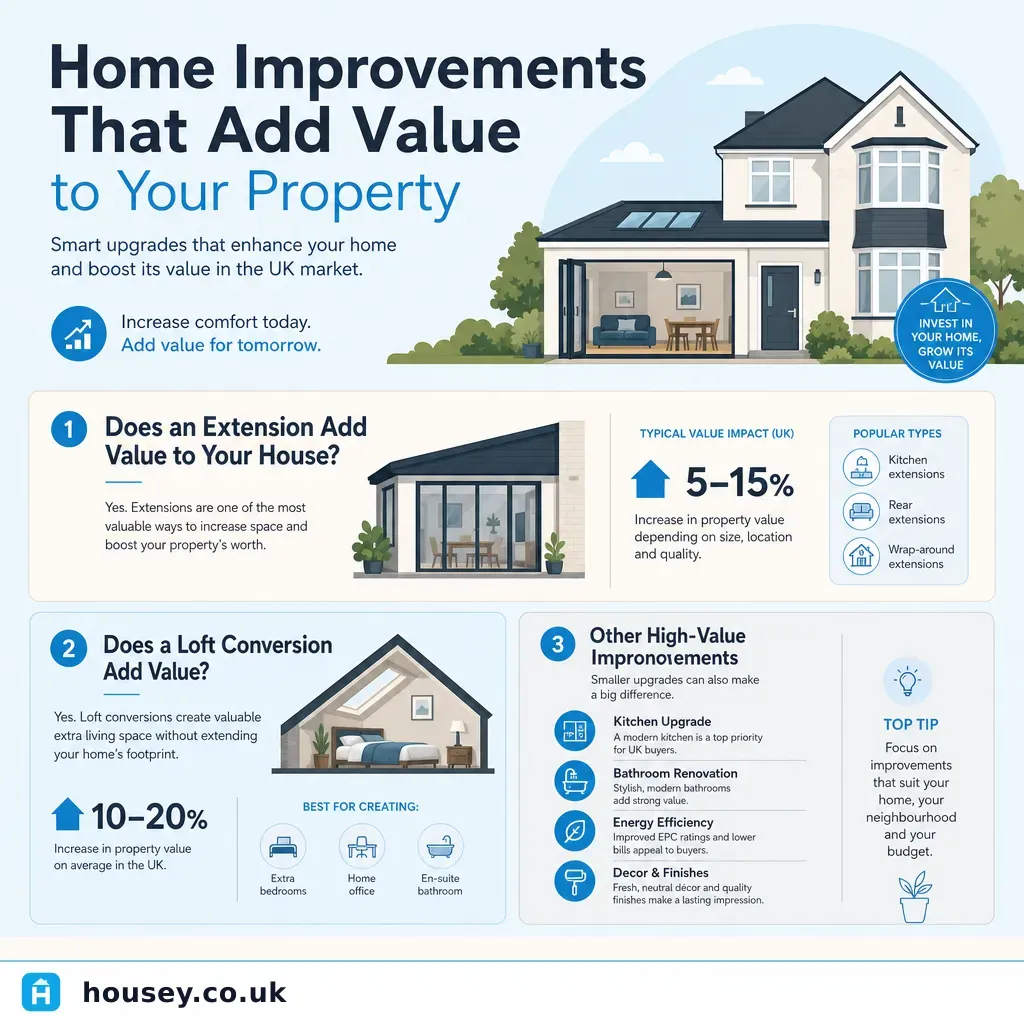 Improvement & Build
Home Improvements That Add Value to Your Property
The home improvements most likely to add value in the UK are those that add usable floor space — loft conversions and extensions — or improve EPC ratings.
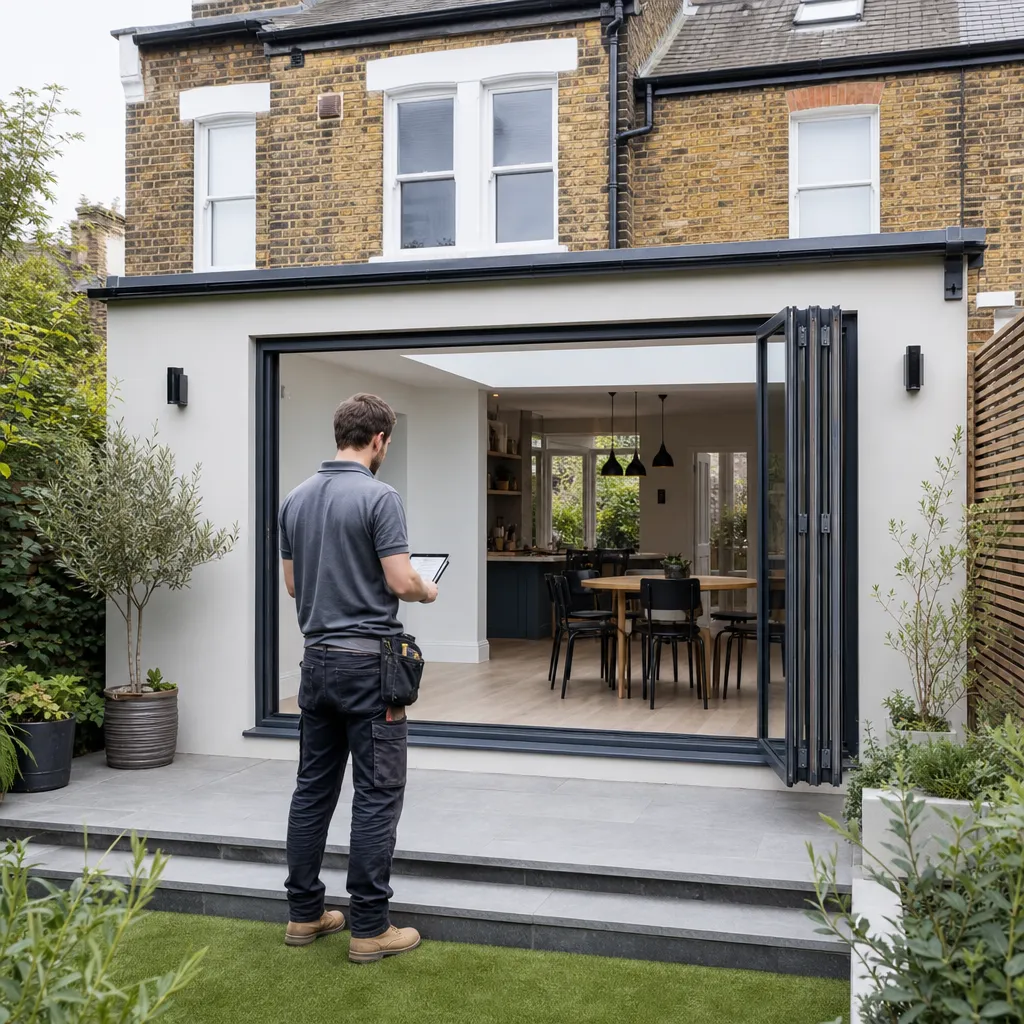 Improvement & Build
Home improvements for selling: investments that increase your property value
Not all home improvements deliver equal return when selling.
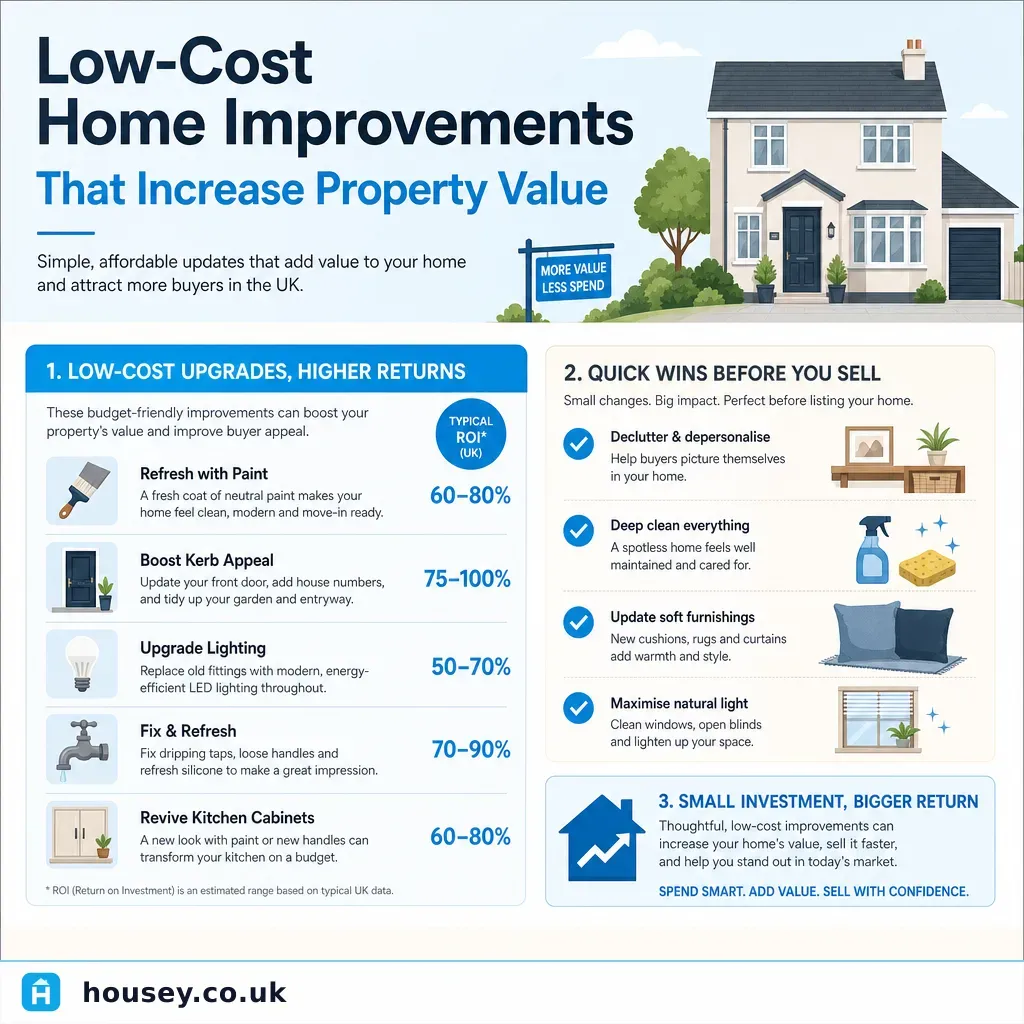 Improvement & Build
Low-Cost Home Improvements That Increase Property Value
Cosmetic upgrades such as fresh neutral paint, improved kerb appeal, tidied gardens, and refreshed kitchens and bathrooms can meaningfully improve a property's saleability and perceived value at relatively low cost.
 Improvement & Build
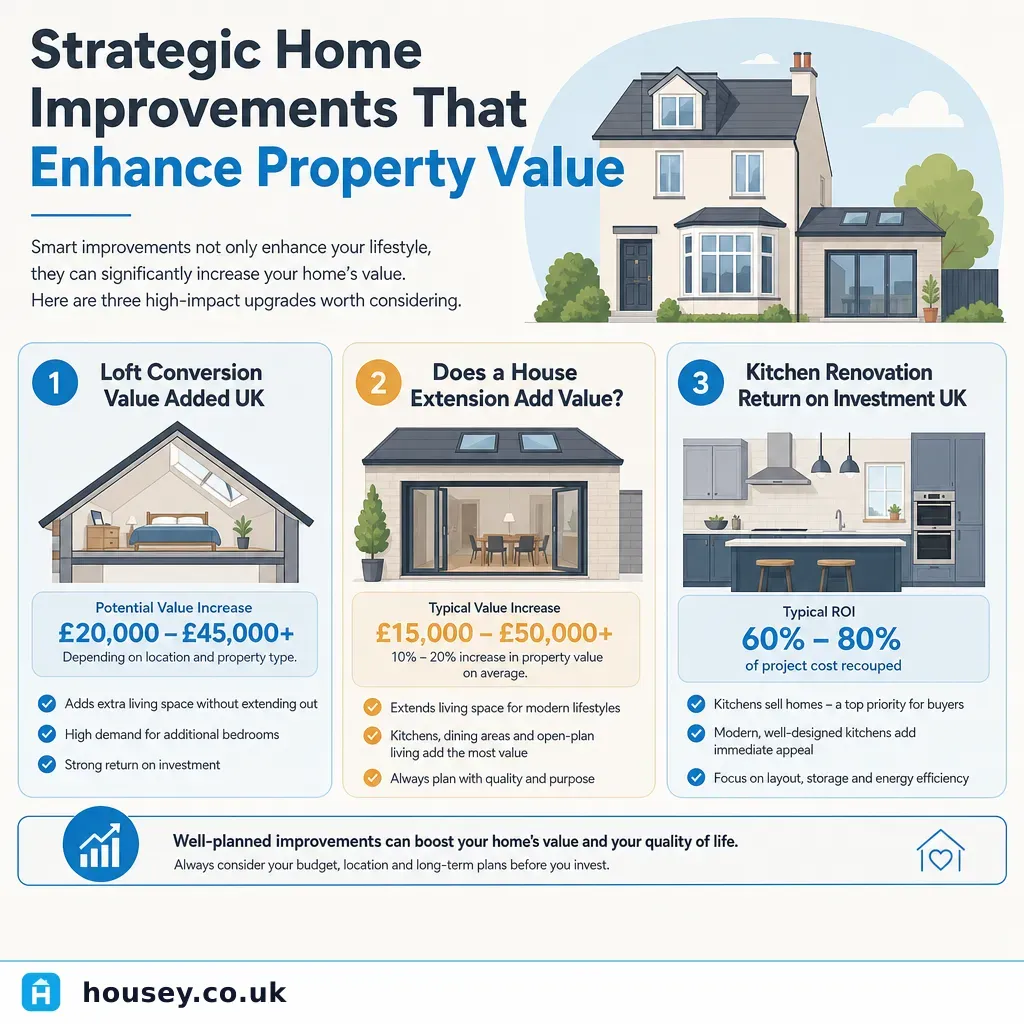
Strategic Home Improvements That Enhance Property Value
The home improvements most likely to add value in the UK are loft conversions (typically 10–20%), rear extensions (5–15%), and updated kitchens and bathrooms.
 Improvement & Build
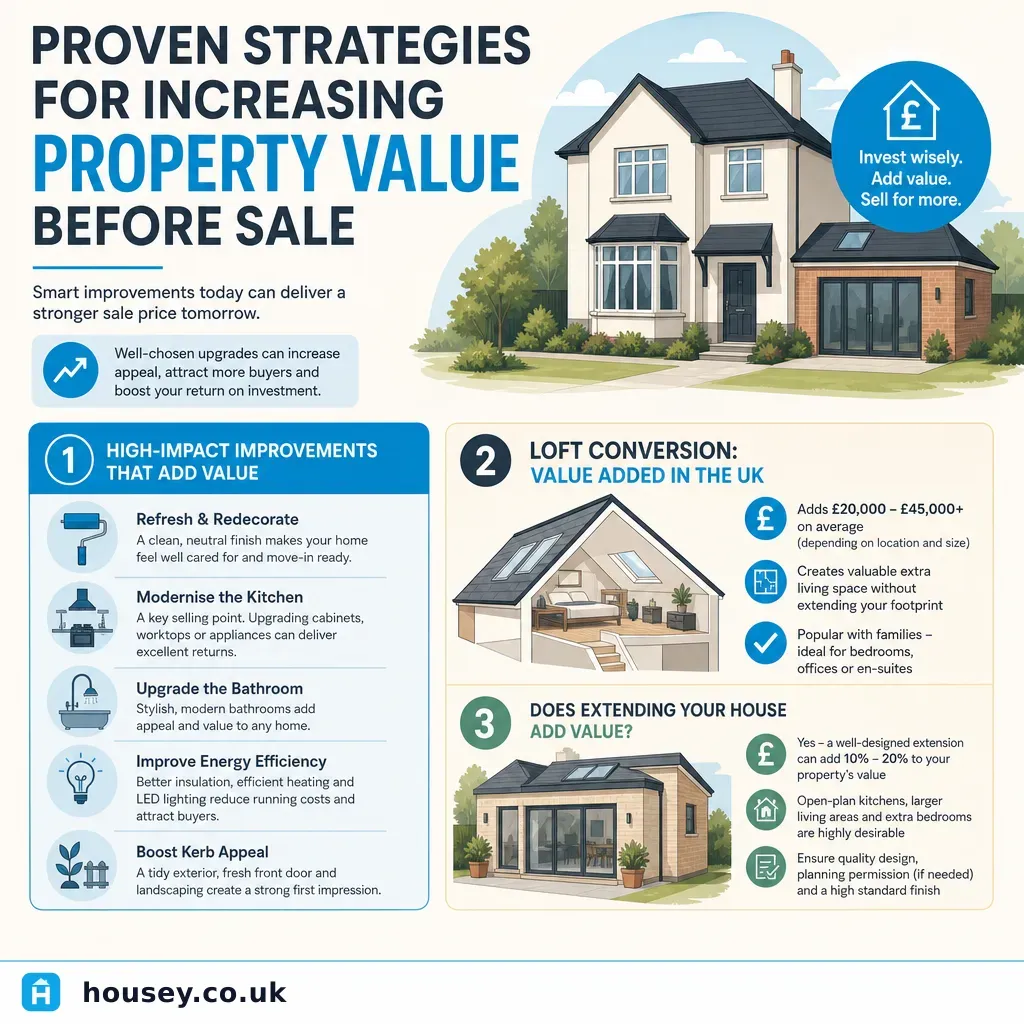
Proven Strategies for Increasing Property Value Before Sale
The improvements most consistently linked to value uplift in UK property are loft conversions (15–20%), rear extensions (5–15%), and EPC improvements.