Adding an External Exit to a Finished Basement: Costs and Considerations
By Housey · Last reviewed 31st of May 2026
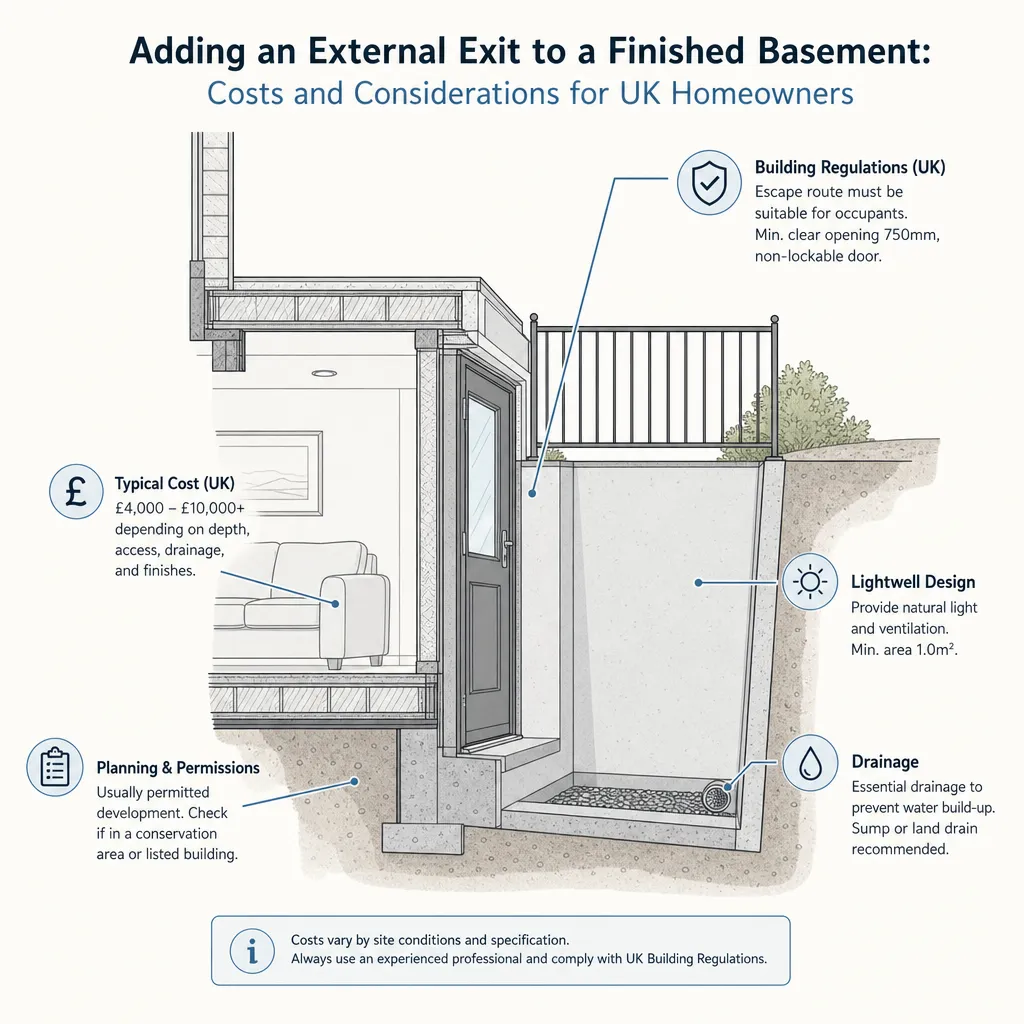
Adding an External Exit to a Finished Basement: Costs and Considerations
Adding a new external exit to an existing finished basement is one of the more technically complex home improvement projects a UK homeowner can undertake. It typically arises when converting a cellar into a habitable room, bringing a lower-ground floor space up to building regulations standards, or improving emergency escape from a basement flat. The project cuts through loadbearing structure, demands careful waterproofing, and draws on several parts of the Building Regulations — making it essential to involve the right professionals before any cutting begins.
Key points
- Building Regulations approval under Parts A (structure), B (fire safety), C (moisture resistance), and H (drainage) is required for any new opening cut into a basement wall.
- A structural engineer must design the opening and provide calculations before any cutting or propping work starts — basement walls are almost always loadbearing.
- A lighwell (area well or dry area) requires a trapped floor drain and typically extends at least 900 mm from the external wall face.
- The Party Wall etc. Act 1996 may apply if excavation is within 3 metres of a neighbouring building's foundations, triggering a Section 6 notice requirement.
- Planning permission is required if the property is listed, in a conservation area, or if the lighwell or opening materially affects an elevation visible from a highway.
What does adding an external exit involve?
In UK practice, the scope typically includes: cutting a structural opening in an existing basement or lower-ground floor wall; forming a lighwell outside the new door to bring ground level down to the door threshold; installing a trapped floor drain in the lighwell; fitting steps or a stair from the lighwell to garden level; waterproofing the new opening, threshold, and lighwell junction in accordance with BS 8102:2022; and installing a compliant external door. This is distinct from constructing a new basement, though some structural and waterproofing principles overlap.
Do you need planning permission?
Decision tree: planning permission
- Permitted development likely applies if: the lighwell and opening are wholly below ground or within the rear garden, the principal elevation facing the highway is unaffected, and the property is not listed and not subject to an Article 4 Direction or conservation area designation.
- Apply for planning permission if: the lighwell or steps are visible from a public highway and create a new opening in the principal or side elevation; the property is listed (Listed Building Consent is always required for external alterations); or Article 4 restrictions have removed permitted development rights.
- Check with your local planning authority (LPA) if: you are uncertain whether the works affect the building's principal elevation or whether an Article 4 Direction applies to the property.
- Consult a planning consultant if: the application is likely to be contentious, or the property has a complex planning or listed building history.
Permitted development rules are set out in the Town and Country Planning (General Permitted Development) (England) Order 2015, as amended. Rules in Wales and Scotland differ — check with your LPA if outside England.
Building regulations: what applies
Building regulations approval is required regardless of whether planning permission is needed.
Approved Document | What it covers | Key requirement |
|---|---|---|
Part A – Structure | Loadbearing wall integrity | Structural engineer's design; lintel or beam over new opening; temporary propping sequence |
Part B – Fire safety | Escape from habitable basement rooms | Compliant door (minimum 750 mm clear width recommended); unobstructed escape route to outside |
Part C – Moisture | Resistance of the new opening | Existing waterproofing must not be breached; lighwell drainage must prevent water ingress; BS 8102:2022 applies |
Part H – Drainage | Lighwell surface water management | Trapped floor drain connected to a suitable outfall; consent required for connection to public sewer |
Part K – Protection from falling | Steps and guarding in the lighwell | Stair or ladder dimensions must comply; guarding required where the drop exceeds 600 mm |
Part M – Access | Threshold heights and access routes | Accessible threshold may be required depending on intended use |
Your building control body — local authority building control (LABC) or a Registered Building Control Approver — must be notified before work starts and will inspect at defined stages.
Structural and waterproofing considerations
Structural engineering: The basement wall carries loads from the floors and walls above — potentially including party-wall loads in a terraced or semi-detached property. A structural engineer must design the opening size, specify the lintel material and bearing lengths, and detail the temporary propping sequence before any cutting begins. Proceeding without an engineer's sign-off carries serious safety and legal liability risks.
Waterproofing: BS 8102:2022 describes three protection systems: Type A (barrier), Type B (structurally integral), and Type C (drained cavity). Cutting a new opening interrupts or compromises an existing waterproofing system. A specialist waterproofing contractor should assess the existing system and design an appropriate treatment for the new threshold, reveal, and lighwell junction. This is a specialised discipline; most general builders are not qualified to design or warrant basement waterproofing systems.
Lighwell drainage: The lighwell floor drain must be trapped and connected to a suitable outfall — typically a soakaway where ground conditions allow. Connection to the surface water sewer requires consent from the sewerage undertaker. An undersized or poorly maintained lighwell drain is the most common cause of basement flooding after this type of project.
Indicative costs
Indicative UK costs, last reviewed 2026-05-31. Ranges are broad because costs are highly sensitive to wall construction, basement depth, ground conditions, drainage requirements, and site access.
Element | Indicative cost range |
|---|---|
Structural engineer (design and calculations) | £800–£2,500 |
Building control application fee (LABC) | £400–£900 |
Structural opening (cutting, propping, lintel, making good) | £3,000–£8,000 |
Lighwell (precast concrete or brick, steps, drainage) | £3,000–£10,000+ |
External door (supply; fire-rated if required by Part B) | £500–£2,500 |
Waterproofing to opening, threshold, and lighwell | £1,500–£5,000 |
Typical total range | £10,000–£30,000+ |
Complex projects — high water table, party-wall complications, conservation area requirements, deep basements, or difficult access — may cost considerably more. Always obtain at least three detailed written quotes from contractors who have inspected the site in person.
When this becomes urgent
Do not start any structural work and seek immediate professional advice if:
- Water is entering the basement at any existing point — a new opening will almost certainly make this significantly worse
- You have already cut or disturbed the wall without structural engineer sign-off
- The basement wall shows existing cracks, bowing, or signs of structural movement
- Neighbouring foundations are suspected to be within 3 metres of the planned excavation line
- The property is a terrace or semi-detached and you are uncertain whether the basement wall forms part of a party wall
Important limitations
This article provides general guidance only. Basement structural works involve loadbearing elements, complex waterproofing requirements, and multiple parts of Building Regulations. Rules, costs, and structural requirements vary significantly between properties depending on construction type, condition, depth, water table, and location. This guidance does not substitute for a structural engineer's assessment, building control consultation, or legal advice on planning and party wall matters. Always verify requirements with your local authority and a qualified structural engineer before starting work.
What to ask a qualified professional
Before instructing a structural contractor, ask:
- Can you confirm in writing that the basement wall is loadbearing and specify what structural support is required before any cutting?
- Who will produce the structural calculations, and will these be submitted to building control before work starts?
- What is the planned temporary propping sequence, and which party is responsible for its design and implementation?
- How will the existing waterproofing system be protected or reinstated at the new opening, and what warranty will be provided?
- What drainage is proposed for the lighwell, and does the proposed outfall require consent from the sewerage undertaker?
- Will you identify and serve Party Wall Act notices if required, or do I need to appoint a party wall surveyor separately?
- What building control inspection stages are required, and who will manage notifications at each stage?
When to get professional help
This project always requires a structural engineer and building control involvement as a minimum. You should also engage:
- A waterproofing specialist with experience of BS 8102 basement protection systems
- A party wall surveyor if the excavation is within 3 metres of an adjoining owner's building (Party Wall etc. Act 1996, Section 6)
- A planning consultant if the property is listed, in a conservation area, or the works affect a visible elevation
- A drainage engineer if the lighwell drain connection is not straightforward
Do not rely solely on a general building contractor to co-ordinate all of these specialist inputs without explicit confirmation of each professional's involvement and scope.
How Housey can help
Housey can connect you with experienced extension builders who undertake basement structural work, and building control consultants who can guide you through the approvals process from initial assessment through to completion certificate. Compare vetted professionals in your area before committing to any structural work.
Frequently asked questions
Do I always need building regulations for adding a basement exit?
Yes, always. Any structural opening in a basement wall, a new lighwell, and a new external door all require building regulations approval. This applies regardless of whether planning permission is also needed. You must notify your building control body before structural work starts; do not proceed on the basis of a contractor's assurance alone.
How deep does a lighwell need to be?
The lighwell must be deep enough to accommodate the door threshold and provide a clear walkway. A projection of at least 900 mm from the external wall face is a common starting point, but the required dimensions depend on the door swing, drainage design, step configuration, and any guarding requirements. Confirm specific dimensions with your structural engineer and building control officer.
Does the Party Wall Act apply to this work?
It may. If excavation for the lighwell is within 3 metres of an adjoining owner's building, Section 6 of the Party Wall etc. Act 1996 applies and a formal notice must be served. If the basement wall is itself a party wall, Section 2 may also apply. Consult a party wall surveyor if there is any doubt about proximity to a shared boundary.
Will structural alterations affect my home insurance?
Yes. Any significant structural alteration should be notified to your home insurer before work starts; failure to do so may affect your cover during construction. On completion, a building control completion certificate confirms the work has been inspected and approved, which also matters for future property sales and mortgage applications.
Sources and further reading
- Building regulations: approved documents — GOV.UK
- Party Wall etc. Act 1996: explanatory booklet — GOV.UK
- Permitted development rights for householders: technical guidance — GOV.UK
- BS 8102:2022 — Protection of below ground structures against water from the ground — British Standards Institution
Useful next reads
 Improvement & Build
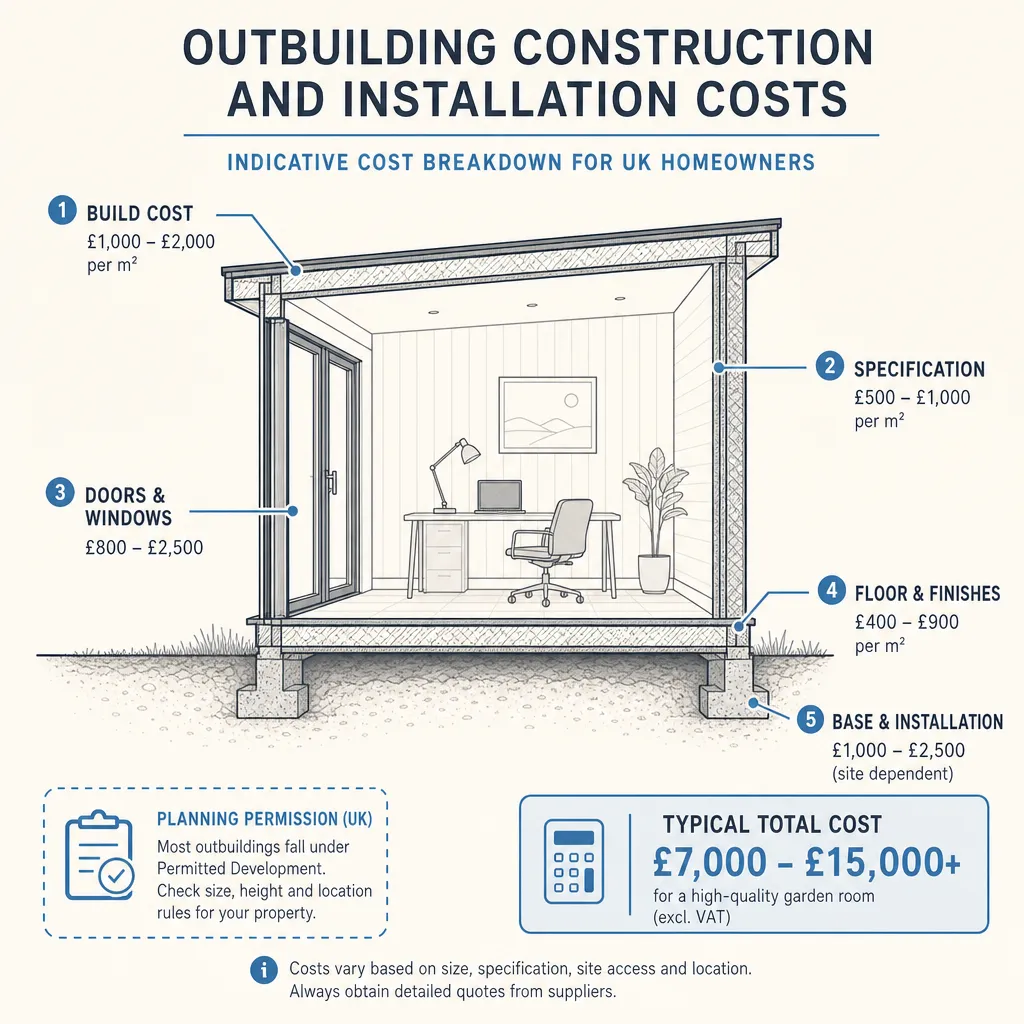
Outbuilding Construction and Installation Costs
Building an outbuilding in the UK typically costs between £5,000 and £60,000+, depending on size, materials, and specification.
 Improvement & Build
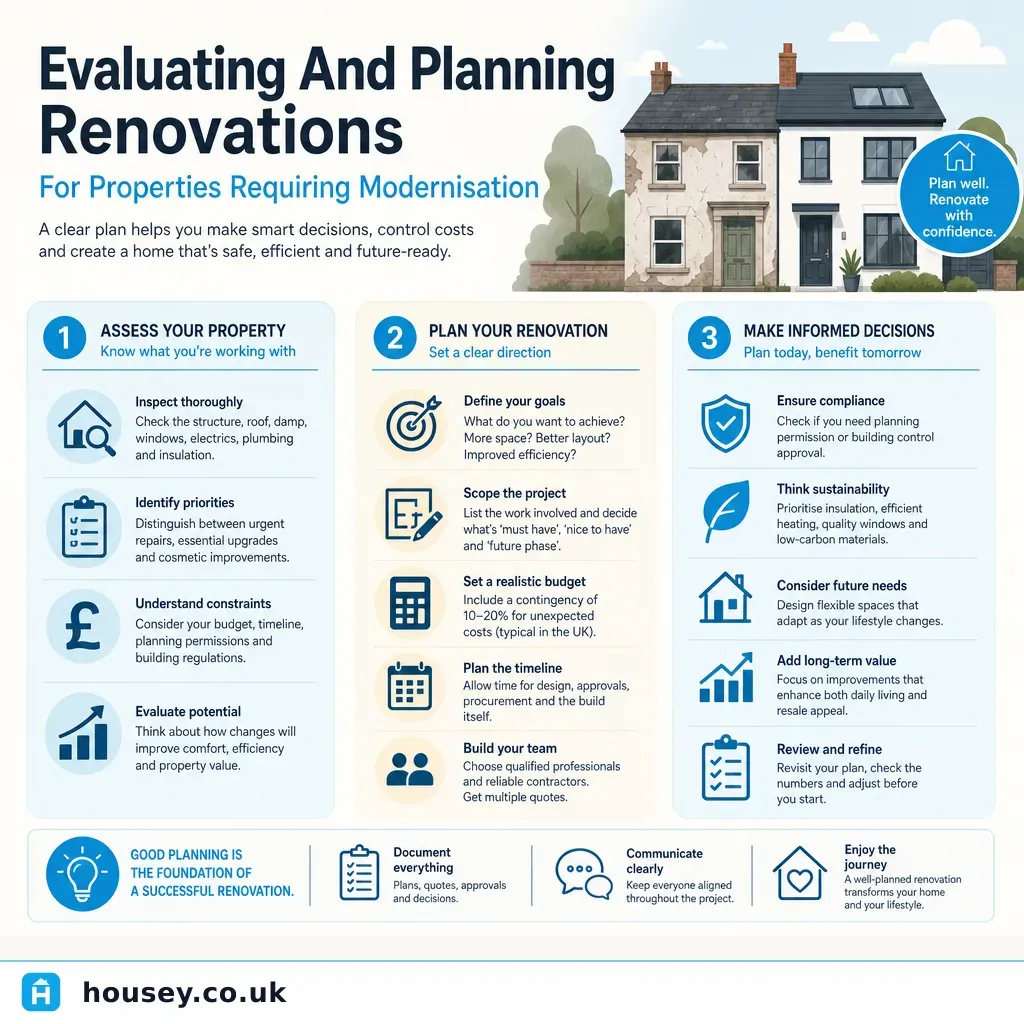
Evaluating And Planning Renovations For Properties Requiring Modernisation
Start by commissioning a condition survey — RICS Level 3 for pre-1919 properties — to identify structural defects, damp, and services issues before finalising a budget.
 Improvement & Build
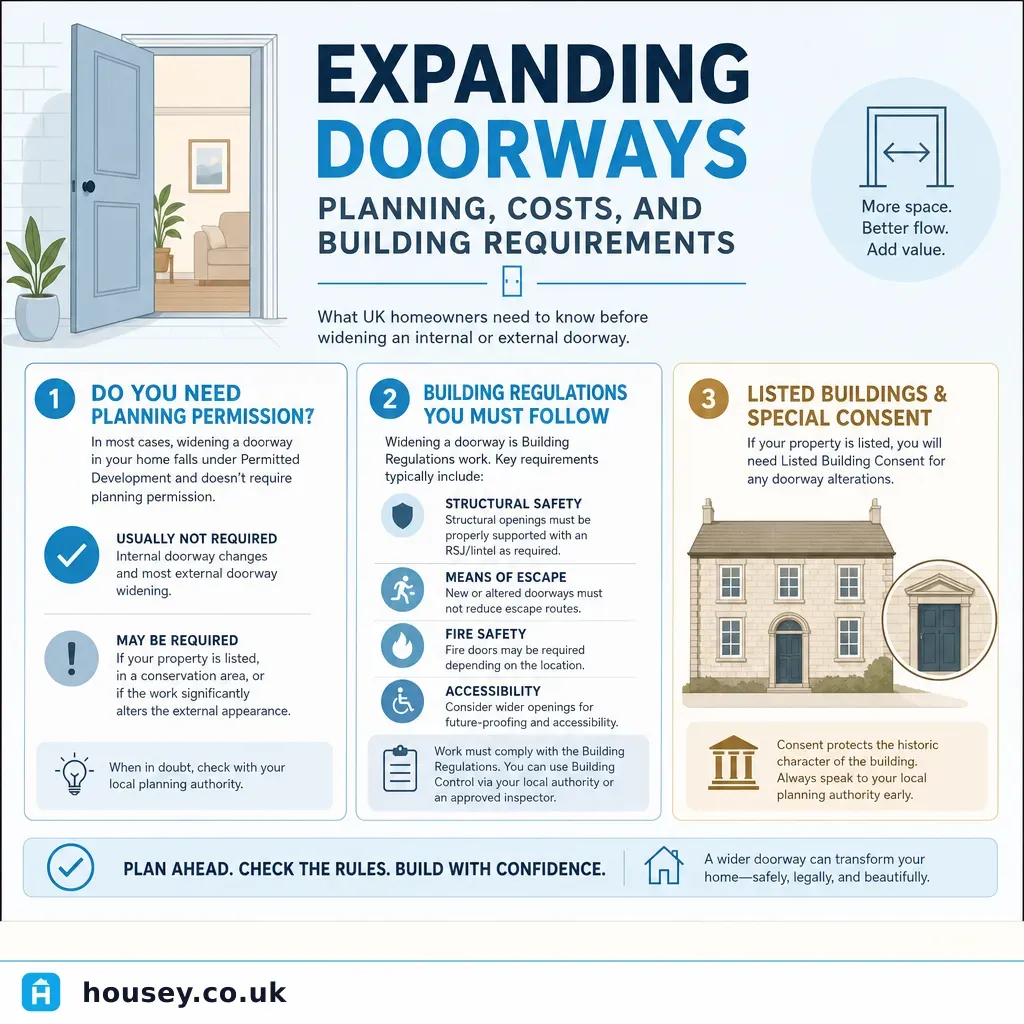
Expanding Doorways: Planning, Costs, and Building Requirements
Expanding a doorway in a load-bearing wall requires Building Regulations Part A approval and a structural engineer's lintel design.
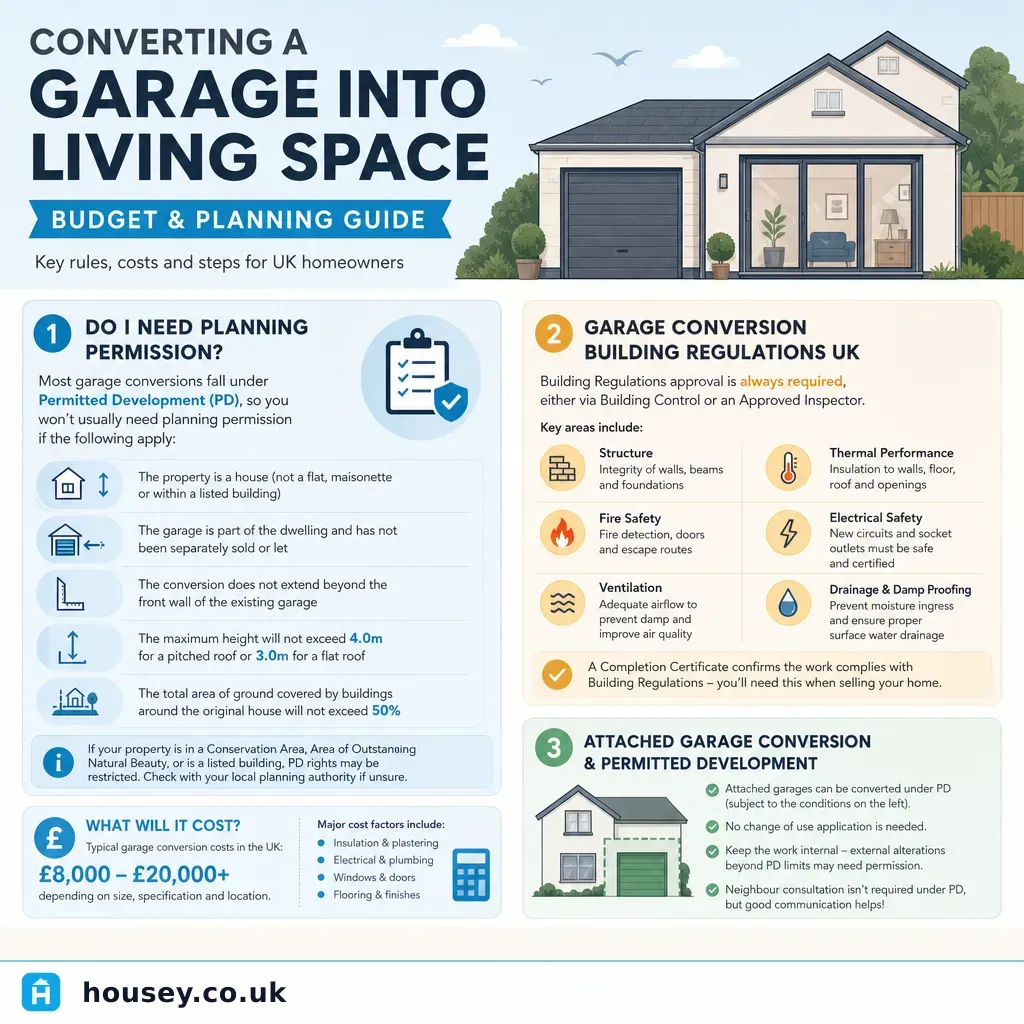 Improvement & Build
Converting a Garage into Living Space: Budget and Planning Guide
A single-garage conversion typically costs £8,000–£20,000 in the UK.
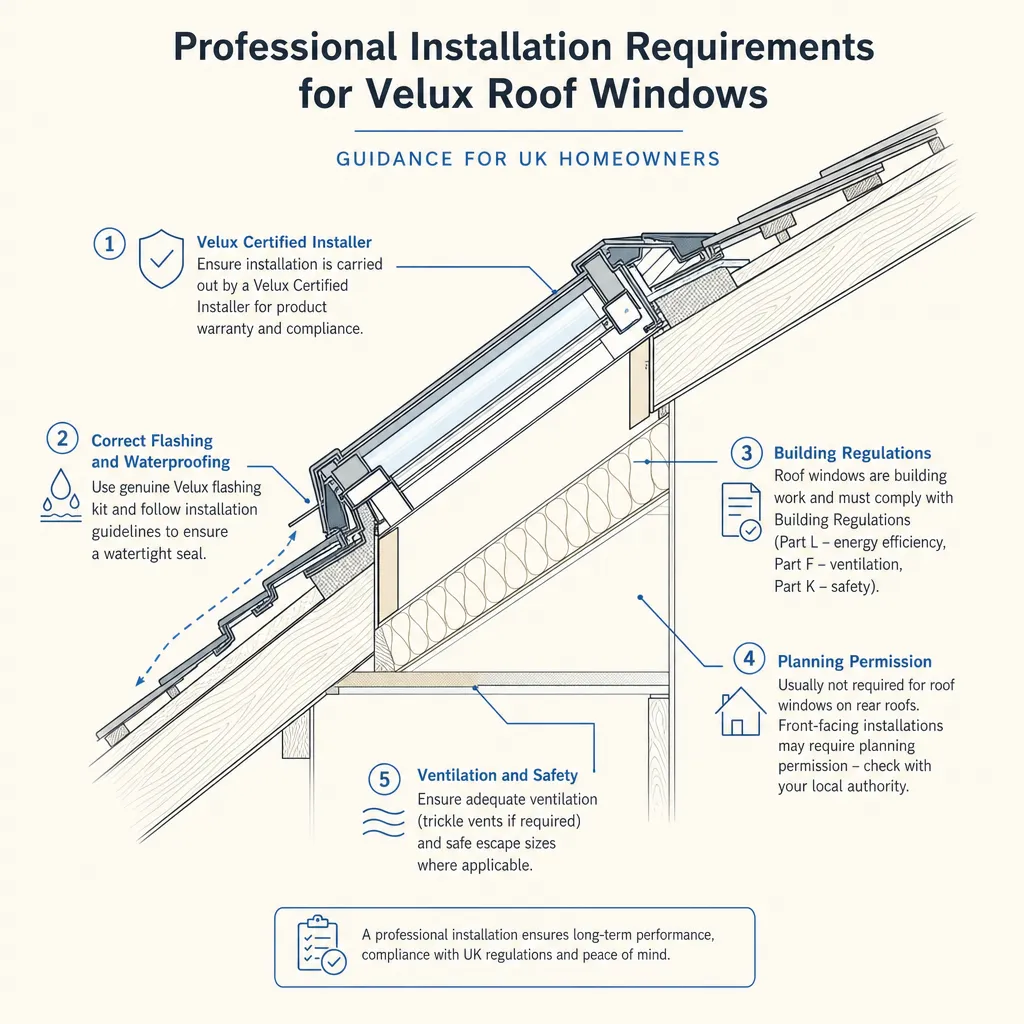 Improvement & Build
Professional Installation Requirements for Velux Roof Windows
Velux roof windows installed as replacements in the same opening usually fall under permitted development, but new openings or changes on listed buildings or in conservation areas require planning permission.