Professional Installation Requirements for Velux Roof Windows
By Housey · Last reviewed 11th of May 2026
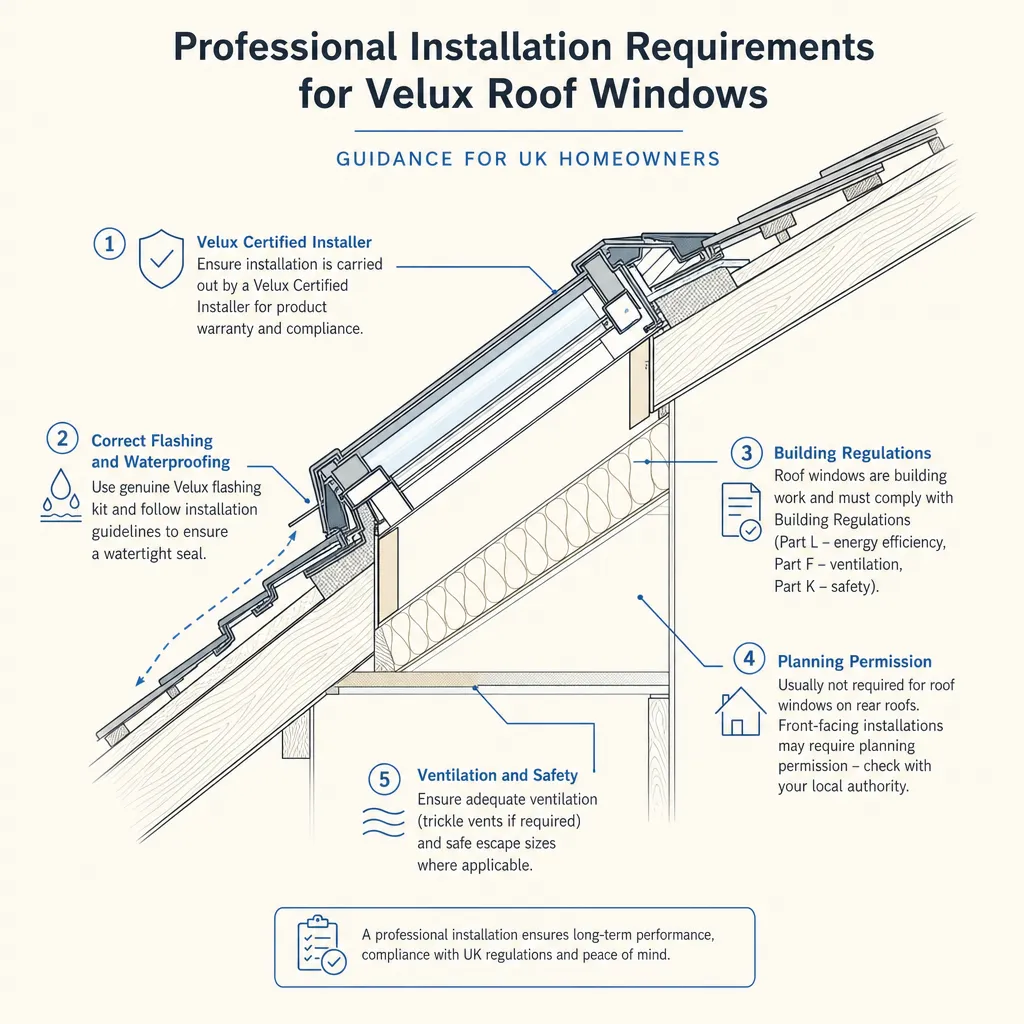
Professional Installation Requirements for Velux Roof Windows
Roof windows are one of the most popular ways to bring natural light into a loft room or improve a converted attic space, and VELUX is the most widely specified brand in the UK residential market. Homeowners often ask whether any qualified roofer or carpenter can carry out the work — or whether specific accreditations, Building Regulations notifications, or planning applications are also involved. The answer depends on whether you are replacing an existing window or creating a new opening, the property's planning status, and the scope of any associated works.
Key points
- Replacing an existing roof window like-for-like in England is generally permitted development under Schedule 2, Part 1, Class C of the Town and Country Planning (General Permitted Development) (England) Order 2015, provided the replacement does not project more than 150 mm above the existing roof plane.
- Building Regulations Part L (energy efficiency) applies to replacement and new roof windows in existing dwellings; the installed product must meet the applicable limiting U-value set out in Approved Document L — confirm the current threshold before specifying a product.
- Part A (structural) applies whenever a new opening is cut into the roof: trimming rafters and providing structural support requires assessment and will normally need building control sign-off.
- VELUX operates a Certified Installer programme in the UK; registered installers have completed product-specific training and can register installations for extended warranties of up to 20 years on qualifying products, compared with the standard 10-year product guarantee.
- On listed buildings and in some conservation areas, permitted development rights for roof alterations are removed; Listed Building Consent or a full planning application is required before any installation proceeds.
Planning permission: when you need it
The starting point for most homeowners in England is whether the installation is a like-for-like replacement. Under Schedule 2, Part 1, Class C of the Town and Country Planning (General Permitted Development) (England) Order 2015, replacing an existing roof window with one that does not protrude more than 150 mm above the existing roof slope and does not exceed the highest part of the roof is generally permitted development.
A planning application is normally required if:
- You are creating a new opening where no roof window previously existed.
- The proposed window projects more than 150 mm above the existing roof slope.
- The property is a listed building — permitted development rights are removed and Listed Building Consent is needed.
- The property is in a conservation area, World Heritage Site, or Area of Outstanding Natural Beauty and the window faces a highway.
- The roof alteration would, in the local planning authority's view, harm the character of the roofscape.
Rules differ in Scotland, Wales, and Northern Ireland. Always confirm with your local planning authority before beginning work, particularly on listed or locally restricted properties.
Building Regulations: what applies
Building Regulations approval or a building control notification may be required when:
- A new structural opening is cut into the roof — Part A applies to the trimming of rafters, lintel provision, and structural adequacy of the modified roof.
- The installation changes the thermal performance of the dwelling — Part L requires the new product to meet the limiting U-value threshold or not materially worsen the overall fabric energy performance.
- Ventilation to a habitable room depends primarily on the new roof window — Part F applies.
- The installation is part of a loft conversion to habitable use, in which case Part B (fire egress), Part E (sound), and other Parts may also apply.
For a straightforward like-for-like replacement of an existing roof window using a product that meets the Part L U-value requirement, formal building control notification may not be required. This should be confirmed with your local authority building control (LABC) or an Approved Inspector before work starts — do not assume exemption applies.
The VELUX Certified Installer programme
VELUX operates a Certified Installer scheme across the UK. Installers who have completed the programme:
- Have received product-specific training covering installation sequences, flashing kit selection, and weatherproofing detail for different roof coverings.
- Can register installations for extended manufacturer warranties — up to 20 years on some products, compared with the standard 10-year product guarantee.
- May be listed on the VELUX installer finder tool on the manufacturer's website, allowing homeowners to verify status.
Certification does not automatically qualify an installer to sign off Building Regulations compliance — that remains the responsibility of the local authority building control body or an Approved Inspector. However, using a Certified Installer reduces the risk of incorrect flashing details, which are a common cause of water ingress and voided warranties on roof window installations.
Installation routes and compliance
Scenario | Permitted development? | Building Regs notification needed? | Recommended installer |
|---|---|---|---|
Like-for-like replacement, same size, ≤150 mm protrusion | Usually yes | Confirm U-value compliance; formal notice often not required | VELUX Certified Installer or experienced roofer |
New opening, within PD limits | Usually yes | Likely required (Part A and Part L) | Certified Installer; submit building control notice |
Conservation area, like-for-like | Check with local planning authority first | Confirm with building control | As above; LPA pre-application advice recommended |
Listed building | No — Listed Building Consent required | Also required | Specialist conservation roofer; LPA involvement essential |
Part of a loft conversion | Planning may be needed depending on dormer form | Required (multiple Parts) | Architect or building designer plus Certified Installer |
What to look for when choosing an installer
When requesting quotes for a roof window installation, check the following:
- VELUX Certified Installer status — verifiable on the VELUX website before instructing.
- Public liability insurance of at least £1–2 million, particularly where structural work to rafters is involved.
- Written specification of the flashing system, lintel or trimmer details, and weatherproofing materials proposed for your specific roof covering.
- Clarity on Building Regulations responsibility — who will submit any required notice and manage building control sign-off?
- Written confirmation of the product U-value and compliance with Approved Document L.
- Documentation on completion: installation record, building control completion certificate where applicable, and VELUX warranty registration confirmation.
Important limitations
This article provides general guidance on the planning and Building Regulations framework and VELUX's installer accreditation programme as they stand in England in May 2026. Planning policy and Building Regulations are periodically updated; requirements also vary depending on local planning authority policies, the property's planning history, and site-specific conditions. Do not rely on this guide as a substitute for advice from your local planning authority, a qualified building professional, or an Approved Inspector. Rules differ in Scotland, Wales, and Northern Ireland.
What to ask a qualified professional
Before instructing a roofer or installer for a roof window project, ask:
- Are you on the VELUX Certified Installer scheme, and can I verify your status on the VELUX website?
- Does this project require planning permission, and will you advise on or assist with any application?
- Is a Building Regulations notification required, and who will submit and manage it through to sign-off?
- What flashing system will you use, and how does it interface with my specific roof covering — interlocking concrete tiles, plain clay tiles, or natural slate?
- What is the U-value of the proposed window, and does it comply with Approved Document L?
- Will the installation affect my existing roof warranty or the waterproofing of the surrounding roof area?
- What written documentation will I receive on completion — installation record, building control certificate, and VELUX warranty registration?
When to get professional help
Seek advice from a VELUX Certified Installer, an experienced roofer, or a building control officer before proceeding if:
- You are unsure whether the project requires planning permission, particularly on a listed building or in a conservation area.
- The installation involves cutting a new structural opening rather than replacing an existing window.
- There is existing damage, rot, or evidence of water ingress in the roof structure at the proposed installation point.
- The project is part of a wider loft conversion and multiple sets of Building Regulations apply.
- A buyer or mortgage lender has queried the compliance of a previous installation.
How Housey can help
Housey connects homeowners with qualified window and door installers and experienced roofers for roof window projects of all scales. If your installation requires formal building control notification, Housey can also connect you with specialists in building regulations drawings to prepare the documentation required before work starts.
Frequently asked questions
Does a Velux window installation always require Building Regulations approval?
Not always. A straightforward like-for-like replacement using a product that meets the Part L U-value requirement may not need a formal building control notification. Any project involving a new structural opening, a loft conversion, or a material change to the thermal envelope will usually require approval. Confirm with your local authority building control or an Approved Inspector before starting work.
Can any roofer install a Velux window?
Technically yes — Velux Certified Installer status is not a legal requirement. However, Velux recommends using a Certified Installer to ensure correct product specification, flashing detail, and warranty registration. An installer unfamiliar with the manufacturer's flashing systems may introduce weatherproofing errors that cause water ingress over time without being immediately visible.
Do I need planning permission to replace an existing roof window?
In most cases in England, replacing a roof window of the same or smaller size is permitted development, provided the replacement does not project more than 150 mm above the existing roof plane. Exceptions apply for listed buildings and some conservation areas. Rules differ in Scotland, Wales, and Northern Ireland — check with your local planning authority if in any doubt.
How long does a Velux window installation typically take?
A like-for-like replacement on an accessible roof can typically be completed in one day by an experienced installer. A new opening requiring structural trimming of rafters, building control inspection, and scaffolding may take two or more days for the physical works, with building control sign-off following in due course. Timescales vary with roof type, access, and project scope.
Sources and further reading
- Town and Country Planning (GPDO) 2015, Schedule 2, Part 1 — legislation.gov.uk
- Approved Document L: Conservation of fuel and power — GOV.UK
- Approved Document A: Structure — GOV.UK
- When is permission required? — GOV.UK Planning Practice Guidance
- Local Authority Building Control (LABC) — LABC
Useful next reads
 Improvement & Build
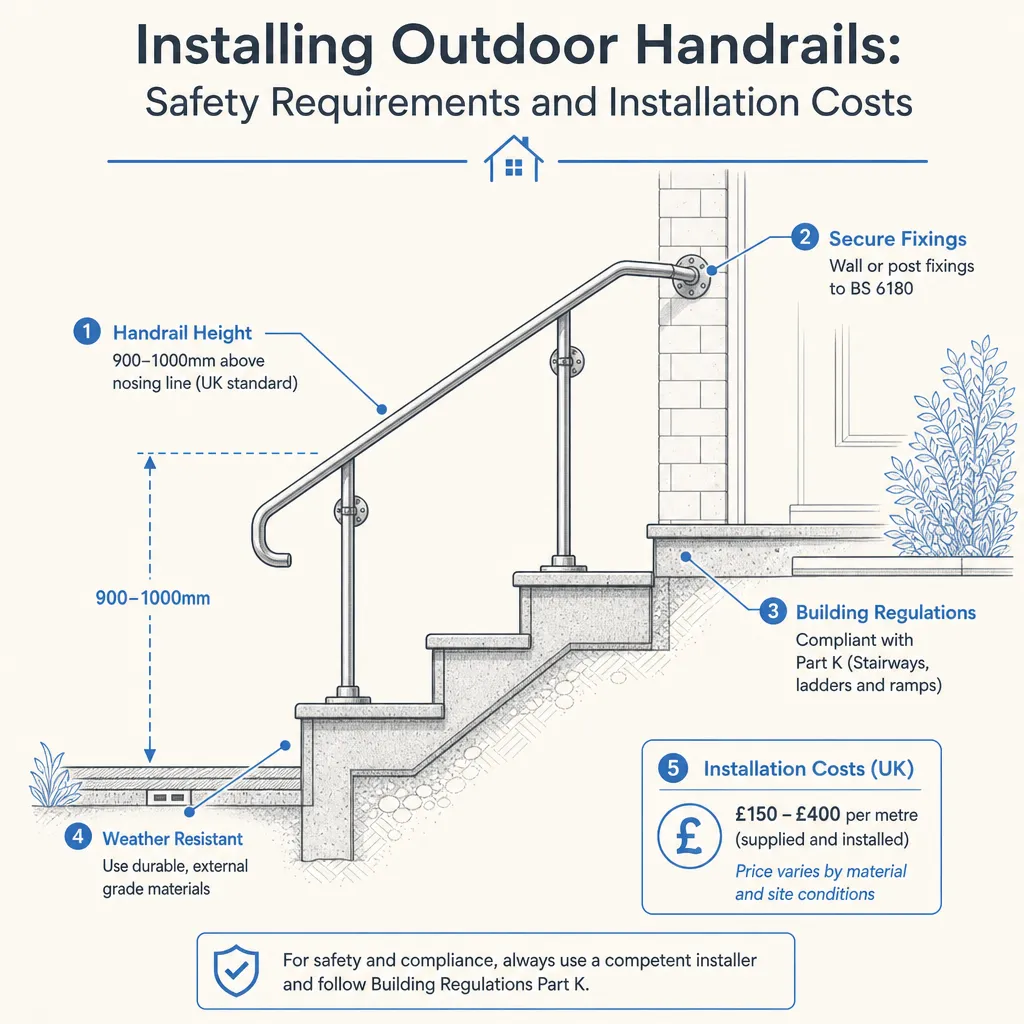
Installing Outdoor Handrails: Safety Requirements and Installation Costs
Outdoor handrails are required by Building Regulations Approved Document K on domestic stairs with two or more risers and on ramps rising more than 600mm.
 Improvement & Build
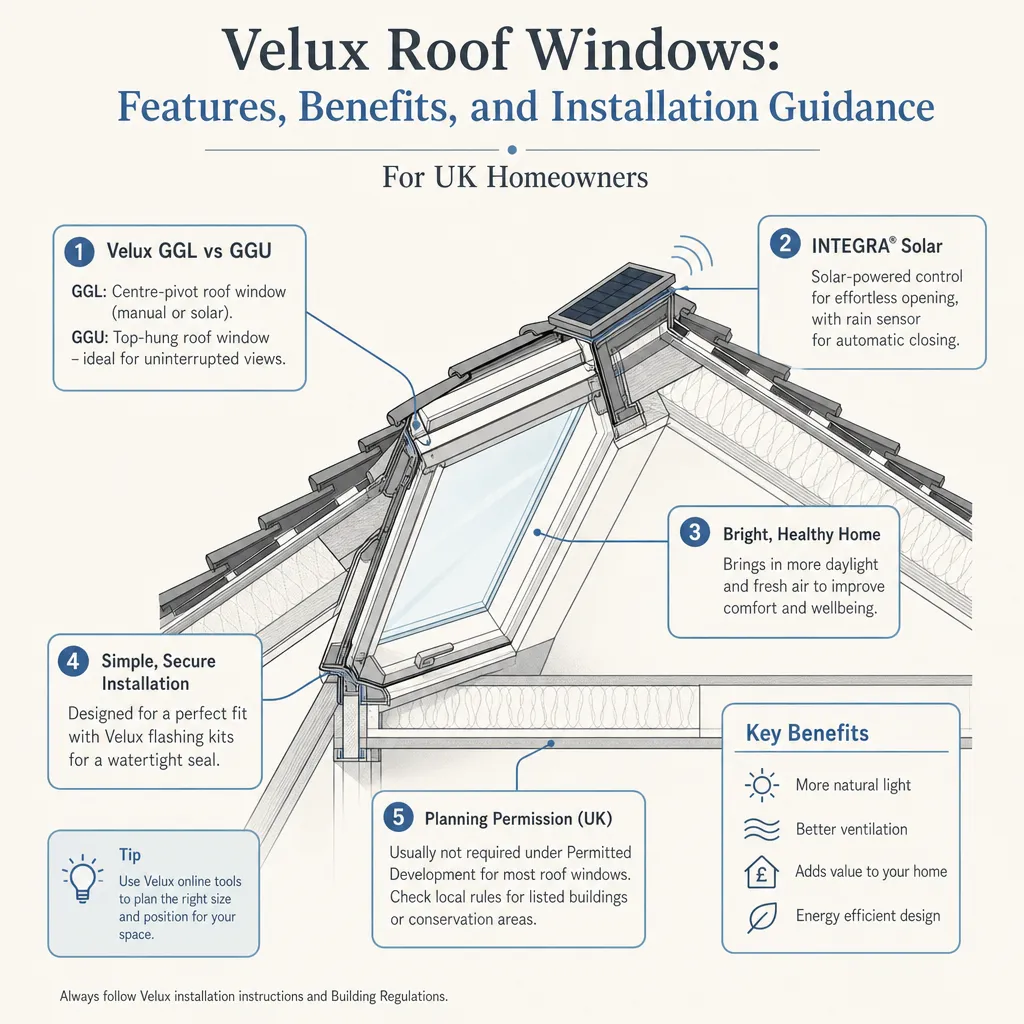
Velux Roof Windows: Features, Benefits, and Installation Guidance
Velux roof windows are the most widely specified brand for UK loft conversions and attic rooms.
 Improvement & Build
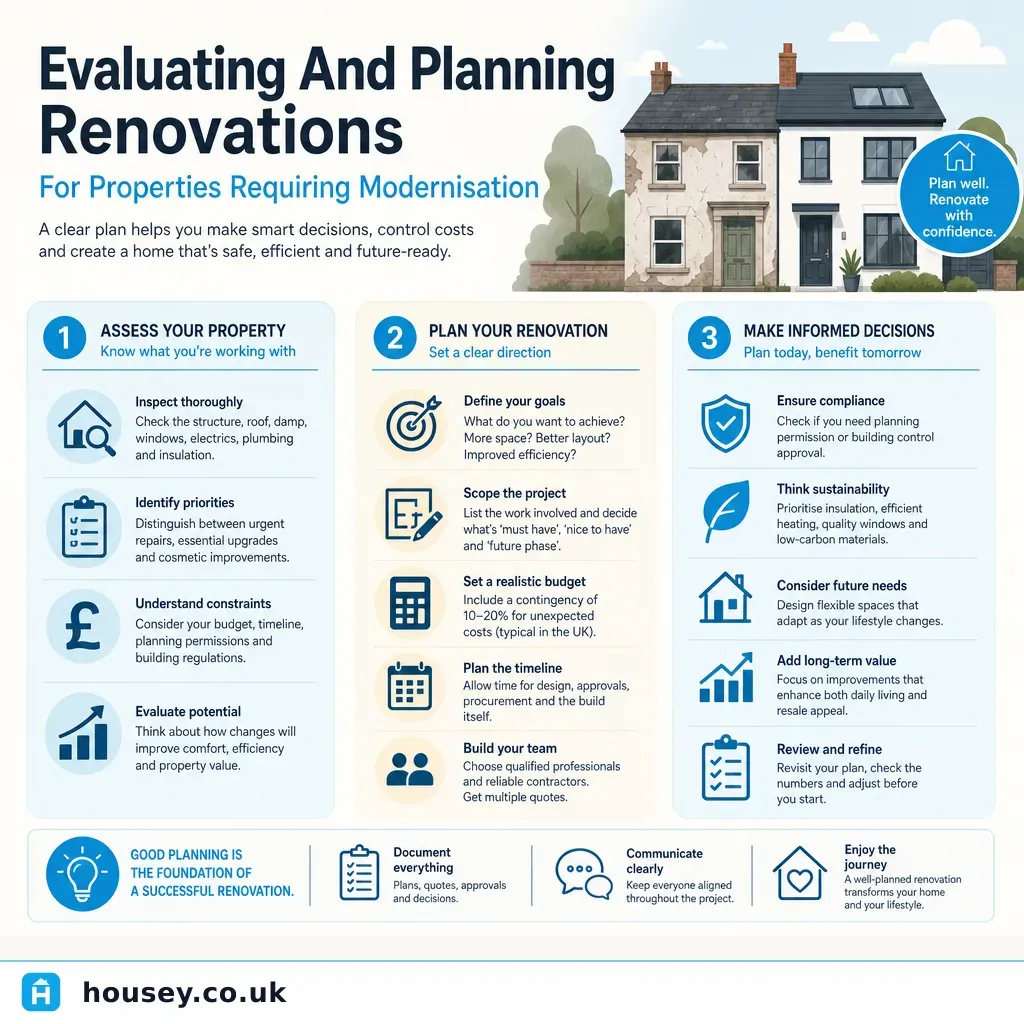
Evaluating And Planning Renovations For Properties Requiring Modernisation
Start by commissioning a condition survey — RICS Level 3 for pre-1919 properties — to identify structural defects, damp, and services issues before finalising a budget.
 Improvement & Build
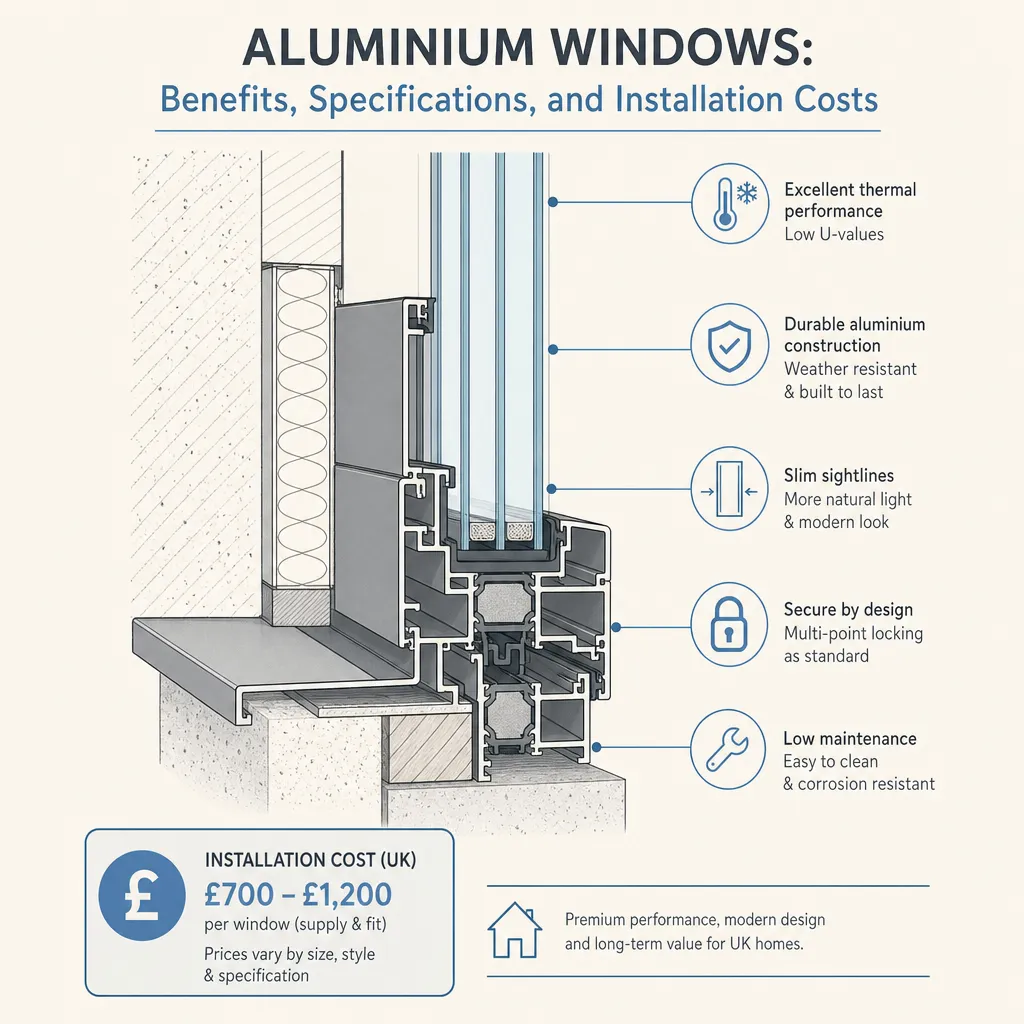
Aluminium Windows: Benefits, Specifications, and Installation Costs
Aluminium windows typically cost £600–£1,800 per window installed in the UK, depending on size and specification.
 Improvement & Build
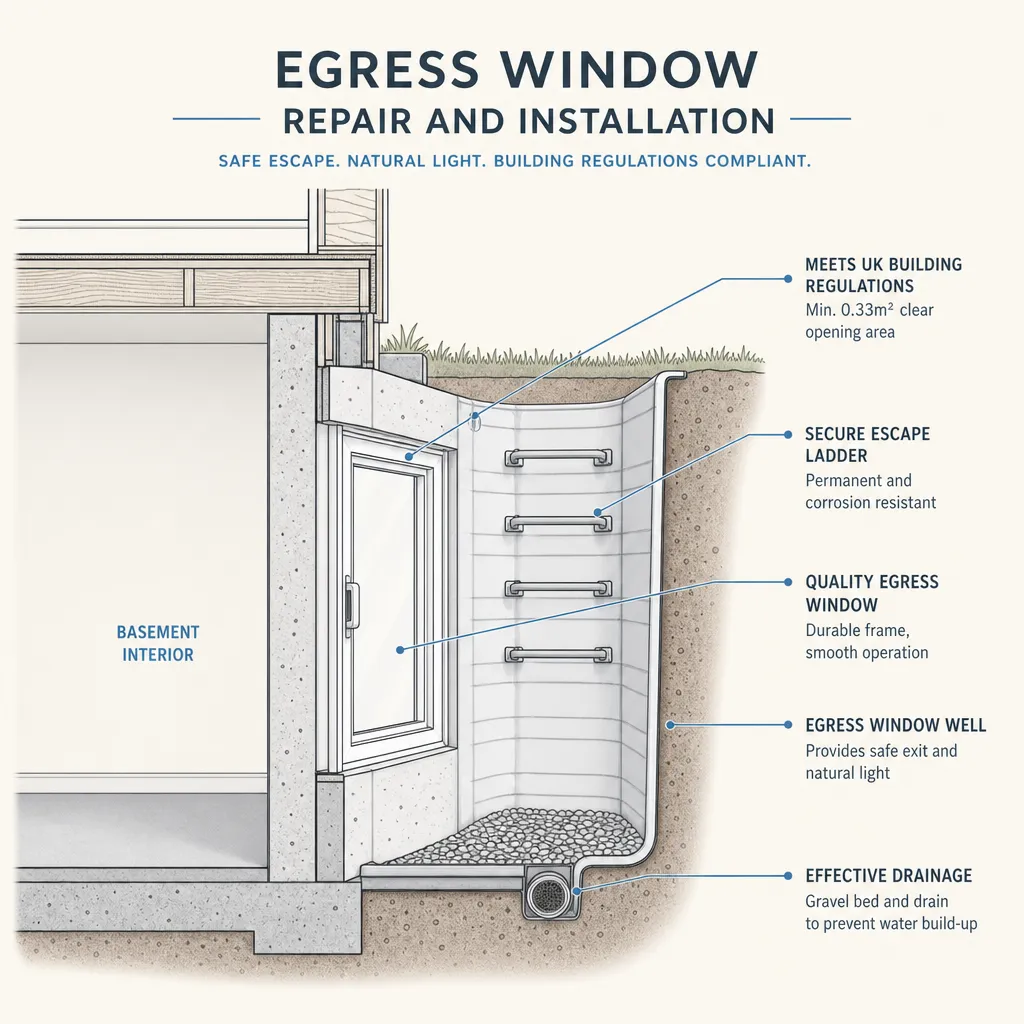
Egress Window Repair and Installation
An egress window is a window large enough to serve as an emergency escape route from a habitable room.