Addressing Invasive Species Findings in Property Surveys
By Housey · Last reviewed 1st of June 2026
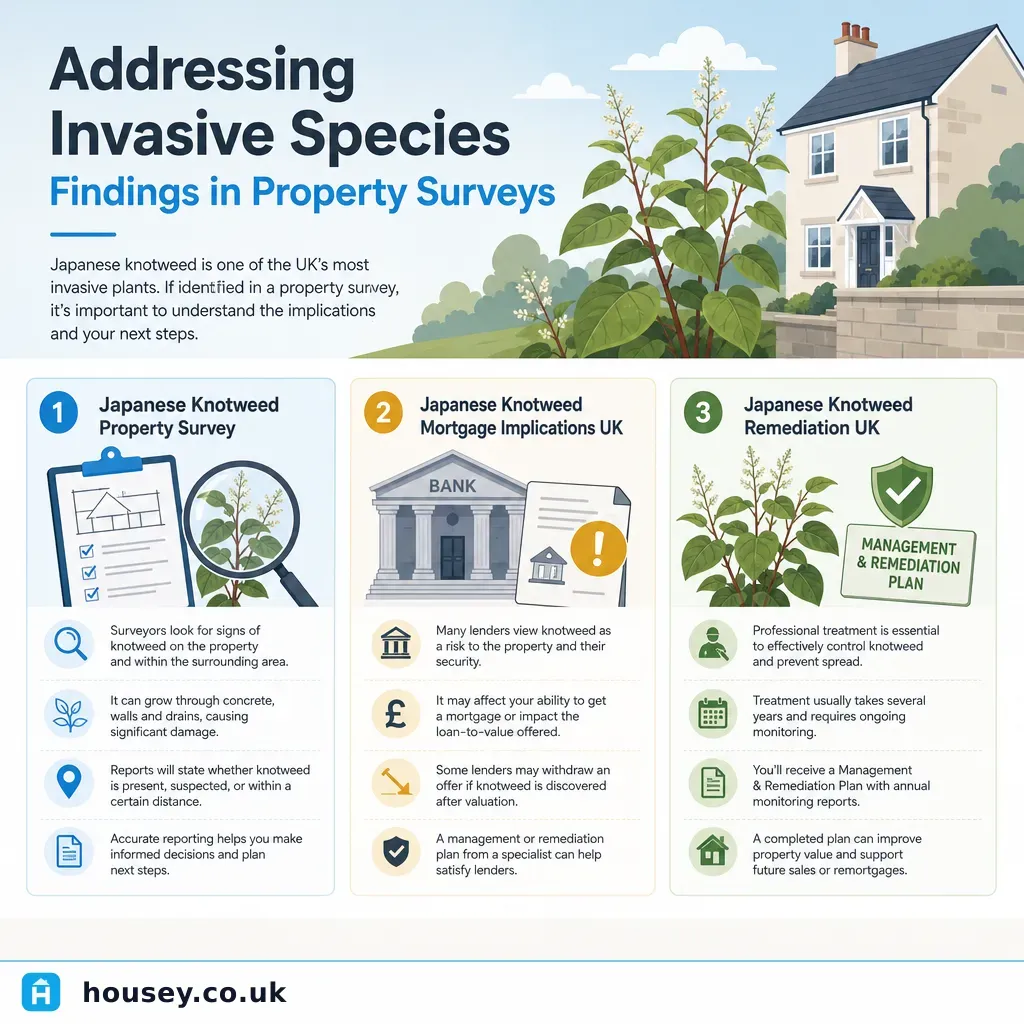
Addressing Invasive Species Findings in Property Surveys
Discovering that a property survey has flagged an invasive species — most commonly Japanese knotweed — can be one of the more unsettling moments in a property transaction, raising immediate questions about whether the purchase should proceed, who is responsible for remediation, and what the mortgage lender will say. These findings turn up during RICS home surveys, ecological surveys, and standard valuations, affecting properties of all ages and types across the UK. For sellers, disclosure obligations add a further layer of urgency that catches many off guard.
Key points
- Japanese knotweed must be disclosed by sellers on the TA6 Property Information Form; concealing it can expose a seller to a misrepresentation claim after completion.
- Under the Wildlife and Countryside Act 1981, it is a criminal offence to plant Japanese knotweed or cause it to spread into the wild.
- Many mortgage lenders require a PCA-accredited management plan and insurance-backed guarantee before lending on knotweed-affected properties; some apply a 7-metre threshold from the main structure.
- Giant hogweed is a public health hazard — its sap causes severe phototoxic burns and blisters — and should never be handled without specialist protective equipment.
- Herbicide treatment programmes for Japanese knotweed typically run for three to five growing seasons before a specialist can issue a completion certificate.
Which invasive species are commonly flagged in UK property surveys?
RICS surveyors, ecologists, and mortgage valuers increasingly note the presence of invasive non-native plants on or near residential properties. The most frequently encountered include:
Species | Risk to property | Risk to health | Legal status |
|---|---|---|---|
Japanese knotweed (Fallopia japonica) | Can damage hard landscaping, drains, and foundations if unchecked; major mortgage and sale obstacle | Low | Schedule 9, Wildlife and Countryside Act 1981; controlled waste when excavated |
Giant hogweed (Heracleum mantegazzianum) | Limited structural risk | HIGH — sap causes severe phototoxic burns | Schedule 9, Wildlife and Countryside Act 1981 |
Himalayan balsam (Impatiens glandulifera) | Low direct structural risk; destabilises riverbanks | Low | Schedule 9; common near watercourses |
Rhododendron (Rhododendron ponticum) | Outcompetes native vegetation; may indicate site neglect | Low | Not Schedule 9 but targeted by local management schemes in upland areas |
New Zealand pigmyweed (Crassula helmsii) | Aquatic; affects ponds and drainage features | Low | Schedule 9 |
Japanese knotweed is by far the most significant for property transactions because of its interaction with mortgage lending criteria and the legal duty to disclose.
What happens when a surveyor flags an invasive species?
A RICS Level 2 or Level 3 home survey may note suspected Japanese knotweed or other invasive species in the grounds section, typically assigning a Condition Rating 3 (requiring urgent attention) or adding a specialist referral note. The surveyor will not usually provide definitive identification or a management plan — that falls outside the scope of a standard home survey.
What you should do next depends on what has been found:
Decision tree: what to do after an invasive species is flagged
- Suspected Japanese knotweed noted, no management plan in place → Commission a specialist Japanese knotweed survey from a PCA-accredited contractor or qualified ecologist to confirm identification, map the extent, and produce a management plan.
- Management plan and insurance-backed guarantee already in place → Obtain copies from the seller; confirm the guarantee is transferable; check with your mortgage lender that the plan meets their criteria.
- Giant hogweed on or adjacent to the site → Do not approach or attempt removal. Instruct a specialist contractor immediately; inform your local council if the plant is on public or adjacent land.
- Multiple invasive species or a large infestation near a watercourse → Commission a full ecological survey to assess biodiversity impact and any obligations under the Environment Act 2021.
- Invasive species on neighbouring land only → Seek legal advice; neighbouring landowners have duties not to allow spread onto your property. This may still affect your mortgage offer.
Japanese knotweed and mortgage lending
The presence of Japanese knotweed has a disproportionate effect on property transactions compared with most structural defects, because many lenders have adopted explicit policies on it. While there is no single industry-wide standard, common lender positions include:
- Requiring an insurance-backed guarantee (IBG) from a PCA-accredited contractor before making a mortgage offer.
- Applying a distance threshold — commonly cited as 7 metres from the main structure, though this varies by lender — with knotweed within that zone treated as higher risk.
- Requiring evidence of an active management plan with annual treatment records.
If you are buying a property where knotweed has been identified, ask your solicitor to raise enquiries about the treatment history and obtain copies of any existing guarantees. Check directly with your mortgage lender about their specific requirements before proceeding.
Sellers must complete the TA6 Property Information Form honestly. Failing to disclose known knotweed — or actively concealing it — can give a buyer grounds for a misrepresentation claim after completion.
Remediation options and realistic timelines
There is no quick fix for Japanese knotweed. Responsible remediation involves one of three main approaches:
Herbicide treatment: The most common and cost-effective approach. Glyphosate-based herbicides are applied during the growing season, typically over three to five years, until regrowth ceases and a specialist can issue a completion certificate. Indicative UK costs, last reviewed 2026-06-01: treatment programmes range from around £1,500 to £5,000+ depending on infestation size, site access, and the number of seasons required. Always obtain at least three quotes.
Excavation and removal: Faster but significantly more expensive and disruptive. Knotweed rhizome must be treated as controlled waste and disposed of at a licensed facility; rhizomes can extend 3 metres below ground. Indicative UK costs, last reviewed 2026-06-01: typically £5,000–£30,000+ depending on volume and site complexity.
Root barrier installation: Used alongside herbicide treatment in some circumstances, particularly close to structures. Barriers prevent further rhizome spread but do not eradicate existing plants.
All approaches should be carried out by a PCA-accredited specialist. Unaccredited contractors cannot issue the insurance-backed guarantees that most lenders require.
What to ask a qualified professional
Before instructing a contractor or ecologist, ask:
- Are you PCA-accredited for Japanese knotweed treatment and management?
- Will the management plan include an insurance-backed guarantee, and is it transferable on sale?
- What is the treatment approach, how many site visits per year, and what is the anticipated programme length?
- How will you confirm eradication at the end of the programme, and what does the completion certificate cover?
- Can you provide a site-specific map showing the full extent of the infestation?
- What are your obligations if knotweed regrows after the guarantee period?
- Do you carry adequate professional indemnity and public liability insurance?
Important limitations
This article provides general information about invasive species findings in UK property surveys. Regulations, lender policies, and remediation requirements vary by property, lender, and location and may change over time. Nothing here constitutes legal, financial, or ecological advice. A qualified ecologist or PCA-accredited contractor should inspect your specific site. If your mortgage offer or sale is at risk, consult your solicitor and engage a specialist without delay.
Red flags: when to act without delay
- A surveyor assigns Condition Rating 3 to vegetation in a RICS home survey or adds a specialist referral note for invasive species.
- You can see bamboo-like cane regrowth, hollow stems with purple speckles, or large shield-shaped leaves consistent with Japanese knotweed during spring or summer.
- The seller has left the knotweed question on the TA6 blank, or their answers are vague or inconsistent.
- Giant hogweed is present and any person has had skin contact with the sap — seek medical attention immediately.
- Your mortgage lender has requested evidence of a management plan before issuing a formal offer.
- There is evidence of recent landscaping that may have spread or buried knotweed rhizome across the site.
When to get professional help
Commission a specialist survey if any invasive species is flagged in a home survey, if you observe suspicious vegetation during a property viewing, or if you are a seller who suspects knotweed is present before listing. A suitably qualified ecologist can identify species correctly and advise on your legal duties under the Wildlife and Countryside Act 1981 and the Environment Act 2021. Attempting to remove knotweed without specialist knowledge risks spreading rhizome fragments and creating a larger, harder-to-treat infestation — and may invalidate any existing guarantee.
How Housey can help
Housey connects you with qualified professionals for ecological surveys and RICS home surveys — including Level 2 and Level 3 inspections that assess grounds and site conditions. Where a targeted assessment of a known invasive species concern is needed before committing to a purchase, a specific defect survey can provide focused professional opinion on extent, risk, and remediation options.
Frequently asked questions
Does Japanese knotweed automatically prevent a mortgage?
Not necessarily. Many lenders will lend on knotweed-affected properties provided an insurance-backed management plan from a PCA-accredited contractor is in place and meets their specific criteria. Requirements vary between lenders, so check directly with your lender and solicitor before proceeding.
Can I treat Japanese knotweed myself?
You can apply glyphosate herbicide on your own residential land, but DIY treatment will not produce the insurance-backed guarantee and completion certificate that most mortgage lenders require. Effective herbicide programmes take multiple growing seasons. A PCA-accredited contractor's programme is the standard most lenders and future buyers will expect.
Is Japanese knotweed on a neighbouring property my problem?
It can be. If knotweed on a neighbouring property is encroaching onto yours, your lender may still require a management plan. You can seek legal advice about requiring the neighbour to address it, and your local council environmental health team may also be able to assist.
How long does a Japanese knotweed management plan take?
Herbicide-based programmes typically run for three to five growing seasons. Excavation is faster — usually completed in weeks — but significantly more expensive. The exact timeline depends on infestation size, extent of rhizome spread, and site access.
What is an insurance-backed guarantee for knotweed treatment?
It is a guarantee issued by a PCA-accredited contractor confirming that the treatment programme meets industry standards, underwritten by an insurance policy. The guarantee is usually transferable to future owners and is the document most mortgage lenders will ask for before lending on a knotweed-affected property.
Sources and further reading
- Wildlife and Countryside Act 1981 — legislation.gov.uk
- Invasive non-native species: guidance — GOV.UK
- Japanese knotweed and residential property — RICS
- Giant hogweed: dealing with it safely — GOV.UK
- Japanese knotweed guidance for homeowners — Property Care Association
Useful next reads
 Surveys & Inspections
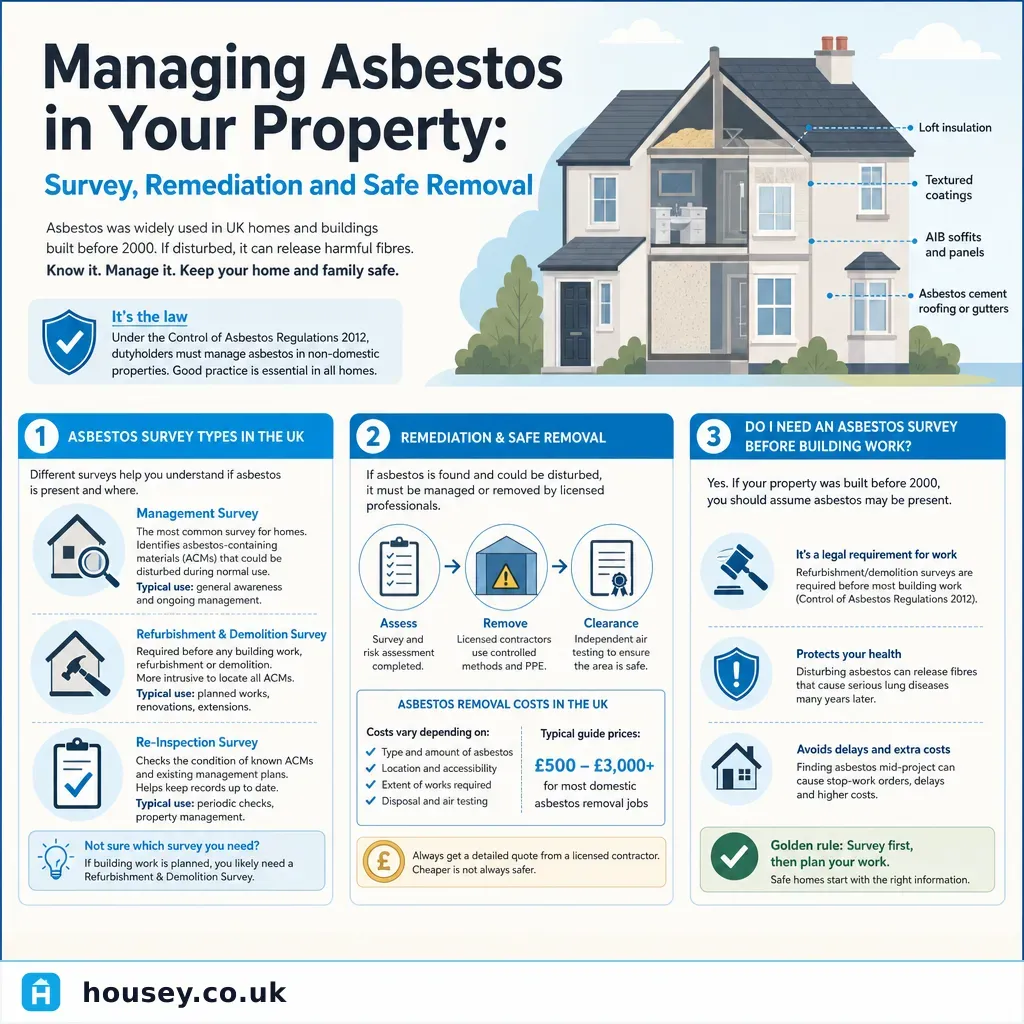
Managing Asbestos in Your Property: Survey, Remediation and Safe Removal
Asbestos was commonly used in UK buildings until its full ban in 1999.
 Surveys & Inspections
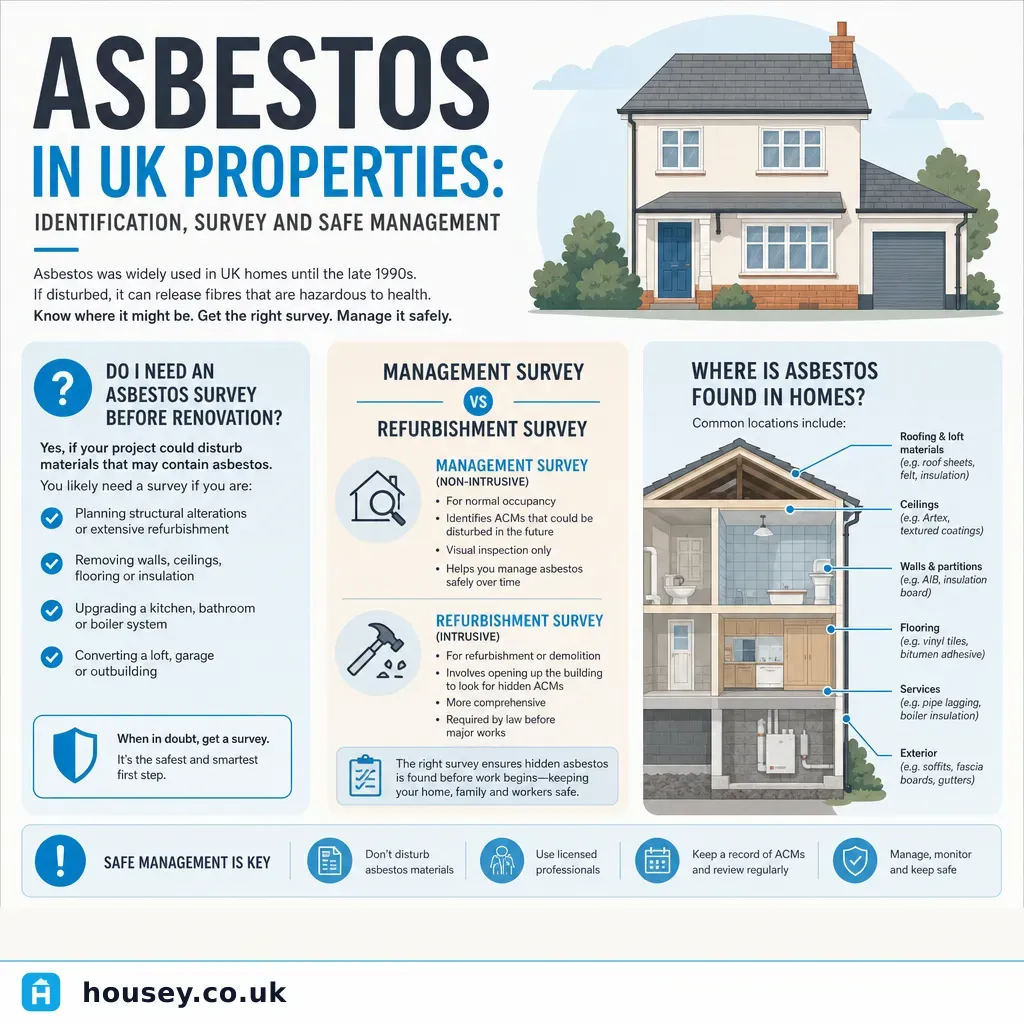
Asbestos in UK Properties: Identification, Survey and Safe Management
Asbestos may be present in any UK property built or refurbished before 2000.
 Surveys & Inspections
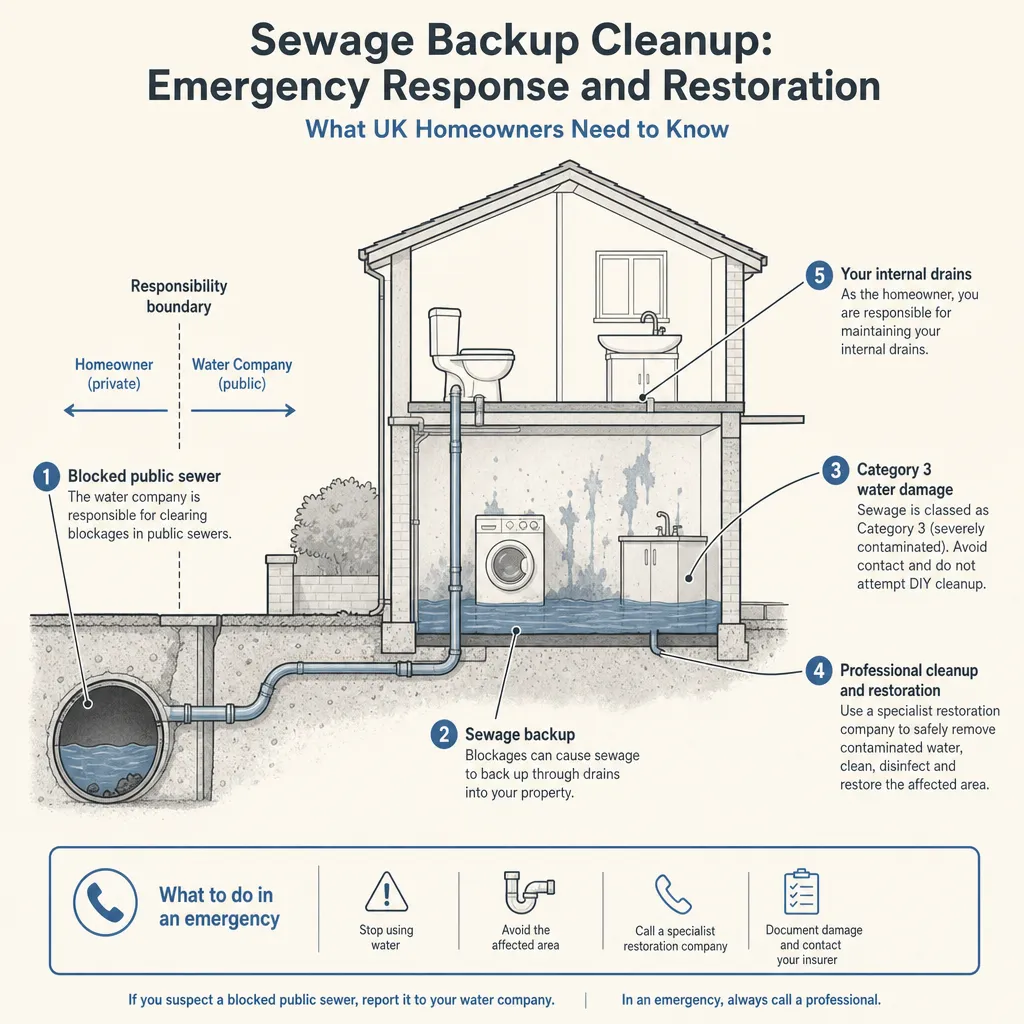
Sewage Backup Cleanup: Emergency Response and Restoration
A sewage backup should be treated as a Category 3 contamination event.
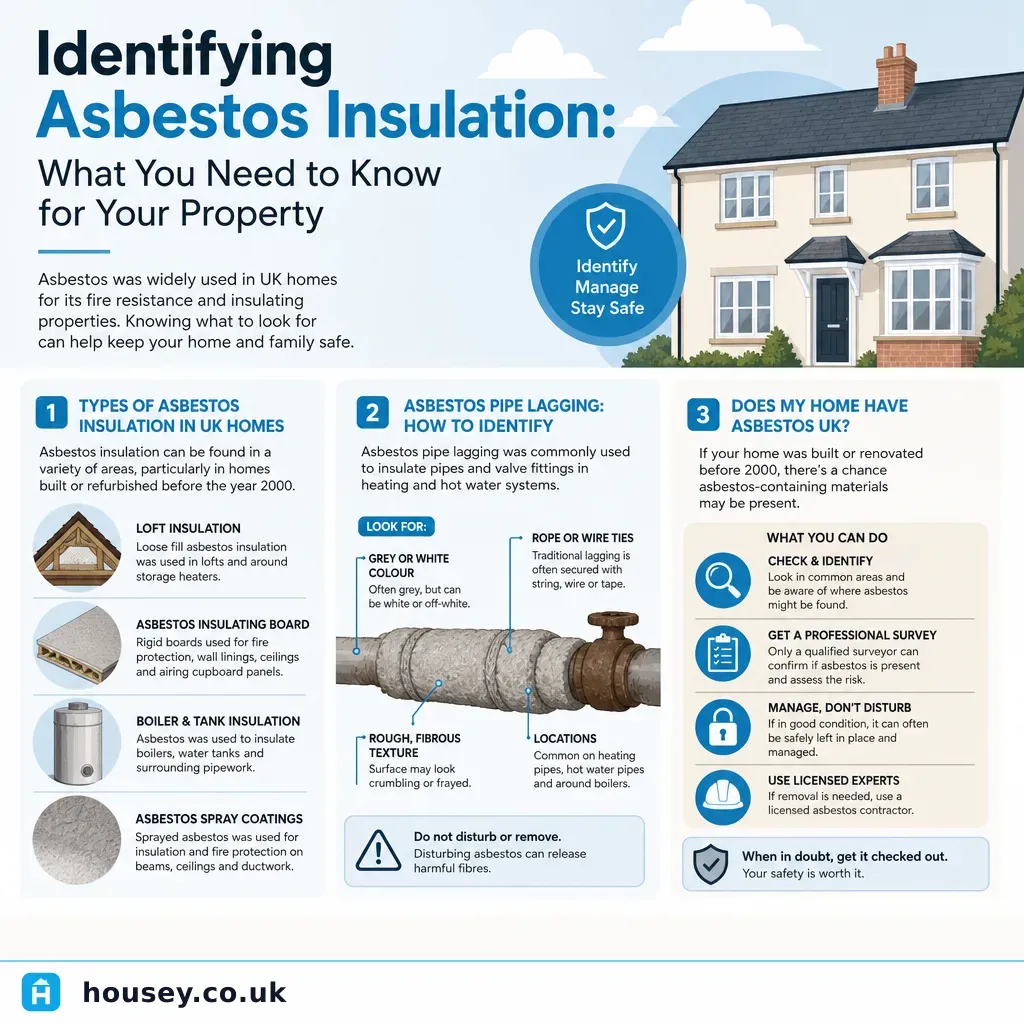 Surveys & Inspections
Identifying Asbestos Insulation: What You Need to Know for Your Property
Asbestos insulation was widely used in UK properties built before 2000, commonly found in pipe lagging, ceiling tiles, loose-fill loft insulation, and around boilers.
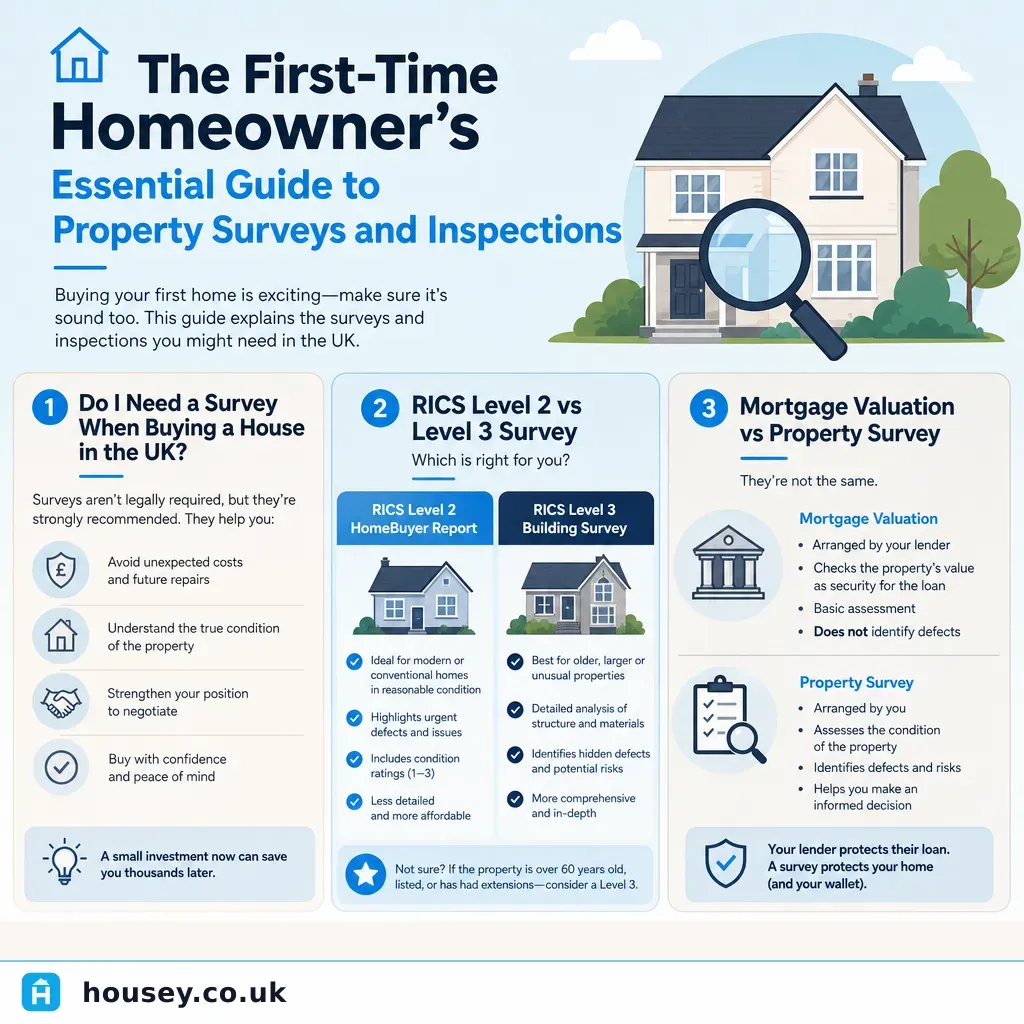 Surveys & Inspections
The First-Time Homeowner's Essential Guide to Property Surveys and Inspections
First-time buyers in the UK need more than the mortgage valuation — that report protects the lender, not you.