The First-Time Homeowner's Essential Guide to Property Surveys and Inspections
By Housey · Last reviewed 31st of May 2026
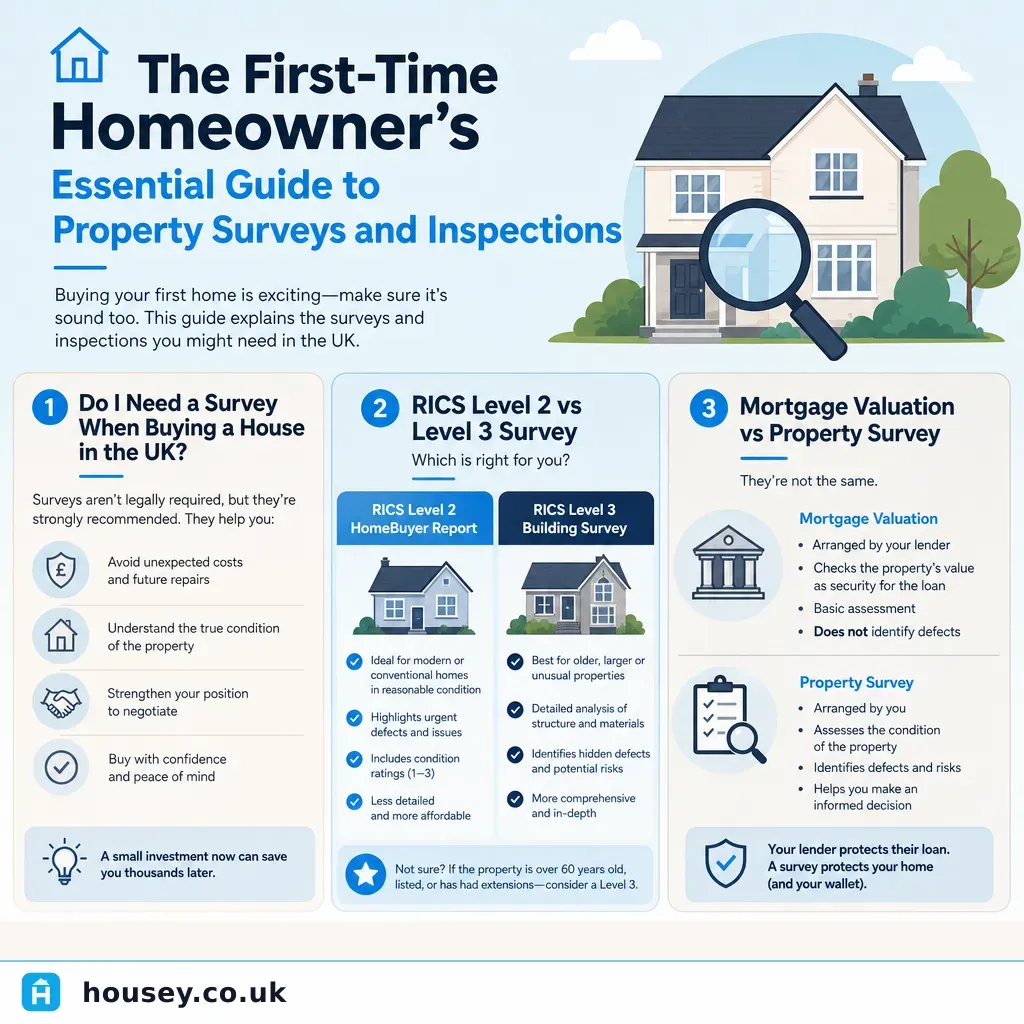
The First-Time Homeowner's Essential Guide to Property Surveys and Inspections
Buying your first home in the UK means navigating a wave of professional reports, fees, and decisions — often under time pressure from vendors and agents. One of the most consequential choices happens before exchange of contracts: deciding whether to commission a property survey and, if so, which type. Getting this wrong can mean spending thousands more after completion on defects that a thorough inspection would have flagged beforehand.
Key points
- A mortgage lender's valuation is not a property survey — it confirms the property is adequate security for the loan and provides no meaningful detail about the building's condition; the report belongs to the lender, not to you.
- RICS markets its inspection products as the Home Survey Level 1, Level 2, and Level 3; Level 3 (formerly the Building Survey) is the most comprehensive and covers defect analysis, likely causes, repair options, and maintenance advice.
- Level 2 is typically suited to conventional homes built after approximately 1900 in reasonable condition; Level 3 is recommended for older, larger, extended, unusual, or visibly defective properties.
- A RICS-accredited surveyor must hold current professional indemnity insurance; verify their membership on the RICS Find a Surveyor register at ricsfirms.com before instructing.
- Survey fees are non-refundable if you withdraw from the purchase — commission one only once your offer is accepted and the property is Sold Subject to Contract (SSTC).
Why the mortgage valuation is not enough
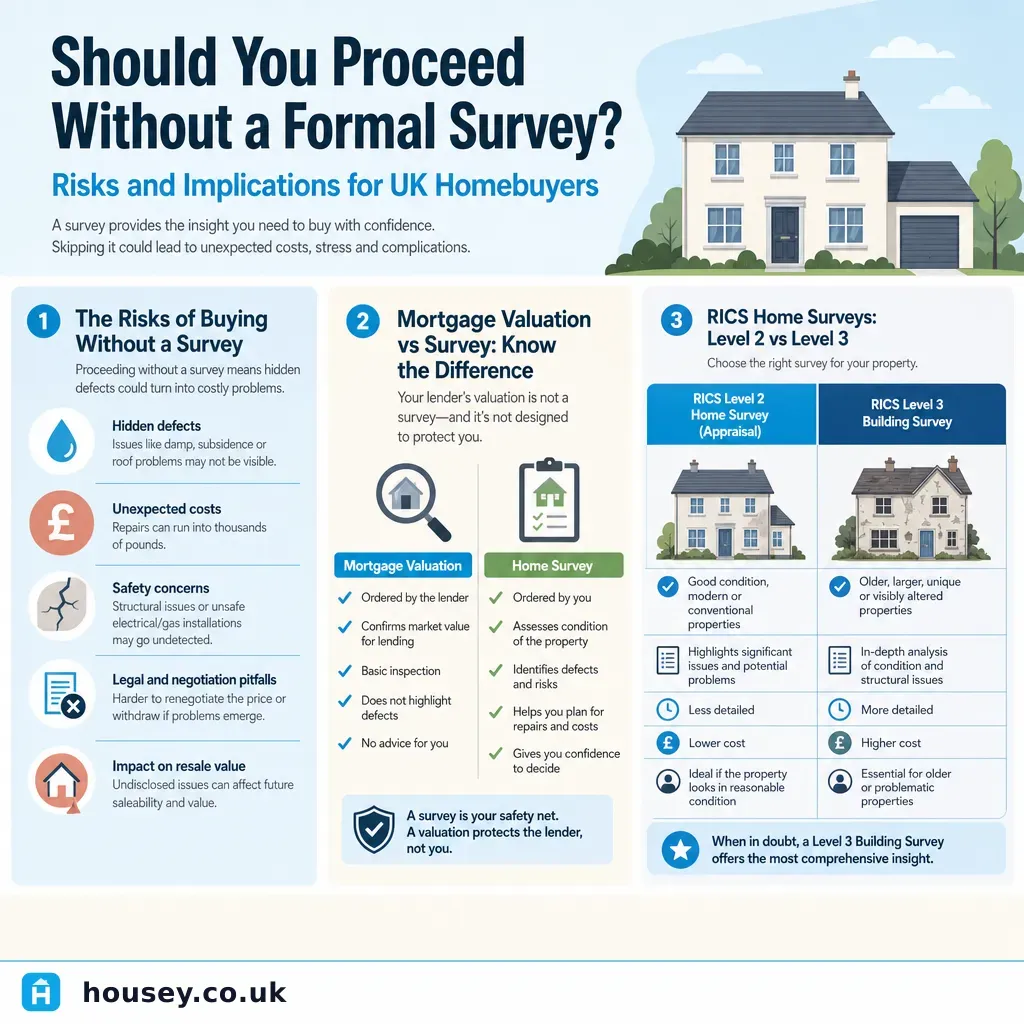
When you apply formally for a mortgage, the lender commissions a valuation. This is sometimes a desktop exercise using comparable sales data, sometimes a brief physical visit. Either way, the valuation's purpose is to confirm the property is worth at least the amount being lent. The report belongs to the lender; many will not share it with you at all.
A mortgage valuation does not:
- Assess the structural condition of the building in any depth.
- Identify damp, roof defects, drainage problems, or the impact of past alterations.
- Give you any right of recourse if problems emerge after completion.
For most first-time buyers, the mortgage valuation should be treated as the lender's administrative step — not as protection for your purchase.
Types of RICS survey: which do you need?
Survey type | Best for | Not ideal for | Typical output | Indicative cost* |
|---|---|---|---|---|
RICS Level 1 Home Survey | New-build or near-new homes with no visible concerns | Older, extended, or altered properties | Traffic-light condition ratings only, no repair advice | £300–£500 |
RICS Level 2 Home Survey | Post-1900 homes in reasonable condition, conventional construction | Pre-1900, unusual construction, signs of movement or damp | Condition ratings, commentary, urgent issues flagged | £400–£800 |
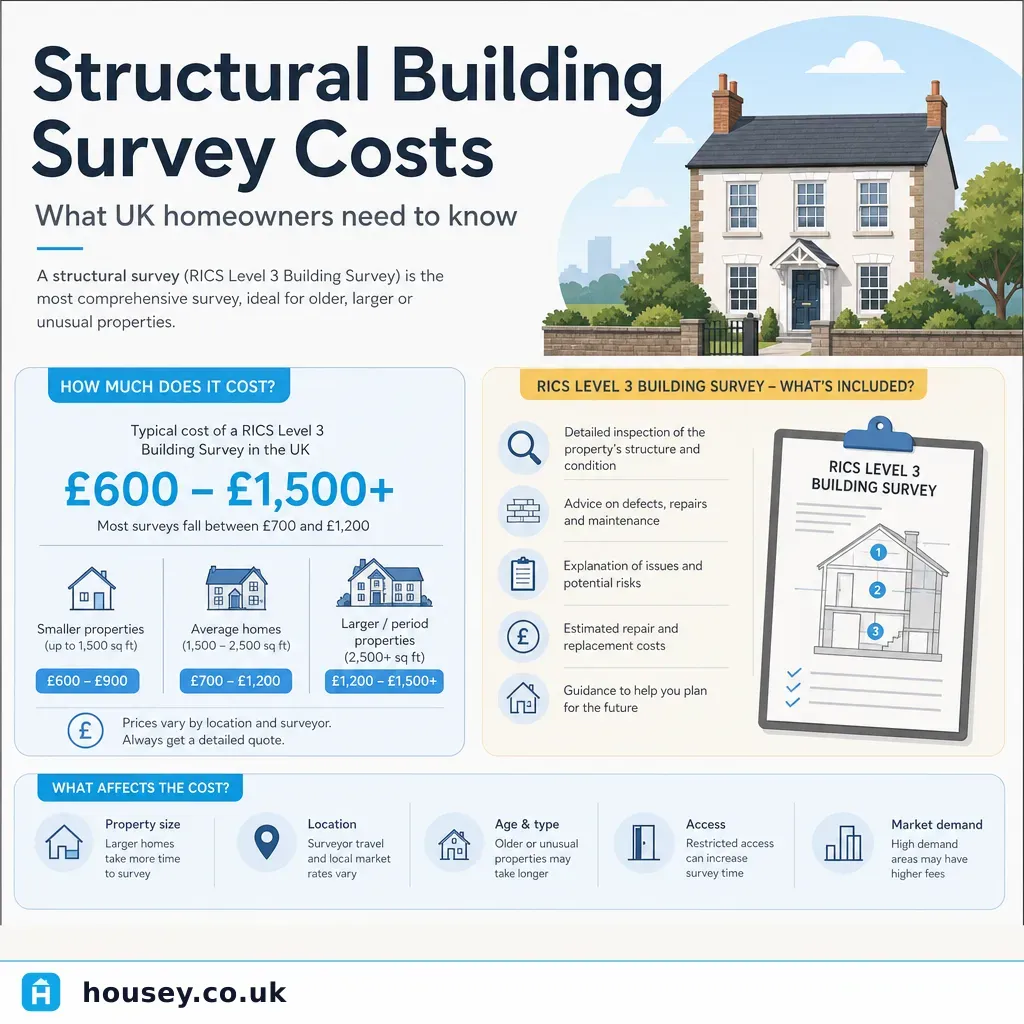
RICS Level 3 Home Survey (Building Survey) | Pre-1900, large, extended, altered, or defective properties | New-builds (not designed for them) | Detailed defect analysis, causes, repair options, maintenance advice | £600–£1,500+ |
Specific defect report | One known or suspected issue such as a crack or damp patch | Substitute for a full survey on an unknown property | Focused diagnosis of a single defect | £300–£700 |
Indicative UK costs, last reviewed 2026-05-31. Prices vary significantly by region and property size. Always obtain written quotes from at least two RICS-accredited firms.
Which survey should you choose?
- Choose RICS Level 1 if the property is a new-build or near-new with a developer's structural warranty (NHBC Buildmark or equivalent) still in force and no visible defects.
- Choose RICS Level 2 if the property was built after approximately 1900, has conventional brick-and-tile construction, is in broadly reasonable condition, and shows no obvious signs of damp, movement, or major past alteration.
- Choose RICS Level 3 if the property is pre-1900, has solid walls (no cavity), shows signs of damp or cracking, has had a loft conversion or extension, is unusually large or complex, or the listing notes phrases such as "scope for improvement" or "some work needed."
- Consider a structural engineer's report in addition to or instead of a general survey if you can see diagonal cracks through brickwork, sticking doors and windows on an upper floor, or a surveyor's Level 2 report has flagged potential movement for specialist investigation.
- Ask your RICS surveyor if you are unsure — many offer a brief pre-instruction call to discuss the property and advise on the appropriate level.
What a survey does and doesn't cover
A RICS Level 2 or Level 3 survey covers visible and accessible elements of the building: walls, roof, floors, windows, services (a general overview — not a detailed test), drainage, and outbuildings if included. Surveyors cannot open up walls, lift fitted carpets, or access locked, unsafe, or inaccessible areas.
A standard RICS survey does not cover:
- Detailed electrical testing (requires a separate Electrical Installation Condition Report, EICR, from a qualified electrician).
- Gas safety checks (requires a Gas Safe registered engineer).
- Asbestos surveys (requires a UKAS-accredited asbestos surveyor — relevant for any pre-2000 property with artex ceilings, floor tiles, or pipe lagging).
- Legal or title issues (handled by your conveyancing solicitor).
- Environmental searches such as flood risk, ground contamination, or planning history (ordered by your solicitor as part of the conveyancing process).
What happens after the survey
If the survey identifies significant defects, you generally have four options:
- Renegotiate the purchase price — provide the vendor with the relevant section of the survey report and request a reduction reflecting estimated repair costs.
- Request that the vendor carries out repairs before exchange — less common and harder to enforce; you would need to verify works were completed satisfactorily.
- Proceed at the agreed price — appropriate if defects are minor and you have already priced them in.
- Withdraw from the purchase — if defects are severe enough to affect the property's value or habitability fundamentally. Note that solicitor and survey fees up to this point are typically lost.
First-time buyer survey checklist
Before instructing a surveyor, confirm:
When to get professional help
Always commission a survey before exchange if you are buying with a mortgage or cash. Consider escalating beyond a Level 2 if:
- A surveyor advises further specialist investigation of a specific defect.
- The property has a flat or green roof, timber-frame construction, pre-cast reinforced concrete (PRC) elements, or an unusual foundation type.
- You notice signs of movement, rising or penetrating damp, or evidence of past flooding at your viewing.
- The property is listed or in a conservation area and may have had unlawful alterations.
How Housey can help
Housey makes it straightforward to find RICS-accredited surveyors for RICS Home Surveys, valuation surveys, and structural surveys. You can compare quotes, check credentials, and manage your instructions through a single dashboard — useful when you are already coordinating solicitors, mortgage advisers, and removal firms at the same time.
Frequently asked questions
Is a mortgage valuation the same as a property survey?
No. A mortgage valuation is carried out for the lender, not for you, and confirms the property is worth the loan amount. It does not assess the building's condition in any meaningful way and gives you no recourse if defects emerge after completion. You need to commission a separate survey — RICS Level 2 or Level 3 — for your own protection as a buyer.
When should I book a property survey?
Commission a survey after your offer is accepted and the property is formally SSTC. Booking too early risks spending the fee before an offer is agreed; delaying risks running out of time before the vendor expects exchange. Most surveyors can carry out an inspection within one to two weeks of instruction, though busy periods or remote properties may take longer.
How much does a property survey cost in the UK?
A RICS Level 2 survey typically costs £400–£800 and a RICS Level 3 £600–£1,500 or more, depending on property size, type, and location. London and the South-East tend to be at the higher end. Indicative UK costs, last reviewed 2026-05-31. Always obtain written quotes from at least two accredited surveyors and confirm what is included in the scope of service.
What if the survey reveals serious problems?
Use the survey report to renegotiate the purchase price or request the vendor carry out essential repairs before exchange. If problems are severe — structural movement, widespread damp, a condemned roof — you may choose to withdraw from the purchase. Withdrawal costs such as solicitor and survey fees are not usually recoverable, but completing on a property with major hidden defects is almost always more costly in the long run.
Sources and further reading
- RICS Home Survey Standard — RICS
- GOV.UK: Surveys and valuations — GOV.UK
- Citizens Advice: Buying a home — Citizens Advice
- RICS Find a Surveyor — RICS
Useful next reads
 Surveys & Inspections
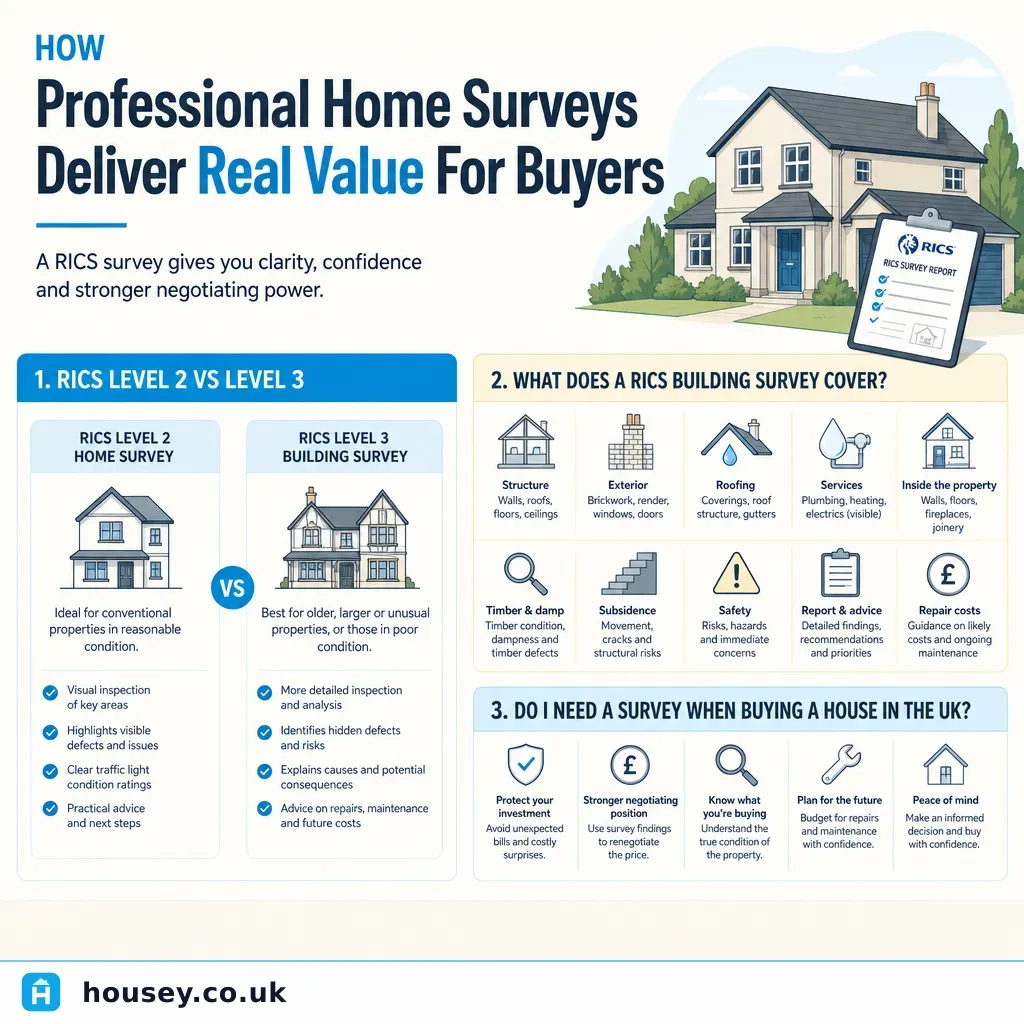
How Professional Home Surveys Deliver Real Value For Buyers
A professional home survey by a RICS-registered surveyor can identify defects, legal compliance gaps, and cost liabilities before exchange of contracts, giving buyers an evidence base for negotiation or withdrawal.
 Surveys & Inspections
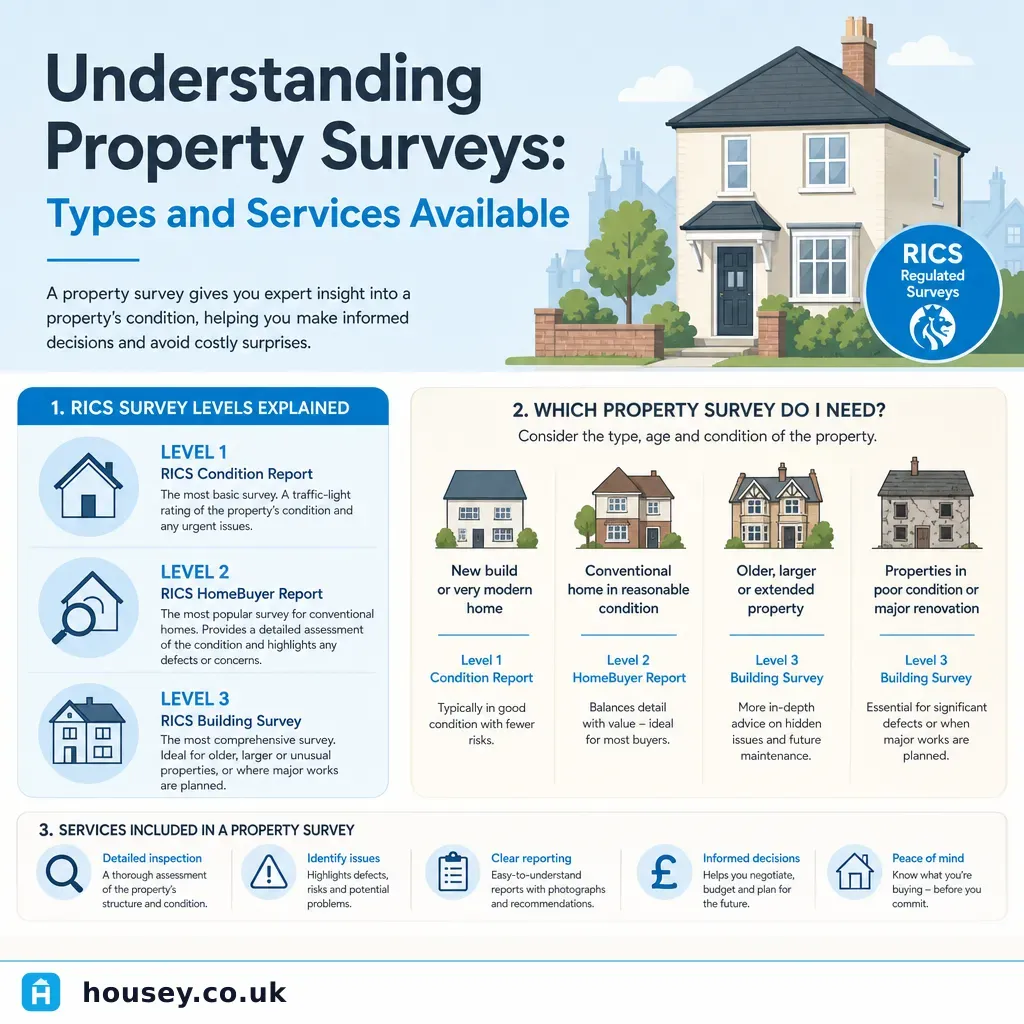
Understanding Property Surveys: Types and Services Available
UK property surveys follow three RICS-defined levels: Level 1 (Condition Report), Level 2 (Home Survey), and Level 3 (Building Survey).
 Surveys & Inspections
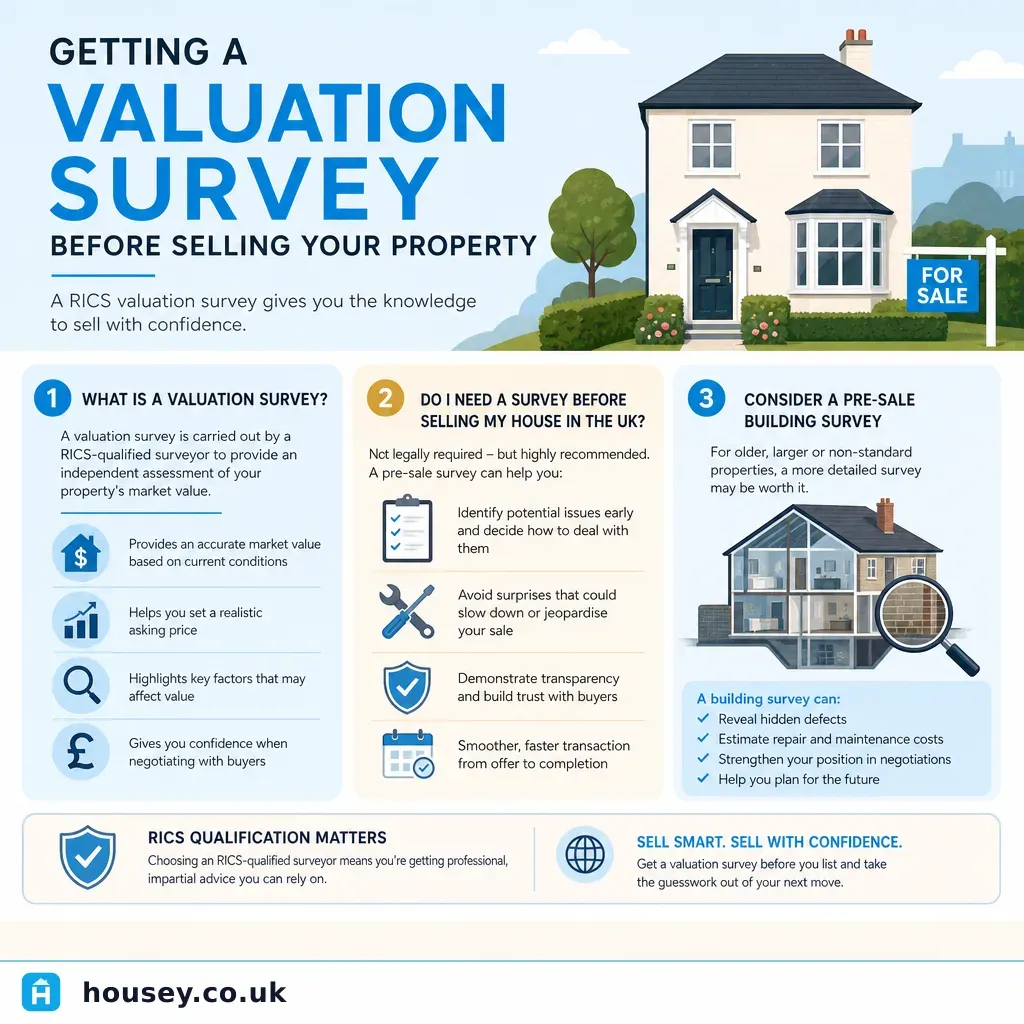
Getting a Valuation Survey Before Selling Your Property
Before selling, a free estate agent appraisal gives a market price guide, but only a RICS Red Book valuation carries formal professional standards and legal weight.
 Surveys & Inspections
Structural Building Survey Costs
A RICS Level 3 Building Survey typically costs £500–£1,500 in the UK, depending on property size, age, and location.
 Surveys & Inspections
Should You Proceed Without a Formal Survey? Risks and Implications
In England and Wales there is no legal requirement to obtain a survey before exchange, but caveat emptor means any undisclosed defects become your problem the moment contracts are exchanged.