Asbestos in UK Properties: Identification, Survey and Safe Management
By Housey · Last reviewed 19th of May 2026
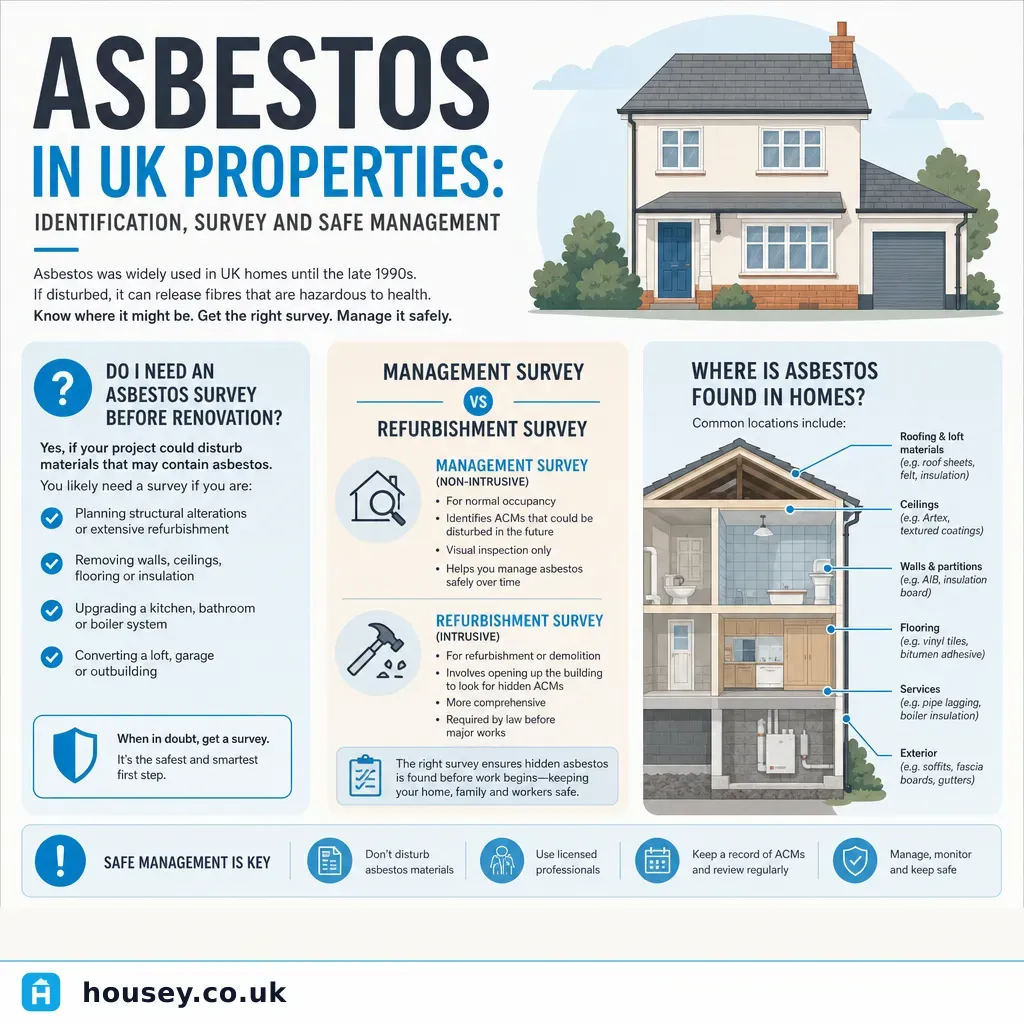
Asbestos in UK Properties: Identification, Survey and Safe Management
Asbestos-containing materials (ACMs) are present in millions of UK homes and commercial properties built or refurbished before the year 2000. For homeowners planning renovation work, buying an older property, or managing a rented building, understanding where asbestos might be found and what a professional survey involves is a critical first step. Unlike many property hazards, the risks associated with asbestos are not always visible — and disturbing material that is in good condition can be more dangerous than leaving it in place.
Key points
- Asbestos was used in UK construction until it was fully banned in 1999; any property built or substantially refurbished before that date may contain ACMs.
- The Control of Asbestos Regulations 2012 (CAR 2012) place a legal duty on those managing non-domestic premises to assess and manage asbestos risk; residential duty-to-manage provisions are more limited but landlords should be aware of their obligations.
- The HSE's guidance document HSG264 defines two primary survey types: the Management Survey (for routine occupation) and the Refurbishment/Demolition Survey (required before any renovation or demolition work).
- Undisturbed asbestos in good condition is often safer managed in situ than removed; the decision should be made by a qualified, UKAS-accredited assessor, not on visual inspection alone.
- Licensed contractors registered with the HSE must carry out high-risk asbestos removal; some lower-risk work falls under Notifiable Non-Licensed Work (NNLW) rules with different requirements.
Why asbestos matters in UK properties
Asbestos is a naturally occurring silicate mineral used extensively in the UK building industry from the 1950s through the late 1990s, valued for fire resistance, insulation properties, and durability. All commercial forms — chrysotile (white), amosite (brown), and crocidolite (blue) — are now banned in the UK, but their legacy remains in an enormous range of building materials.
When asbestos fibres are released into the air and inhaled, they can cause serious and potentially fatal diseases including mesothelioma, asbestosis, and asbestos-related lung cancer. These are irreversible conditions with latency periods of 20 to 50 years, which makes asbestos one of the most serious occupational and domestic health hazards in UK construction history.
Where is asbestos commonly found in UK homes?
ACMs can appear in almost any part of a pre-2000 property. The table below covers the most common locations:
Location | Typical material | Notes |
|---|---|---|
Textured coatings (e.g. Artex) | Chrysotile in coating | Very widespread in homes built 1950s–1990s |
Roof tiles and slates (outbuildings) | Asbestos cement | Often found in garages and sheds |
Soffit boards and fascias | Asbestos cement board | Check when replacing or overpainting |
Floor tiles (9" vinyl tiles) | Chrysotile | Common in 1950s–1970s kitchens and bathrooms |
Lagging on pipes and boilers | Amosite or crocidolite | High-risk if friable; common in older flats |
Ceiling tiles | Chrysotile or amosite | Often in older commercial-to-residential conversions |
Insulation board in airing cupboards | Amosite | High-risk material; often poorly maintained |
Garage roofs and cladding panels | Asbestos cement sheet | One of the most common domestic ACMs in the UK |
This list is not exhaustive. The only reliable way to confirm whether a material contains asbestos is laboratory analysis of a professionally collected sample.
Types of asbestos survey: Management vs Refurbishment/Demolition
The HSE's guidance document HSG264 defines two principal survey types:
Management Survey
- Purpose: Identifies ACMs that could be disturbed during normal occupation and routine maintenance activities.
- Scope: Intrusive only where necessary; does not require destructive access to all areas.
- Suitable for: Occupied buildings, landlords fulfilling duty-to-manage obligations, pre-purchase due diligence on older properties.
- Output: An asbestos register recording location, extent, condition, and risk rating of all identified or presumed ACMs.
Refurbishment/Demolition Survey
- Purpose: Identifies all ACMs in areas to be refurbished or demolished before work starts.
- Scope: Fully intrusive — destructive access to all areas within the scope of the proposed works.
- Suitable for: Before any renovation, extension, conversion, or demolition affecting the fabric of a pre-2000 building.
- Output: Detailed schedule of ACMs, condition assessments, and recommendations for removal or encapsulation prior to commencement.
A Management Survey is not sufficient before renovation work. If you plan to disturb building fabric in any pre-2000 property — including seemingly minor tasks such as drilling into walls, replacing floor tiles, or cutting into ceiling boards — a Refurbishment/Demolition Survey of the relevant areas is required first.
Decision tree: which survey do I need?
- Is the property built or substantially refurbished before 2000? If no, asbestos is very unlikely though not impossible — proceed with standard due diligence. If yes, proceed through this tree.
- Are you carrying out any renovation, extension, or demolition that disturbs building fabric? If yes, you need a Refurbishment/Demolition Survey of the affected areas before work starts.
- Are you a landlord or duty holder for a non-domestic building? You have a legal duty under CAR 2012 to manage asbestos — a Management Survey and resulting asbestos register are required.
- Are you buying or selling an older property and want to understand risk before exchange? A Management Survey or targeted inspection by a qualified surveyor can inform your decision, though it is not a legal requirement for residential sales.
- Has asbestos already been identified and are you unsure whether to remove or manage it? Consult a UKAS-accredited analyst or HSE-licensed contractor for a condition assessment and professional recommendation.
What to ask a qualified asbestos professional
Before instructing a surveyor or contractor, ask:
- Are you accredited by UKAS for asbestos surveying or analytical testing? UKAS accreditation is the recognised standard for inspection and testing bodies in the UK.
- Do you hold an HSE asbestos licence for removal work, if that is what I need?
- Which survey type do you recommend for my specific scope of works, and why?
- What does the survey report include — will I receive a full asbestos register with condition ratings and risk scores?
- If ACMs are found, what are my options: manage in place, encapsulate, or remove?
- Who would carry out removal if required, and are they HSE-licensed for the materials involved?
- Is air monitoring (clearance testing) after removal included in your scope, or do I need to arrange this separately?
Red flags: when to stop work immediately
Stop work and seek professional advice immediately if:
- You discover a material that could be Artex, pipe lagging, floor tiles in a pre-1980 property, or insulation board and you have not had a survey
- A material that has been drilled into, cut, or stripped appears fibrous, crumbly, or friable
- Dust or loose fibres have been released during work in any pre-2000 building
- A contractor begins work on a pre-2000 building without asking about asbestos or requesting a survey
- You are told that a material "looks fine" without any testing or sampling being carried out
If you suspect you have already disturbed asbestos, the HSE recommends vacating the area, restricting access, and contacting a licensed asbestos surveyor or environmental consultant promptly.
Important limitations
This article provides general information about asbestos in UK residential and commercial properties. It does not constitute a risk assessment, professional survey, or legal advice. Asbestos identification requires physical sampling and laboratory analysis by a qualified professional — visual inspection alone is not reliable. The duty-to-manage under CAR 2012 applies specifically to non-domestic premises; residential properties are subject to different rules. Always engage a UKAS-accredited surveyor before commencing any work that may disturb building fabric in a pre-2000 property.
When to get professional help
Never attempt to sample, cut, drill into, or remove a suspected asbestos-containing material yourself. The health risks are serious and irreversible. Contact a qualified professional if:
- You are planning any renovation in a pre-2000 property and have not had an asbestos survey
- You have already disturbed a material that may contain asbestos
- You are a landlord and have not established an asbestos management plan for a non-domestic building
- A RICS survey, mortgage valuation, or pre-purchase report has flagged potential ACMs
- You are buying a pre-1999 property and want to understand the asbestos risk profile before exchange
How Housey can help
Housey connects homeowners and landlords with UKAS-accredited asbestos professionals. Our asbestos surveys service matches you with qualified surveyors who carry out both Management Surveys and Refurbishment/Demolition Surveys, provide a full asbestos register, and advise on next steps. For properties where asbestos is one of several concerns alongside structural issues, damp, or timber decay, our specific defect surveys and environmental surveys services can help you commission the right combination of assessments in one place.
Frequently asked questions
Is asbestos always dangerous in a UK home?
Not immediately. Asbestos-containing materials that are in good condition, undisturbed, and not likely to be touched during normal use pose a low risk. The hazard arises when materials are damaged, deteriorating, or disturbed — releasing fibres into the air. A qualified surveyor can assess condition and advise whether management in situ or removal is more appropriate for your situation.
Do I need an asbestos survey to sell my house?
There is no legal requirement to commission an asbestos survey before selling a residential property in England and Wales. However, if you are aware of asbestos-containing materials, you may have a duty to disclose this via the property information form (TA6). If building work is being carried out as part of a sale or pre-sale refurbishment, a Refurbishment/Demolition Survey is required before those works begin.
Who is allowed to remove asbestos in the UK?
High-risk materials — including sprayed coatings, asbestos insulation board, and pipe lagging — must be removed by a contractor holding an HSE asbestos licence. Some lower-risk materials fall under Notifiable Non-Licensed Work (NNLW) rules. Householders are legally permitted to remove small amounts of asbestos cement from their own homes, but HSE guidance strongly recommends using licensed contractors given the irreversible health risks involved.
How long does an asbestos survey take?
A domestic Management Survey typically takes one to three hours depending on property size. A Refurbishment/Demolition Survey for a full house may take a full day or more, as it requires intrusive access to all areas within scope. Laboratory analysis of bulk samples usually takes two to five working days, after which you receive a full written report and asbestos register.
Sources and further reading
- HSG264 Asbestos: The Survey Guide — Health and Safety Executive
- Control of Asbestos Regulations 2012 — legislation.gov.uk
- Asbestos guidance for homeowners — Health and Safety Executive
- UKAS accreditation for asbestos testing and inspection — UKAS
- Asbestos: the hidden killer — Health and Safety Executive
Useful next reads
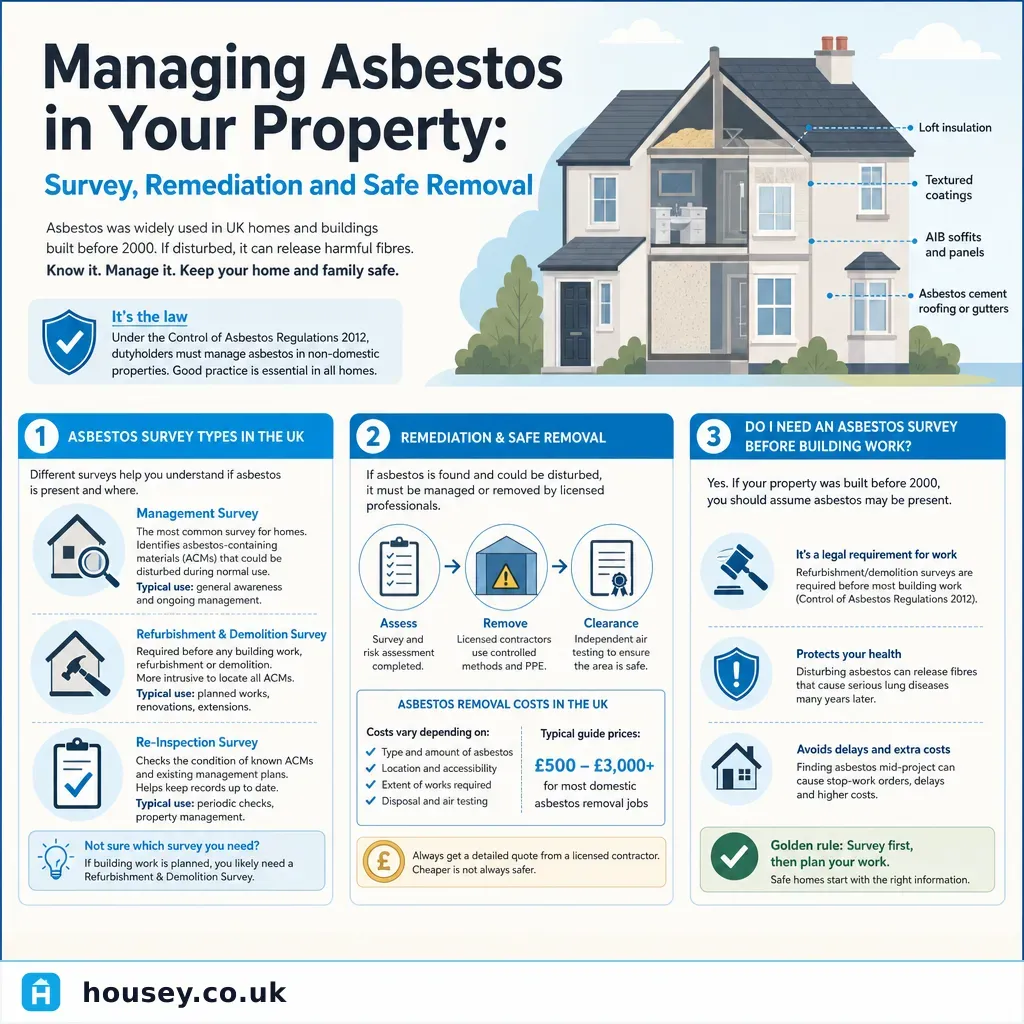 Surveys & Inspections
Managing Asbestos in Your Property: Survey, Remediation and Safe Removal
Asbestos was commonly used in UK buildings until its full ban in 1999.
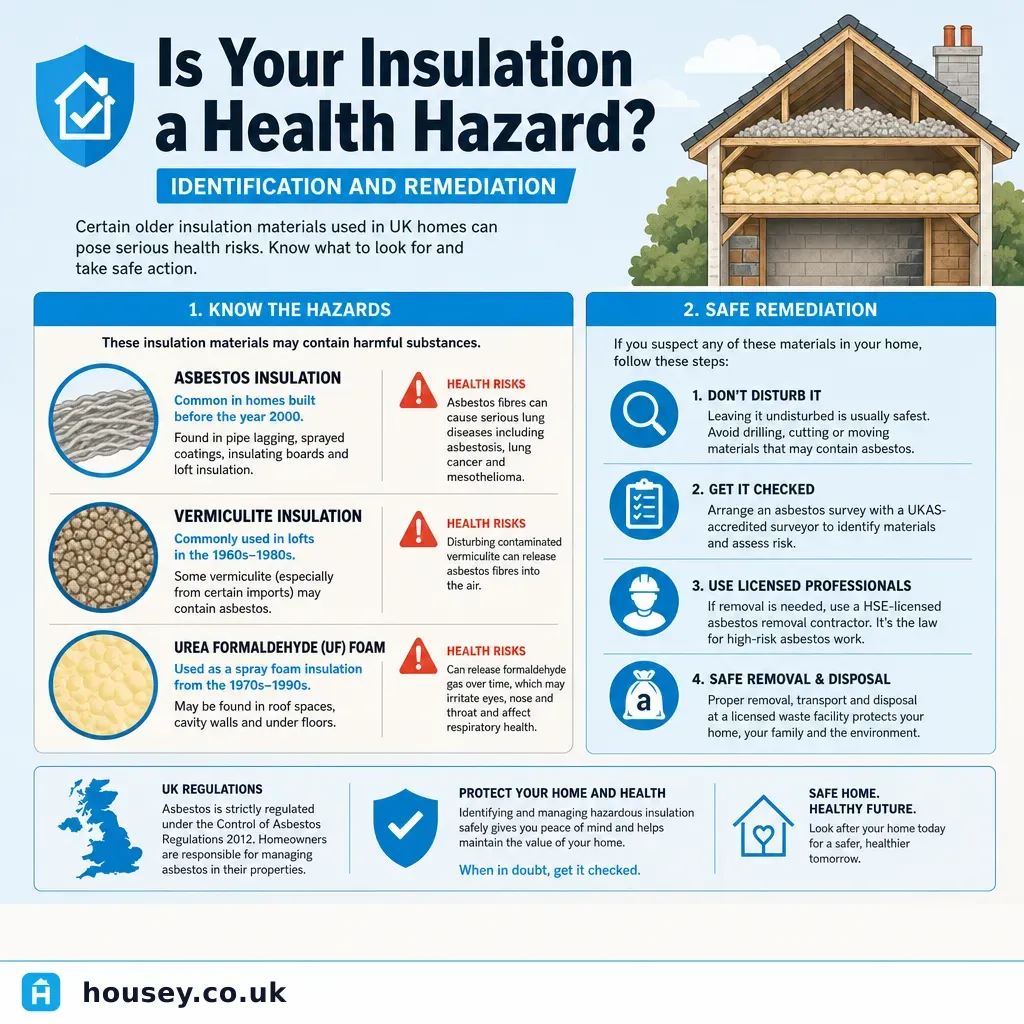 Surveys & Inspections
Is Your Insulation a Health Hazard? Identification and Remediation
Some insulation materials in pre-2000 UK homes may pose genuine health risks.
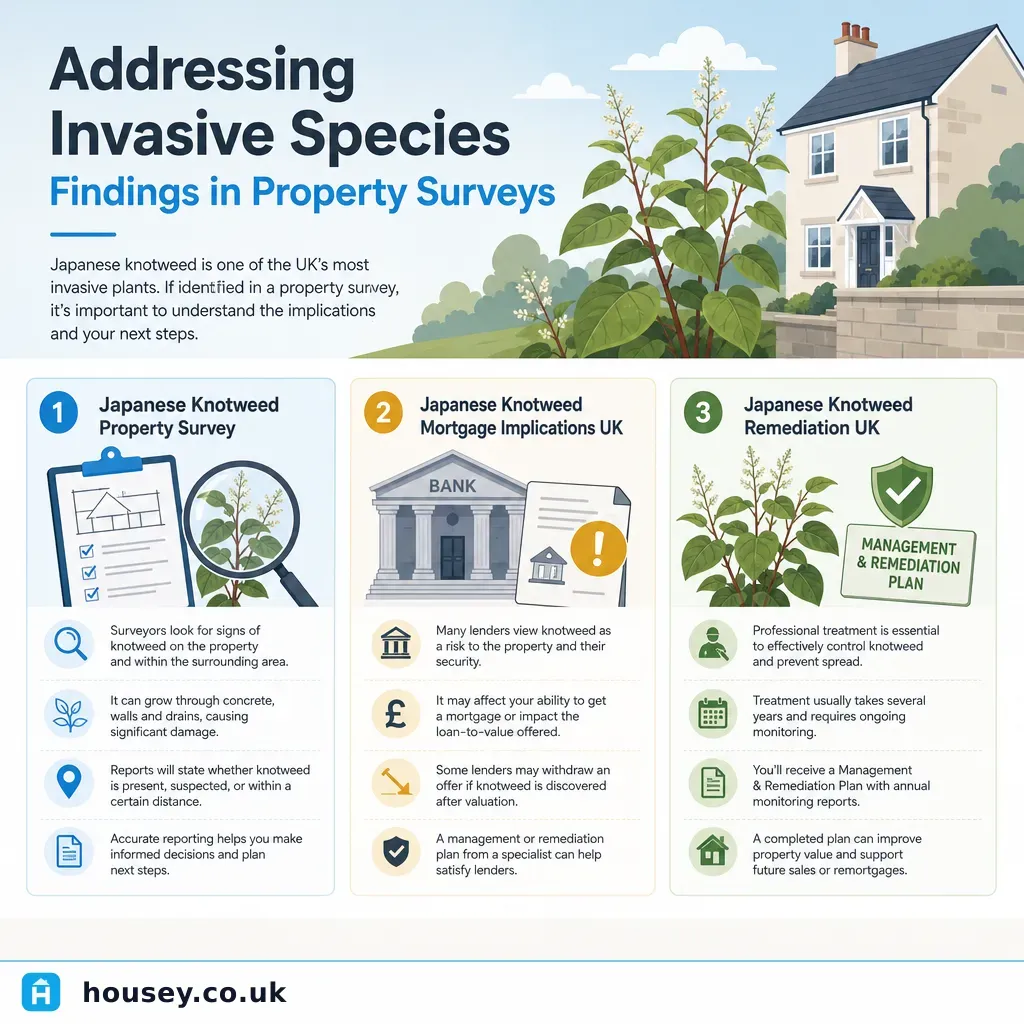 Surveys & Inspections
Addressing Invasive Species Findings in Property Surveys
If a property survey flags an invasive species such as Japanese knotweed, you should commission a specialist ecological or knotweed survey to confirm the extent and obtain a management plan.
 Surveys & Inspections
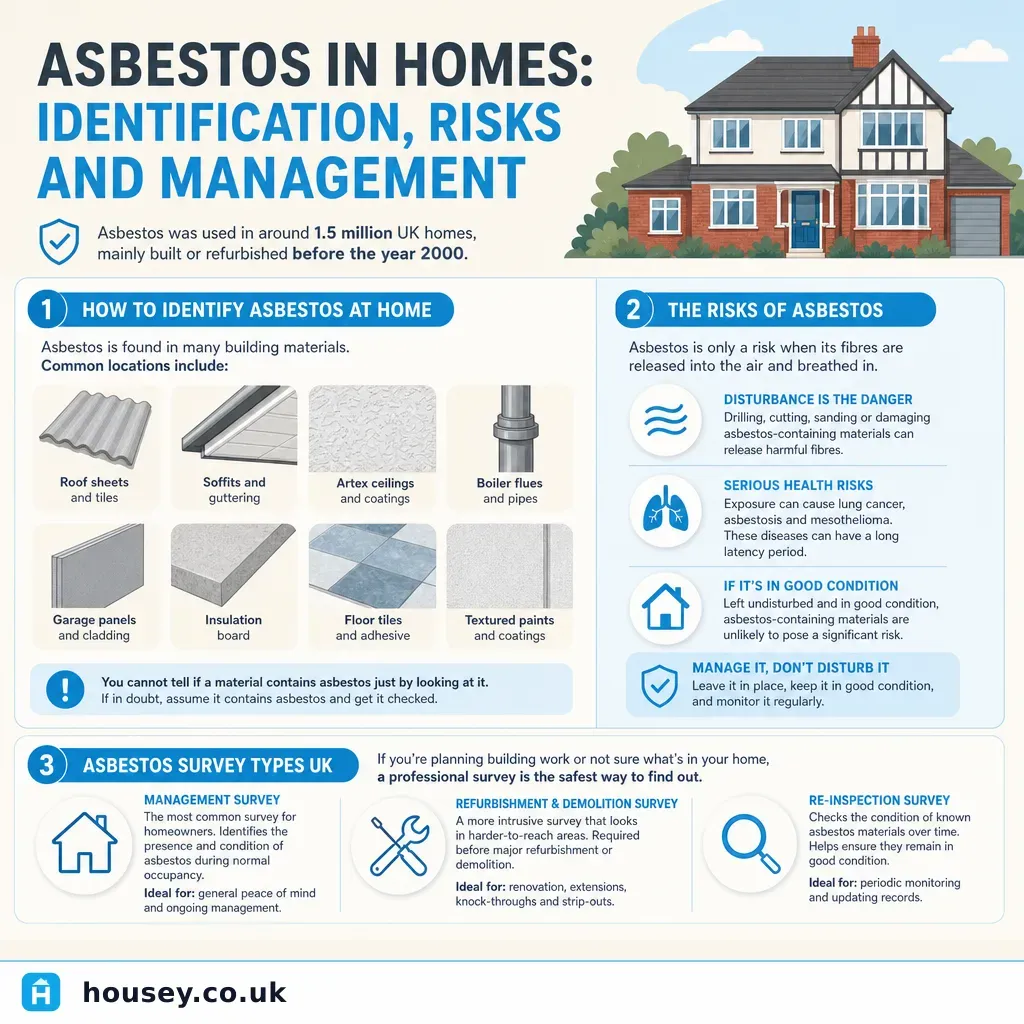
Asbestos in homes: identification, risks and management
Asbestos was widely used in UK construction until it was banned in November 1999, so any home built before 2000 may contain asbestos-containing materials.
 Surveys & Inspections
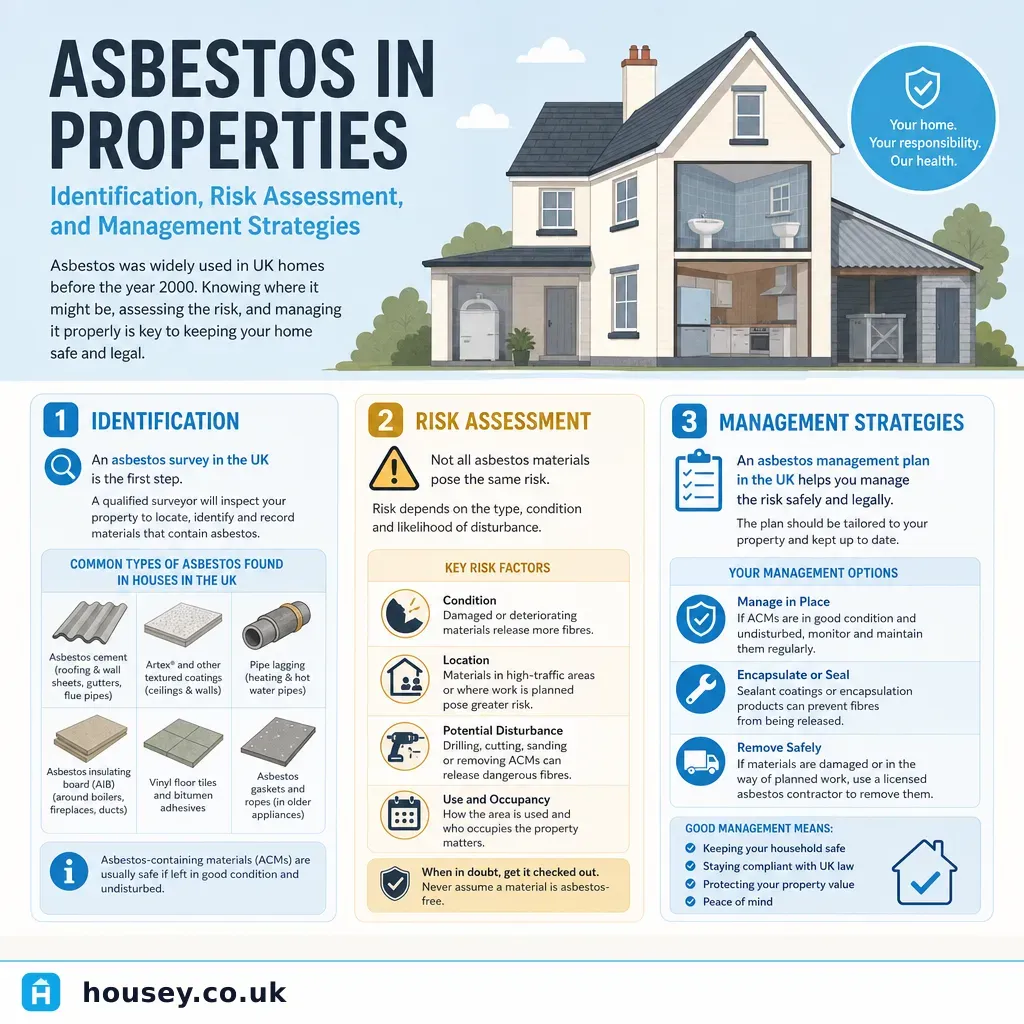
Asbestos in Properties: Identification, Risk Assessment, and Management Strategies
Asbestos-containing materials may be present in any UK property built before 2000.