Front Door Frame Reinforcement for Security Upgrade
By Housey · Last reviewed 1st of June 2026
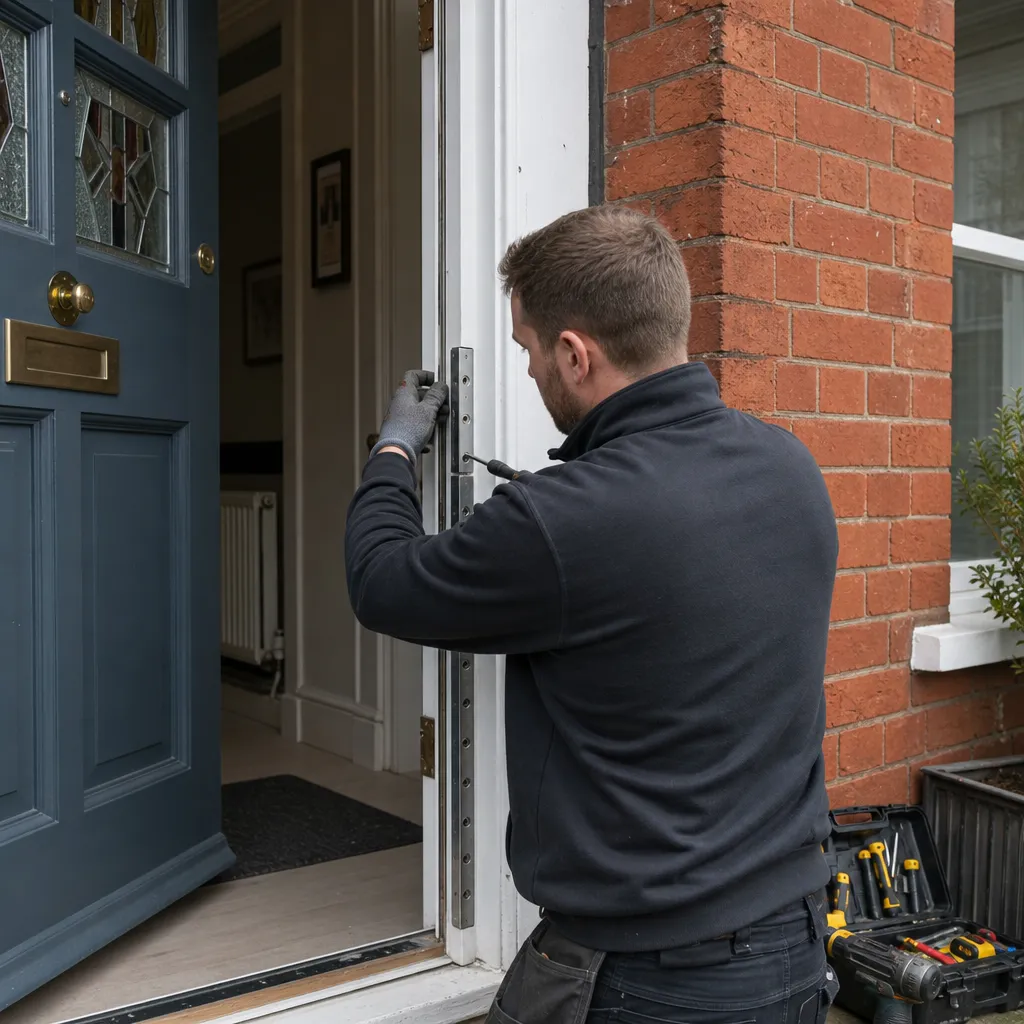
Front Door Frame Reinforcement for Security Upgrade
Most forced entries to UK homes target the weakest structural link in the door assembly — typically the frame or strike plate, not the lock cylinder itself. Knowing which element is most vulnerable, and how to address it cost-effectively, is the practical question for most UK homeowners who have just received a crime prevention notice or spoken to their insurer. Door security upgrades range from a simple plate swap to a full PAS 24-compliant doorset, and the right choice depends entirely on your current setup.
Key points
- Door and window forced entry accounts for the majority of UK domestic break-ins; police analysis consistently identifies the door frame and strike plate as the most common failure points under kick-in attack.
- PAS 24:2022 is the British Standard for enhanced security performance of doorsets; frames and door leaves tested to this specification must resist a defined sequence of impact, jemmy, and manipulation tests.
- Secured by Design — the UK Police Crime Prevention Initiatives scheme — requires PAS 24 (or equivalent LPS 1175) compliance for doors in new builds and major refurbishments seeking its accreditation.
- Hinge reinforcement via hinge bolts or BS EN 1935 Grade 13+ security hinges is often overlooked; a reinforced strike plate offers limited benefit if the hinge side fails under attack.
- BS 3621:2007+A2:2012 is the British Standard for thief-resistant lock assemblies; most UK home insurance policies require this standard as a minimum on all external doors.
Why front door frames fail under attack
A door frame in a typical UK property consists of a timber head, two jambs, and usually a timber sill, screwed into masonry or a timber stud wall. Standard fixings — 75 to 100 mm frame screws — hold well under normal use but are vulnerable to the sudden impact loads of a kick-in attack.
The most common failure points are:
- The strike plate — a shallow-rebated plate secured with short screws that can shear under a single hard kick.
- The latch jamb near the mid-rail — where combined impact forces concentrate when a door is kicked at the lock.
- The hinge fixings — particularly on older timber frames where wood has dried and shrunk away from screws over decades.
- The euro cylinder — vulnerable to snap attacks if it protrudes more than 3 mm beyond the handle plate and lacks anti-snap protection.
Identifying your weakest point determines which reinforcement gives the most value for money.
Types of door frame reinforcement
Reinforcement type | What it does | Best for | Indicative UK cost (2026) |
|---|---|---|---|
Steel frame reinforcement kit | Steel channel wraps the jamb and distributes kick forces over a larger area | Timber-framed doors on masonry openings | £40–£120 kit; £80–£180 fitted |
Heavy-duty strike plate with 75–100 mm screws | Replaces shallow strike box; long screws reach into masonry or stud | Most residential doors | £15–£40; DIY-feasible |
Hinge bolts (dog bolts) | Steel bolts engage the opposite jamb when closed, preventing hinge-side separation | Outward-opening doors; doors with basic hinges | £20–£50 per pair |
Security hinges (BS EN 1935 Grade 13+) | Interlocking leaves resist frame separation under attack | All residential doors | £30–£80 per pair; professional fit recommended |
Anti-snap euro cylinder (TS007 3-star) | Cylinder breaks in a controlled way rather than allowing snap-and-grab access | Multi-point lock doors | £30–£80; DIY if comfortable with cylinder removal |
Full PAS 24 doorset | New frame, door leaf, and hardware tested as a system to the standard | Seriously degraded frames; post-break-in replacement | £800–£2,500+ installed |
Indicative UK costs, last reviewed 2026-06-01. Quotes vary by region, property type, and specification. Always request itemised quotes.
Which reinforcement should you choose?
- Choose a heavy-duty strike plate with long screws if your door and frame are in good condition but the current strike plate is shallow or secured with short screws — this addresses the most common kick-in weak point at low cost.
- Add hinge bolts if your door opens outward, or if the hinge side shows any movement or play.
- Fit an anti-snap TS007 3-star cylinder if your lock uses a standard euro profile cylinder without snap protection.
- Fit a steel frame reinforcement kit if the frame shows signs of previous forcing, visible movement, or you have fewer than four fixing screws per jamb.
- Choose a full PAS 24 doorset if the frame is significantly degraded, the property has experienced a break-in, or you need Secured by Design compliance for a new installation.
- Ask a specialist door installer to assess first if there is visible rot, damp-damaged timber, or you are unsure whether the surrounding masonry is structurally sound.
Multi-point locking and frame reinforcement
Multi-point locks distribute locking forces across the full height of the door leaf — typically at the top, mid-point, and bottom — reducing the vulnerability of a single kick at the strike zone. They are most effective when combined with a reinforced frame, because no single strike plate then carries all the load.
Upgrading an older UK door with a single mortice deadlock and nightlatch to a multi-point system requires a new lock case, often a new door slab, and a reinforced frame to accept the keep assembly. This is a job for a door specialist rather than a general carpenter, as tolerances directly affect the security performance of the finished installation.
Red flags that need professional attention
- Visible cracks or gaps between the frame and the masonry surround, suggesting movement or failed fixings.
- A door that is visibly bowed, warped, or requires lifting to close — geometry affects the effectiveness of any reinforcement added.
- Evidence of a previous forced entry: splintered timber, bent hinges, or pulled-out screws.
- The door is a heritage or original feature in a listed building or conservation area — check with your local planning authority before replacing, as listed building consent may be required.
- Daylight visible around the frame perimeter when the door is closed — simultaneously a security and draught-seal problem that reinforcement alone will not resolve.
When to get professional help
Fitting a replacement strike plate or adding hinge bolts is achievable for most householders comfortable with basic tools. Anything beyond this — installing a steel frame reinforcement kit, replacing a lock case, or fitting security hinges in a door that has settled out of square — is better assessed and fitted by a trained door specialist. If your property has experienced a break-in, the full frame and lock system should be inspected before simply replacing the damaged components, as structural integrity may be compromised in ways not immediately visible.
How Housey can help
Housey connects you with vetted window and door installers who can assess your current door security, recommend a specification-appropriate solution, and supply and fit to PAS 24 or Secured by Design standards where required. Get quotes from local professionals and compare them in one place.
Frequently asked questions
Does reinforcing my door frame affect my home insurance?
It can, positively. Most UK home insurers specify a minimum lock standard — typically BS 3621 cylinders — and reward additional security measures through lower premiums or enhanced cover. Notify your insurer of upgrades, particularly if you install a PAS 24 doorset or Secured by Design-accredited hardware, and ask for written confirmation that your cover is unaffected by the change.
Is a steel door frame reinforcement kit difficult to fit?
Most kits for inward-opening timber-framed doors involve cutting steel channel sections to length and securing them with long screws into the masonry. It requires a drill, chisel, and patience. If your frame is irregular, or you are not confident drilling near a structural lintel, a door specialist can fit most kits in under two hours.
Do I need planning permission to replace my front door?
In most cases, replacing a front door is permitted development for a house. However, if your property is in a conservation area, the door faces a highway, or the building is listed, you may need listed building consent or prior approval. Check with your local planning authority before proceeding.
What is a TS007 3-star rating for lock cylinders?
TS007:2014 is a UK specification for resistance to cylinder attacks. A 3-star rating — achieved by the cylinder alone or by a 1-star cylinder combined with a 2-star handle — indicates the highest resistance to snap, pick, bump, and drill attacks under that standard. Look for this marking when replacing a euro cylinder.
Sources and further reading
- Home Office: Crime in England and Wales — Home Office
- Secured by Design: home security guidance — Police Crime Prevention Initiatives
- PAS 24:2022 Enhanced security performance requirements for doorsets — BSI Group
- TS007:2014 Cylinders for locks — specification — BSI Group
- BS 3621:2007+A2:2012 Thief resistant lock assemblies — BSI Group
Useful next reads
 Improvement & Build
Ensuring Your Home Locks Are Secure Enough
For most UK homes, external door locks should meet British Standard BS 3621 or be part of a PAS 24-certified door set.
 Improvement & Build
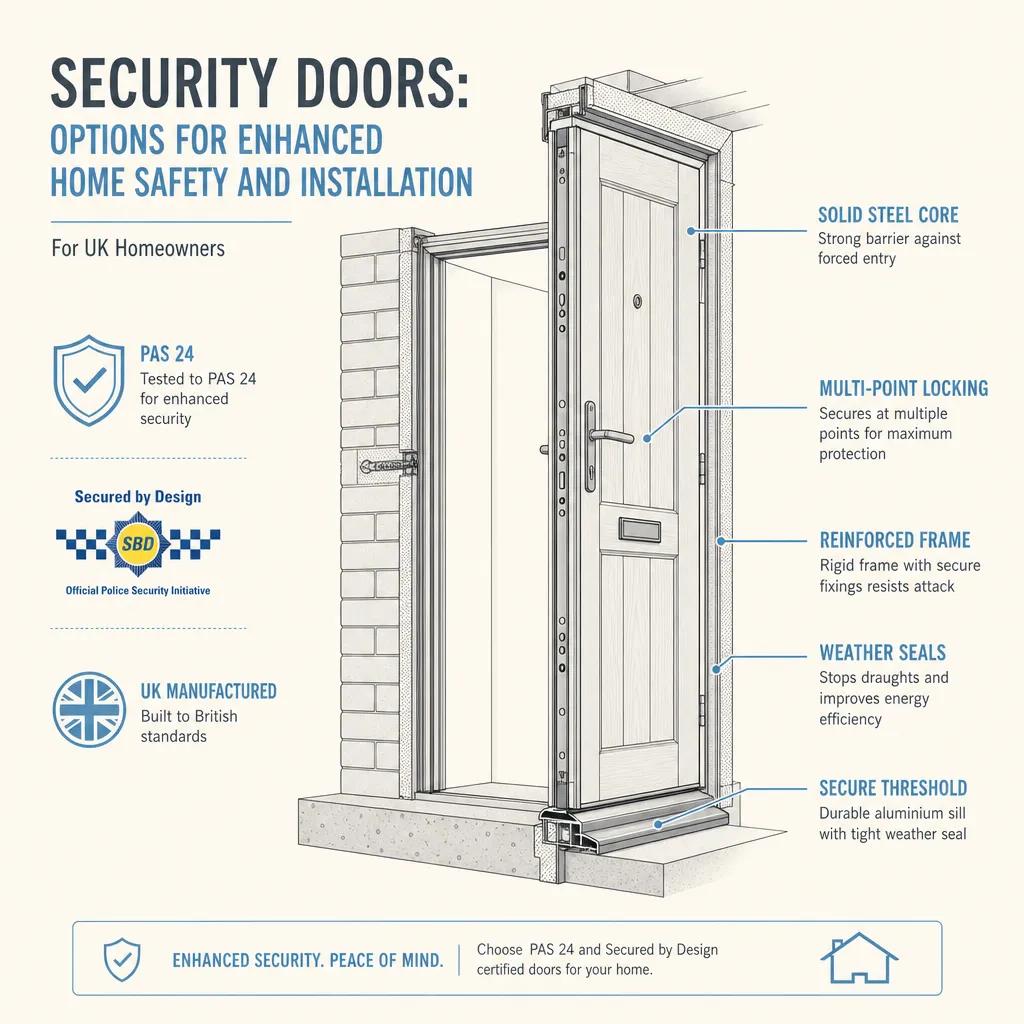
Security Doors: Options for Enhanced Home Safety and Installation
A security door should meet PAS 24:2022 or BS EN 1627 RC2 as a minimum.
 Improvement & Build
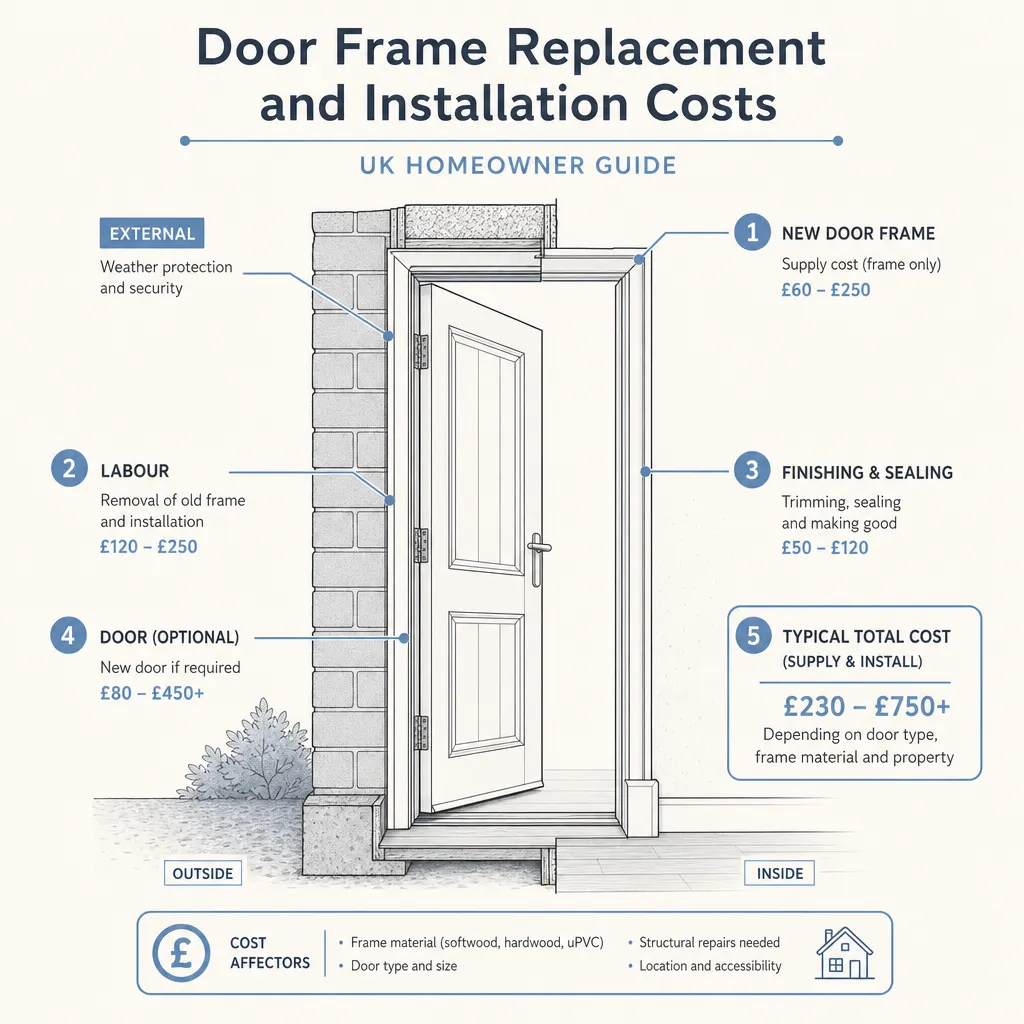
Door Frame Replacement and Installation Costs
Replacing an internal door lining in the UK typically costs £100–£300 including labour; an external door frame costs £300–£800 for softwood or UPVC and £600–£1,500 or more for hardwood or composite.
 Improvement & Build
Adjusting Multipoint Door Locks: Alignment and Operation
Most multipoint lock problems — stiff handles, hooks that will not engage, rattling doors — result from minor door sag causing locking points to miss their keeps.
 Improvement & Build
Replacing Doors: Options, Building Regulations and Installation
Replacing an external door in England requires compliance with Building Regulations Part L (minimum U-value 1.