The advantages of installing large windows in your home
By Housey · Last reviewed 11th of May 2026
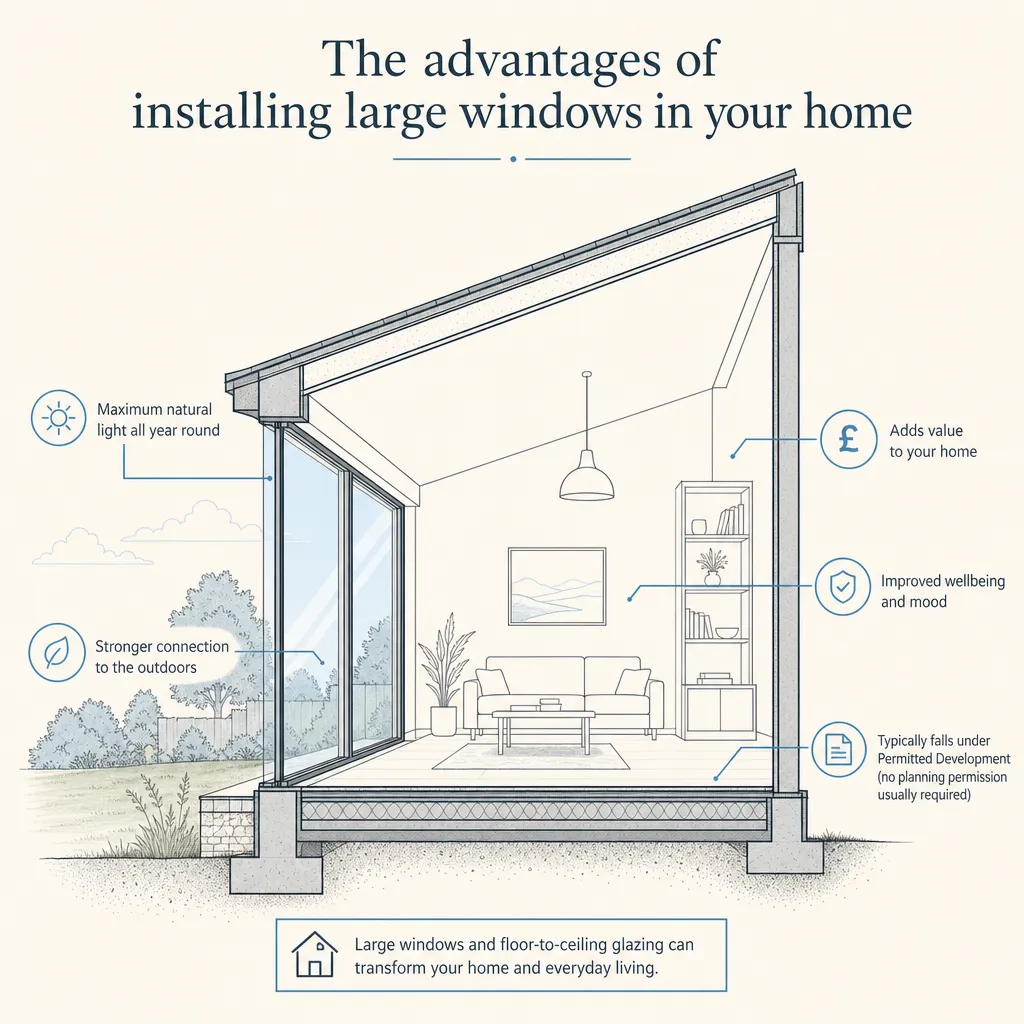
The advantages of installing large windows in your home
Replacing modest window openings with larger glazed areas — or incorporating full-height windows into an extension or loft conversion — is increasingly popular with UK homeowners seeking to improve natural light and connect interior spaces with gardens. Whether you are looking at a Victorian rear elevation with small original sashes or planning a contemporary rear extension, the case for larger windows is often compelling. The outcomes, however, depend heavily on glazing specification, orientation, and how well the project navigates building regulations and planning rules.
Key points
- Modern double glazing achieves whole-window U-values of 1.4 W/m²K or below — the minimum required under Approved Document L for replacement windows — meaning well-specified large windows can improve thermal performance compared with the original single glazing they replace.
- Replacement windows installed in existing openings do not usually require planning permission under permitted development rights for standard dwellinghouses; new openings in existing walls, and any window work on listed buildings or in conservation areas, require consent.
- FENSA- and CERTASS-registered installers can self-certify building regulations compliance for replacement windows, avoiding a separate building control application and providing a certificate required at point of sale.
- Solar control glazing (characterised by a g-value or solar factor rating) helps manage heat gain in south-facing large windows; without it, summer overheating can offset the winter benefits of passive solar gain.
- Safety glazing to BS EN 12600 is required under Approved Document K in critical locations — including glazing below 800 mm from floor level and within 300 mm of a doorway.
Natural light and wellbeing
Improved daylight is the most cited reason for investing in large windows. UK homes — particularly Victorian terraces, inter-war semis, and ground-floor flats — often have window openings designed for single-glazed sashes that limit daylight far more than modern glazing technology requires.
Practical benefits include:
- Reduced reliance on artificial lighting during daylight hours, with modest energy savings over time.
- Improved perception of space — well-lit rooms appear larger and feel less enclosed.
- Stronger connection between interior living areas and gardens or green spaces (a biophilic design benefit associated with improved mood and wellbeing).
- Enhanced views, which can be a significant quality-of-life improvement in properties with attractive outlooks or well-kept gardens.
These benefits are most pronounced in south- and west-facing rooms. North-facing rooms gain valuable diffuse light that reduces artificial lighting needs, but benefit less from passive solar warmth.
Thermal performance: why glazing specification matters
Larger windows increase the total glazed area of your home's thermal envelope. Whether this improves or worsens overall heat loss depends almost entirely on the glazing specification chosen.
Glazing type | Typical centre-pane U-value | Approximate whole-window U-value | Best suited to |
|---|---|---|---|
Original single glazing (timber sash) | 5.0–5.8 W/m²K | 5.0+ W/m²K | Listed buildings where replacement is not permitted (secondary glazing preferred) |
Standard double glazing | 1.0–1.4 W/m²K | 1.4–1.6 W/m²K | General replacement; meets Part L minimum |
High-performance double glazing | 0.7–1.0 W/m²K | 1.0–1.2 W/m²K | Extensions and energy-conscious refurbishments |
Triple glazing | 0.5–0.8 W/m²K | 0.8–1.0 W/m²K | Cold-facing elevations and fabric-first energy strategies |
Indicative U-values only; actual performance varies by frame material, spacer type, and gas fill. Source: Energy Saving Trust guidance, last reviewed 2026-05-11.
Under Approved Document L (2021 edition), replacement windows in existing dwellings must achieve a whole-window U-value of 1.4 W/m²K or better, or a Window Energy Rating (WER) of Band C or above. High-performance double glazing typically exceeds this threshold comfortably.
Solar control glazing: for large south- or west-facing windows, specify a g-value (solar factor) of approximately 0.35–0.45 to balance winter passive solar gain against summer overheating. A qualified installer should advise on the appropriate g-value for each elevation based on orientation, shading, and room use.
Planning and building regulations: what applies
Replacing existing windows in the same aperture:
- Does not usually require planning permission under permitted development for standard dwellinghouses.
- Must comply with building regulations for thermal performance (Part L) and safety glazing in critical locations (Part K).
- FENSA or CERTASS registered installers self-certify compliance — no separate building control application needed.
Enlarging existing openings or creating new ones:
- Structural work — new or enlarged lintels, possibly structural calculations — is required and is notifiable to building control.
- Planning permission is not usually required under permitted development for window enlargements on a dwellinghouse, but check for local Article 4 Directions.
- In conservation areas or for listed buildings, any change to windows requires planning consent and/or listed building consent regardless of scale.
Windows in new extensions or loft conversions:
- Addressed as part of the extension or conversion's full planning and building control application.
- Overlooking and overshadowing of neighbours are material planning considerations that affect permitted size and position.
If you are uncertain about your permitted development rights, the Planning Portal's permitted development guide for windows provides up-to-date guidance, and your local planning authority can confirm whether an Article 4 Direction applies to your area.
What not to assume
Several common assumptions about large windows can lead to budget overruns or planning problems:
- "Bigger windows always mean more warmth." Only if the glazing specification is good and the elevation is south- or west-facing. North-facing large windows can increase heat loss faster than they contribute passive solar benefit.
- "No planning permission is ever needed." True for most direct replacements in standard dwellinghouses, but not for listed buildings, conservation areas, or some properties in Article 4 Direction areas.
- "Triple glazing is always the right choice." Triple glazing improves U-values but adds significant frame weight (affecting structural requirements), slightly reduces visible light transmission, and has a longer cost-payback period than high-performance double glazing for most UK climates and orientations.
- "Large windows are maintenance-free." Larger panes are more expensive to replace if cracked. High-level glazing in extensions or loft dormers requires access equipment for periodic cleaning and resealing.
- "Any window installer can enlarge an opening." Enlarging openings requires structural work — a competent builder or structural engineer should specify the lintel and confirm structural adequacy before installation begins.
Questions to ask before instructing an installer
Before accepting a quote for large-format window installation or replacement:
- Are you FENSA or CERTASS registered, and will you provide a compliance certificate on completion?
- What glazing specification (U-value, g-value, frame material, spacer type) do you recommend for each elevation, and why?
- Does enlarging this opening require structural work, and if so, is this included in your quote?
- Is the quote inclusive of VAT, scaffolding or access equipment, internal making-good (plastering, window reveals), and waste disposal?
- What is the lead time for frame and sealed glass unit manufacture?
- What warranties do you provide on the frame, glazing unit, and installation workmanship?
- Do I need planning permission or listed building consent for this work, and will you confirm this before starting?
When to get professional help
Most replacement window projects are straightforward when handled by a FENSA or CERTASS registered installer. Seek additional professional input if:
- The work involves enlarging or creating new openings in external walls — a structural engineer or experienced building contractor should specify the lintel and confirm loadings.
- The property is listed or in a conservation area — consult a planning consultant or the local authority's conservation officer before instructing an installer.
- Very large fixed panes are planned near floor level or in stairwells where Part K safety glazing requirements should be formally assessed.
- The property has unusual construction — timber frame, steel frame, or thin solid masonry — where window fixing details and airtightness require specialist knowledge.
How Housey can help
Housey connects homeowners with vetted window and door installers who can advise on glazing specification, planning requirements, and building regulations compliance for large-format window projects across the UK.
Frequently asked questions
Do I need planning permission to install large windows?
Replacing existing windows with units of the same size or smaller does not usually require planning permission for standard dwellinghouses under permitted development. Enlarging openings, or any window work on listed buildings or in conservation areas, requires consent — check with your local planning authority before instructing a contractor.
Will large windows make my home colder?
Not if correctly specified. Modern double glazing with a whole-window U-value of 1.4 W/m²K or better performs significantly better thermally than the single glazing it typically replaces. The net effect depends on orientation, glazing specification, and how much the total glazed area increases — a qualified installer should assess this for your specific project.
What is a FENSA certificate and why does it matter?
FENSA is a government-authorised competent person scheme for window and door installers. A FENSA-registered installer self-certifies that the installation complies with building regulations and notifies the local authority on your behalf. The certificate is required by solicitors during property sales — without it you may need retrospective building control sign-off or indemnity insurance.
Can I install large windows in a listed building?
Not without listed building consent, and only if the design is sympathetic to the building's character. Consent is required in addition to any planning permission. Your local authority's conservation officer should be consulted at an early stage — secondary glazing is often preferred in listed buildings as it avoids altering the historic fabric.
Sources and further reading
- Approved Document L — Conservation of fuel and power — GOV.UK
- Approved Document K — Protection from falling, collision and impact — GOV.UK
- FENSA — the window and door industry scheme — FENSA
- Planning Portal — permitted development for windows — Planning Portal
- Windows and doors — energy saving advice — Energy Saving Trust
- Windows in historic buildings — Historic England
Useful next reads
 Improvement & Build
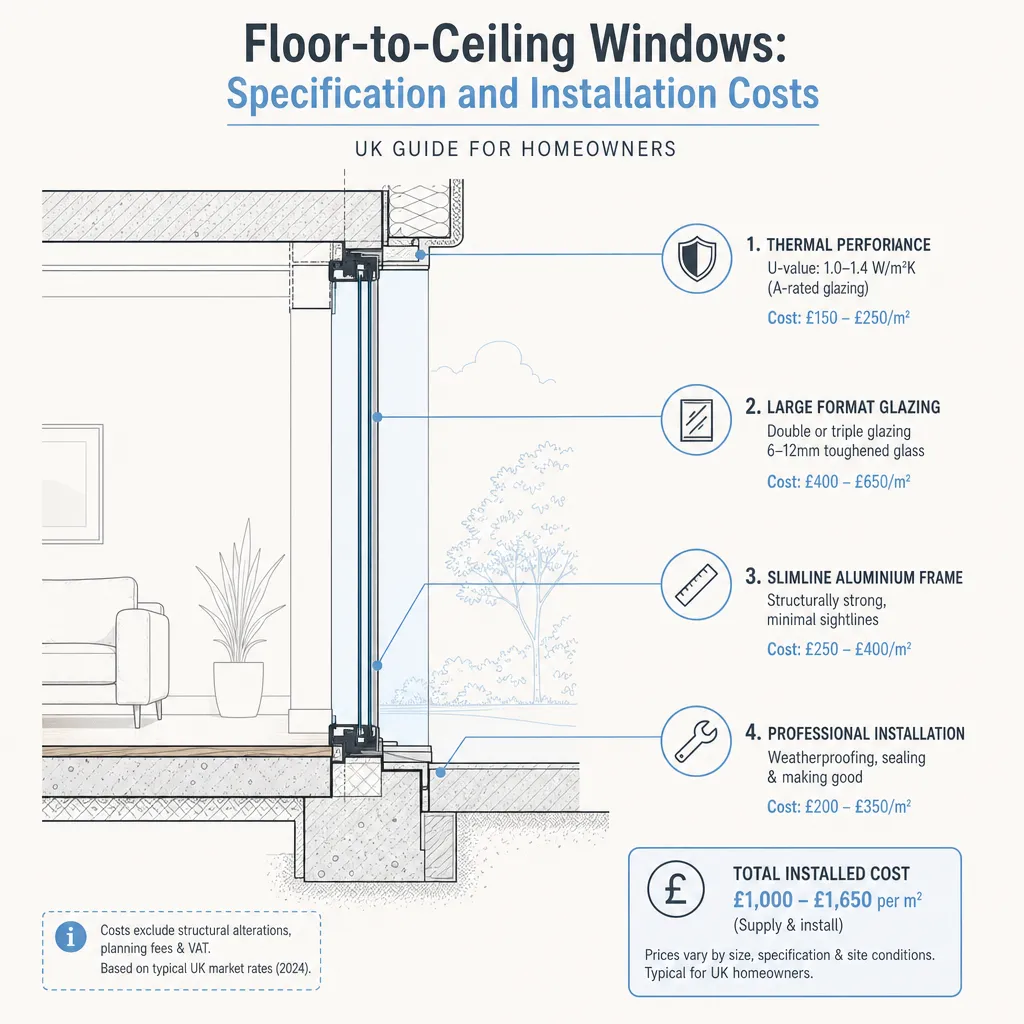
Floor-to-Ceiling Windows: Specification and Installation Costs
Floor-to-ceiling windows in the UK typically cost £1,800–£6,500 per unit installed, depending on glazing type, frame material, and whether structural alterations are needed.
 Improvement & Build
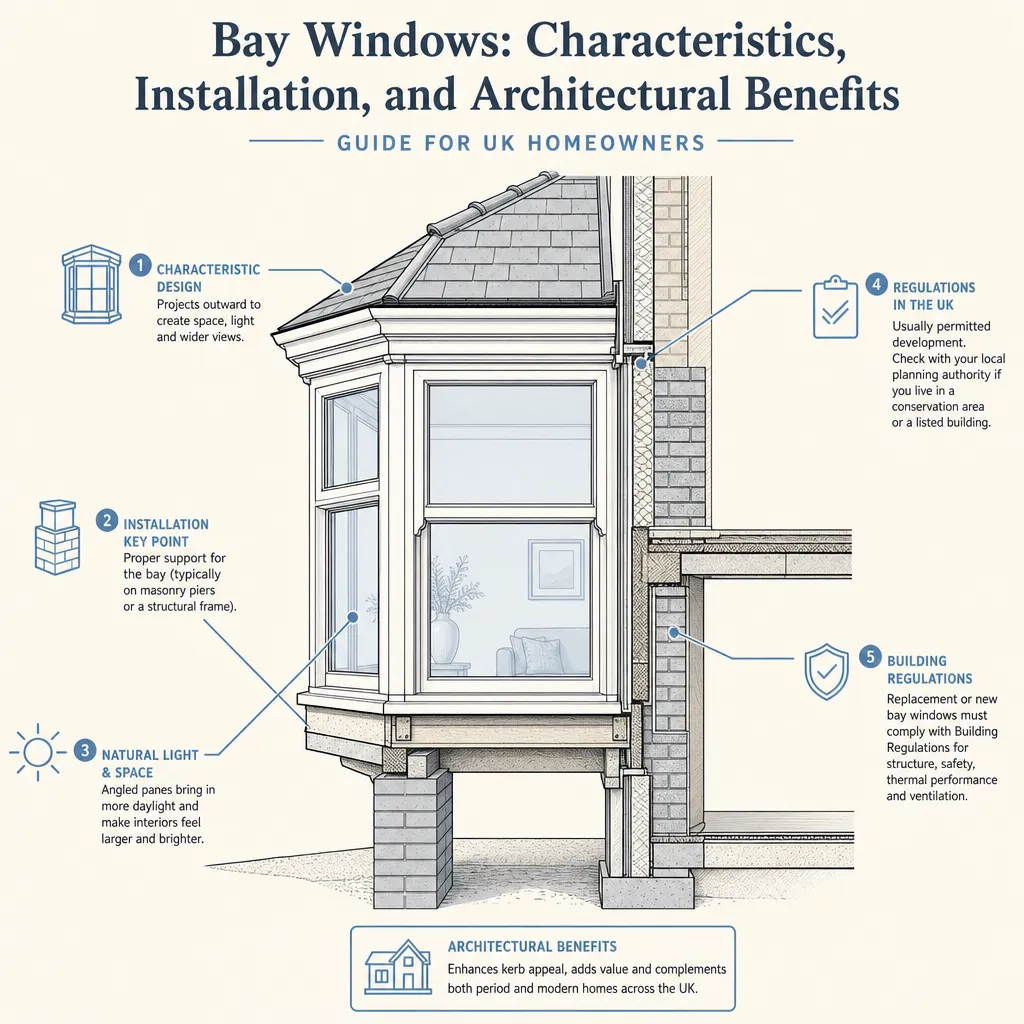
Bay Windows: Characteristics, Installation, and Architectural Benefits
Bay windows project outward from the main wall, adding floor space, natural light, and architectural character.
 Improvement & Build
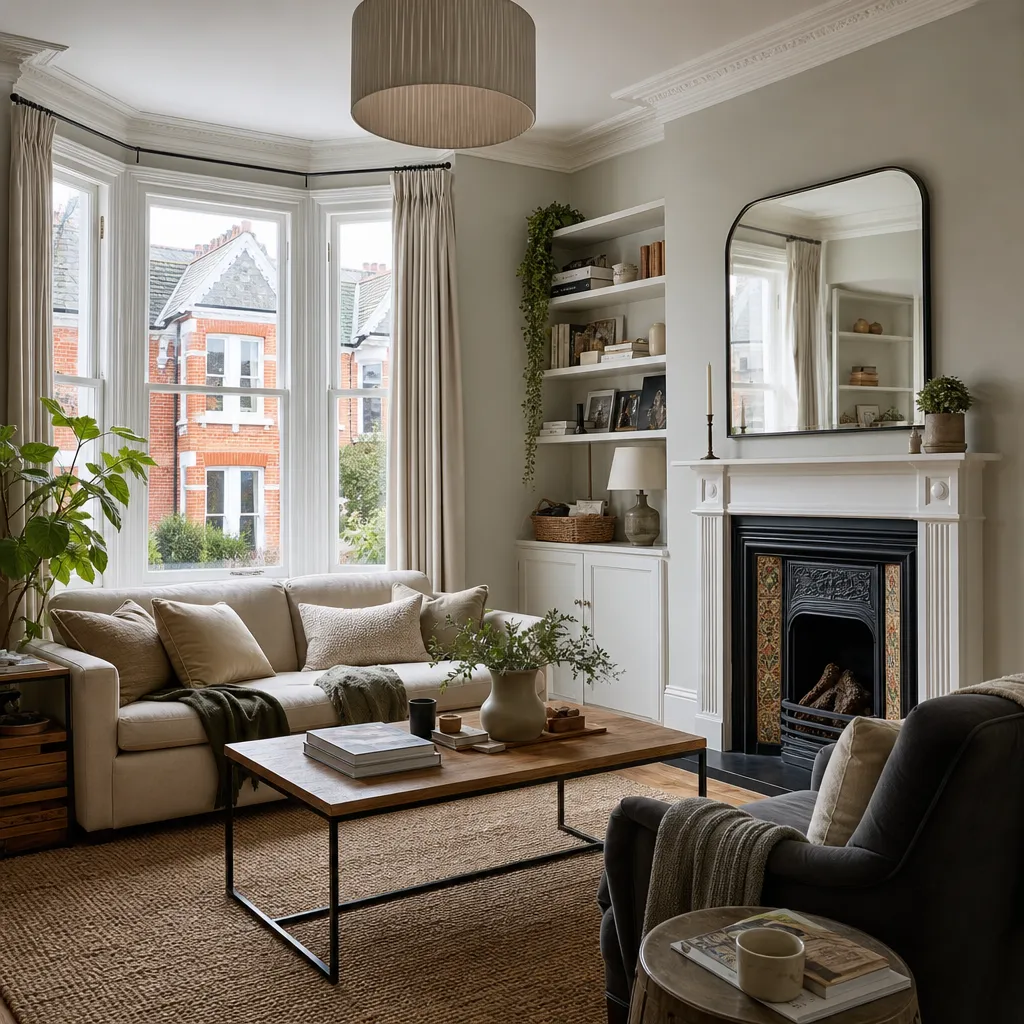
Creating Your Home Sanctuary: Design and Comfort Principles
Creating a home sanctuary is about balancing sensory comfort, functional layout, and personal aesthetic.
 Improvement & Build
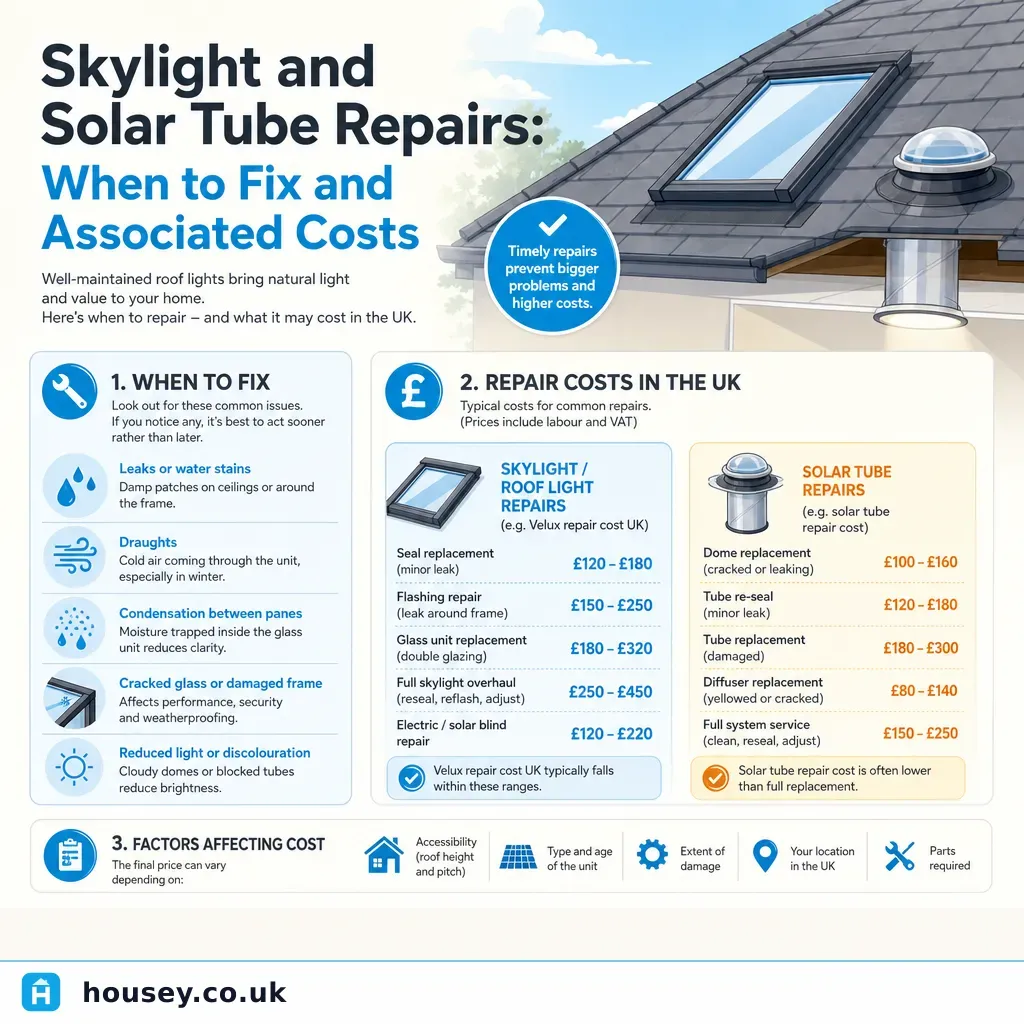
Skylight and solar tube repairs: when to fix and associated costs
Skylight repairs — resealing, reflashing, or replacing a misted glazing unit — typically cost £150–£400 for minor work and £800–£2,500+ for a full replacement in the UK.
 Improvement & Build
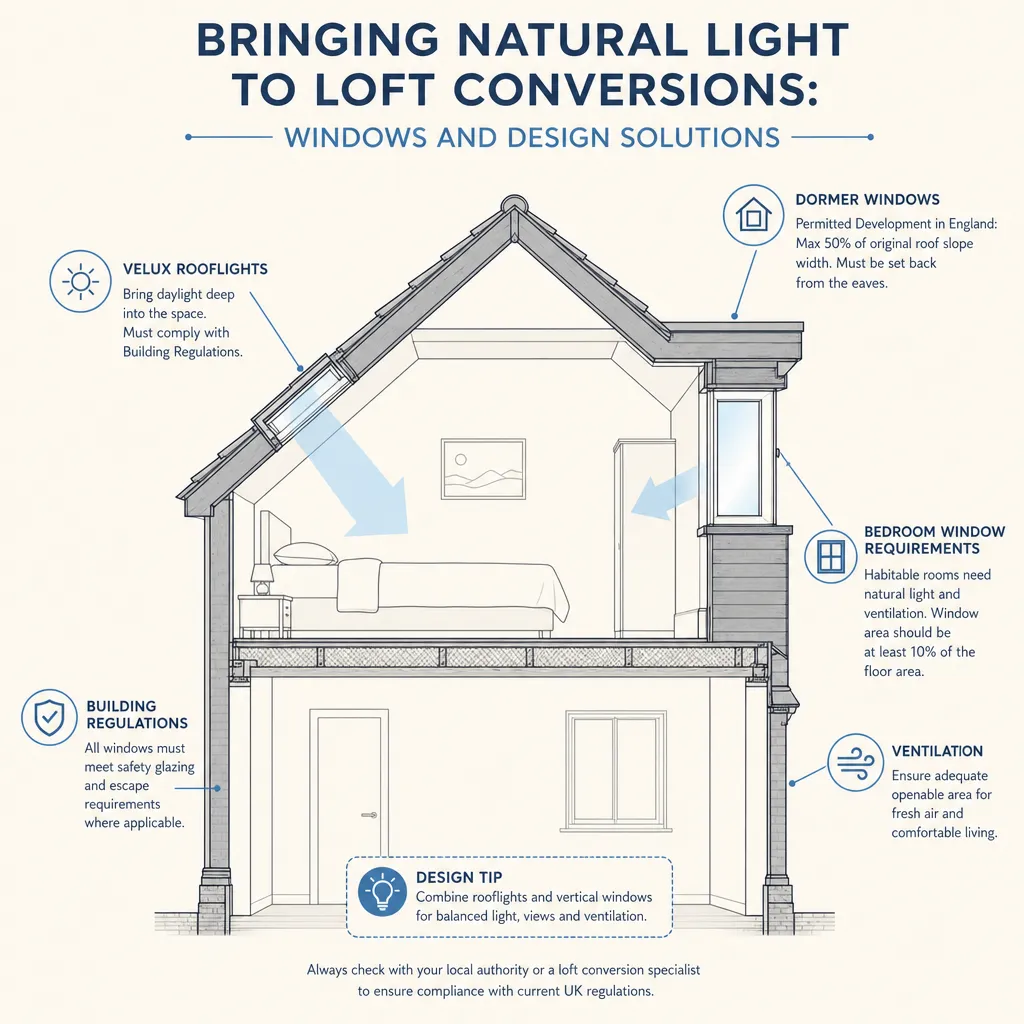
Bringing Natural Light to Loft Conversions: Windows and Design Solutions
Natural light in a loft conversion is usually achieved through roof lights, dormer windows, or gable-end glazing.