Skylight and solar tube repairs: when to fix and associated costs
By Housey · Last reviewed 12th of May 2026
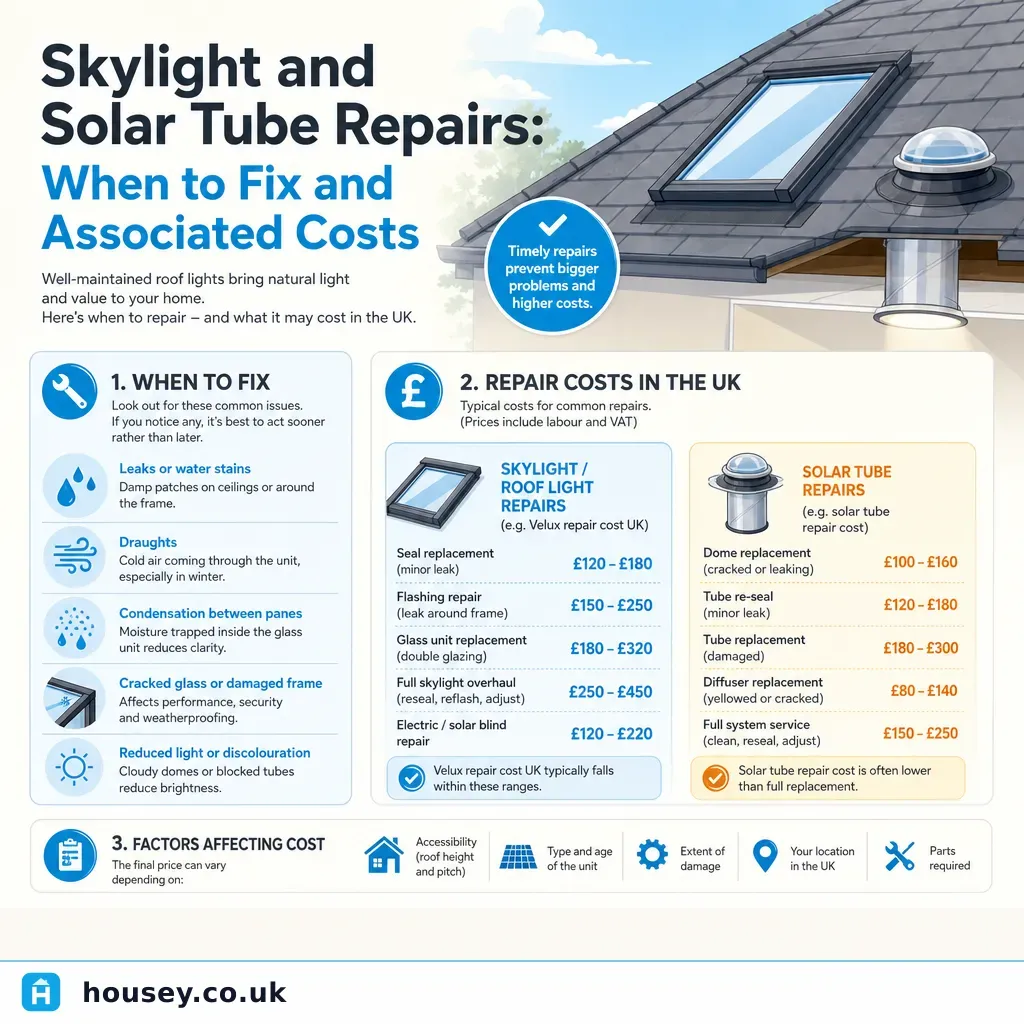
Skylight and solar tube repairs: when to fix and associated costs
A leaking skylight or a degraded solar tube diffuser may seem like a minor nuisance, but left unaddressed either can lead to water ingress, mould growth, and damage to ceiling linings or roof insulation. Homeowners typically face this decision after heavy rain reveals a drip, persistent condensation appears around a roof window frame, or a solar tube that once brightened a hallway has started to dim noticeably.
Key points
- Resealing or reflashing a leaking skylight typically costs £150–£400 in the UK; full skylight replacement usually ranges from £800 to £2,500+ including labour, depending on unit size and roof access (indicative costs, last reviewed 2026-05-12).
- Solar tube repairs — including dome replacement, reflashing, or diffuser replacement — typically cost £150–£500 depending on which component has failed.
- Any work involving the roof surface must be carried out by a competent professional; falls from height are a leading cause of serious injury on domestic properties in the UK, according to the Health and Safety Executive.
- Like-for-like skylight repairs and replacements generally do not require planning permission, but changes to listed buildings or in conservation areas may need LPA consent.
- Replacement roof windows must meet the minimum thermal performance standard of 1.4 W/m²K U-value for roof windows in England under Approved Document L of the Building Regulations.
What causes skylights and solar tubes to fail?
Skylights and solar tubes share a common failure mode: the junction between the glazed unit and the roof covering deteriorates over time, allowing water to track under the flashing and into the roof structure. The specific fault — and therefore the appropriate repair — differs between the two product types.
Common skylight faults:
- Failed or cracked lead or metal flashing around the frame
- Degraded sealant between the frame and glazing unit
- Misted double-glazed unit, indicating a broken glass seal
- Damaged or warped frame (more common in timber-framed units on older properties)
- Broken hinges, handles, or remote-operated opening mechanisms
Common solar tube faults:
- Cracked or yellowed acrylic dome at roof level due to UV degradation over time
- Degraded or displaced flashing allowing water ingress around the tube
- Condensation inside the reflective tube, indicating a seal breach
- Damaged or discoloured diffuser at ceiling level
- Blockage from debris, moss, or bird nesting material inside the tube
Most solar tube domes and diffusers can be replaced without replacing the entire tube assembly, making them relatively cost-effective to restore when the core tube structure is sound.
How much do skylight and solar tube repairs cost in the UK?
Indicative UK costs, last reviewed 2026-05-12.
Repair type | Indicative cost range | Notes |
|---|---|---|
Skylight resealing or reflashing | £150–£400 | Scaffolding or access platform may add cost |
Skylight glazing unit replacement only | £150–£600 | Depends on unit size and specification |
Full skylight replacement (supply and fit) | £800–£2,500+ | Larger fixed rooflights at the upper end |
Solar tube dome replacement | £80–£200 | Component cost; roof access required |
Solar tube diffuser replacement | £50–£150 | Usually done from inside; no roof access needed |
Solar tube full assembly replacement | £400–£900 | Includes new flashing and roof work |
Scaffold or access tower (if required) | £400–£1,200 | Varies by roof height and complexity |
Costs vary by roof pitch, height, access constraints, and the installer's location. Always obtain at least two quotes and confirm whether scaffolding is included or quoted separately.
Repair or replace? A decision guide
Which option should you choose?
- Reseal or reflash if the frame and glazing unit are structurally sound and the leak originates at the flashing junction. This is often the most cost-effective first step for a newer or mid-life skylight.
- Replace the glazing unit only if the glass is misted or cracked but the frame is in good condition and within its serviceable life.
- Replace the full skylight if the frame is warped, the unit is more than 15–20 years old, the glazing no longer meets current Part L thermal standards, or repeated repairs have failed to resolve the leak.
- Replace the solar tube dome or diffuser if the dome is yellowed, cracked, or light-blocking and the rest of the assembly is sound.
- Replace the full solar tube assembly if water ingress has tracked inside the reflective tube, or the tube itself is corroded, separated at a joint, or physically damaged.
- Ask a professional roofer or window and door installer to inspect first if you cannot identify which component has failed — especially when the leak source is not obvious from inside the property.
Red flags: when to act promptly
Do not delay if you notice any of the following:
- Active dripping during or after rain — water is already entering the roof structure and may be spreading unseen
- Brown water staining on the ceiling around the skylight frame or solar tube diffuser
- Mould growth or a damp smell near the ceiling fitting
- Visible daylight around the interior frame — the flashing has failed and the aperture is effectively open to the elements
- Sagging ceiling material around the fitting — water has pooled above the ceiling surface
These signs indicate the problem has progressed beyond surface-level deterioration. Delaying repair at this stage risks damage to roof structure timbers, insulation, and ceiling joists — all significantly more expensive to address than a prompt repair.
Planning and building regulations considerations
Most skylight repairs — resealing, replacing a glazing unit, or replacing a like-for-like solar tube — do not require planning permission under general repair and maintenance provisions.
However:
- Replacing a skylight with a different or larger unit may constitute a material alteration requiring planning consent, particularly on listed buildings or in conservation areas.
- New skylights or rooflights on a flat roof visible from a road may require consent in conservation areas.
- Building Regulations Part L applies to replacement glazing specifications; replacement skylights must achieve a minimum U-value of 1.4 W/m²K or better for roof windows in England under Approved Document L.
- If in doubt, check with your local planning authority before ordering a replacement unit.
What to ask before accepting a quote
- Will you inspect the roof around the skylight before quoting, or is there a separate call-out survey fee?
- Is scaffolding or an access platform included in the quote, or quoted separately?
- If replacing the glazing unit, what U-value does the new unit achieve?
- What warranty is offered on workmanship and materials?
- Are you a member of a recognised roofing trade body, or a FENSA-registered glazing installer for any associated work?
- What could change the price once you are on the roof?
- Is VAT included in the quote figure?
When to get professional help
Roof access should always be carried out by a professional with appropriate access equipment. Do not attempt to reseal or inspect a skylight or solar tube dome from a domestic ladder without proper training and stabilisation equipment.
Additional situations that warrant professional input:
- You cannot identify the leak source — water often tracks a considerable distance from the entry point before it appears at the ceiling
- The roof around the skylight shows signs of general deterioration, missing tiles, or damaged felt
- You are considering a change in skylight size or specification
- The property is listed or in a conservation area
How Housey can help
Housey connects you with vetted roofers and window and door installers who can inspect, quote for, and carry out skylight and solar tube repairs. Getting at least two quotes helps you understand whether repair or replacement represents better long-term value for your specific unit and roof condition.
Frequently asked questions
Can I repair a skylight myself?
Minor internal tasks — such as replacing a solar tube diffuser at ceiling level or cleaning the reflective tube from inside — can sometimes be managed without roof access. Any work involving the roof surface, including resealing, reflashing, or replacing the external dome, should be carried out by a competent professional. Falls from height are a leading cause of serious domestic injury in the UK.
How long does a skylight repair take?
A straightforward reseal or reflash typically takes half a day to a full day, assuming scaffold is already in place. Full skylight replacement including scaffold erection and dismantling usually takes one to two days. Solar tube dome replacement is typically a shorter job depending on roof access.
Does home insurance cover skylight leaks?
This depends on your specific policy wording. Most buildings insurance covers sudden or accidental damage such as storm damage, but may exclude gradual deterioration or maintenance-related failure. Check your policy and contact your insurer before instructing repairs if you plan to make a claim.
Do I need building regulations approval to replace a skylight?
A like-for-like replacement achieving a U-value of 1.4 W/m²K or better under Approved Document L in England does not usually require formal building regulations approval, though notification may be required in some cases. If you are enlarging the opening or substantially changing the specification, consult your local building control body first.
Sources and further reading
- GOV.UK Approved Document L: Conservation of Fuel and Power — thermal performance requirements for replacement roof glazing
- Planning Portal: Repairs and maintenance guidance — when planning consent is and is not needed for alterations
- Health and Safety Executive: Falls from height — guidance on working safely at height on domestic properties
- FENSA: glazing certification — certification scheme for window and door replacements
Useful next reads
 Improvement & Build
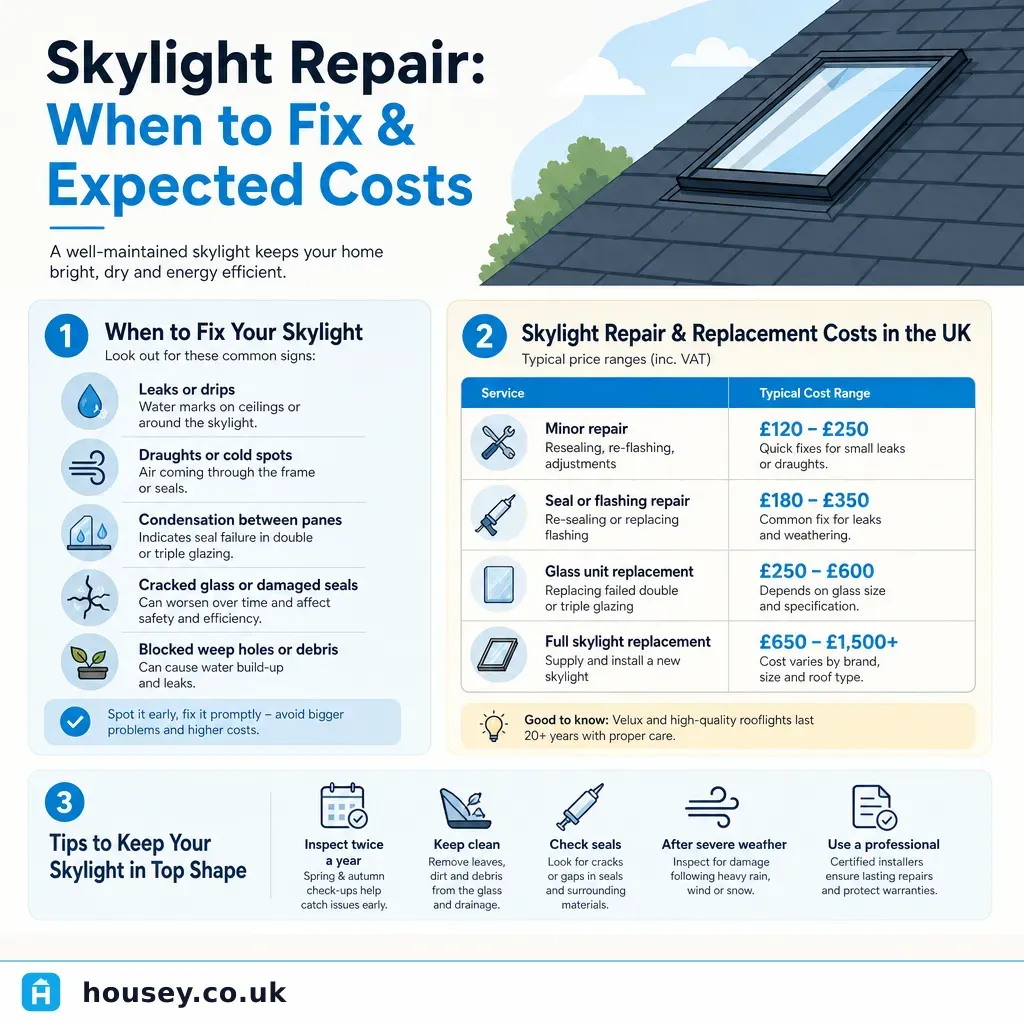
Skylight repair: when to fix and expected costs
Skylight repairs in the UK typically cost £150–£800 depending on the fault, while full replacement usually runs £500–£2,500.
 Improvement & Build
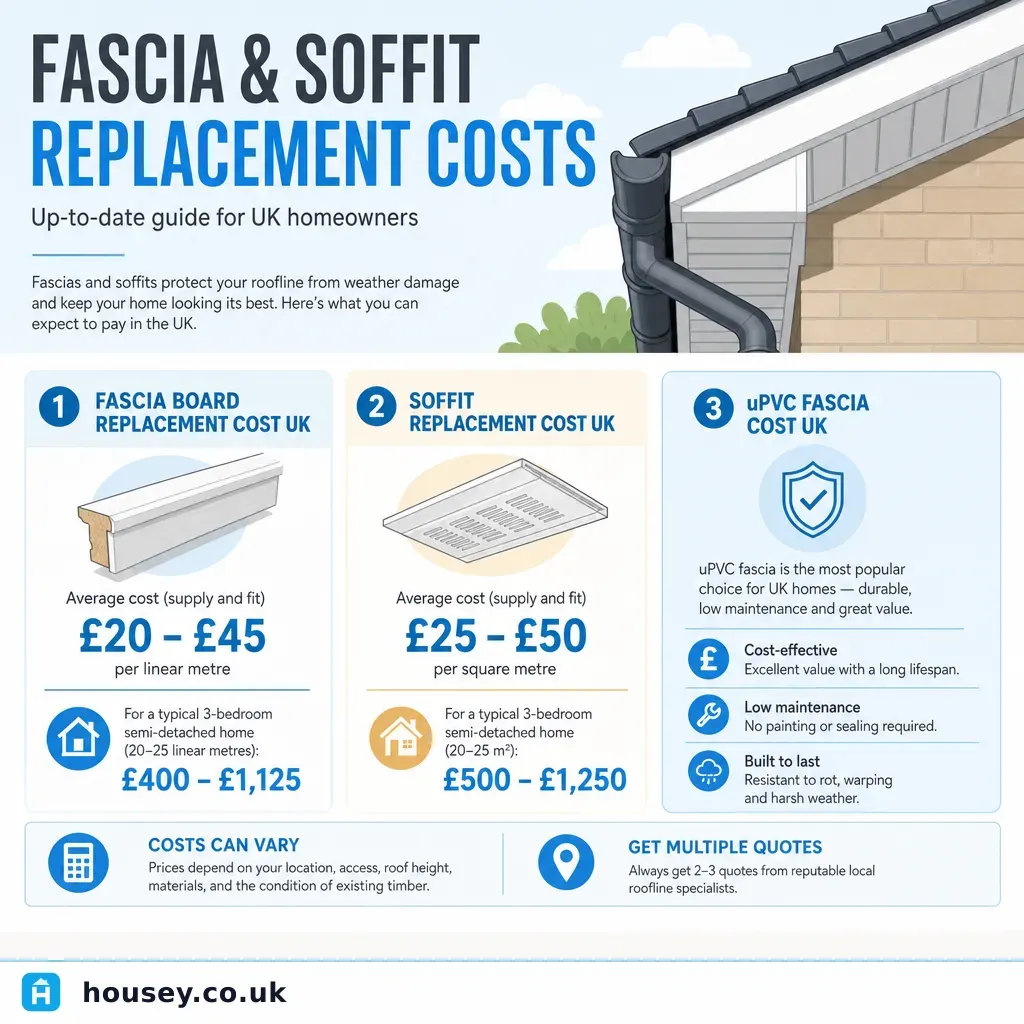
Fascia and Soffit Replacement Costs
Fascia and soffit replacement for a semi-detached house in the UK typically costs £1,800–£4,500 for uPVC boards and new guttering.
 Improvement & Build
Door Sills: Purpose, Maintenance, and Replacement Guidance
A door sill — also called a threshold — is the horizontal component at the base of an external door frame.
 Improvement & Build
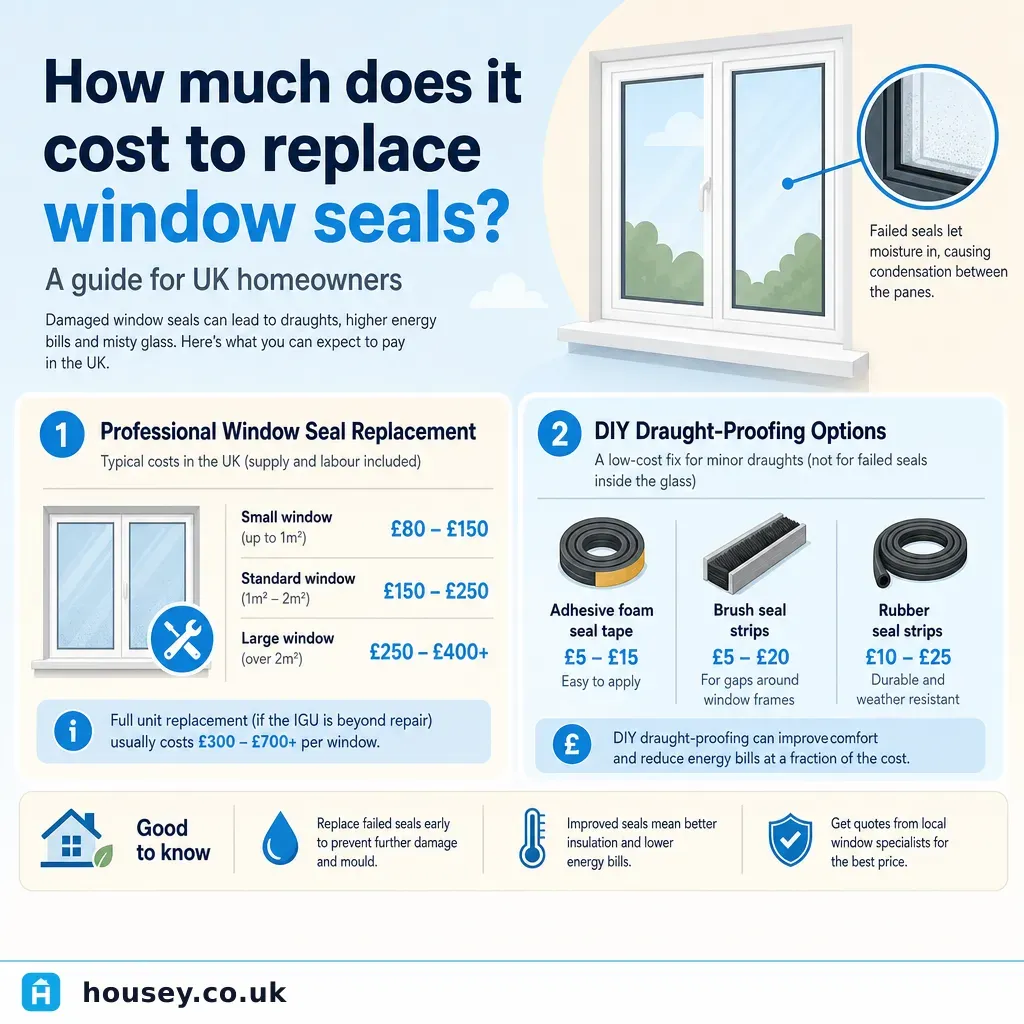
How much does it cost to replace window seals?
Replacing window seals in the UK costs between £40 and £350 per window depending on the repair type.
 Improvement & Build
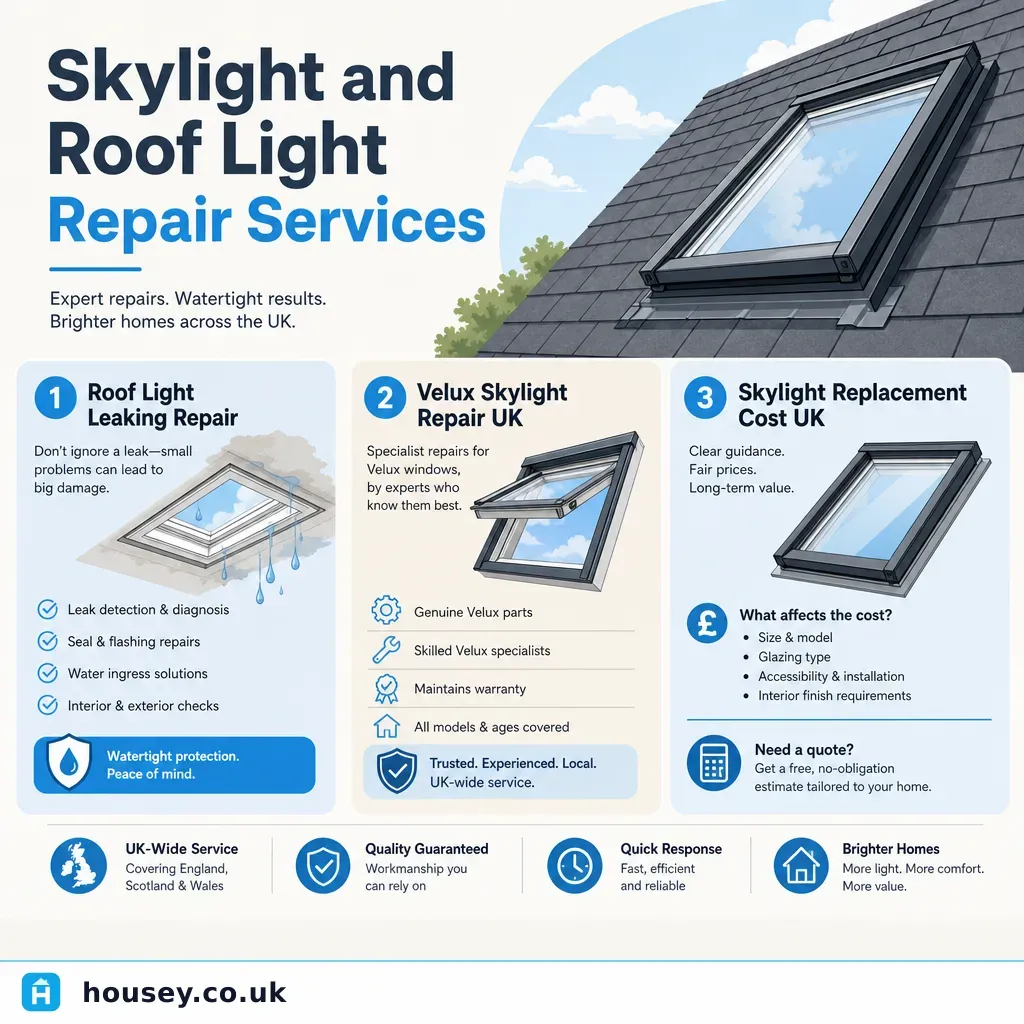
Skylight and Roof Light Repair Services
Skylight and roof light repairs typically cover resealing, glass replacement, frame repairs, or flashing fixes.