Bringing Natural Light to Loft Conversions: Windows and Design Solutions
By Housey · Last reviewed 19th of May 2026
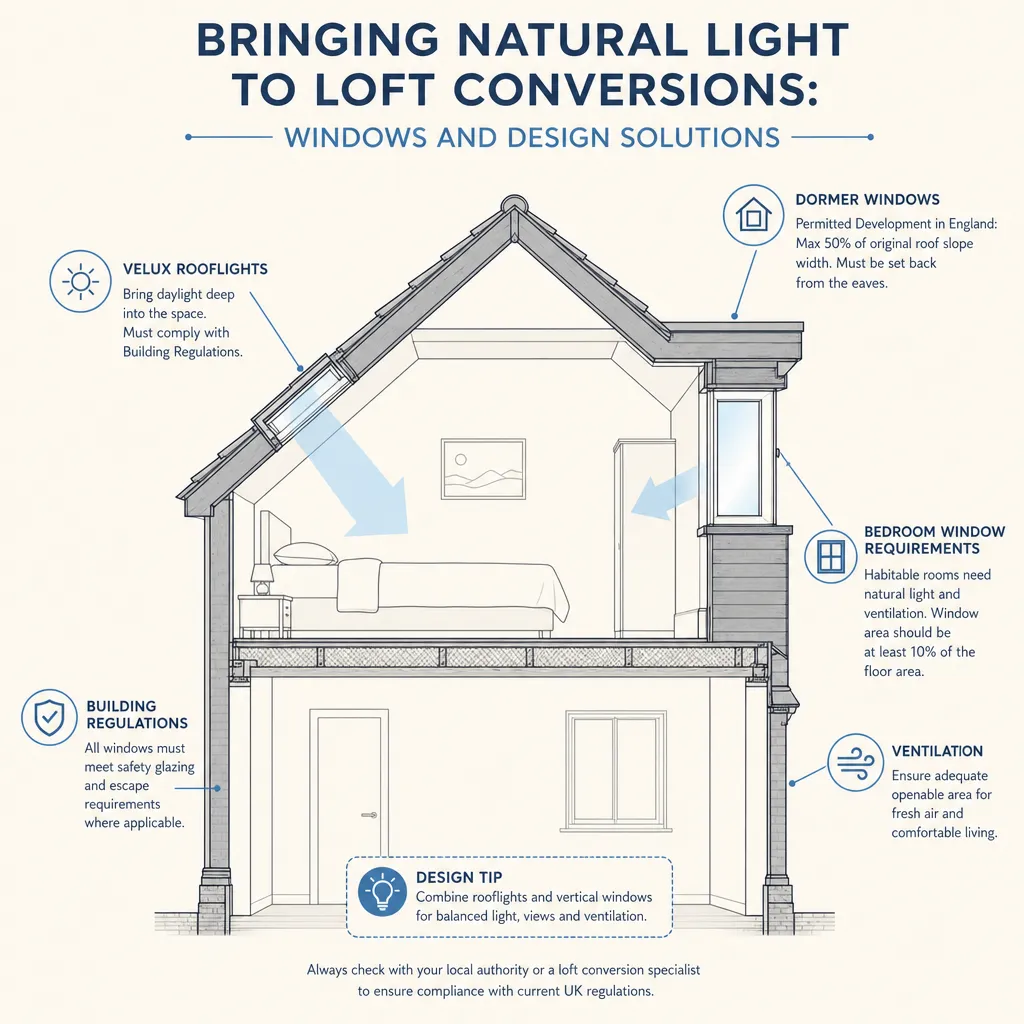
Bringing Natural Light to Loft Conversions: Windows and Design Solutions
A dark, poorly lit loft conversion can undermine the whole point of the project — usable, comfortable living space. Choosing the right glazing strategy is one of the most consequential design decisions in any loft project, affecting habitability, ventilation compliance, fire escape provision, and how much planning or building control involvement is required. For Victorian terraces, 1930s semis, and post-war houses alike, the answer depends on roof pitch, property type, and location.
Key points
- Building Regulations Approved Document F (Ventilation, 2021) requires habitable rooms to have openable windows totalling at least 1/20th of the floor area for purge ventilation, plus background ventilation via trickle vents of at least 8,000 mm² equivalent area.
- Roof lights set flush within the roof plane are usually permitted development in England if they do not protrude more than 150 mm above the existing roof plane and are not on a principal or highway-facing elevation — but permitted development rights can be removed by Article 4 Directions.
- Rear dormers may be permitted development for non-listed houses outside conservation areas, subject to volume limits: no more than 40 m³ above the original roof space for terraced houses and 50 m³ for semi-detached or detached houses.
- Approved Document B requires a means-of-escape window in certain loft configurations: minimum clear opening of 0.33 m² with neither dimension less than 450 mm.
- The minimum ceiling height for a habitable loft room under Building Regulations is typically 2.2 m over at least half the usable floor area, which directly affects where roof lights or dormers should be positioned to deliver adequate headroom.
Window types for loft conversions
Roof lights
Roof lights — typically Velux or Fakro-pattern windows — sit within the roof plane and are the least disruptive glazing option. They are cost-effective, relatively quick to install, and in most cases do not alter the external roofline. They suit pitched roofs with a minimum slope of around 15° and can be positioned to maximise morning or afternoon sun depending on orientation.
A common practical limitation is solar gain in summer and potential glare if positioned without regard to aspect. Roof light manufacturers publish installation and specification guides, including sizing charts to meet ventilation area requirements under Approved Document F.
Dormer windows
A dormer is a structural addition that creates a vertical window within a projection from the roof slope. A rear-facing dormer typically provides more usable floor area and better headroom than roof lights alone, and it gives a conventional, forward-facing window view more suited to use as a bedroom or study.
Rear dormers on non-listed, non-conservation-area houses in England are often permitted development under Class B of Schedule 2, Part 1 of the Town and Country Planning (General Permitted Development) (England) Order 2015 — subject to volume, height, and setback requirements. However, permitted development rights can be removed by Article 4 Directions or by conditions on the original planning permission. Always verify with your local planning authority, and consider applying for a Lawful Development Certificate before or after works.
Side dormers and any dormers on listed buildings or in conservation areas generally require a full planning application.
Gable-end glazing
For hip-to-gable and gable-extension loft conversions, a full gable wall can incorporate conventional casement or fixed windows, bringing in large amounts of natural light without the constraints of roof pitch. This approach suits Edwardian and inter-war semis where a hipped roof end is extended to a vertical gable. The structural changes are more significant than a simple roof light installation, and planning permission is usually required for a hip-to-gable alteration.
Comparison: loft window options
Option | Planning position | Light quality | Ventilation | Structural impact | Indicative cost |
|---|---|---|---|---|---|
Flush roof light | Usually permitted development | Good (diffuse, overhead) | Good if openable | Low | £500–£1,500 per window installed |
Rear flat-roofed dormer | Often permitted development; verify locally | Excellent (vertical glazing) | Excellent | Medium | Part of wider loft conversion cost |
Side dormer | Usually requires planning permission | Good | Good | Medium | Part of wider loft conversion cost |
Hip-to-gable with gable glazing | Planning permission usually required | Excellent | Excellent | High | Part of wider loft conversion cost |
Indicative UK costs, last reviewed 2026-05-19. Full loft conversion costs in the UK typically range from £20,000 to £60,000+ depending on size, location, and specification. Obtain at least three quotes.
Permitted development rules for loft windows in England
Permitted development (PD) rights allow certain works without a planning application. For loft glazing in England, the key rules are:
Roof lights must not protrude more than 150 mm above the existing roof plane; must not be installed on a wall or roof slope that fronts a highway; and the existing roofline must not be raised.
Rear dormers must not exceed the original roof volume by more than 40 m³ (terraced house) or 50 m³ (semi-detached or detached). The dormer must be set back at least 20 cm from the eaves and must not extend beyond the highest part of the roof. Materials should match the existing house as far as practicable.
PD rights do not apply to listed buildings, properties in conservation areas, Areas of Outstanding Natural Beauty, National Parks, or properties subject to Article 4 Directions removing household PD rights.
Scotland, Wales, and Northern Ireland have their own permitted development regimes, which differ from the English rules. Always check the rules for your nation before proceeding.
Applying for a Lawful Development Certificate (LDC) before or after works confirms PD status in writing and protects your position at point of sale.
Building Regulations requirements for loft windows
Regardless of planning position, Building Regulations apply to all loft conversions:
Approved Document F (Ventilation): Habitable rooms require purge ventilation via openable windows of at least 1/20th of the floor area, and background ventilation via trickle vents of at least 8,000 mm² equivalent area per habitable room.
Approved Document L (Energy efficiency): Windows must meet minimum thermal performance standards. Most loft conversion windows should achieve a BFRC (British Fenestration Rating Council) Window Energy Rating of at least Band B, or equivalent U-value, to comply with Part L.
Approved Document B (Fire safety): Where a loft room is the only room on that storey and has no protected staircase, an escape window meeting the minimum clear opening dimensions (at least 450 mm high by 450 mm wide, with at least 0.33 m² clear opening area) is usually required. The window sill should be between 800 mm and 1,100 mm from the floor. Confirm requirements with your building control officer.
Approved Document K (Protection from falling): Windows at low level in rooms used by children should include child safety restrictors where appropriate.
Which window solution should you choose?
- Choose roof lights if your planning situation is constrained, your roof pitch is suitable, and you want the most cost-effective approach with minimal structural impact.
- Choose a rear dormer if you need more headroom and usable floor area and the relevant roof slope is on a rear elevation — but confirm permitted development status with your local planning authority first.
- Choose gable-end glazing if you are extending to a full gable and want maximum light, accepting that planning permission is likely needed and structural input will be required.
- Instruct an architectural technologist if you are unsure which option suits your property type, planning history, or structural constraints.
- Check with building control before fixing a window specification to confirm fire escape, ventilation area, and energy performance requirements for the specific rooms planned.
- Apply for a Lawful Development Certificate before starting any works where you intend to rely on permitted development — this provides legal certainty and helps at point of sale.
Important limitations
This article provides general guidance on loft conversion glazing options in England. Planning and building control requirements vary by property, location, prior planning history, and local authority interpretation. Rules for listed buildings, conservation areas, and Article 4 Direction areas are significantly more restrictive than the default position. Scotland, Wales, and Northern Ireland each have their own permitted development and building standards regimes. Always confirm requirements with your local planning authority and a qualified designer before submitting applications or commencing work.
When this becomes urgent
Seek professional advice immediately if:
- You have already started or completed a dormer or roof alteration without confirming planning permission or permitted development status and have received a planning enforcement notice.
- A building control officer has raised concerns about fire escape provision or structural adequacy during an inspection.
- You are preparing to sell and a buyer's solicitor has raised a planning query about an unconverted or converted loft that lacks a Lawful Development Certificate or building control completion certificate.
In each of these situations, acting promptly and engaging a qualified planner or architectural technologist is important — enforcement and conveyancing timescales can be tight.
What to ask a qualified professional
Before appointing a loft conversion company or designer:
- Is my property subject to any Article 4 Directions, conservation area restrictions, or listed building designations that affect permitted development rights?
- What is the maximum permitted dormer volume for my specific property type under the current Town and Country Planning (GPDO) rules?
- Which window positions and opening areas will satisfy Approved Document F ventilation requirements and Approved Document B fire escape requirements for the rooms planned?
- Will the structural opening for a dormer require a structural engineer's calculations, and how will building control approval be obtained?
- Can you apply for a Lawful Development Certificate before work starts?
- What Window Energy Rating (BFRC) do the proposed windows achieve, and how does this comply with Approved Document L?
When to get professional help
Loft conversions always require building control oversight regardless of planning position. Also seek professional help if:
- Your home is listed or in a conservation area.
- You are unsure whether permitted development rights apply to your property.
- The proposed dormer or gable extension involves structural alterations to rafters, ridge, or party walls.
- You want a Lawful Development Certificate to protect your position at point of sale.
- The loft has a complex roof geometry, a low ridge height, or shares party walls with neighbouring properties.
How Housey can help
Housey connects homeowners with experienced loft conversion companies and architectural technologists who can advise on window placement, planning compliance, and building control submissions. If you need drawings for building regulations approval, find vetted professionals offering building regulations drawings through the platform. For window specification and installation, window and door installers listed on Housey can advise on products that meet Part L and Part F requirements.
Frequently asked questions
Do Velux-type roof lights always fall within permitted development?
Not always. Roof lights are usually permitted development in England if they do not protrude more than 150 mm above the existing roof plane and are not on a principal or highway-facing elevation. However, permitted development rights may be removed for listed buildings, properties in conservation areas, and some estates subject to Article 4 Directions. Always verify with your local planning authority before proceeding.
What window size is needed for a loft bedroom to comply with Building Regulations?
For ventilation under Approved Document F, habitable rooms need openable windows totalling at least 1/20th of the floor area. For fire escape under Approved Document B, a means-of-escape window needs a minimum clear opening of 0.33 m² with neither dimension less than 450 mm. Your building control officer can confirm the exact requirements for your specific conversion layout.
Can I add windows to a loft conversion in a conservation area?
Work in a conservation area is subject to additional restrictions. Roof lights on front-facing slopes typically require planning permission rather than relying on permitted development rights in conservation areas. Dormers are also likely to require full planning permission. Consult your local planning authority and consider a pre-application advice meeting before proceeding with any works.
How many windows do I need in a loft conversion?
There is no fixed minimum number — what matters is total glazed area relative to floor area for ventilation compliance, whether fire escape requirements are met, and sufficient natural light for the intended use. A single well-positioned large roof light may suffice for a small room; larger spaces may need multiple units or a dormer to achieve adequate light levels and the required headroom.
Sources and further reading
Useful next reads
 Improvement & Build
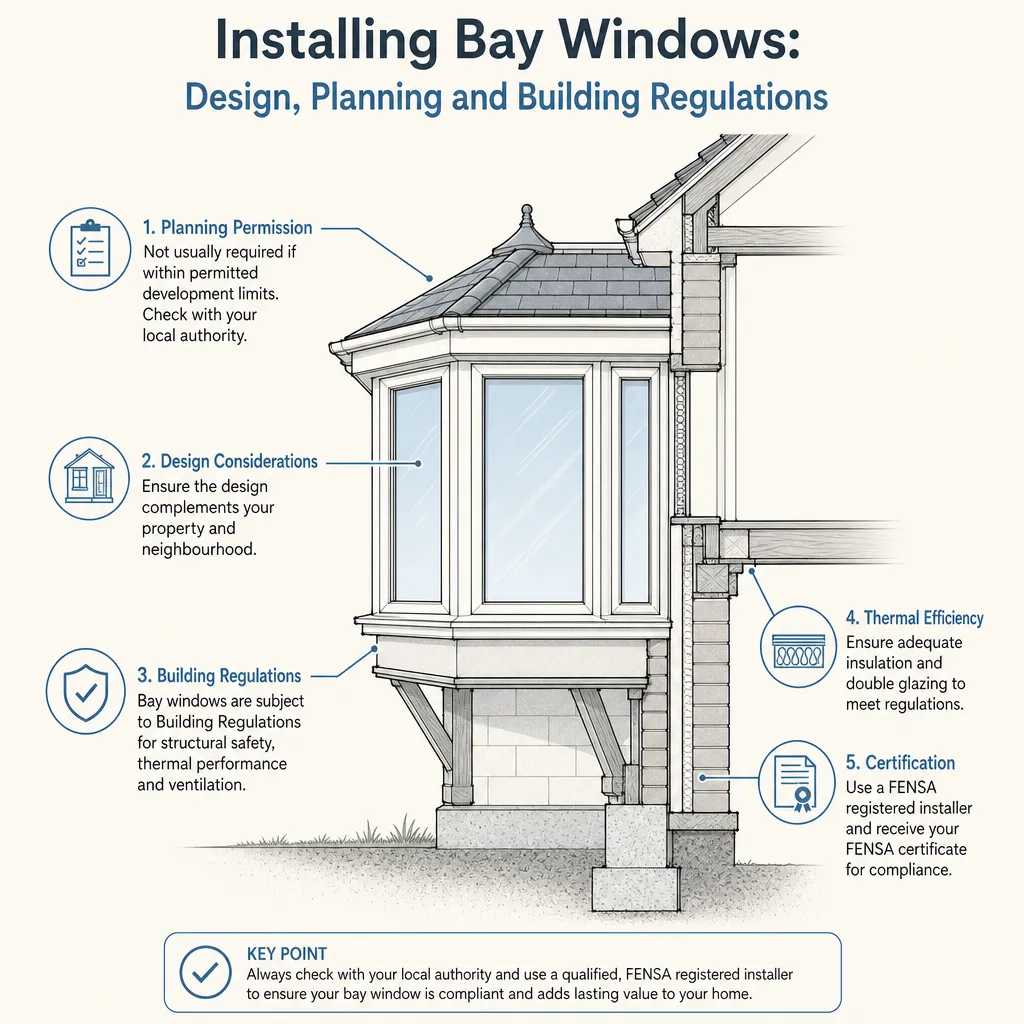
Installing Bay Windows: Design, Planning and Building Regulations
Most like-for-like bay window replacements are permitted development — no planning permission is needed unless the property is listed or in a conservation area.
 Improvement & Build
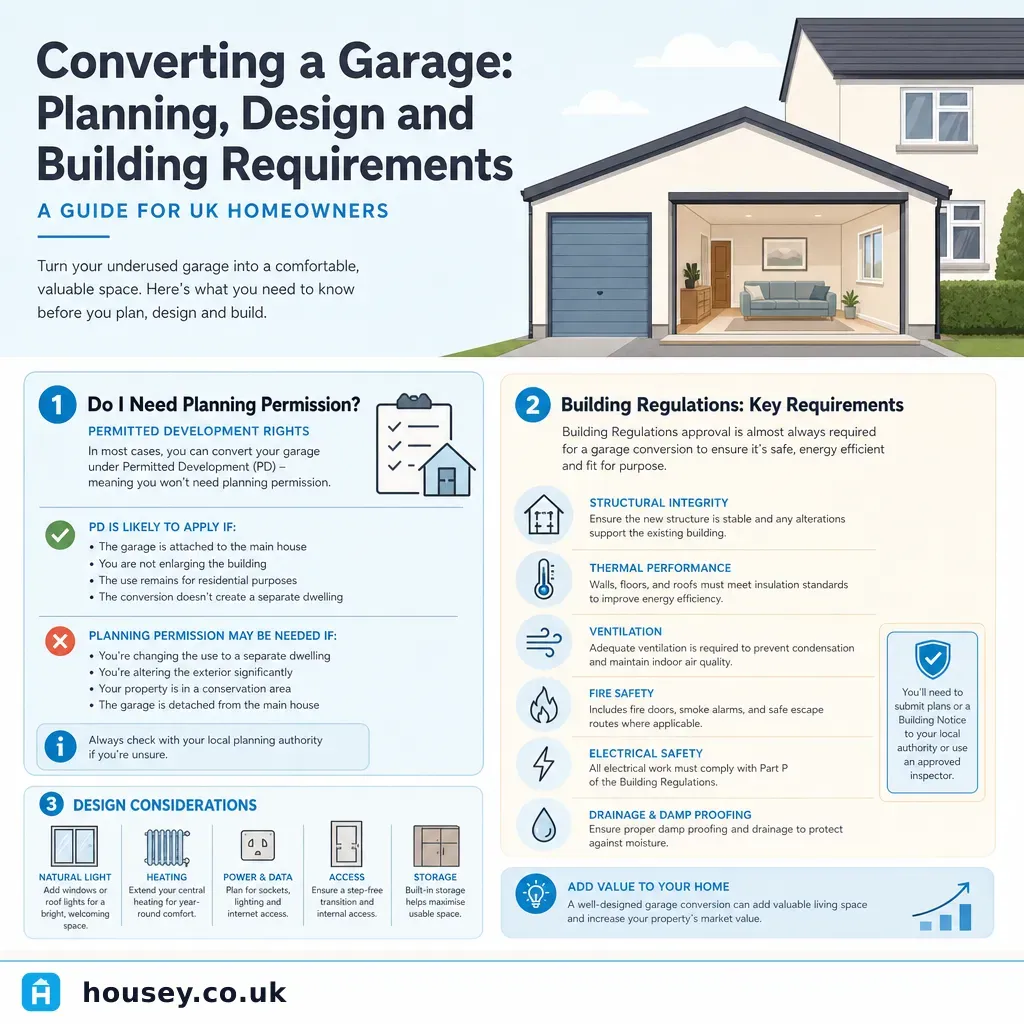
Converting a Garage: Planning, Design and Building Requirements
Most garage conversions in England do not need planning permission under permitted development rights, but all conversions require Building Regulations approval covering structure, thermal insulation, fire safety, and ventilation.
 Improvement & Build
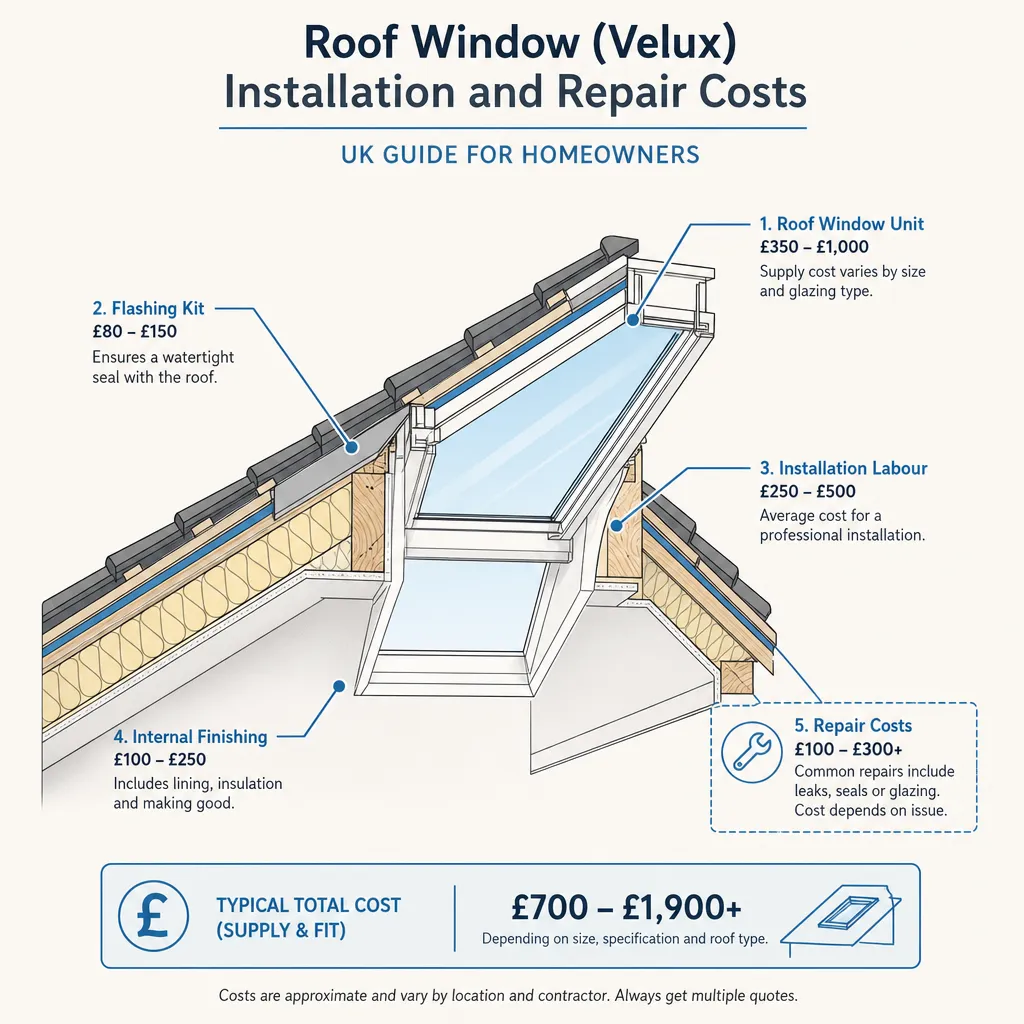
Roof Window (Velux) Installation and Repair Costs
Roof windows in the UK cost £500–£2,100 per window to supply and install on a pitched roof, depending on size and specification.
 Improvement & Build
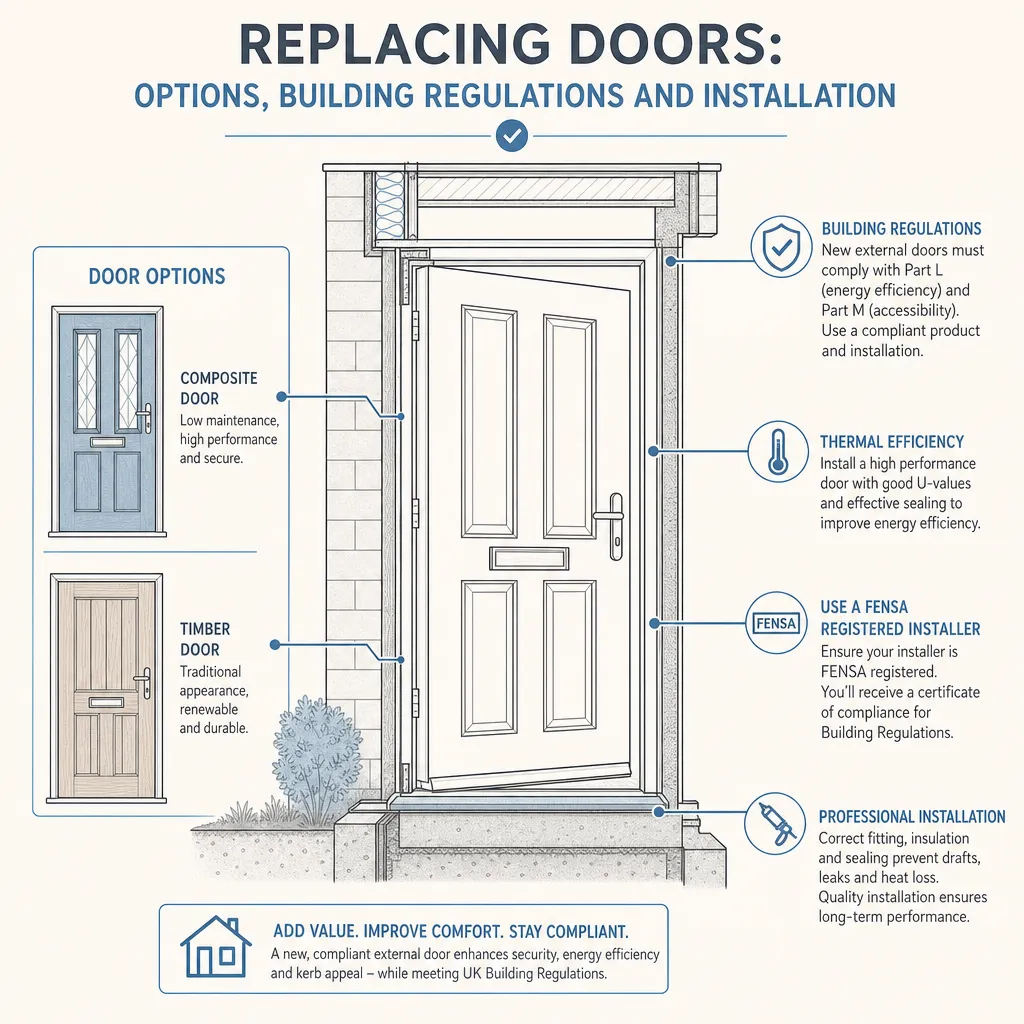
Replacing Doors: Options, Building Regulations and Installation
Replacing an external door in England requires compliance with Building Regulations Part L (minimum U-value 1.
 Improvement & Build
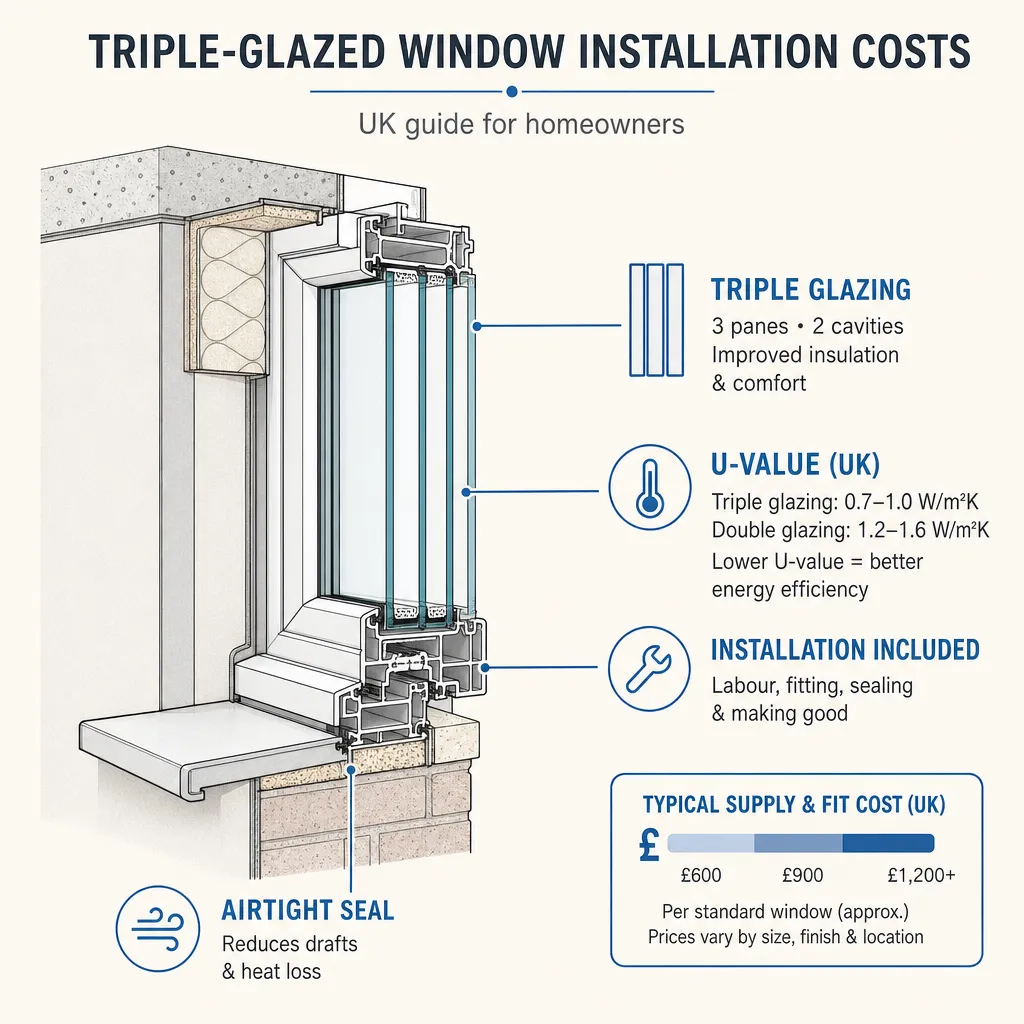
Triple-Glazed Window Installation Costs
Triple-glazed window installation in the UK typically costs £800–£1,800 per window, depending on size, frame material, and glazing specification.