Air Source Heat Pump Installation: Costs and Considerations
By Housey · Last reviewed 5th of May 2026
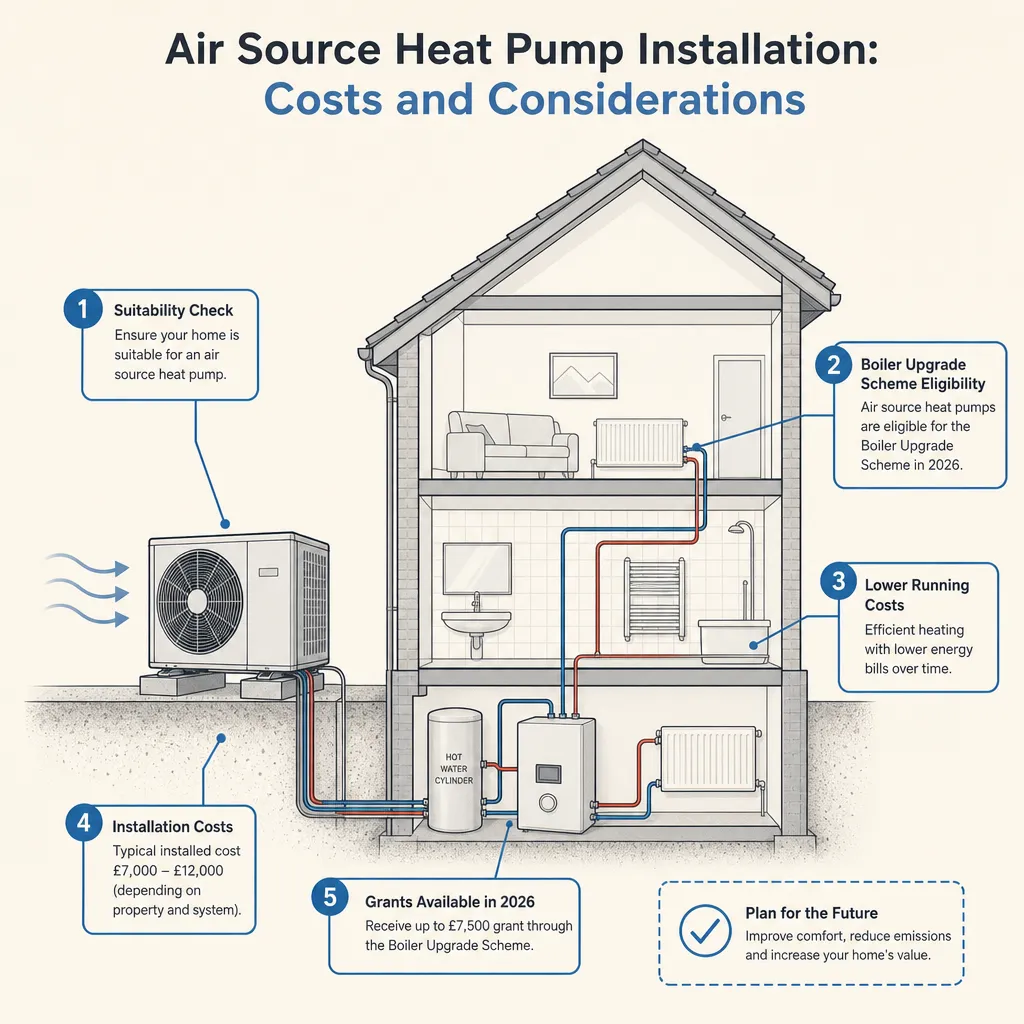
Air Source Heat Pump Installation: Costs and Considerations
As the UK government targets the phase-out of fossil-fuel heating in homes, air source heat pumps have moved from a niche retrofit choice to a mainstream option for homeowners replacing ageing boilers or undertaking major energy upgrades. Whether a heat pump is the right choice — and whether your home is genuinely ready for one — depends on variables that broad marketing rarely addresses: insulation levels, heating system design, electrical supply capacity, and grant eligibility. Getting these right before instructing an installer can save thousands of pounds and prevent a system that underperforms for years.
Key points
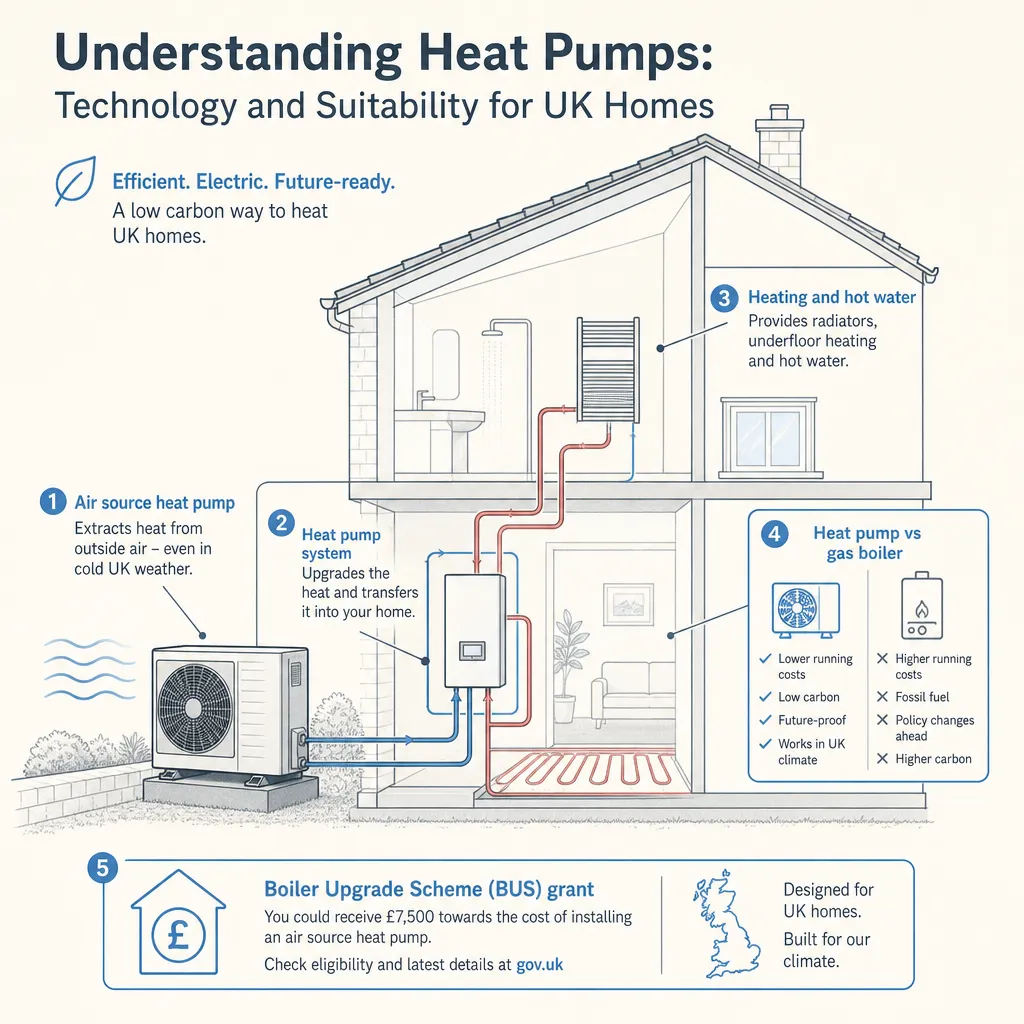
- The Boiler Upgrade Scheme (BUS) provides a £7,500 grant for air source heat pump installations in England and Wales, applied by MCS-certified installers at point of installation — not as a homeowner rebate.
- Installed costs before the BUS grant typically range from £8,000 to £15,000 for a standard UK domestic property (indicative costs, last reviewed 2026-05-05); more complex retrofits requiring full radiator programmes can exceed £20,000.
- MCS (Microgeneration Certification Scheme) certification is required for both the product and the installer to access the BUS grant — always verify on the MCS installer database before signing a contract.
- Heat pumps operate most efficiently at low flow temperatures (35–45°C); homes with radiators sized for high-temperature gas systems will likely need partial or full radiator upgrades to achieve this.
- Heat pump installations funded through ECO4 or other government-backed retrofit schemes require a PAS 2035-qualified Retrofit Coordinator and TrustMark-registered contractor to oversee the project.
What does air source heat pump installation involve?
An air source heat pump (ASHP) extracts thermal energy from outside air and uses a refrigerant cycle to transfer it into your home's heating and hot water system. A standard domestic installation typically involves the following stages:
- Heat loss survey: A qualified MCS installer calculates your home's heat loss room by room (in kilowatts) to size the unit correctly. Undersizing reduces comfort in cold weather; oversizing reduces efficiency and increases running costs.
- System design: The installer specifies the heat pump unit, hot water cylinder (usually required unless you already have one compatible with heat pump flow temperatures), controls, and any emitter upgrades — typically larger radiators or underfloor heating circuits.
- Installation: The outdoor unit is mounted on a wall bracket or ground slab at least 0.5–1 metre from walls or fences. Refrigerant pipework connects it to the indoor unit and cylinder.
- Commissioning: The system is pressure-tested, filled, and commissioned. F-gas regulations require a certified engineer to handle refrigerants — this is not DIY work.
- MCS Commissioning Certificate: Issued on completion if the installation meets MCS standards; required to claim the BUS grant.
A straightforward installation in a property with an existing compatible hot water cylinder and adequately sized radiators typically takes two to four days. More complex projects — including a new cylinder, multiple radiator upgrades, and extensive pipework rerouting — can take one to two weeks.
How much does air source heat pump installation cost in the UK?
Costs depend on unit size, system complexity, and the extent of any upgrades to existing heating infrastructure.
Scenario | Indicative cost (before BUS grant) | Notes |
|---|---|---|
Small–medium home (3–4 bed), minimal upgrades | £8,000–£11,000 | Existing cylinder usable; few or no radiator changes |
Medium home, partial radiator upgrades | £10,000–£15,000 | New cylinder; 3–5 radiators upsized |
Larger or complex retrofit, full system overhaul | £15,000–£22,000+ | Full radiator programme; new cylinder; extensive pipework |
BUS grant deduction (England and Wales) | –£7,500 | Applied by installer; reduces net cost to homeowner |
Indicative UK costs, last reviewed 2026-05-05. Figures vary by region, installer, property size, and specification. Obtain at least three itemised written quotes.
Running costs depend on the Seasonal Coefficient of Performance (SCOP) of the unit — typically 2.5 to 4.0, meaning 2.5 to 4 units of heat per unit of electricity consumed — and on current electricity and gas tariffs. The Energy Saving Trust publishes regularly updated guidance comparing heat pump and gas boiler running costs under current Ofgem price cap conditions.
Boiler Upgrade Scheme and other financial support
Boiler Upgrade Scheme (BUS): Available in England and Wales, this scheme provides a £7,500 upfront grant for air source heat pump installations by MCS-certified contractors. The grant is deducted by the installer at point of installation — homeowners do not apply directly. Eligibility requires a valid EPC for the property with no outstanding recommendations for cavity wall or loft insulation. Check current eligibility criteria on GOV.UK, as scheme rules and funding can change.
ECO4: Low-income households may qualify for heavily subsidised or free heat pump installations through the ECO4 scheme, administered by energy suppliers. This route requires a TrustMark-registered provider and a PAS 2035-qualified Retrofit Coordinator. Contact your energy supplier or local authority to check eligibility.
Scotland: The Home Energy Scotland Loan (up to £15,000 interest-free, with a separate cashback element for heat pumps) runs independently of the BUS. Contact Home Energy Scotland for current terms.
Wales: The Nest and Warm Homes schemes offer support for eligible Welsh households. Contact Energy Saving Trust Wales or the Welsh Government for current details.
VAT: Heat pump installations currently attract 0% VAT in Great Britain, as of 2026-05-05 per HMRC guidance. Confirm with your installer that this rate is correctly applied in quotations.
Is your home suitable for a heat pump?
Heat pumps are not the right solution for every property. Use the table below to assess fit before requesting installation quotes.
Factor | More suitable | Less suitable |
|---|---|---|
Insulation | EPC C or above; cavity walls insulated; loft insulated to at least 270mm | Uninsulated solid walls; poor loft insulation; draughty pre-1919 fabric |
Heating emitters | Underfloor heating; large modern radiators | Small old radiators sized for high-temperature gas systems |
Hot water system | Existing hot water cylinder, or space to fit one | Combi boiler with no cylinder space |
Outdoor space | Garden, side return, or suitable wall area away from neighbour windows | No outdoor space; upper-floor flats with no external wall access |
Electricity supply | Standard single-phase 100A supply or three-phase | Very old or limited electrical supply (may need DNO upgrade) |
Property type | Well-insulated detached or semi-detached house; modern build; bungalow | High heat-loss unimproved listed buildings; poorly insulated solid-wall homes |
A fabric-first approach — insulating walls, floors, and loft before commissioning the heat pump — reduces the required unit size, lowers running costs, and can make the difference between a successful and an underperforming installation.
Homeowner pre-installation checklist
Choosing a qualified installer
Use only MCS-certified installers where you intend to claim the BUS grant. Verify certification at mcscertified.com before signing anything. When comparing quotes, look for:
- An MCS 007 heat pump certificate that is current and in scope for your property type.
- Evidence that the installer will produce a full heat loss calculation to BS EN 12831 before specifying the unit.
- TrustMark registration if the project involves ECO4 funding.
- An itemised quotation showing unit, cylinder, emitter upgrades, commissioning, and MCS certificate as separate line items.
- Manufacturer training certification for the specific heat pump brand proposed.
- A commissioning process that includes system balancing and controls set-up.
Avoid installers who offer a fixed price without surveying the property or who cannot show the methodology behind their unit sizing.
Important limitations
The information in this article is general guidance for UK homeowners and is not a substitute for a professional assessment of your specific property. Heat pump suitability, sizing, system design, and grant eligibility depend on your home's individual characteristics — construction age, insulation levels, heating system design, electrical supply, and local planning constraints. Grant scheme rules, eligibility criteria, and funding availability can change; always check current GOV.UK guidance and the Energy Saving Trust before making a decision.
Heat pump installations involve F-gas refrigerants, electrical work at consumer unit level, and in some cases structural modifications. These must be carried out only by qualified, registered engineers. Do not attempt DIY installation of any part of the refrigerant circuit or electrical connections to the consumer unit.
What to ask a qualified professional
Before appointing an installer, ask these questions and expect clear, evidenced answers:
- What heat loss calculation method are you using, and can you share the calculation with me?
- How did you arrive at the unit's kW output specification?
- Which radiators need upgrading, and to what size?
- What design flow temperature will the system run at, and what SCOP do you project?
- Will the system require a buffer tank, low-loss header, or additional controls?
- How will the hot water cylinder be sized, and will it integrate with any existing solar thermal?
- Is your MCS certification current and specifically in scope for this type and size of installation?
- How will you support my Boiler Upgrade Scheme grant claim — what documentation will you provide?
- What happens if an unforeseen issue is found mid-project, such as an electrical supply upgrade requirement?
- What warranties cover the unit, the cylinder, and the installation workmanship respectively?
When to get professional help
A heat pump survey by a qualified, independent assessor should ideally precede any decision to install. Seek professional advice before proceeding if:
- Your EPC shows outstanding loft or cavity wall insulation recommendations — BUS applications will be rejected until these are addressed.
- Your electrical supply may be inadequate; a Distribution Network Operator (DNO) connection upgrade can take weeks and carries its own costs.
- You are uncertain about permitted development rights — particularly if your property is a flat, is in a conservation area, or is subject to an Article 4 Direction.
- Your property is listed — any external installation may require Listed Building Consent, and some listed buildings are poorly suited to heat pump technology without substantial insulation improvements.
- You are considering a ground source heat pump rather than an air source model — these require more extensive groundwork, boreholes or ground arrays, and a different professional assessment process.
How Housey can help
Before committing to an installer, an independent assessment can confirm whether your home is genuinely suitable, what system design you need, and which grants you qualify for. Housey can help you request quotes from qualified heat pump surveyors who can assess your property and provide an objective view before you seek installation quotes.
Frequently asked questions
Do I need planning permission for an air source heat pump in England?
Most domestic air source heat pump installations are permitted development in England, provided the unit meets specific siting, size, and noise criteria — for example, it must not be installed on a wall or roof facing a highway, and it must not be in a listed building or some conservation areas. If you live in a flat, a conservation area, or a listed building, check with your local planning authority before proceeding.
What is the Boiler Upgrade Scheme and who is eligible?
The Boiler Upgrade Scheme (BUS) provides a £7,500 grant for air source heat pumps installed in properties in England and Wales by MCS-certified contractors. To be eligible, you need a valid EPC for the property with no outstanding recommendations for loft or cavity wall insulation. The grant is applied at point of installation by the installer. Check GOV.UK for full current eligibility criteria before committing to an installer.
How long do air source heat pumps last?
Well-maintained air source heat pumps typically last 15–20 years. Most manufacturers offer a 5–7 year warranty on the unit, with extended warranties available. Annual servicing by a qualified engineer — checking refrigerant levels, electrical connections, and controls — is recommended to maintain efficiency and keep any warranty valid. The outdoor unit should be kept clear of leaves, debris, and ice build-up.
Can I keep my existing radiators when switching to a heat pump?
Possibly, but many older radiators are sized for high-temperature gas systems running at 60–70°C and are too small to deliver adequate heat at the 35–45°C flow temperatures typical of a heat pump. An MCS installer should carry out a room-by-room heat loss calculation and assess each radiator. Partial radiator upgrades — perhaps 3–6 across the house — are common and should be priced as a separate line item in your quotation.
Sources and further reading
- Boiler Upgrade Scheme — GOV.UK
- Air source heat pumps — Energy Saving Trust
- MCS installer database — Microgeneration Certification Scheme
- ECO4 scheme — Ofgem
- Heat pumps: permitted development rights — GOV.UK
Useful next reads
 Energy & Retrofit
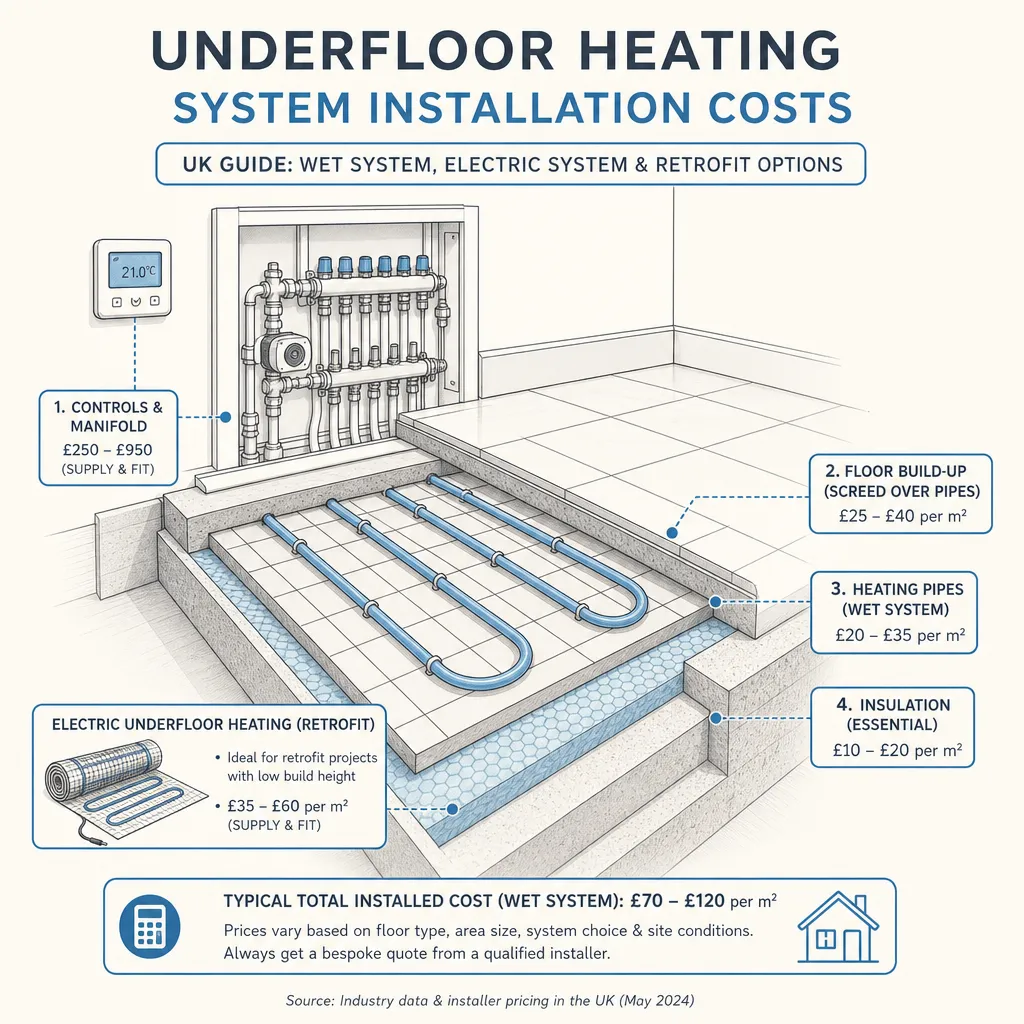
Underfloor Heating System Installation Costs
Underfloor heating installation in the UK typically costs £20–£50 per m² for electric mat or foil systems and £50–£150 per m² for wet (hydronic) systems, including labour.
 Energy & Retrofit
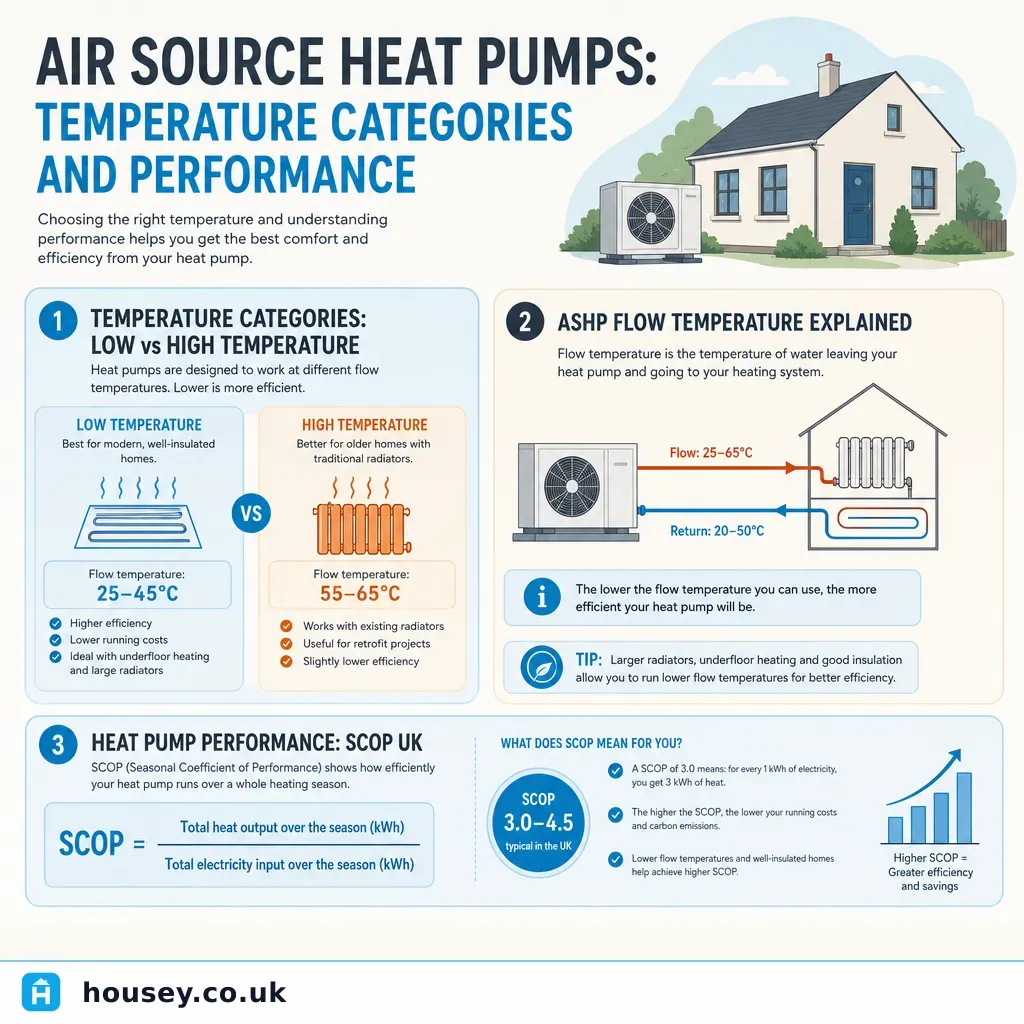
Air Source Heat Pumps: Temperature Categories and Performance
Air source heat pumps are typically classified as low temperature (flow temperatures of 35–55°C) or high temperature (up to 65–80°C).
 Energy & Retrofit
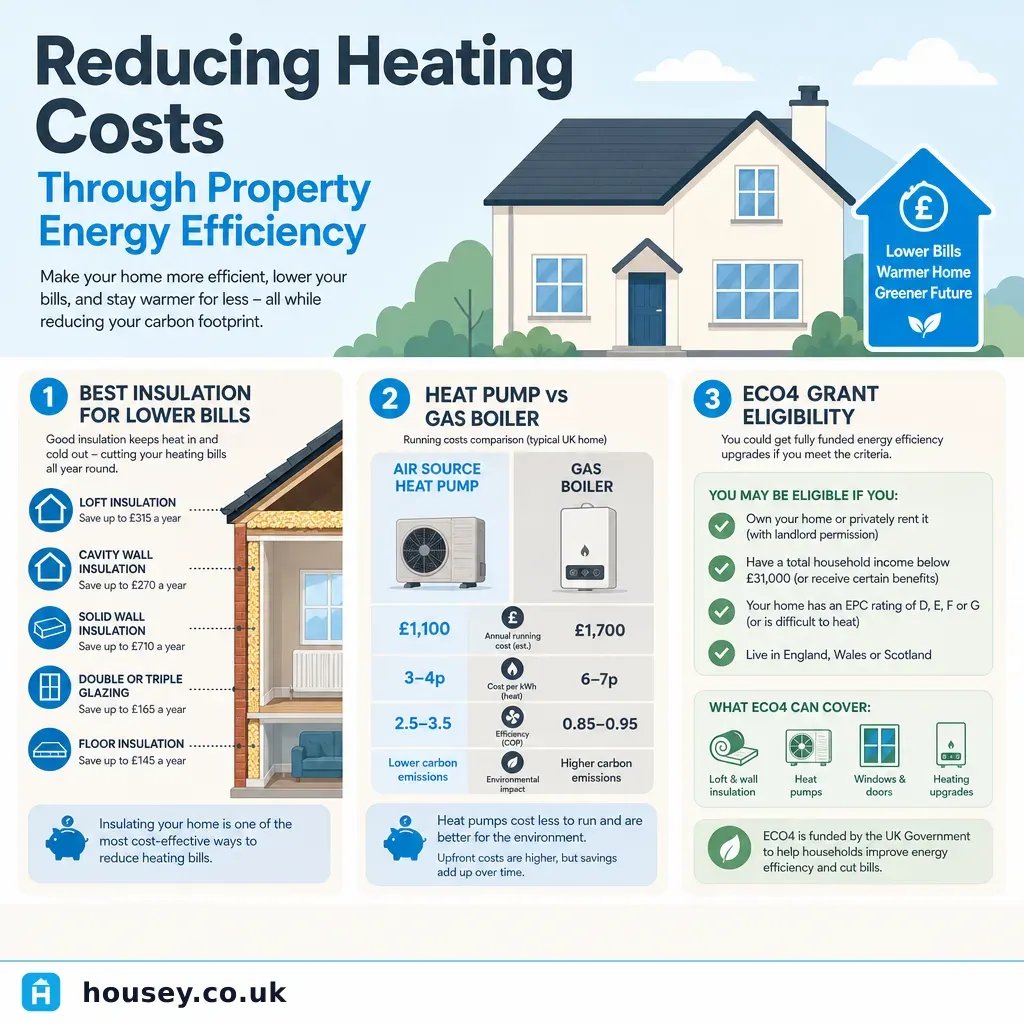
Reducing Heating Costs Through Property Energy Efficiency
Reducing heating costs starts with identifying where heat is lost — typically walls (30–35%), roof (20–25%), and windows.
 Energy & Retrofit
Making your home resilient to climate change: practical strategies
UK homeowners can improve climate resilience by addressing flood risk, overheating, and energy efficiency together.
 Energy & Retrofit
Understanding Heat Pumps: Technology and Suitability for UK Homes
Heat pumps extract heat from the air or ground and transfer it indoors, typically achieving efficiencies of 250–400% compared to a conventional boiler's near 100%.