Understanding Heat Pumps: Technology and Suitability for UK Homes
By Housey · Last reviewed 8th of May 2026
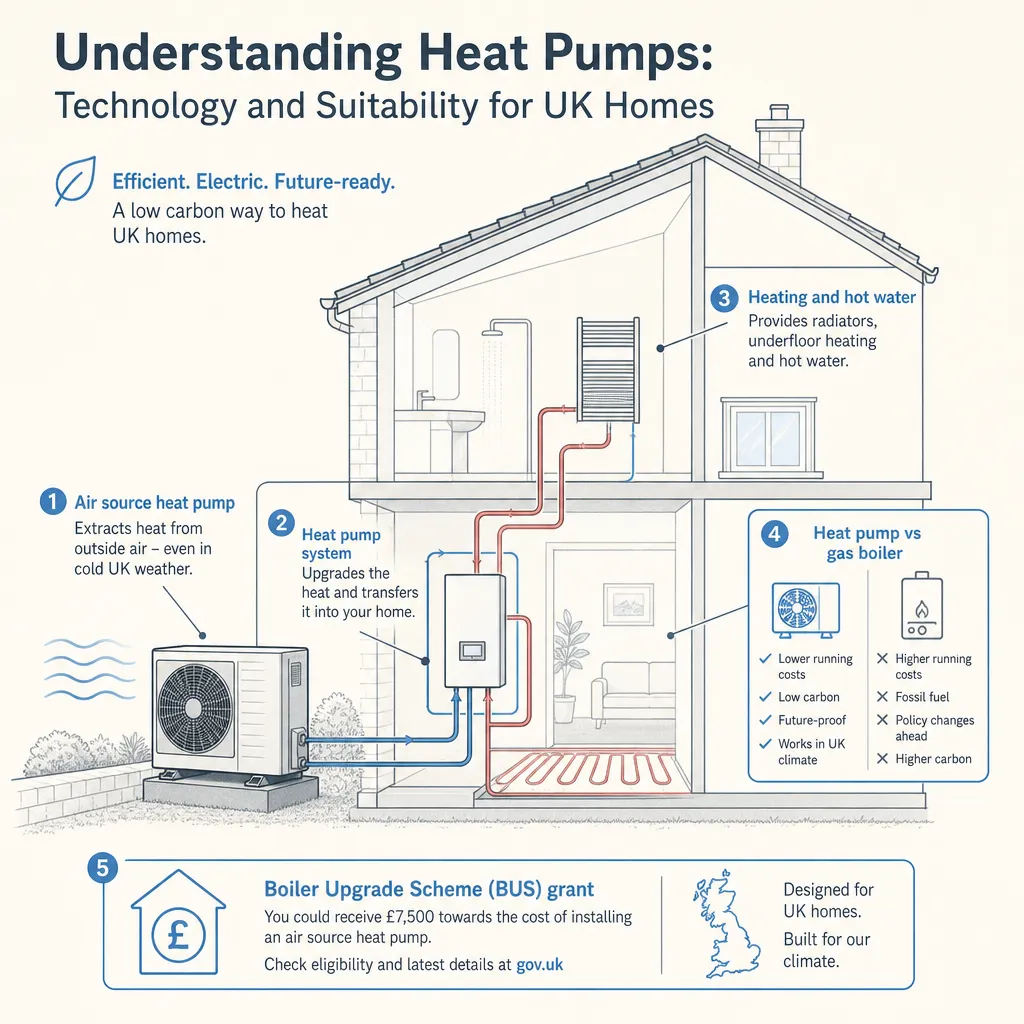
Understanding Heat Pumps: Technology and Suitability for UK Homes
Heat pumps are increasingly central to the UK's plans for decarbonising home heating, with government targets pushing for 600,000 installations per year by 2028. For many homeowners the question is not simply whether heat pumps work, but whether a particular property is ready for one — and what needs to change first. Getting the sizing, fabric preparation, and system design right can mean the difference between a comfortable, efficient home and a costly disappointment.
Key points
- Heat pumps move heat rather than burning fuel, achieving a Coefficient of Performance (CoP) typically between 2.5 and 4.5 — meaning they deliver 2.5 to 4.5 units of heat for every unit of electricity consumed.
- The Boiler Upgrade Scheme (BUS) offers a £7,500 grant towards eligible air source or ground source heat pump installations in England and Wales, subject to installer MCS certification and a valid EPC being in place.
- A full heat loss calculation to BS EN 12831 is required before sizing a heat pump correctly; an undersized system will struggle in cold weather, while an oversized one will short-cycle and reduce seasonal efficiency.
- Most heat pump systems operate at lower flow temperatures (35–55°C) than conventional gas boilers (60–80°C), which means larger radiators, underfloor heating, or good fabric insulation often improve performance significantly.
- Ground source heat pumps require either substantial horizontal land area (typically two to three times the heated floor area) or a vertical borehole, making them less practical for most urban UK properties.
How heat pumps work
A heat pump extracts low-grade thermal energy from an external source — air, ground, or water — and uses a refrigeration cycle to upgrade it to a temperature useful for space heating and domestic hot water. The process uses a refrigerant that evaporates at low temperature, is compressed to raise its temperature, then releases heat through a condenser into the home's heating circuit before expanding back to restart the cycle.
The key efficiency measure is the Seasonal Coefficient of Performance (SCoP) — the ratio of heat output to electrical input across a whole heating season. The Energy Saving Trust notes that modern air source heat pumps (ASHPs) achieve an SCoP of around 2.5–3.5 in UK climates. Ground source heat pumps (GSHPs), which draw heat from the more thermally stable ground, typically achieve an SCoP of 3.0–4.5 because ground temperatures vary much less than air temperatures in winter.
Air source vs ground source heat pumps
Feature | Air source (ASHP) | Ground source (GSHP) |
|---|---|---|
Heat extracted from | Outdoor air | Ground via horizontal pipes or vertical borehole |
Typical SCoP | 2.5–3.5 | 3.0–4.5 |
Space required | External wall or garden space for outdoor unit | Large garden for horizontal collector, or land for borehole |
Typical installed cost (indicative) | £8,000–£15,000 | £15,000–£35,000+ |
BUS grant available | £7,500 | £7,500 |
Planning permission (England) | Usually permitted development | Usually permitted development |
Best suited to | Most UK residential properties | Rural properties with larger plots |
Main drawback | Efficiency reduces in very cold weather | Higher upfront cost; disruptive ground installation |
Indicative UK costs, last reviewed 2026-05-08. Costs vary by property size, installer, and ground conditions. Always request multiple quotes.
Is my home suitable for a heat pump?
Not every property is heat-pump-ready today, but many can be made suitable with targeted fabric improvements. Use this decision guide as a starting point — a qualified heat pump surveyor should always confirm suitability for your specific property.
- Choose a heat pump now if your home has cavity-wall or solid-wall insulation, double glazing, a well-insulated loft (270mm mineral wool or equivalent), and existing radiators that are large or underfloor heating is already installed.
- Consider fabric improvements first if your home has an EPC rating of D or below, single glazing, uninsulated walls or loft, or small radiators. Improving insulation reduces the required heat pump size and running costs before you commit to installation.
- Ask an energy-efficiency consultant if you are uncertain about your heat loss, current insulation levels, or the likely impact of improvements — advice not tied to any installer is particularly valuable at this stage.
- Check with your local planning authority if your property is listed, in a conservation area, or a flat — permitted development rights for heat pumps may not apply in those circumstances.
- Consult a ground investigation specialist if you are considering a ground source system requiring a borehole, as ground conditions must be assessed before a GSHP can be designed.
What affects efficiency and running costs
Insulation and heat loss — A well-insulated home loses heat slowly, so the heat pump runs at lower output for longer periods (known as weather compensation), which is more efficient than short, high-output bursts. Draught-proofing, loft insulation, and wall insulation all reduce heat demand and can make a significant difference to the running cost of a heat pump system.
Heat emitter size — Heat pumps working at lower flow temperatures (around 35–45°C for underfloor heating; 45–55°C for radiators) are far more efficient than those pushed to higher temperatures. If existing radiators are too small for low-temperature operation, they may need replacing or supplementing with additional panels.
Hot water cylinder — Heat pumps require a well-insulated hot water cylinder (typically 200–300 litres). Properties with a combination boiler and no existing cylinder will need one fitted as part of the heat pump project, adding to the overall cost.
Electricity tariff — Because heat pumps run on electricity, cost-effectiveness versus gas depends on the prevailing electricity-to-gas price ratio. Specialist time-of-use tariffs can reduce running costs by shifting energy consumption to cheaper overnight periods.
System controls — Smart controls that enable the heat pump to run during cheaper electricity periods and maintain steady indoor temperatures are important for optimising both running costs and comfort.
Important limitations
This article provides general information about heat pump technology and suitability for UK homes. It is not a substitute for a property-specific heat loss assessment, professional survey, or installer recommendation. Heat pump sizing and system design must be carried out by an MCS-certified installer or qualified heat pump engineer — an incorrectly sized or designed system may not deliver expected comfort or efficiency. Boiler Upgrade Scheme eligibility conditions, grant amounts, and installer requirements may change; always verify current conditions at GOV.UK before proceeding.
What to ask a qualified professional
Before instructing a heat pump installer or surveyor, consider asking:
- What is the calculated heat loss for my property in kilowatts, and what heat pump size does that require?
- Have you carried out a full heat loss calculation to BS EN 12831?
- Are my existing radiators suitable for low-temperature operation, or will they need upgrading?
- Is my property eligible for the Boiler Upgrade Scheme, and will you manage the application on my behalf?
- Are you MCS-certified, and can I see your certificate details before work begins?
- What flow temperature will the system be designed to operate at, and why?
- Will I need a new hot water cylinder, and what size do you recommend for my household?
- What is the expected SCoP for my property, and what assumptions is that estimate based on?
- What warranties are offered on the heat pump unit and on the installation?
- What ongoing maintenance will the system require, and at what typical annual cost?
When to get professional help
A heat pump installation always requires a qualified, MCS-certified professional — it involves refrigerant handling, electrical connections, and often significant plumbing alterations that must be carried out by competent persons. Seek professional input particularly if:
- You are unsure whether your home's insulation is adequate for efficient low-temperature heating
- Your property is older, has solid walls, a complex layout, or a mix of heating zones
- You are considering a ground source system and need ground investigation or borehole work
- Your property is listed, in a conservation area, or a converted building with unusual construction
- You have received conflicting advice about heat pump sizing or system design
An independent energy-efficiency consultant can provide advice that is not tied to any particular installer or product.
How Housey can help
Housey connects UK homeowners with qualified professionals at each stage of a heat pump project. If you want to understand whether your home is ready, a heat pump survey will give you a property-specific assessment of heat loss, system suitability, and any preparatory works needed. For broader advice before committing to any single technology, an energy-efficiency consultant can review your whole-home energy performance and help you prioritise measures.
Frequently asked questions
Do I need planning permission for an air source heat pump in the UK?
In most cases in England, air source heat pump installations are permitted development for houses (not flats) under the Town and Country Planning (General Permitted Development) (England) Order 2015, provided the unit is not on a wall or roof facing a highway and only one unit is installed. Listed buildings and conservation areas may require full planning consent. Always check with your local planning authority before installation.
Can a heat pump replace a gas boiler entirely?
Yes, in most well-insulated homes a heat pump can provide all space heating and domestic hot water without a gas boiler. In older properties with higher heat loss, a hybrid system combining a heat pump with a retained gas or oil boiler may be more practical, with the boiler used only during the coldest periods. A heat loss assessment will indicate which approach suits your property.
What EPC rating does my home need for a heat pump?
There is no absolute minimum EPC rating required by law for a heat pump installation. The Boiler Upgrade Scheme requires a valid EPC to be in place, and many assessors use a rating of C or above as a guide to likely efficiency at low flow temperatures. However, a full heat loss calculation to BS EN 12831 is a more accurate measure of suitability than the EPC rating alone.
How long does it take to heat a home with a heat pump?
Heat pumps are designed to run continuously at lower output, maintaining a consistent indoor temperature rather than rapidly reheating a cold home. This differs from how most UK gas boilers are used. Most systems use weather compensation controls to vary output with outdoor temperature. Running the system at a steady temperature throughout the day, rather than switching off and on, is generally more efficient and places less strain on the equipment.
How much does a heat pump cost to install in the UK?
Indicative UK costs, last reviewed 2026-05-08: air source heat pump installations typically range from £8,000 to £15,000 before the £7,500 Boiler Upgrade Scheme grant, depending on property size, existing system, and whether emitter upgrades are needed. Ground source systems typically range from £15,000 to £35,000 or more. Costs vary by region, installer, and property. Request at least three quotes from MCS-certified installers.
Sources and further reading
- Boiler Upgrade Scheme: what you need to know — GOV.UK
- Heat pumps explained — Energy Saving Trust
- MCS certified heat pump installers — Microgeneration Certification Scheme
- Permitted development rights for householders: technical guidance — GOV.UK
- PAS 2035: Retrofitting dwellings for improved energy efficiency — BSI Group
Useful next reads
 Energy & Retrofit
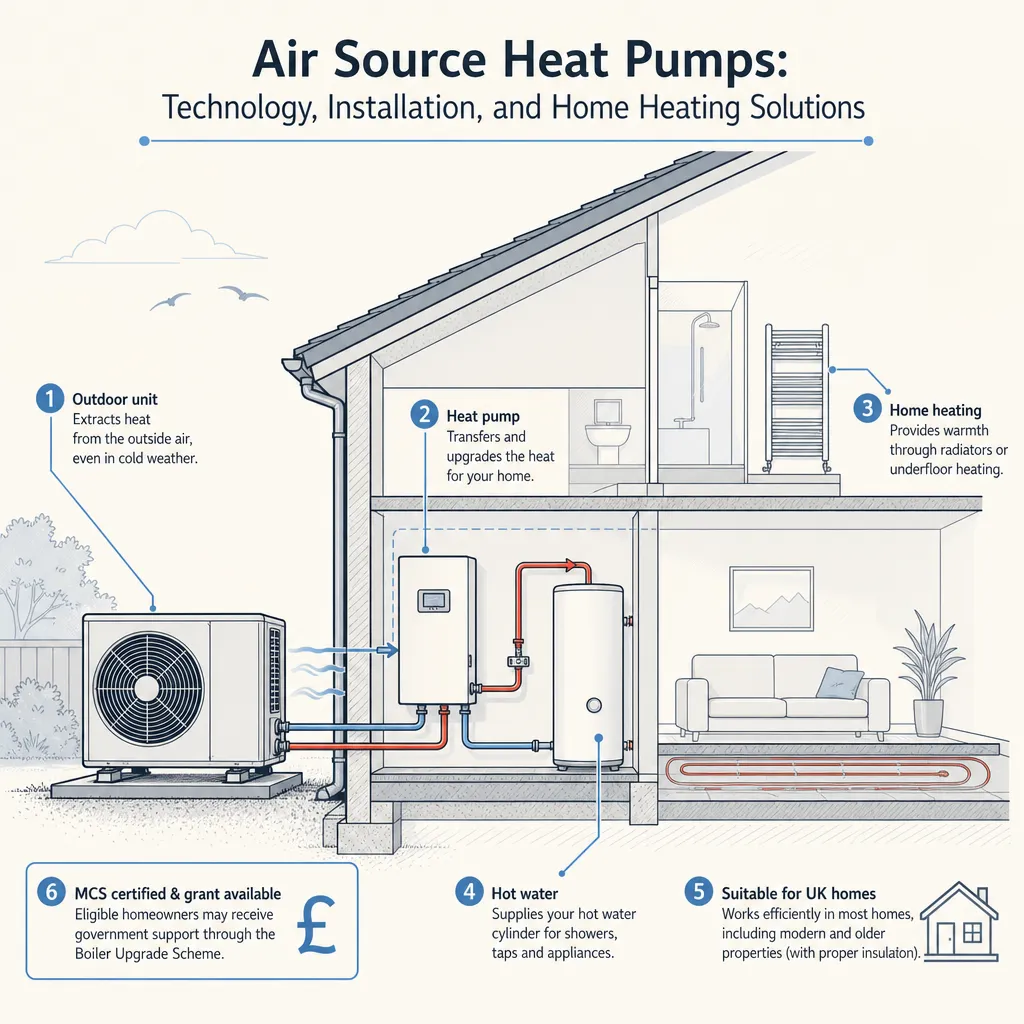
Air Source Heat Pumps: Technology, Installation, and Home Heating Solutions
An air source heat pump extracts heat from outdoor air and transfers it indoors via a refrigerant cycle, typically delivering 2.
 Energy & Retrofit
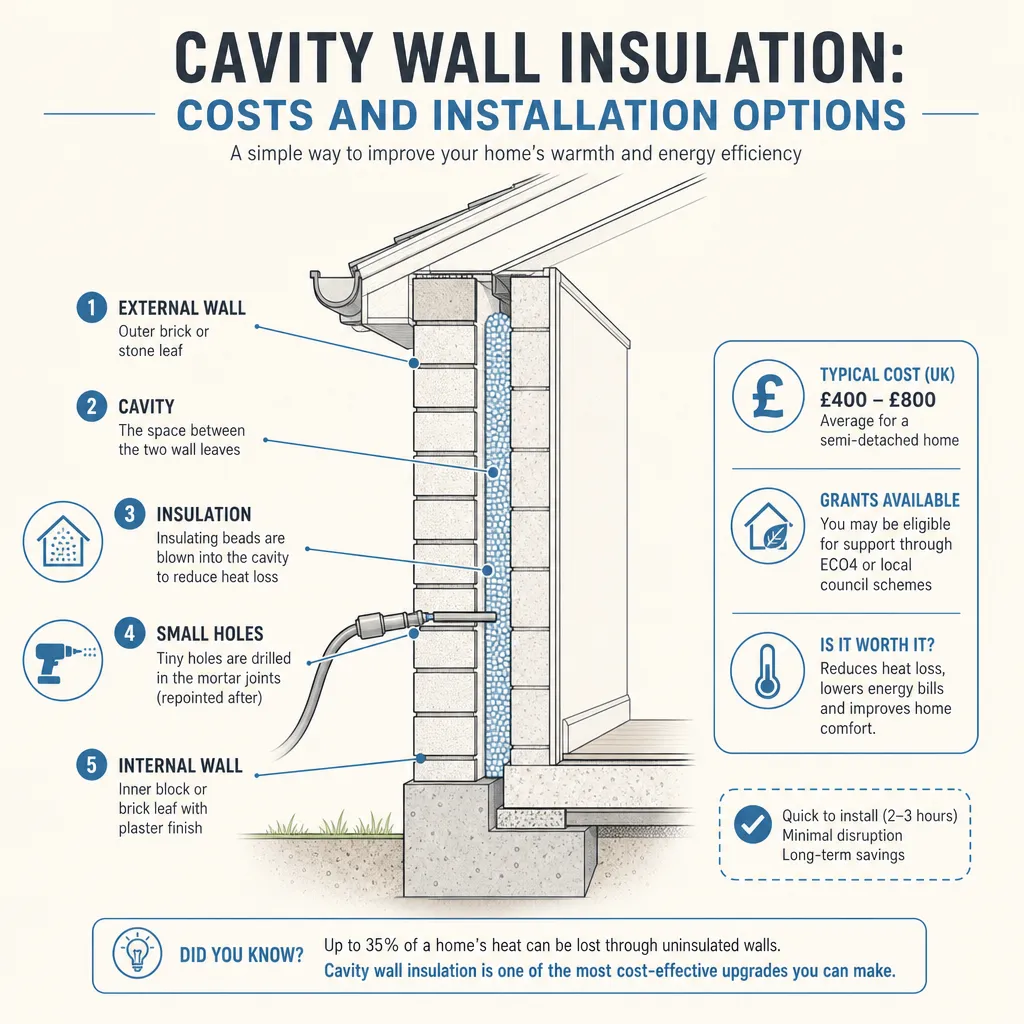
Cavity Wall Insulation: Costs and Installation Options
Cavity wall insulation typically costs £400–£1,200 for a standard UK semi-detached home, though eligible households may pay nothing under ECO4.
 Energy & Retrofit
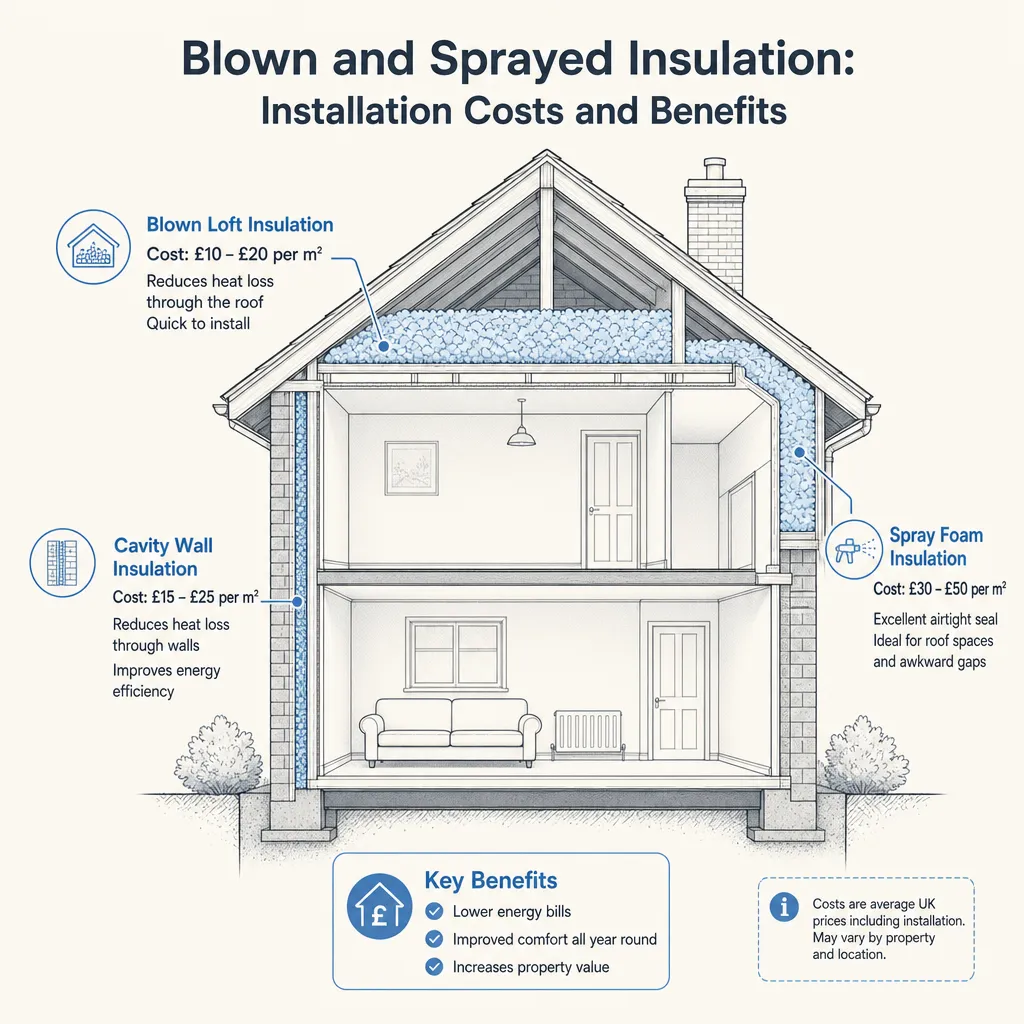
Blown and Sprayed Insulation: Installation Costs and Benefits
Blown cavity wall insulation for a typical semi-detached house costs £400–£1,200; blown loft insulation costs £300–£600.
 Energy & Retrofit
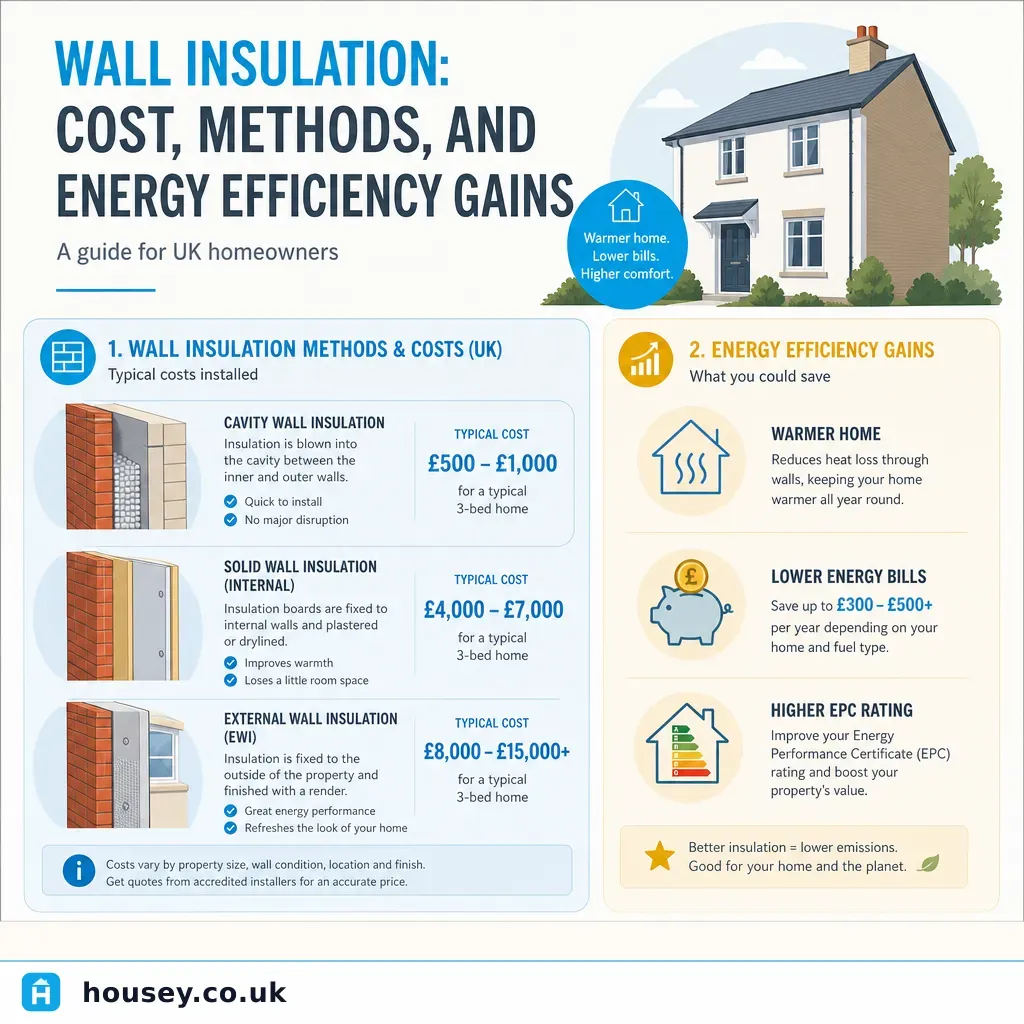
Wall Insulation: Cost, Methods, and Energy Efficiency Gains
Wall insulation in UK homes uses one of three main methods: cavity wall insulation for post-1920 homes with an unfilled cavity, external wall insulation for solid-walled properties, and internal wall insulation where external changes are not permitted.
 Energy & Retrofit
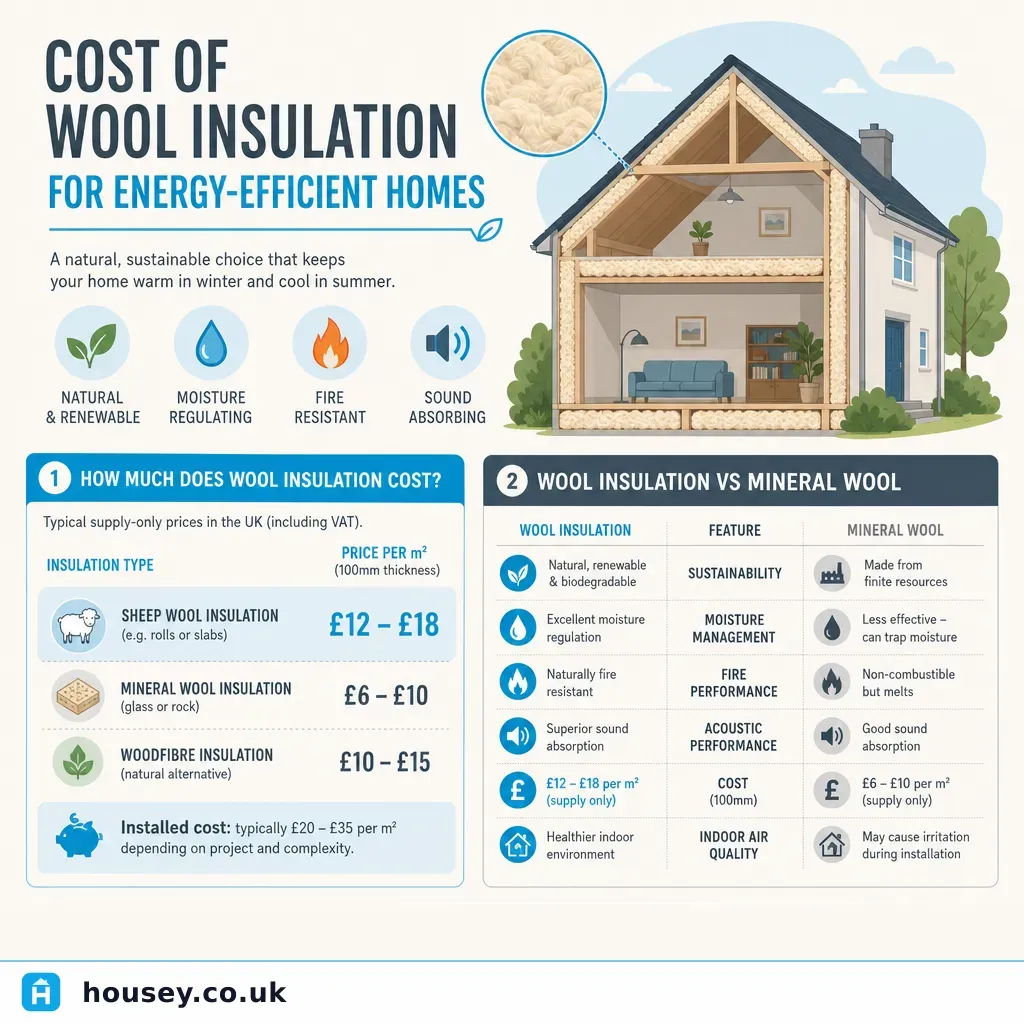
Cost of Wool Insulation for Energy-Efficient Homes
Sheep wool insulation typically costs £5–£15 per m² for materials, rising to £8–£40 per m² installed depending on application and depth.