Air Source Heat Pumps: Temperature Categories and Performance
By Housey · Last reviewed 11th of May 2026
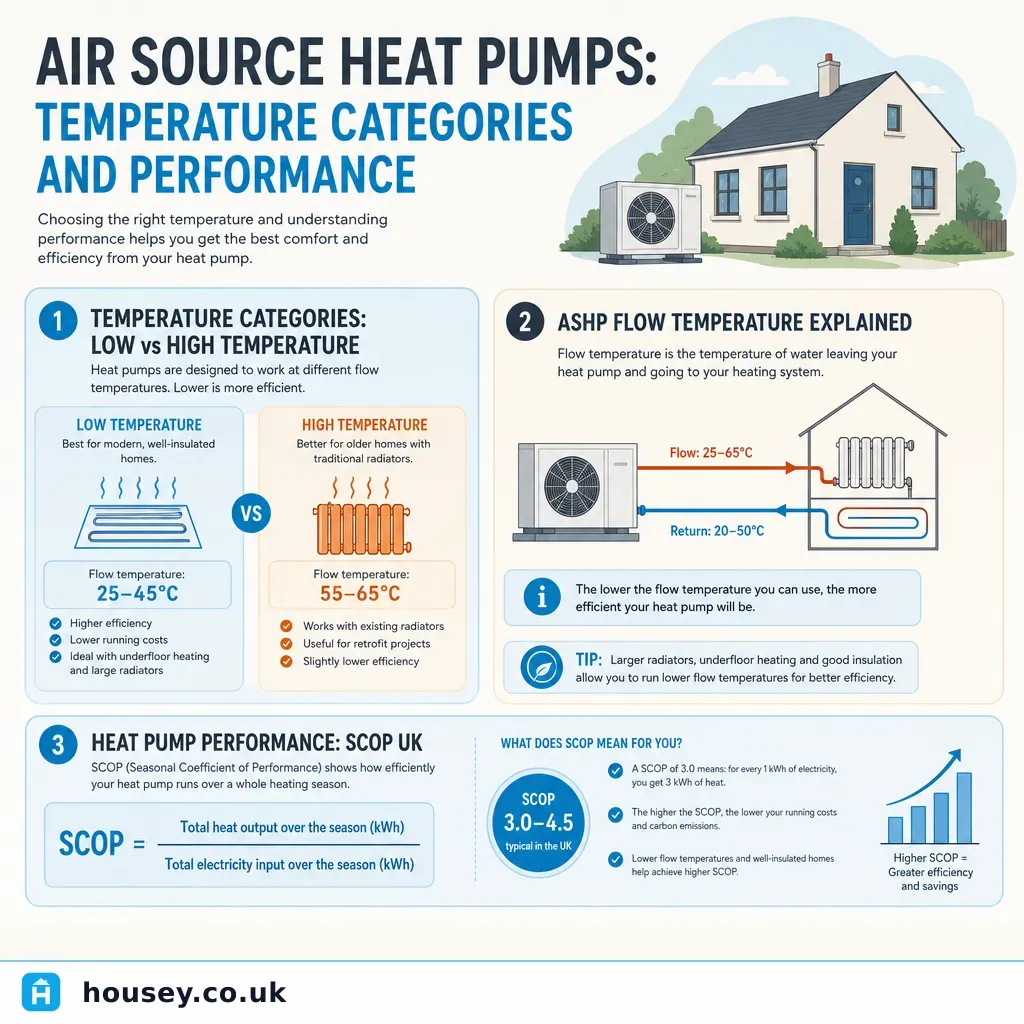
Air Source Heat Pumps: Temperature Categories and Performance
Replacing a gas boiler with an air source heat pump is one of the most significant energy decisions a UK homeowner can make. Whether you are motivated by the Boiler Upgrade Scheme, rising gas costs, or a net-zero retrofit plan, understanding how heat pumps are classified by temperature output is essential before commissioning a design or accepting a quote. Getting the wrong type for your property's insulation level and emitter system can mean poor comfort, higher running costs, and performance that falls well short of what was promised.
Key points
- Air source heat pumps (ASHPs) are classified as low temperature (LT, typical flow temperatures of 35–55°C) or high temperature (HT, up to 65–80°C); the classification determines which homes and emitter systems they suit.
- The Seasonal Coefficient of Performance (SCOP) — the ratio of heat output to electricity consumed over a heating season — is typically 3.0–4.0 for low-temperature ASHPs at the A7/W35 test condition (7°C outdoor air, 35°C flow temperature).
- PAS 2035, the UK's whole-house retrofit standard, requires a formal Retrofit Assessment before any grant-funded heat pump installation under ECO4 or the Boiler Upgrade Scheme (BUS).
- The BUS currently offers a £7,500 grant towards an ASHP; only MCS-accredited installers can submit the application on your behalf.
- A room-by-room heat loss calculation to BS EN 12831 is required to correctly size an ASHP — this document should be provided to you before you commit to any installation.
How temperature classification works in heat pumps
A heat pump transfers heat from outdoor air into your home using a refrigerant cycle. The key performance metric is the flow temperature — the temperature of the water circulated to your emitters (radiators or underfloor heating). A lower flow temperature means the refrigerant is compressed less aggressively, which requires less electricity per unit of heat delivered and results in a higher SCOP.
The two categories used across the UK market are:
- Low-temperature ASHPs: deliver flow temperatures of approximately 35–55°C. These match underfloor heating (typically 35–45°C) and oversized low-temperature radiators. The majority of residential ASHPs sold in the UK are low-temperature models.
- High-temperature ASHPs: deliver flow temperatures of 60–80°C, making them more compatible with existing standard-sized radiators and some combination systems. They typically carry a lower SCOP than LT equivalents at the same outdoor conditions because achieving a higher flow temperature requires a greater refrigerant compression ratio.
Comparing low-temperature and high-temperature ASHPs
Feature | Low-temperature ASHP | High-temperature ASHP |
|---|---|---|
Typical flow temperature | 35–55°C | 60–80°C |
Typical SCOP (UK conditions) | 3.0–4.0+ | 2.0–3.0 |
Best suited to | Well-insulated homes, underfloor heating, oversized radiators | Older or harder-to-insulate properties, existing standard radiator circuits |
Insulation requirement | Higher — EPC C or above is commonly cited as a starting point | Can operate in lower EPC-rated homes, but with reduced efficiency |
BUS grant eligible | Yes (check MCS product database for specific models) | Yes (check MCS product database for specific models) |
Indicative installed cost before grant | £10,000–£15,000 | £12,000–£18,000 |
Indicative UK costs, last reviewed 2026-05-11. Actual costs vary significantly by property size, installer, and location. Always obtain multiple quotes.
Which type suits your property?
- Choose a low-temperature ASHP if your home is well insulated (cavity wall or solid wall insulation installed, double or triple glazing in place), you have underfloor heating or are prepared to upsize radiators, and your EPC rating is C or above — or you are planning to reach that level as part of a wider retrofit package.
- Choose a high-temperature ASHP if your property has insulation limitations that cannot be remedied (for example, a listed building where external or internal wall insulation is restricted by heritage conditions), you are unable to replace the existing radiator circuit, and you accept that running costs per unit of heat will be higher than a low-temperature alternative.
- Commission a heat loss calculation first (to BS EN 12831) before choosing either type — sizing is more critical for ASHPs than for gas boilers, and an undersized unit will run at maximum output continuously, reducing both lifespan and seasonal efficiency.
- Get a PAS 2035 Retrofit Assessment if you are applying for ECO4 or BUS funding — this is a mandatory step under both schemes and identifies fabric improvements that should be completed before or alongside the heat pump.
How outdoor temperature affects ASHP performance
SCOP is measured at standard European test conditions. The most widely cited reference points are:
- A7/W35: outdoor air at 7°C, flow temperature 35°C — typically the best-case SCOP figure in product literature.
- A2/W35: outdoor air at 2°C — performance drops. A typical ASHP may see SCOP fall by 15–25% compared with the A7/W35 figure.
- A-7/W35: outdoor air at -7°C — most LT ASHPs still operate but at significantly reduced efficiency. Some units activate electric backup resistance heating at very low temperatures, reducing seasonal performance further.
This matters for UK homeowners because winter temperatures regularly reach 0°C to -10°C in Scotland, northern England, and upland Wales. A heat pump correctly sized for the design outdoor temperature for your location (typically -3°C across much of England, per CIBSE climate data) should still meet your heating demand — but the SCOP you achieve in practice will be meaningfully lower than the A7/W35 brochure figure.
Important limitations
This article provides general information only. Heat pump performance, type suitability, and system design depend on factors specific to your property: construction type, current insulation levels, emitter system, hot water demand, local climate, and occupant behaviour. No article can substitute for a detailed heat loss calculation and site survey carried out by a qualified, MCS-accredited heat pump installer or an independent energy consultant. Boiler Upgrade Scheme eligibility conditions may change — check GOV.UK for the current BUS terms before proceeding.
When this becomes urgent
Seek professional assessment promptly if:
- A contractor is proposing to install an ASHP without providing a room-by-room heat loss calculation — this is a significant red flag.
- You are being encouraged to sign a contract before any fabric assessment (insulation, draught-proofing, glazing) has been completed.
- Standard-sized radiators are in place and a low-temperature ASHP is being quoted without a confirmed plan to upsize them — this commonly results in a chronically underperforming system.
- An existing installation is not reaching target temperatures, or your electricity bills are substantially above the figures projected at point of sale.
What to ask a qualified professional
Before accepting any heat pump quote, ask your installer or energy-efficiency consultant:
- Have you carried out a room-by-room heat loss calculation to BS EN 12831, and can I have a copy of it?
- What is the design flow temperature, and is it compatible with my current or proposed emitters?
- What SCOP do you project for my location and system, and what assumptions underpin that figure?
- Is the system sized for my heat loss at the design outdoor temperature, not just mild winter averages?
- Are you MCS-accredited, and will you submit the Boiler Upgrade Scheme application on my behalf?
- What fabric improvements do you recommend before or alongside the installation?
- What is the servicing schedule, and what performance monitoring do you offer post-installation?
When to get professional help
Heat pump installation is a regulated activity — only MCS-accredited installers can apply for BUS funding, and ECO4-funded work requires a Retrofit Coordinator under PAS 2035. Seek independent advice, separate from the installing contractor, if you are unsure whether your home is suitable without significant fabric improvement, if you own a listed building or a property in a conservation area where insulation options are restricted, or if a previous heat pump installation has underperformed and you need a second opinion. A retrofit assessment can provide an independent baseline for your property before you commit to any system.
How Housey can help
Housey connects homeowners with MCS-accredited heat pump specialists and independent energy consultants across the UK. A heat pump survey can establish whether your property is suitable, identify which type of system works best, and produce a heat loss calculation you can use to compare installer quotes on a like-for-like basis — without being tied to a particular product or brand.
Frequently asked questions
Do I need to improve my insulation before installing an air source heat pump?
In most cases, yes — especially for low-temperature systems. A fabric-first approach reduces heat loss, lowers the required system size, and improves real-world SCOP. PAS 2035 requires a Retrofit Assessment for grant-funded installations, which identifies priority insulation improvements. High-temperature ASHPs can work in less well-insulated homes but typically incur higher running costs as a result.
Can an air source heat pump supply hot water as well as heating?
Yes, but an ASHP heats water stored in a cylinder rather than producing instant hot water like a combi boiler. You need space for a hot water tank — typically 150 to 300 litres. The cylinder must periodically reach 60°C to prevent legionella growth, which high-temperature ASHPs achieve more easily than low-temperature models.
What outdoor temperature can an air source heat pump operate down to?
Most modern ASHPs operate down to around -20°C to -25°C outdoor temperature, though efficiency falls significantly below -5°C. At very low temperatures many systems activate electric backup resistance heating. Correct sizing at the design outdoor temperature for your location — not just average UK conditions — is essential to avoid heavy reliance on backup heat.
Does installing an air source heat pump require planning permission?
In most cases in England, ASHP installation is permitted development under Class G of the GPDO 2015, subject to noise and siting conditions. Rules differ in Scotland, Wales, and Northern Ireland. Conservation areas and listed buildings may remove permitted development rights. Always check with your local planning authority before proceeding with an installation.
Sources and further reading
- Boiler Upgrade Scheme guidance — GOV.UK
- MCS: Heat pump certification and standards — MCS
- Heat pumps — Energy Saving Trust
- PAS 2035: Retrofitting dwellings for improved energy efficiency — BSI Group
Useful next reads
 Energy & Retrofit
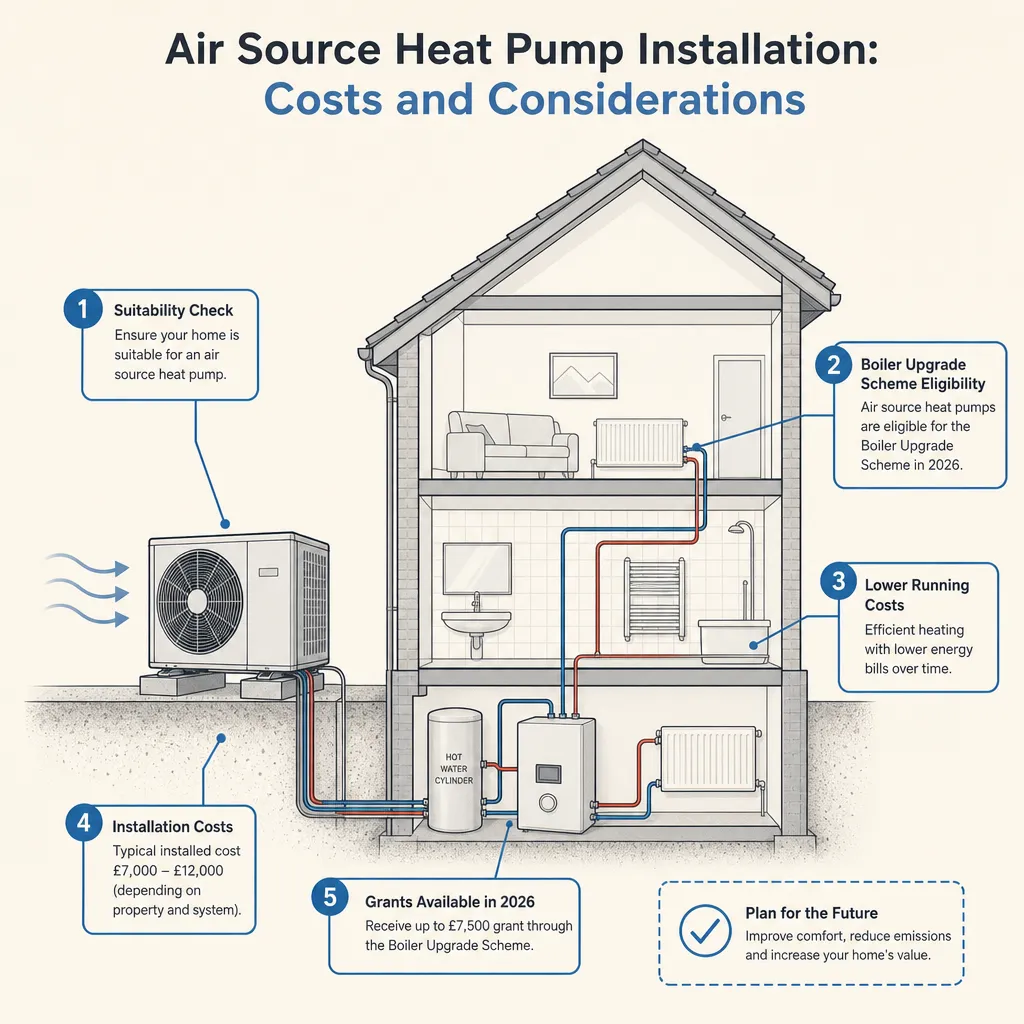
Air Source Heat Pump Installation: Costs and Considerations
Air source heat pump installation in the UK typically costs £8,000–£15,000 before the £7,500 Boiler Upgrade Scheme grant, available through MCS-certified installers in England and Wales.
 Energy & Retrofit
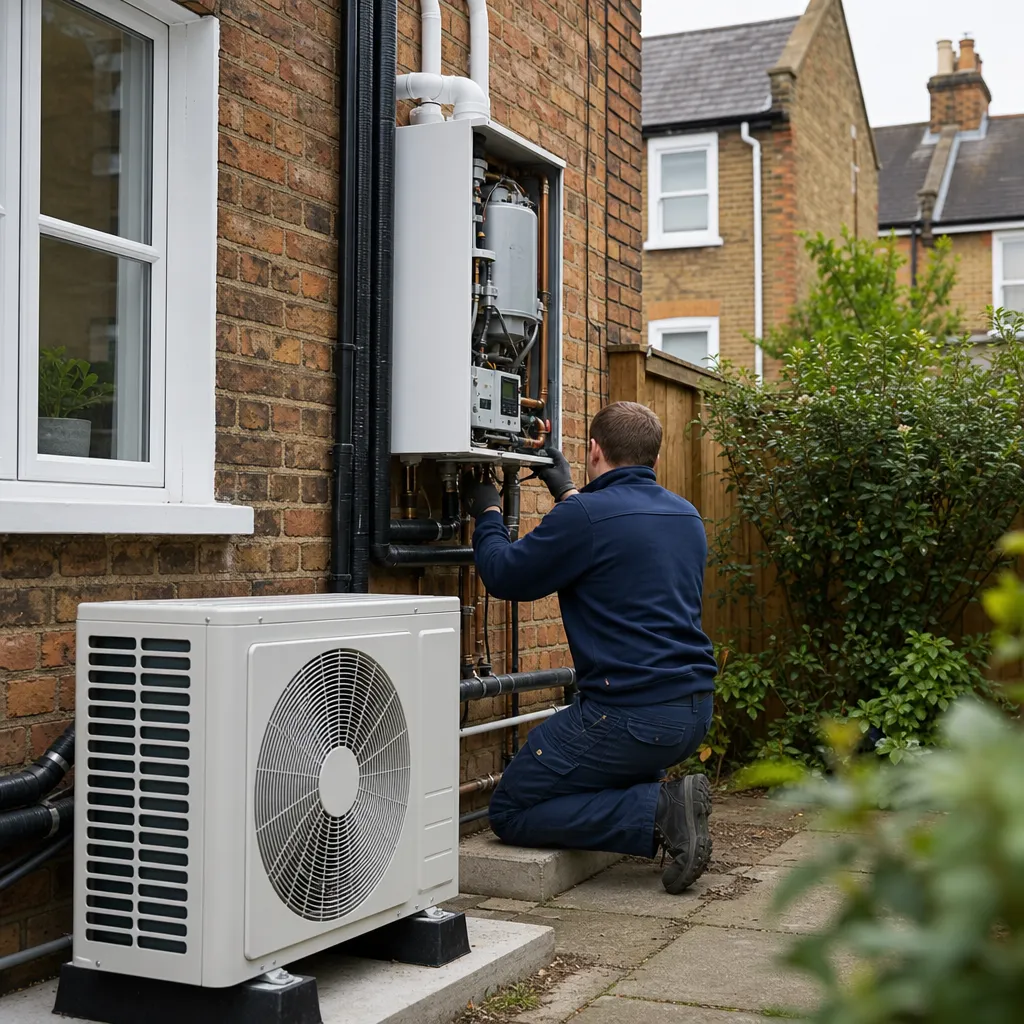
Heat Pump and Boiler Hybrid Systems: Optimising Efficiency in UK Homes
A hybrid heat pump system pairs an air source heat pump with a gas boiler, letting the heat pump handle most heating loads while the boiler activates during very cold weather.
 Energy & Retrofit
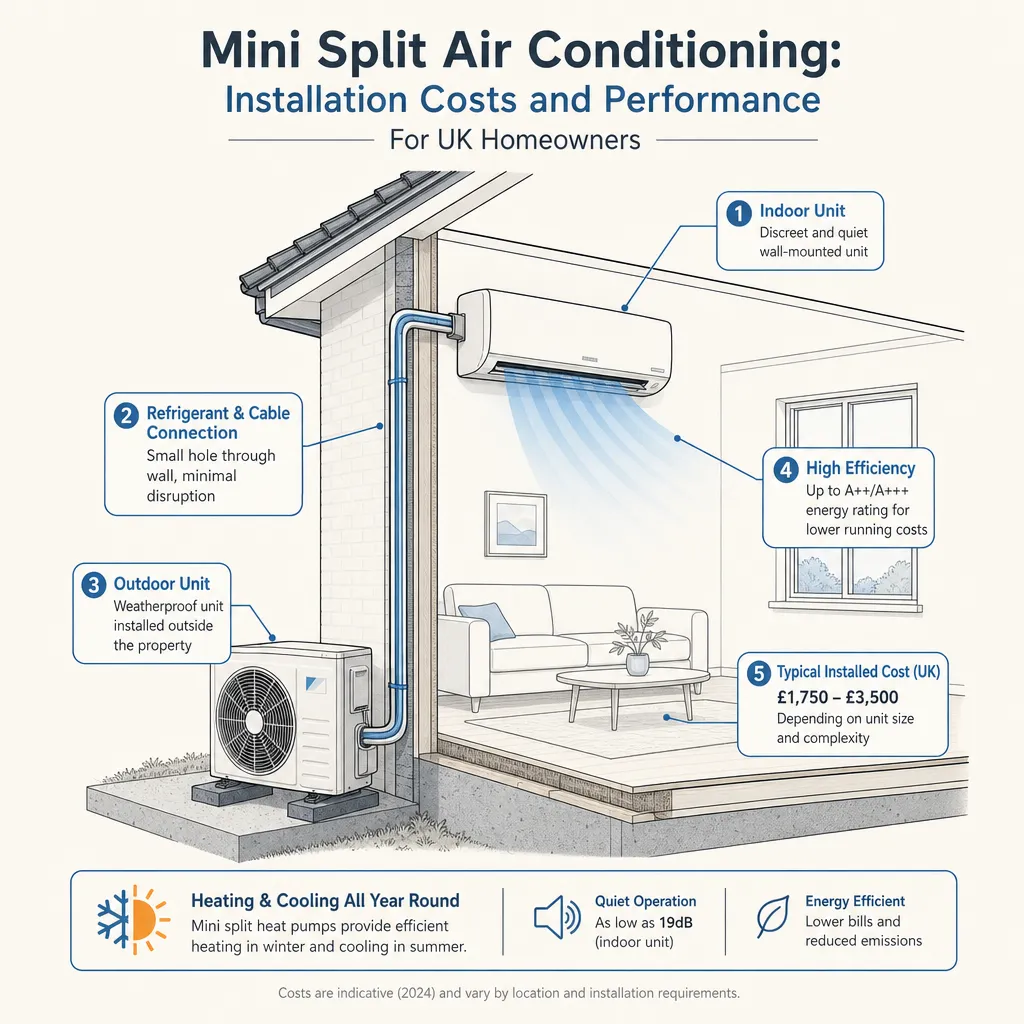
Mini Split Air Conditioning: Installation Costs and Performance
A mini-split (ductless) air conditioning unit costs roughly £1,500–£4,000 installed for a single room in the UK.
 Energy & Retrofit
Underfloor Heating System Installation Costs
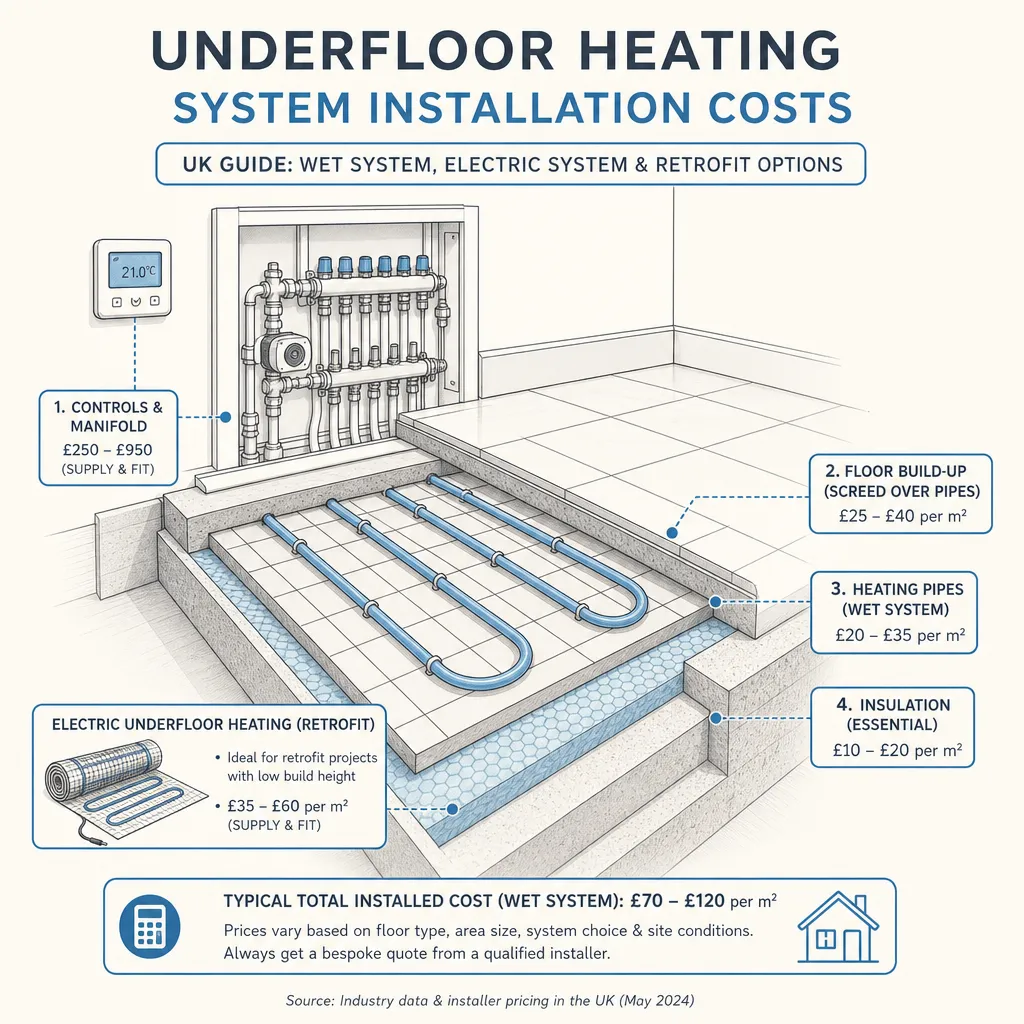
Underfloor heating installation in the UK typically costs £20–£50 per m² for electric mat or foil systems and £50–£150 per m² for wet (hydronic) systems, including labour.
 Energy & Retrofit
Air Source Heat Pumps and Their Impact on Home Valuation
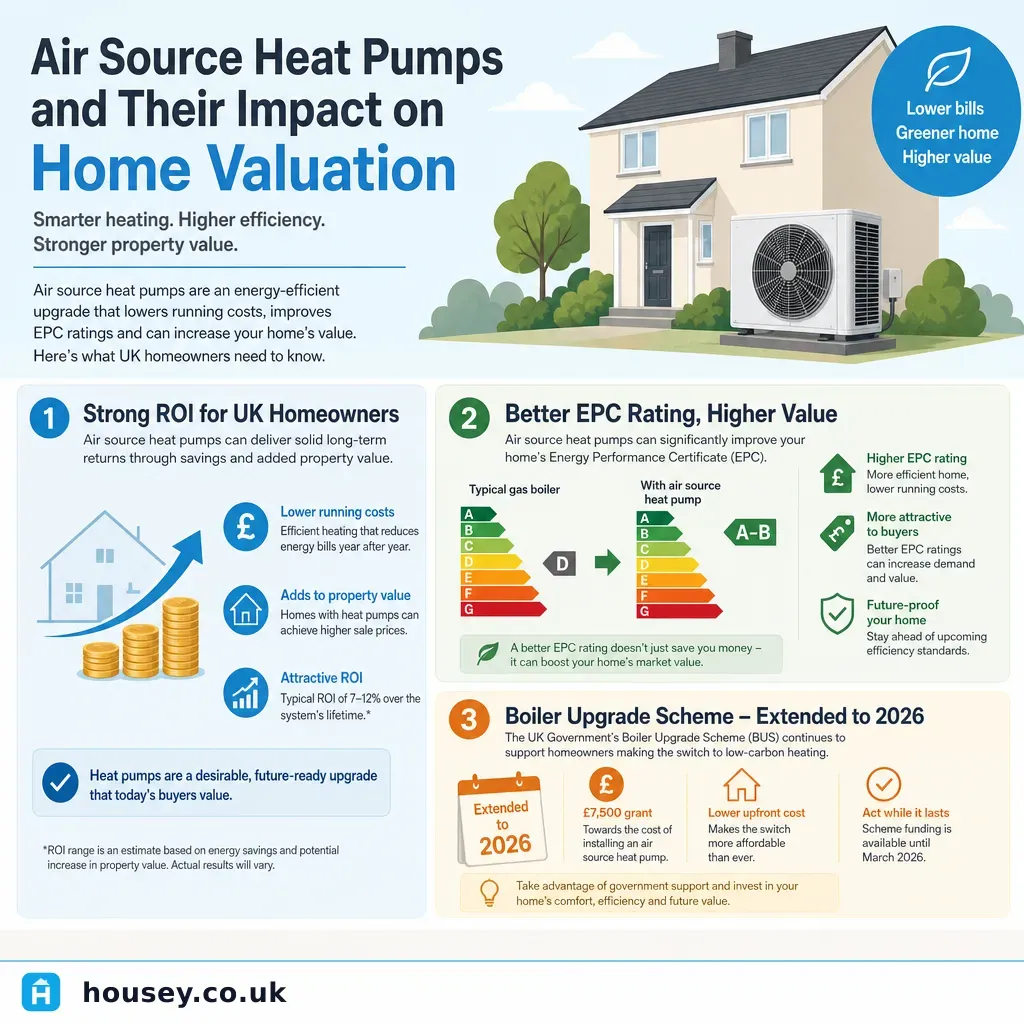
An air source heat pump can improve your home's EPC rating, which may positively influence its market value — particularly as mortgage lenders and buyers increasingly factor in energy performance.