Making your home resilient to climate change: practical strategies
By Housey · Last reviewed 11th of May 2026

Making your home resilient to climate change: practical strategies
The way UK homes are built and maintained is increasingly out of step with the climate conditions they face. Summers are getting hotter and drier, winters wetter, and storms more intense — the UK Climate Projections 2018 (UKCP18) published by the Met Office point to continued and accelerating change across all regions. For homeowners the challenge is translating that broad picture into practical decisions: what to address first, what needs professional assessment before any money is spent, and how to avoid creating new problems — particularly moisture damage — while solving existing ones.
Key points
- UK Climate Projections 2018 (UKCP18) project that average summer temperatures in England could be 2–5.4°C higher by the 2080s, with hotter, drier summers and wetter winters becoming increasingly frequent.
- PAS 2035:2023 is the publicly available specification for energy retrofit in domestic buildings; it requires a qualified Retrofit Assessor to survey the building fabric before specifying insulation or airtightness improvements.
- The Environment Agency's Flood Map for Planning is a free tool to check whether a property sits in Flood Zone 1 (low risk), Zone 2 (medium), or Zone 3 (high risk) — around 5.2 million properties in England face some flood risk.
- Building Regulations Part O (England, 2021) introduced overheating requirements for new residential buildings, but existing homes have no equivalent mandatory standard — homeowners must act proactively.
- The Great British Insulation Scheme (GBIS) and ECO4 offer funded or part-funded insulation improvements for eligible households; eligibility depends on EPC rating, household income, and local authority referral routes.
Understanding your property's climate risks
Climate resilience is not a single measure — it is a combination of improvements matched to your property's specific risks. The starting point is identifying which climate hazards are most relevant given your location, construction type, and the orientation of your home.
Decision tree: which risk should you prioritise first?
- Prioritise flood risk if your property is within 500 metres of a river, stream, lake, or coastline, or if you have experienced surface water flooding. Check your flood zone on the Environment Agency Flood Map for Planning.
- Prioritise overheating if your home has extensive south- or west-facing glazing, is a top-floor flat, or sits in an urban area with a significant heat island effect.
- Address fabric first (insulation and draught-proofing) if your EPC is D or below and your heating bills are high — improving the thermal envelope reduces both winter heating demand and summer heat gain.
- Commission a PAS 2035 retrofit assessment before combining multiple measures — especially if your home was built before 1930 or has solid walls, where poor sequencing can trap moisture and damage the building fabric.
- Consult a structural engineer if your property sits on shrinkable clay soil, which can be destabilised by the cycle of prolonged summer drought followed by wet winters.
- Check planning constraints before installing external wall insulation, flood barriers, or other external measures if your property is listed or in a conservation area — permitted development rights may not apply.
Flood resilience: practical measures for UK homes
Around 5.2 million properties in England face some level of flood risk (Environment Agency). Protective measures fall into two categories: resistance (keeping water out) and resilience (limiting damage when water gets in).
Measure | Type | Typical indicative cost | Best suited to |
|---|---|---|---|
Demountable flood barriers for doors and air bricks | Resistance | £200–£800 per opening | Flood Zone 2 and 3 properties |
Non-return valves on drains and sewers | Resistance | £200–£500 per valve | Surface water and sewer flooding risk |
Raised electrical sockets (above 750mm) | Resilience | Varies; usually part of broader renovation | All at-risk ground floors |
Waterproof lime render or tanking to lower walls | Resistance | Varies by property size; obtain quotes | Solid-wall older properties |
Water-resistant flooring (tiles, concrete) at ground level | Resilience | Varies by floor area | Any at-risk ground floor |
Permeable paving in the front garden | Resilience | £50–£150 per m² | Properties contributing to surface run-off |
Indicative UK costs, last reviewed 2026-05-11. Prices vary significantly by property type, location, and contractor. Obtain at least three quotes before committing.
Reducing overheating in existing homes
Overheating is increasingly recognised as a health risk in UK homes — the summer 2022 heatwave saw hospital admissions spike due to heat-related illness. For existing homes, the most effective measures are passive and do not require planning permission in most cases:
- External shading — awnings, external blinds, or deciduous trees that shade glazing in summer while allowing solar gain in winter. External shading is significantly more effective than internal blinds at preventing heat from passing through the glass.
- Cross-ventilation — ensure openable windows on opposite or adjacent elevations to create through-draughts; trickle vents in replacement windows can provide background airflow.
- Loft insulation — a well-insulated loft slows radiant heat transfer from a hot roof into the rooms below; 270mm mineral wool is the current Building Regulations Part L standard.
- Cool roof coatings — reflective coatings for flat roofs can significantly reduce surface temperatures on hot days.
- Night purge ventilation — opening windows fully during cooler night-time hours flushes stored heat from walls and floors before the following day heats up.
Before blocking or reducing ventilation openings, consider the impact on moisture management and indoor air quality — this is particularly important in solid-wall and pre-1930s properties.
Improving energy efficiency as climate adaptation
A better-insulated home performs well in both hot summers and cold winters. The most impactful measures for UK homes are:
- Loft insulation to 270mm (Part L standard) — often the highest-value first step, particularly in homes with little or no existing insulation in the roof space.
- Cavity wall insulation where appropriate — not all cavities are suitable; a survey is needed to check width, condition, and local exposure rating before installation.
- Solid wall insulation (internal or external) for pre-1930s solid-brick or stone homes — a PAS 2035 assessment is required to avoid moisture problems and specify the correct system.
- Draught-proofing of gaps around doors, windows, loft hatches, suspended timber floors, and pipework penetrations.
- Double or triple glazing to improve U-values, reduce heat loss in winter, and improve comfort near windows on hot days.
A Retrofit Assessor accredited under PAS 2035 can survey the building fabric, assess the existing ventilation strategy, and specify improvements in the correct sequence to avoid condensation, damp, and thermal bridging.
Homeowner climate resilience checklist
Important limitations
This article provides a general overview of climate resilience measures for UK homeowners as of May 2026. Grant scheme eligibility criteria, planning requirements, and building regulations change regularly — always verify current details on GOV.UK and with your local planning authority. Retrofit measures, particularly insulation and airtightness work, must be assessed by a PAS 2035-qualified Retrofit Assessor before installation, as incorrect specification can cause condensation, damp, and structural damage. Heat pump sizing and installation must be assessed and carried out by an MCS-accredited installer. This article does not constitute structural, engineering, or planning advice.
What to ask a qualified professional
Before instructing a retrofit assessor or energy improvement contractor:
- Are you qualified as a PAS 2035 Retrofit Assessor or Retrofit Coordinator, and can I see your accreditation?
- Will the assessment cover the full building fabric, including the existing ventilation strategy and moisture risk?
- How will you sequence improvements to avoid interstitial condensation or other moisture problems?
- Is the installer MCS-accredited (required for heat pumps and solar photovoltaic installations)?
- What documents will I receive, and can they support an application for ECO4, GBIS, or another grant scheme?
- Are you independent of the contractors installing the measures, or is there a commercial relationship I should be aware of?
When to get professional help
Seek professional assessment before committing to work if:
- You are considering solid wall insulation, external wall insulation, or a heat pump — all require specialist assessment before specification.
- Your home has existing damp, mould, or water ingress that predates any retrofit work — these must be resolved before improving airtightness.
- You live in a listed building or conservation area where some measures require listed building consent or planning permission.
- You want to combine multiple improvements such as insulation, new windows, and a heat pump — interaction between measures needs professional coordination under PAS 2035.
- You have noticed cracking or door-binding following dry summers, which may indicate shrinkable clay soil movement.
How Housey can help
Housey connects homeowners with accredited professionals at every stage of climate adaptation. Request a PAS 2035 retrofit assessment to understand the right measures for your property, find qualified insulation installers for cavity or solid wall work, or book a heat pump survey to confirm suitability before committing to a system.
Frequently asked questions
Do I need planning permission for climate resilience improvements?
Most standard improvements — loft insulation, cavity wall insulation, draught-proofing, internal shading — fall within permitted development rights. Exceptions include external wall insulation that alters the appearance of a property in a conservation area, and any alterations to a listed building. Always check with your local planning authority if you are unsure before starting work.
What is the difference between a PAS 2035 retrofit assessment and an EPC?
An Energy Performance Certificate (EPC) rates a property's current energy efficiency on an A–G scale and is required for rental and sale. A PAS 2035 retrofit assessment is far more detailed, analysing building fabric, ventilation, moisture risk, and heating to produce a coordinated improvement plan. An EPC may take an hour; a thorough PAS 2035 assessment typically takes several hours on site.
Is cavity wall insulation suitable for all homes?
No. Cavity wall insulation requires an assessment to check cavity width, wall condition, and local exposure rating. Properties in high-rainfall or high-wind areas, or those with defective masonry, may not be suitable without remedial work first. A survey by a BBA-approved or CIGA-registered company is advisable before installation is agreed.
How much does a home flood resilience survey cost?
A professional flood resilience survey typically costs £200–£500 for a standard home, though prices vary by location and property size. Some local authorities and water companies offer subsidised surveys for at-risk properties. Check the Environment Agency website and your local authority for current schemes in your area.
Sources and further reading
- UK Climate Projections 2018 (UKCP18) — Met Office
- Environment Agency Flood Map for Planning — Environment Agency
- PAS 2035:2023 overview — BSI
- Great British Insulation Scheme — GOV.UK
- Energy Company Obligation (ECO4) scheme guidance — GOV.UK
- Approved Document L: Conservation of fuel and power — GOV.UK
Useful next reads
 Energy & Retrofit
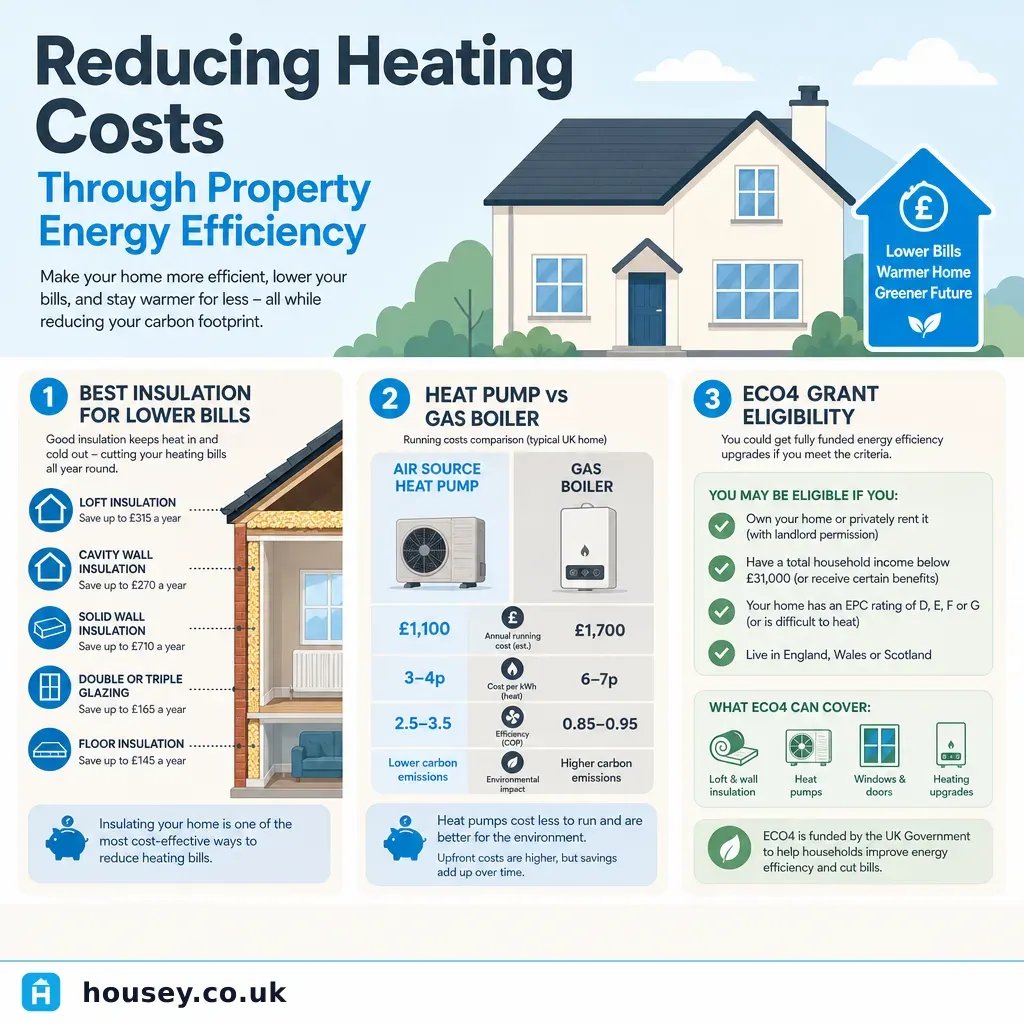
Reducing Heating Costs Through Property Energy Efficiency
Reducing heating costs starts with identifying where heat is lost — typically walls (30–35%), roof (20–25%), and windows.
 Energy & Retrofit
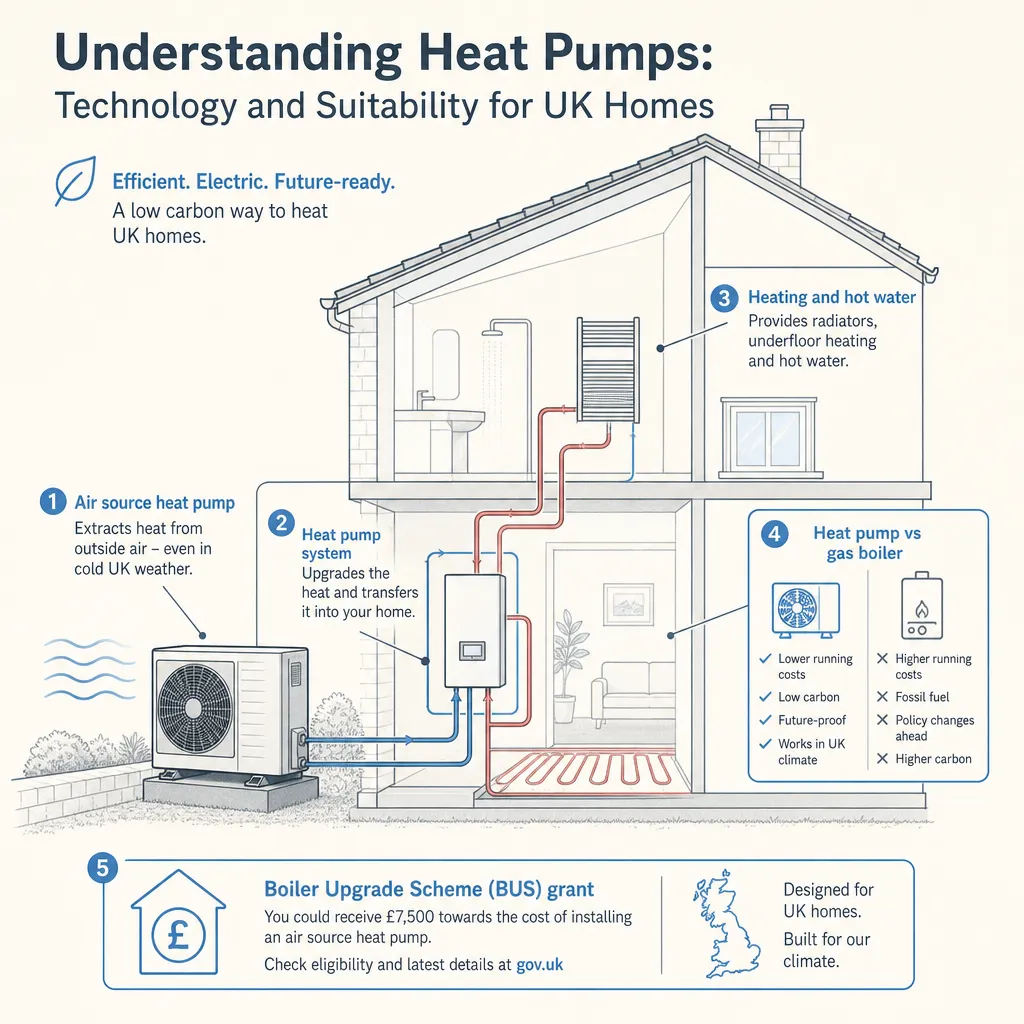
Understanding Heat Pumps: Technology and Suitability for UK Homes
Heat pumps extract heat from the air or ground and transfer it indoors, typically achieving efficiencies of 250–400% compared to a conventional boiler's near 100%.
 Energy & Retrofit
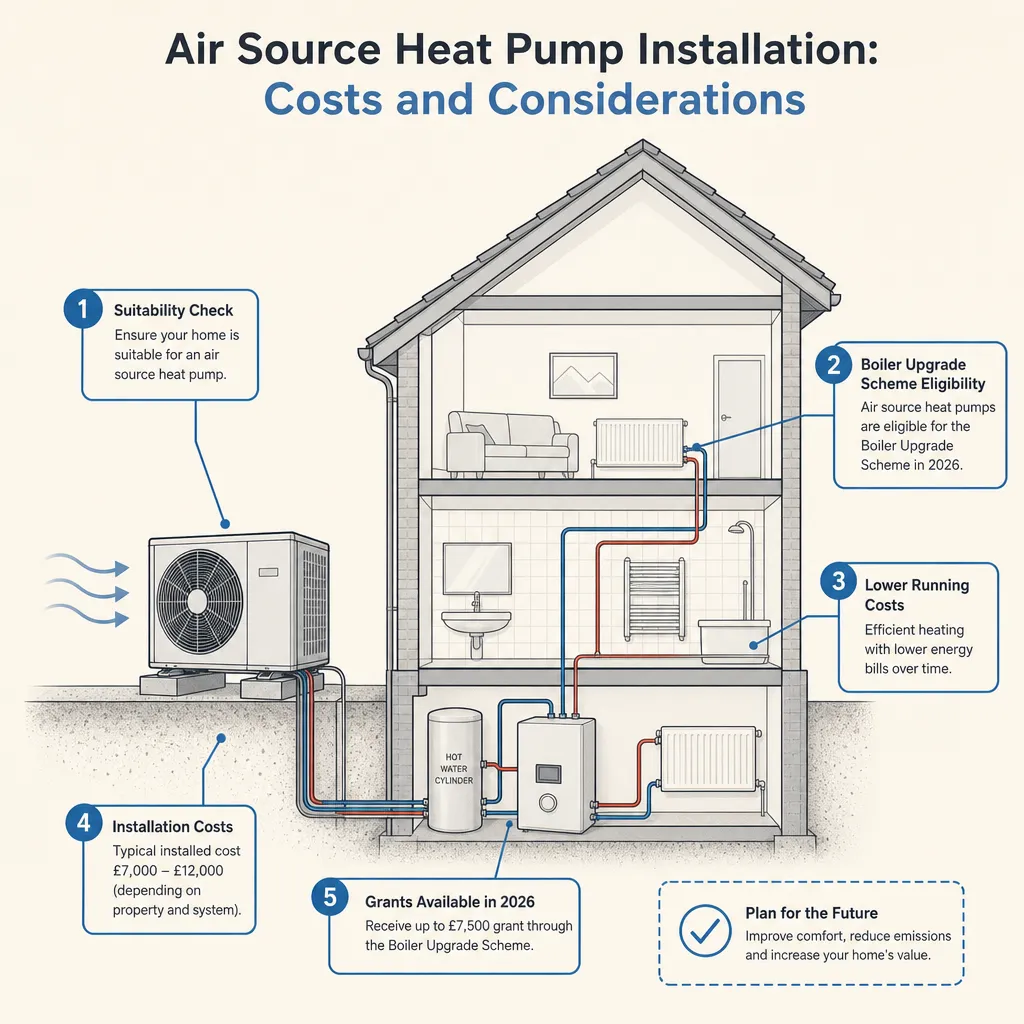
Air Source Heat Pump Installation: Costs and Considerations
Air source heat pump installation in the UK typically costs £8,000–£15,000 before the £7,500 Boiler Upgrade Scheme grant, available through MCS-certified installers in England and Wales.
 Energy & Retrofit
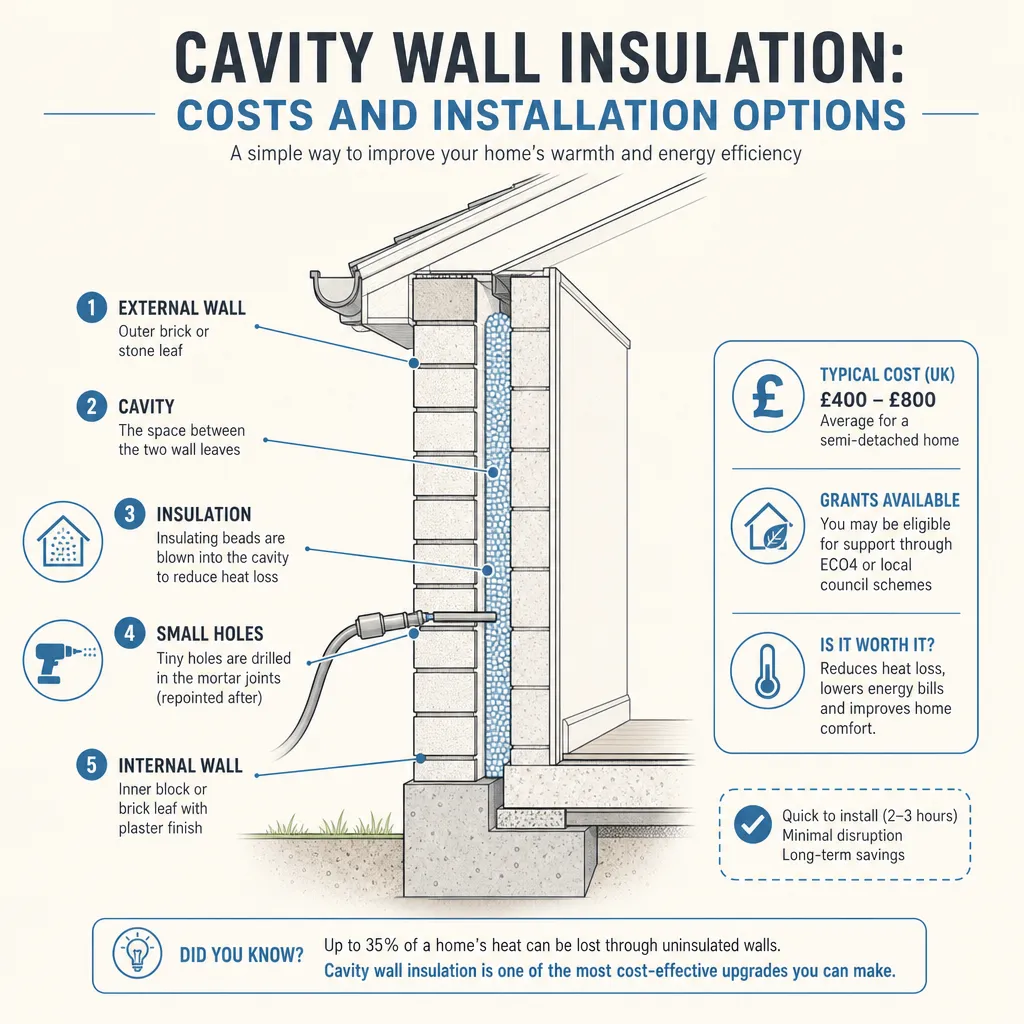
Cavity Wall Insulation: Costs and Installation Options
Cavity wall insulation typically costs £400–£1,200 for a standard UK semi-detached home, though eligible households may pay nothing under ECO4.
 Energy & Retrofit
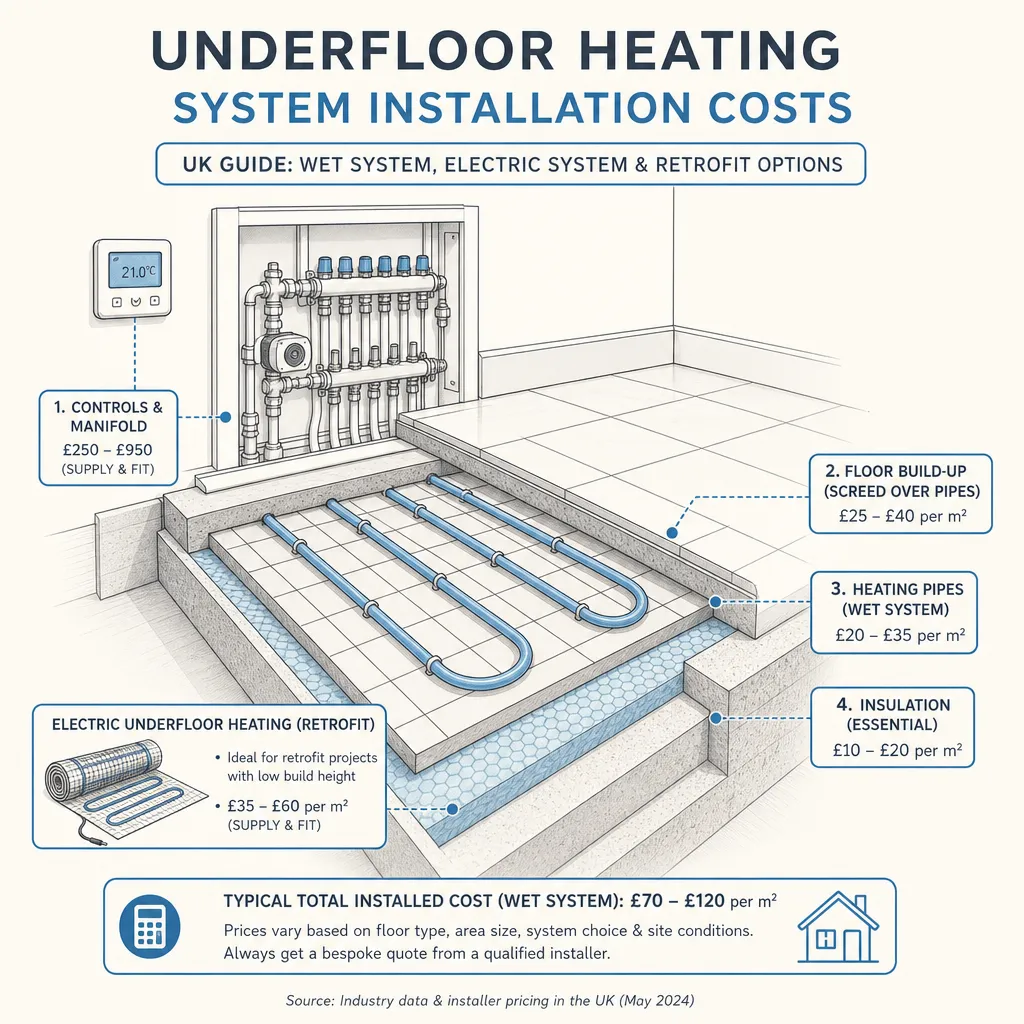
Underfloor Heating System Installation Costs
Underfloor heating installation in the UK typically costs £20–£50 per m² for electric mat or foil systems and £50–£150 per m² for wet (hydronic) systems, including labour.