Do air source heat pumps produce noise? What to expect
By Housey · Last reviewed 11th of May 2026
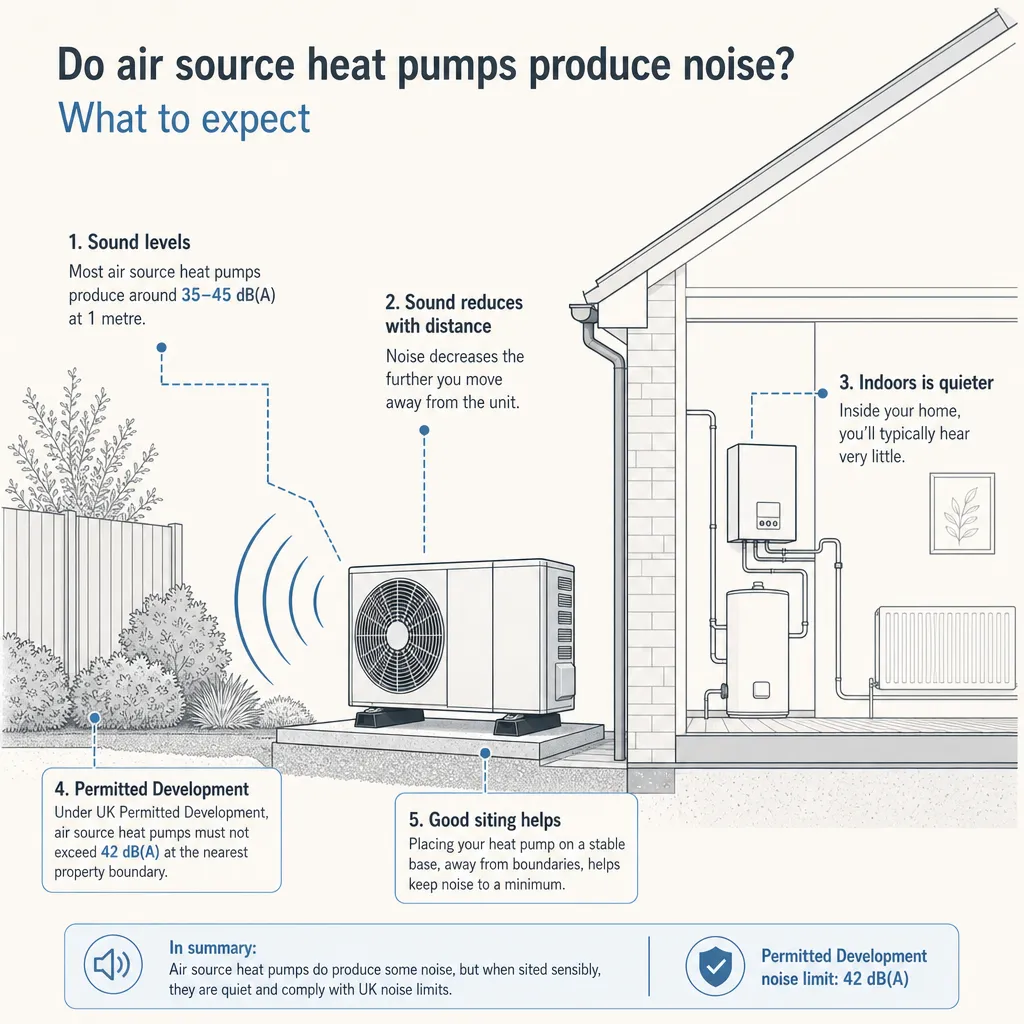
Do air source heat pumps produce noise? What to expect
Noise is one of the most common concerns homeowners raise when considering an air source heat pump (ASHP), and it is also a question with direct planning implications in the UK. The issue typically arises once installation quotes are received and a homeowner wants to understand what day-to-day sound levels will feel like — and whether they could cause friction with neighbours. In England, noise output also determines whether an ASHP qualifies for permitted development rights, making it both a practical and a regulatory consideration before any work is commissioned.
Key points
- Most modern air source heat pumps operate at 40–55 dB(A) at one metre, comparable in volume to a household refrigerator (around 40 dB) or a quiet conversation (around 60 dB).
- Under The Town and Country Planning (General Permitted Development) (England) Order 2015, Schedule 2, Part 14, an ASHP must not produce more than 42 dB(A) measured one metre from any neighbour's window or door to qualify for permitted development.
- MCS Domestic Heat Pump Installation Standard MIS 3005 requires installers to carry out a noise assessment confirming the proposed siting meets the permitted development noise limit before installation begins.
- Inverter-driven compressors modulate their speed according to demand and are generally quieter than fixed-speed units — always check the declared sound power level (L_WA in dB(A)) in the manufacturer's datasheet when comparing models.
- Sound output increases when the compressor works harder in very cold weather — design-condition noise levels may be higher than the rated-condition figure shown in a specification sheet.
How loud is an air source heat pump?
Decibels are logarithmic: a 10 dB increase roughly doubles perceived loudness. A practical reference table helps contextualise what different levels actually sound like at the same distance:
Source | Typical noise level |
|---|---|
Quiet library | ~30 dB(A) |
Household refrigerator at 1 m | ~40 dB(A) |
Modern ASHP at 1 m | 40–55 dB(A) |
Normal conversation at 1 m | ~60 dB(A) |
Typical air conditioning unit | 50–60 dB(A) |
Busy road at 10 m | ~70 dB(A) |
Most homeowners describe a well-sited, modern heat pump as a low background hum rather than an intrusive sound. The critical variable is the ambient noise level at the property: a 50 dB heat pump in a quiet rural garden feels very different from the same unit beside a suburban street with passing traffic.
Night-time is often when sensitivity is greatest. If the property is a terraced house with close adjoining gardens or a semi-detached with a shared boundary near the proposed unit position, a thorough noise assessment is particularly important before installation proceeds.
UK permitted development noise rules
Permitted development (PD) rights allow ASHPs to be installed without full planning permission in England, subject to specific conditions. Under Schedule 2, Part 14 of the Town and Country Planning (General Permitted Development) (England) Order 2015:
- The installation must not result in a sound level exceeding 42 dB(A) at one metre from any window or door belonging to a neighbouring property.
- The unit must not be installed on a wall or roof that faces a highway.
- The property must not be a listed building.
- Only one heat pump may be installed under permitted development at any one property.
If the proposed siting cannot meet the 42 dB(A) limit, full planning permission will be required. An MCS-registered installer will conduct a noise assessment as a standard part of the design process under MIS 3005.
Scotland, Wales, and Northern Ireland each have their own permitted development regulations. Do not assume the England rules apply — check with your local planning authority before proceeding.
What affects noise levels in practice?
Several installation and site factors influence how much sound reaches a neighbouring property:
- Distance from boundaries: Sound dissipates with distance — even 2–3 metres of additional separation can meaningfully reduce the level reaching a neighbour's window.
- Wall and surface reflection: Siting a unit against a solid wall amplifies sound through reflection. Anti-vibration mounts and standoff brackets help reduce this, as does positioning the unit away from hard surfaces.
- Unit specification: Inverter compressors are quieter than fixed-speed equivalents. The declared sound power level (L_WA) in the datasheet is the most reliable comparison point between models.
- Fan discharge orientation: Directing the fan exhaust away from boundaries and habitable room windows is best practice and should be noted in the installation design documentation.
- Acoustic screening: Proprietary fence panels or existing garden structures can reduce transmitted noise, but their effectiveness varies. These should be assessed and documented by the installer, not added as an afterthought.
- Cold weather load: On the coldest winter nights, the unit may be noticeably louder than during mild conditions — ask for the noise level at design outdoor temperatures, not just at rated output.
Red flags: when noise may become a problem
Be cautious if any of the following apply to your proposed installation:
- The unit will be sited within 1 metre of a boundary wall or fence adjacent to a neighbour's habitable room window.
- The installation quote makes no mention of a noise assessment or reference to MIS 3005.
- The declared sound power level (L_WA) exceeds 60 dB(A) — meeting the 42 dB(A) PD limit at neighbouring boundaries becomes harder at this level.
- The property is in a quiet rural area where ambient noise is very low, meaning even moderate ASHP sound is more perceptible.
- Neighbours share a semi-detached or terraced boundary where gardens are narrow.
- The unit is proposed for a rear wall directly facing a neighbouring garden or conservatory.
If any of these apply, ask the installer to produce a formal noise impact assessment before work proceeds, or instruct an independent acoustic consultant.
Important limitations
This article provides general guidance on air source heat pump noise. Actual noise levels at any property depend on the specific unit, its siting, local topography, ambient conditions, and building layout. Permitted development rules are subject to amendment and differ across England, Scotland, Wales, and Northern Ireland. This article does not constitute planning, acoustic, or engineering advice. A qualified MCS-registered installer and, where noise levels are uncertain, an independent acoustic consultant should assess your specific installation before any work is commissioned.
When this becomes urgent
Seek professional advice promptly if:
- Your installer cannot produce a written noise assessment for the proposed siting.
- The predicted noise level is at or above the 42 dB(A) permitted development limit at a neighbouring property.
- A neighbour has raised a formal complaint with the local planning authority or environmental health team.
- The property is a listed building, flat, or is in a conservation area where permitted development may not apply.
- An existing installation has been flagged as potentially non-compliant during a Boiler Upgrade Scheme (BUS) grant inspection.
What to ask a qualified professional
Before instructing an installer, ask:
- What is the declared sound power level (L_WA in dB(A)) for the unit you are recommending?
- Have you calculated the predicted noise level at my nearest neighbour's window or door using the MIS 3005 methodology?
- Does the proposed siting meet the 42 dB(A) permitted development limit?
- If not, what changes to siting, specification, or acoustic screening would bring it within limits — or will full planning permission be required?
- Are anti-vibration mounts included as standard in your installation?
- What is the predicted noise level at design conditions, using the coldest outdoor temperature in your sizing calculation?
- Will I receive a written noise assessment as part of the installation documentation?
How Housey can help
Housey connects you with qualified MCS-registered installers who carry out a full site assessment — including noise evaluation — as part of their survey process. Request a heat pump survey to receive comparable quotes from vetted professionals in your area.
Frequently asked questions
Will my air source heat pump be louder in winter?
Yes. In cold weather the compressor works harder to extract heat from the air, which can increase noise output. Most modern inverter-driven units modulate their speed continuously and remain relatively quiet even at low ambient temperatures, but some increase in noise during the coldest nights is normal. Ask your installer for the declared sound level at design conditions, not just at rated conditions.
Can my neighbour object to my heat pump on noise grounds?
Neighbours cannot block an installation that meets permitted development conditions, but they can report a potential noise nuisance to the local planning authority or environmental health team. If noise levels breach planning conditions or constitute a statutory nuisance under the Environmental Protection Act 1990, the local authority can take action, so obtaining a proper noise assessment before installation is important.
Do I need planning permission if my heat pump is too loud for permitted development?
If the installation cannot meet the 42 dB(A) limit one metre from a neighbour's window, full planning permission will be required. Your local planning authority will assess the noise impact as part of the application. Alternatively, adjusting the unit's siting or specification, or adding acoustic attenuation, may bring the installation within permitted development limits — your MCS-registered installer should advise.
How is the permitted development noise limit measured?
The 42 dB(A) limit is assessed at one metre from the nearest neighbour's window or door using the sound power level declared by the manufacturer, adjusted for distance and any attenuation. MCS-registered installers follow the methodology set out in MIS 3005 for this calculation. An independent acoustic consultant can verify the assessment if you have concerns.
Sources and further reading
- Town and Country Planning (General Permitted Development) (England) Order 2015, Schedule 2, Part 14 — legislation.gov.uk
- MCS: MIS 3005 Domestic Heat Pump Installation Standard — Microgeneration Certification Scheme
- Planning Portal: air source heat pumps — Planning Portal
- Air source heat pumps — Energy Saving Trust
- Boiler Upgrade Scheme — GOV.UK
Useful next reads
 Energy & Retrofit
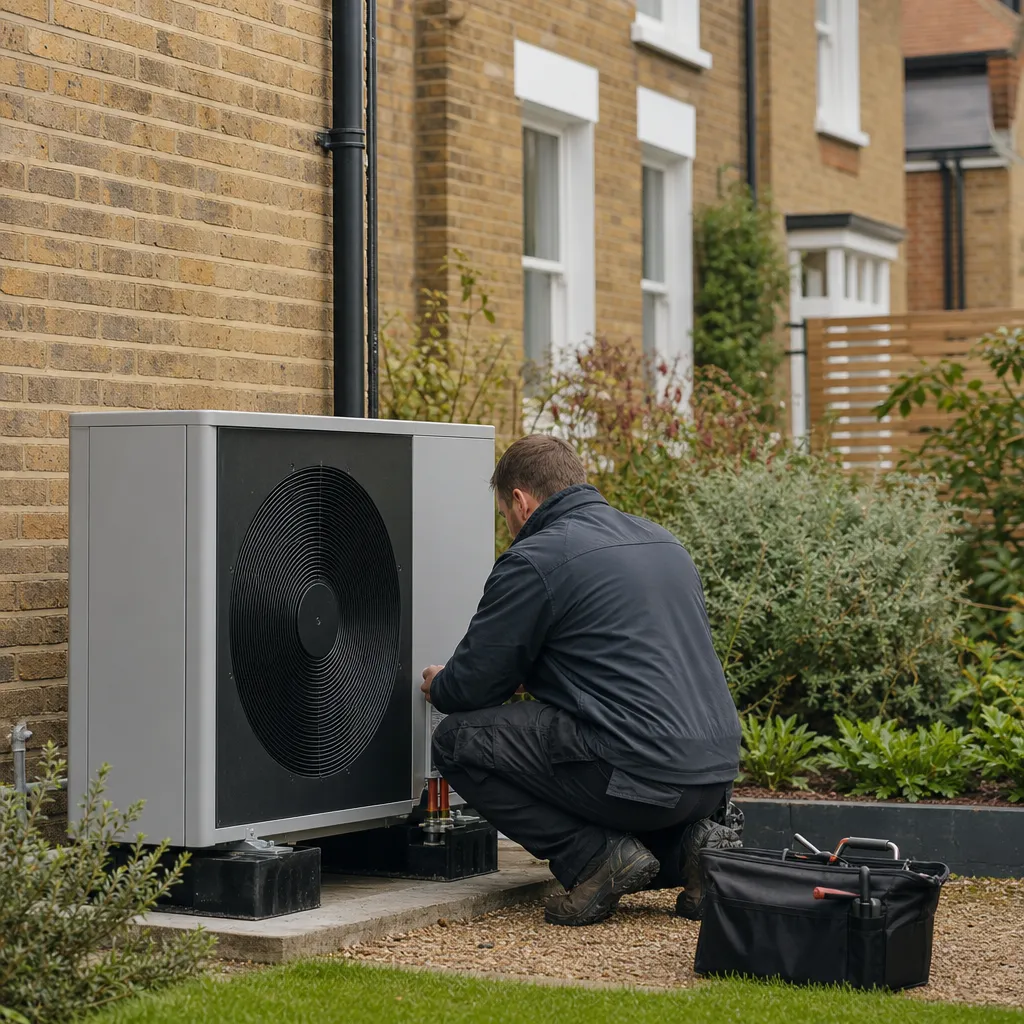
Are ground source heat pumps noisy? What homeowners should know
Ground source heat pumps are significantly quieter than air source heat pumps during normal operation as they have no outdoor fan unit.
 Energy & Retrofit
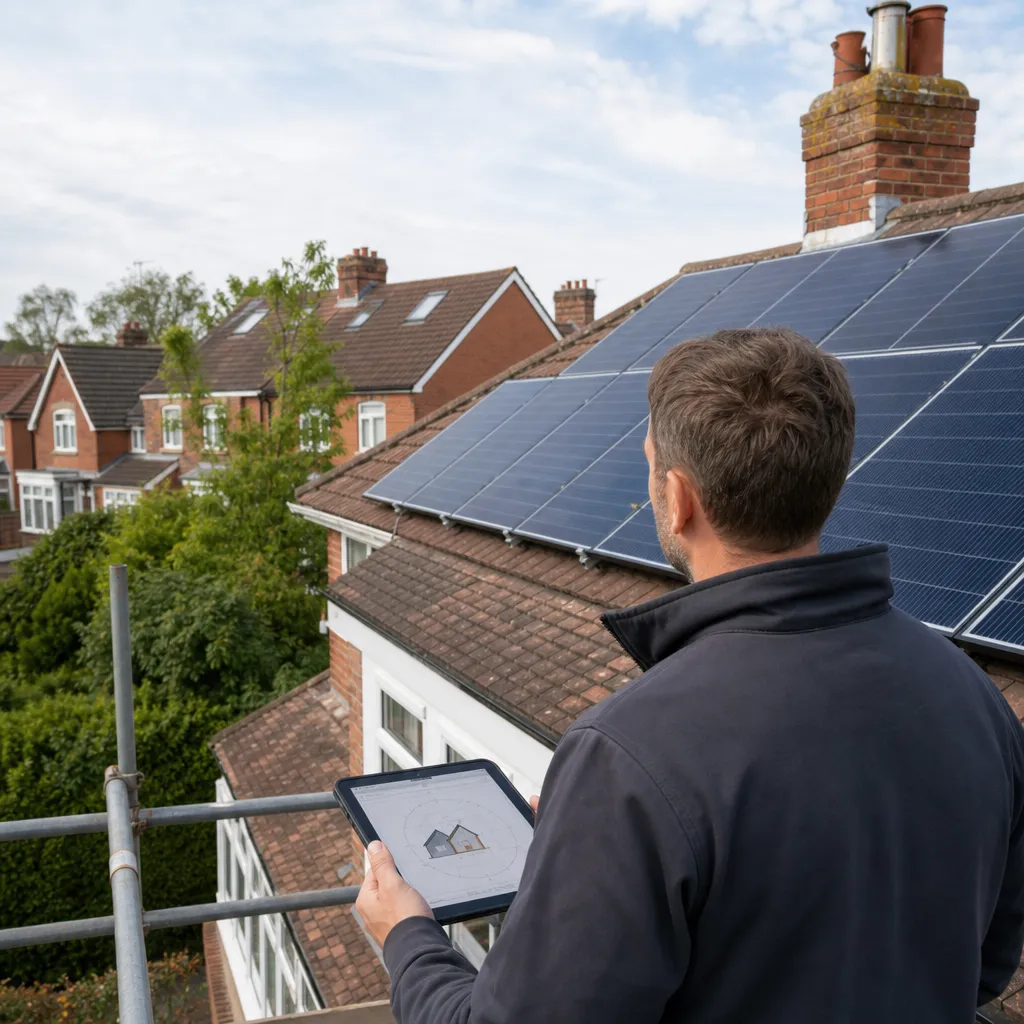
Solar Panel Orientation: Optimising Direction and Placement for UK Properties
In the UK, solar panels generate the most electricity when facing true south at a pitch of 30–40 degrees.
 Energy & Retrofit
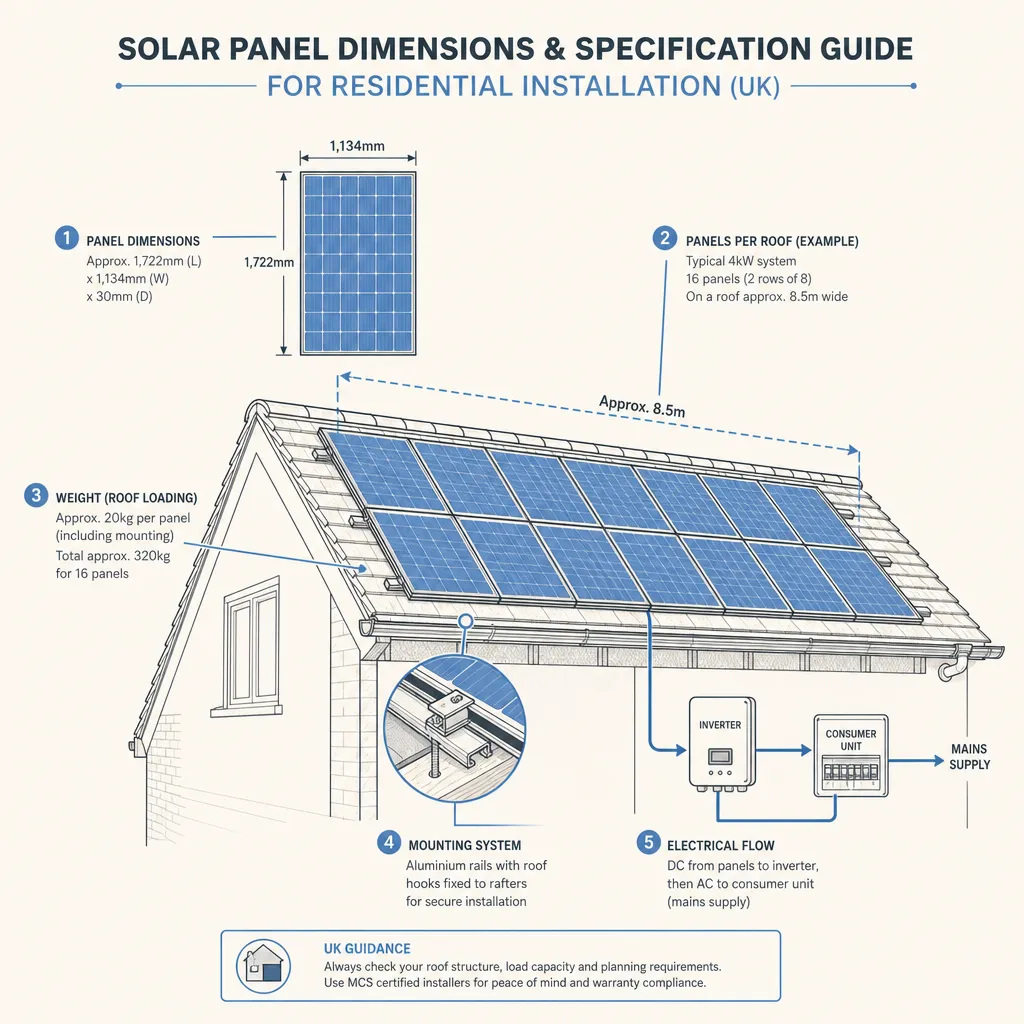
Solar Panel Dimensions and Specification Guide for Residential Installation
A standard residential solar panel measures approximately 1700–1800mm × 1000–1050mm, weighs 18–22 kg, and produces 380–450 W.
 Energy & Retrofit
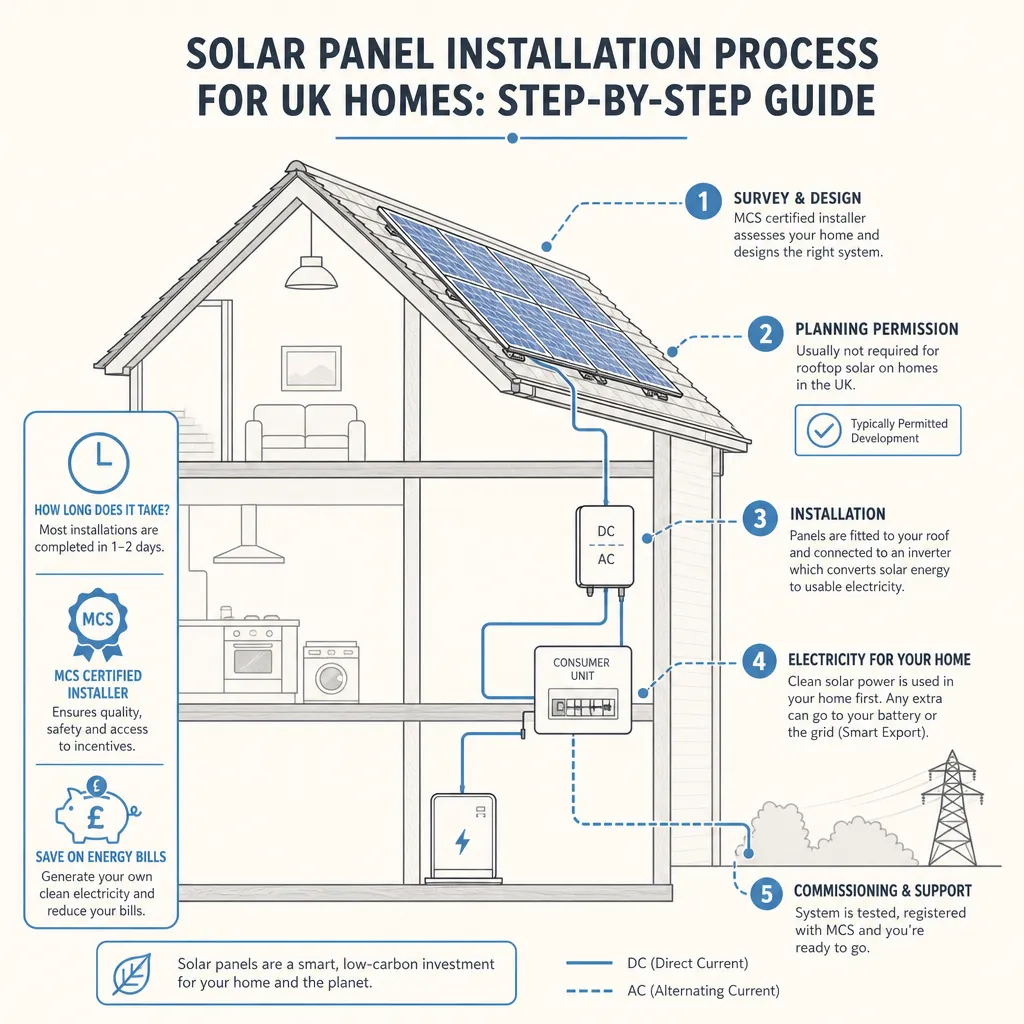
Solar Panel Installation Process for UK Homes: Step-by-Step Guide
Solar panel installation for a UK home usually takes 1–2 working days on-site, with the full process from initial survey to MCS certificate taking 2–6 weeks.
 Energy & Retrofit
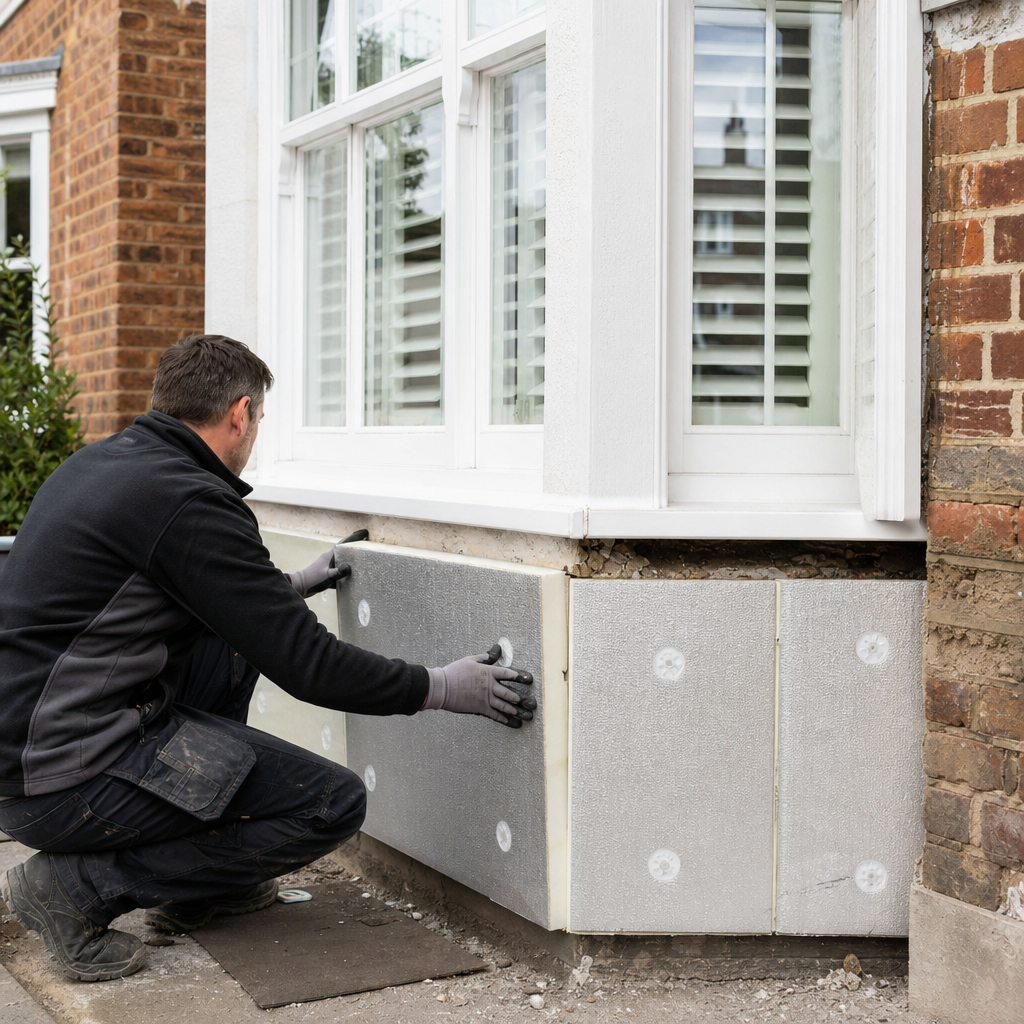
Insulating Solid Masonry Walls Under Bay Windows: Technical Guidance
Insulating solid masonry walls under bay windows requires specialist detailing at angled wall faces, window reveals, and the bay floor and ceiling junctions.