Air Source Heat Pumps and Their Impact on Home Valuation
By Housey · Last reviewed 11th of May 2026
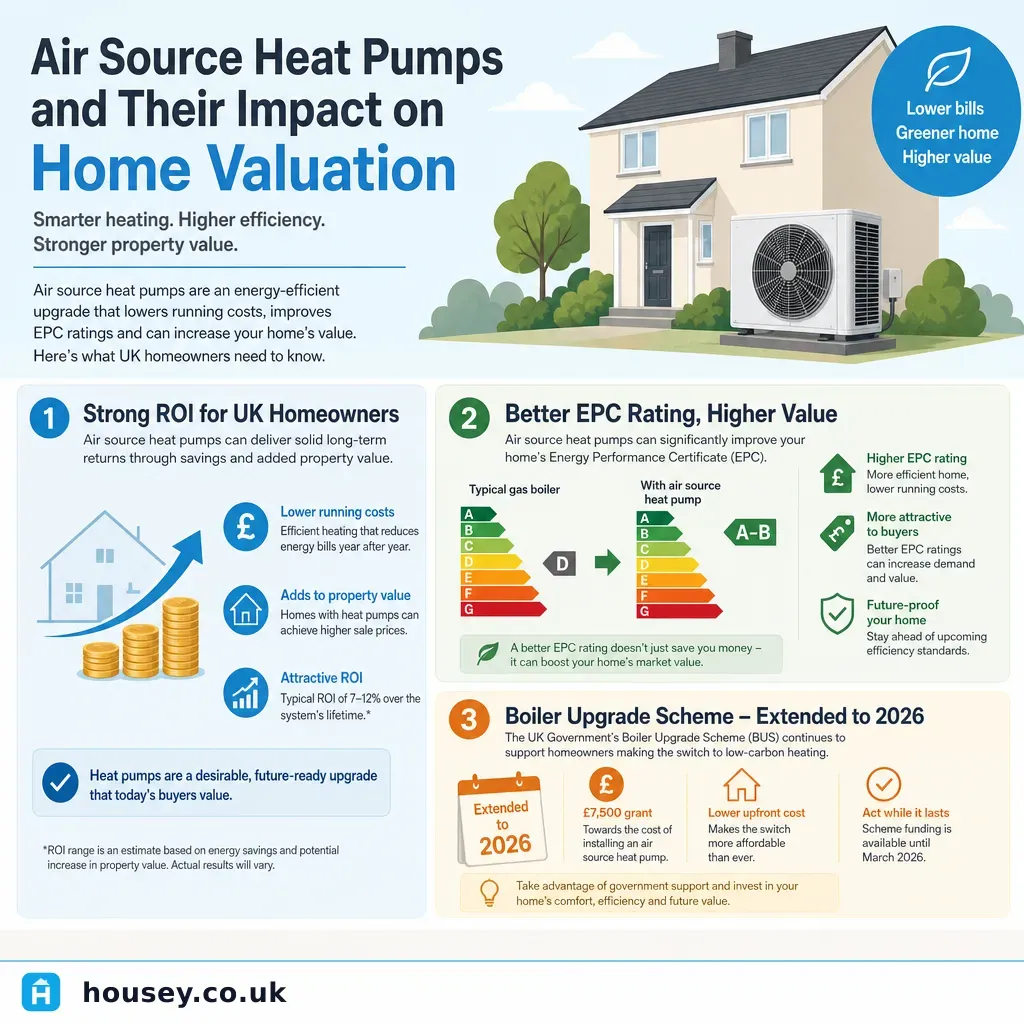
Air Source Heat Pumps and Their Impact on Home Valuation
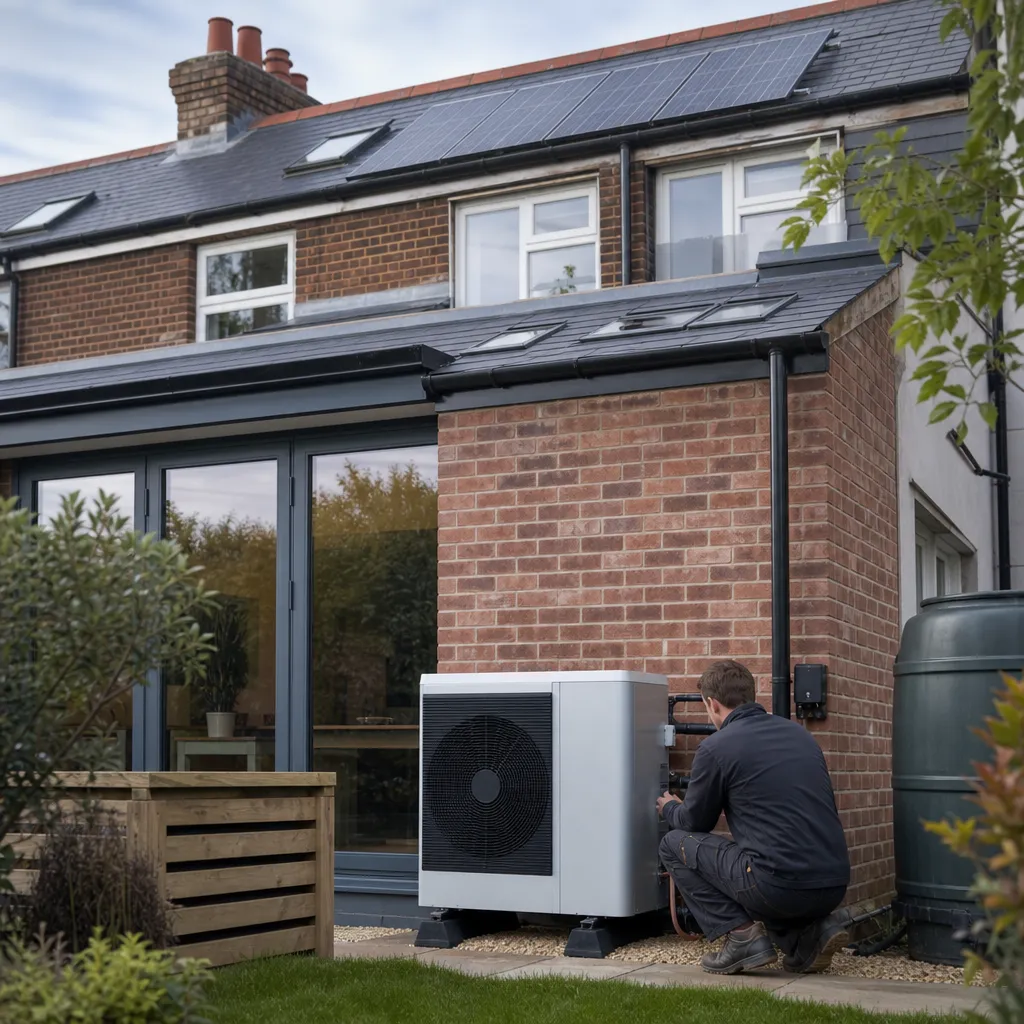
Whether you are considering installing an air source heat pump (ASHP) ahead of selling, or evaluating the return on a retrofit already under way, the relationship between heat pump installation and property value is genuinely complex. As UK mortgage lenders begin adjusting rates based on Energy Performance Certificate (EPC) ratings, and as future policy changes edge gas boilers closer to obsolescence, buyers and sellers alike are asking how heating technology shapes what a property is worth.
Key points
- Properties rated EPC A or B attract measurably higher sale prices on average; Rightmove data indicates A/B-rated homes can command a premium of approximately 2–5% over equivalent D-rated properties in the same area.
- The Boiler Upgrade Scheme (BUS) offers a £7,500 grant toward an air source heat pump (as of May 2026, subject to Government review); the grant is claimed by the installing homeowner and does not transfer to future buyers.
- An MCS (Microgeneration Certification Scheme) certificate from an accredited installer is required to claim the BUS grant and is increasingly expected by surveyors and mortgage lenders as evidence of a compliant installation.
- Heat pump systems must comply with Building Regulations Part L (conservation of fuel and power) and Part F (ventilation); poor installation — undersized emitters, missing buffer tanks, or inadequate insulation — can reduce system performance and attract adverse commentary in a RICS survey report.
- PAS 2035, the standard governing whole-house retrofit, does not apply to heat pump-only installations, but a retrofit assessment is considered good practice for older, solid-wall, or poorly insulated properties before any system is specified.
How does an air source heat pump affect EPC rating?
An EPC rating reflects a home's energy efficiency, calculated using SAP (Standard Assessment Procedure) methodology. Switching from a gas boiler to an air source heat pump typically improves the SAP score — sometimes by a full letter grade — because the calculation credits the lower carbon intensity of grid electricity and recognises the heat pump's seasonal coefficient of performance (SCOP).
For homes currently rated D or below, moving to an ASHP alongside improved insulation can push the property into band C or above. This matters because:
- Several high-street lenders now offer green mortgage products at reduced rates for EPC-A and EPC-B properties.
- Proposed legislation would require rental properties to achieve EPC C by 2030 (subject to parliamentary approval), making any verifiable energy improvement potentially attractive to landlord-buyers.
- Estate agents increasingly market EPC ratings prominently on listings, and portals such as Rightmove and Zoopla display the rating on search results.
A heat pump alone will not transform an EPC rating if the building fabric is poor. A RICS-registered energy assessor or energy-efficiency consultant can advise on the combined effect of heat pump installation and insulation measures before you commit to works.
What do RICS surveyors note about heat pump installations?
When a RICS Level 2 or Level 3 survey is carried out on a property with an ASHP, the surveyor will typically assess:
- Whether the system holds an MCS certificate and a visible commissioning record.
- Whether emitters (radiators or underfloor heating circuits) appear suitably sized for low-temperature operation — heat pumps typically run flow temperatures of 35–45 °C, compared with 60–70 °C for a standard gas boiler, so undersized radiators are a common problem in retro-fit installations.
- Whether pipework, controls, expansion vessels, and buffer tanks are appropriately installed.
- Any visible defects, noise concerns relating to unit location and proximity to boundaries, or access issues.
A well-installed, MCS-certified ASHP is unlikely to attract an adverse condition rating. A poorly installed system — particularly one retro-fitted to existing undersized radiators without upsizing — may be flagged as a defect requiring further specialist investigation.
Comparison: heat pump installation scenarios and likely survey outcomes
Installation scenario | Likely surveyor view | Buyer perception | Probable effect on value |
|---|---|---|---|
MCS-certified ASHP, upsized radiators, insulation upgraded | Neutral to positive; EPC improvement noted | Generally positive — lower running costs expected | Possible modest premium in energy-conscious markets |
MCS-certified ASHP, original radiators, no insulation upgrade | Neutral; running cost benefit may be limited | Mixed — some buyers may query efficiency | Unlikely to add or subtract value significantly |
Uncertified installation, no commissioning record | Flagged as defect; lender may require inspection | Negative — uncertainty over legality and warranty | May reduce value or delay sale |
Heat pump installed but disconnected or faulty | Noted as non-functional item requiring attention | Negative — buyer sees cost to repair or replace | May depress offers |
What do buyers and lenders currently make of heat pumps?
Market perception in 2025–26 is mixed, partly because ASHP technology remains relatively unfamiliar to many UK buyers outside newly built homes. Research from the Energy Saving Trust and property portals suggests buyer appetite for low-carbon heating is growing — but primarily among buyers already committed to sustainability or purchasing new builds where ASHPs are standard.
In the broader resale market, a heat pump's contribution to value depends on:
- Local buyer demographics. Urban and suburban markets with eco-conscious buyers tend to respond more positively than rural areas where oil boilers or solid fuel are the norm.
- Running cost evidence. A heat pump that demonstrably reduces energy bills — supported by recent utility bills or smart meter data — is more persuasive than one where performance is uncertain.
- Agent familiarity. Estate agents experienced in marketing low-carbon homes can present ASHP installations more effectively to the right buyers.
Worked UK property scenario
A 1930s semi-detached in the East Midlands, EPC-D rated, is retrofitted with a 9 kW air source heat pump, new larger radiators throughout, and 100 mm loft insulation top-up. The installer is MCS-accredited and provides a full commissioning certificate. The EPC is re-assessed and the property moves from band D to band C. At sale, the listing notes that the BUS grant has already been claimed by the current owner; a buyer cannot claim it again. The RICS Level 2 survey notes the ASHP installation with no adverse condition ratings. The property sells at asking price, in line with comparable EPC-C properties on the same road. No specific heat pump premium is achieved, but the energy performance credentials support the asking price and the home attracts more enquiries than a similar D-rated property listed at the same time nearby.
Important limitations
This article provides general information about air source heat pumps and property valuation in a UK context. Valuations are property-specific and depend on local market conditions, buyer demand, building fabric, installation quality, and surveyor judgement. No general guidance can substitute for a professional valuation or a heat pump-specific survey of your property. Heat pump sizing in particular must be calculated by a qualified heating engineer — an incorrectly sized system can be costly, inefficient, and difficult to sell on. Grants, regulations, and mortgage products referenced in this article are subject to Government review and lender policy changes; always verify current eligibility on GOV.UK or with a qualified adviser.
When this becomes urgent
Seek professional advice promptly if:
- Your installed heat pump has no commissioning certificate or MCS documentation — mortgage lenders may decline to lend until the system is verified by a competent engineer.
- A RICS survey has flagged the ASHP at condition rating 2 or 3.
- You are planning to install a heat pump in a solid-wall or poorly insulated property without first commissioning a fabric assessment — moisture, condensation, and ventilation risks are genuine concerns in older stock.
- You have received a mortgage offer conditional on heat pump inspection or certification.
What to ask a qualified professional
Before instructing a heat pump installer, surveyor, or energy consultant, consider asking:
- Is my property's insulation adequate for a heat pump, or should the building fabric be improved first?
- What seasonal coefficient of performance (SCOP) should I expect from a correctly sized system in this property?
- Will my existing radiators need upsizing, and what does that add to the overall project cost?
- Will the installation be MCS-certified and eligible for the Boiler Upgrade Scheme?
- How will the installation be documented for a future RICS survey or mortgage application?
- What impact do you anticipate on my EPC rating, and will you arrange a re-assessment on completion?
When to get professional help
A heat pump installation is a technically complex and regulated project. Engage a qualified professional if:
- You are unsure whether your property is suitable — a fabric-first energy assessment is recommended before any system is specified.
- You want to maximise EPC improvement alongside the installation.
- You are considering selling within 2–3 years and want a realistic view of likely value impact — a valuation survey from a RICS-registered surveyor is the most reliable route.
- Your property is listed, converted, solid-wall, or unusually constructed, where standard heat loss calculations may not apply.
How Housey can help
Housey connects UK homeowners with accredited professionals offering heat pump surveys, independent valuation surveys, and energy-efficiency consultants who can assess your property's suitability before you commit to installation or sale. Getting an independent view on likely EPC improvement and realistic market impact can save significant cost and avoid surprises at the survey stage.
Frequently asked questions
Does an air source heat pump always add value to a property?
Not automatically. A correctly installed, MCS-certified ASHP in a well-insulated property can support or modestly improve market value, particularly where it improves the EPC rating. However, a poorly installed system, or one retro-fitted to a property with inadequate insulation, may be flagged in a survey and have little positive — or even a negative — effect on value.
Do I need to tell my mortgage lender if I install a heat pump?
You are generally not required to notify your lender mid-term for a like-for-like heating replacement. However, if you are remortgaging or coming to the end of a fixed term, the lender may ask about heating type. Some lenders offer green mortgage products for EPC-A and EPC-B properties — check with your lender or a mortgage adviser to see what is available.
Can the Boiler Upgrade Scheme grant be transferred to a new buyer?
No. The Boiler Upgrade Scheme grant is claimed by the homeowner at the time of installation and cannot be transferred on sale. If a property is sold, the new owner cannot claim the BUS grant for the already-installed system. They may be eligible for future grant schemes if Government policy changes, but this is not guaranteed.
How long does an air source heat pump typically last?
A well-maintained air source heat pump typically has a lifespan of 15–20 years. The compressor and refrigerant circuit are the main components subject to wear. Annual servicing by a qualified F-Gas-registered engineer is advisable, and some MCS-accredited installers offer maintenance contracts as part of their installation package.
Sources and further reading
- Boiler Upgrade Scheme guidance — GOV.UK
- Energy Performance Certificates: guidance for homeowners — GOV.UK
- Heat pump guidance for households — Energy Saving Trust
- MCS: Microgeneration Certification Scheme — MCS
- RICS home surveys — RICS
Useful next reads
 Energy & Retrofit
Do Solar Panels Increase Property Value?
Solar panels generally add value to UK properties, with research suggesting an uplift of 0.
 Energy & Retrofit
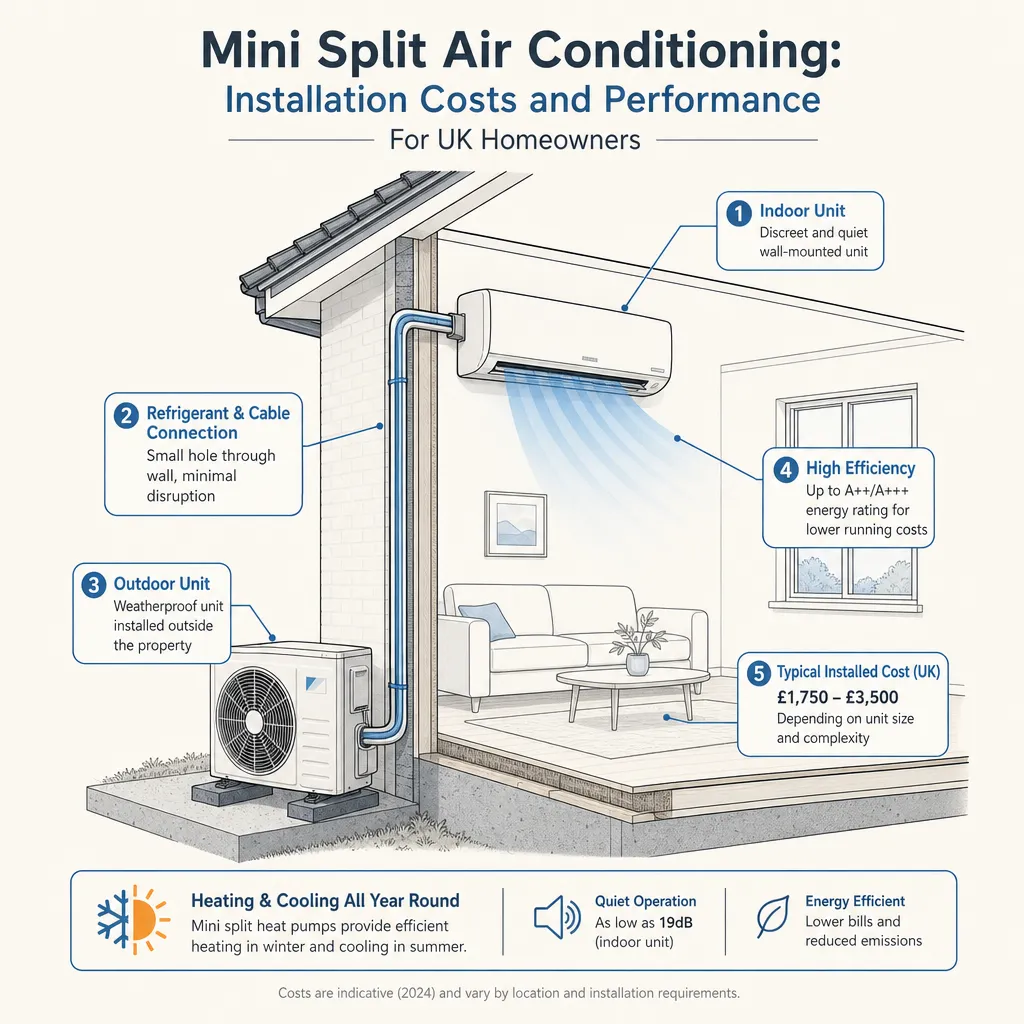
Mini Split Air Conditioning: Installation Costs and Performance
A mini-split (ductless) air conditioning unit costs roughly £1,500–£4,000 installed for a single room in the UK.
 Energy & Retrofit
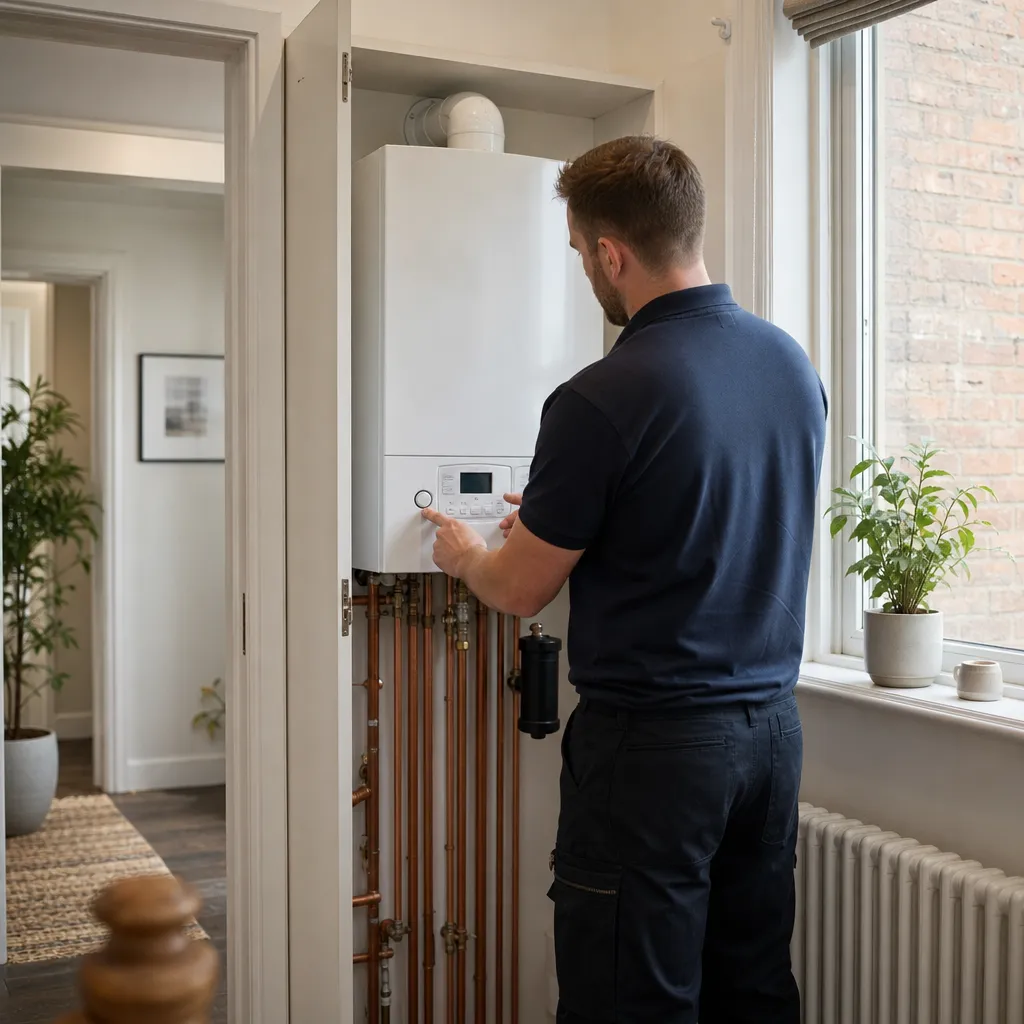
Optimising Heating Systems for Energy Efficiency
Optimising a UK heating system usually involves improving controls such as smart thermostats and thermostatic radiator valves, ensuring the boiler or heat pump is correctly sized, and upgrading radiators or pipework where needed.
 Energy & Retrofit
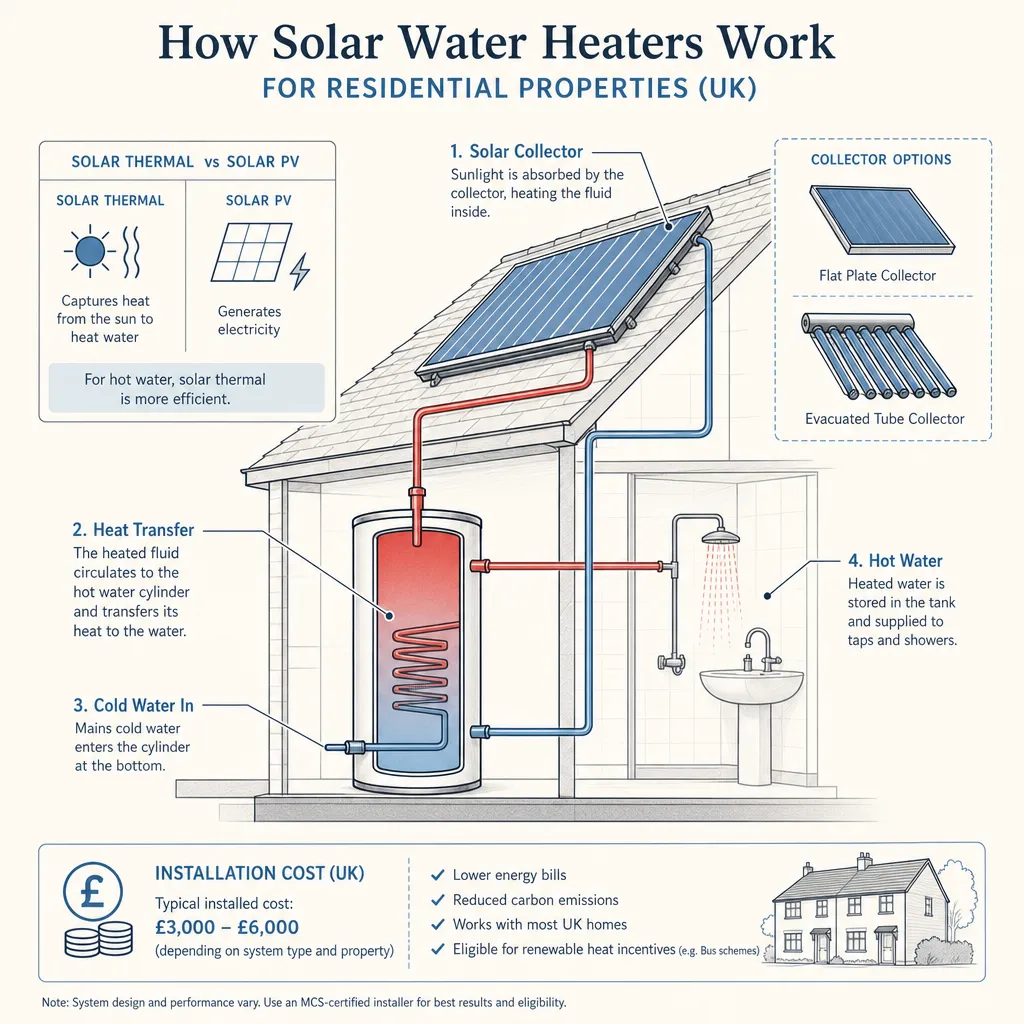
How Solar Water Heaters Work for Residential Properties
Solar water heaters use roof-mounted collectors to capture heat from sunlight and transfer it to a hot water cylinder via a fluid circuit.
 Energy & Retrofit
Renewable Energy Technologies for Homes
UK homes can choose from solar photovoltaic panels, air source heat pumps, ground source heat pumps, and battery storage as the main residential renewable technologies.