Do Solar Panels Increase Property Value?
By Housey · Last reviewed 11th of May 2026
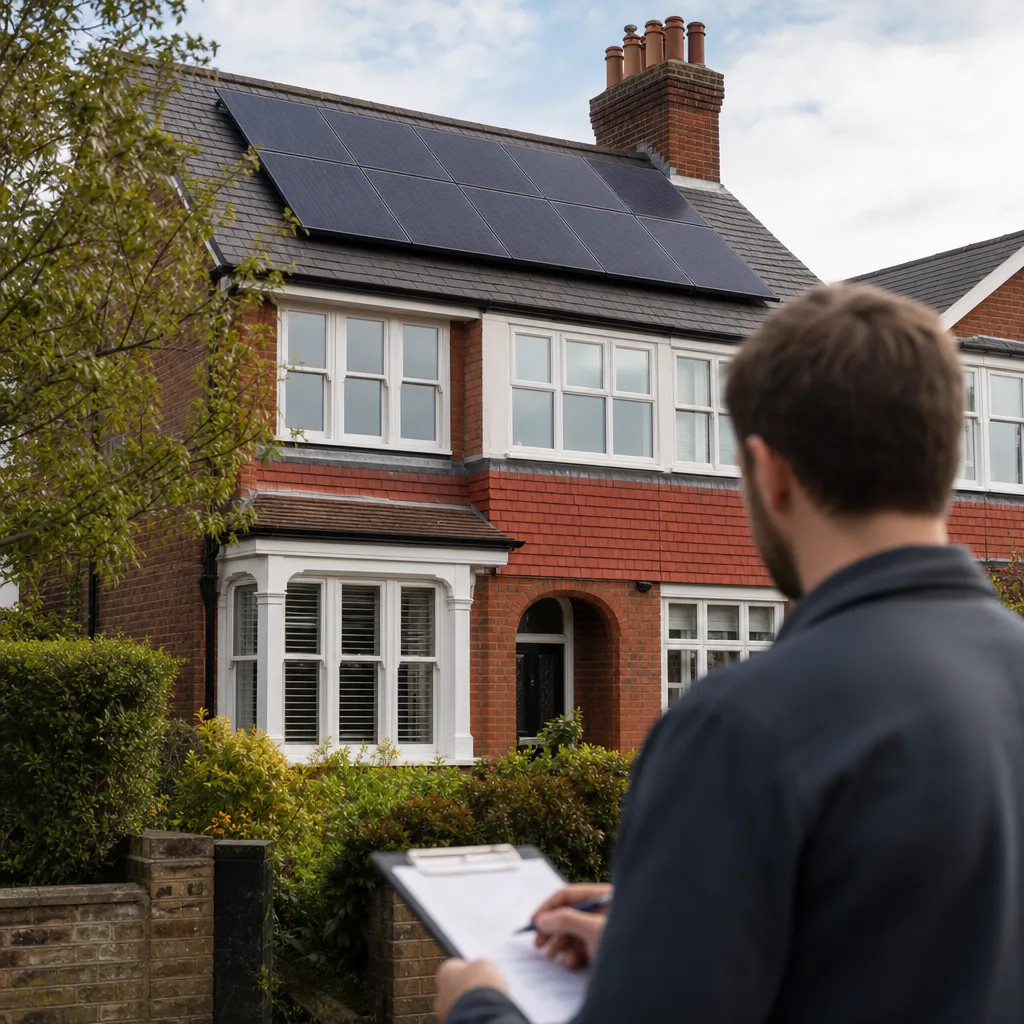
Do Solar Panels Increase Property Value?
With over one million UK homes now hosting solar photovoltaic (PV) systems, the technology has become a standard feature across many areas — and a legitimate financial consideration for anyone buying, selling, or planning a retrofit. Whether panels add, subtract, or simply complicate a sale depends on how they were acquired, their current performance, and the growing awareness among buyers and mortgage lenders of what solar ownership actually entails.
Key points
- Research cited by Solar Energy UK and property portal analysis suggests owner-occupied, MCS-certified solar PV systems may add between 0.9% and 4% to a property's sale price, though this varies significantly by region, property type, and buyer demand.
- The Smart Export Guarantee (SEG), regulated by Ofgem, entitles owners of MCS-certified systems to payment for electricity exported to the grid — a transferable income stream that informed buyers may factor into an offer.
- Solar PV typically improves a property's Energy Performance Certificate (EPC) rating by one to two bands, which can help buyers qualify for green mortgage products offered by lenders including Halifax, Barclays, and Nationwide.
- Roof-lease or 'rent-a-roof' schemes — where a third party owns the panels affixed to your roof — can complicate conveyancing and restrict the buyer pool, as some mortgage lenders decline to lend on properties with unapproved third-party roof leases.
- RICS guidance notes that any value uplift is not automatic: a surveyor will assess panel age, condition, remaining warranty, roof condition, and any planning considerations as part of a standard valuation.
How solar panels can add value
The clearest value-add mechanism is reduced energy bills. A 3.5 kWp system on a south-facing roof in southern England can generate roughly 3,000–3,500 kWh per year (Energy Saving Trust, 2025 estimate), meaningfully reducing grid electricity costs. A buyer who understands this ongoing saving may reflect it in their offer.
A second mechanism is EPC improvement. Solar PV reduces a property's estimated energy cost per square metre, typically moving it up one to two EPC bands — from D to C, or C to B. This matters increasingly as buyers become aware of the Minimum Energy Efficiency Standards (MEES) regime for rental properties and possible future requirements for owner-occupied homes.
A third factor is SEG income. If a SEG contract is in place, a new owner can take over the arrangement subject to re-registration with the energy supplier, receiving payments per kWh exported. Sellers should confirm the transfer process with their SEG licensee before marketing.
What does not add value — or can reduce it
Not every solar installation is a straightforward asset in a sale:
- Ageing or under-performing systems installed in the early Feed-in Tariff era (pre-2012) may have degraded capacity and could be approaching the end of their manufacturer performance warranty (typically 25 years). Buyers are unlikely to pay a premium for panels with limited remaining life.
- Poor roof condition beneath panels. If the roof has not been inspected since installation, a buyer's surveyor may flag restricted access as a concern. A RICS Level 2 or Level 3 survey may recommend specialist inspection of the roof covering beneath the array.
- Third-party lease arrangements. If a previous owner enrolled in a 'free solar panels' scheme, the panels may be owned by a commercial entity under a 25-year roof lease registered against the title. Some mortgage lenders will not proceed without specific lease conditions being met, reducing the available buyer pool.
- Non-MCS installations. Panels installed without Microgeneration Certification Scheme (MCS) certification do not qualify for SEG payments and may be viewed as a liability rather than an asset.
Owned vs. leased solar panels: what buyers and lenders see
Feature | Owned outright (MCS-certified) | Third-party roof lease |
|---|---|---|
Mortgage lender acceptability | Generally acceptable to most lenders | Varies — some lenders decline without specific lease terms |
SEG or FiT income | Belongs to the homeowner; re-registerable on sale | Usually belongs to the lease company |
EPC improvement | Yes, while system performs | Yes, while system performs |
Conveyancing complexity | Low | Higher — lease terms require legal review |
Value impact | Likely positive with good condition and documentation | Neutral to negative if buyer pool is restricted |
Warranty registration | Owner can register and transfer | May not be transferable to new owner |
What not to assume
Solar panels always add value. This is not guaranteed. If a buyer faces re-roofing within a few years, the cost of removing and reinstalling panels (typically £1,500–£3,000 indicatively, last reviewed 2026-05-11) reduces or eliminates any apparent premium. The net impact depends on roof age, system condition, and the local market at the time of sale.
A Feed-in Tariff contract transfers automatically. FiT payments are tied to the registered recipient. Assignment to a new owner requires a formal transfer process with the energy company and is not automatic. Sellers should resolve this before marketing, or it may delay or complicate exchange.
Larger arrays always add more value. Panels on north-facing pitches, heavily shaded rooflines, or steep angles may generate significantly less energy than a smaller, well-sited system. A buyer's surveyor may note sub-optimal orientation, reducing any perceived premium.
Planning permission is never needed. In most cases solar panels on a dwelling in England are permitted development under Schedule 2, Part 14 of the Town and Country Planning (General Permitted Development) (England) Order 2015 — but listed buildings and some conservation areas are excluded. Always check before installation.
Worked example: selling a 1930s semi in Bristol
A homeowner in Bristol owns a 1930s semi-detached house. In 2019 they installed a 4 kWp south-facing solar PV system, MCS-certified, with a Smart Export Guarantee contract at 5.5p/kWh. The EPC improved from D to C.
Selling in 2026:
- The improved EPC may qualify buyers for green mortgage rates from certain lenders, widening the potential buyer pool.
- The MCS certificate confirms standards compliance and supports the conveyancing process.
- The SEG contract requires re-registration with the energy supplier in the buyer's name — the seller's solicitor should address this in the transaction.
- The system is seven years old with approximately 18 years of performance warranty remaining — likely viewed positively in a survey report.
- The roof was inspected at installation with no outstanding maintenance flagged.
Under these conditions, the panels are a modest positive in the sale. The exact price impact depends on buyer awareness, local demand, and available mortgage products at the time.
Decision tree: solar panels and your property sale
- Present panels as an asset if: they are owned outright, MCS-certified, a SEG contract is in place, the EPC has improved, and the roof is in good condition — prepare all certificate documentation for the buyer's solicitor.
- Seek legal advice early if: the panels are on a third-party roof lease — confirm mortgage lender acceptability before marketing the property.
- Commission a performance check if: the system is more than 10 years old or output appears to have declined — transparency about condition protects you at exchange.
- Check planning records if: the property is listed or in a conservation area and you are unsure whether permitted development applied at installation.
- Consult a professional before installing: an energy-efficiency consultant or solar surveyor can confirm whether the system will improve your EPC and that the roof is structurally suitable.
When to get professional help
Seek professional advice if:
- A buyer's solicitor has raised concerns about mortgage lender acceptability of a roof lease arrangement.
- The FiT or SEG contract transfer is unclear and the energy supplier has not confirmed the process.
- A buyer's surveyor has flagged roof condition beneath the panels and recommended a specialist inspection.
- You are buying a property with existing panels and want confirmation of system performance and remaining warranty before exchange.
How Housey can help
Housey connects homeowners with qualified solar surveyors who can assess system performance and roof suitability before installation or sale, and with energy-efficiency consultants who can advise on EPC improvement strategies and the full range of retrofit options to support a stronger asking price.
Frequently asked questions
Do solar panels always improve an EPC rating?
Usually, yes. Solar PV reduces a property's estimated energy cost per square metre, improving the SAP score used to produce the EPC. The degree of improvement depends on system size, orientation, and the property's existing energy performance. An EPC assessor should be instructed after installation to update the certificate and reflect the new rating.
Can I sell a house if the solar panels are on a roof lease?
Yes, but it can be more complicated. Some mortgage lenders will not proceed unless the lease meets criteria in UK Finance guidance — typically including the lender's right to repossess the property and have panels removed if necessary. Seek legal advice early in the conveyancing process to identify any issues before marketing the property.
What is the Smart Export Guarantee?
The Smart Export Guarantee (SEG) is a UK government scheme regulated by Ofgem, requiring licensed energy suppliers with more than 150,000 customers to offer export tariffs to eligible small-scale renewable generators. Homeowners with MCS-certified solar PV systems can apply for SEG payments from any participating SEG licensee, and the contract can be re-registered on sale.
Do I need planning permission to install solar panels on my home?
In most cases, solar panels on a domestic property in England are permitted development under Schedule 2, Part 14 of the Town and Country Planning (GPDO) 2015 and do not require a planning application. Exceptions include listed buildings and some conservation areas. Rules differ in Scotland, Wales, and Northern Ireland — check with your local planning authority if uncertain.
Sources and further reading
- Smart Export Guarantee guidance — Ofgem
- Solar panels — Energy Saving Trust
- Town and Country Planning (GPDO) 2015, Schedule 2, Part 14 — legislation.gov.uk
- When is permission required? — GOV.UK Planning Practice Guidance
- UK Finance mortgage lender guidance — UK Finance
Useful next reads
 Energy & Retrofit
Renewable Energy Systems and Property Value: Solar Panels and Heat Pumps
Solar panels can add a modest 1–4% to UK property values in the right conditions, particularly when they improve the EPC rating.
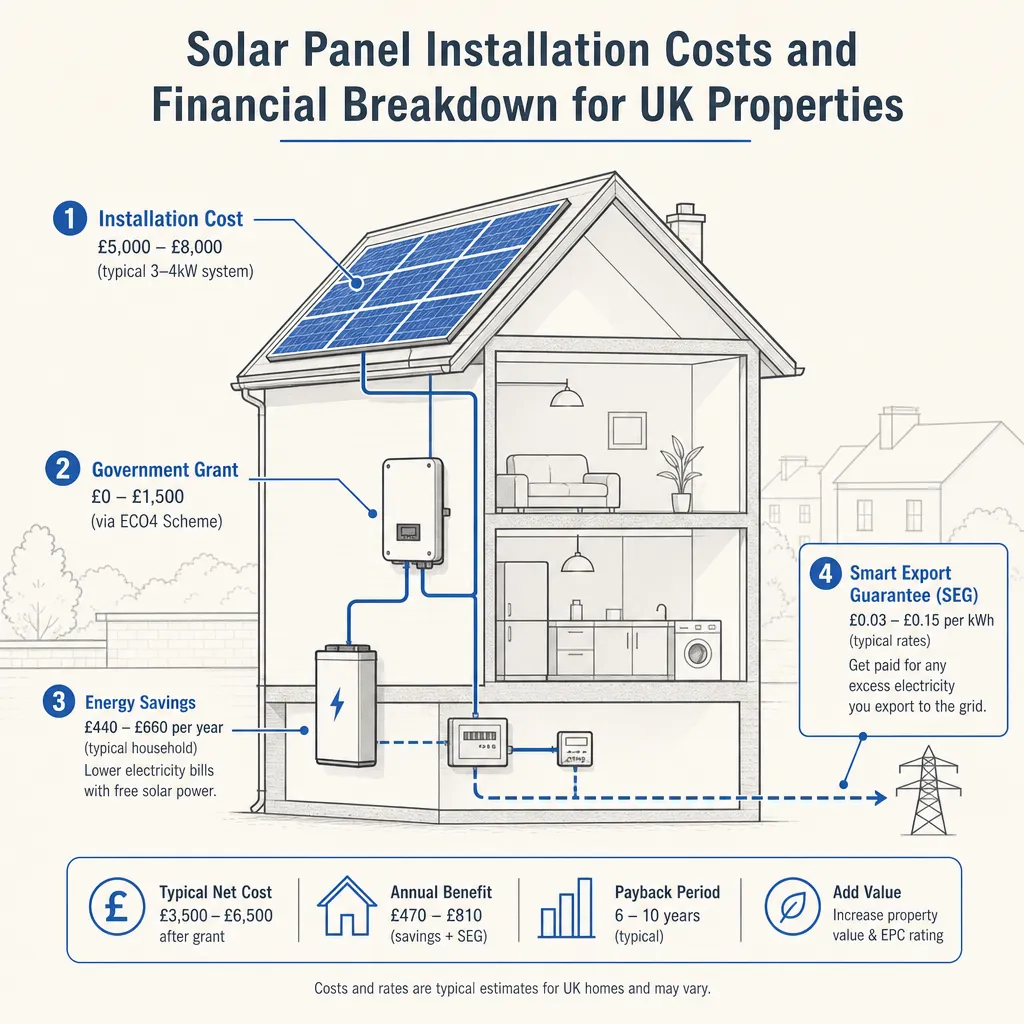 Energy & Retrofit
Solar Panel Installation Costs and Financial Breakdown for UK Properties
A typical domestic solar panel system (3.
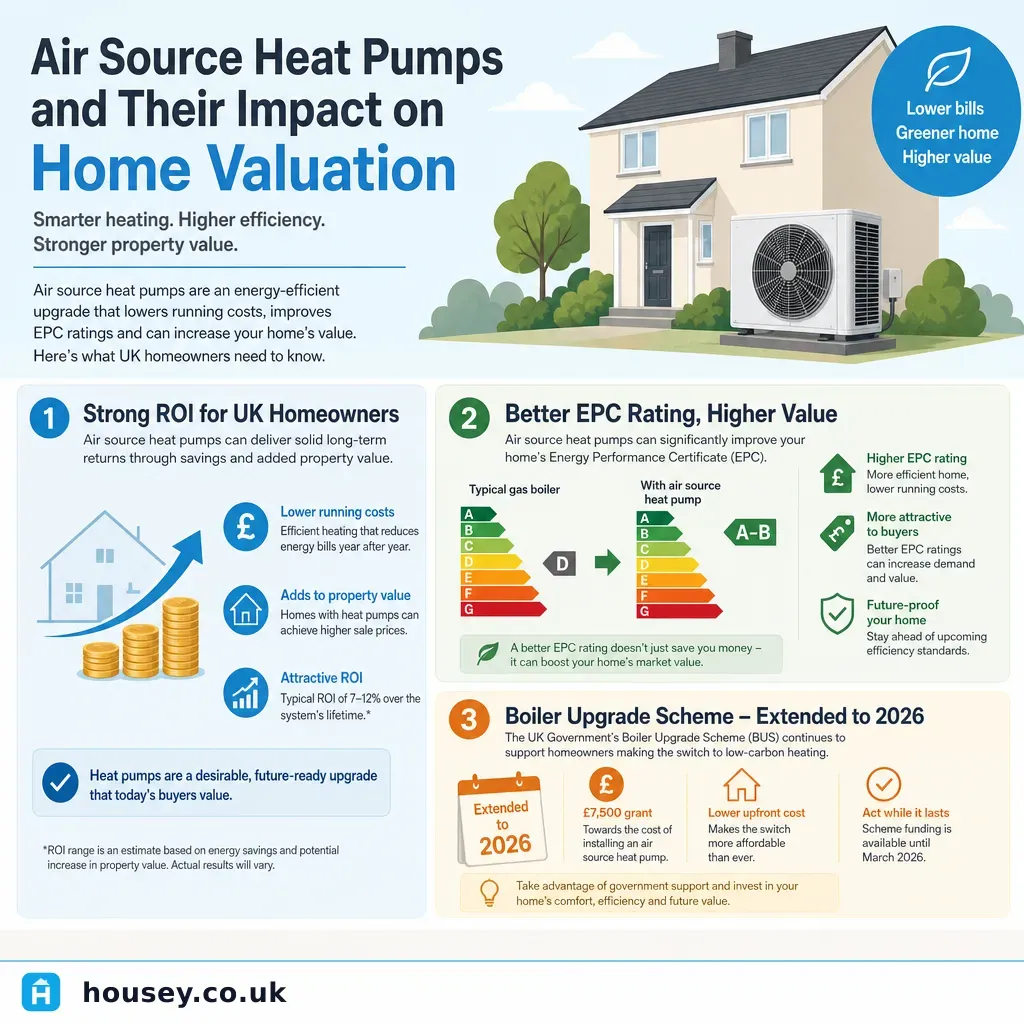 Energy & Retrofit
Air Source Heat Pumps and Their Impact on Home Valuation
An air source heat pump can improve your home's EPC rating, which may positively influence its market value — particularly as mortgage lenders and buyers increasingly factor in energy performance.
 Energy & Retrofit
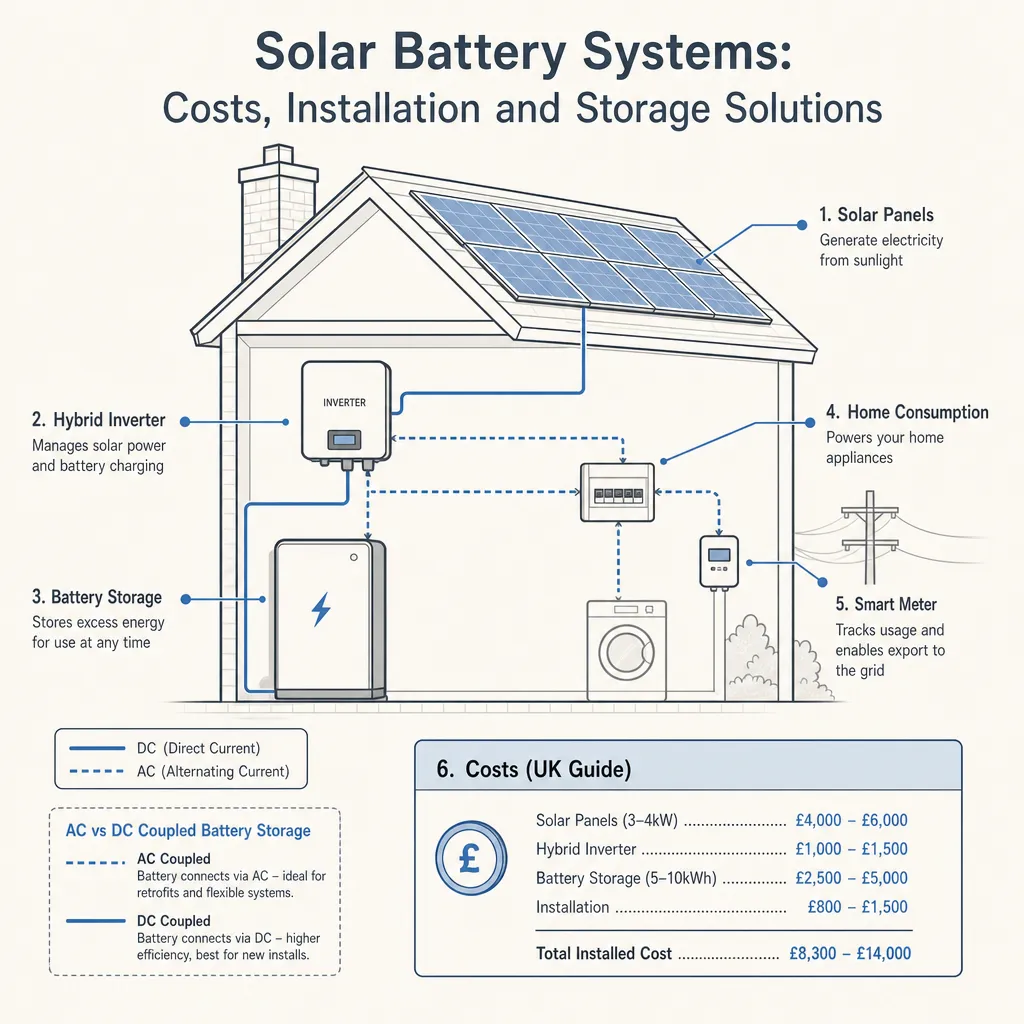
Solar Battery Systems: Costs, Installation and Storage Solutions
Solar battery systems in the UK typically cost £3,000–£8,000 installed for a 5–10 kWh system, though prices vary by brand, capacity, and coupling method.
 Energy & Retrofit
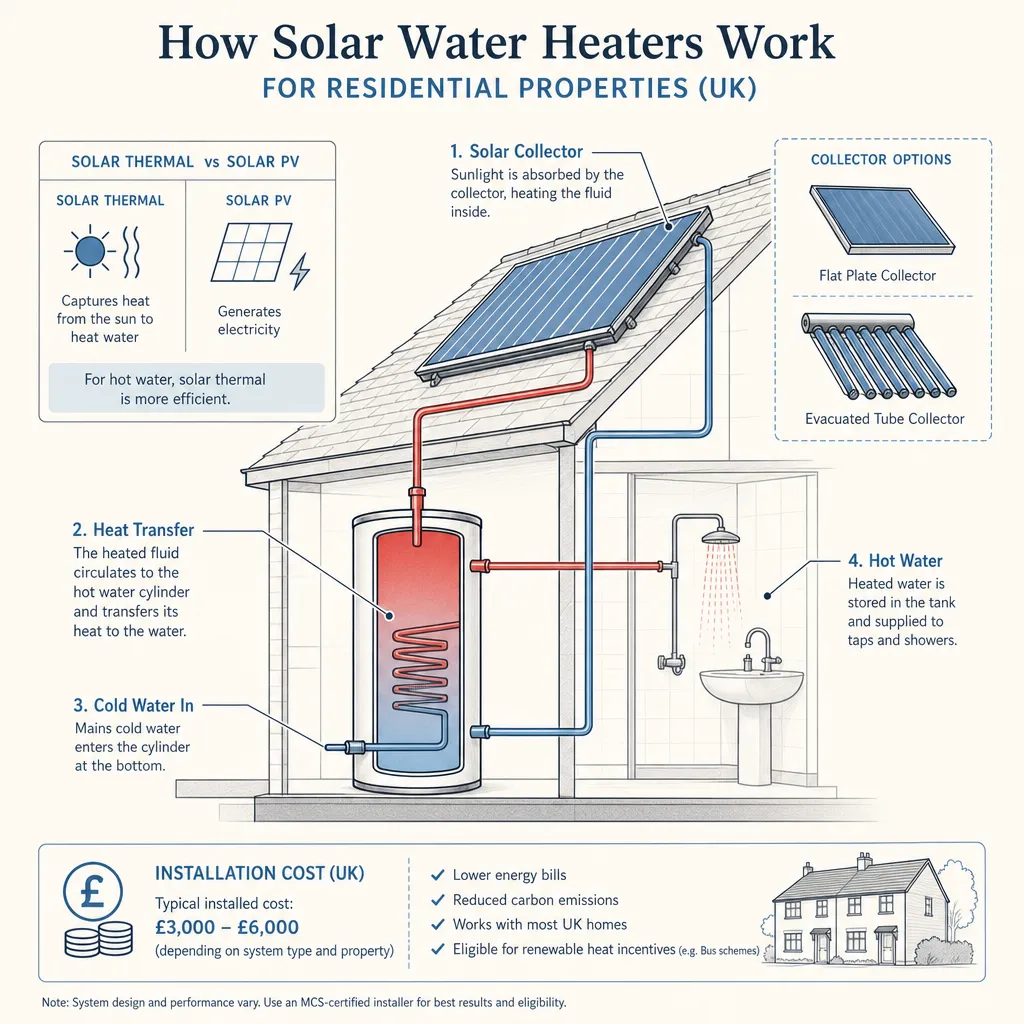
How Solar Water Heaters Work for Residential Properties
Solar water heaters use roof-mounted collectors to capture heat from sunlight and transfer it to a hot water cylinder via a fluid circuit.