Optimising Heating Systems for Energy Efficiency
By Housey · Last reviewed 11th of May 2026
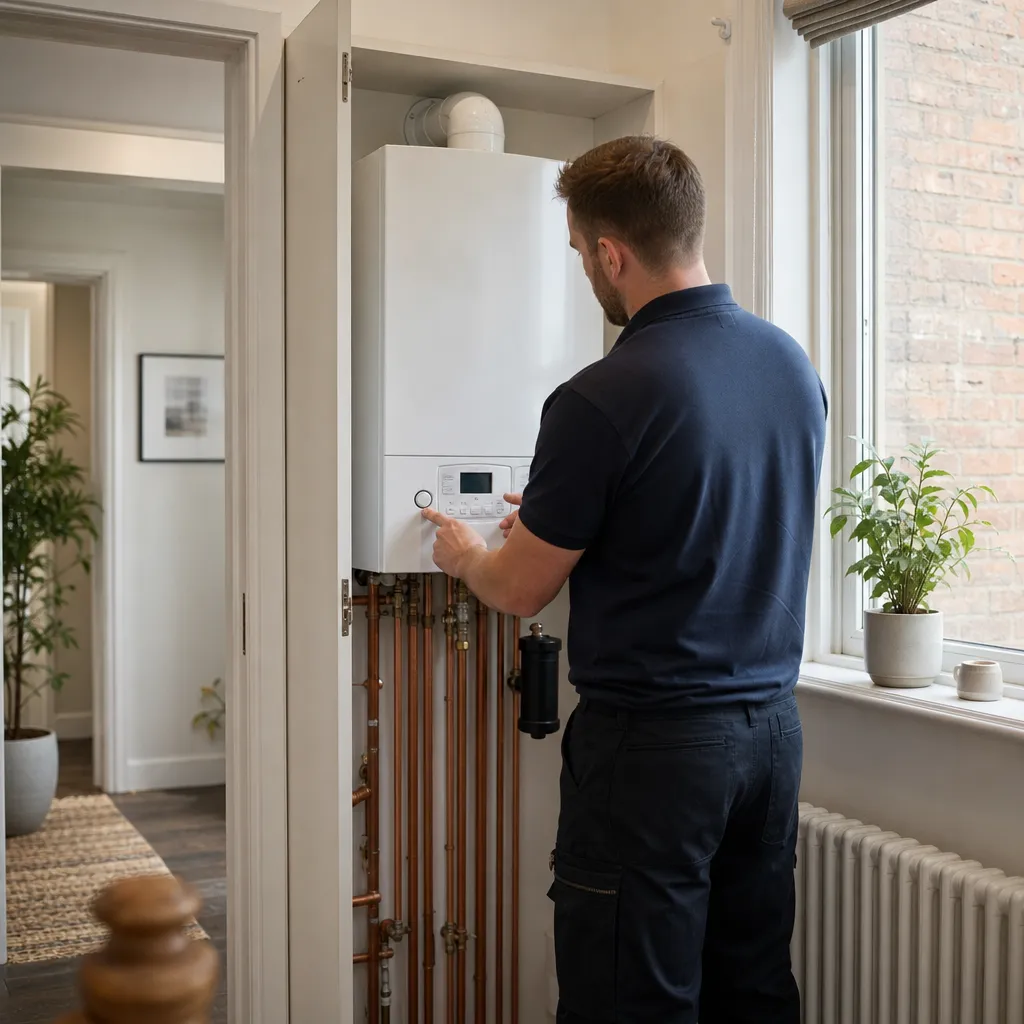
Optimising Heating Systems for Energy Efficiency
Heating accounts for around 60% of energy use in a typical UK home, yet most systems operate well below their potential efficiency. Controls are often poorly programmed, radiators may be undersized or unbalanced, and boilers are frequently kept well beyond their optimal working life. Understanding where inefficiency occurs — and which changes deliver the most meaningful improvement — helps homeowners and landlords prioritise spending, whether the goal is a lower fuel bill, an improved EPC rating, or a smoother transition to low-carbon heating.
Key points
- A gas boiler must be serviced annually by a Gas Safe registered engineer; landlords are legally required to hold a valid Gas Safety Record under the Gas Safety (Installation and Use) Regulations 1998.
- Heat loss calculations to BS EN 12831 are required before sizing a heat pump — MCS certification for the installation depends on this calculation being carried out correctly.
- Thermostatic Radiator Valves (TRVs) should not be fitted on the radiator in the same room as the main room thermostat, as this can cause the heating system to hunt and short-cycle.
- Upgrading from a pre-2005 G-rated boiler to an A-rated condensing boiler can reduce gas consumption for space heating by 15–30%, according to the Energy Saving Trust.
- The Boiler Upgrade Scheme (BUS) currently offers a £7,500 grant towards an air-source or ground-source heat pump for eligible properties in England and Wales.
What heating optimisation actually means
Heating optimisation is the process of matching heat output to a building's actual heat demand at the lowest possible energy input. It covers several distinct activities:
- Controls upgrade — replacing a basic on/off programmer with a smart thermostat (such as Nest, Hive, or a weather-compensating controller) and adding TRVs to provide room-by-room control.
- Hydraulic balancing — adjusting the flow rate through each radiator so heat is distributed evenly rather than concentrated near the boiler, leaving distant rooms cold.
- Radiator upgrades — replacing undersized radiators with larger or higher-output units, which is especially important when switching to a heat pump operating at lower flow temperatures (typically 35–55°C, compared with 60–80°C for a gas boiler).
- Pipework improvements — insulating hot water pipes to reduce standby losses; replacing corroded or undersized pipework to improve flow rates and system pressure.
- System replacement — replacing the boiler or switching to a heat pump, justified only once controls and emitters are optimised; replacing a poorly controlled system without addressing the fundamentals rarely delivers predicted savings.
Heating upgrade comparison
Upgrade | Typical efficiency gain | Best for | Professional required |
|---|---|---|---|
Smart thermostat and TRVs | 10–15% reduction in heating bills | All wet central heating systems | Heating engineer for TRVs; some thermostats self-install |
Hydraulic balancing | Improved comfort and reduced bills | Older systems with uneven heat distribution | Heating engineer |
Annual boiler service | Maintains rated efficiency, identifies faults early | All gas and oil boiler homes | Gas Safe or OFTEC registered engineer (mandatory for gas) |
New A-rated condensing boiler | 15–30% reduction in space heating gas use | Pre-2005 homes with inefficient boilers | Gas Safe registered engineer |
Air-source heat pump | COP of 2–4 (200–400% efficient) | Well-insulated homes, EPC Band C or above | MCS-certified installer; heat loss survey required |
Underfloor heating | Better comfort at lower flow temperatures | New builds or full renovations | Heating engineer or plumber |
Indicative UK savings figures, last reviewed 2026-05-11. Actual savings depend on property type, occupancy, current system condition, and energy tariffs. Always obtain professional assessments before making decisions.
Which heating upgrade should you choose?
- Choose a controls upgrade first if your current system has only a basic on/off programmer or no room-by-room control — this is usually the highest-value first step and the least disruptive.
- Choose hydraulic balancing if some radiators are consistently cold or some rooms are always too hot despite the boiler working correctly.
- Choose boiler replacement if your boiler is more than 15–20 years old, below Band A efficiency, or repeatedly requiring costly repairs.
- Consider a heat pump if your home is EPC Band C or above (or you are planning insulation works to reach that level) and the electricity-to-gas cost ratio makes it financially viable — commission an MCS heat loss survey first.
- Ask a retrofit coordinator if you are planning multiple measures — the order of works matters for moisture risk, ventilation, and correct system sizing under PAS 2035.
- Check GOV.UK for Boiler Upgrade Scheme eligibility before instructing a heat pump installer, as the grant application must begin through an MCS-certified installer before work starts.
Important limitations
This article provides general information about heating system optimisation in UK residential properties. Rules, performance figures, and grant eligibility change regularly and vary by property type, tenure, fuel source, and location. Nothing here substitutes for a site-specific assessment by a qualified heating engineer, retrofit coordinator, or energy assessor.
All gas and oil heating work must be carried out by Gas Safe registered or OFTEC-registered engineers respectively — always verify registration at gassaferegister.co.uk or oftec.co.uk before instructing anyone. Heat pump sizing must be based on a room-by-room heat loss calculation to BS EN 12831; proprietary shortcut methods may not satisfy MCS requirements. Grant schemes including the Boiler Upgrade Scheme, ECO4, and the Great British Insulation Scheme have eligibility conditions and application procedures that change; always verify current terms on GOV.UK before committing to expenditure.
What to ask a qualified professional
Before instructing a heating engineer or heat pump installer:
- Are you Gas Safe registered (for gas work), OFTEC registered (for oil), or MCS-certified (for heat pump installation)?
- Will you carry out a room-by-room heat loss calculation to BS EN 12831 before recommending a system size?
- Is hydraulic balancing included in the installation scope, and how will you confirm it has been achieved?
- What flow temperature will the system be designed for, and are my existing radiators adequately sized for that temperature?
- What warranty and aftercare support do you provide for both the equipment and the installation?
- Can you help me apply for available grants before the installation date?
- Will the installation be subject to building control inspection, or self-certified under a Competent Person scheme?
When this becomes urgent
Stop relying on a guide and seek professional help immediately if:
- You smell gas — leave the building, do not operate any switches, and call the National Gas Emergency Service on 0800 111 999.
- Your boiler is showing a persistent error code, has stopped firing, or you notice soot marks around the boiler casing or flue terminal — these may indicate combustion problems.
- Radiators remain cold across the whole system even after bleeding, which may indicate circulating pump failure or significant sludge buildup requiring a power flush.
- You are considering a heat pump installation — seek independent advice from retrofit assessors before committing to a specific installer or product.
How Housey can help
Housey can connect you with heat pump surveyors who carry out heat loss assessments to BS EN 12831, energy-efficiency consultants who can advise on the right order of measures for your property, and retrofit assessors working to the PAS 2035 framework.
Frequently asked questions
How often should a gas boiler be serviced?
A gas boiler should be serviced every 12 months by a Gas Safe registered engineer. For landlords, this is a legal requirement under the Gas Safety (Installation and Use) Regulations 1998, and a valid Gas Safety Record must be provided to tenants. For owner-occupiers, annual servicing maintains efficiency and typically preserves the manufacturer warranty conditions.
Can a heat pump work in an older UK home?
A heat pump can work in older UK homes but performs best where insulation is good (EPC Band C or above), radiators are sized for lower flow temperatures, and the building fabric is reasonably airtight. A thorough heat loss assessment and often radiator upgrades are needed before installation. The Energy Saving Trust recommends addressing insulation shortfalls before fitting a heat pump where possible.
What is hydraulic balancing and do I need it?
Hydraulic balancing adjusts flow rates through each radiator so all reach their design temperature at the same time. It is particularly important after a boiler replacement or when switching to a heat pump, as these systems operate at different flow temperatures. An unbalanced system wastes energy by overheating some rooms while leaving others cold. A heating engineer can carry out balancing in a few hours.
What is the Boiler Upgrade Scheme?
The Boiler Upgrade Scheme (BUS) is a UK government grant offering £7,500 towards an air-source or ground-source heat pump in England and Wales. MCS-certified installers apply on the homeowner's behalf. Eligibility requires a valid EPC with no outstanding recommendations for loft or cavity wall insulation. Check current terms on GOV.UK as scheme budgets and conditions change.
Sources and further reading
- Boiler Upgrade Scheme guidance — GOV.UK
- Gas Safety (Installation and Use) Regulations 1998 — legislation.gov.uk
- MCS standards for heat pump installation — MCS
- Air source heat pumps guidance — Energy Saving Trust
- PAS 2035: Retrofitting dwellings for improved energy efficiency — BSI Group
Useful next reads
 Energy & Retrofit
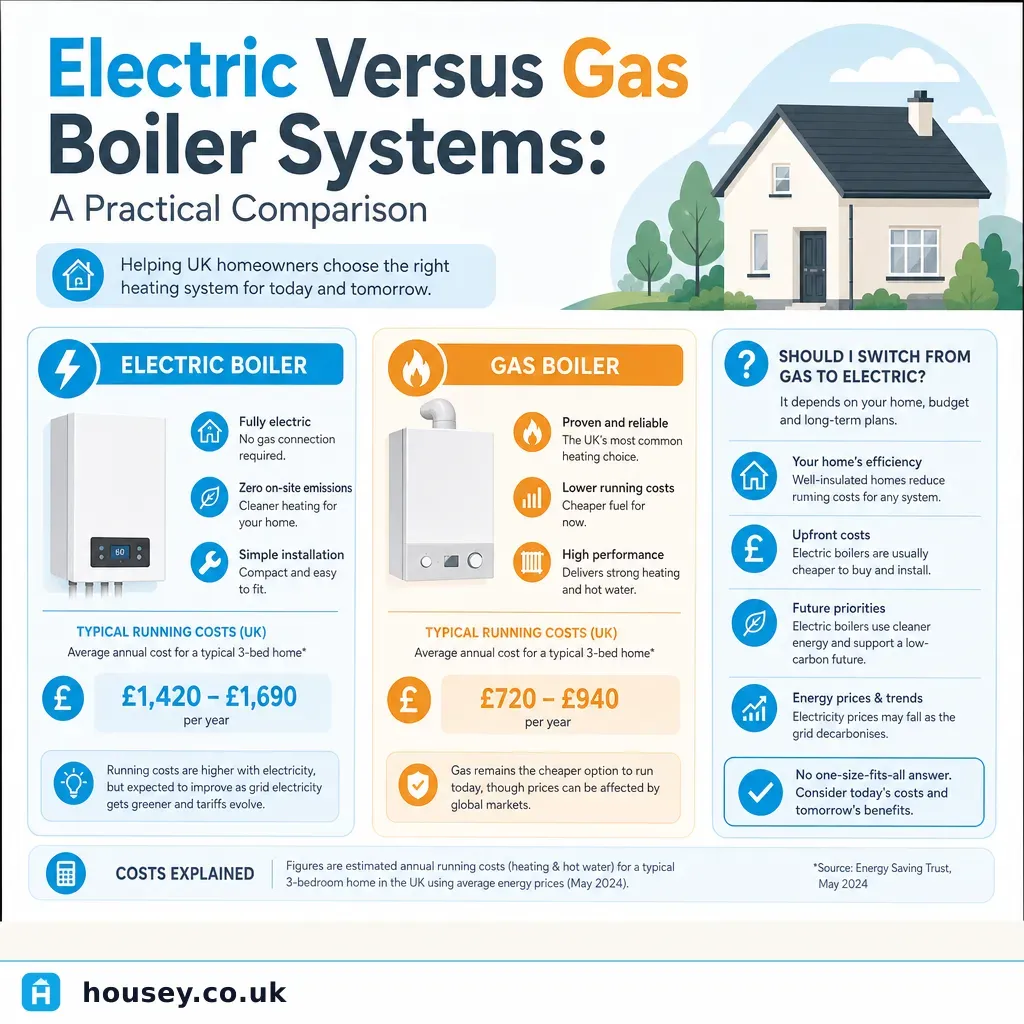
Electric Versus Gas Boiler Systems: A Practical Comparison
Electric boilers convert nearly all electricity into heat (98–99% efficiency) but electricity costs roughly 3–4 times more per kWh than gas, making running costs higher in most UK homes.
 Energy & Retrofit
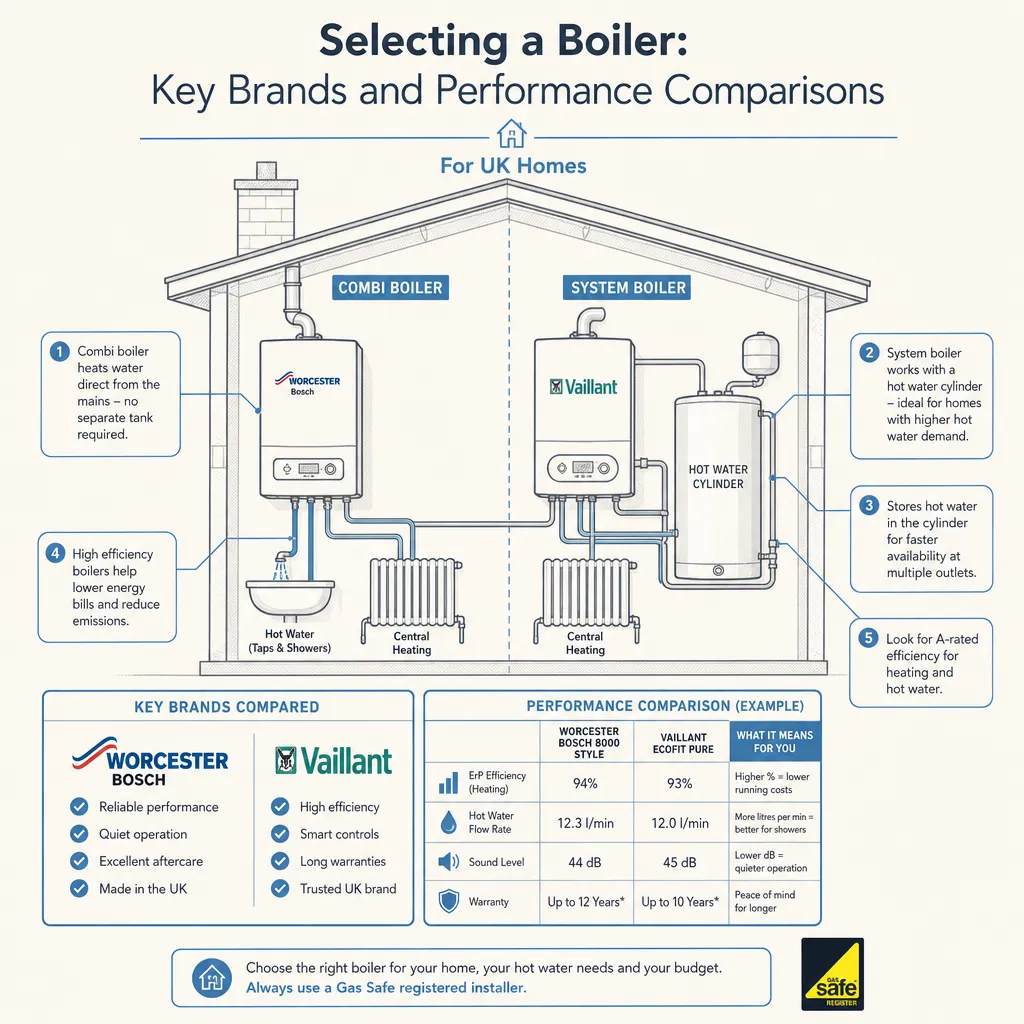
Selecting a Boiler: Key Brands and Performance Comparisons
Most UK homes are heated by a combi, system, or heat-only boiler.
 Energy & Retrofit
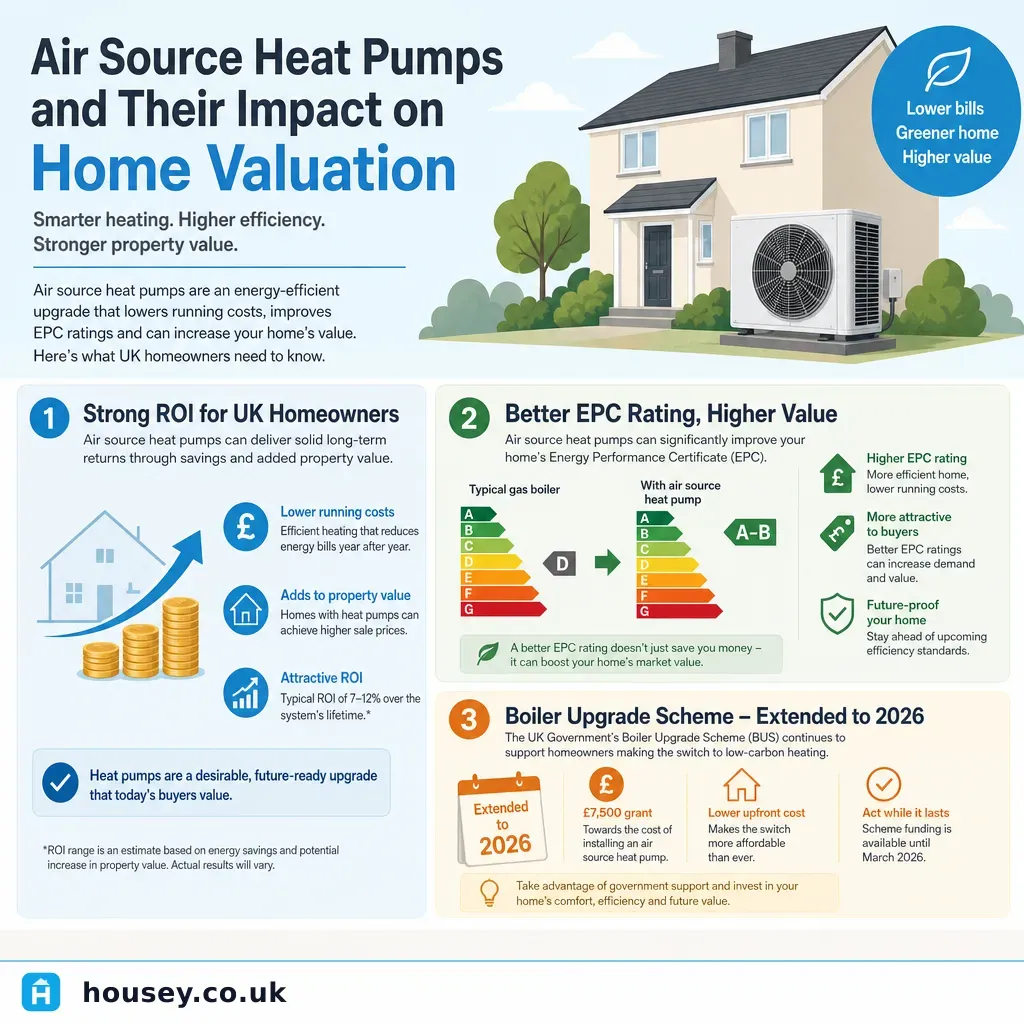
Air Source Heat Pumps and Their Impact on Home Valuation
An air source heat pump can improve your home's EPC rating, which may positively influence its market value — particularly as mortgage lenders and buyers increasingly factor in energy performance.
 Energy & Retrofit
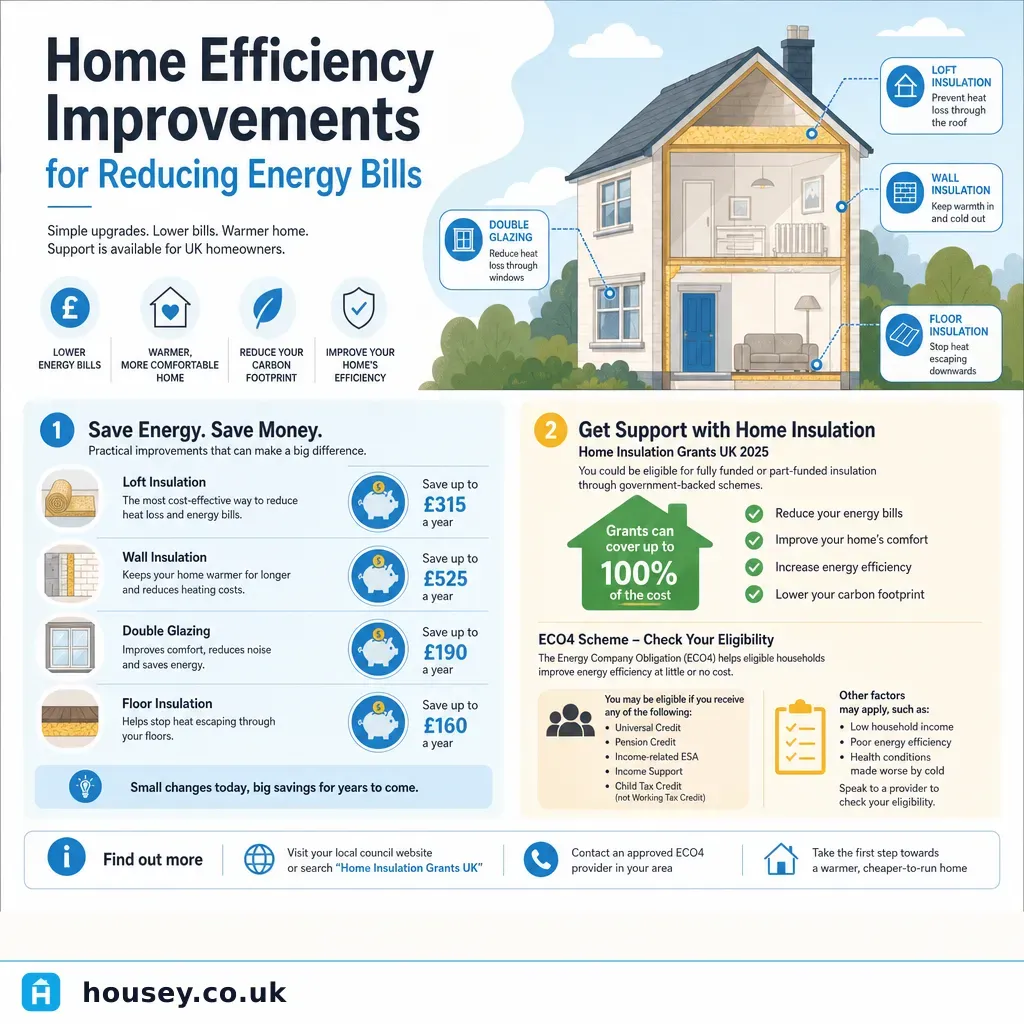
Home Efficiency Improvements for Reducing Energy Bills
The most cost-effective UK home efficiency improvements are usually loft insulation, cavity wall insulation, draught-proofing, and upgrading heating controls.
 Energy & Retrofit
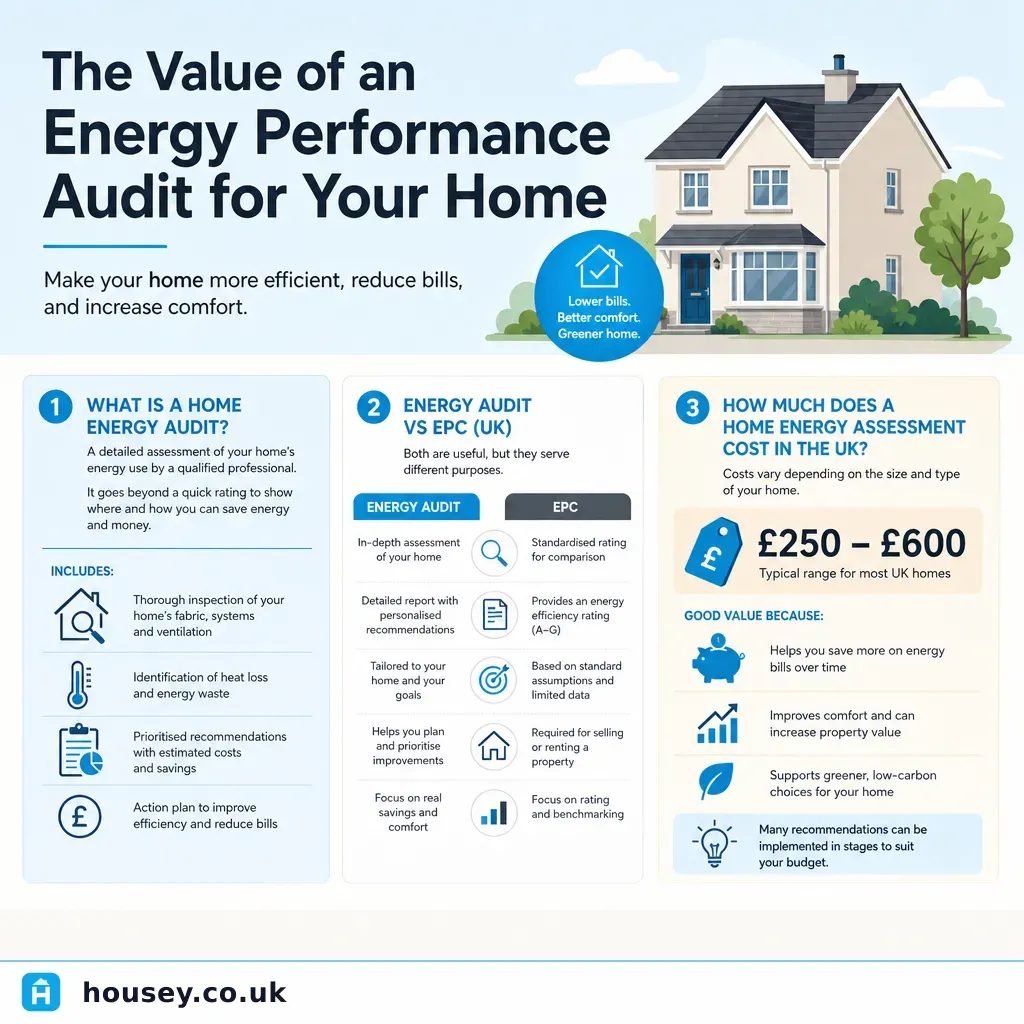
The Value of an Energy Performance Audit for Your Home
A home energy performance audit is a detailed, site-specific assessment of a property's fabric, heating, ventilation, and controls.