Renewable Energy Technologies for Homes
By Housey · Last reviewed 11th of May 2026
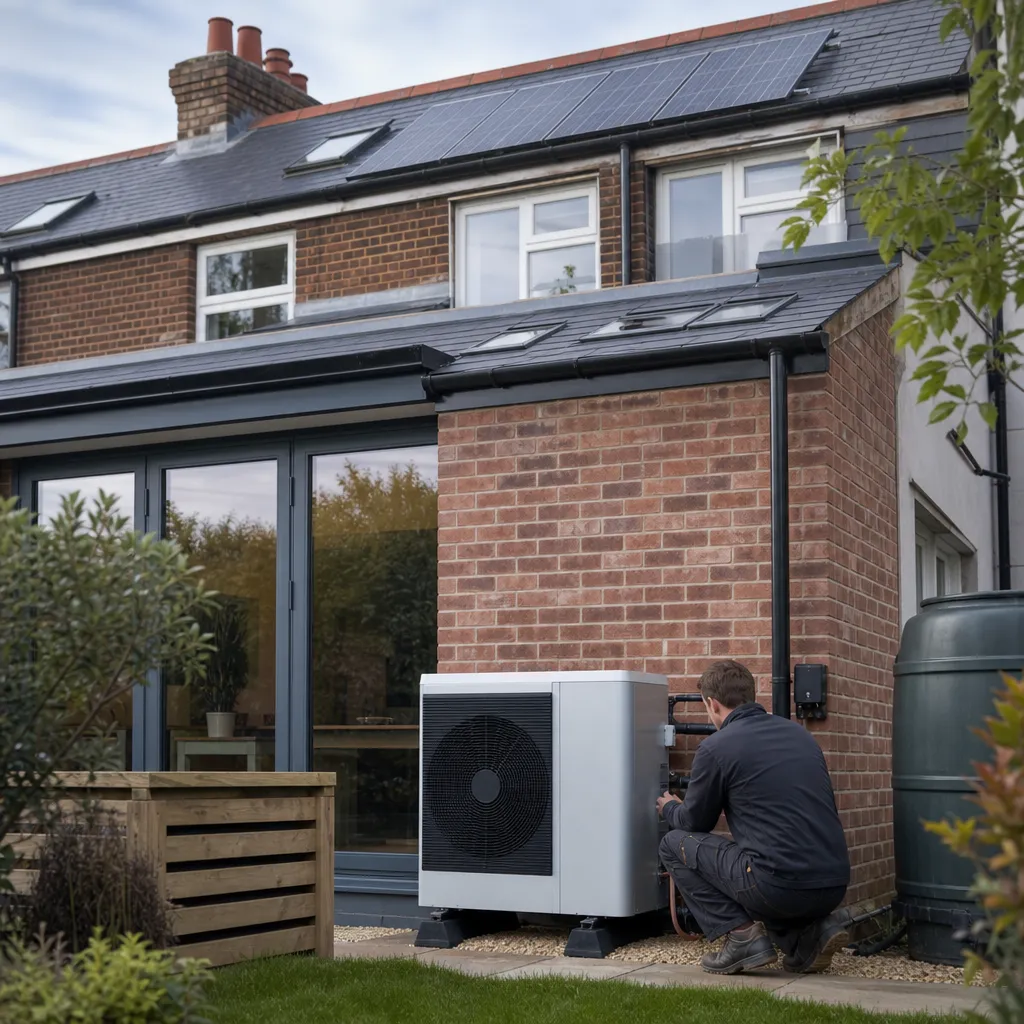
Renewable Energy Technologies for Homes
The shift towards lower-carbon heating and electricity in UK homes has moved from niche to mainstream over the past five years, driven by rising energy prices, the Boiler Upgrade Scheme, and legally binding net-zero targets under the Climate Change Act 2008. For most homeowners the question is no longer whether to consider renewable technology, but which option suits their specific property and how to navigate certified installation and available grants. Making an informed choice at the outset avoids the common and costly mistake of installing the wrong technology for a building's insulation level or roof orientation.
Key points
- Solar PV panels installed on a dwellinghouse roof in England generally fall within permitted development rights and do not require planning permission, subject to conditions — including that the property is not a listed building and the panels do not face a highway.
- The Boiler Upgrade Scheme (BUS), administered by Ofgem, currently offers grants of £7,500 towards an air source or ground source heat pump installation for eligible properties in England and Wales.
- MCS (Microgeneration Certification Scheme) certification is required for installers to issue the paperwork necessary for BUS grant eligibility and Smart Export Guarantee (SEG) tariff registration for surplus solar electricity.
- Solar PV systems in the UK generate an average of 850–950 kWh per kWp of installed capacity per year; south-facing roofs at 30–35° pitch perform best, with east or west orientations typically producing 15–20% less.
- Heat pump sizing must be based on a full heat loss calculation to BS EN 12831 — an undersized system will not meet heating demand, while an oversized system will short-cycle, reducing efficiency and lifespan.
Understanding the main renewable technologies
Solar photovoltaic (PV) panels
Solar PV converts daylight into electricity via panels typically mounted on the roof and connected to the home's consumer unit. Surplus electricity can be exported to the grid under the Smart Export Guarantee (SEG), where energy suppliers pay a per-unit tariff for electricity fed back.
Suitability factors: roof orientation (south is optimal; east or west workable with reduced output), pitch angle, available roof area, shading from trees or neighbouring buildings, and roof structural condition.
Typical system size for UK homes: 3–5 kWp for a semi-detached or detached house. Indicative installed cost: £5,000–£9,000 for a 4 kWp system. (Indicative UK costs, last reviewed 2026-05-11; see Energy Saving Trust for updated estimates.)
Air source heat pumps (ASHP)
An air source heat pump extracts heat from outdoor air and concentrates it to heat the home and hot water via a refrigeration cycle. Heat pumps operate most efficiently when the building is well insulated and the heating system runs at low flow temperatures — typically 35–45°C, compared with the 55–70°C of a conventional gas boiler.
Suitability factors: existing insulation level (EPC rating D or above is usually recommended before installation), available outdoor space for the external unit, and heating distribution system (underfloor heating or oversized radiators work best at low flow temperatures).
BUS grant: £7,500 available for eligible properties in England and Wales. Scottish homeowners should check Home Energy Scotland for equivalent support.
Ground source heat pumps (GSHP)
Ground source heat pumps extract heat from loops buried horizontally in a garden or vertically via boreholes. They typically achieve higher efficiency than air source systems in very cold weather but require significantly more land or drilling cost.
Suitability factors: available garden area (horizontal loops require approximately twice the heated floor area of the property) or willingness to invest in vertical borehole drilling. Indicative cost: £15,000–£30,000+ depending on ground conditions and system size. The £7,500 BUS grant also applies.
Battery storage systems
Battery storage stores surplus solar PV electricity — or cheap off-peak grid electricity under time-of-use tariffs — for use at peak times. Battery systems are commonly paired with solar PV but can be installed independently.
Suitability factors: an existing or planned solar PV system, a household that uses significant electricity in evenings or overnight, and available installation space (typically a wall-mounted unit in a garage or utility room). Indicative cost: £2,500–£6,000. (Indicative UK costs, last reviewed 2026-05-11.)
Small-scale wind and solar thermal
Domestic wind turbines are MCS-eligible but require planning permission in most locations and are only viable in rural, exposed settings. Solar thermal panels heat water rather than generating electricity and may suit properties with high hot-water demand, though there is currently no national grant for solar thermal in England.
Comparison of main domestic renewable technologies
Technology | Best suited to | Key requirement | Typical incentive | Main limitation |
|---|---|---|---|---|
Solar PV | South/SW/SE-facing roof, minimal shading | MCS installer; building regs notification | SEG export tariff | No output overnight without battery |
Air source heat pump | EPC D+ home, outdoor space available | MCS/BUS-eligible installer; system redesign likely | £7,500 BUS grant | Less efficient in poorly insulated homes |
Ground source heat pump | Rural plots or borehole option | MCS installer; ground survey; groundworks | £7,500 BUS grant | High upfront cost |
Battery storage | Home with solar PV or flexible tariff | Electrical installer; wall space | No current direct national grant | Payback period varies by usage |
Solar thermal | Homes with high hot-water demand | MCS installer | No current grant (England) | Hot water only; no electricity generated |
Which technology should you choose?
- Choose solar PV if your roof is south, south-west, or south-east facing with minimal shading, and you want to reduce electricity bills or charge an electric vehicle.
- Choose an air source heat pump if your home is reasonably well insulated (EPC D or above), you have outdoor space for the unit, and you qualify for the £7,500 BUS grant.
- Choose a ground source heat pump if you have significant land available or can accommodate borehole drilling, and the higher upfront cost is feasible for your situation.
- Add battery storage if you have or are installing solar PV and your household consumes significant electricity in evenings or overnight.
- Consult a Retrofit Coordinator (PAS 2035) if you are planning multiple improvements to an older or solid-wall property, where the interaction between heating, ventilation, and insulation carries moisture risk.
- Check with your local planning authority if the property is listed, in a conservation area, or a flat — permitted development rights for renewables may be restricted or absent.
Important limitations
This article provides general information about domestic renewable energy technologies available in the UK. Suitability assessments, heat loss calculations, and system sizing must be carried out by a qualified professional for your specific property. Heat pump sizing in particular carries heightened risk if done incorrectly — an undersized or oversized system significantly underperforms against predictions and can increase running costs considerably. Grant schemes, planning rules, and building regulations are subject to change; always verify current requirements on GOV.UK and the Ofgem website before proceeding.
What to ask a qualified professional
Before accepting any quote for a renewable energy installation:
- Are you MCS-certified for this technology, and can you confirm my eligibility for the Boiler Upgrade Scheme or Smart Export Guarantee?
- Will you carry out a full heat loss calculation to BS EN 12831 before specifying the heat pump size?
- What fabric improvements would increase the efficiency of the system in my property?
- What are the projected running costs and payback period for my specific property and usage pattern?
- What warranties cover the equipment and the installation workmanship?
- Will you handle building regulations notification, and under which competent person scheme are you registered?
- Is VAT at the current reduced rate included in your quote?
When to get professional help
All grid-connected renewable energy installations — solar PV, heat pumps, and battery storage — require qualified professionals. Self-installation of these systems is not a viable or safe option: they require Part P (electrical) or equivalent competency and MCS registration for grant eligibility.
Seek professional advice before proceeding if:
- Your home's insulation level is uncertain — installing a heat pump before improving fabric efficiency is a common and expensive mistake.
- The property is listed or in a conservation area — permitted development rights may not apply.
- The roof is over 20 years old or shows signs of defect — a structural check before solar PV installation is advisable.
How Housey can help
Housey connects homeowners with MCS-certified professionals who can carry out a solar survey or heat pump survey before any commitment is made, ensuring the technology is genuinely suited to your property. Battery storage installers on the platform are accredited and can advise on pairing storage with existing or new solar systems.
Frequently asked questions
Do I need planning permission for solar panels or a heat pump?
In most cases in England, solar PV panels on a dwellinghouse and air source heat pumps fall within permitted development rights, subject to conditions including noise limits for heat pumps and restrictions on listed buildings or World Heritage Sites. Ground source heat pumps generally also fall within permitted development. Conservation area properties and flats may face additional restrictions — always check with your local planning authority.
What is the Boiler Upgrade Scheme and who qualifies?
The Boiler Upgrade Scheme (BUS) is an Ofgem-administered grant programme offering £7,500 towards a heat pump installation for eligible properties in England and Wales. Eligibility requires a valid EPC with no outstanding loft or cavity wall insulation recommendations, and the installer must be MCS-certified and registered with the scheme. Check current eligibility and the application process on GOV.UK.
How long do solar panels last?
Most solar PV panels carry a 25-year performance warranty, typically guaranteeing at least 80% of rated output after that period. Actual panel lifespan is often 30 years or more, though inverters — which convert DC electricity to AC for household use — typically need replacing after 10–15 years at a cost of around £500–£1,500.
Can I get a grant for battery storage in the UK?
There is currently no national grant specifically for standalone domestic battery storage in England. Some local authority schemes and elements of ECO4 may cover battery storage in specific circumstances. Scotland and Wales have separate funding programmes — check Home Energy Scotland and the Nest scheme in Wales. Battery installations paired with solar PV may qualify for reduced VAT rates.
Sources and further reading
- Boiler Upgrade Scheme — GOV.UK
- Smart Export Guarantee (SEG) — Ofgem
- MCS Certification Scheme — MCS
- Solar panels — advice for homeowners — Energy Saving Trust
- PAS 2035 retrofit standard — TrustMark
Useful next reads
 Energy & Retrofit
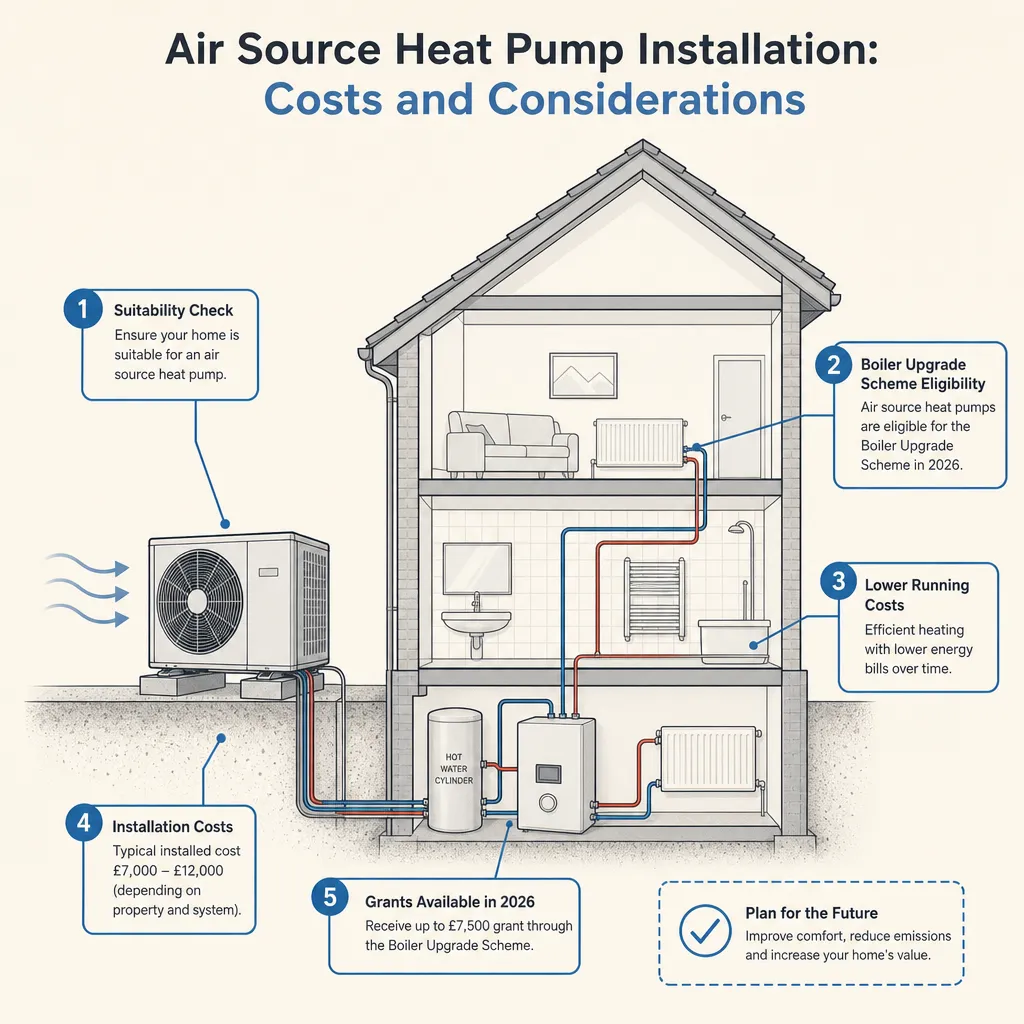
Air Source Heat Pump Installation: Costs and Considerations
Air source heat pump installation in the UK typically costs £8,000–£15,000 before the £7,500 Boiler Upgrade Scheme grant, available through MCS-certified installers in England and Wales.
 Energy & Retrofit
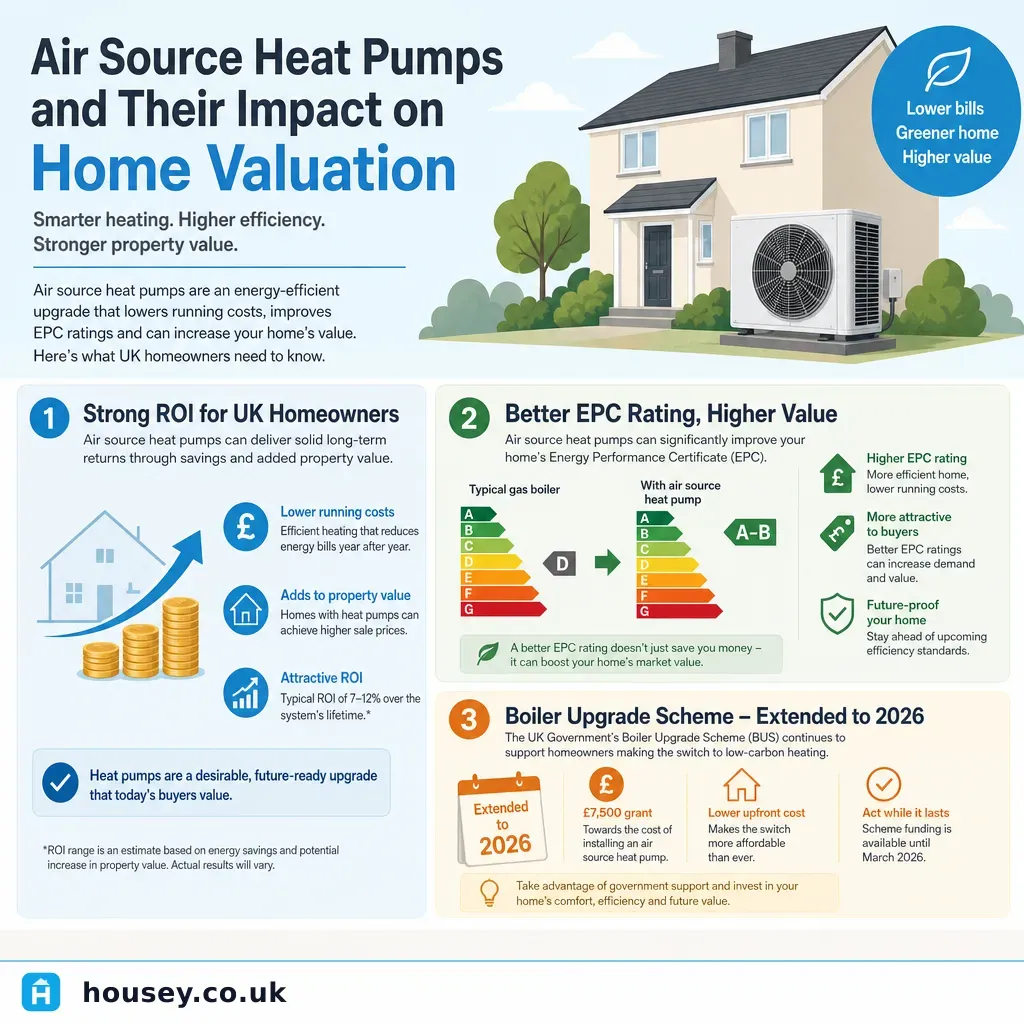
Air Source Heat Pumps and Their Impact on Home Valuation
An air source heat pump can improve your home's EPC rating, which may positively influence its market value — particularly as mortgage lenders and buyers increasingly factor in energy performance.
 Energy & Retrofit
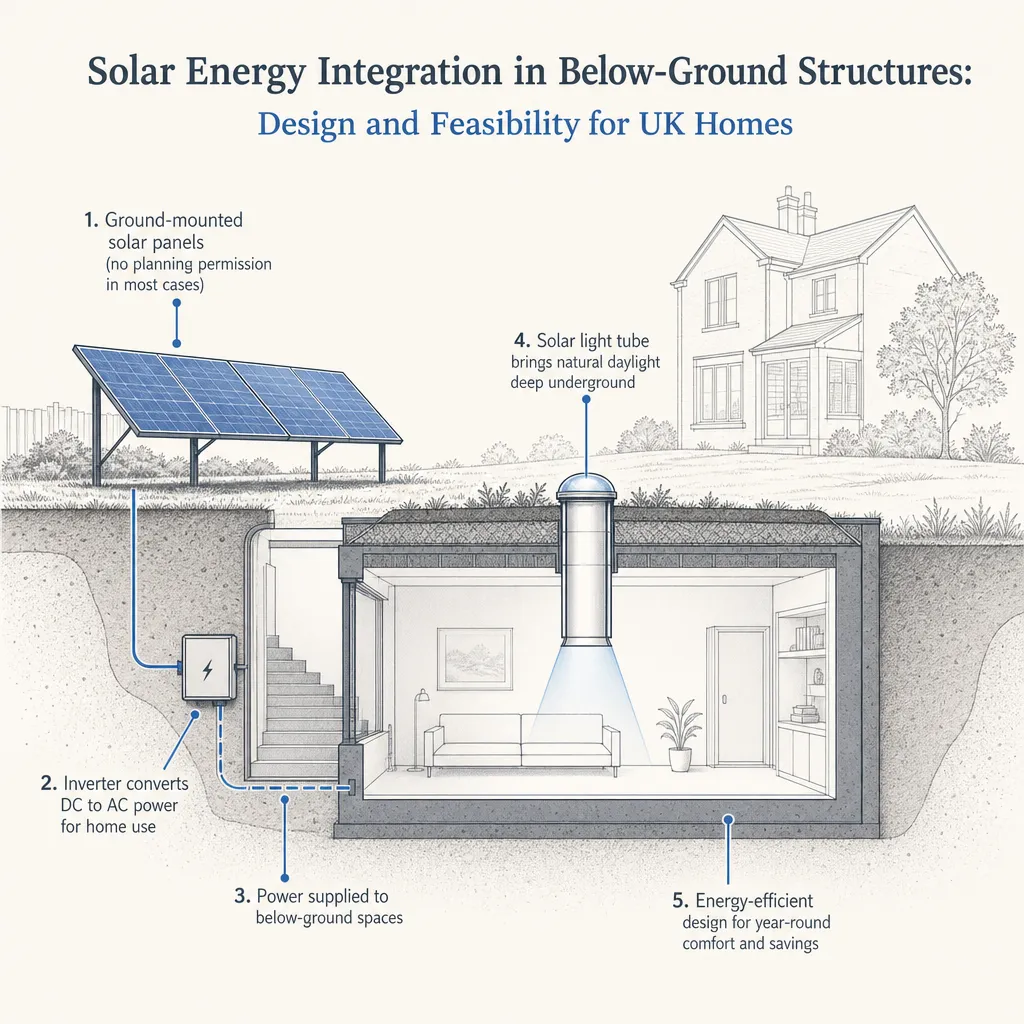
Solar Energy Integration in Below-Ground Structures: Design and Feasibility
Below-ground structures cannot host solar panels on their own roofs but can use surface-mounted panels connected via cable runs, solar light tubes for daylighting, and battery storage.
 Energy & Retrofit
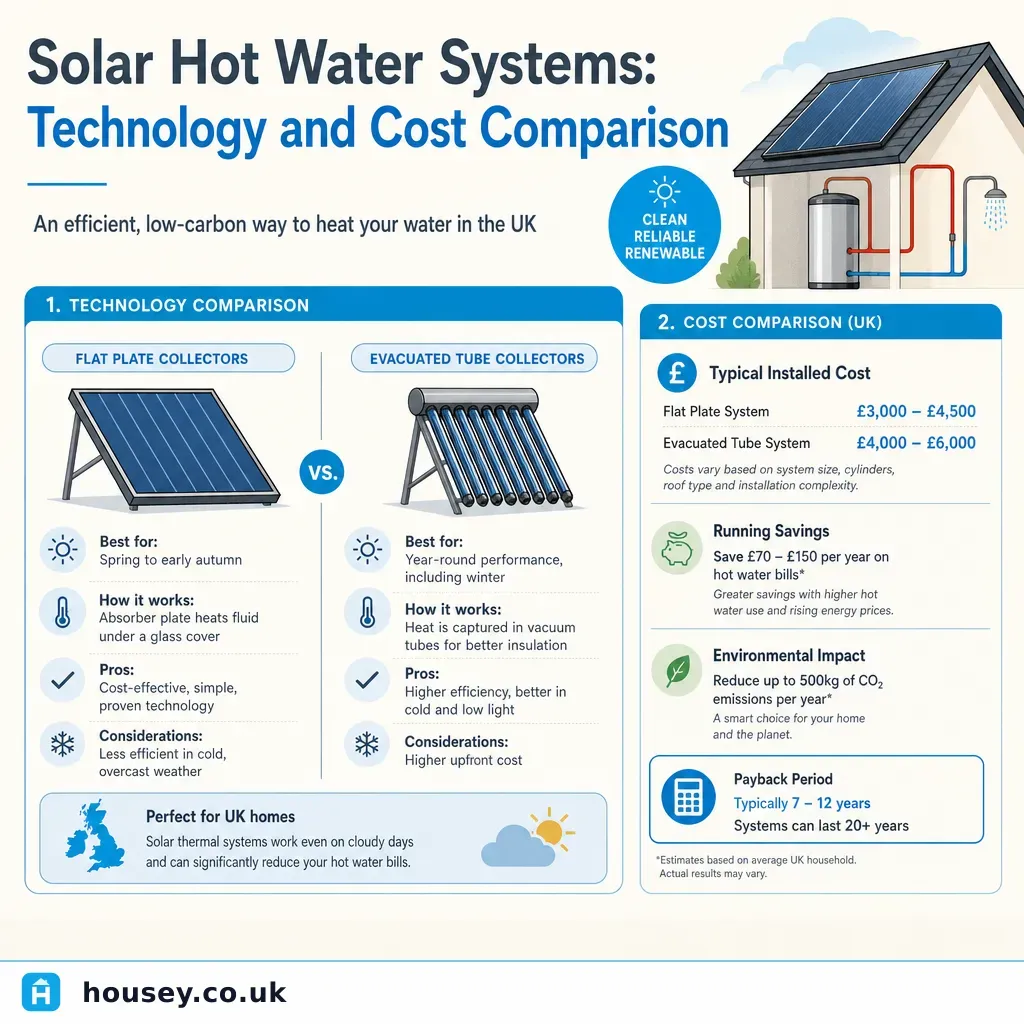
Solar Hot Water Systems: Technology and Cost Comparison
Solar thermal systems use roof-mounted collectors to heat domestic hot water via a glycol circuit and twin-coil cylinder.
 Energy & Retrofit
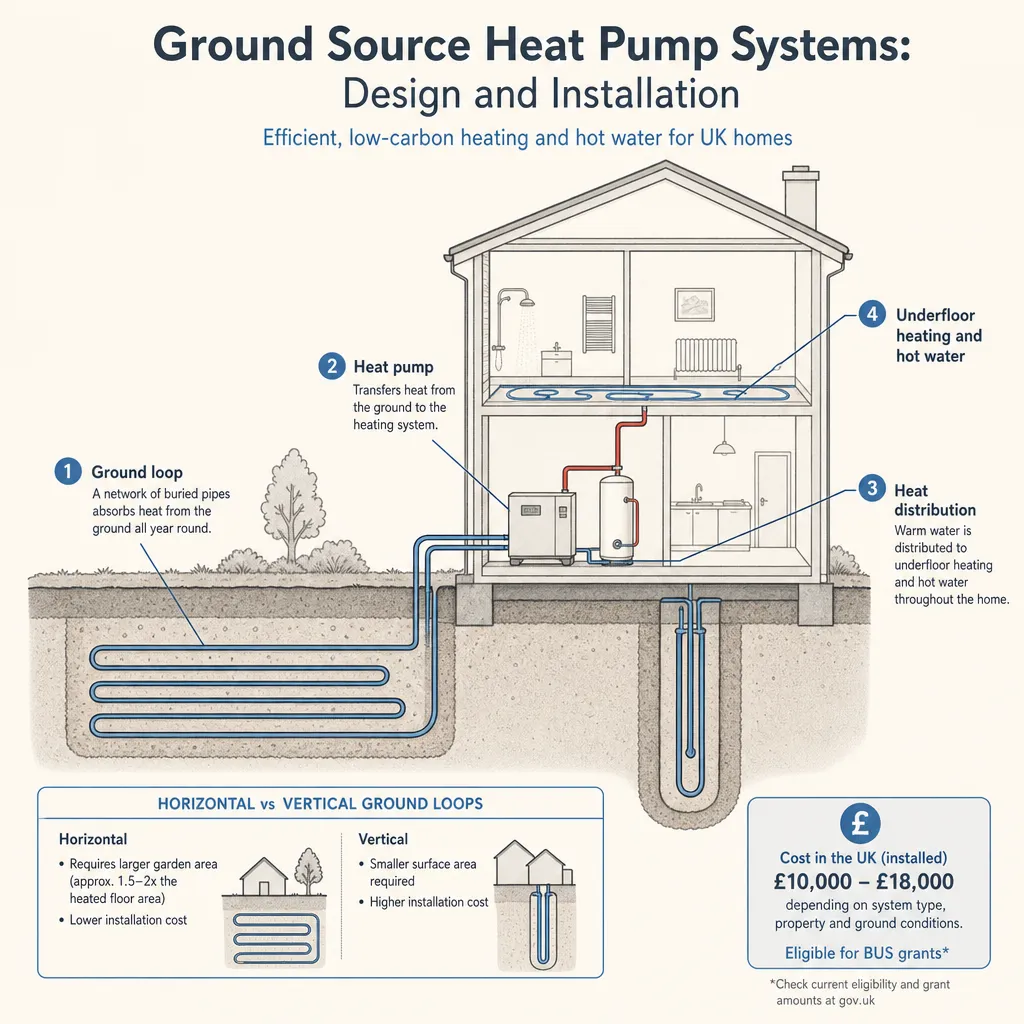
Ground Source Heat Pump Systems: Design and Installation
Ground source heat pumps extract heat from the earth through buried loops or boreholes, then upgrade it for space heating and hot water.