Air Source Heat Pumps: Technology, Installation, and Home Heating Solutions
By Housey · Last reviewed 24th of May 2026
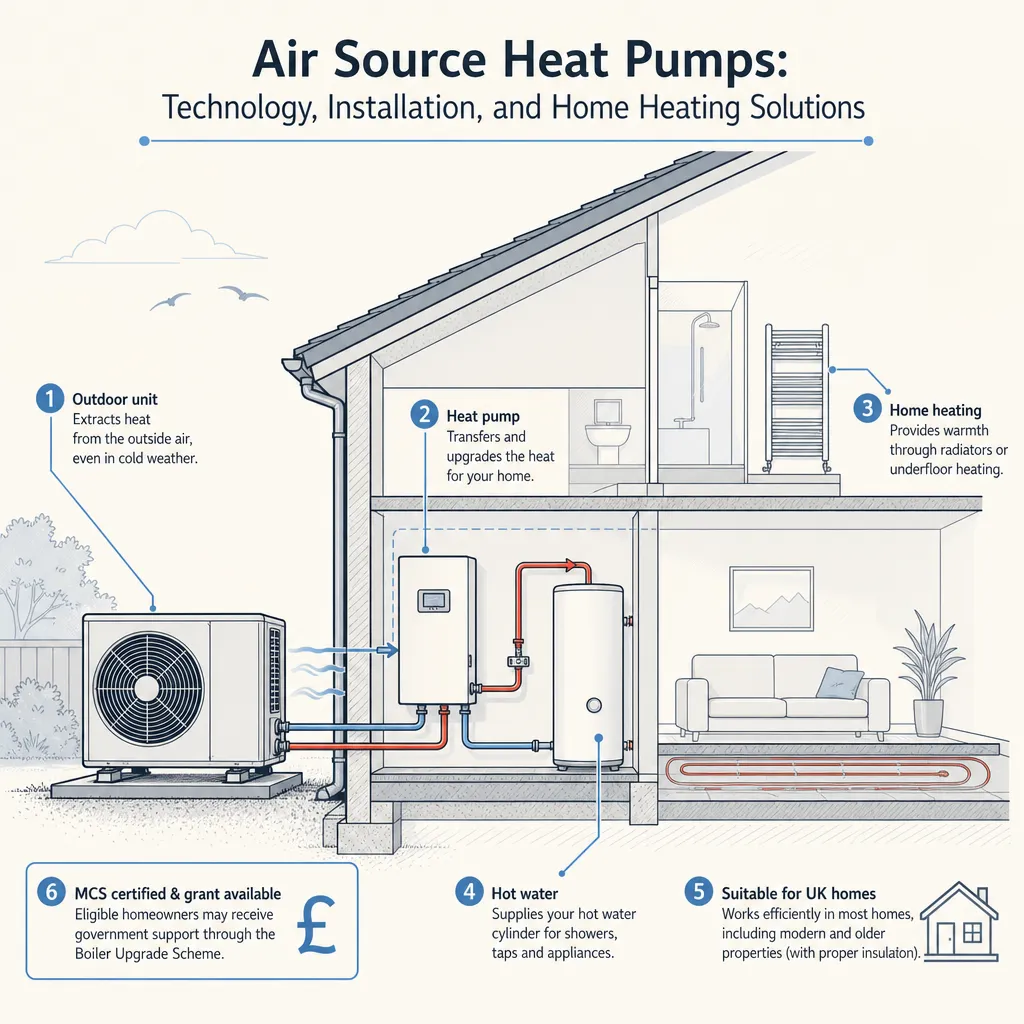
Air Source Heat Pumps: Technology, Installation, and Home Heating Solutions
Switching from a gas boiler to an air source heat pump is one of the most significant decisions a UK homeowner can make about their heating system. The choice typically surfaces when a boiler reaches end-of-life, when energy bills become a concern, or when a homeowner wants to reduce their carbon footprint ahead of tightening building regulations. Getting it wrong — whether through poor system design, inadequate insulation, or mismatched heat emitters — can result in a system that runs inefficiently and costs more to operate than expected.
Key points
- Air source heat pumps (ASHPs) must be installed by a Microgeneration Certification Scheme (MCS)-certified installer to qualify for the Boiler Upgrade Scheme (BUS) grant.
- The Boiler Upgrade Scheme currently offers a £7,500 grant toward an ASHP in England and Wales — check GOV.UK for current eligibility and availability.
- A heat pump's coefficient of performance (COP) typically ranges from 2.5 to 4.0, meaning it delivers 2.5–4 units of heat per unit of electricity consumed.
- PAS 2035 is the overarching standard for energy efficiency retrofit work; heat pump installations within whole-house retrofit projects must follow this framework.
- Most ASHPs operate at a flow temperature of 35–55°C, which means existing radiators may need to be upsized if they were designed for a gas boiler running at 70–80°C.
How air source heat pumps work
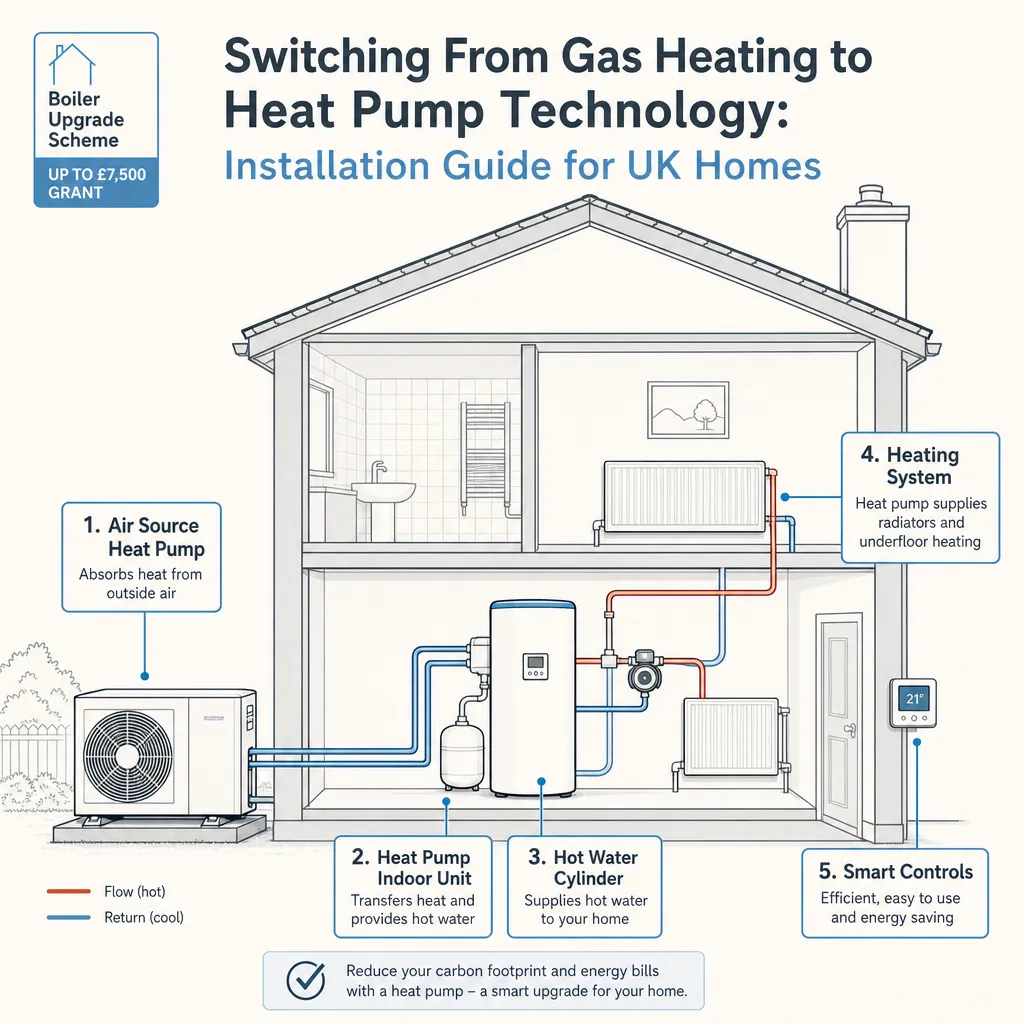
An air source heat pump works on the same refrigeration principle as a fridge, but in reverse. A refrigerant fluid absorbs heat from outdoor air — even at temperatures as low as -15°C — and passes it through a compressor, which raises the temperature. This heat is then transferred to your home's central heating and hot water system via a heat exchanger.
The key performance metric is the coefficient of performance (COP), which describes how many kilowatt-hours of heat you receive for every kilowatt-hour of electricity consumed. A well-designed and installed ASHP in a suitable UK home typically achieves a seasonal COP (SCOP) of 2.5–3.5 in practice, though laboratory ratings can be higher. The actual figure depends heavily on the flow temperature the system operates at — lower flow temperatures produce better efficiency.
Is your home suitable for a heat pump?
Not every home is immediately ready for an air source heat pump. The decision guide below can help you assess your starting position.
- Proceed with a heat pump assessment if your home has cavity or solid-wall insulation, double or triple glazing, and a loft insulated to at least 270 mm.
- Prioritise insulation improvements first if your home has uninsulated solid walls, a draughty loft, or single glazing — a heat pump will work, but efficiency and running costs may be poor.
- Consider a radiator upgrade if your current radiators were sized for a high-temperature gas system — an MCS installer can carry out flow temperature modelling and advise.
- Ask a specialist about a hybrid system if your home has listed building constraints, limited outdoor space, or unusually high heat demand that a heat pump alone may struggle to meet.
- Check your hot water cylinder situation — ASHPs require a hot water cylinder; if you currently have a combi boiler and no cylinder, factor in the additional cost and space requirements.
Property type | Typical suitability | Notes |
|---|---|---|
Well-insulated 1990s or newer house | High | Often close to ready with minimal changes |
1960s–80s cavity-wall semi | Moderate | Cavity fill and radiator check usually needed |
Victorian solid-wall terrace | Variable | Solid-wall insulation usually required; listed buildings need separate advice |
New-build (post-2020) | High | Often designed from the outset for low-temperature heating |
Flat or maisonette | Complex | Requires freeholder agreement; outdoor unit placement may be restricted |
The installation process
A typical ASHP installation involves several distinct stages. Understanding these helps homeowners set realistic expectations and ask the right questions of prospective installers.
- Heat loss calculation: The installer conducts a detailed room-by-room heat loss calculation (to BS EN 12831) to size the heat pump correctly. Oversizing and undersizing are both problematic.
- System design: Flow temperatures, radiator sizes, pipework, and hot water cylinder capacity are designed to match the heat pump's output at the intended operating conditions.
- Planning and permissions: Most ASHP external units fall under permitted development in England, but conservation areas, listed buildings, and flats may require planning permission. Always verify with your local planning authority before proceeding.
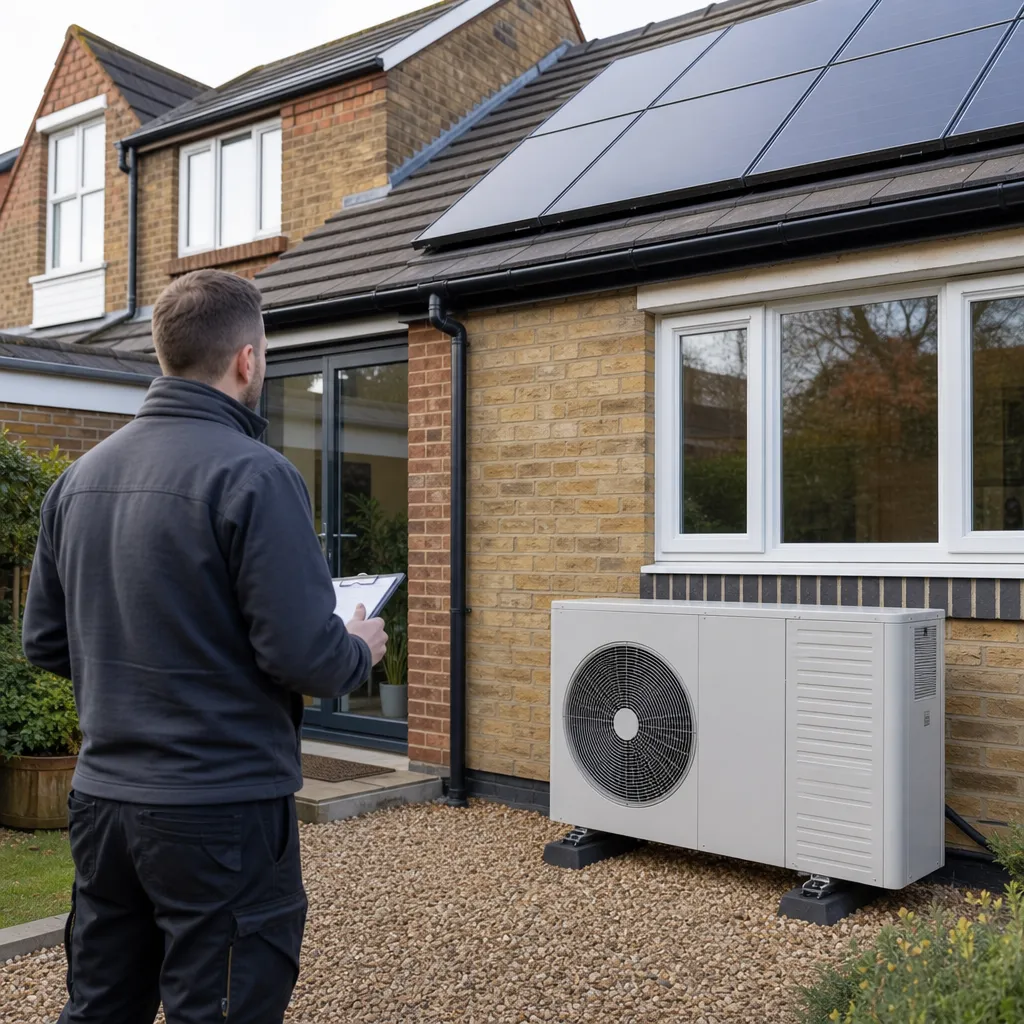
- Installation: The outdoor unit is placed on an external wall bracket or ground-mounted pad. Internal pipework, the cylinder, controls, and electrical connections are completed.
- Commissioning: The system is commissioned and tested. The MCS-certified installer provides the commissioning documentation required for a Boiler Upgrade Scheme grant claim.
- Handover: You should receive a user guide, MCS certificate, and guidance on optimum thermostat and hot water settings for efficient operation.
The installation itself typically takes one to three days, though the design and procurement phase may take several weeks depending on equipment lead times.
Costs, grants, and running costs
Indicative UK costs, last reviewed 2026-05-24.
Item | Indicative cost range | Notes |
|---|---|---|
ASHP supply and installation | £8,000–£15,000 | Varies by property size, system complexity, and installer |
Boiler Upgrade Scheme grant (England and Wales) | £7,500 reduction | Claimed by the installer on your behalf; verify availability on GOV.UK |
Radiator upgrades (if needed) | £500–£3,000 | Depends on number of rooms and existing radiator sizes |
Hot water cylinder (if needed) | £500–£1,500 | May be included within some installer quotes |
Running costs depend on your electricity tariff, achieved SCOP, and home size. Heat pumps use electricity, which carries a higher unit cost than gas, but the higher efficiency offsets much of this difference. The Energy Saving Trust publishes independently reviewed running cost comparisons. Some energy suppliers offer heat pump tariffs with lower overnight rates, which can improve economics when a hot water cylinder is charged on a timed schedule.
Important limitations
This article provides general information about air source heat pumps and does not constitute engineering, design, or financial advice. Every property is different, and heat pump performance depends on factors specific to your home — including insulation levels, heat emitter sizes, air tightness, hot water demand, and local climate.
Heat pump sizing and system design should always be carried out by a qualified, MCS-certified heating engineer using an approved heat loss calculation method such as BS EN 12831. Incorrect sizing can result in poor thermal comfort, elevated running costs, and potential equipment warranty issues. Rules around permitted development rights and grant eligibility can change; always verify current requirements with GOV.UK and your chosen installer before committing to any works.
When to get professional help
Speak to an MCS-certified heat pump installer or heating engineer if:
- Your boiler is approaching end-of-life and you want to understand all your options before committing to a replacement system.
- Your energy bills are unusually high and you suspect your heating system is underperforming.
- You are planning an extension or significant renovation and want to design the heating system correctly from the outset.
- You live in a listed building or conservation area, where additional planning constraints may apply to external equipment.
- You have received a heat pump quote but are unsure whether the system design was based on a proper heat loss calculation.
What to ask a qualified professional
Before instructing an MCS-certified installer, ask:
- Are you MCS-certified, and can you provide your certificate number for verification?
- Have you carried out a room-by-room heat loss calculation to BS EN 12831?
- What flow temperature are you designing the system for, and what seasonal COP does that imply in practice?
- Do any of my existing radiators need upgrading, and is that work included in the quote?
- Will I need a new hot water cylinder, and what capacity are you specifying?
- Does my home require insulation improvements before a heat pump will perform efficiently?
- Will you handle the Boiler Upgrade Scheme grant application on my behalf?
- What commissioning documentation will I receive at handover?
- What warranty applies to the unit itself and to your installation workmanship?
How Housey can help
Housey connects UK homeowners with qualified specialists for heat pump surveys, giving you an independent assessment of your home's suitability before committing to installation. If you are also exploring battery storage installers to pair with your heat pump for overnight off-peak charging, Housey can help you find MCS-accredited local providers.
Frequently asked questions
Do I need planning permission for an air source heat pump?
In England, most external ASHP units are permitted development under the Town and Country Planning (General Permitted Development) (England) Order 2015, subject to conditions on unit size and noise levels. Conservation areas, listed buildings, and flats may be excluded. Always confirm with your local planning authority before installation proceeds.
Can a heat pump work with my existing radiators?
Possibly, but it depends on whether your radiators were sized for the higher flow temperatures of a gas boiler, typically 70–80°C. Many heat pump installations work best at 35–45°C. An MCS-certified installer should model your system and advise whether upsizing is needed. Underfloor heating is particularly well suited to heat pump flow temperatures.
How long does an air source heat pump last?
Most manufacturers quote a design life of 15–20 years for the heat pump unit itself. Regular annual servicing is recommended to maintain performance and keep warranty cover valid. Hot water cylinders and ancillary components may have different lifespans; confirm these details with your installer at handover.
Is a heat pump suitable for a Victorian terrace?
It can be, but solid-wall homes typically have higher heat losses, which means insulation improvements are usually advisable first. A qualified assessor should model your home's heat loss before recommending a heat pump size. Some Victorian terraces have been successfully retrofitted, but each case depends on the specific building fabric and heating demand.
Sources and further reading
Useful next reads
 Energy & Retrofit
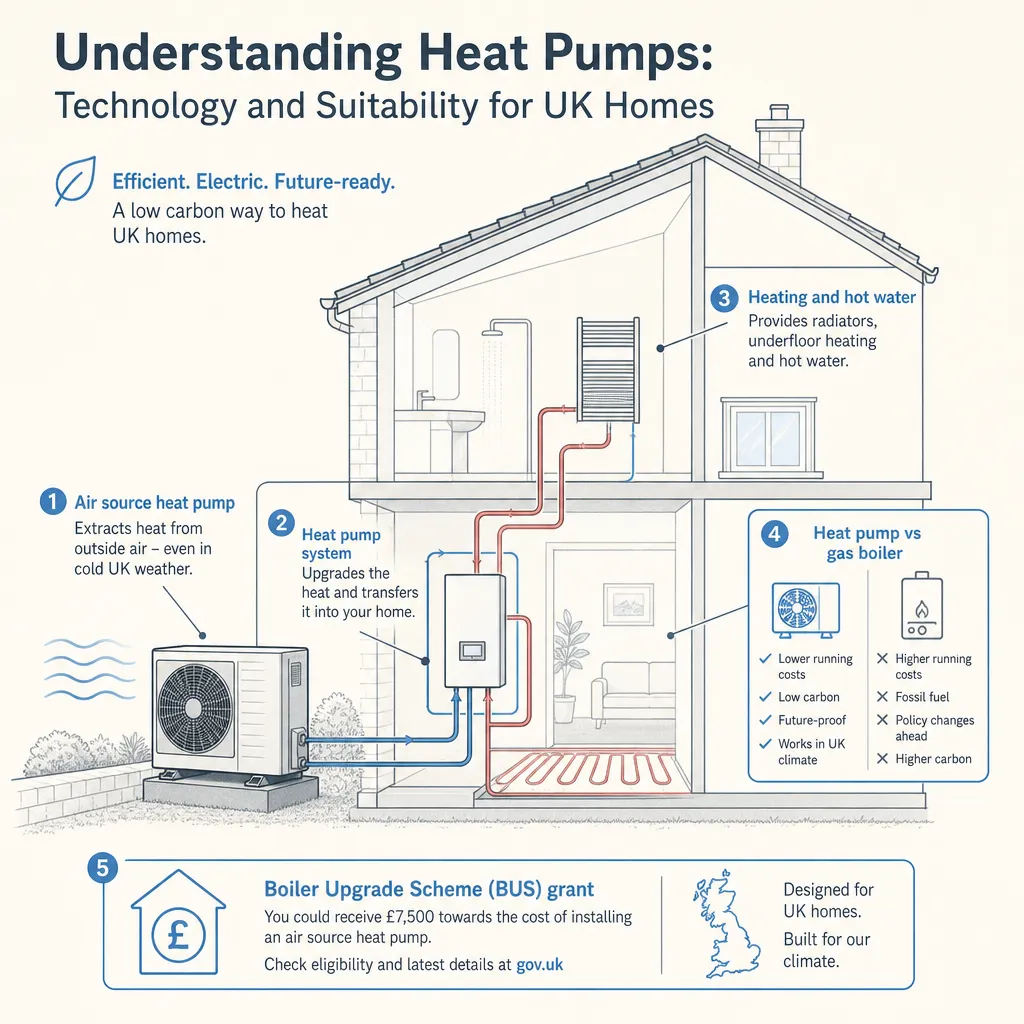
Understanding Heat Pumps: Technology and Suitability for UK Homes
Heat pumps extract heat from the air or ground and transfer it indoors, typically achieving efficiencies of 250–400% compared to a conventional boiler's near 100%.
 Energy & Retrofit
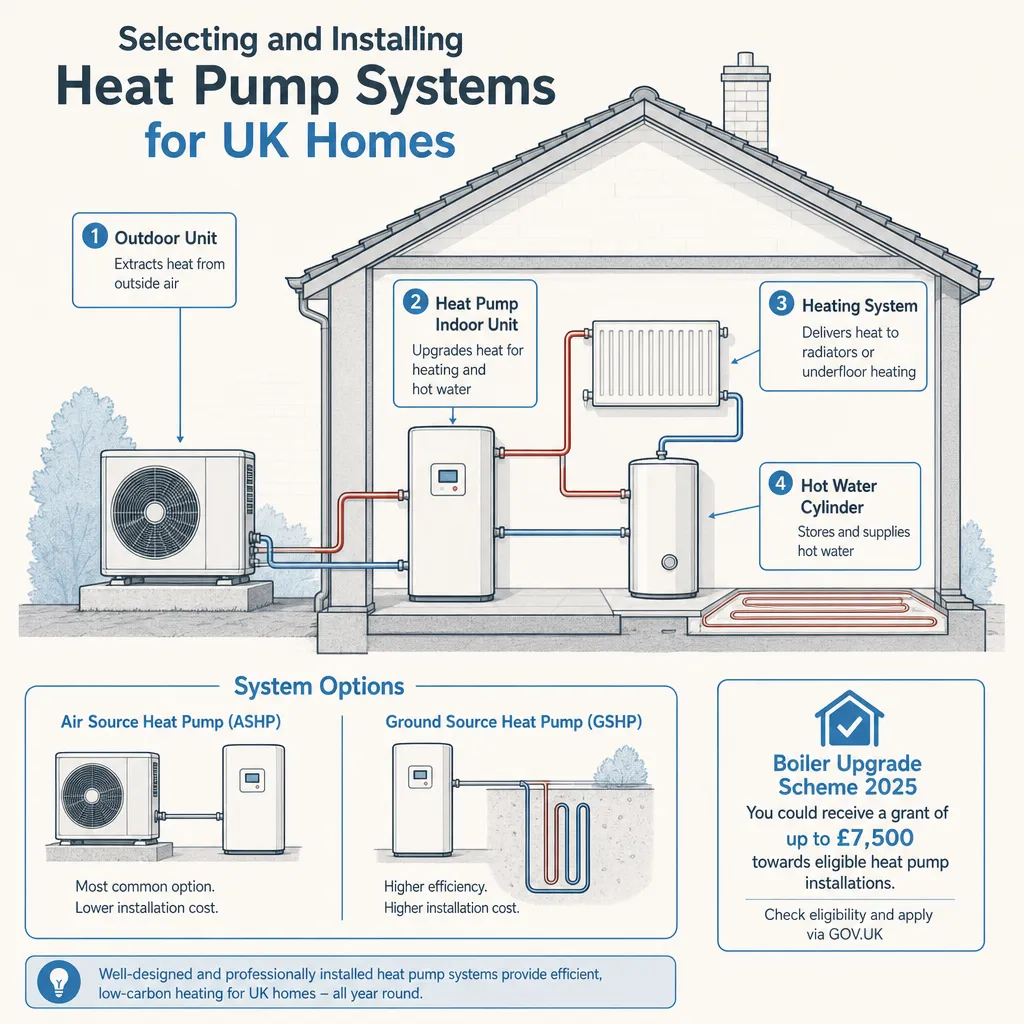
Selecting and Installing Heat Pump Systems for UK Homes
Selecting a heat pump for a UK home requires a site-specific heat loss calculation, an assessment of existing heat emitters, and a check on fabric insulation before any system is chosen.
 Energy & Retrofit
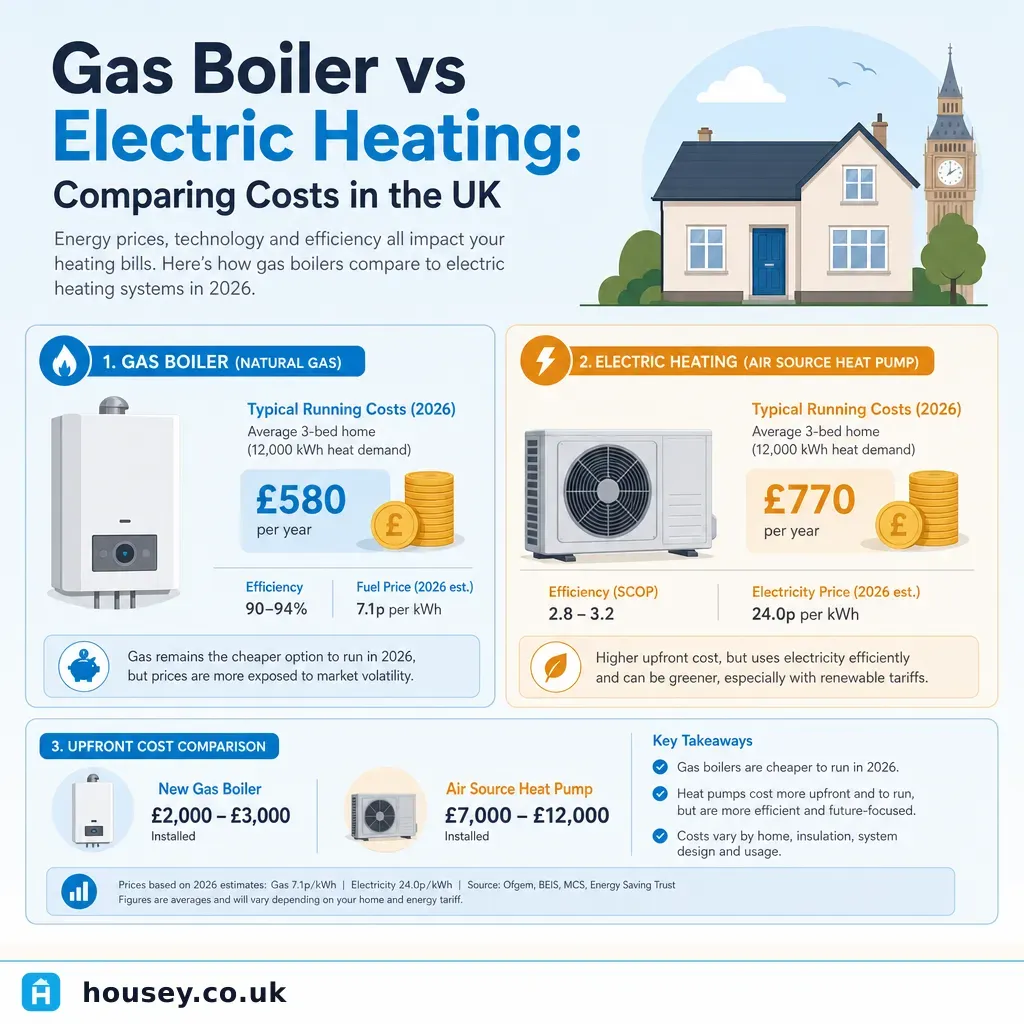
Gas Boiler vs Electric Heating: Comparing Costs in the UK
Gas boilers currently cost around 6.
 Energy & Retrofit
Switching From Gas Heating to Heat Pump Technology: Installation Guide
Switching from gas to a heat pump requires a heat loss calculation, correctly sized equipment, and often radiator upgrades before installation.
 Energy & Retrofit
Renewable Energy Systems and Property Value: Solar Panels and Heat Pumps
Solar panels can add a modest 1–4% to UK property values in the right conditions, particularly when they improve the EPC rating.